Wood Roof Design: Structure, Performance, and Architectural Expression
Wood roof design is a fundamental aspect of timber construction, combining structural efficiency with architectural warmth and versatility. From simple residential roofs to long-span commercial and civic buildings, wood roof systems can be tailored to meet a wide range of functional, environmental, and aesthetic requirements.
This article explores the principles of wood roof design, common structural systems, and key considerations for creating durable, efficient, and visually compelling roofs.
We have completed hundreds of civil and structural design spreadsheets, including all aspects of structural timber design. Follow the link for further details and offers.


Why Choose Wood for Roof Structures?
Wood has been used in roof construction for centuries—and for good reason. Its natural properties make it especially suitable for spanning, load distribution, and architectural expression.
Key benefits of wood roof design include:
- High strength-to-weight ratio, reducing structural and foundation loads
- Ease of fabrication, including prefabrication and off-site assembly
- Sustainability, as a renewable, low-carbon material
- Thermal performance, reducing thermal bridging
- Aesthetic appeal, especially when structure is exposed
Modern engineered timber products further expand what is possible with wood roofs.
Common Wood Roof Structural Systems
Rafters and Joists
Traditional wood roof systems use closely spaced rafters or joists spanning between walls or beams. This approach is common in residential and small commercial buildings.
Timber Truss Roofs
Wood trusses use triangulated members to span longer distances efficiently. They are widely used for houses, barns, halls, and industrial buildings where clear interior space is required.
Beam-and-Purlin Systems
In beam-and-purlin roofs, primary beams support secondary purlins, which carry the roof deck. This system allows flexible layouts and is often used with exposed timber architecture.
Engineered Timber Roofs
Glulam, LVL, and mass timber panels enable long spans, reduced depth, and precise structural performance. These systems are common in modern architectural and commercial projects.
Key Design Loads for Wood Roofs
Wood roof design must consider several types of loading:
- Dead loads: self-weight of structure, roofing materials, insulation
- Live loads: snow, maintenance, access loads
- Wind loads: uplift and lateral forces
- Seismic loads (where applicable)
Snow and wind loads often govern roof member sizing and connection design, particularly for lightweight timber roofs.
Structural Design Considerations
Spans and Member Depth
Span length strongly influences roof depth and layout. Longer spans typically require:
- Deeper members
- Trusses or portal frames
- Engineered timber products
Early span planning leads to more efficient roof design.
Deflection and Vibration
Serviceability often governs wood roof design. Excessive deflection can lead to:
- Ponding on flat or low-slope roofs
- Cracking of finishes
- Roof drainage problems
Designers must consider both short-term and long-term deflection due to creep.
Lateral Stability
Wood roofs often act as horizontal diaphragms, transferring wind and seismic loads to walls or frames. Proper detailing of sheathing and connections is essential for global stability.
Roof Pitch and Geometry
Roof geometry affects both structure and performance:
- Steep roofs shed snow and water efficiently but increase wind exposure
- Low-slope roofs require careful waterproofing and deflection control
- Curved or folded roofs demand advanced structural analysis but offer strong architectural identity
Wood is adaptable to all of these forms when properly engineered.
Connections and Detailing
Connections are critical to the success of any wood roof design. They must:
- Transfer gravity and uplift forces
- Accommodate timber movement
- Resist moisture ingress
Common connection types include steel plates, bolts, screws, concealed connectors, and traditional timber joinery. For exposed roofs, connection detailing significantly influences appearance.
Durability and Moisture Control
Roofs are the primary defense against weather, making moisture control essential:
- Provide adequate ventilation above insulation
- Avoid moisture traps at connections
- Protect exposed timber with suitable finishes or detailing
- Ensure reliable drainage paths
Good roof detailing often has a greater impact on durability than member sizing.
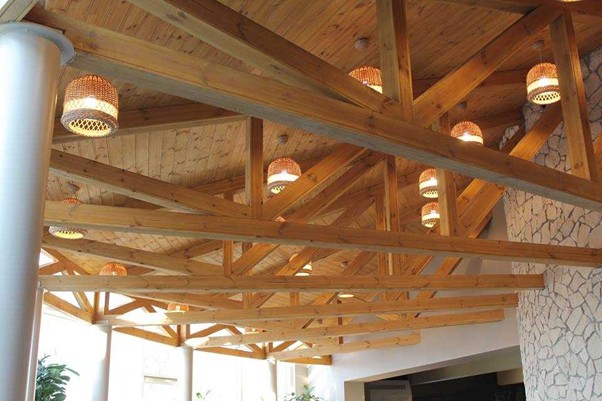
Exposed Wood Roofs and Architecture
Exposed wood roof structures are widely used to enhance interior spaces by:
- Expressing structure honestly
- Creating rhythm and scale
- Adding warmth and texture
When structure is visible, coordination between engineering and architecture becomes especially important.
Sustainability and Performance
Wood roof design supports sustainable construction by:
- Reducing embodied carbon
- Allowing efficient material use
- Supporting prefabrication and fast installation
When combined with high-performance insulation and airtightness, wood roofs contribute to energy-efficient buildings.
Final Thoughts
Wood roof design balances structure, performance, and architectural intent. Whether using simple rafters or advanced engineered systems, a well-designed wood roof provides strength, durability, and visual quality. By understanding loads, spans, detailing, and moisture behavior, designers can create wood roofs that perform reliably and age gracefully over time.


