Timber Pavilion Design: Lightweight Structures with Architectural Impact
Timber pavilion design brings together structural efficiency, natural materials, and expressive architecture. Often open-sided and lightweight, timber pavilions are used to create sheltered spaces for gathering, exhibition, relaxation, or contemplation—while maintaining a strong connection to the surrounding environment.
From park structures and cultural installations to private garden features and architectural statements, timber pavilions demonstrate how wood can be both structurally effective and visually inspiring.
We have completed hundreds of civil and structural design spreadsheets, including all aspects of structural timber design. Follow the link for further details and offers.
What Is a Timber Pavilion?
A timber pavilion is typically a freestanding structure defined by a roof supported by wood columns, frames, or shells, with minimal or no enclosure. Unlike enclosed buildings, pavilions prioritize openness, lightness, and spatial experience over environmental separation.
Because their structure is often fully exposed, timber pavilion design places equal emphasis on engineering performance and visual clarity.
Why Timber Is Ideal for Pavilion Design
Timber is especially well suited for pavilions due to its unique combination of properties:
- High strength-to-weight ratio, allowing slender members
- Ease of prefabrication, supporting fast and precise construction
- Natural aesthetics, blending seamlessly with landscapes
- Sustainability, as a renewable, low-carbon material
- Design flexibility, from simple post-and-beam to complex geometries
Wood’s tactile quality makes timber pavilions inviting and human-scaled.
Common Timber Pavilion Structural Systems
Post-and-Beam Pavilions
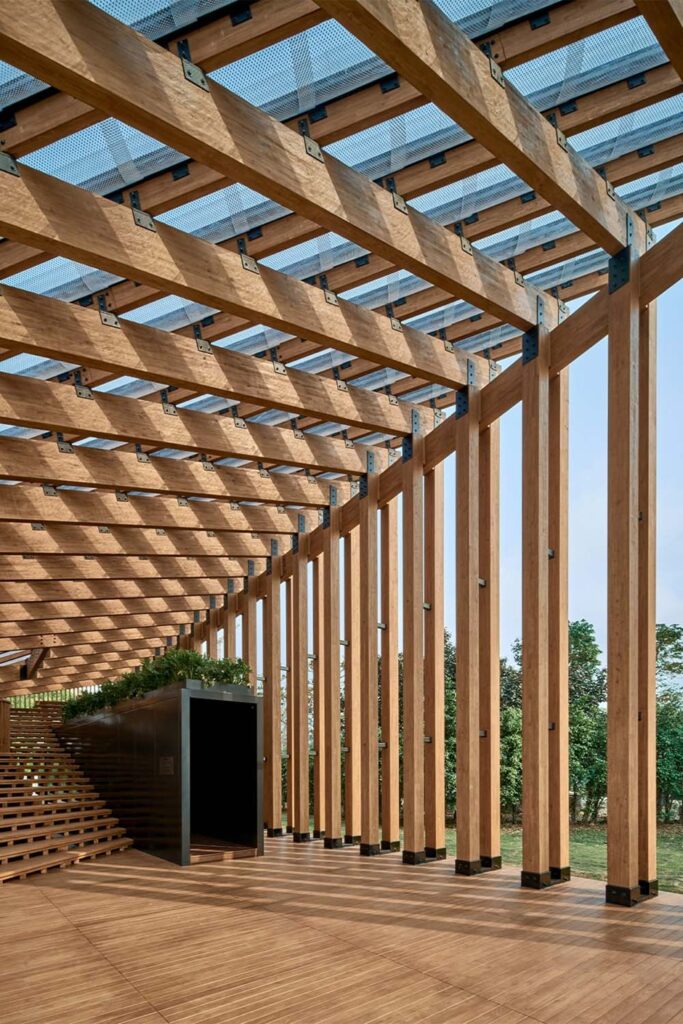
One of the most common systems, post-and-beam pavilions use vertical timber columns supporting horizontal beams and a roof structure. This approach is simple, adaptable, and suitable for many scales.
Frame and Portal Systems
Timber frames or small portal frames allow wider spans and greater openness by reducing the number of interior supports.
Gridshells and Lattice Structures
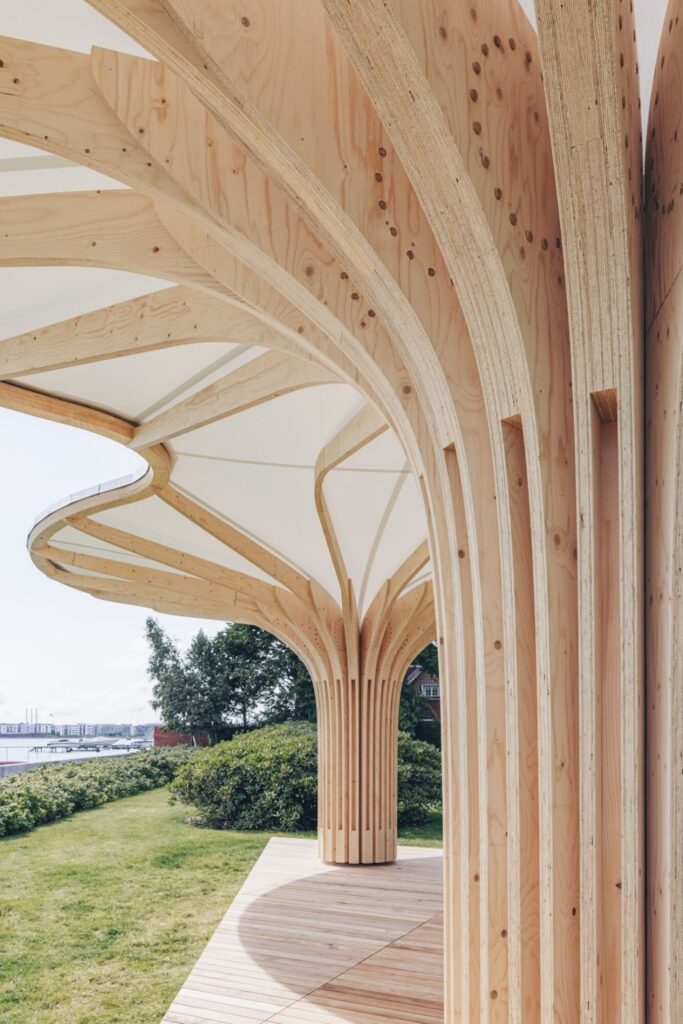
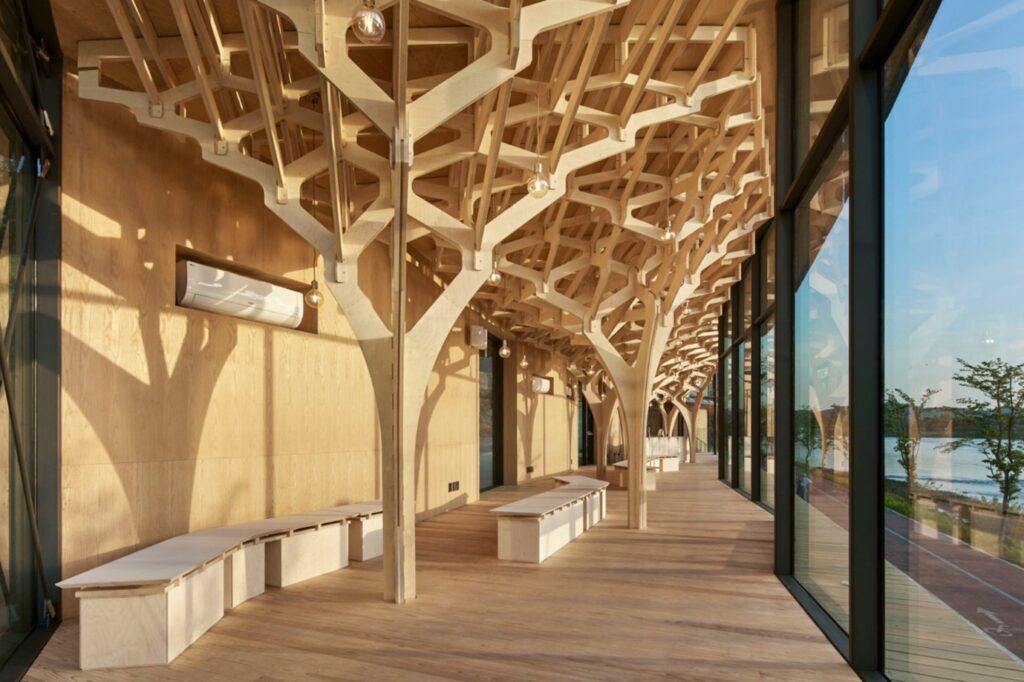
More expressive timber pavilions use curved grids, lattices, or woven systems. These structures efficiently distribute loads while creating dramatic architectural forms.
Panel and Plate Systems
Some pavilions incorporate mass timber panels or folded plate systems, where the roof itself becomes a stiff, load-bearing surface.
Key Design Considerations
Structural Loads
Although lightweight, timber pavilions must still resist:
- Dead loads from the roof structure
- Live loads such as maintenance or snow
- Wind uplift and lateral forces
Because pavilions are often exposed, wind design frequently governs.
Connections and Detailing
With the structure on display, connection design is critical. Bolted steel plates, concealed connectors, or traditional timber joinery can be used depending on the desired aesthetic.
Good detailing also ensures durability by preventing water accumulation and allowing drainage and ventilation.
Foundations
Foundations for timber pavilions range from simple concrete pads to strip footings or piers. Design must account for uplift, overturning, and soil conditions.
Durability and Weathering
Exterior timber pavilions require careful consideration of:
- Wood species selection
- Protective finishes or treatments
- Replaceable or sacrificial elements
Well-designed timber pavilions are intended to weather gracefully over time.
Architectural Expression and Experience
Timber pavilion design often focuses on:
- Rhythm and repetition of structural elements
- Light and shadow created by timber members
- Transparency and visual permeability
- Integration with landscape and context
Because pavilions are often approached from all sides, they must be architecturally resolved in the round.
Sustainability and Temporary Architecture
Timber pavilions are frequently used for temporary or semi-permanent installations due to:
- Low embodied carbon
- Reusability and demountability
- Minimal site impact
Even permanent pavilions benefit from timber’s environmental credentials and efficient use of material.
Where Timber Pavilion Design Excels
Timber pavilions are commonly used for:
- Parks and public spaces
- Cultural and exhibition structures
- University campuses
- Gardens and private estates
- Event and gathering spaces
Their adaptability makes them suitable for both modest and iconic projects.
Final Thoughts
Timber pavilion design showcases the best qualities of wood: strength, lightness, beauty, and sustainability. By exposing structure and embracing simplicity, timber pavilions create memorable spaces that connect people to place and material. Whether modest or ambitious, a well-designed timber pavilion stands as a clear expression of architecture reduced to its essentials.


