Timber Portal Frame Design: Efficient Long-Span Structures in Wood
Timber portal frame design is a highly efficient structural system used to create large, open-span buildings with minimal internal supports. Commonly seen in agricultural, industrial, commercial, and recreational buildings, timber portal frames combine structural performance with the sustainability and visual warmth of wood.
With the growing use of engineered timber products such as glulam and LVL, timber portal frames are now capable of spans and loads once reserved for steel—while offering significant environmental and architectural advantages.
We have completed hundreds of civil and structural design spreadsheets, including all aspects of structural timber design. Follow the link for further details and offers.
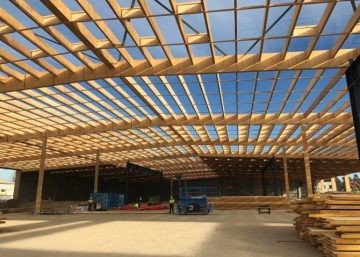


What Is a Timber Portal Frame?
A timber portal frame is a rigid structural system consisting of columns and rafters connected with moment-resisting joints. These rigid connections allow the frame to resist both vertical loads and lateral forces without relying heavily on bracing or shear walls.
Portal frames are typically repeated at regular spacing to form the primary load-bearing structure of a building, supporting roof systems and transferring loads to the foundations.
Why Choose Timber for Portal Frame Design?
Timber portal frames offer several compelling benefits:
- Long clear spans without interior columns
- Lightweight construction, reducing foundation loads
- Rapid erection, especially with prefabricated members
- Sustainability, using renewable, low-carbon materials
- Architectural appeal, with exposed timber structure
Engineered timber products provide the strength, consistency, and dimensional stability needed for portal action.
Common Applications of Timber Portal Frames
Timber portal frame design is widely used for:
- Agricultural buildings and barns
- Warehouses and workshops
- Sports halls and riding arenas
- Commercial and light industrial buildings
- Aircraft hangars and storage facilities
The system is especially effective where flexibility and unobstructed floor space are required.
Structural Behavior of Timber Portal Frames
Portal frames resist loads through a combination of:
- Bending moments in columns and rafters
- Rigid knee and ridge connections
- Frame action that stabilizes the structure laterally
Key loads considered in design include:
- Dead loads from roofing and structure
- Live loads such as snow and maintenance
- Wind loads, often governing lateral design
- Seismic loads where applicable
The stiffness of the joints plays a critical role in overall frame performance.
Key Design Considerations
Member Sizing
Columns and rafters are typically designed for combined axial force and bending. Glulam is commonly used due to its high strength, availability in large sections, and ability to form tapered members.
Connections and Joints
Moment-resisting joints are the most critical aspect of timber portal frame design. Common solutions include:
- Steel plates with bolts or dowels
- Glued-in rods
- Proprietary concealed connector systems
Connections must be carefully detailed to ensure stiffness, strength, durability, and constructability.
Frame Stability
Portal frames may require additional stability systems, such as:
- Roof diaphragms
- Longitudinal bracing
- Moment-resisting end frames
These elements ensure stability in the direction perpendicular to the main frames.
Deflection and Serviceability
Timber portal frames are often governed by:
- Horizontal sway limits
- Vertical deflection of rafters
- Long-term creep effects
Serviceability checks are essential for roof performance and cladding durability.
Fire and Durability Considerations
Fire Performance
Large timber members perform well in fire due to predictable charring behavior. Fire design may involve:
- Allowance for sacrificial char layers
- Fire-resistant coatings or encapsulation
- Compliance with required fire resistance ratings
Durability and Moisture Control
Portal frames are commonly used in exposed or semi-exposed environments. Proper detailing includes:
- Protection from moisture ingress
- Durable connection detailing
- Appropriate timber treatment where required
Sustainability and Efficiency
Timber portal frame design supports sustainable construction by:
- Reducing embodied carbon compared to steel frames
- Enabling efficient material use through tapered members
- Allowing off-site fabrication and reduced construction time
These benefits make timber portal frames attractive for cost-effective and environmentally responsible buildings.
Advantages and Limitations
Advantages
- Economical for medium to long spans
- Visually appealing exposed structure
- Lightweight and fast to construct
Limitations
- Connection design can be complex
- Larger member sizes may be required compared to steel
- Skilled fabrication and erection are essential
Understanding these trade-offs is key to successful design.
Final Thoughts
Timber portal frame design is a proven and adaptable structural solution that combines efficiency, sustainability, and architectural quality. With modern engineered timber products and well-designed connections, timber portal frames can meet demanding structural requirements while creating warm, expressive spaces. As demand for low-carbon construction grows, timber portal frames are set to play an increasingly important role in large-span building design.


