Practical Design of Timber Structures to Eurocode 5
The practical design of timber structures to Eurocode 5 (EN 1995) bridges the gap between structural theory and real-world construction. While the code provides a comprehensive framework for safety and reliability, successful timber design depends on understanding how its rules translate into efficient member sizing, robust connections, and durable detailing.
This article focuses on a practical, design-oriented approach to Eurocode 5—emphasizing clarity, engineering judgment, and buildability rather than purely academic interpretation.
We have completed hundreds of civil and structural design spreadsheets, including all aspects of structural timber design. Follow the link for further details and offers.
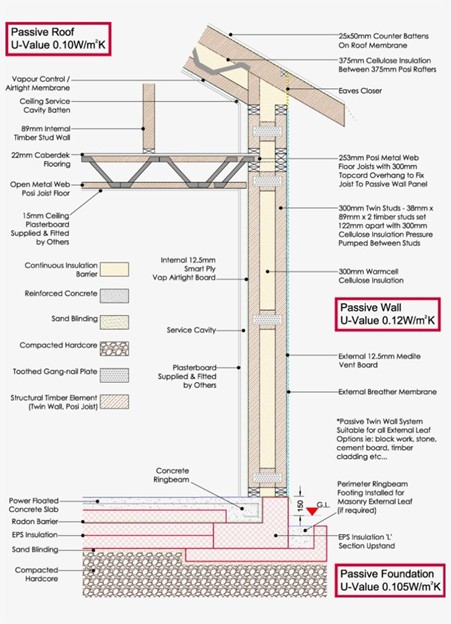
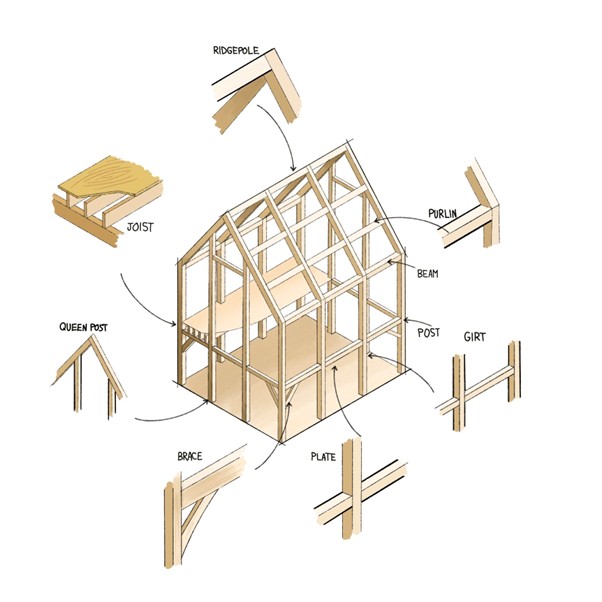
Understanding Eurocode 5 in Practice
Eurocode 5 governs the structural design of timber buildings and civil engineering works. It works alongside:
- EN 1990 (Basis of structural design)
- EN 1991 (Actions on structures)
- National Annexes, which define country-specific parameters
In practical terms, Eurocode 5 is about ensuring:
- Ultimate limit state (ULS) safety
- Serviceability limit state (SLS) performance
- Durability and robustness over the structure’s life
Designers must balance code compliance with efficient use of material and construction simplicity.
Material Properties and Design Values
A key practical step in Eurocode 5 design is converting characteristic material properties into design values.
This involves:
- Selecting the correct strength class (e.g., C24, GL24h)
- Applying modification factors (kmod) based on load duration and service class
- Applying partial safety factors (γM)
Understanding typical service classes and load combinations early in the design process prevents unnecessary overdesign.
Member Design: From Theory to Reality
Bending, Compression, and Tension
Eurocode 5 provides interaction equations for combined actions such as bending and axial force. In practice:
- Bending often governs beams and joists
- Buckling governs columns and slender members
- Lateral torsional buckling can control long, narrow beams
Practical designers simplify layouts, reduce unbraced lengths, and choose sensible member proportions to avoid complex checks.
Serviceability Matters
Deflection, vibration, and long-term creep often govern timber design more than strength.
Key practical considerations include:
- Limiting span-to-depth ratios
- Accounting for creep using kdef
- Checking instantaneous and final deflections
Ignoring serviceability early can lead to costly redesign later.
Connections: The Heart of Timber Design
Connections are where Eurocode 5 becomes most detailed—and most critical.
Dowel-Type Fasteners
Bolts, screws, nails, and dowels are designed using Johansen yield theory. In practice:
- Ductile failure modes are preferred
- Spacing, edge distances, and end distances are often decisive
- Connection capacity is frequently lower than member capacity
Good practical design simplifies load paths and avoids heavily congested joints.
Moment-Resisting Connections
While possible under Eurocode 5, rigid connections are:
- Detailing-intensive
- Often governed by slip and stiffness rather than strength
Many practical timber structures favor pinned connections combined with bracing or diaphragm action.
Stability and Global Behavior
Eurocode 5 requires designers to consider:
- Member stability (buckling and lateral restraint)
- Overall structural stability
- Load redistribution and robustness
In practice, stability is improved by:
- Clear bracing strategies
- Effective diaphragm action from floors and roofs
- Regular framing layouts
A simple, well-understood load path is often safer than a complex optimized solution.
Fire Design in Practice
Timber behaves predictably in fire due to charring. Eurocode 5 allows designers to:
- Reduce section sizes using charring rates
- Demonstrate fire resistance without added protection
Practical fire design often favors:
- Larger exposed sections
- Simple rectangular members
- Clear sacrificial layers
This approach can eliminate the need for applied fire protection.
Durability and Moisture Control
Eurocode 5 durability provisions are closely tied to real-world detailing.
Practical measures include:
- Correct service class assumptions
- Avoiding moisture traps in connections
- Providing ventilation and drainage
- Selecting appropriate timber treatments
Good detailing often has a greater impact on longevity than material strength.
Common Practical Pitfalls
Designers new to Eurocode 5 often encounter:
- Overly conservative assumptions
- Underestimating connection complexity
- Ignoring creep and vibration effects
- Relying on strength checks alone
Experience, precedent, and collaboration with fabricators are key to avoiding these issues.
A Practical Design Mindset
Successful Eurocode 5 design is not about checking every equation—it is about:
- Choosing sensible structural systems
- Understanding governing limit states
- Designing buildable connections
- Using engineering judgment alongside code rules
When approached practically, Eurocode 5 enables elegant, efficient, and durable timber structures.
Final Thoughts
The practical design of timber structures to Eurocode 5 requires more than code literacy—it demands an understanding of timber behavior, construction realities, and service performance. By focusing on simplicity, clarity, and durability, designers can use Eurocode 5 not as a constraint, but as a powerful framework for high-quality timber engineering.


