Timber Geodesic Dome: Innovative Wood Structures Inspired by Nature
A timber geodesic dome is a striking structural form that combines geometric efficiency with the warmth and sustainability of wood. Known for their strength, material efficiency, and futuristic appearance, timber geodesic domes are used for homes, pavilions, greenhouses, event spaces, and experimental architecture.
By uniting advanced geometry with natural materials, timber geodesic domes demonstrate how wood can be used in highly efficient and visually captivating ways.
We have completed hundreds of civil and structural design spreadsheets, including all aspects of structural timber design. Follow the link for further details and offers.


What Is a Timber Geodesic Dome?
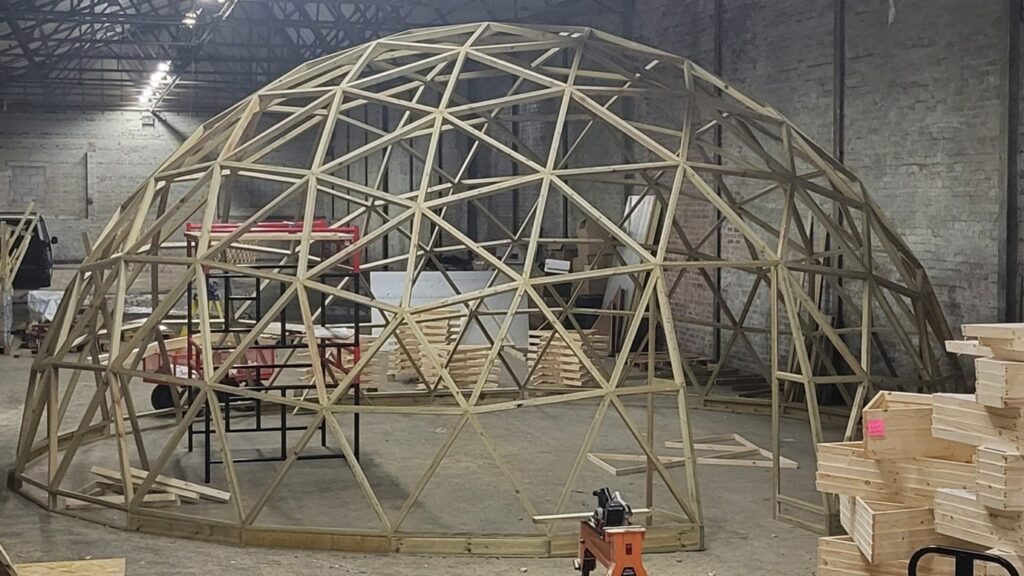
A geodesic dome is a spherical or partial-spherical structure made up of a network of interconnected triangles. In a timber geodesic dome, these triangles are formed using wood members—often solid lumber, engineered wood, or laminated components.
The triangular geometry distributes loads evenly across the structure, allowing domes to span large areas with minimal material.
Why Use Timber for Geodesic Domes?
Wood is particularly well suited for geodesic dome construction due to several key advantages:
- High strength-to-weight ratio, reducing foundation demands
- Ease of fabrication, especially for repeated triangular members
- Sustainability, as a renewable, low-carbon material
- Thermal performance, when combined with proper insulation
- Natural aesthetics, creating warm and inviting interiors
Timber softens the technical nature of dome geometry, making the structure feel organic rather than industrial.
Structural Behavior of Timber Geodesic Domes
Geodesic domes work primarily through axial forces—tension and compression—rather than bending. This allows relatively small wood members to achieve impressive spans.
Key structural characteristics include:
- Efficient load distribution across the entire dome
- High resistance to wind and seismic forces
- Redundancy, meaning localized damage does not lead to collapse
Connections between members are critical, as they govern both strength and constructability.
Common Applications of Timber Geodesic Domes
Residential and Eco Homes
Timber domes are popular in sustainable housing due to their energy efficiency and minimal material use. Their open interiors allow for flexible layouts and dramatic living spaces.
Pavilions and Event Structures
Domes create memorable, column-free spaces ideal for gatherings, exhibitions, and cultural events.
Greenhouses and Botanical Structures
The dome shape maximizes solar exposure and interior volume, making timber geodesic domes ideal for plant growth and climate-controlled environments.
Educational and Recreational Spaces
Domes are often used for planetariums, learning centers, and play structures due to their engaging geometry.
Design Considerations for Timber Geodesic Domes
Geometry and Frequency
The “frequency” of a dome determines how many triangles it contains. Higher-frequency domes:
- Appear smoother and more spherical
- Require more members and connections
- Allow greater control over openings and detailing
Connections and Nodes
Nodes can be created using:
- Steel plates or hubs
- Bolted timber connections
- Custom-fabricated connectors
Connection design must account for load transfer, moisture protection, and constructability.
Envelope and Insulation
Because domes have many facets, detailing the building envelope requires careful planning. Common solutions include:
- Insulated panels fitted between members
- Continuous exterior membranes
- Interior finishes that follow the dome geometry
Foundations
Despite their light weight, timber domes still require well-designed foundations to resist uplift and lateral forces.
Sustainability and Performance
Timber geodesic domes align strongly with sustainable design principles:
- Minimal material usage for maximum enclosed volume
- Reduced embodied carbon compared to steel or concrete domes
- Compatibility with prefabrication and off-site construction
Their aerodynamic shape also performs well in high-wind and snow-prone environments.
Challenges and Limitations
While highly efficient, timber geodesic domes can present challenges:
- Complex detailing for doors, windows, and services
- Higher design effort compared to conventional buildings
- Limited familiarity among builders and inspectors
These challenges are best addressed through early coordination between designers, engineers, and fabricators.
Final Thoughts
The timber geodesic dome is a powerful example of how geometry, engineering, and natural materials can come together to create efficient and inspiring structures. Whether used as a home, pavilion, or architectural statement, timber domes offer strength, sustainability, and a unique spatial experience that few other building forms can match.


