Timber Truss Design: Efficient Structures for Long Spans
Timber truss design is a cornerstone of structural engineering in wood, enabling long spans, efficient material use, and expressive architectural forms. From traditional roof trusses in houses and barns to modern engineered systems in sports halls and bridges, timber trusses combine structural logic with the natural beauty of wood.
This article explores how timber trusses work, common configurations, and key design considerations for achieving safe, efficient, and buildable structures.
We have completed hundreds of civil and structural design spreadsheets, including all aspects of structural timber design. Follow the link for further details and offers.
What Is a Timber Truss?
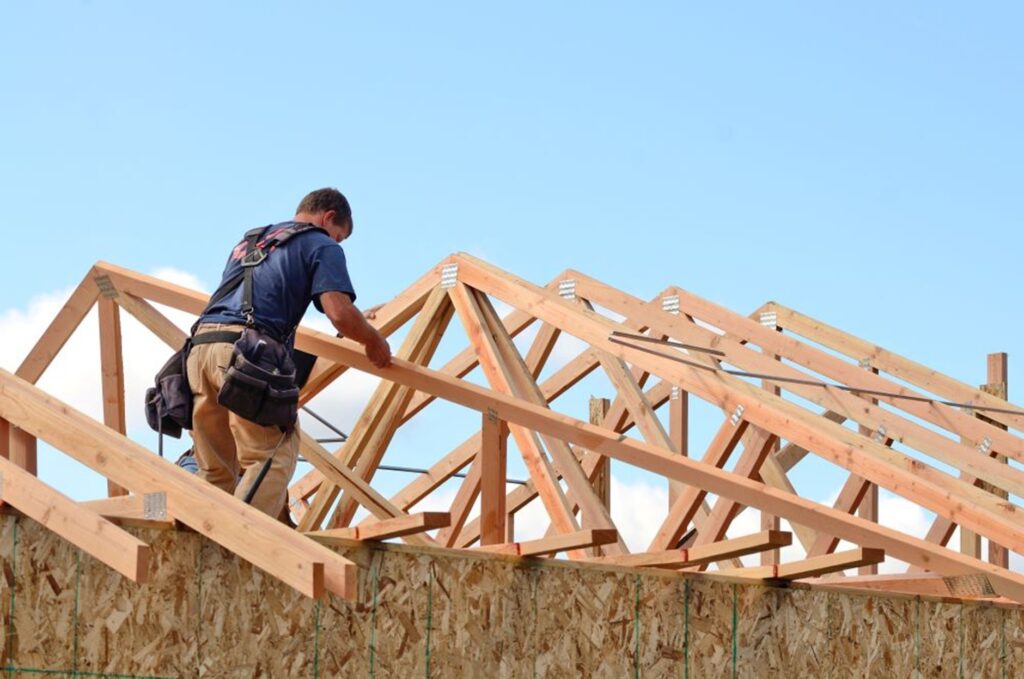
A timber truss is a triangulated structural system made of straight wood members connected at nodes. Loads are transferred primarily through axial forces—tension and compression—rather than bending, allowing trusses to span longer distances with less material than solid beams.
Typical components include:
- Top chord (usually in compression)
- Bottom chord (usually in tension)
- Web members that form triangles and distribute forces
- Connections that transfer axial forces between members
Why Use Timber Trusses?
Timber trusses offer several advantages over simple beams:
- Long-span capability with reduced material use
- Lightweight construction, lowering foundation demands
- Efficient load paths through axial action
- Prefabrication potential, improving quality and speed
- Architectural expression when left exposed
These qualities make timber trusses suitable for both structural efficiency and visual impact.
Common Types of Timber Trusses
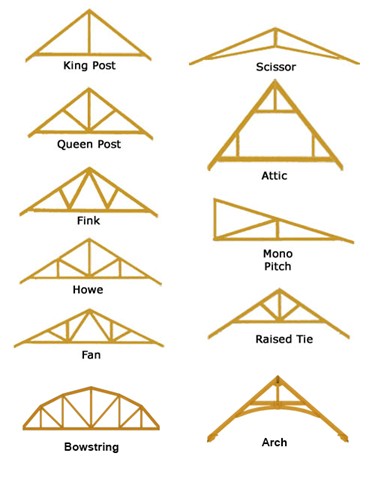
King Post and Queen Post Trusses
Traditional forms often used in historic buildings and small to medium spans. They are simple, material-efficient, and visually distinctive when exposed.
Fink and Howe Trusses
Widely used in residential and light commercial roofs, these trusses balance efficiency with ease of fabrication and erection.
Pratt Trusses
Common in longer spans and bridges, Pratt trusses place diagonal members in tension, which can be advantageous for timber design.
Bowstring and Curved Trusses
These trusses use curved top chords to achieve large, open spaces with reduced structural depth, often seen in halls and industrial buildings.
Engineered Timber Trusses
Modern trusses use glulam or LVL members and steel connectors to achieve large spans and high load capacity with precision.
Structural Behavior of Timber Trusses
Timber trusses rely on:
- Axial force transfer in members
- Triangulation, which provides geometric stability
- Pinned or semi-rigid joints, depending on connection design
Because bending is minimized, timber trusses can be more efficient than beams for spans typically exceeding 8–10 meters.
Key Design Considerations
Load Assessment
Truss design must account for:
- Dead loads (self-weight, roofing, services)
- Live loads (snow, maintenance, occupancy)
- Wind uplift and lateral loads
Load combinations often govern member sizing and connection forces.
Member Design
Chords and webs are designed for axial tension or compression, with checks for:
- Buckling of compression members
- Net section capacity in tension members
- Combined axial and bending effects where applicable
Slenderness control is especially important for compression members.
Connections
Connections are critical in timber truss design and often govern overall capacity. Common solutions include:
- Bolted steel gusset plates
- Timber-to-timber dowel connections
- Metal plate connectors in light-frame trusses
Connections must be designed for strength, stiffness, and durability.
Deflection and Vibration
Although strong, trusses must also meet serviceability limits. Excessive deflection can affect roofing, ceilings, and user comfort.
Construction and Fabrication
Timber trusses are well suited to off-site fabrication, offering:
- Improved quality control
- Faster site installation
- Reduced waste
Large trusses may be delivered in sections and assembled on site, requiring careful consideration of transport and lifting.
Exposed Timber Trusses in Architecture
Exposed timber trusses are often used as a defining architectural feature, contributing to:
- Spatial rhythm and scale
- Warm, natural interiors
- Clear expression of structure
When exposed, detailing, alignment, and connection aesthetics become especially important.
Advantages and Limitations
Advantages
- Highly efficient for medium to long spans
- Flexible geometry and layout options
- Compatible with traditional and modern architecture
- Sustainable and renewable material choice
Limitations
- Connection design can be complex
- Increased depth compared to beams
- Requires careful coordination with services and roof build-up
Understanding these trade-offs leads to better design outcomes.
Final Thoughts
Timber truss design remains one of the most effective ways to achieve long spans in wood construction. By working with axial forces and clear load paths, timber trusses deliver structural efficiency, architectural clarity, and sustainability. Whether traditional or contemporary, a well-designed timber truss is both an engineering solution and an architectural statement.


