Drainage field design is an important part of many foul drainage design projects, particularly in isolated areas or where the ground is suitable. Hand calculations can however be repetitive and time consuming, and optimization of the design is difficult with the variety of potential trench widths, lengths and trench numbers.
The CivilWeb Drainage Field Design Spreadsheet can save hours of repetitive calculations while ensuring compliance with BS 6297, reliable accuracy and even optimisation tools which can save money and time during the construction phase.
The CivilWeb Drainage Field Design Spreadsheet can be purchased lower down this page for only £19.99. Or why not buy our best value bundle? Our Full Drainage Design Spreadsheet Suite can be purchased at the bottom of this page for only £49.99. This suite includes all of our drainage design spreadsheets, more than 20, and represents an incredible saving of more than 85%.
Understanding Drainage Fields: Design, Methods, and Spreadsheet Tools
A drainage field is the part of a wastewater or stormwater system that allows treated effluent to soak safely into the ground, and understanding how it works helps you design systems that protect both property and the environment. The sections below walk through what a drainage field is, how it is commonly designed, and why many engineers and installers rely on spreadsheets to get the calculations right.
What is a Drainage Field
A drainage field—sometimes called a soakaway field, septic drain field or leach field—is an underground network of perforated pipes or infiltration trenches that disperses pre‑treated wastewater into the surrounding soil. Its purpose is to allow water to percolate slowly and evenly so the soil can naturally filter and absorb it. This prevents surface flooding, protects groundwater, and ensures that septic or stormwater systems operate safely.
A drainage field is typically laid out as a series of parallel pipes, far enough apart that each pipe can continue to infiltrate without interference. Typical drain field layouts.
A well‑designed drainage field depends on the soil’s ability to absorb water. Sandy or loamy soils typically drain well, while clay soils require more careful planning because they hold water for longer. Key factors that influence performance include the depth of the pipes, the spacing between trenches, the soil infiltration rate, and the volume of water the system must handle.
Typical benefits of a properly functioning drainage field include:
- Reduced risk of surface pooling or flooding
- Protection of nearby watercourses from contamination
- Longer lifespan for septic tanks and treatment systems
- Stable ground conditions around buildings and landscaping
How does the Drainage Field Design Spreadsheet Work?
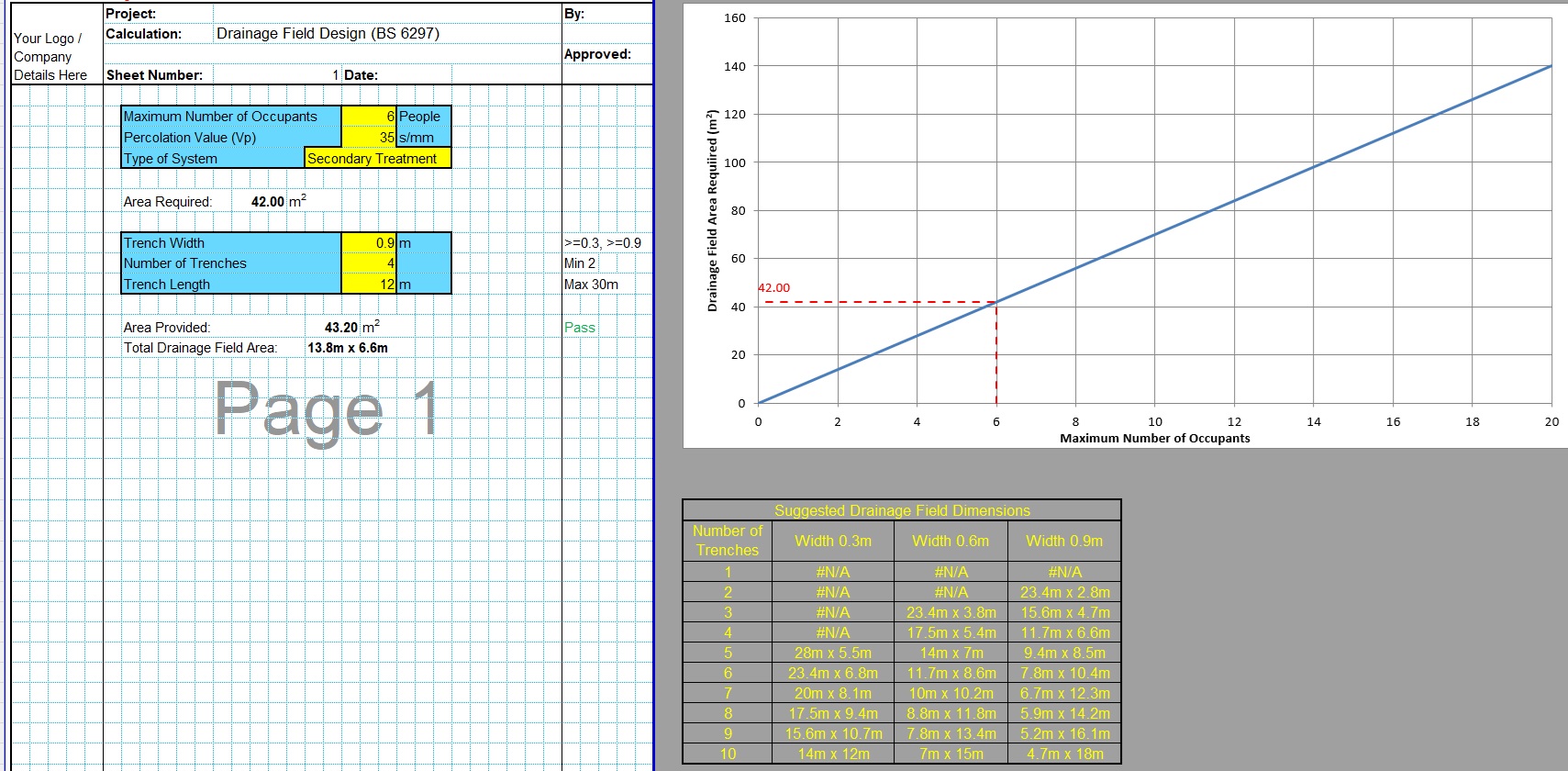
The spreadsheet completes the design of the drainage field in accordance with the requirements of BS 6297. The spreadsheet requires a few simple inputs including;
- Max number of occupants of the building
- Percolation Value or Vp value. This is a measure of the speed at which the effluent can infiltrate into the soils.
- Type of system, either a secondary system or septic tank system
The spreadsheet uses these inputs to automatically calculate the minimum drainage field area required to successfully infiltrate the required quantity of effluent.
Next the user can enter the desired trench number, width and length. The spreadsheet analyses the drainage field inputs and shows whether the proposed system will be suitable or not.
In order to remove the need for repetitive or iterative calculations, the spreadsheet includes a unique optimization tool. This is a table of pre-calculated, acceptable suggested drainage field layouts for any number of trenches up to 10 and trench widths of 0.3m, 0.6m and 0.9m. This can save the user many hours of tedious and repetitive calculations where many systems require optimized designs.
Why Use a Drainage Field Design Spreadsheet?
A drainage field design spreadsheet helps ensure that the system is sized correctly, compliant with regulations, and capable of handling expected flows. Because drainage design involves multiple variables—soil test results, pipe sizing, trench geometry, infiltration rates—a spreadsheet reduces the risk of errors and speeds up the design process.
Key advantages include:
- Accurate calculations for trench length, infiltration area, and effluent loading
- Consistency across multiple projects or design iterations
- Scenario comparison, allowing you to test different soil conditions or layout options
- Built‑in regulatory checks, ensuring designs meet local standards
For installers, engineers, and homeowners planning a system upgrade, a spreadsheet becomes a practical tool that supports better decisions and reduces the likelihood of costly redesigns.
Get Started Today
Save hours of repetitive calculation time. Whether you’re working on a major project or a small renovation, this tool will give you clarity, accuracy, and confidence.
Buy the CivilWeb Drainage Field Design Spreadsheet now for only £19.99.
Or alternatively big savings are available with our French Drain and Field Drain design bundle. Get both spreadsheets for only £29.99.
Or why not bundle with the CivilWeb Soakaway Design Spreadsheet for only £10 extra?
Or save £50+ by buying our full Drainage Design Suite including all our drainage design spreadsheets.
Free Trial Version
Why not try the fully functional free trial version of this spreadsheet?
PIPE FLOW CALCULATOR
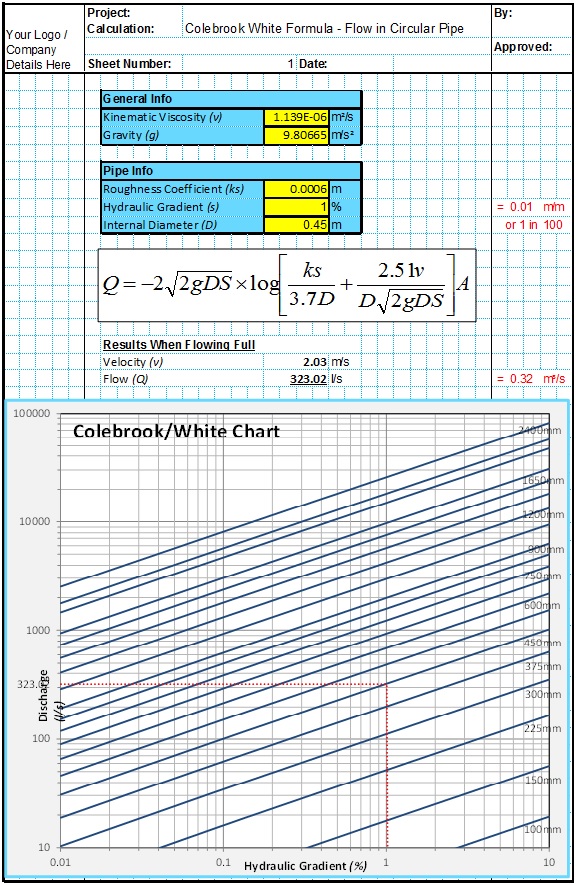
This spreadsheet uses the Colebrook-White and Manning Equations to calculate the flow capacity and velocity in pipes acting under gravity.
Find Out More
Buried Pipe Design Spreadsheet
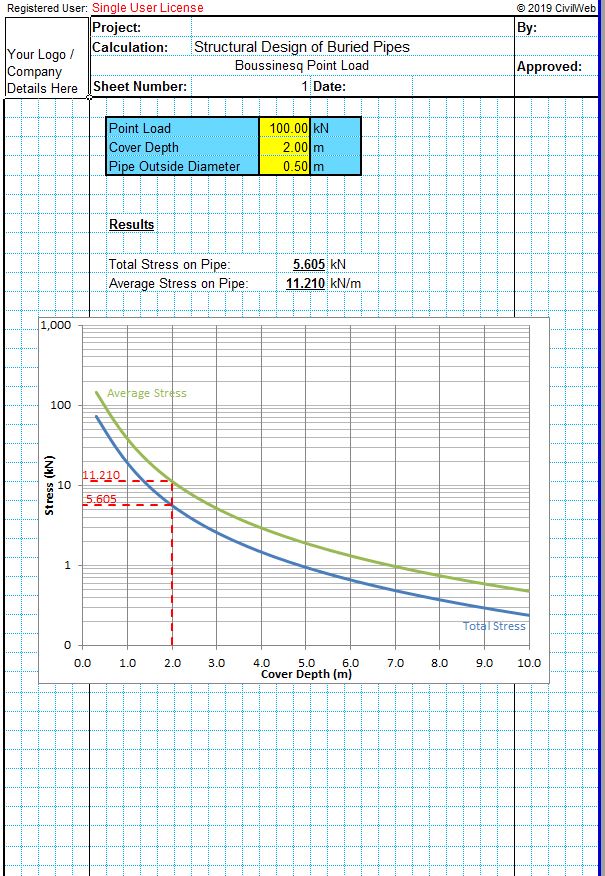
This spreadsheet can be used to design concrete, steel, plastic and other buried pipes in accordance with BS EN 1295-1.
Learn More
Manning Open Channel Design Spreadsheet
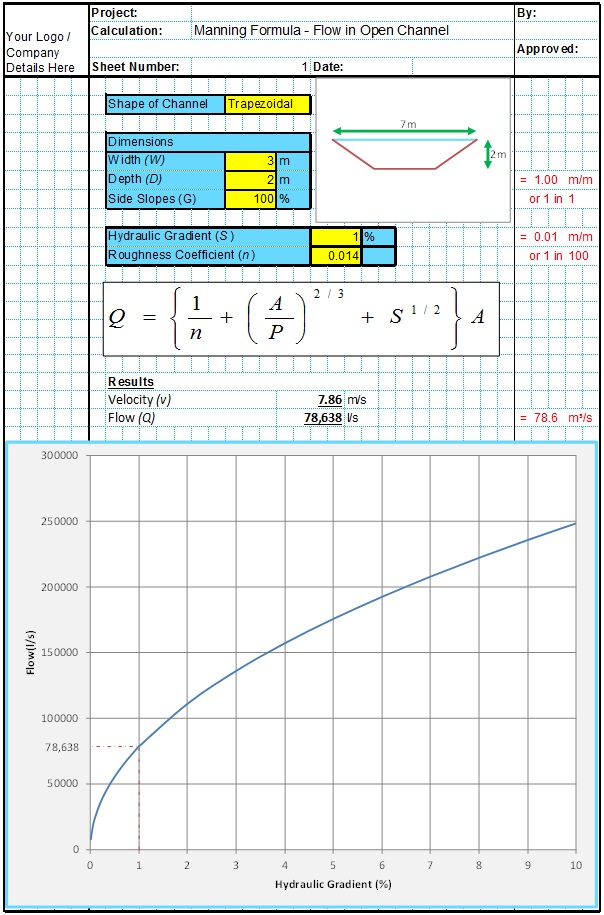
This spreadsheet uses the Manning formula to calculate the flow conditions in an open channel acting under gravity only.
Learn More
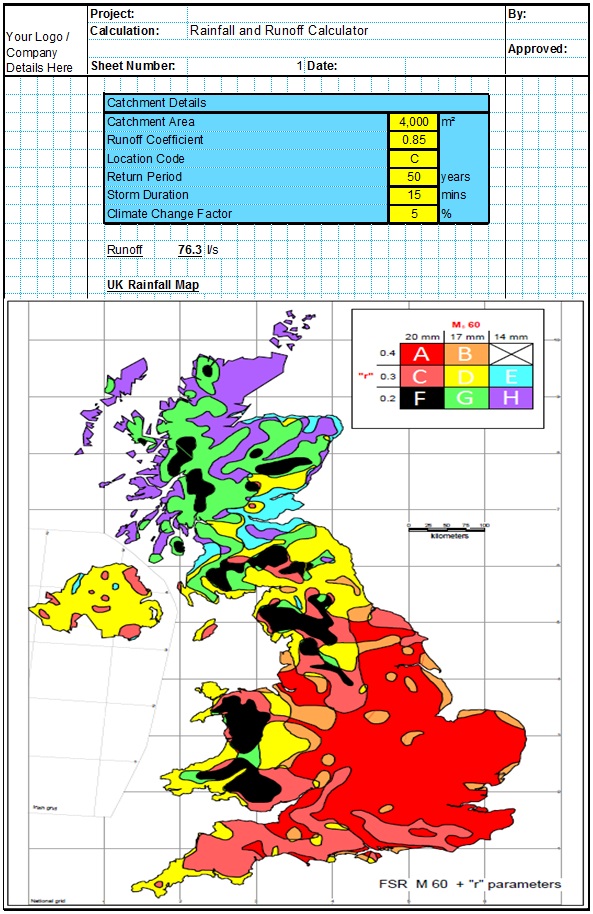
Runoff Calculator Spreadsheet
This spreadsheet calculates the design runoff flow for a site in accordance with the Flood Estimation Handbook.
Learn More
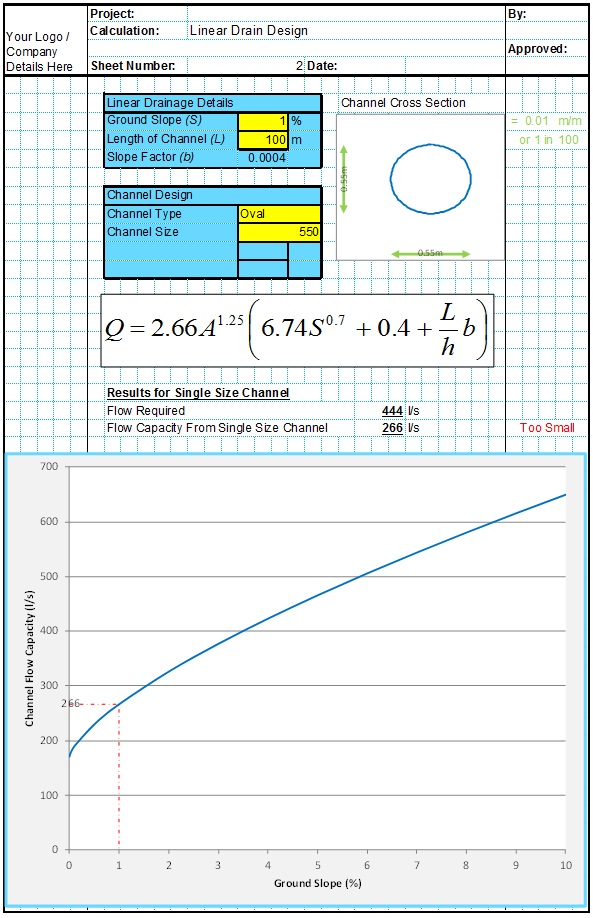
Linear Drainage Design Spreadsheet
This spreadsheet calculates the maximum flow from a specified linear drainage channel and checks whether the channel is sufficient for the specified site and storm conditions.
Learn More
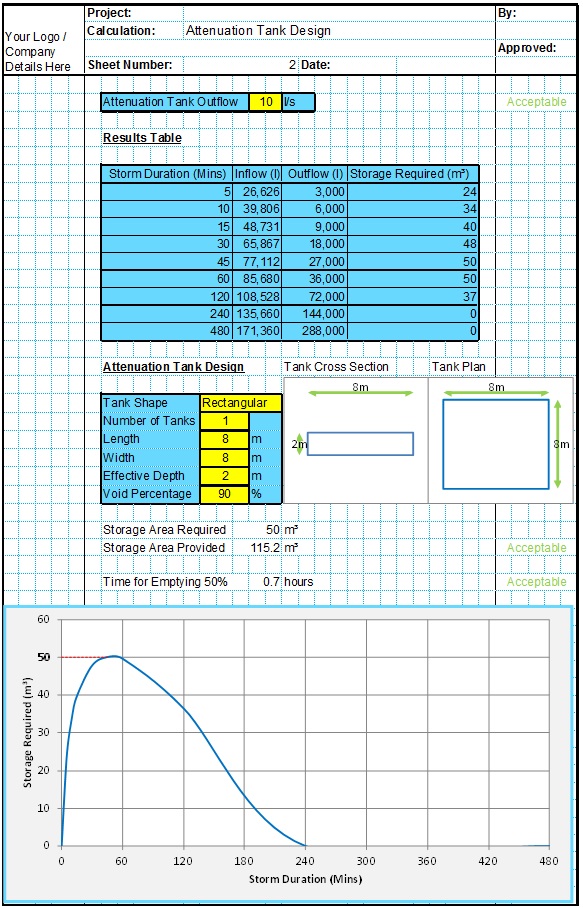
Attenuation Design Spreadsheet
This spreadsheet calculates the requirements for a attenuation system and assists the user to design a suitable system.
Learn More
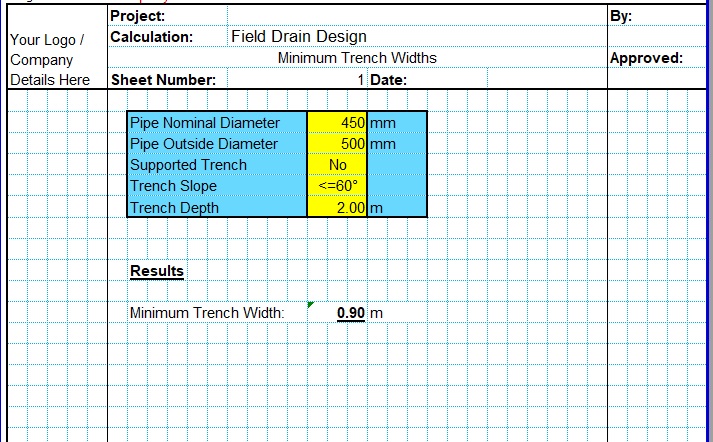
Field Drain Design Spreadsheet
This spreadsheet can be used to design field drains, typically subsurface drainage systems used to drain fields and open areas.
Learn More
Drainage Field Design Spreadsheet
This spreadsheet can be used to design septic infiltration systems known as drainage fields, leach fields or septic drain fields.
Learn More
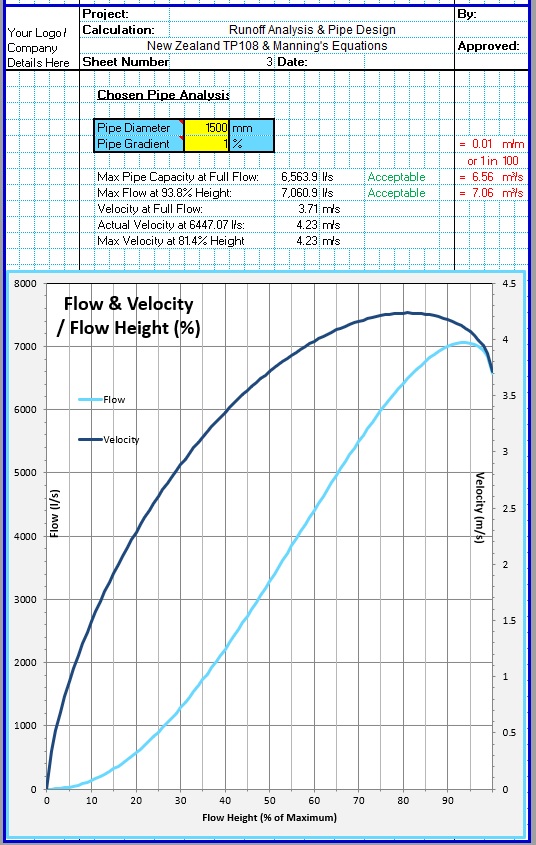
TP108 Spreadsheet
This spreadsheet calculates the rainfall for New Zealand catchments in accordance with TP108.
Learn More
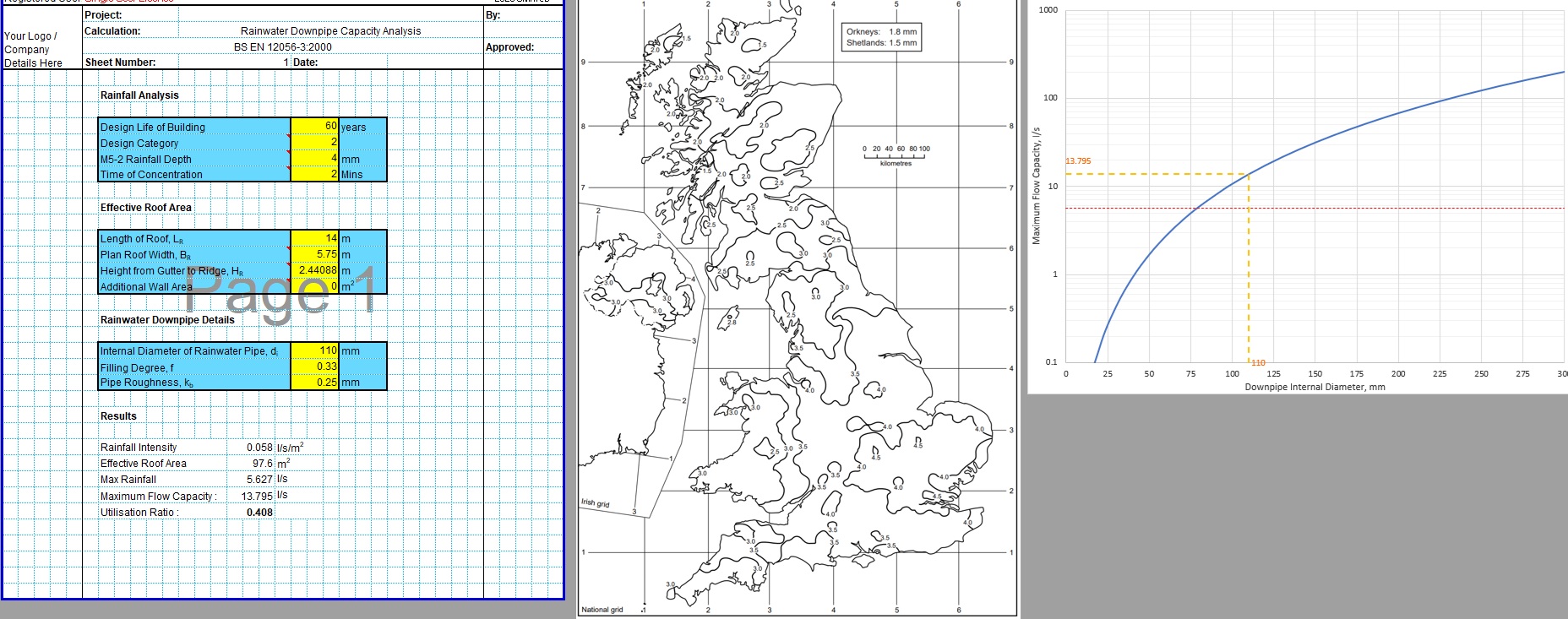
Roof Downpipe Calculator Spreadsheet
This spreadsheet calculates the size of roof drainage downpipes depending on the roof catchment and rainfall requirements.
Learn More
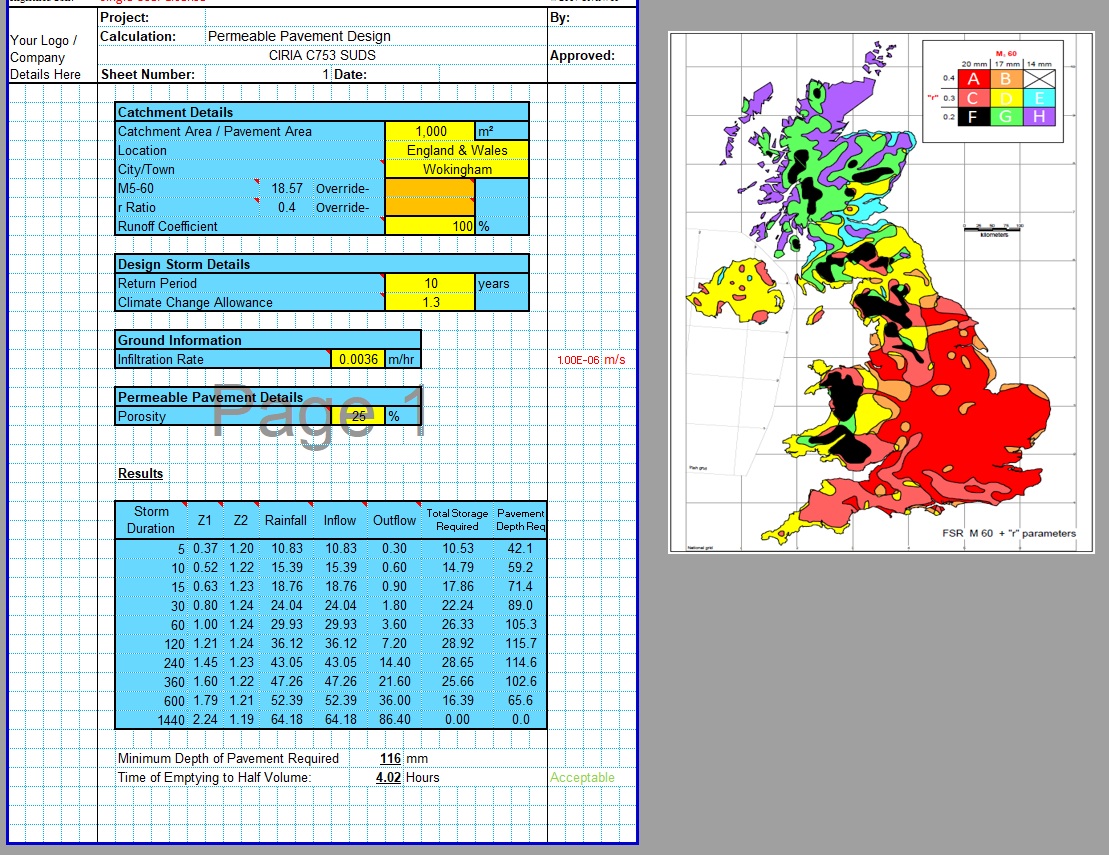
Permeable Pavement Design Spreadsheet
This spreadsheet is designed to determine the size and characteristics of permeable pavements.
Learn More
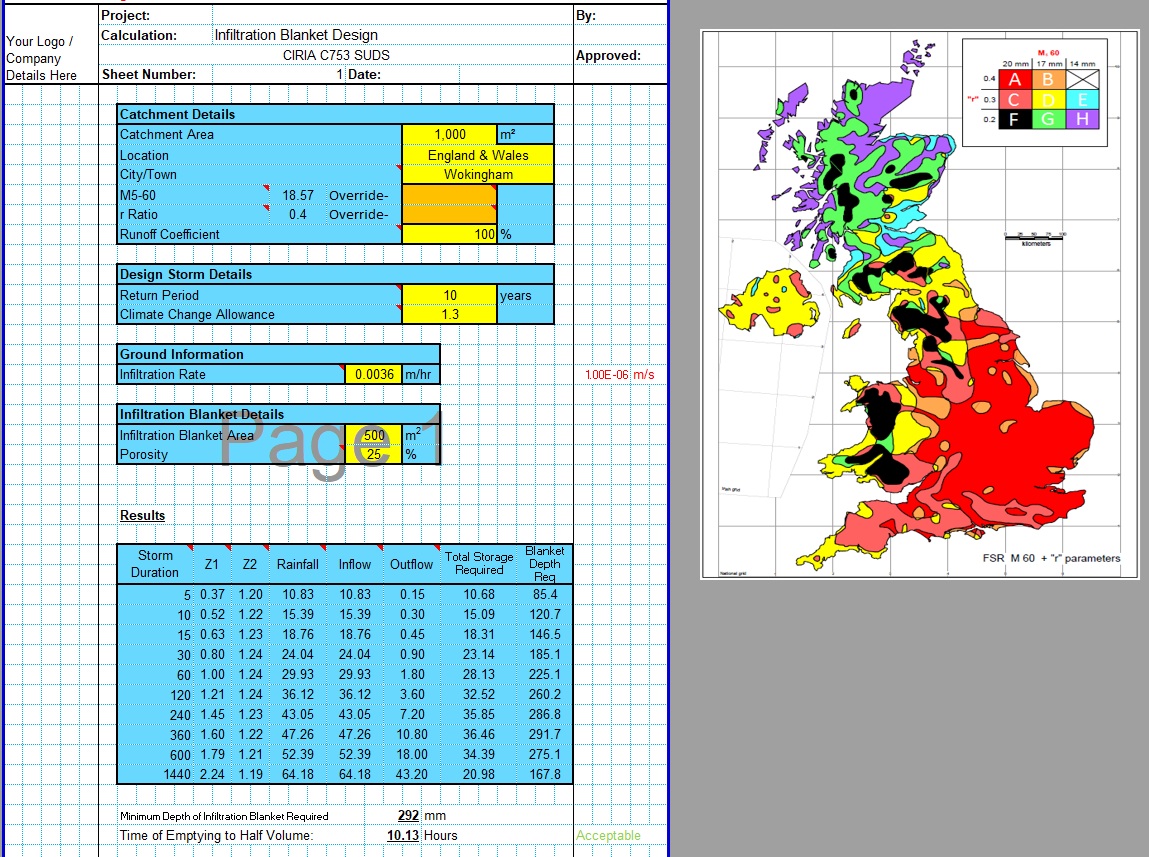
Infiltration Blanket Design Spreadsheet
This spreadsheet can be used to design thin depth infiltration systems, typically called infiltration blanket systems.
Learn More
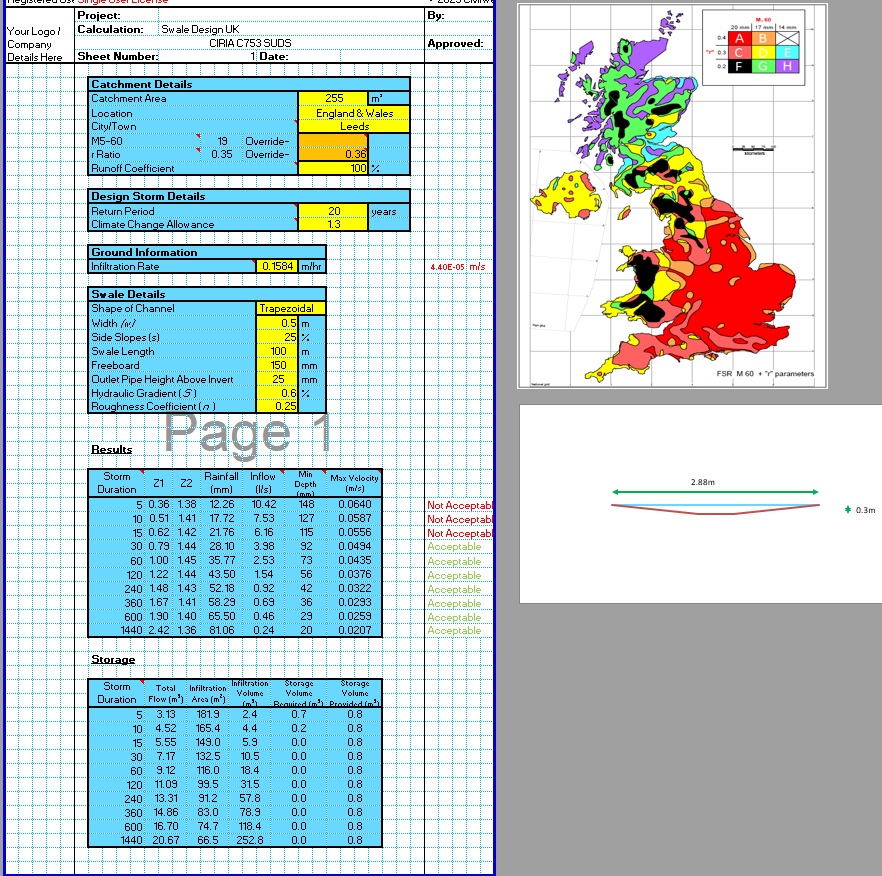
Swale Design Spreadsheet
This spreadsheet can be used to design swales. These linear grassed channels can be used both to convey, infiltrate and filter surface drainage runoff.
Learn More
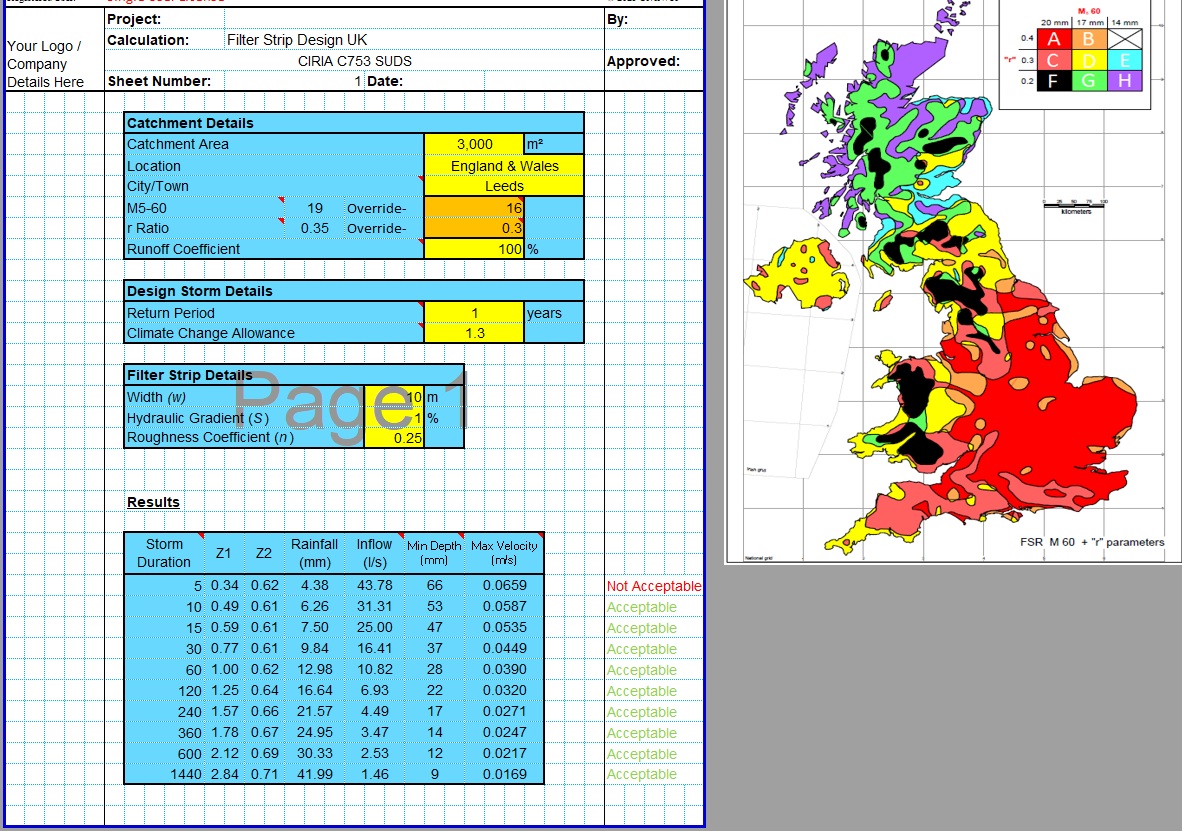
Filter Strip Design Spreadsheet
This spreadsheet is designed to analyse surface water filter strips and to determine the max flow depth and max flow velocity and determine whether they are in accordance with relevant standards.
Learn More
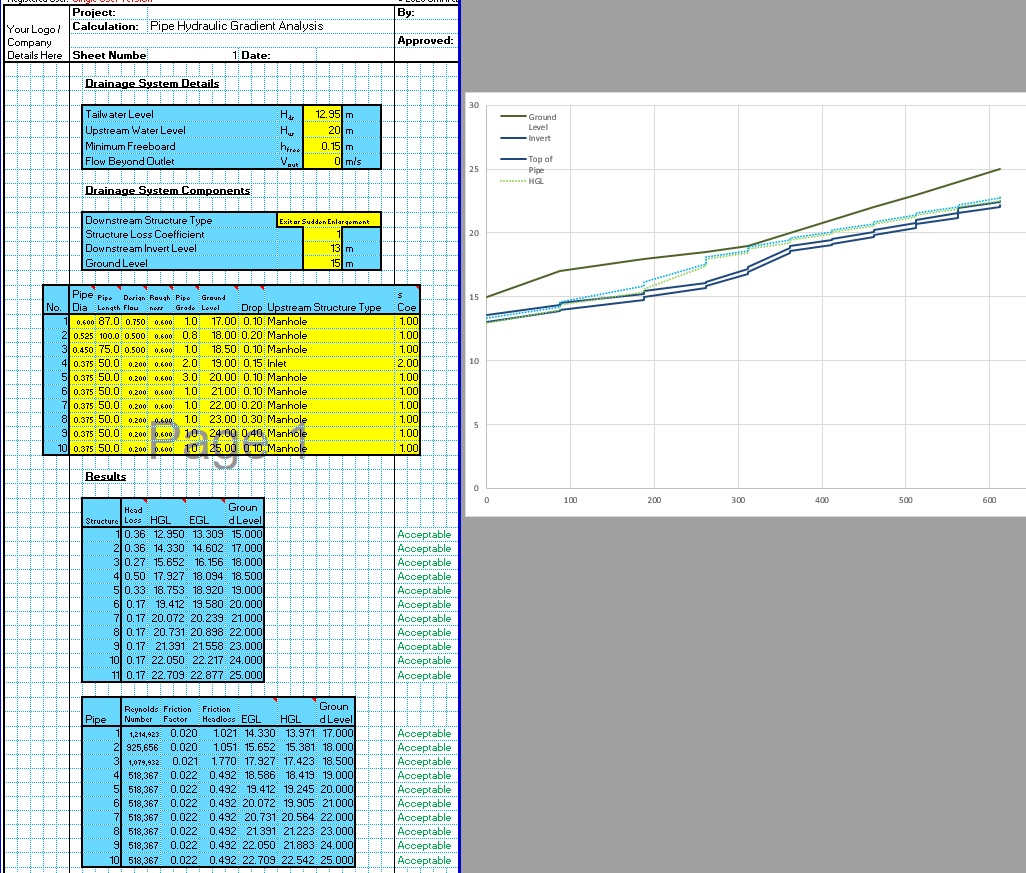
Hydraulic Gradient Analysis Spreadsheet
This spreadsheet analyses the hydraulic and energy grade lines for drainage systems with up to 10 drainage runs.
Learn More
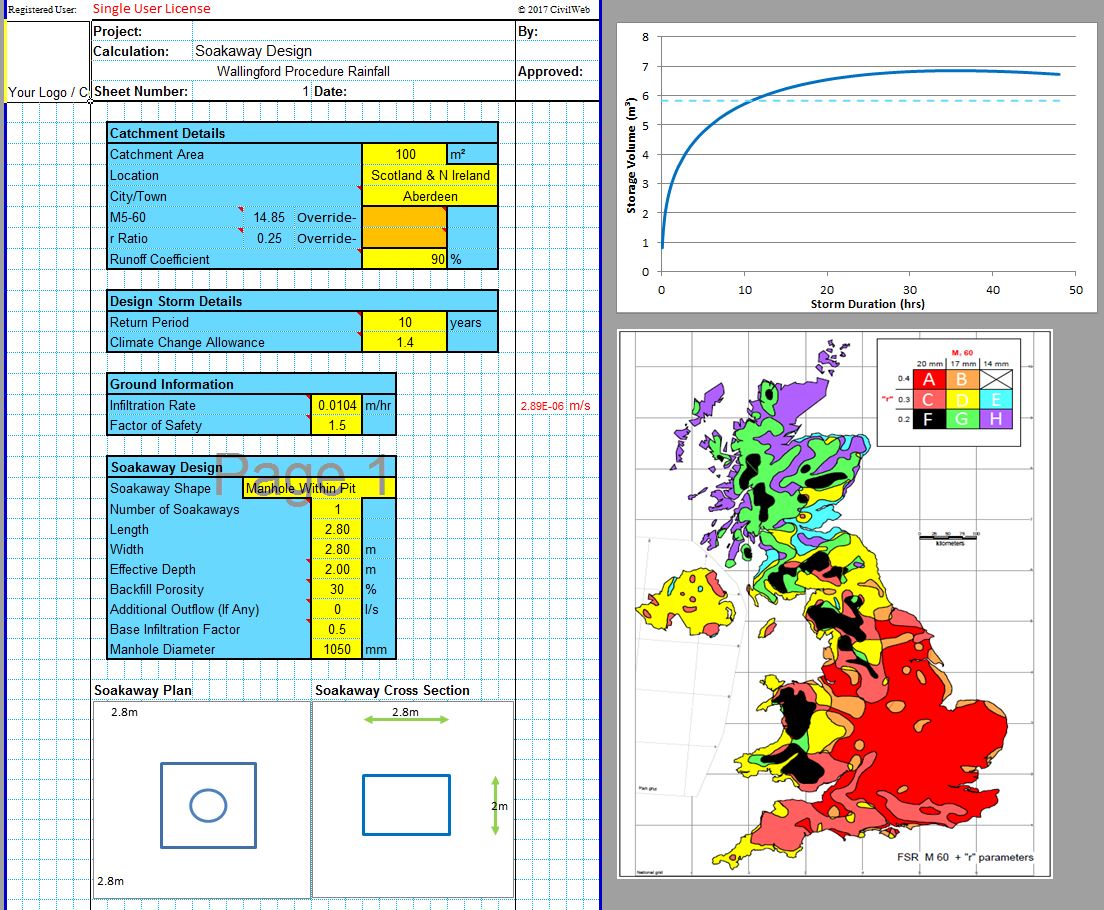
Soakaway Design Spreadsheet
This spreadsheet calculates the requirements for a soakaway system and assists the user to design a suitable system.
Learn More
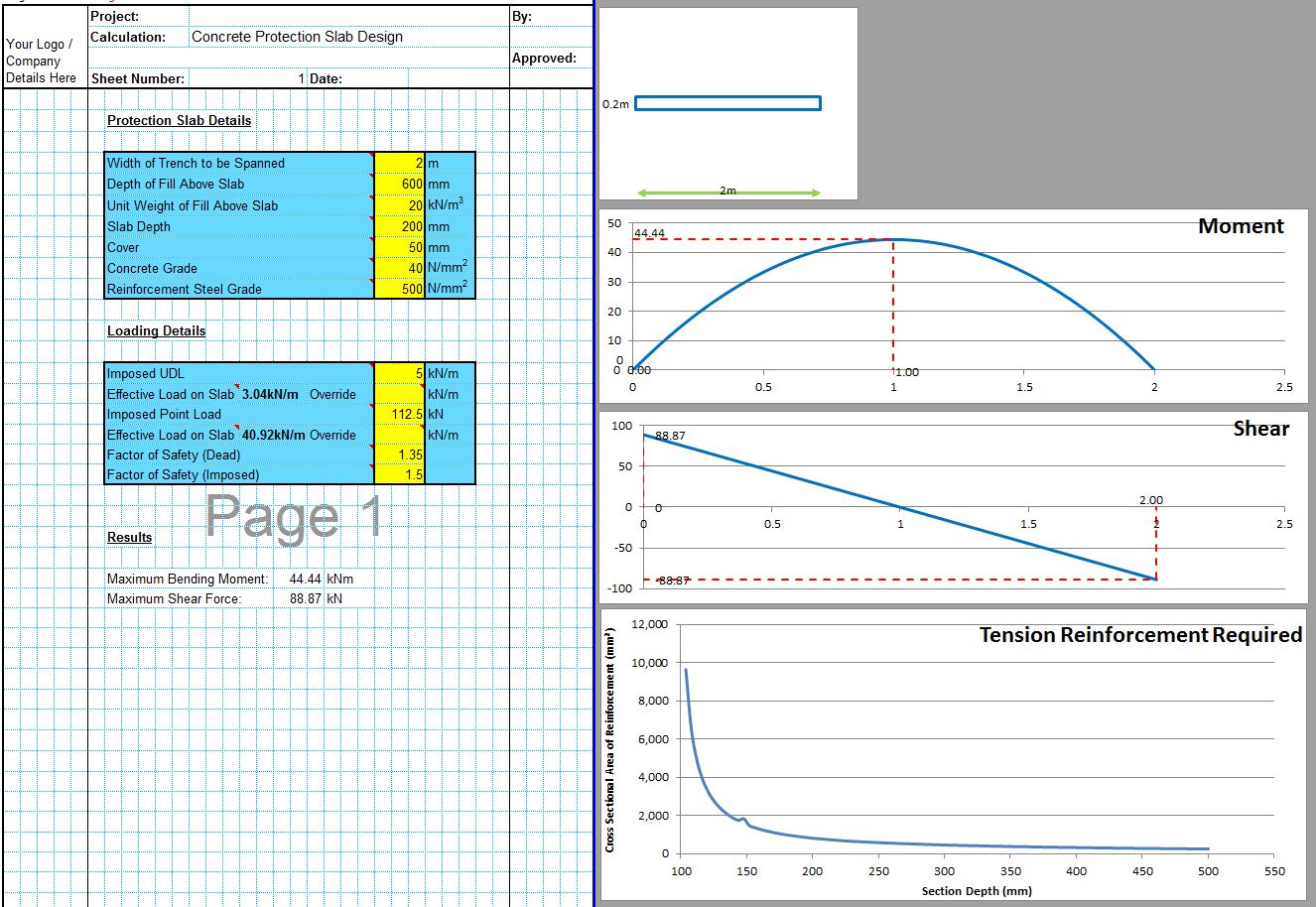
Concrete Protection Slab
This detailed design spreadsheet designs a protection slab commonly installed to protect shallow pipes.
Learn More
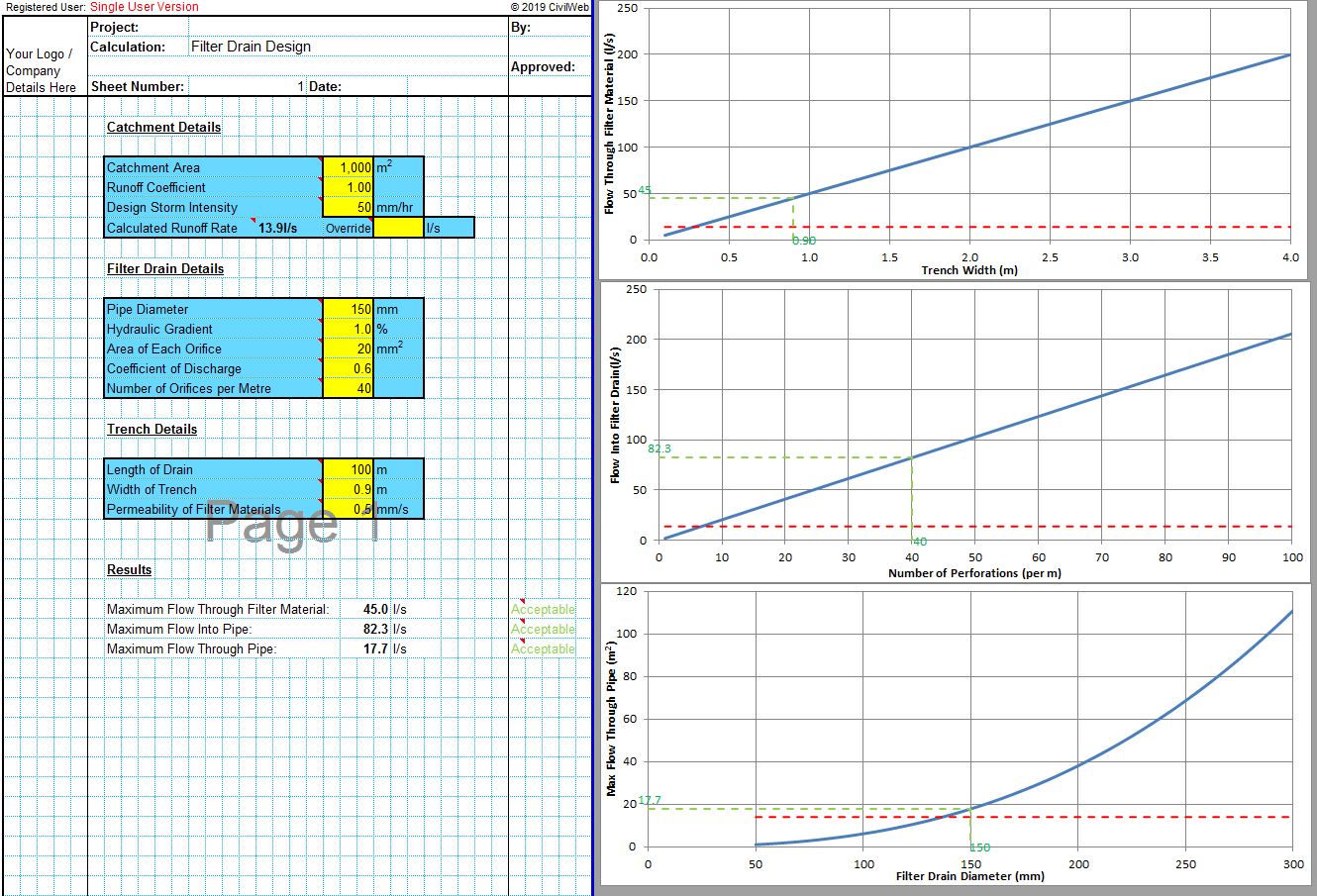
French Drain Design
This spreadsheet completes French Drain Design in accordance with the SUDS Manual.
Learn More
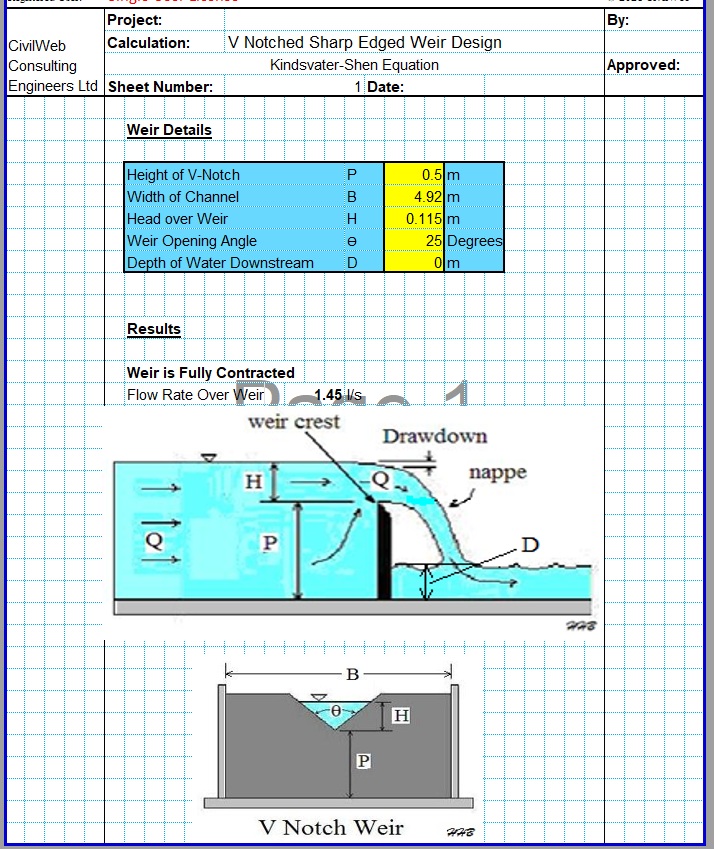
Sharp Crested Weir Flow Calculator Spreadsheets
This suite of 5 separate spreadsheets calculates the flow over sharp crested weirs of all shapes and sizes.
Learn More
Drainage Design Spreadsheet
This is the full suite of drainage design spreadsheets, available at a massive discount for only £49.99.