A field drain is a very common method of subsurface drainage of large areas, but the design of these systems is very often overlooked and seldom properly optimized. The CivilWeb Field Drain Design Spreadsheet allows the designer to quickly and accurately complete all the calculations for a properly designed and optimized field drainage system fully in accordance with the ADAS 345 design method.
The CivilWeb Field Drain Design Spreadsheet can be purchased lower down this page for only £19.99. Or why not buy our best value bundle? Our Full Drainage Design Spreadsheet Suite can be purchased at the bottom of this page for only £49.99. This suite includes all of our drainage design spreadsheets, more than 20, and represents an incredible saving of more than 85%.
What is a Field Drain?
A field drain is a subsurface or surface drainage system designed to remove excess water from agricultural land, construction sites, sports fields, or any area where waterlogging can damage soil structure or limit usability. At its core, a field drain helps maintain the right balance of soil moisture so crops grow better, machinery can operate safely, and land remains stable. Sometimes referred to as a land drain.
Field drains typically work by collecting water through perforated pipes, gravel-filled trenches, or open channels, then directing it to a ditch, watercourse, or soakaway. Effective drainage improves soil aeration, reduces compaction, prevents root diseases, and increases the overall productivity and resilience of the land.
Field drains are often arranged in a herringbone layout, though grid iron or parallel layouts are also often used.
Key benefits of properly designed field drains include:
- Improved Crop Yields – Reduced ponding and waterlogging will improve crop yields and increase the area available for planting
- Improved Germination – Better drainage will allow the soils to warm more quickly in the spring which will improve the conditions for germination
- Soil Organisms – Better drainage will improve the conditions in the soil for beneficial soil organisms
- Improve Plant Roots – Better drainage will improve access to oxygen and water for plant roots
- Mineral Nitrogen – Better drainage will improve the crops uptake of soil mineral nitrogen
- Access to Land – Reduced risk of waterlogging and increased accessibility of land following wet weather periods. Particular attention should be given to access areas where even a small area of ponding can prevent access to a large area of land.
- Extended Growing/Grazing Season – Better drainage will extend the growing and grazing season as the land will be available earlier and for longer
- Improved Efficiency – Reduced waterlogging will improve the efficiency of a number of operations by reducing fuel use and reducing wear and tear on plant and equipment
- Improved Soil Structure – Less waterlogging will improve the soil structure and reduce structural damage to the soils during wet weather
- Reduced Erosion – By reducing the occurrence of ponding and waterlogging the risk of soil erosion from surface water can be reduced or eliminated
- Reduced Phosphorus and Pesticide Loss – Less waterlogging will reduce the loss of pesticides and phosphorus to surface water
- Slug & Snail Activity – Reduced waterlogging will reduce the potential for slug activity, reducing the reliance on metaldehyde. This will also reduce the risk of snails carrying liver fluke.
- Parasitic Larvae – Reduced waterlogging will reduce the activity of parasitic larvae.
- Improve Livestock Hygiene – Less waterlogging will improve the conditions for livestock by reducing the risk of footrot and improving udder hygiene
The maintenance requirements of field drain systems also needs careful consideration prior to installing any new system.
Common Field Drain Designs
Field drain design varies depending on soil type, land slope, rainfall patterns, and the intended use of the land. Several established methods are widely used:
- Lateral Pipe Drainage Systems — Perforated pipes laid in trenches, typically surrounded by gravel or aggregate. Ideal for clay soils or areas with persistent waterlogging. Pipe spacing and depth are calculated based on soil permeability and drainage goals.
- Mole Drainage — A cost-effective method for heavy clay soils. A mole plough creates unlined channels that allow water to flow toward a collector drain. Best suited for soils that can hold the shape of the channel.
- Subsoiling - A method of soil improvement which improves the soil structure and drainage through the soils. Waterlogged soils are easily damaged by plant and livestock and subsoiling can help to restore better soil structure.
Each method has its own design considerations—pipe diameter, trench depth, gradient, soil infiltration rate, and expected flow volumes all influence the final layout. Typical land drain details.
How does the CivilWeb Field Drain Design Spreadsheet work?
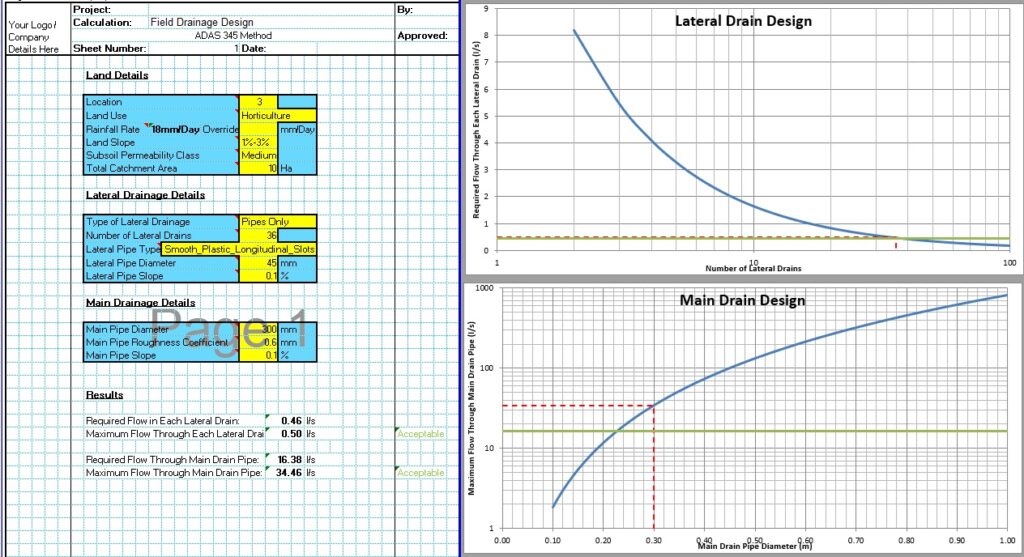
The spreadsheet uses the ADAS 345 method to design and analyze the field drain design.
The CivilWeb spreadsheet requires the below inputs;
- Design Rainfall Rate - ADAS 345 includes typical rainfall information for England and Wales split into 68 climactic regions. These tools are included in the design guide companion which comes with the purchased version of the spreadsheet. The spreadsheet allows the user to input the appropriate climactic region and the type of farmland which produces a daily rainfall rate taken from tables from ADAS 345. Alternatively the designer may override these standard inputs if better rainfall information is available either from a separate rainfall analysis tool such as the CivilWeb Rainfall & Runoff Calculator or from site specific data.
- Drainflow Factor - Once the design rainfall rate has been determined next the drainflow factor is calculated. This factor allows for the rainfall which will be absorbed by the soil and vegetation or runoff the field rather than flowing through to the field drains. This factor depends on the proposed drainage system, land use, slope and the permeability of the soil.
- Design Flow Rate - The design flow rate for each field drain is now calculated from the rainfall rate, drainflow factor and catchment area.
- Lateral Field Drain Diameter - The required field drain diameter can now be determined. ADAS 345 includes a number of empirically derived design graphs showing the hydraulic capacities of four different types of field drains (clayware pipes, smooth plastic pipes with longitudinal slots, smooth plastic pipes with transverse slots and corrugated plastic pipes). These charts are included in the spreadsheets design guide. The CivilWeb spreadsheet allows the used to choose any type and size of pipe from the standard and determines the estimated hydraulic capacity at any gradient. This is then compared with the required design flow rate calculated above to determine whether the pipe chosen is adequate.
- Main Drain Diameter - When the lateral inflow pipes have been designed next the main pipe run diameter can be determined. The ADAS 345 method recommends using the Colebrook White equation as per normal drain pipe design which is generally considered acceptable even when the main run is also perforated to allow inflow from the surrounding soils. The CivilWeb spreadsheet uses the Colebrook-White equation to determine the size of pipe required.
In some cases this simple Colebrook-White evaluation may not be suitable such as for non-circular pipe sections, pipes with expected sedimentation or where the water velocity is also a consideration. In these cases a separate flow calculator such as the CivilWeb Pipe Flow Calculator can be used to give a more detailed hydraulic analysis.
Why Use a Field Drain Design Spreadsheet?
A field drain design spreadsheet brings accuracy, consistency, and efficiency to the file drain design process. Instead of relying on manual calculations or rough estimates, a spreadsheet helps you model the system based on real data and engineering principles.
Advantages include:
- Automated calculations for pipe sizing, spacing, gradients, and flow rates
- Built‑in formulas that reduce human error and speed up design work
- Scenario testing, allowing you to compare different layouts or soil conditions quickly without repetitive hand calculations or approximations
- Documentation and traceability, useful for regulatory compliance or long-term maintenance
For farmers, engineers, and land managers, a well‑designed spreadsheet becomes a practical tool that supports better decision‑making and ensures the drainage system performs as intended.
Get Started Today
Save hours of repetitive calculation time. Whether you’re working on a major project or a small land drainage problem, this tool will give you clarity, accuracy, and confidence.
Buy the CivilWeb Field Drain Design Spreadsheet now for only £19.99.
Or alternatively big savings are available with our French Drain and Field Drain design bundle. Get both spreadsheets for only £29.99.
Or why not bundle with the CivilWeb French Drain Design spreadsheet for only £10 extra?
Or save £50+ by buying our full Drainage Design Suite including all our drainage design spreadsheets.
Free Trial Version
Why not try the fully functional free trial version of this spreadsheet?
PIPE FLOW CALCULATOR
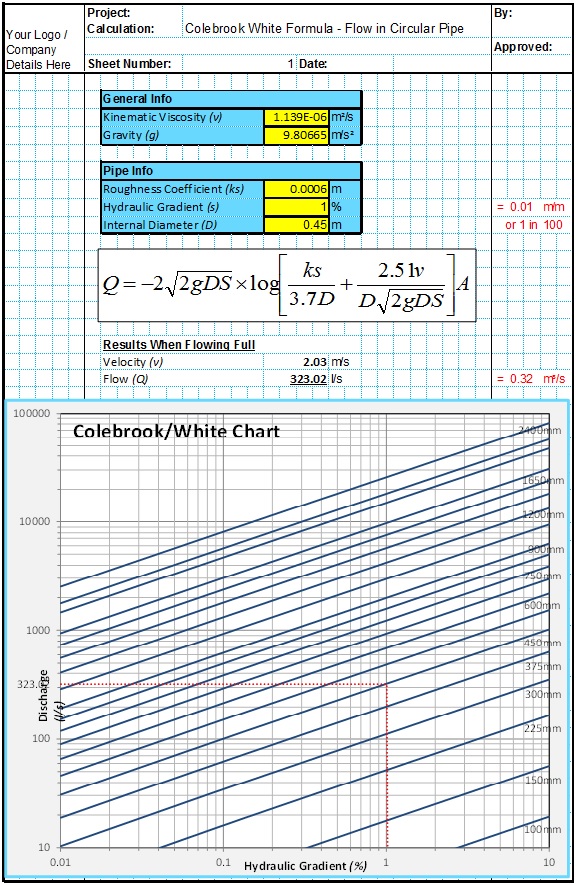
This spreadsheet uses the Colebrook-White and Manning Equations to calculate the flow capacity and velocity in pipes acting under gravity.
Find Out More
Buried Pipe Design Spreadsheet
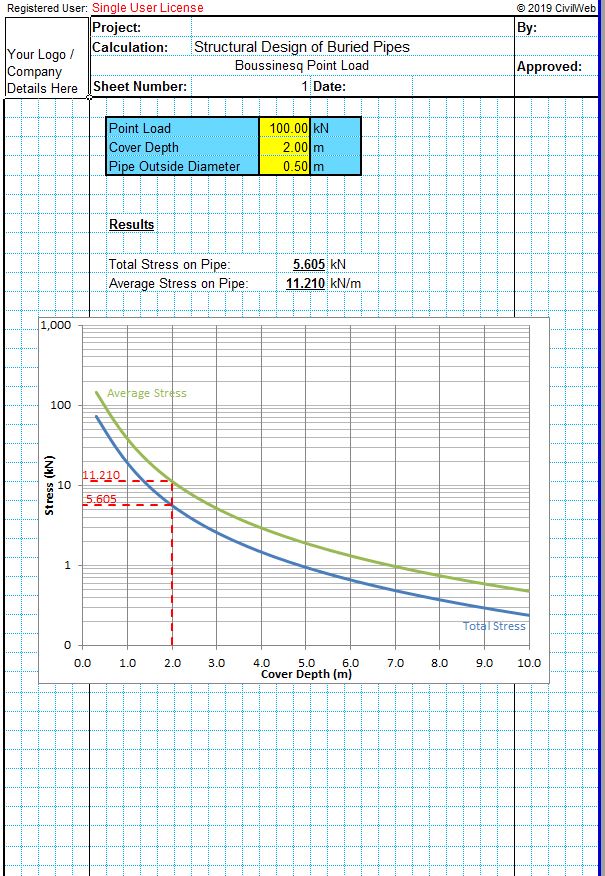
This spreadsheet can be used to design concrete, steel, plastic and other buried pipes in accordance with BS EN 1295-1.
Learn More
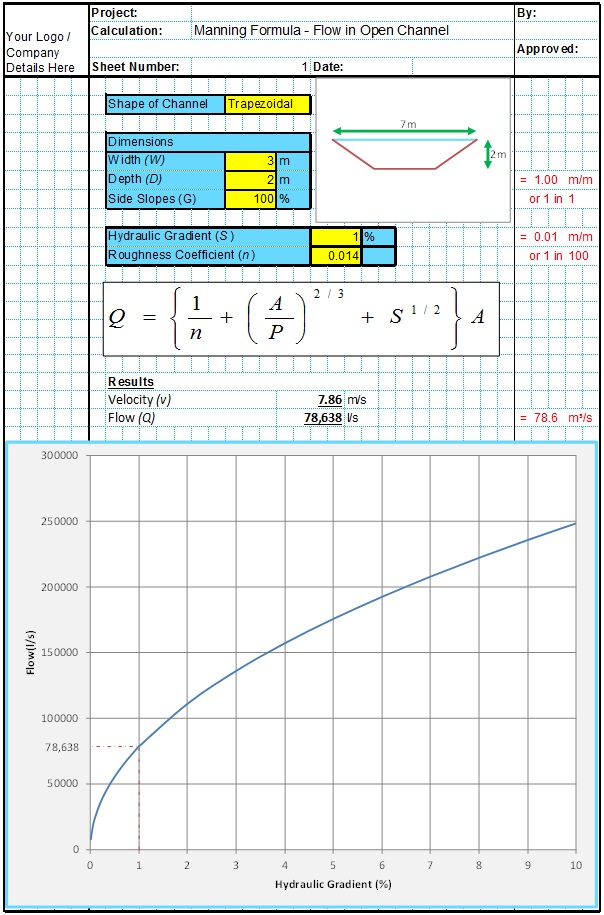
Manning Open Channel Design Spreadsheet
This spreadsheet uses the Manning formula to calculate the flow conditions in an open channel acting under gravity only.
Learn More
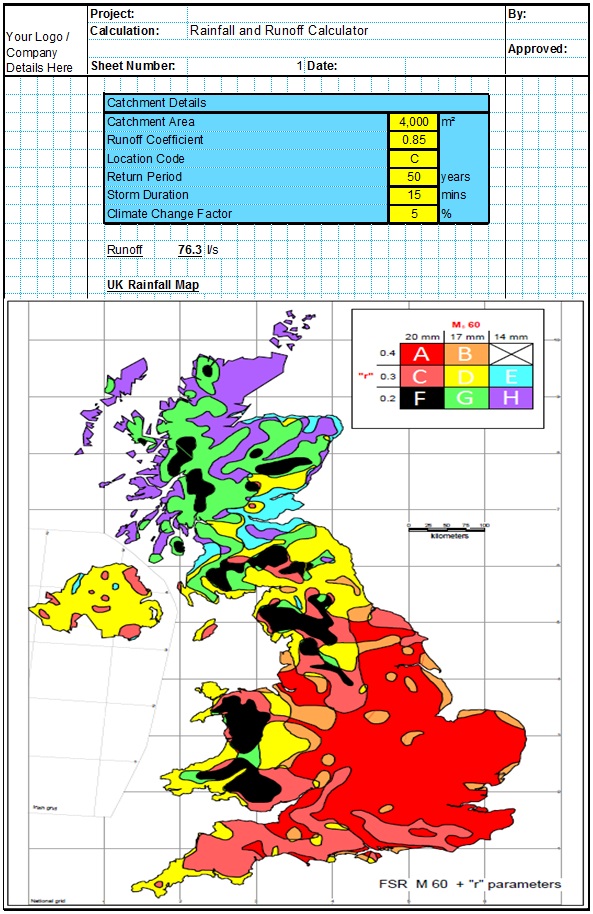
Runoff Calculator Spreadsheet
This spreadsheet calculates the design runoff flow for a site in accordance with the Flood Estimation Handbook.
Learn More
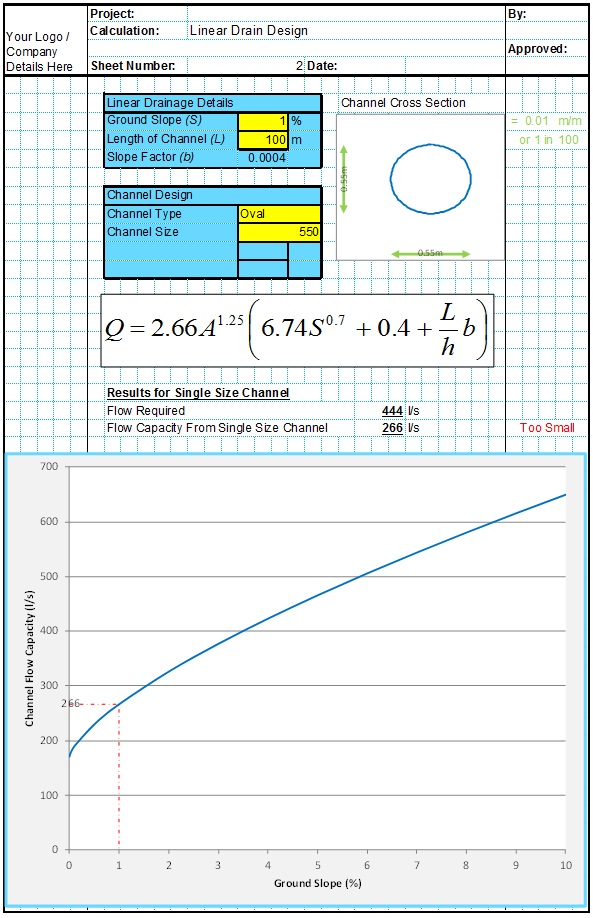
Linear Drainage Design Spreadsheet
This spreadsheet calculates the maximum flow from a specified linear drainage channel and checks whether the channel is sufficient for the specified site and storm conditions.
Learn More
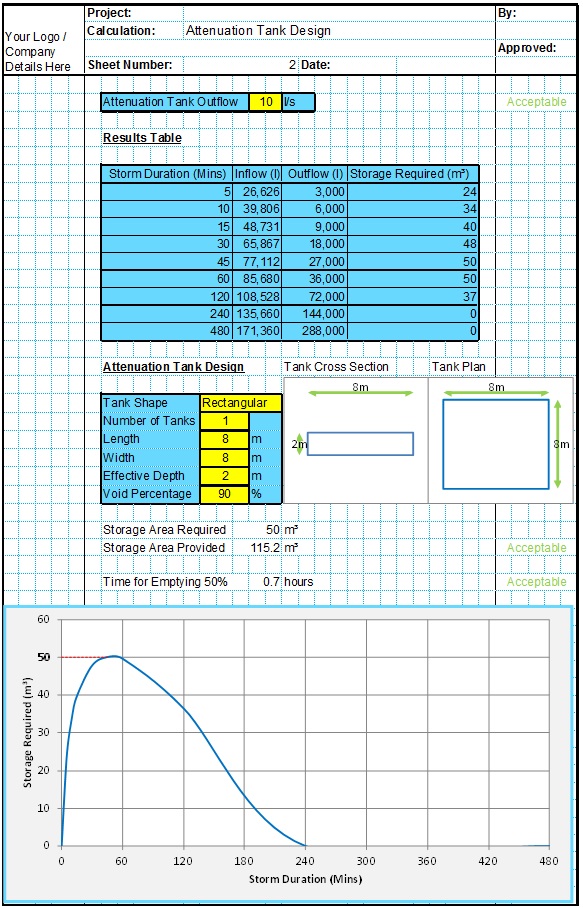
Attenuation Design Spreadsheet
This spreadsheet calculates the requirements for a attenuation system and assists the user to design a suitable system.
Learn More
Field Drain Design Spreadsheet
This spreadsheet can be used to design field drains, typically subsurface drainage systems used to drain fields and open areas.
Learn More
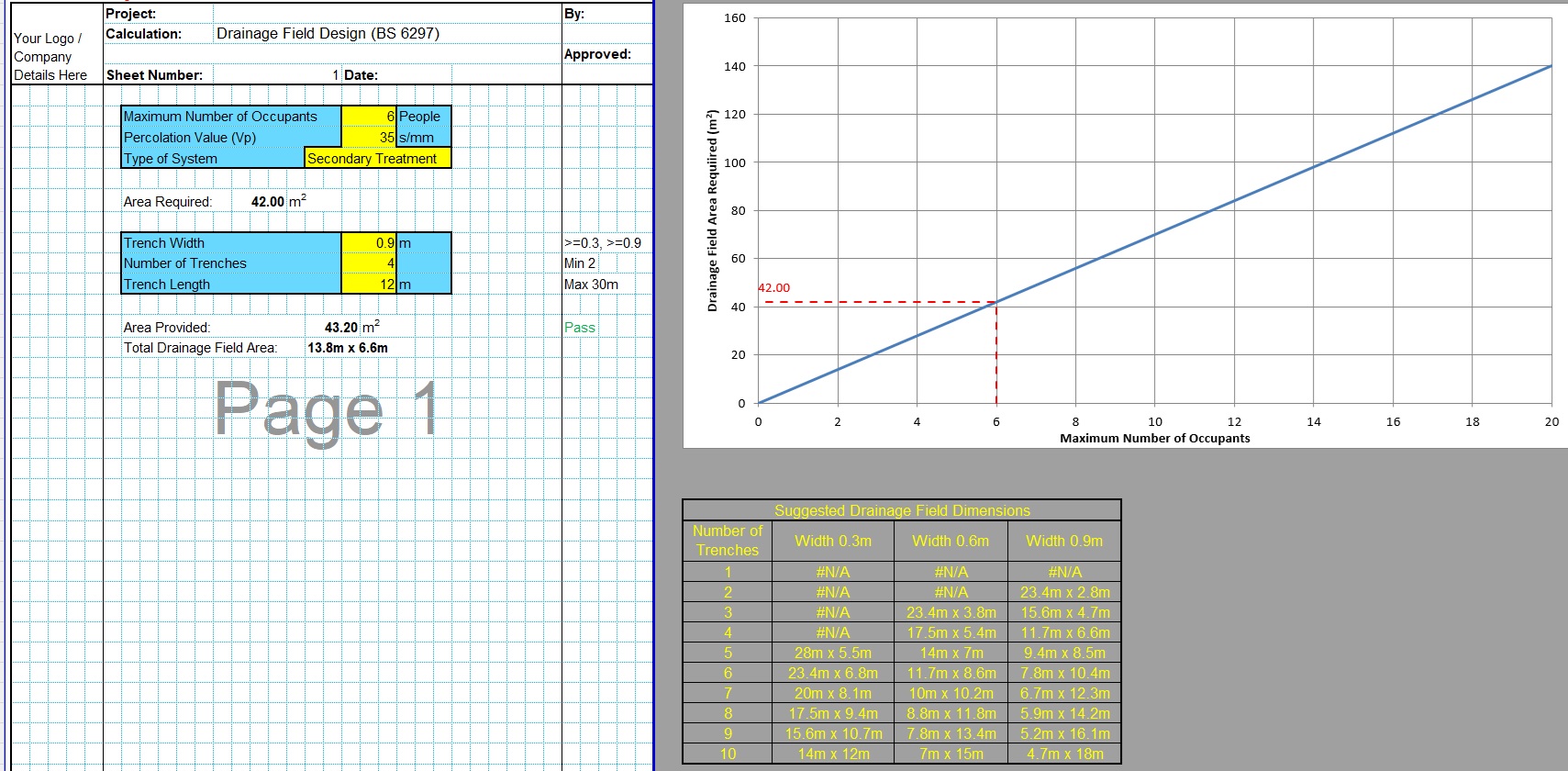
Drainage Field Design Spreadsheet
This spreadsheet can be used to design septic infiltration systems known as drainage fields, leach fields or septic drain fields.
Learn More
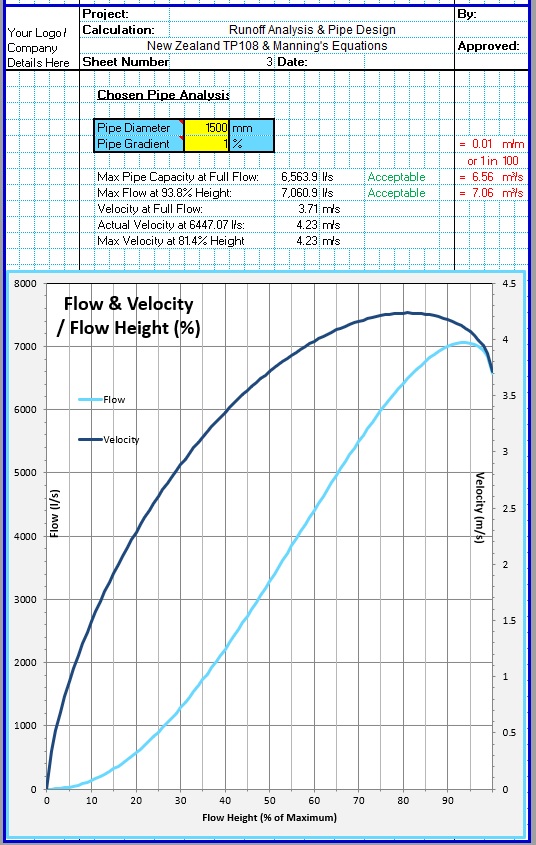
TP108 Spreadsheet
This spreadsheet calculates the rainfall for New Zealand catchments in accordance with TP108.
Learn More
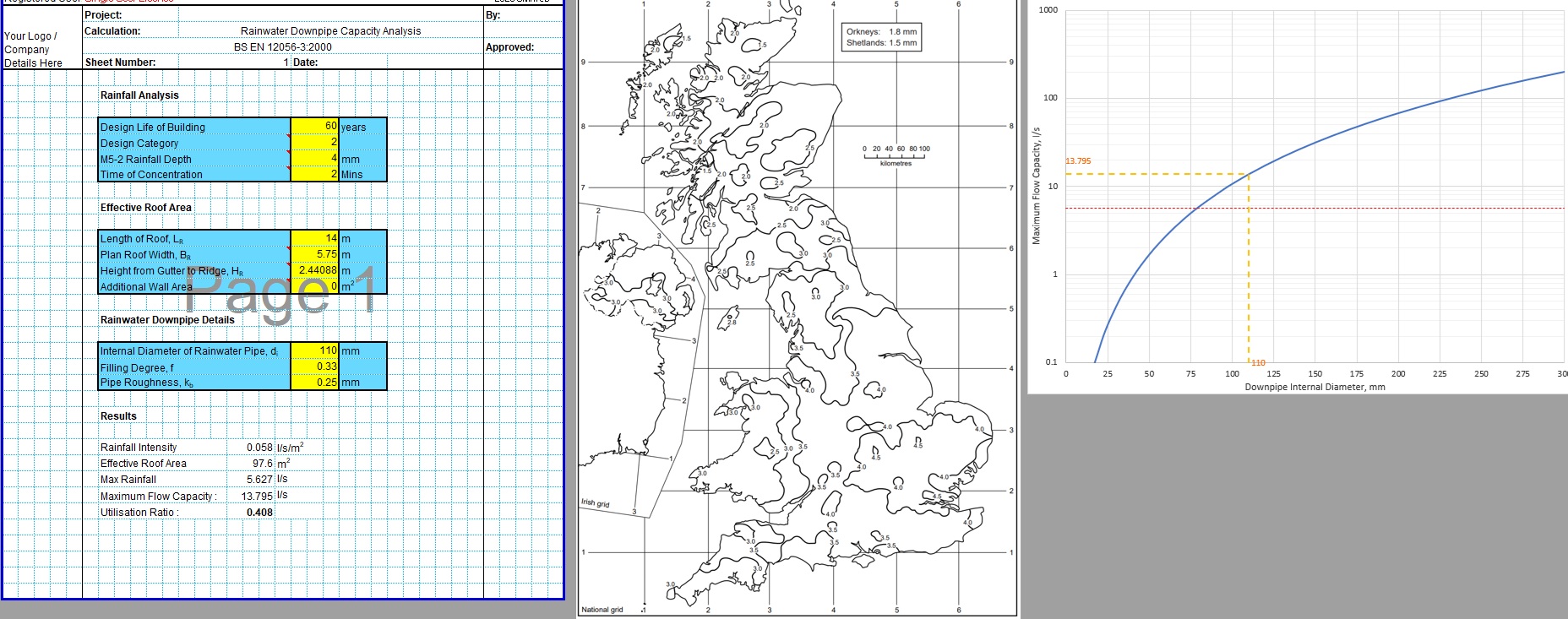
Roof Downpipe Calculator Spreadsheet
This spreadsheet calculates the size of roof drainage downpipes depending on the roof catchment and rainfall requirements.
Learn More
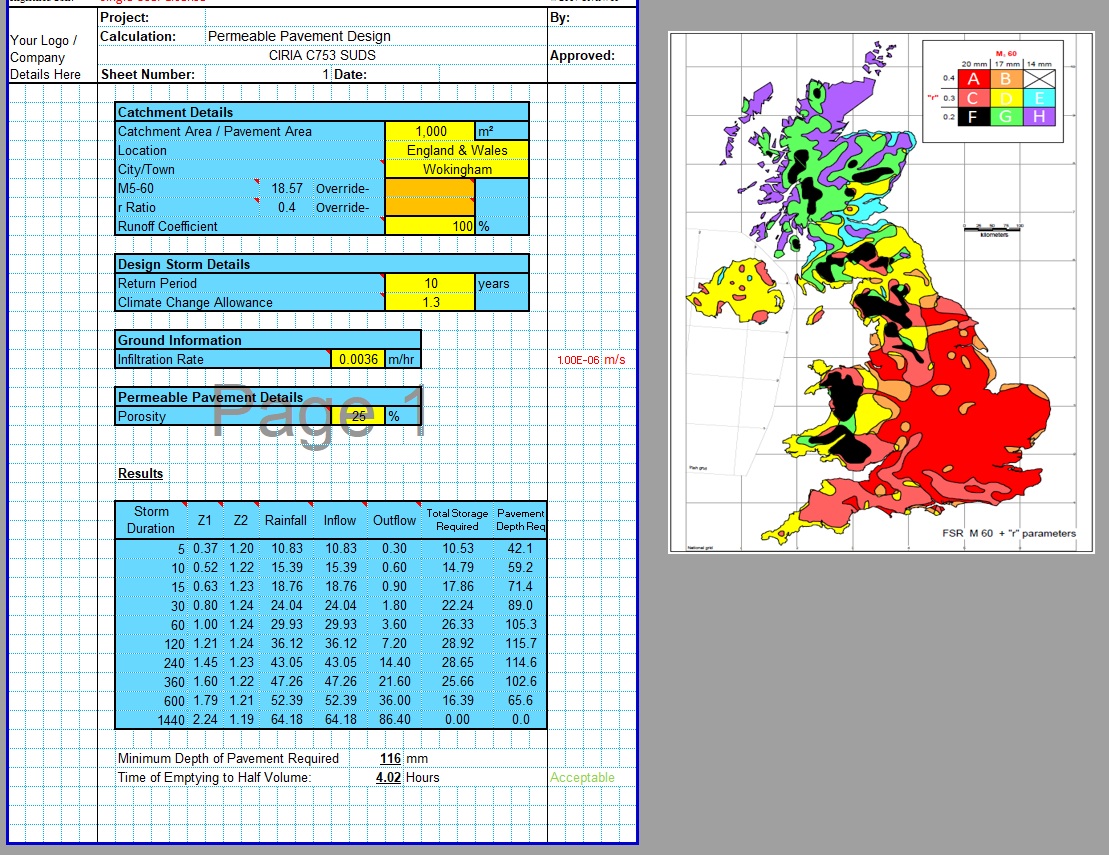
Permeable Pavement Design Spreadsheet
This spreadsheet is designed to determine the size and characteristics of permeable pavements.
Learn More
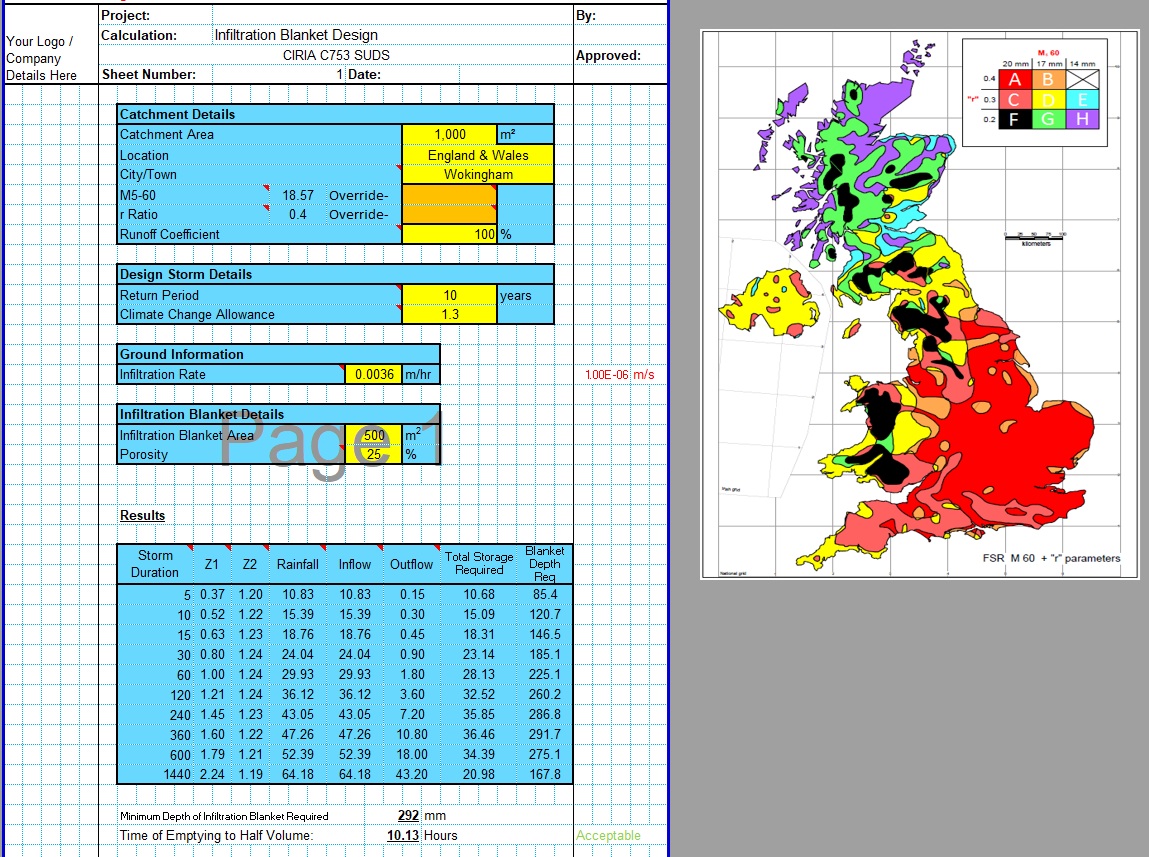
Infiltration Blanket Design Spreadsheet
This spreadsheet can be used to design thin depth infiltration systems, typically called infiltration blanket systems.
Learn More
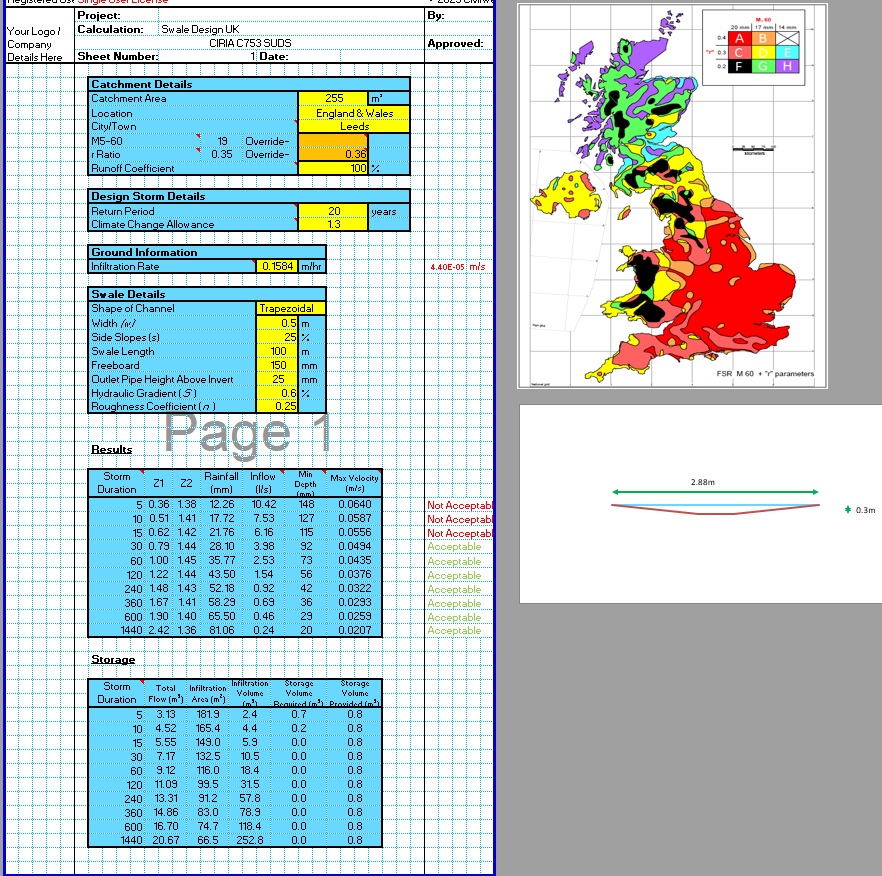
Swale Design Spreadsheet
This spreadsheet can be used to design swales. These linear grassed channels can be used both to convey, infiltrate and filter surface drainage runoff.
Learn More
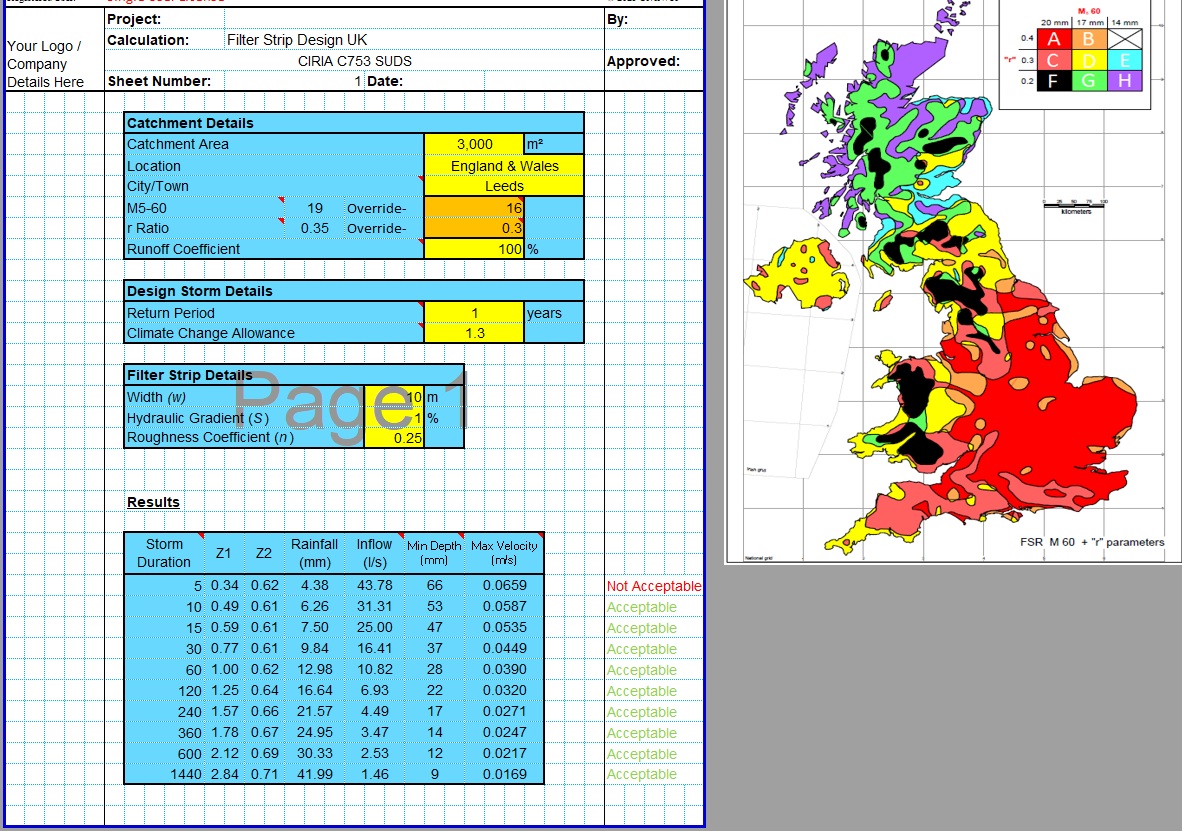
Filter Strip Design Spreadsheet
This spreadsheet is designed to analyse surface water filter strips and to determine the max flow depth and max flow velocity and determine whether they are in accordance with relevant standards.
Learn More
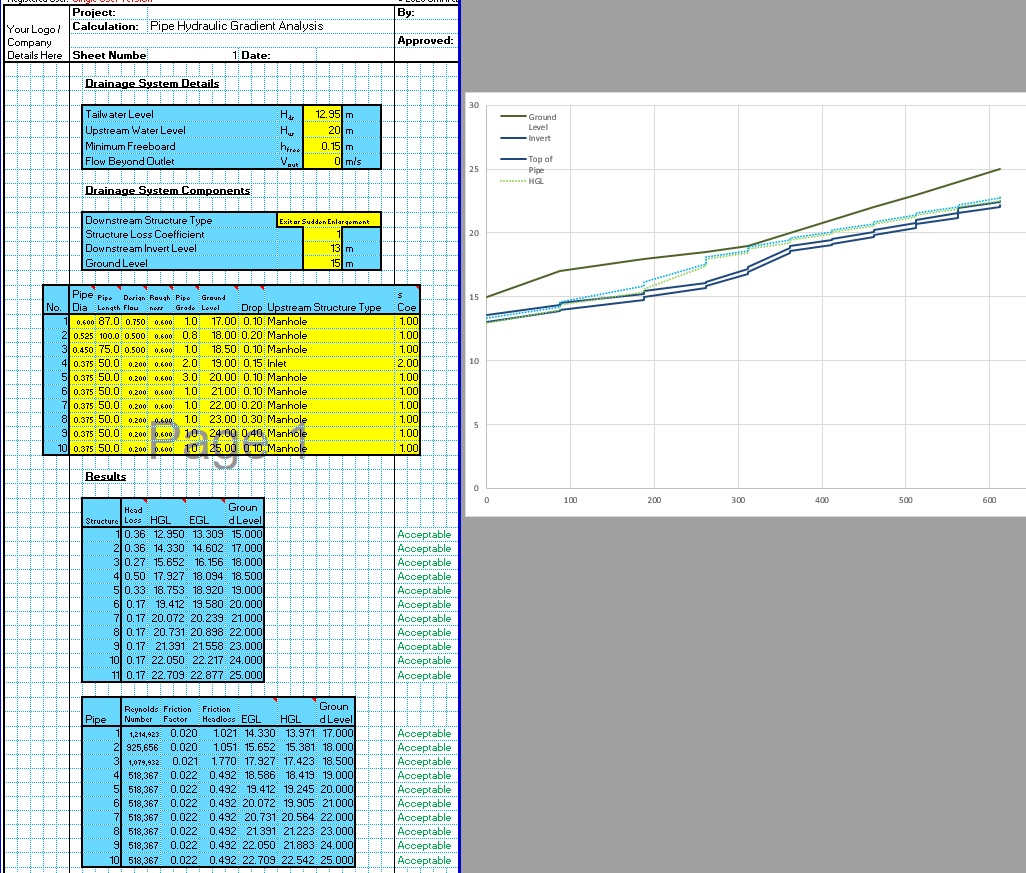
Hydraulic Gradient Analysis Spreadsheet
This spreadsheet analyses the hydraulic and energy grade lines for drainage systems with up to 10 drainage runs.
Learn More
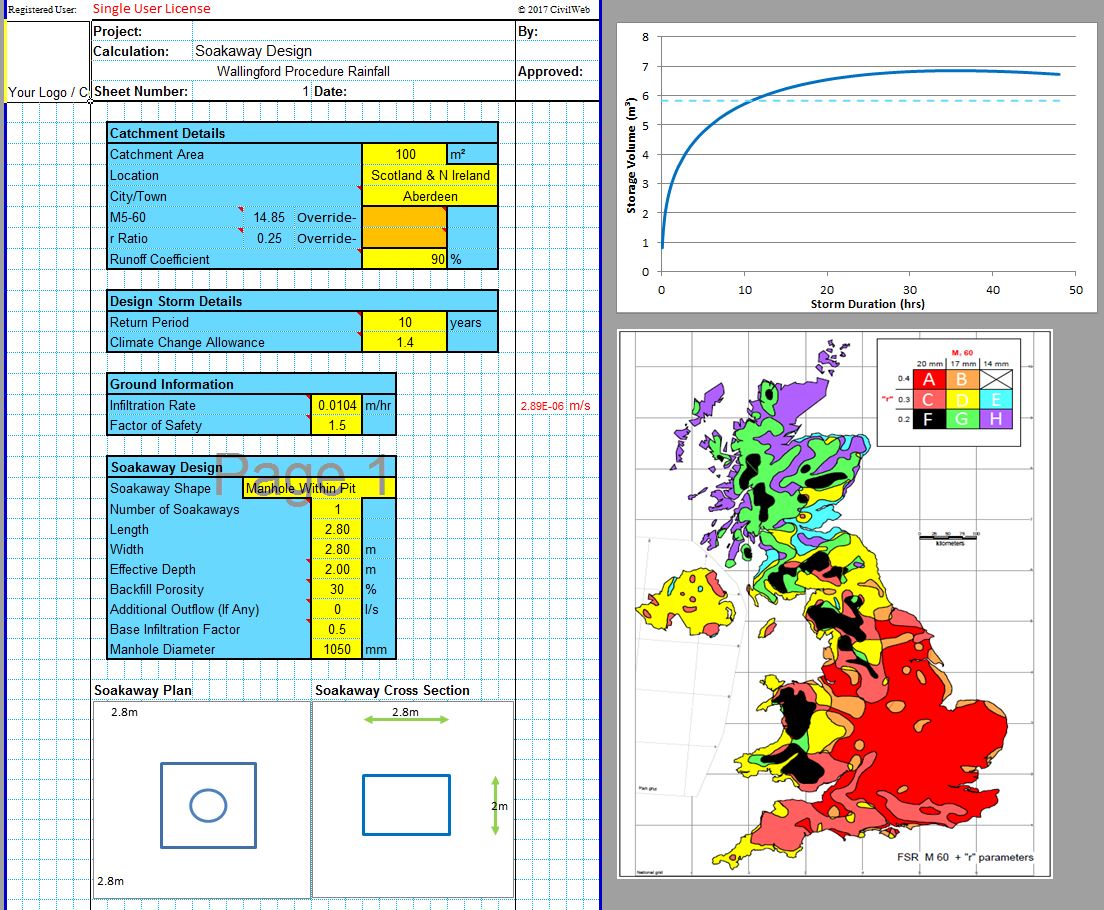
Soakaway Design Spreadsheet
This spreadsheet calculates the requirements for a soakaway system and assists the user to design a suitable system.
Learn More
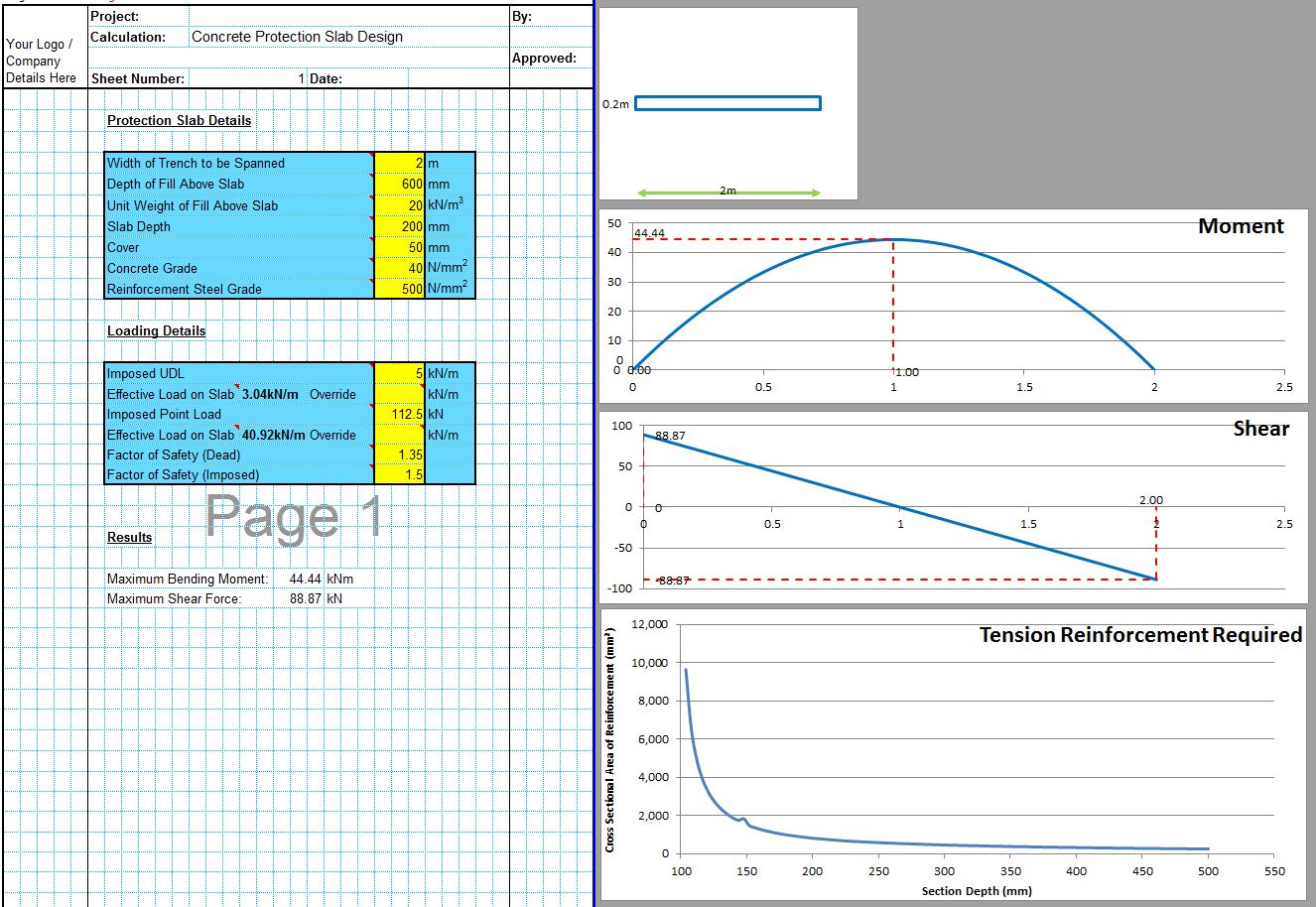
Concrete Protection Slab
This detailed design spreadsheet designs a protection slab commonly installed to protect shallow pipes.
Learn More
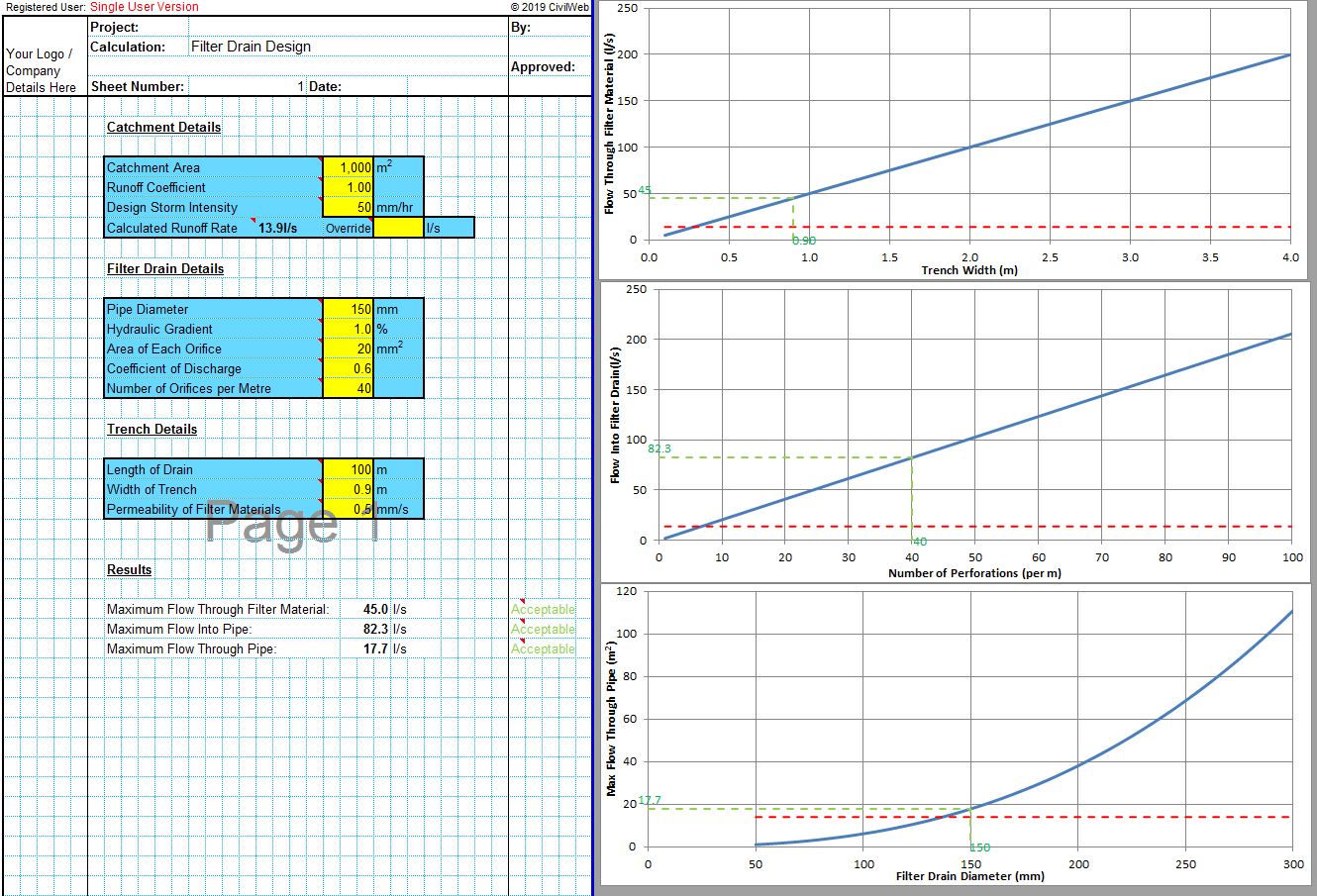
French Drain Design
This spreadsheet completes French Drain Design in accordance with the SUDS Manual.
Learn More
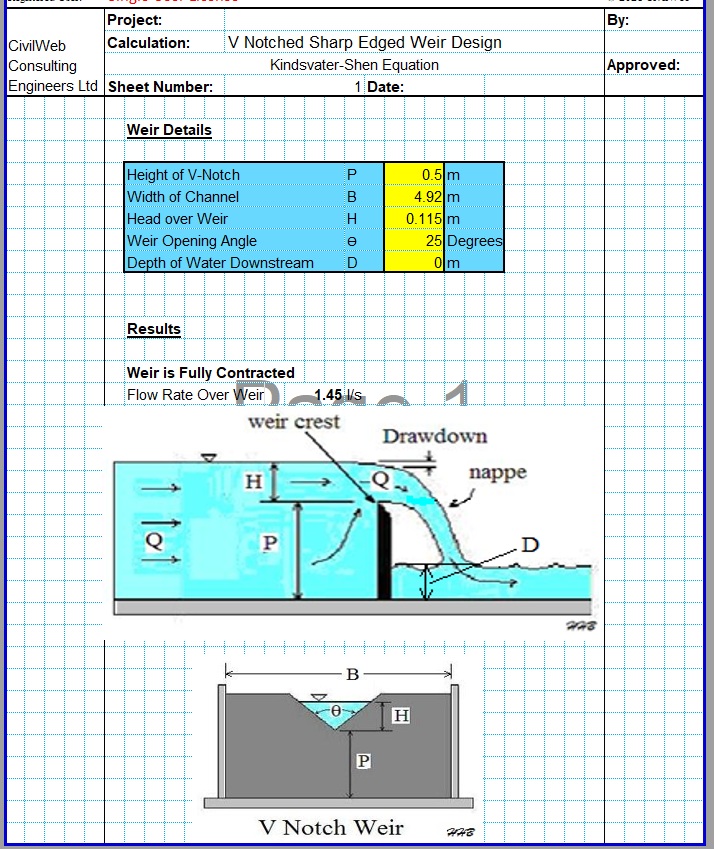
Sharp Crested Weir Flow Calculator Spreadsheets
This suite of 5 separate spreadsheets calculates the flow over sharp crested weirs of all shapes and sizes.
Learn More
Drainage Design Spreadsheet
This is the full suite of drainage design spreadsheets, available at a massive discount for only £49.99.