Swale design is now part of almost every modern SUDS design in the UK, Australia and around the world. Swales create attractive, green ways to convey, infiltrate and filter rainwater runoff from new urban developments, particularly light housing projects.
The CivilWeb Swale Design Spreadsheet can save hours of repetitive calculations while ensuring compliance with CIRIA C753 SUDS Manual in the UK, CSIRO 1999 in Australia or MSMA in Malaysia, reliable accuracy and even optimisation tools which can save money on materials during the construction phase.
The CivilWeb Swale Design Spreadsheet can be purchased lower down this page for only £19.99. Or why not buy our best value bundle? Our Full Drainage Design Spreadsheet Suite can be purchased at the bottom of this page for only £49.99. This suite includes all of our drainage design spreadsheets, more than 20, and represents an incredible saving of more than 85%.
Please click here for the Australian version of this page.
What is a Swale?
A swale is a shallow, vegetated channel designed to slow, convey, and infiltrate stormwater runoff. Sometimes referred to as a bioswale. Concrete Swales are possible where infiltration is not available or desired. And Permaculture Swales can be used where sloping sites are too steep for a traditional drainage swale.
Unlike a conventional drainage ditch, a swale is engineered to manage water sustainably by encouraging infiltration, filtering pollutants, and reducing peak flows before the water reaches downstream systems.
Swales are commonly used alongside roads, car parks, housing developments, and open spaces. Their gentle side slopes and planted surfaces help spread water, trap sediments, and support natural treatment processes. Depending on the design, a swale may function as:
- A conveyance feature that moves water safely across a site
- An infiltration system that allows water to soak into the ground
- A treatment device that improves water quality through vegetation and soil interaction
- A temporary storage area that attenuates peak flows
Key benefits include reduced runoff, improved water quality, enhanced biodiversity, and alignment with SuDS (Sustainable Drainage Systems) requirements.
Common Swale Design Methods
Swale design varies depending on site conditions, regulatory requirements, and the intended hydraulic function. Several established methods are widely used:
- - Hydraulic Conveyance Design
Engineers size the swale to safely convey runoff from a chosen design storm. This includes calculating flow depth, velocity, and freeboard using Manning’s equation and selecting appropriate side slopes and channel width.
- - Infiltration Swale Design
Where soils allow, swales are designed to infiltrate water into the ground. This requires soil infiltration testing, sizing the base width, and ensuring the swale drains within an acceptable timeframe.
- - Check Dams and Energy Dissipation
Small check dams are added to slow water, increase infiltration, and reduce erosion. This method is common on sloped sites.
- - Vegetation‑Based Treatment Design
Swales can be planted with grasses, wildflowers, or wetland species to improve pollutant removal. Designers consider plant selection, soil depth, and maintenance needs.
Dry vs. Wet Swales
- - Dry swales
drain fully between storms and rely on infiltration.
- - Wet swales
include an underdrain or maintain a shallow water table, providing treatment even in poorly draining soils.
Each method must consider rainfall intensity, soil type, groundwater depth, longitudinal slope, maintenance access, and erosion control to ensure long‑term performance.
How Does the CivilWeb Swale Design Spreadsheet Work?
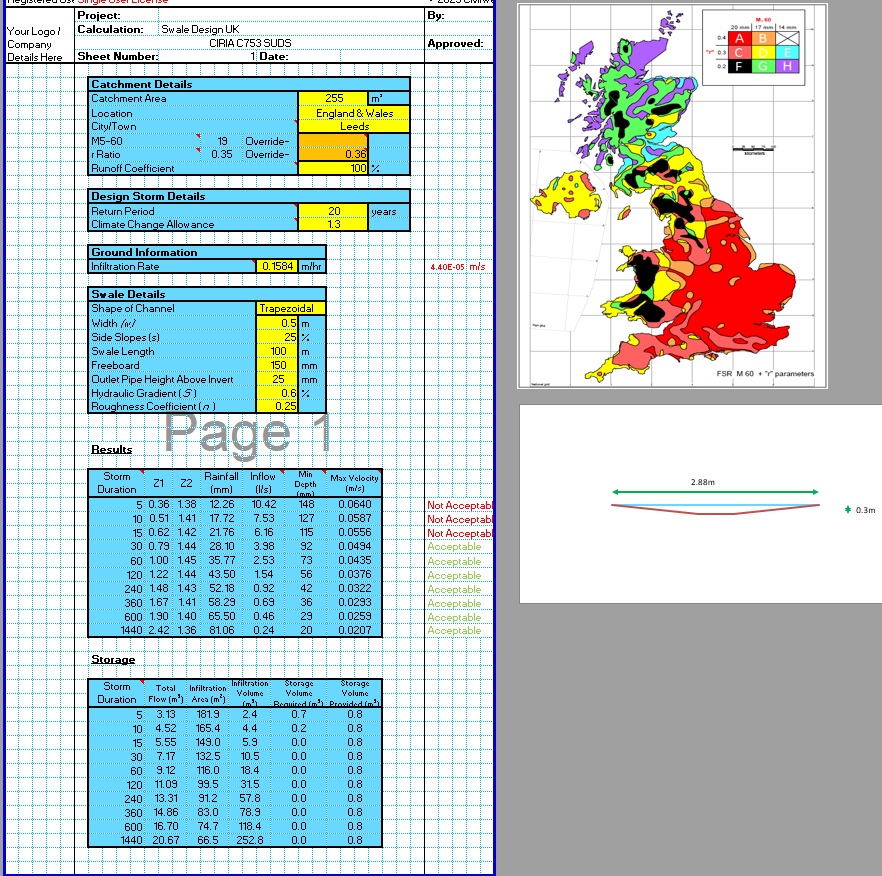
Firstly the spreadsheet calculates the quantity of rain water that the swale will be required to handle. The spreadsheet is pre-loaded with rainfall data for all parts of the UK, so the user simply needs to input the location, runoff coefficient, return period and climate change factor. The spreadsheet uses this info to calculate the rainfall intensity, which is simply multiplied by the catchment area to give the total volume of water for all possible design storm events.
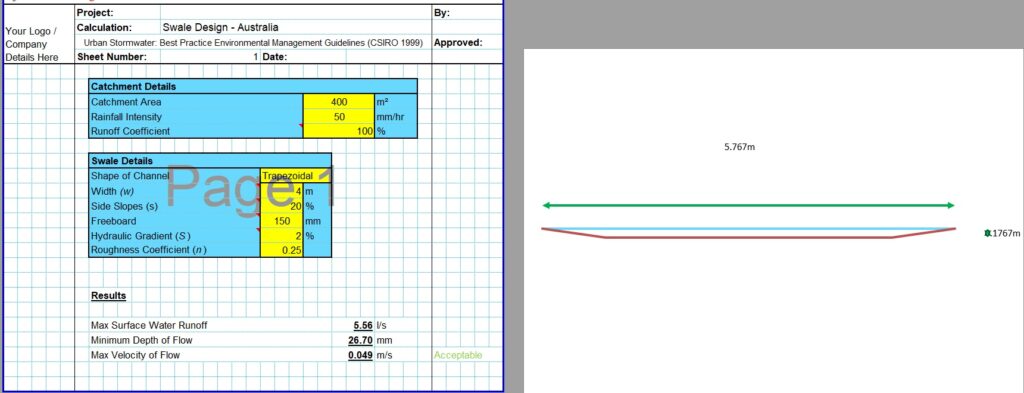
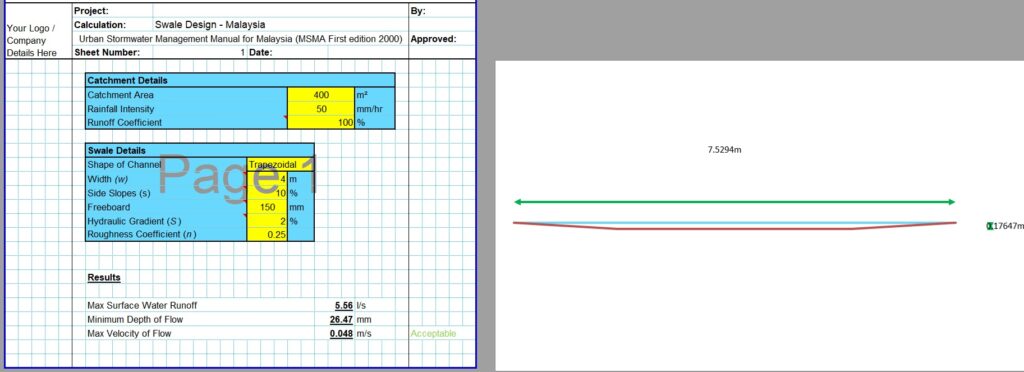
The Australian and Malaysian versions of the spreadsheet use a simple rainfall intensity to calculate the rainfall volumes and flow rates. All versions of the spreadsheet (UK, Australian and Malaysian) are delivered together, there is no need to purchase multiple versions.
Next the user can input the infiltration rate expected from the underlying soils beneath the swale. This enables the spreadsheet to calculate the outflow from the swale through infiltration through the underlying soils.
Finally the user can input the dimensions of the swale to be analyzed. This includes the shape of the channel, width, side slopes, length, gradient and Manning roughness coefficient.
With all these inputs made, the spreadsheet cleverly analyses each potentially critical design storm event and calculates the inflow into the swale and uses this to calculate the depth of flow and the maximum flow velocity through the swale. The spreadsheet also checks these values to ensure that they are in accordance with the relevant standards. This ensures that the swale cannot present any dangers during operation which is important as they are often used in heavily populated areas and housing projects where fast or deep flows could potentially endanger life during storm events.
In addition to the depth and flow calculations, the spreadsheet next calculates the total flow into the swale, the infiltration out of the swale through the underlying soils and therefore the water storage volume required. This is compared with the storage volume available calculated from the swale shape and dimensions.
With all checks completed, the user can clearly see whether the proposed swale is acceptable and in accordance with the relevant design standards or whether it needs to be adjusted.
Why Use a Swale Design Spreadsheet?
A swale design spreadsheet helps engineers manage the many variables involved in sizing, checking, and documenting the system. Because swales combine hydraulic, infiltration, and ecological
functions, a spreadsheet ensures calculations are accurate, consistent, and easy to update.
- Automated calculations for flow depth, velocity, and channel capacity
- Quick comparison of different storm events or swale geometries
- Scenario testing for vegetation types, slopes, and soil conditions
- Clear documentation for planning submissions and SuDS compliance
For developers, engineers, and local authorities, a spreadsheet becomes a practical tool that reduces design time and increases confidence that the swale will perform effectively in real‑world conditions.
Get Started Today
Save hours of repetitive calculation time. Whether you’re working on a major project or a small renovation, this tool will give you clarity, accuracy, and confidence.
Buy the CivilWeb Swale Design Spreadsheet now for only £19.99.
Or alternatively big savings are available with our Swale and Filter Strip design bundle. Get both spreadsheets for only £29.99.
Or why not bundle with the CivilWeb Filter Strip Design Spreadsheet for only £10 extra?
Or save £300+ by buying our full Drainage Design Suite including all our drainage design spreadsheets.
Free Trial Version
Why not try the fully functional free trial version of this spreadsheet?
PIPE FLOW CALCULATOR
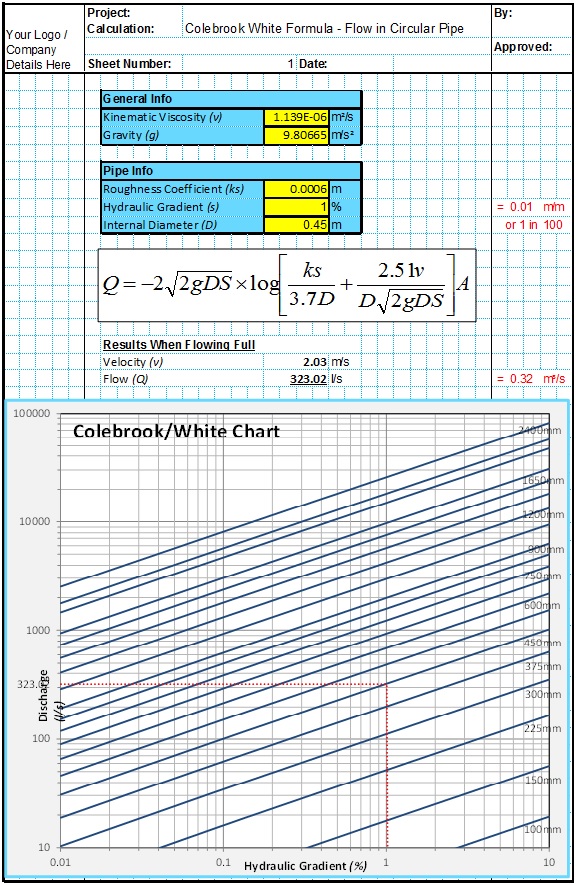
This spreadsheet uses the Colebrook-White and Manning Equations to calculate the flow capacity and velocity in pipes acting under gravity.
Find Out More
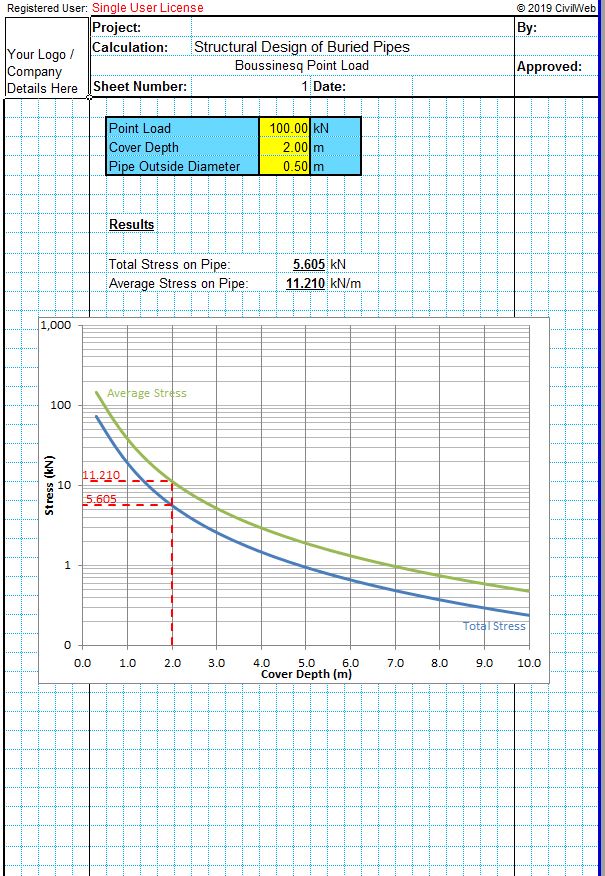
Buried Pipe Design Spreadsheet
This spreadsheet can be used to design concrete, steel, plastic and other buried pipes in accordance with BS EN 1295-1.
Learn More
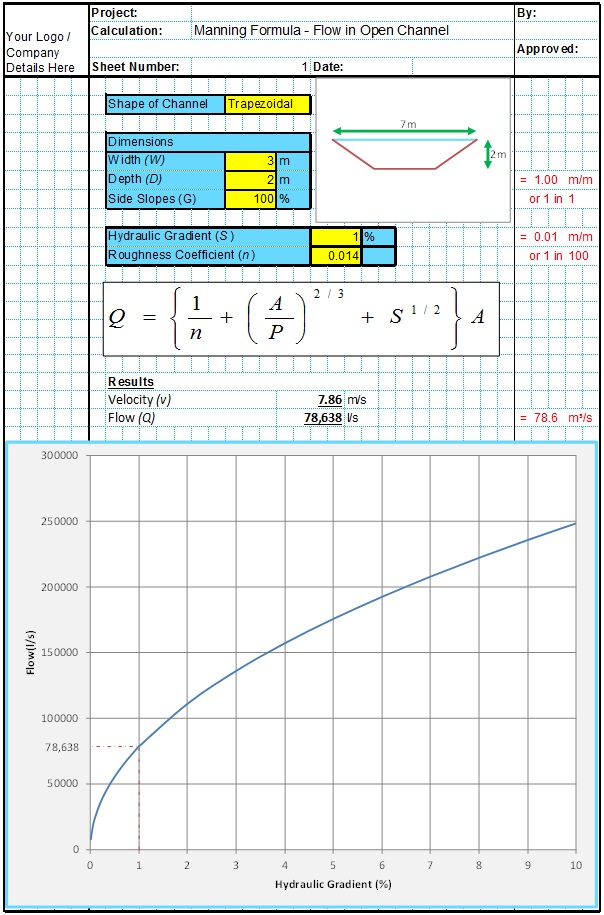
Manning Open Channel Design Spreadsheet
This spreadsheet uses the Manning formula to calculate the flow conditions in an open channel acting under gravity only.
Learn More
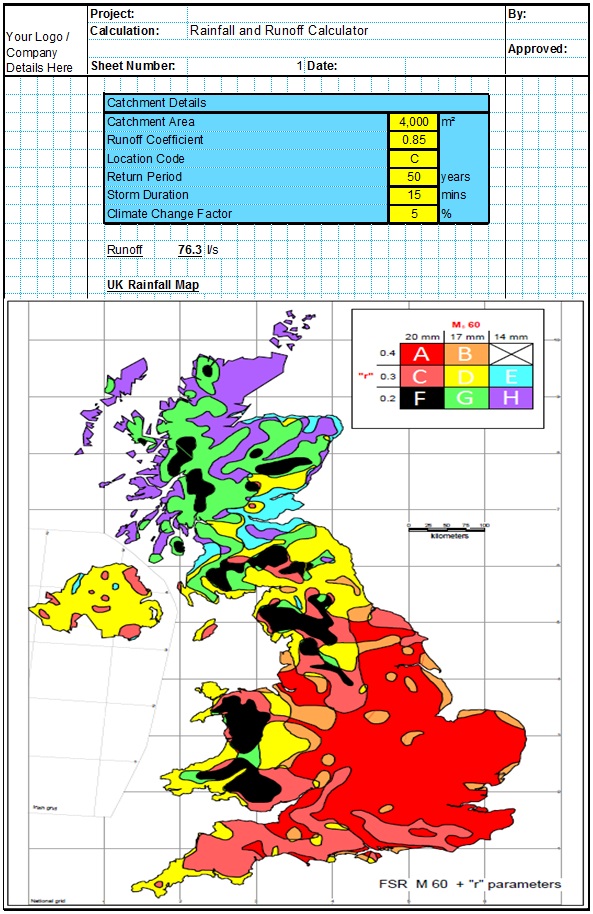
Runoff Calculator Spreadsheet
This spreadsheet calculates the design runoff flow for a site in accordance with the Flood Estimation Handbook.
Learn More
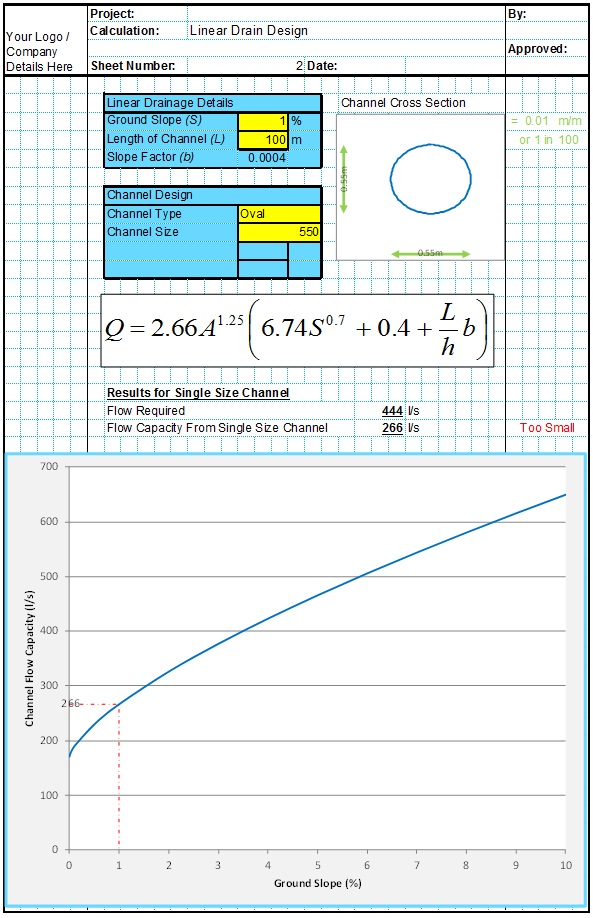
Linear Drainage Design Spreadsheet
This spreadsheet calculates the maximum flow from a specified linear drainage channel and checks whether the channel is sufficient for the specified site and storm conditions.
Learn More
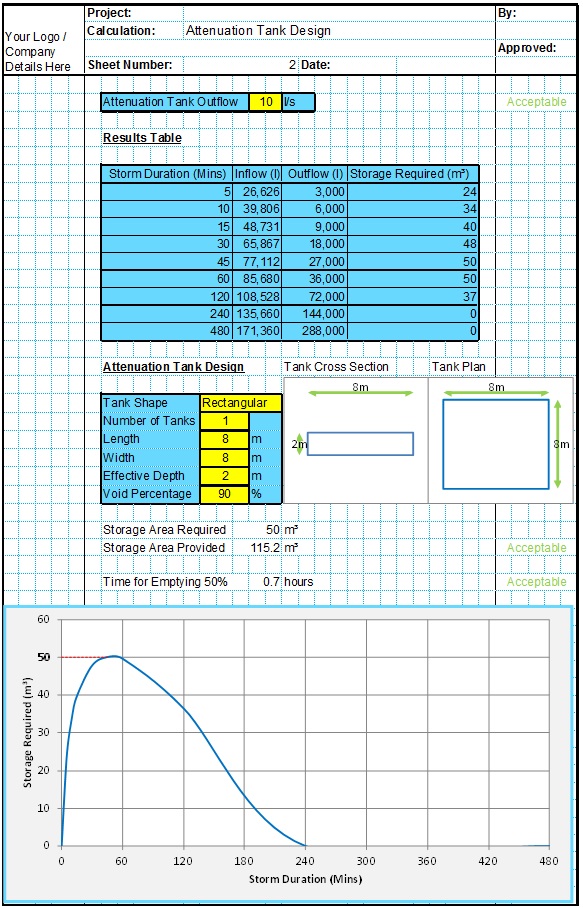
Attenuation Design Spreadsheet
This spreadsheet calculates the requirements for a attenuation system and assists the user to design a suitable system.
Learn More
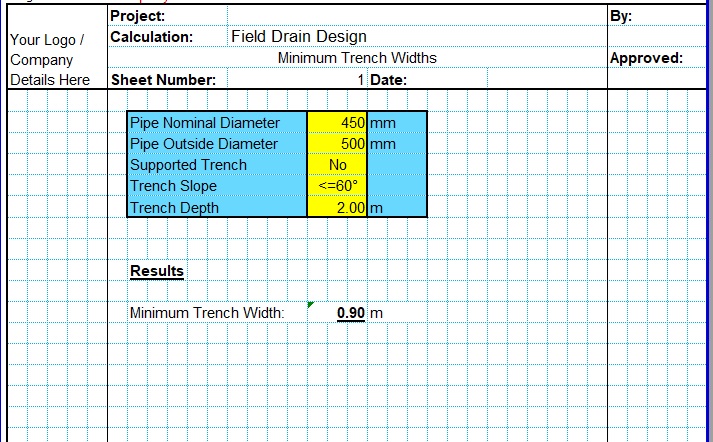
Field Drain Design Spreadsheet
This spreadsheet can be used to design field drains, typically subsurface drainage systems used to drain fields and open areas.
Learn More
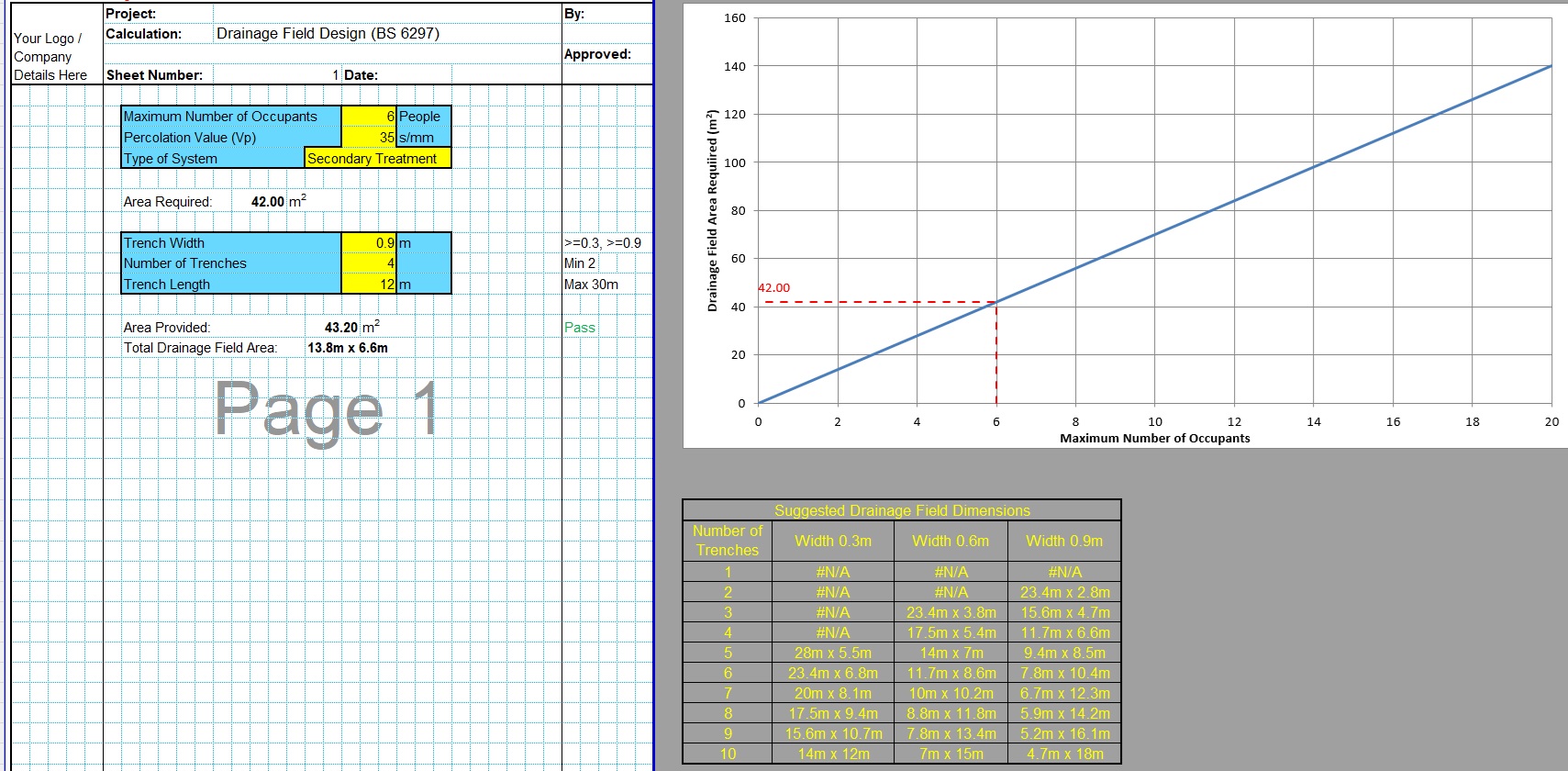
Drainage Field Design Spreadsheet
This spreadsheet can be used to design septic infiltration systems known as drainage fields, leach fields or septic drain fields.
Learn More
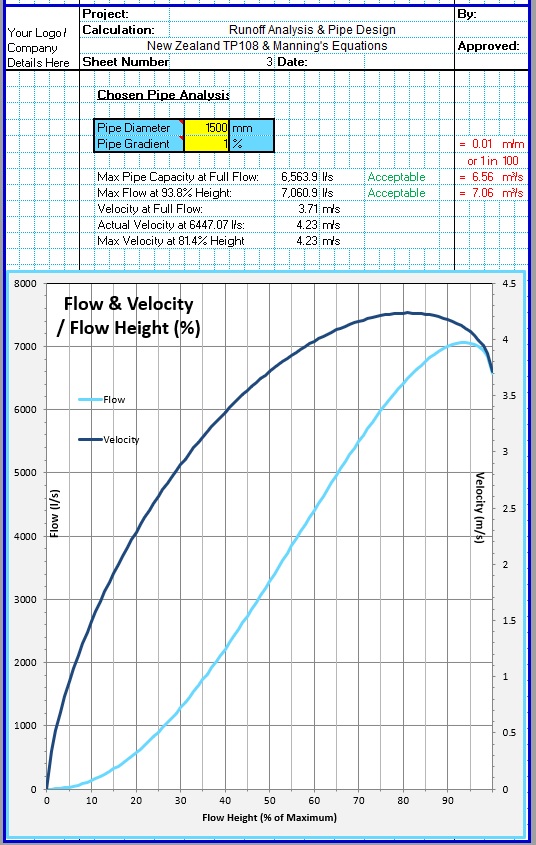
TP108 Spreadsheet
This spreadsheet calculates the rainfall for New Zealand catchments in accordance with TP108.
Learn More
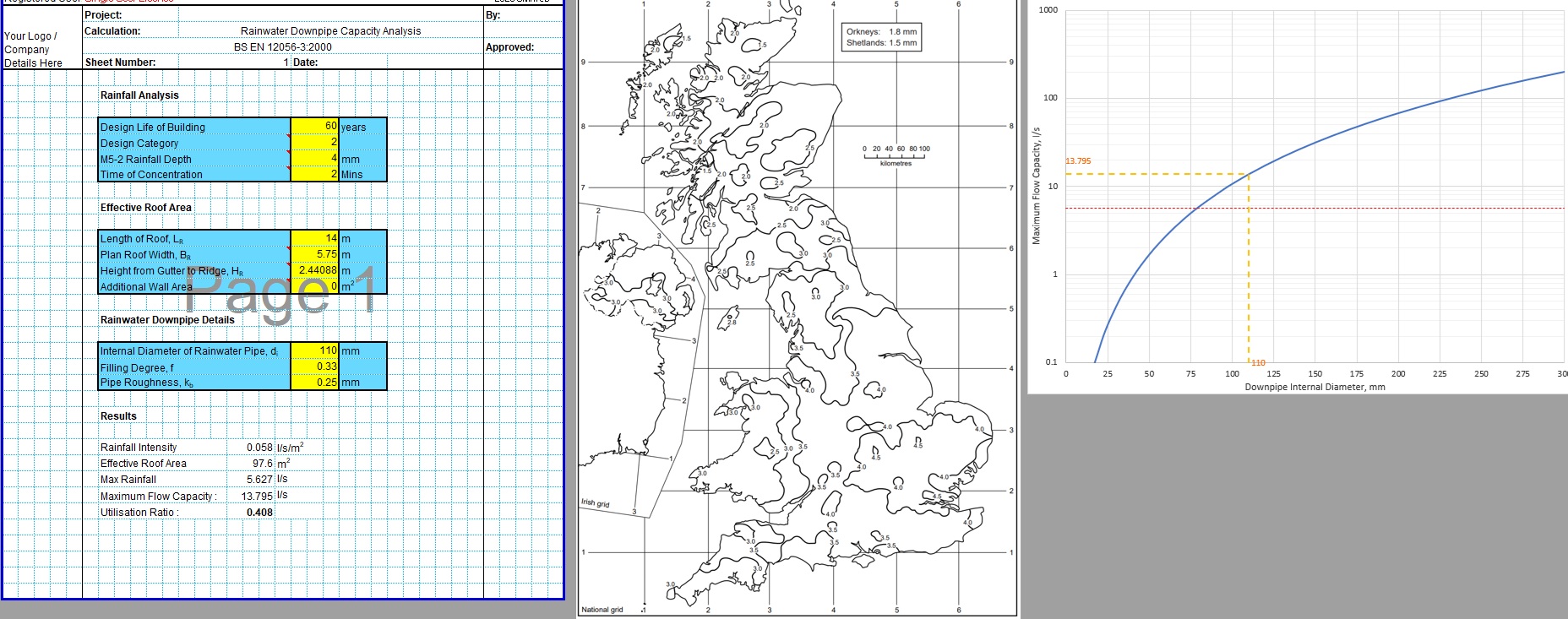
Roof Downpipe Calculator Spreadsheet
This spreadsheet calculates the size of roof drainage downpipes depending on the roof catchment and rainfall requirements.
Learn More
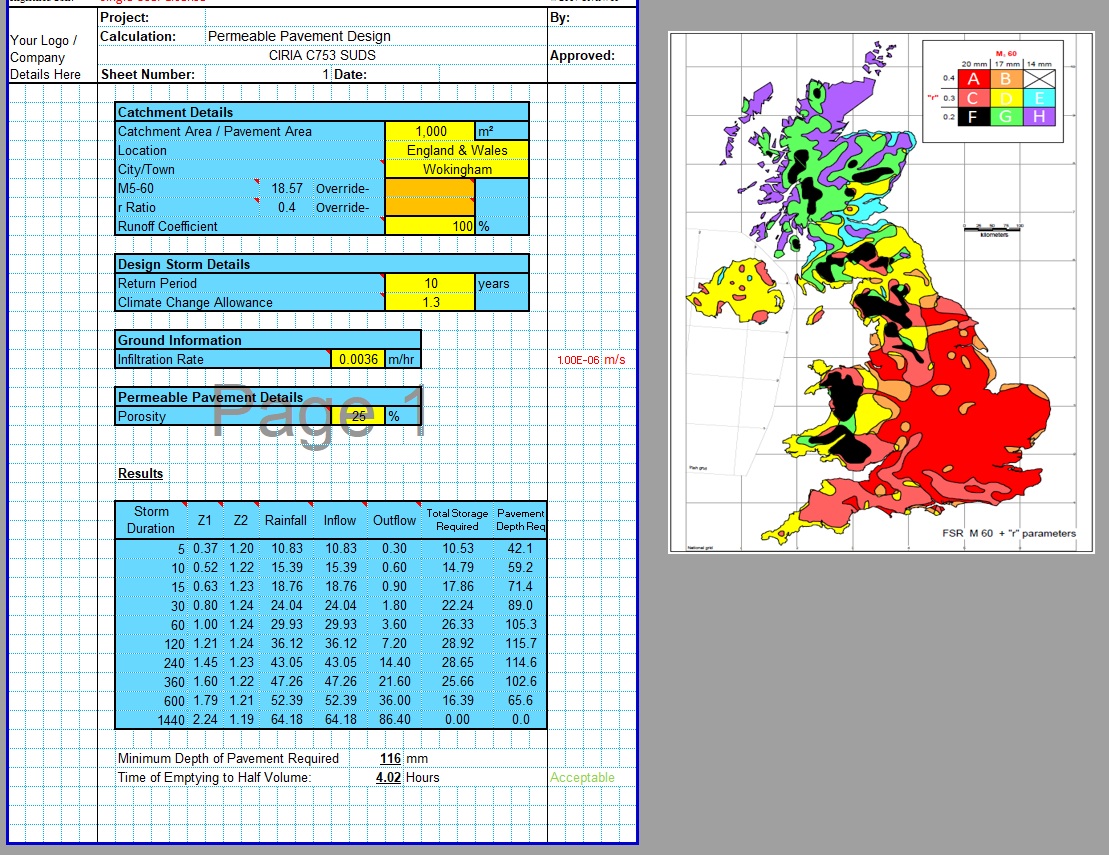
Permeable Pavement Design Spreadsheet
This spreadsheet is designed to determine the size and characteristics of permeable pavements.
Learn More
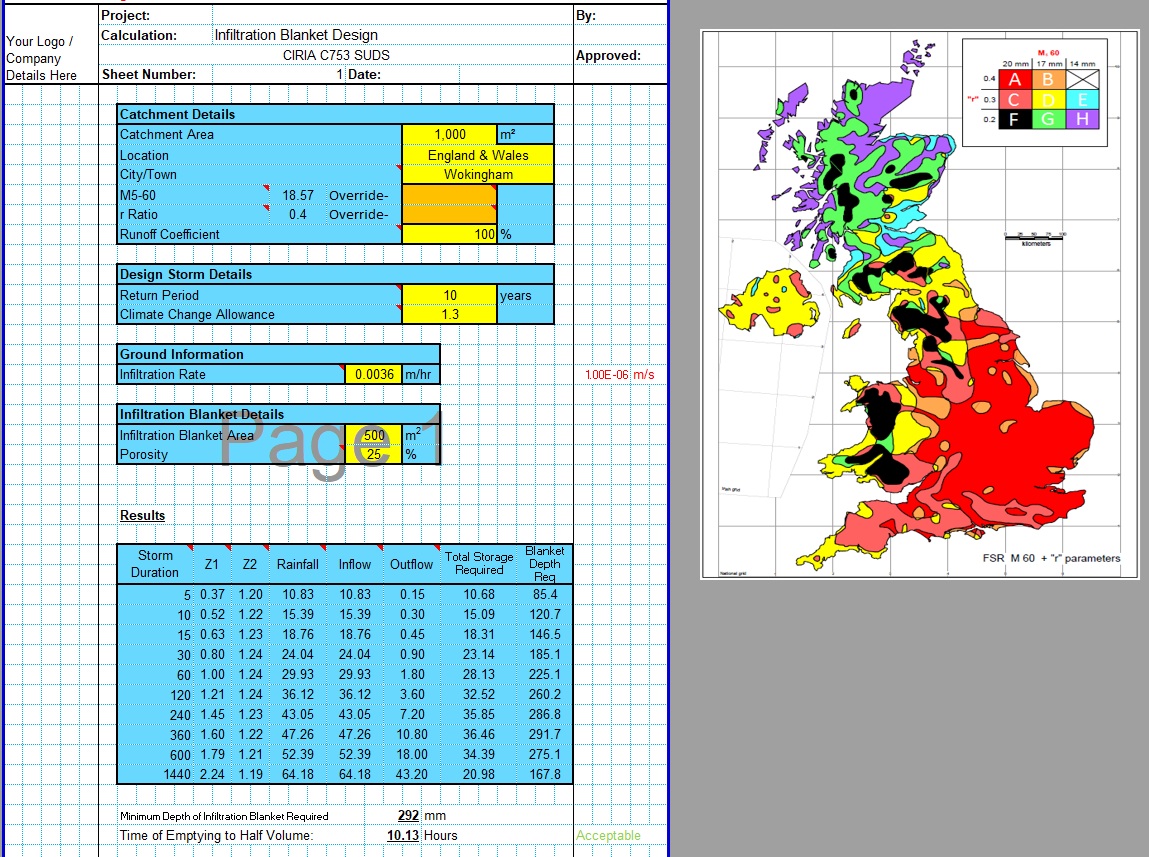
Infiltration Blanket Design Spreadsheet
This spreadsheet can be used to design thin depth infiltration systems, typically called infiltration blanket systems.
Learn More
Swale Design Spreadsheet
This spreadsheet can be used to design swales. These linear grassed channels can be used both to convey, infiltrate and filter surface drainage runoff.
Learn More
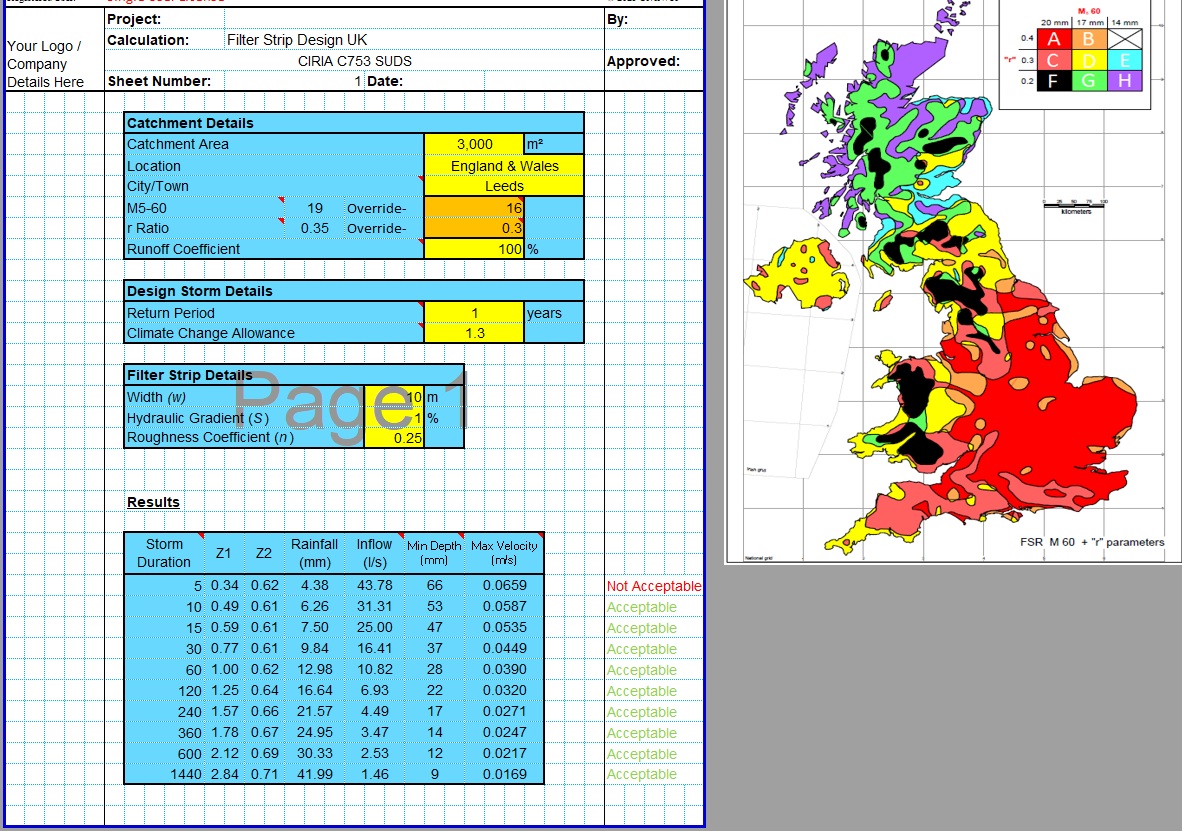
Filter Strip Design Spreadsheet
This spreadsheet is designed to analyse surface water filter strips and to determine the max flow depth and max flow velocity and determine whether they are in accordance with relevant standards.
Learn More
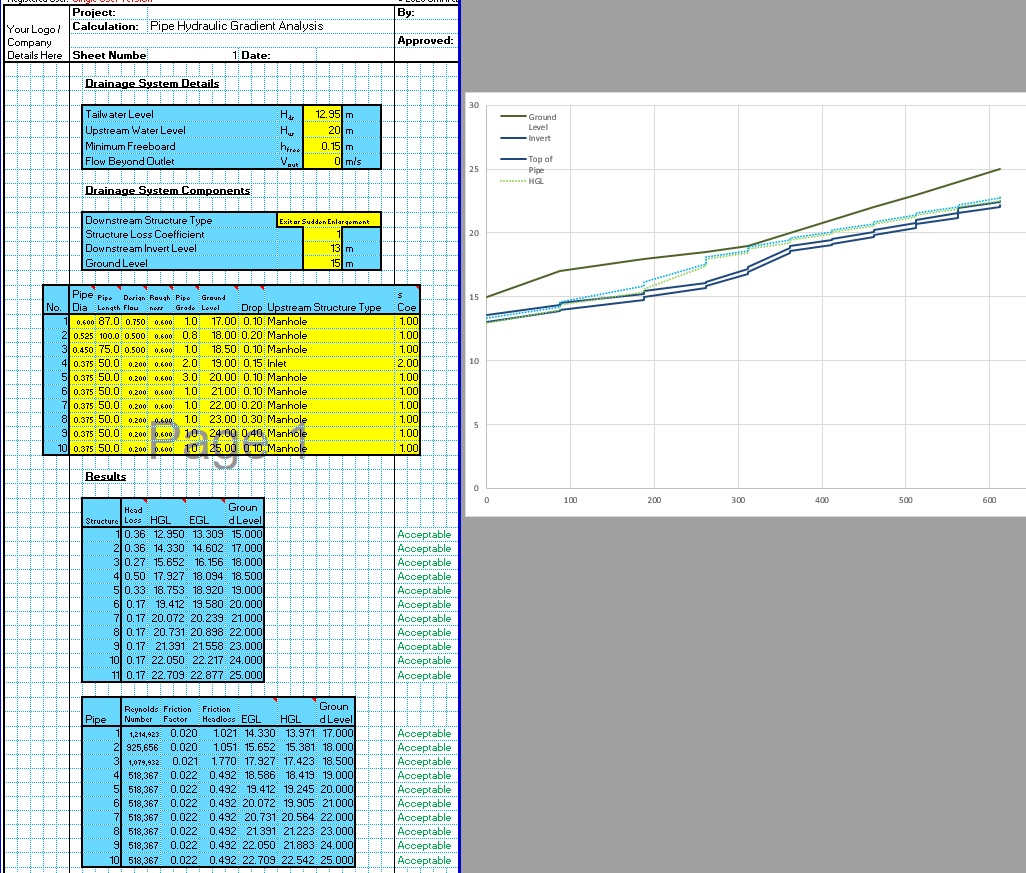
Hydraulic Gradient Analysis Spreadsheet
This spreadsheet analyses the hydraulic and energy grade lines for drainage systems with up to 10 drainage runs.
Learn More
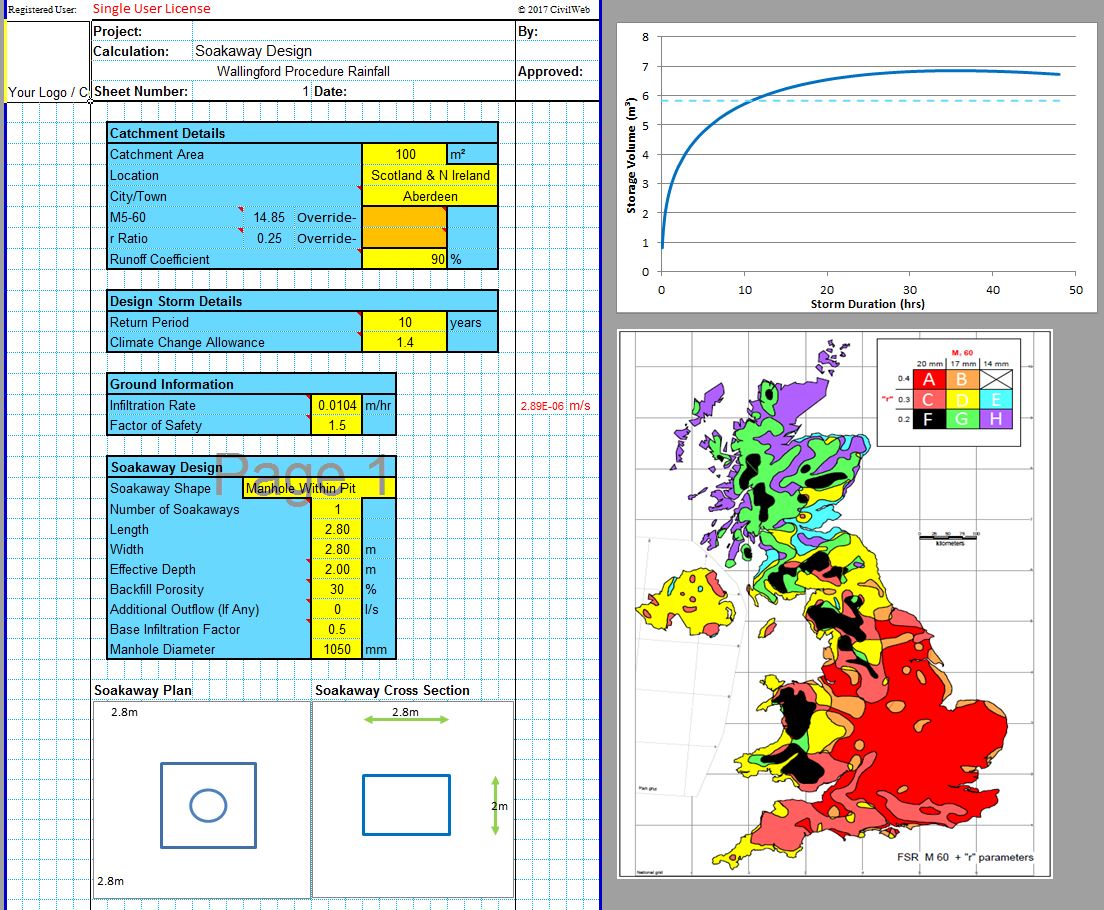
Soakaway Design Spreadsheet
This spreadsheet calculates the requirements for a soakaway system and assists the user to design a suitable system.
Learn More
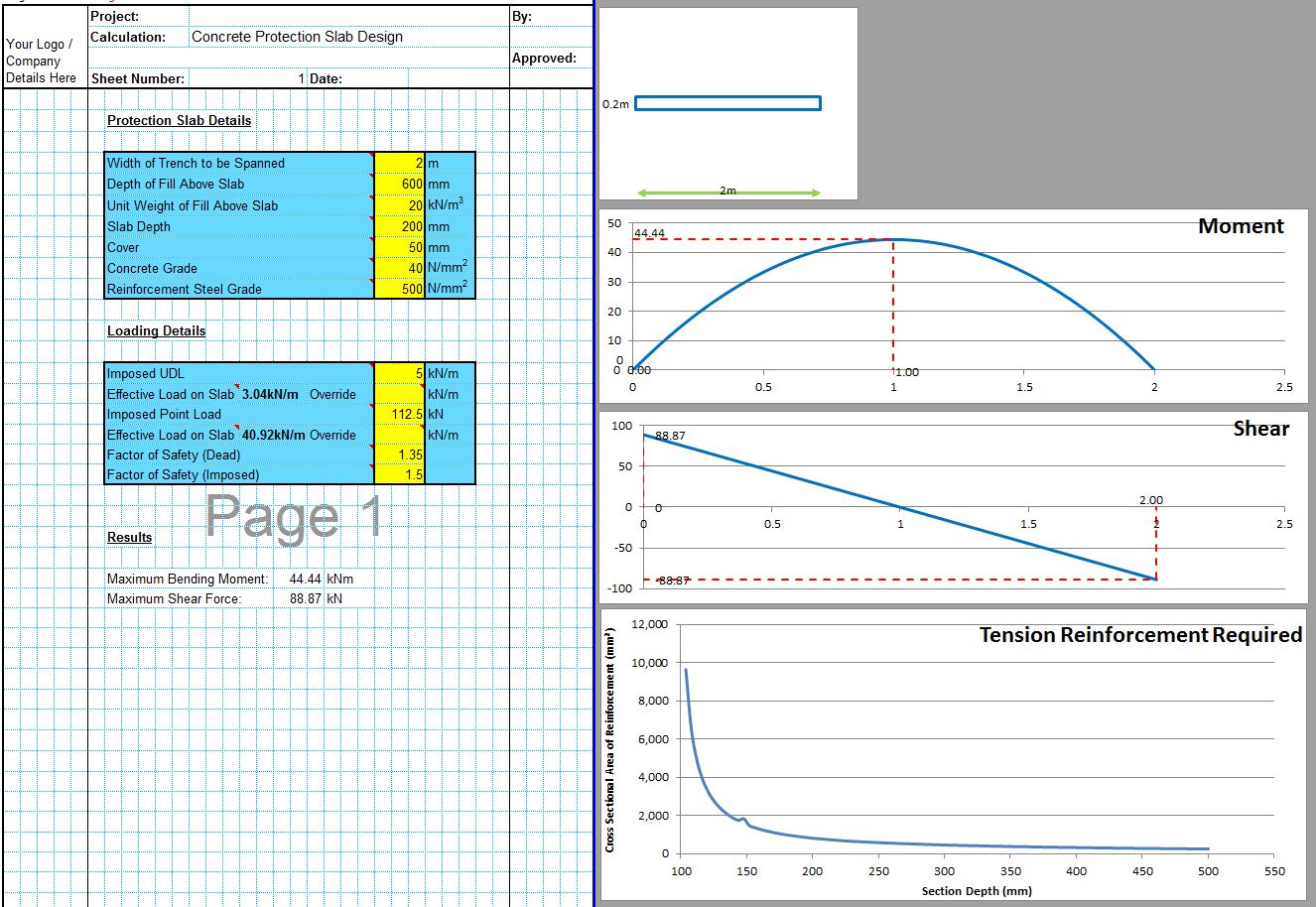
Concrete Protection Slab
This detailed design spreadsheet designs a protection slab commonly installed to protect shallow pipes.
Learn More
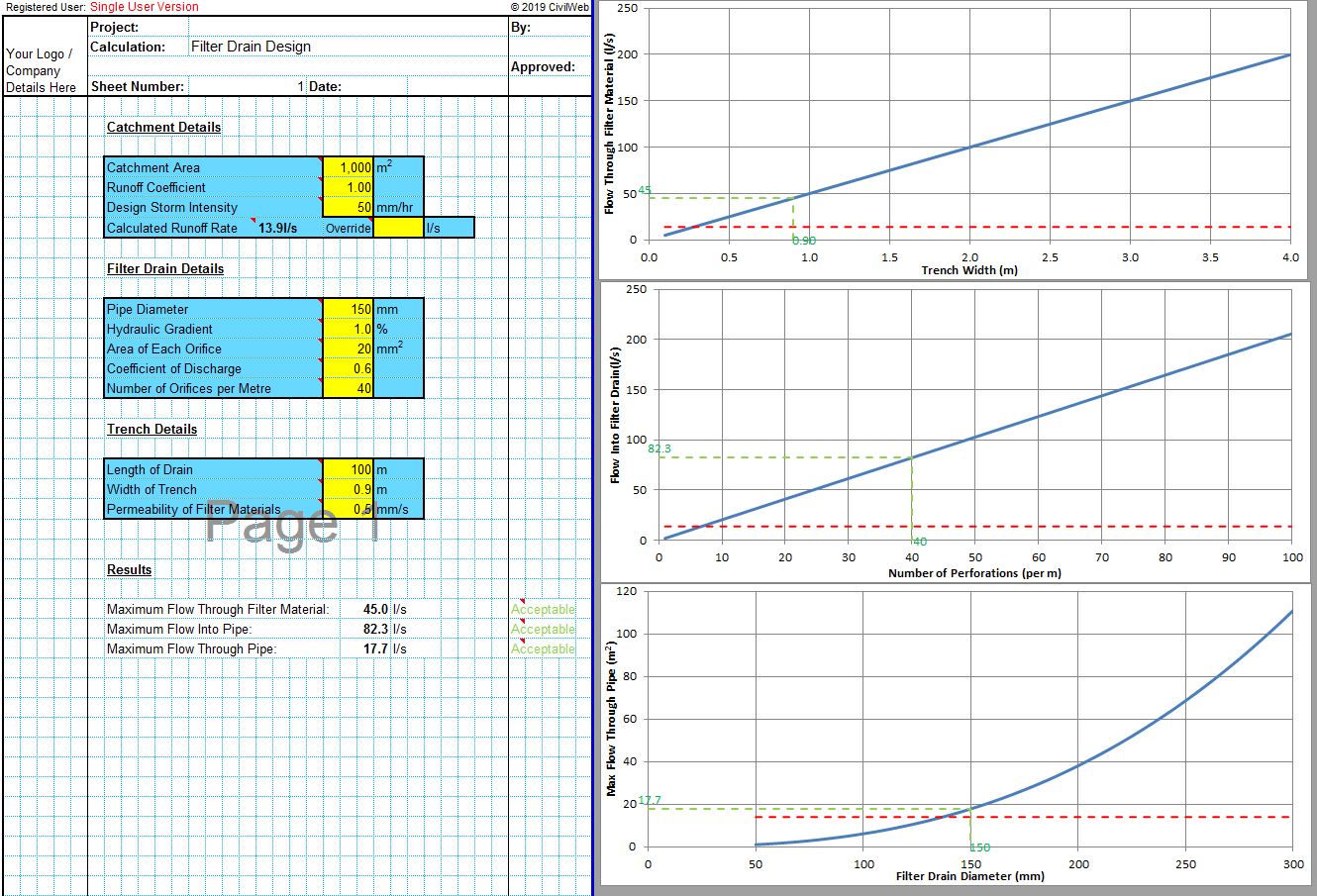
French Drain Design
This spreadsheet completes French Drain Design in accordance with the SUDS Manual.
Learn More
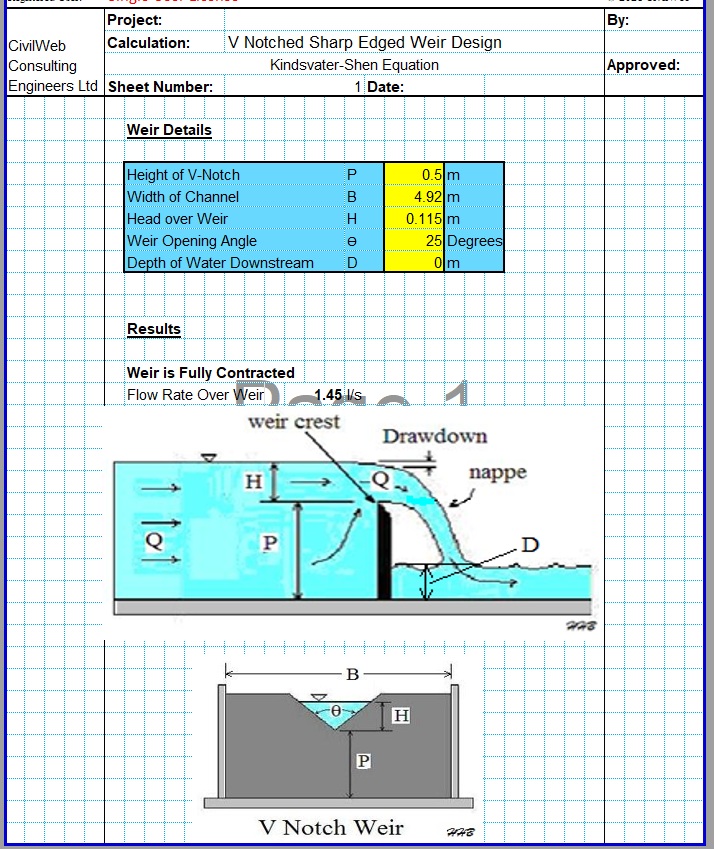
Sharp Crested Weir Flow Calculator Spreadsheets
This suite of 5 separate spreadsheets calculates the flow over sharp crested weirs of all shapes and sizes.
Learn More
Drainage Design Spreadsheet
This is the full suite of drainage design spreadsheets, available at a massive discount for only £49.99.