V Notch Weir design involves determining the flow rate of water over a sharp crested V notch shaped weir. The CivilWeb V Notch Weir Calculator Spreadsheet can save hours of repetitive calculations while ensuring reliable accuracy of the results. The spreadsheet also includes US unit versions along with standard metric versions.
The CivilWeb V Notch Weir Calculator Spreadsheet can be purchased lower down this page for only £19.99. Alternatively all 5 of our weir design spreadsheets can be purchased together in our Sharp Crested Weir Flow Calculator Spreadsheet Suite, which can be purchased for only £29.99.
Or why not buy our best value bundle? Our Full Drainage Design Spreadsheet Suite can be purchased at the bottom of this page for only £49.99. This suite includes all of our drainage design spreadsheets, more than 20, and represents an incredible saving of more than 85%.
Click here for the US or Australian versions of this page.
What is a V‑Notch Weir
A V‑notch weir is a triangular‑shaped flow‑measuring device used to determine the discharge of water in open channels. Water flows over the sharp‑crested V‑shaped opening, and the height of the water above the crest (the head) is used to calculate flow rate using established hydraulic equations.
The most common angle is 90 degrees, but 60° and 30° notches are also used depending on the required sensitivity. Angles up to 100 degrees can also be used in some cases. V‑notch weirs are especially effective for low‑flow measurement, because the triangular shape provides greater accuracy at small discharges compared to rectangular weirs.
Typical applications include:
- - Monitoring baseflow in streams
- - Measuring discharge from treatment systems
- - Flow monitoring in SuDS features
- - Industrial and agricultural flow measurement
- - Calibration of small‑scale hydraulic systems
Key advantages include high accuracy, simple construction, predictable hydraulics, and suitability for a wide range of low‑flow conditions.
Common V‑Notch Weir Design Methods
Designing a V‑notch weir involves ensuring that the weir geometry, approach conditions, and hydraulic assumptions are correct so that flow measurements remain accurate and repeatable.
Common design methods include:
- - Sharp‑Crested Weir Theory — The standard discharge equation for a V‑notch weir is: Q = Cd * (8/15) * sqrt(2g) * tan(θ/2) * H^(5/2)
- - Discharge Coefficient Selection — Engineers select a coefficient based on notch angle, crest sharpness, and laboratory‑derived calibration data. Typical values range from 0.58 to 0.62 for sharp‑crested 90°
- - Approach Flow Conditions — The upstream channel must provide smooth, uniform flow. Designers ensure adequate straight‑channel length and avoid turbulence, sediment buildup, or vegetation interference.
- - Free‑Flow (Unsubmerged) Conditions — The downstream water level must be low enough to avoid submergence. Designers check the submergence ratio to ensure accurate measurement.
- - Head Measurement Setup — The head is measured at a specified distance upstream (typically 3–4 times the maximum head) to avoid velocity effects.
Each method must consider notch angle, crest geometry, channel conditions, sediment load, and maintenance requirements to ensure long‑term accuracy.
How Does the CivilWeb V‑Notch Weir Design Spreadsheet Work?
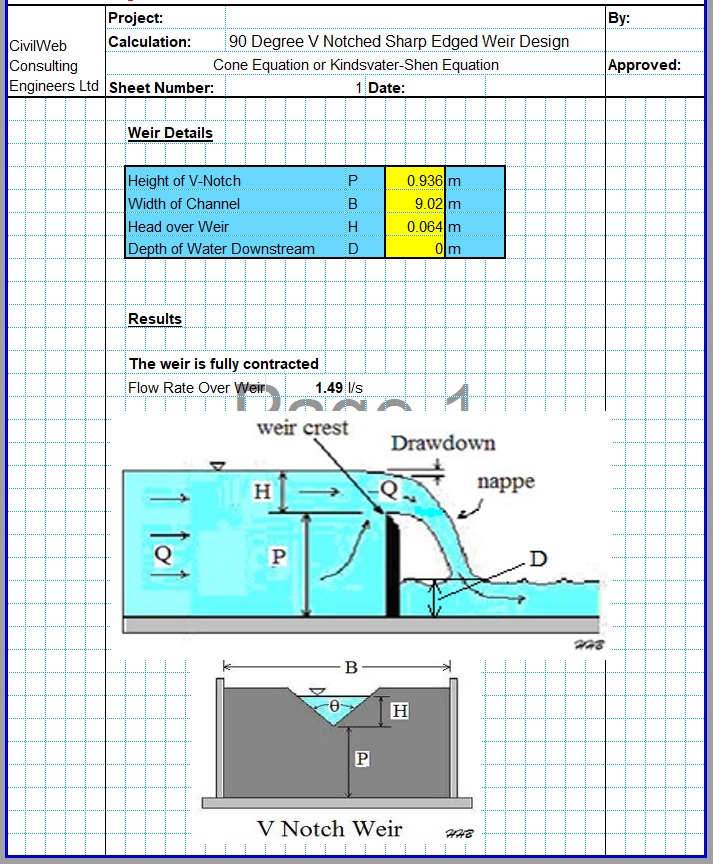
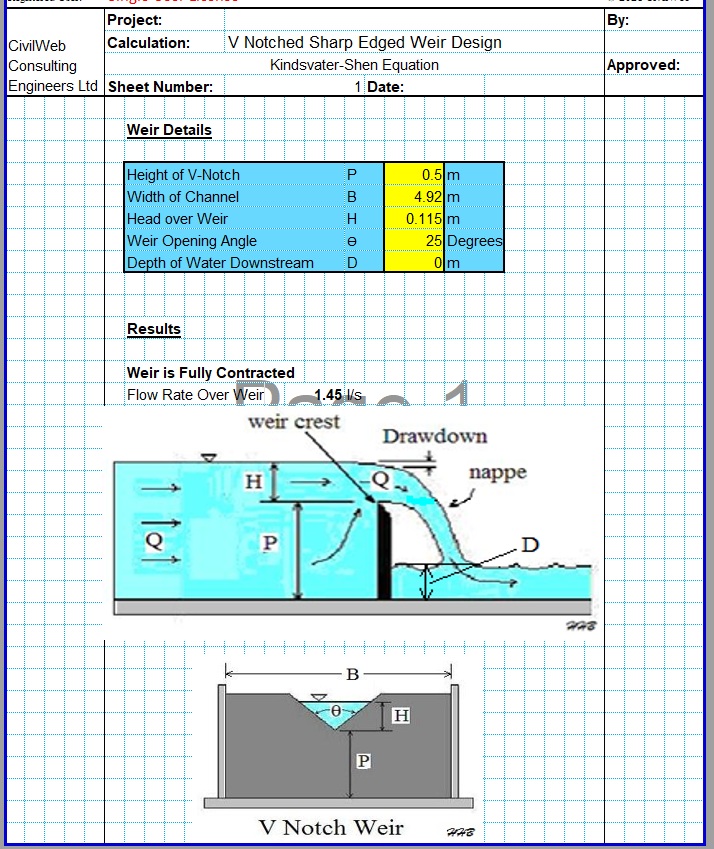
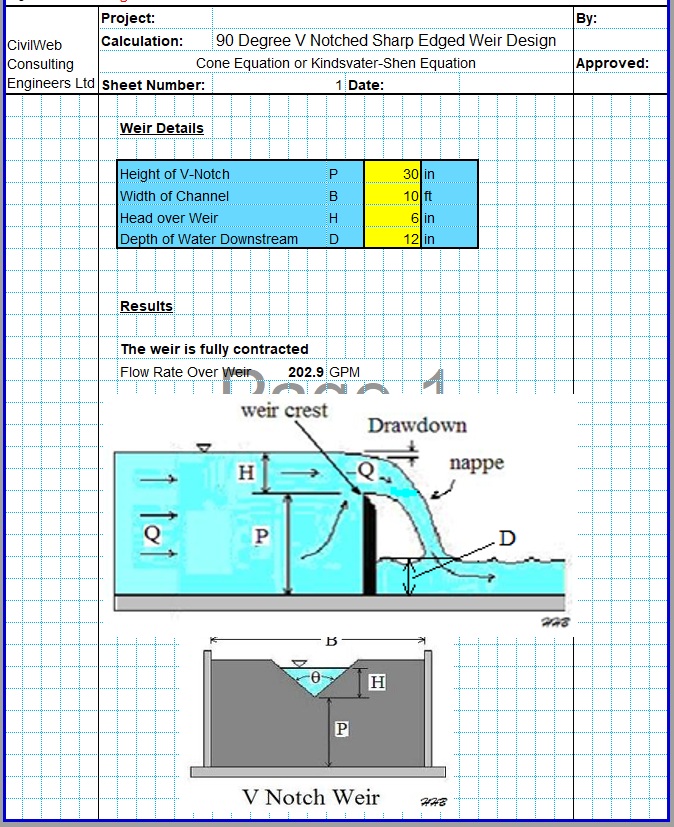
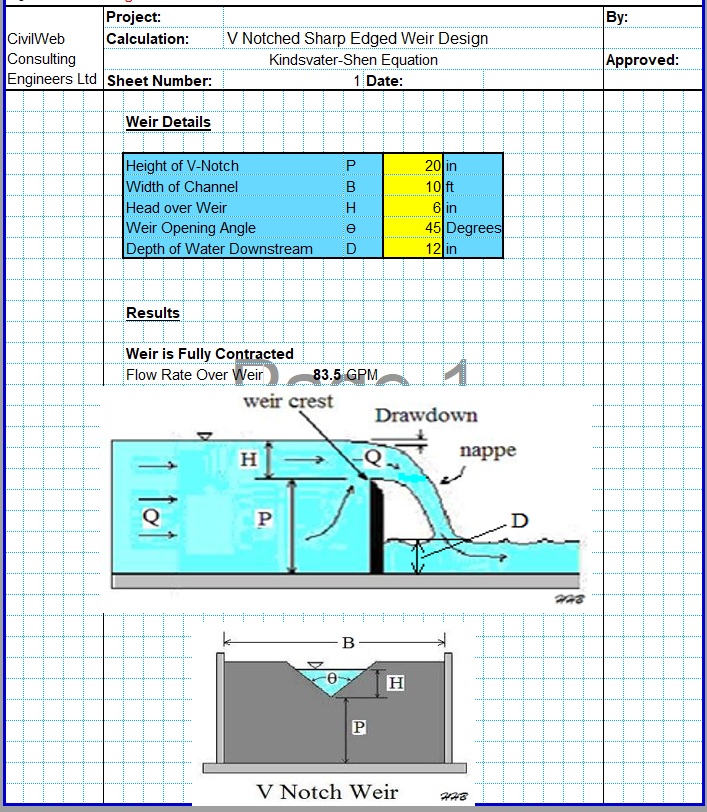
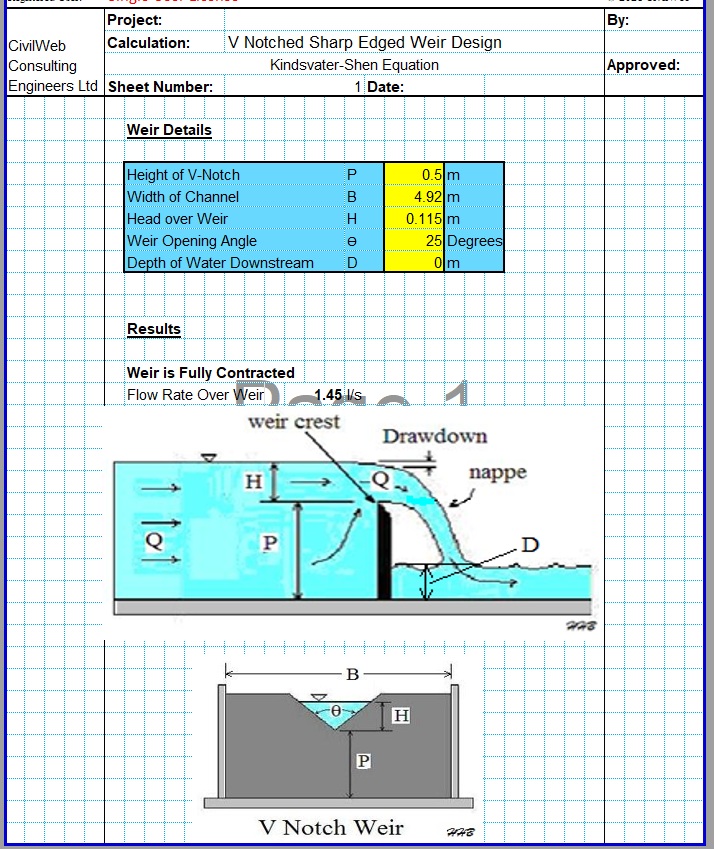
The spreadsheet uses the above flow rate formulas to calculate the flow rate over the weir. The user simply inputs the weir dimensions and angle, the width of channel and depth of downstream water. A useful diagram is also provided within the spreadsheet to make it clear exactly what the inputs are referring to.
The spreadsheet then calculates whether the flow over the weir is fully contracted or not. Then the Kindsvater-Shen equation is used to determine the flow rate over the weir.
Why Use a V‑Notch Weir Design Spreadsheet?
A V‑notch weir design spreadsheet helps engineers manage the many variables involved in calculating flow, checking submergence, and ensuring the weir meets hydraulic requirements. Because flow depends on head, notch angle, discharge coefficient, and site conditions, a spreadsheet ensures calculations are accurate, consistent, and easy to update.
Benefits include:
- - Automated calculation of flow for any head and notch angle
- - Quick comparison any weir notch angle such as 30°, 60°, 90° or 100° notch performance
- - Built‑in checks for fully contracted flow or not
- - Scenario testing for different flow ranges or site constraints
- - Clear documentation for calibration, monitoring, and regulatory reporting
For hydrologists, drainage engineers, and environmental regulators, a spreadsheet becomes a practical tool that improves accuracy and reduces design time while ensuring reliable long‑term flow measurement.
Get Started Today
Save hours of repetitive calculation time. Whether you’re working on a major project or a small renovation, this tool will give you clarity, accuracy, and confidence.
Buy the CivilWeb V Notch Weir Calculator Spreadsheet now for only £19.99.
Or alternatively big savings are available with our Sharp Crested Weir Flow Calculator Spreadsheets bundle. Get all 5 weir flow analysis spreadsheets for only £29.99.
Or save £50+ by buying our full Drainage Design Suite including all our drainage design spreadsheets.
Free Trial Version
Why not try the fully functional free trial version of this spreadsheet?
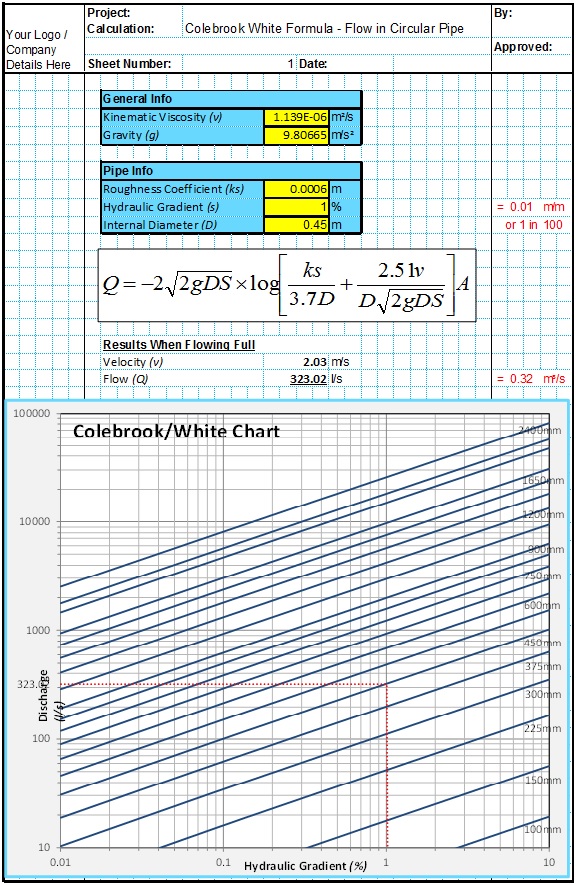
PIPE FLOW CALCULATOR
This spreadsheet uses the Colebrook-White and Manning Equations to calculate the flow capacity and velocity in pipes acting under gravity.
Find Out More
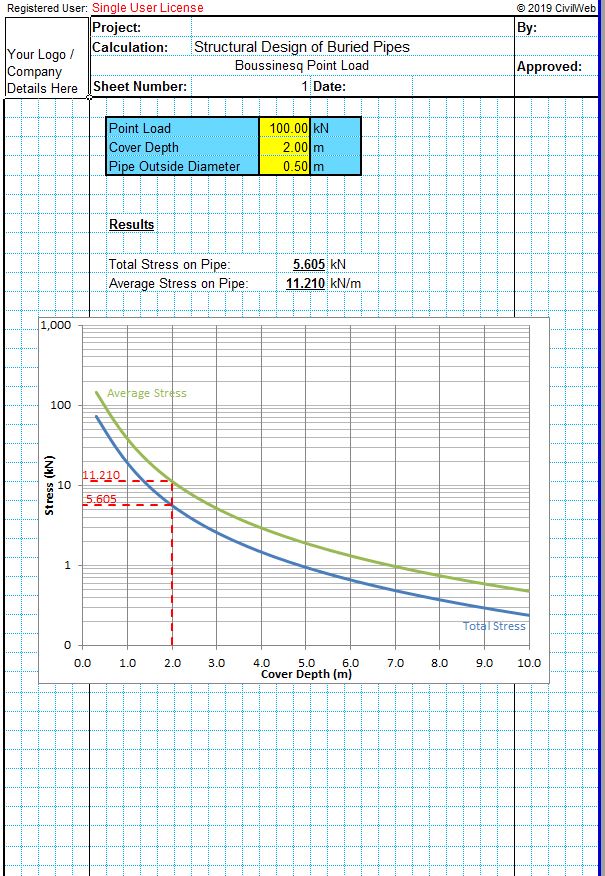
Buried Pipe Design Spreadsheet
This spreadsheet can be used to design concrete, steel, plastic and other buried pipes in accordance with BS EN 1295-1.
Learn More
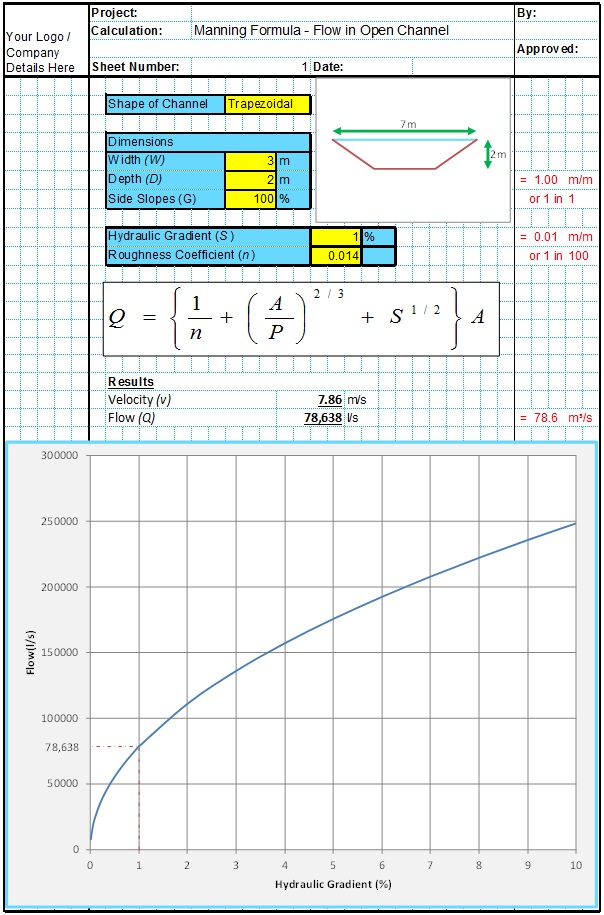
Manning Open Channel Design Spreadsheet
This spreadsheet uses the Manning formula to calculate the flow conditions in an open channel acting under gravity only.
Learn More
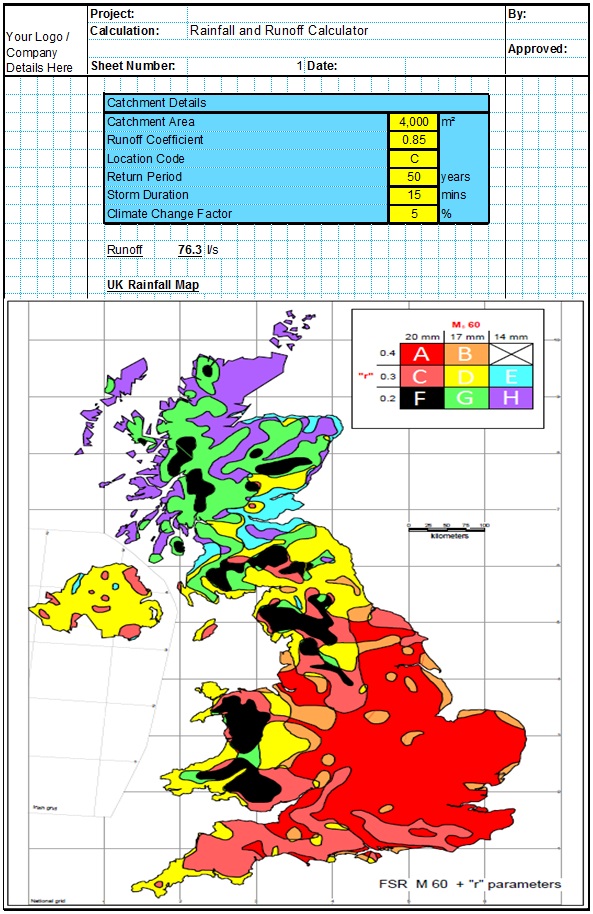
Runoff Calculator Spreadsheet
This spreadsheet calculates the design runoff flow for a site in accordance with the Flood Estimation Handbook.
Learn More
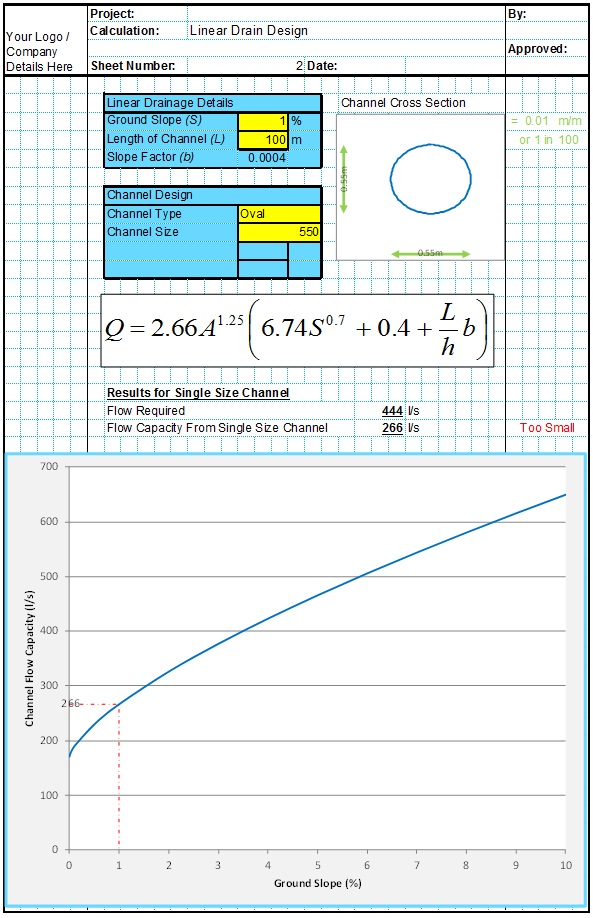
Linear Drainage Design Spreadsheet
This spreadsheet calculates the maximum flow from a specified linear drainage channel and checks whether the channel is sufficient for the specified site and storm conditions.
Learn More
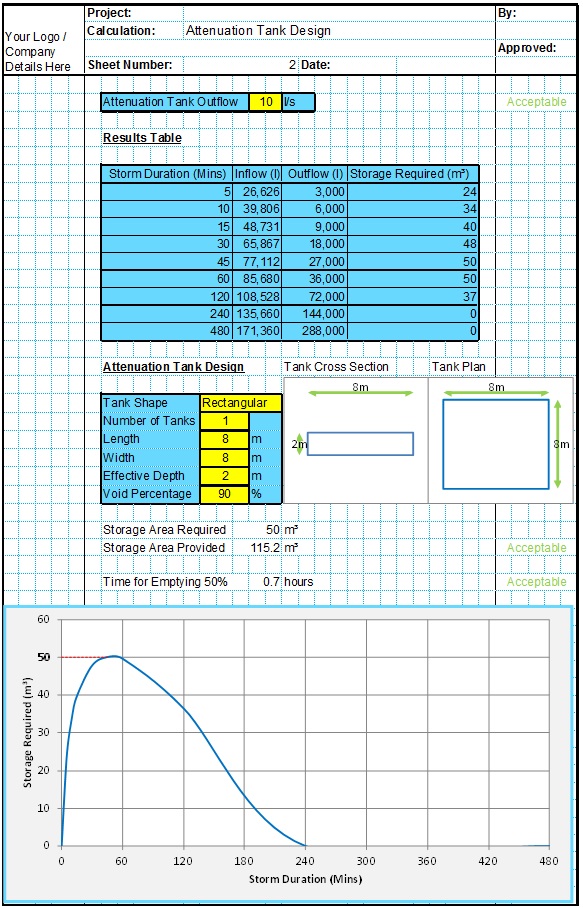
Attenuation Design Spreadsheet
This spreadsheet calculates the requirements for a attenuation system and assists the user to design a suitable system.
Learn More
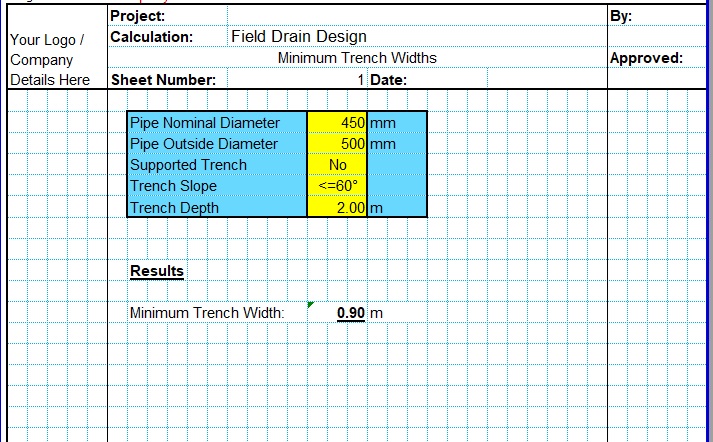
Field Drain Design Spreadsheet
This spreadsheet can be used to design field drains, typically subsurface drainage systems used to drain fields and open areas.
Learn More
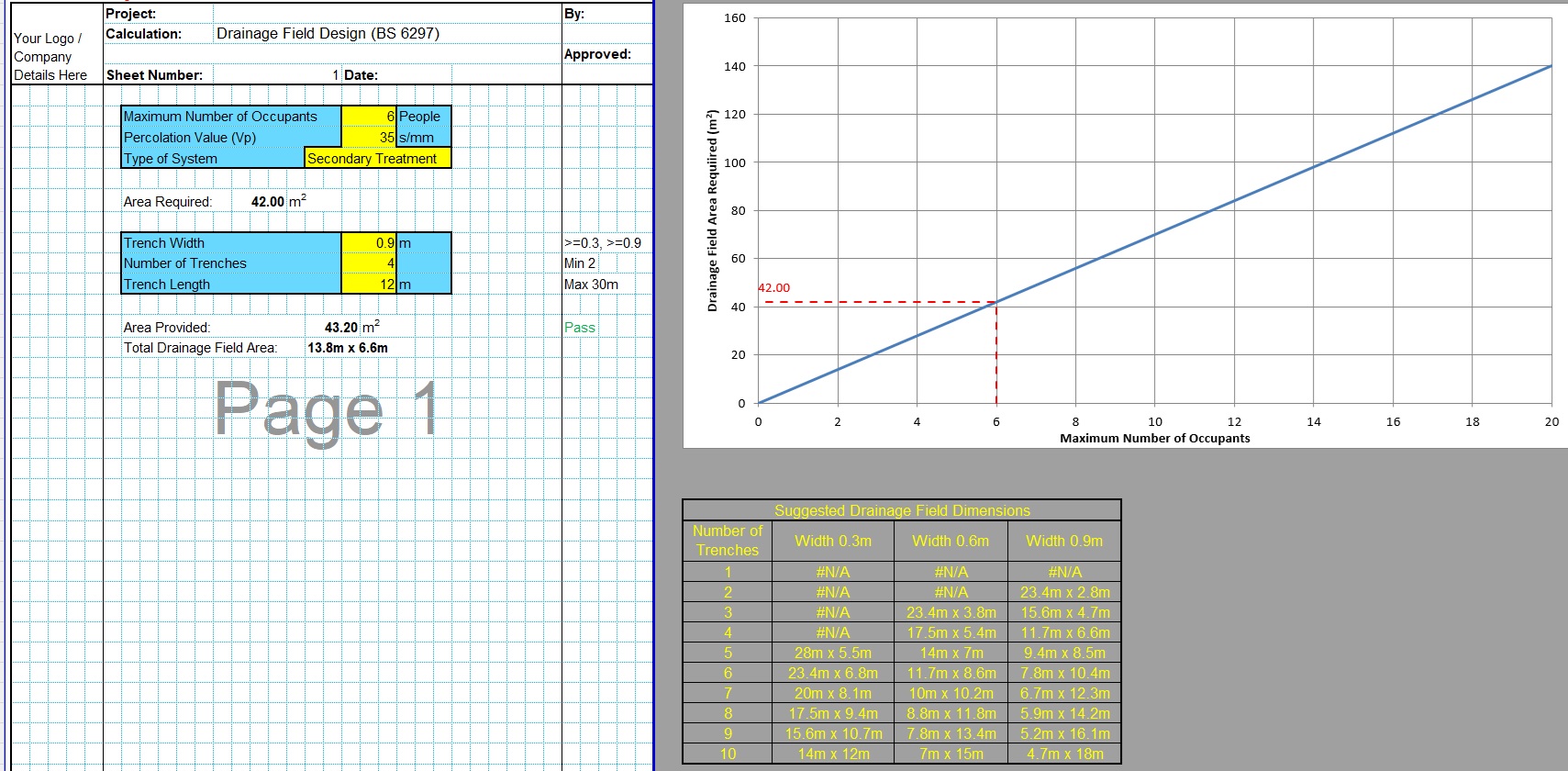
Drainage Field Design Spreadsheet
This spreadsheet can be used to design septic infiltration systems known as drainage fields, leach fields or septic drain fields.
Learn More
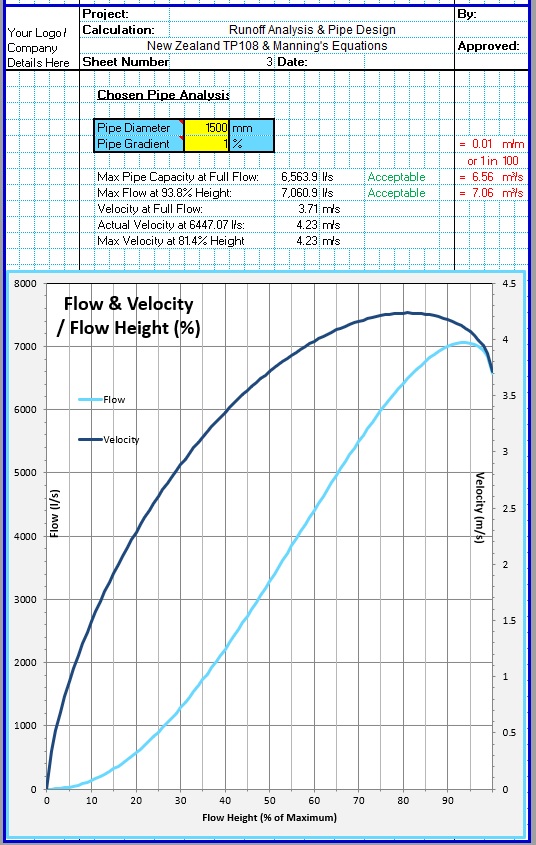
TP108 Spreadsheet
This spreadsheet calculates the rainfall for New Zealand catchments in accordance with TP108.
Learn More
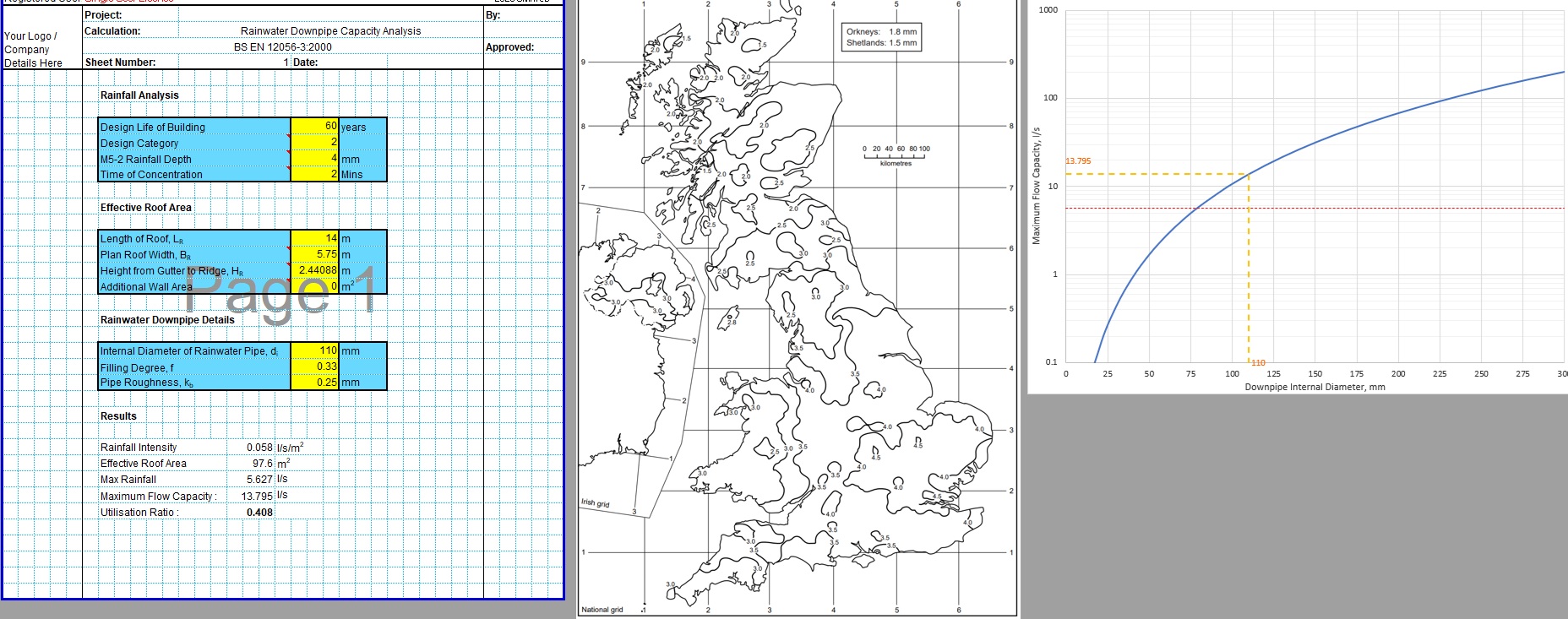
Roof Downpipe Calculator Spreadsheet
This spreadsheet calculates the size of roof drainage downpipes depending on the roof catchment and rainfall requirements.
Learn More
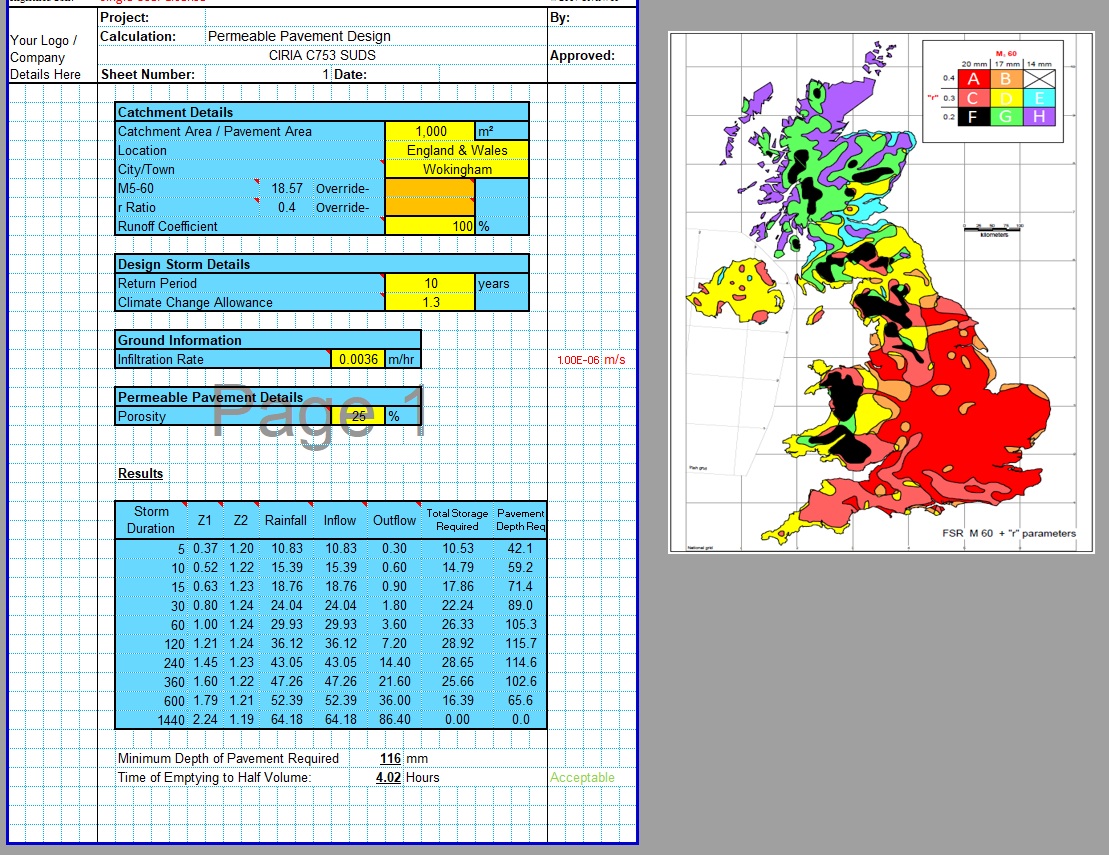
Permeable Pavement Design Spreadsheet
This spreadsheet is designed to determine the size and characteristics of permeable pavements.
Learn More
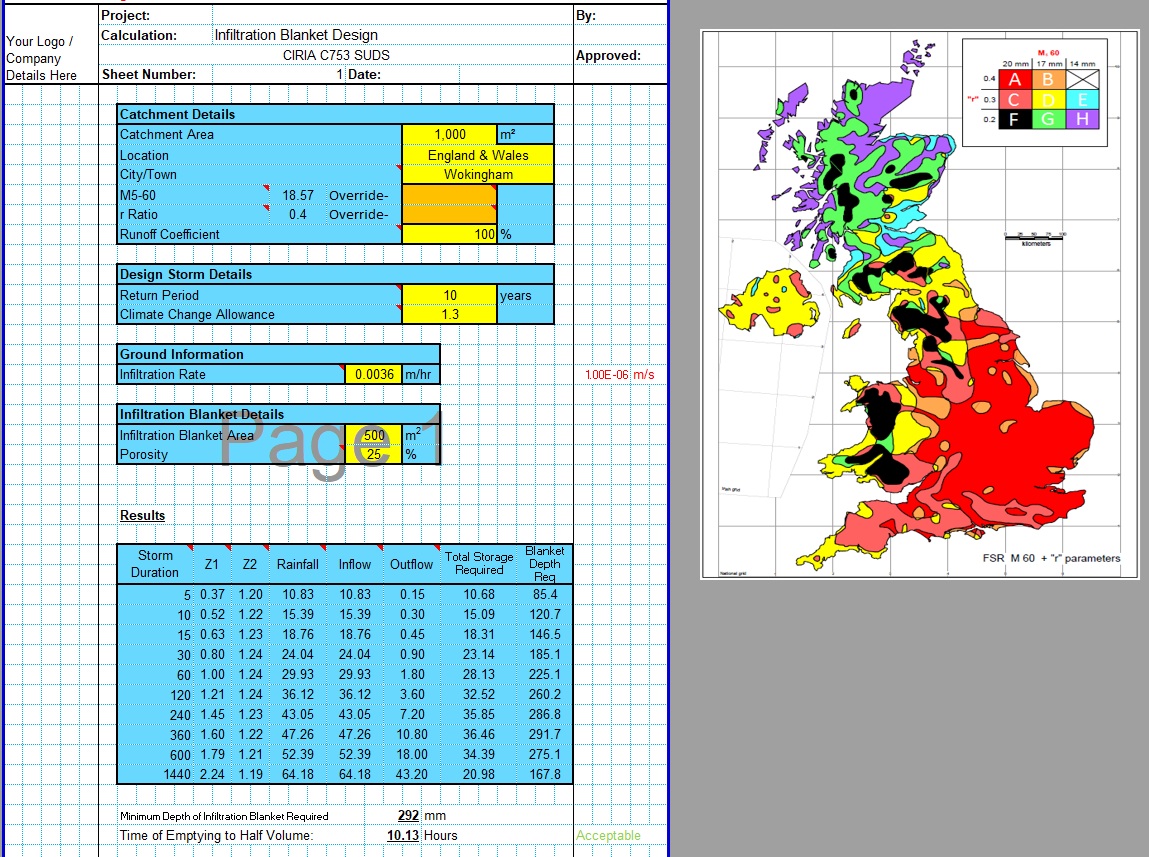
Infiltration Blanket Design Spreadsheet
This spreadsheet can be used to design thin depth infiltration systems, typically called infiltration blanket systems.
Learn More
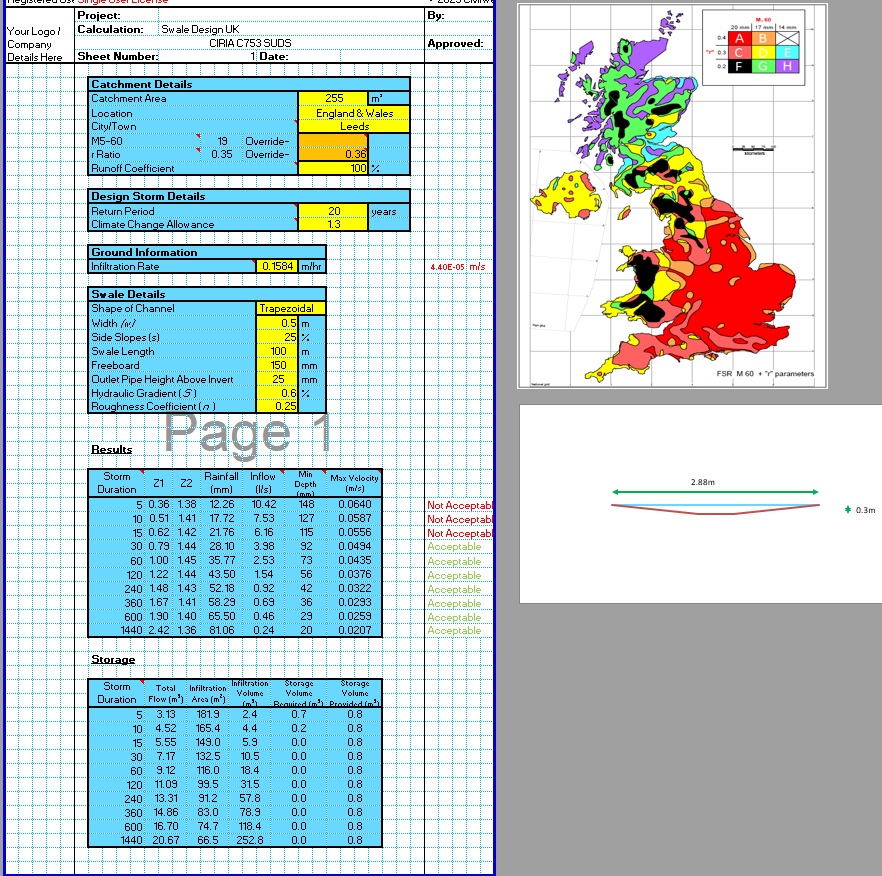
Swale Design Spreadsheet
This spreadsheet can be used to design swales. These linear grassed channels can be used both to convey, infiltrate and filter surface drainage runoff.
Learn More
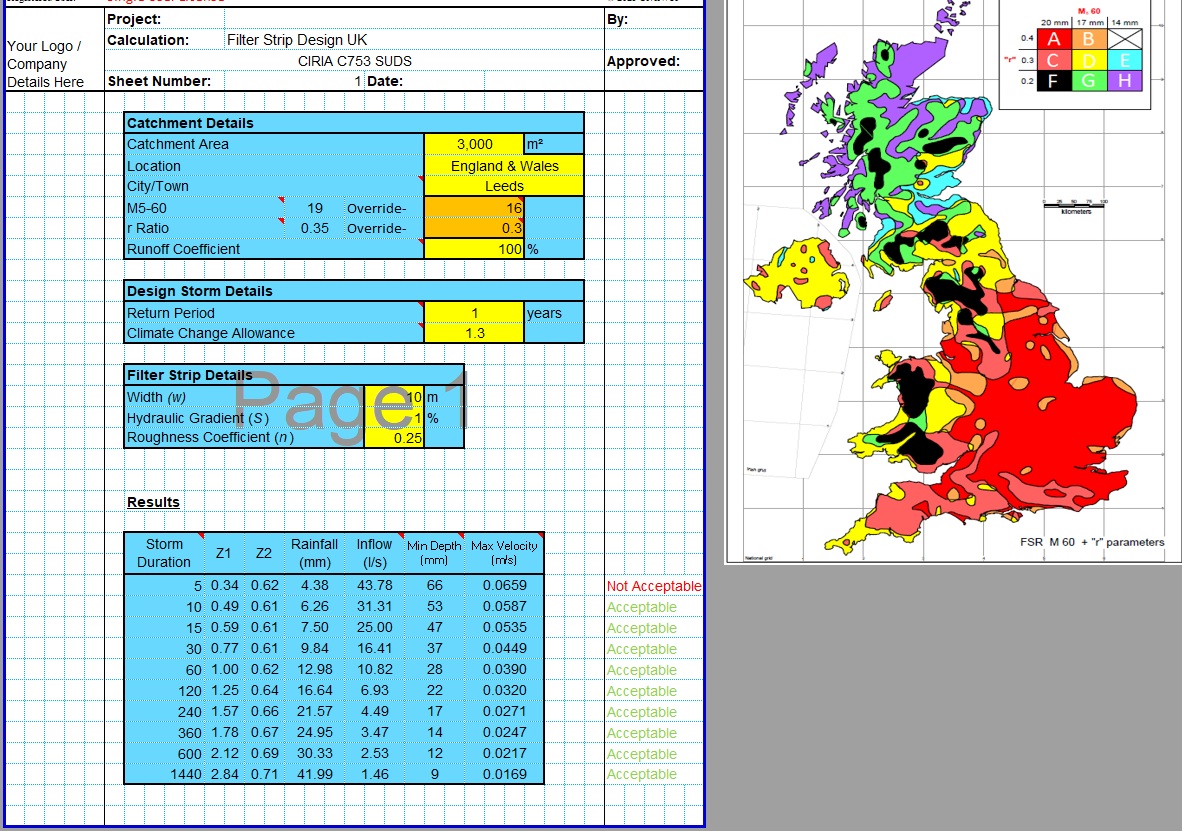
Filter Strip Design Spreadsheet
This spreadsheet is designed to analyse surface water filter strips and to determine the max flow depth and max flow velocity and determine whether they are in accordance with relevant standards.
Learn More
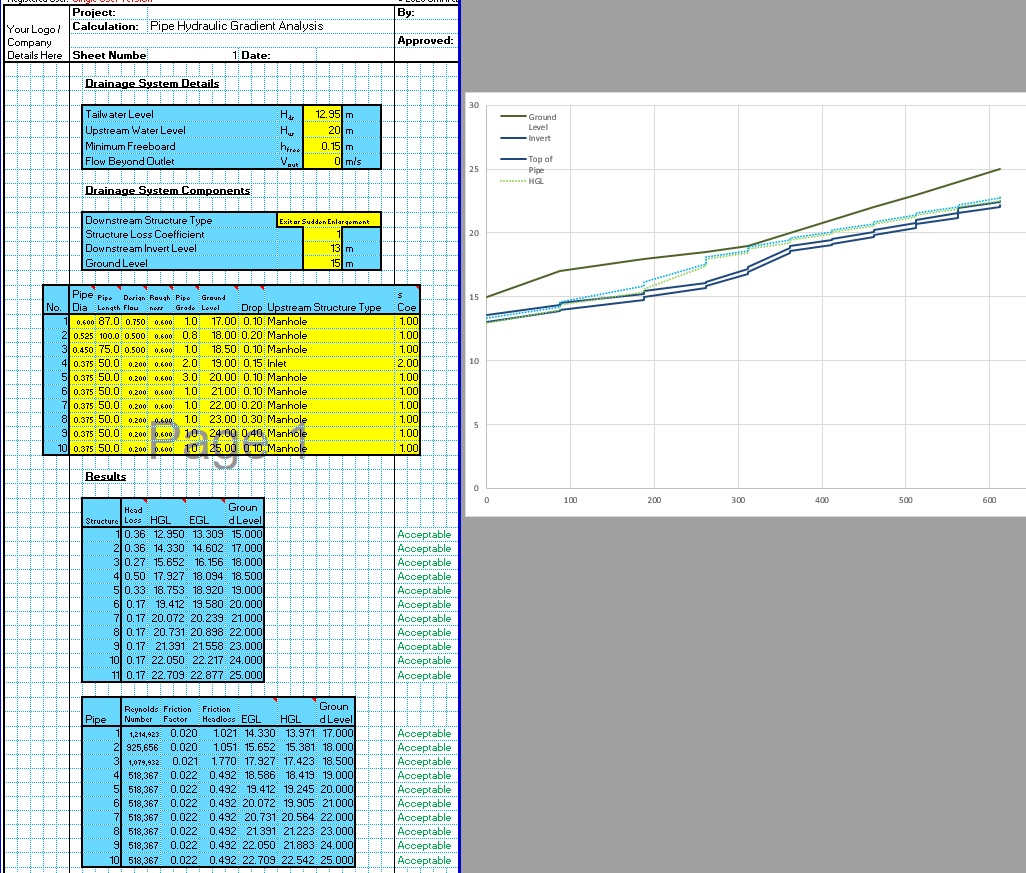
Hydraulic Gradient Analysis Spreadsheet
This spreadsheet analyses the hydraulic and energy grade lines for drainage systems with up to 10 drainage runs.
Learn More
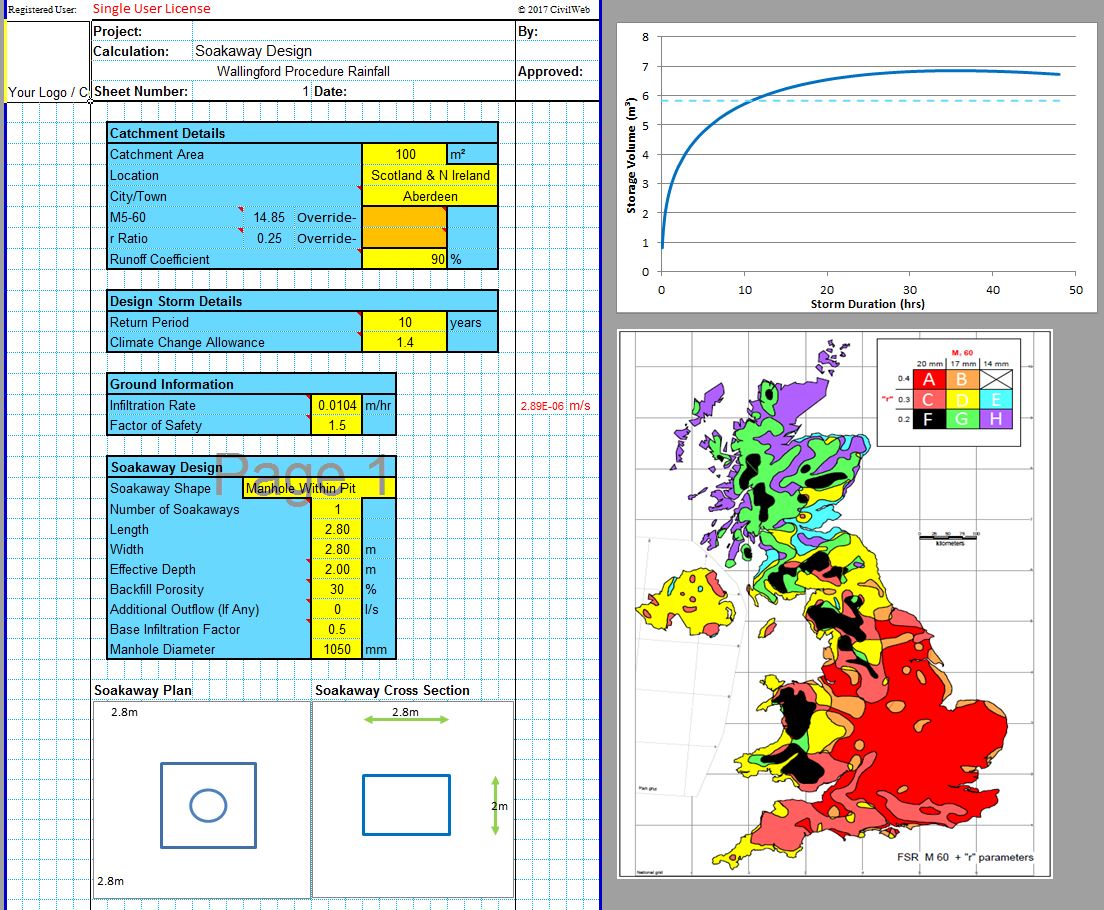
Soakaway Design Spreadsheet
This spreadsheet calculates the requirements for a soakaway system and assists the user to design a suitable system.
Learn More
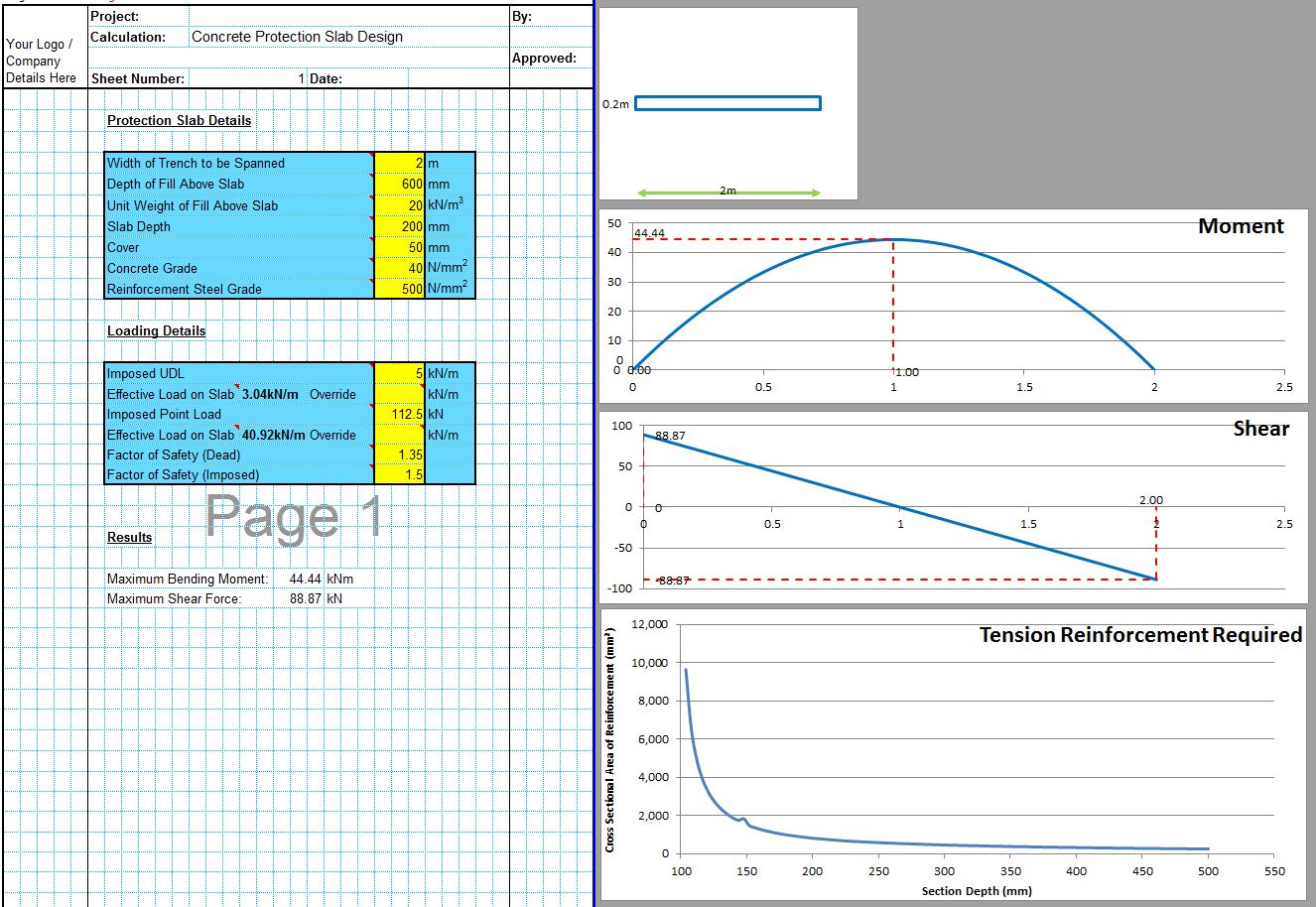
Concrete Protection Slab
This detailed design spreadsheet designs a protection slab commonly installed to protect shallow pipes.
Learn More
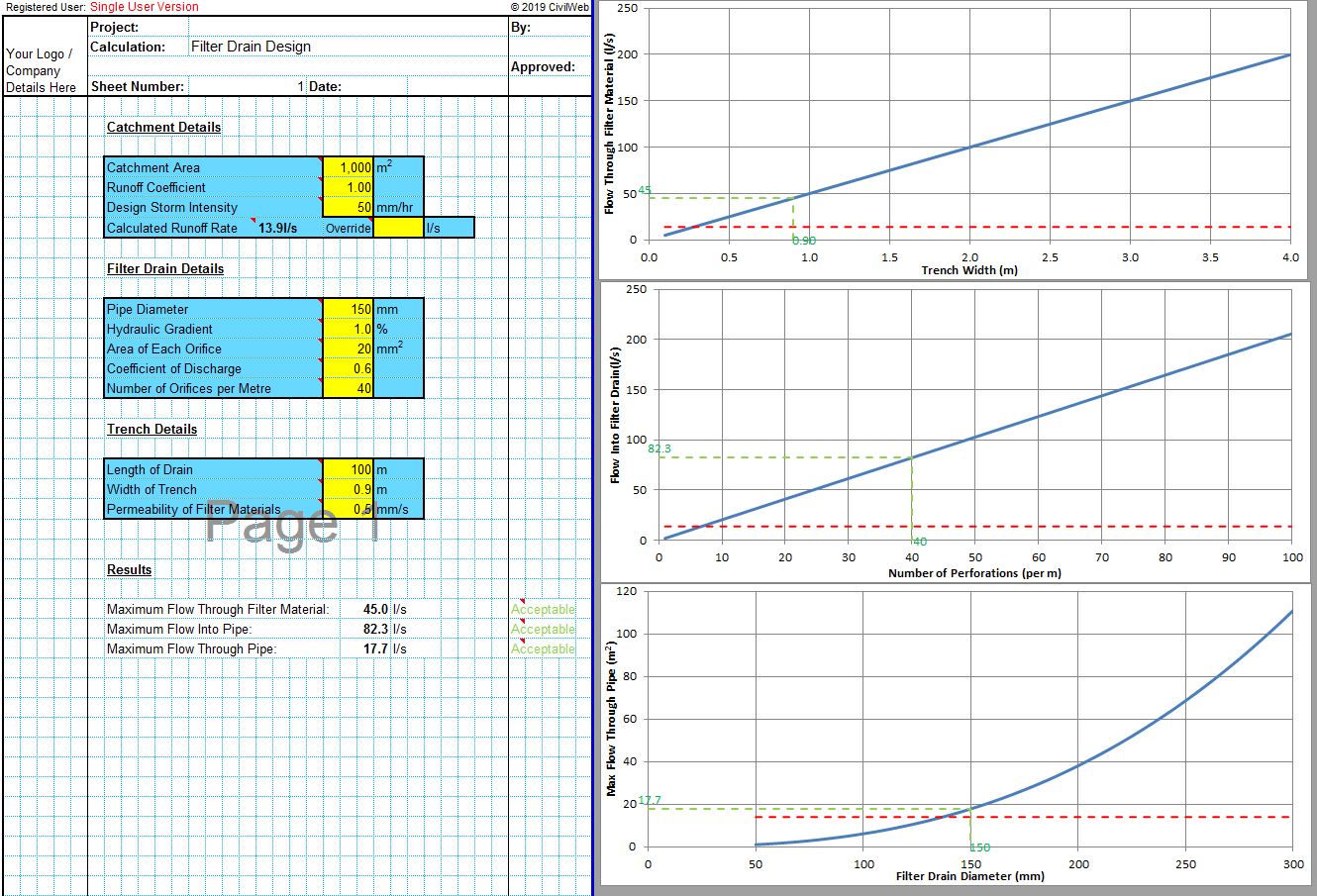
French Drain Design
This spreadsheet completes French Drain Design in accordance with the SUDS Manual.
Learn More
Sharp Crested Weir Flow Calculator Spreadsheets
This suite of 5 separate spreadsheets calculates the flow over sharp crested weirs of all shapes and sizes.
Learn More
Drainage Design Spreadsheet
This is the full suite of drainage design spreadsheets, available at a massive discount for only £49.99.