A clear drain field layout is essential for ensuring that wastewater from a septic system is dispersed evenly, treated effectively in the soil, and kept safely away from groundwater. A well‑planned layout balances soil capacity, trench configuration, and regulatory requirements so the system performs reliably for decades.
The CivilWeb Drainage Field Design Spreadsheet is able to complete all the required calculations fully in accordance with BS 6297:2007+A1:2008, and includes unique optimization tools to speed up the design.
🌿 Purpose of a Drain Field
A drain field—also called a drainage field, leach field, or soakaway—is a subsurface network of perforated pipes laid in gravel-filled trenches. Its role is to purify treated wastewater before it enters the ground by spreading effluent across a broad area where aerobic soil bacteria can break down contaminants. This process is central to meeting environmental rules that require correctly sized and constructed drainage fields.
📐 Core Elements of an Effective Drain Field Layout
A successful layout depends on several interconnected design choices:
- **Trench arrangement** — Drain fields typically use multiple trenches arranged in loops or parallel lines, ensuring even distribution of effluent across the soil. These trenches must sit within the top 700–800 mm of soil to maintain aerobic conditions.
- **Soil porosity and percolation rate** — The soil’s ability to absorb water determines trench length, spacing, and total field area. Percolation tests provide the Vp value used in sizing calculations.
- **Daily wastewater volume** — The field must be large enough to disperse the maximum expected discharge from the property.
- **Regulatory setbacks and depth** — Building regulations require specific distances from buildings, boundaries, and watercourses, as well as construction standards to protect groundwater.
- **Site constraints** — Slope, groundwater level, and available land shape the final layout.
These factors work together to prevent surface breakout, ensure even loading, and maintain long-term treatment performance.
📊 How Drain Field Layouts Are Sized
Sizing is driven by two main variables:
- **Percolation test results (Vp)** — Measures how quickly water drains through the soil.
- **Daily flow rate** — Based on occupancy or building use.
The field must be large enough to treat and disperse the full daily discharge. In practice, sandy soils require shorter trenches, while clay-rich soils may need significantly larger areas or alternative systems.
The CivilWeb Drainage Field Design Spreadsheet can be used to complete all the calculations required to adequately size the drainage field.
🛠️ Construction Practices That Shape the Layout
Good construction reinforces good design:
- Trenches are filled with **clean, washed gravel** to support even flow.
- Pipes must be laid level to avoid overloading one part of the field.
- Soil compaction must be avoided to preserve infiltration capacity.
- Native soil structure should remain undisturbed to maintain aerobic treatment.
- The layout must follow the looped or parallel configuration specified in the design to ensure uniform dispersal.
These practices help the field operate efficiently and extend its lifespan.
🌍 Environmental Protection and Long-Term Performance
A well-designed drain field layout protects groundwater by ensuring wastewater is treated before reaching deeper soil layers. Correct sizing and construction are required to comply with environmental rules and prevent contamination. Regular maintenance—such as septic tank pumping and vegetation management—helps preserve the system’s performance over time.
A thoughtful layout is the foundation of a reliable drainage field.
The CivilWeb Drainage Field Design Spreadsheet is able to complete all the required calculations fully in accordance with BS 6297:2007+A1:2008, and includes unique optimization tools to speed up the design.
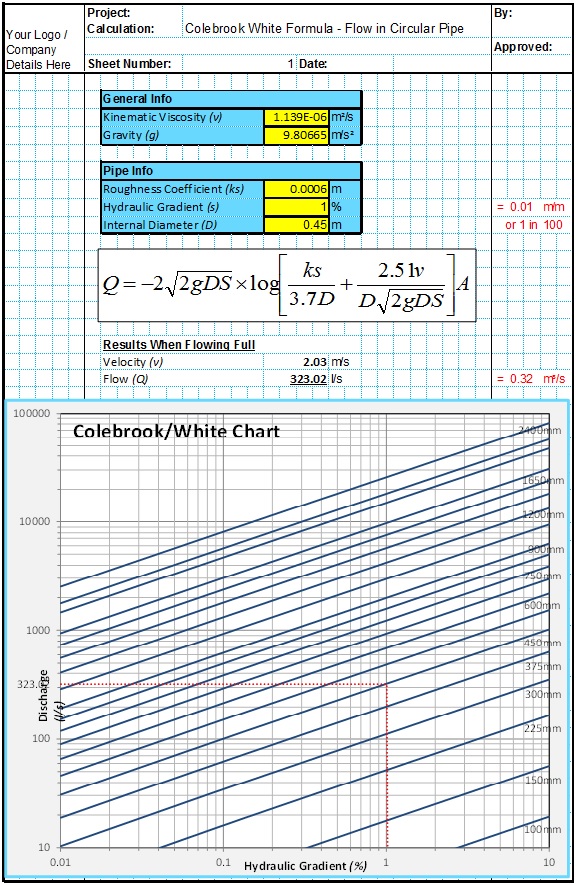
PIPE FLOW CALCULATOR
This spreadsheet uses the Colebrook-White and Manning Equations to calculate the flow capacity and velocity in pipes acting under gravity.
Find Out More
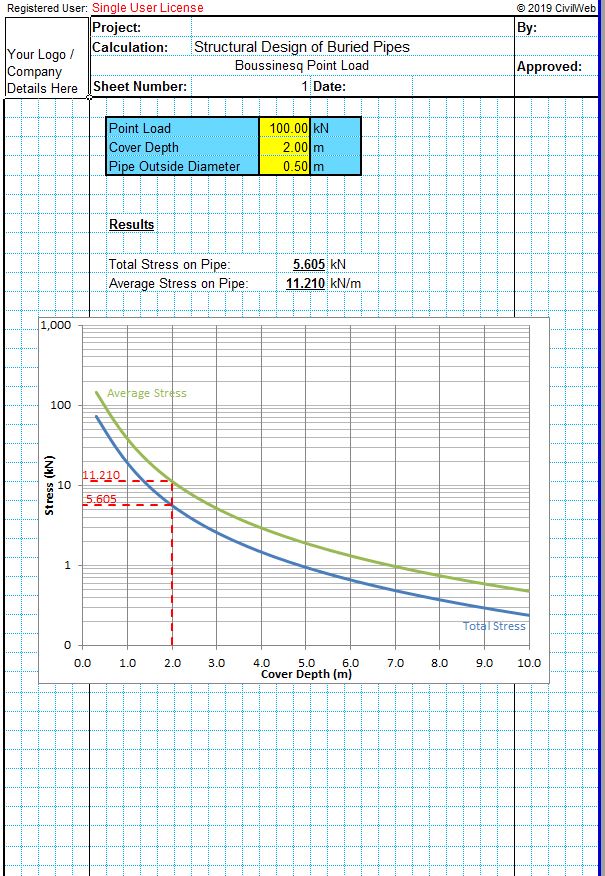
Buried Pipe Design Spreadsheet
This spreadsheet can be used to design concrete, steel, plastic and other buried pipes in accordance with BS EN 1295-1.
Learn More
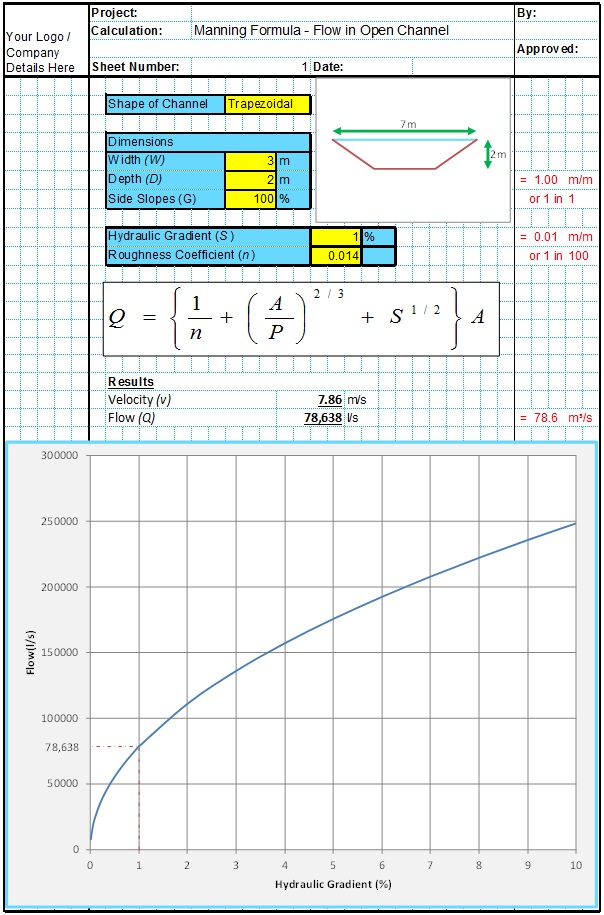
Manning Open Channel Design Spreadsheet
This spreadsheet uses the Manning formula to calculate the flow conditions in an open channel acting under gravity only.
Learn More
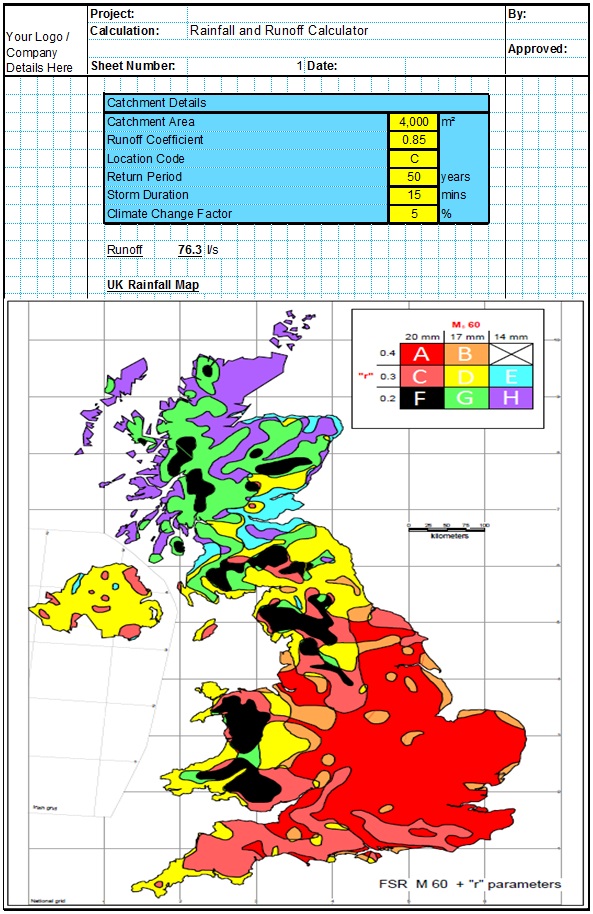
Runoff Calculator Spreadsheet
This spreadsheet calculates the design runoff flow for a site in accordance with the Flood Estimation Handbook.
Learn More
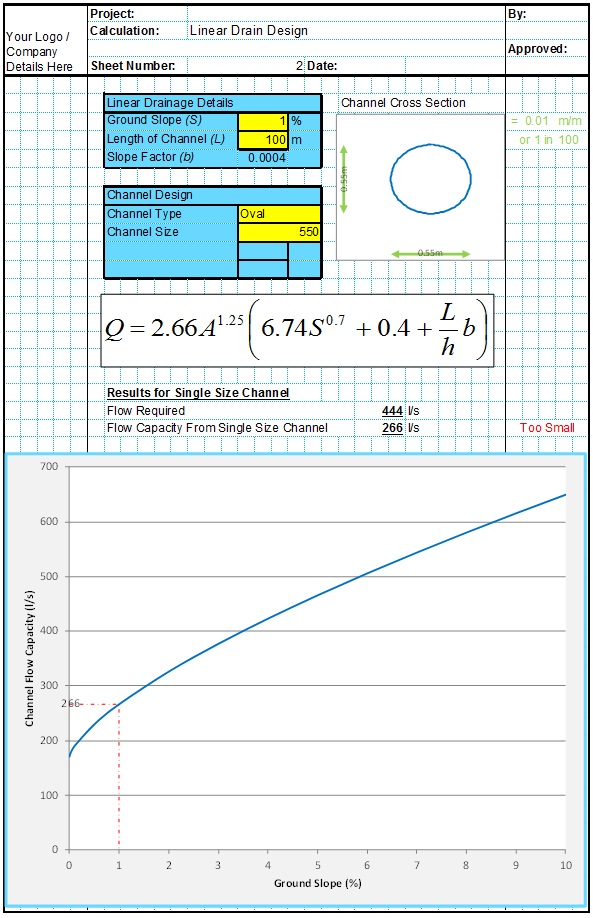
Linear Drainage Design Spreadsheet
This spreadsheet calculates the maximum flow from a specified linear drainage channel and checks whether the channel is sufficient for the specified site and storm conditions.
Learn More
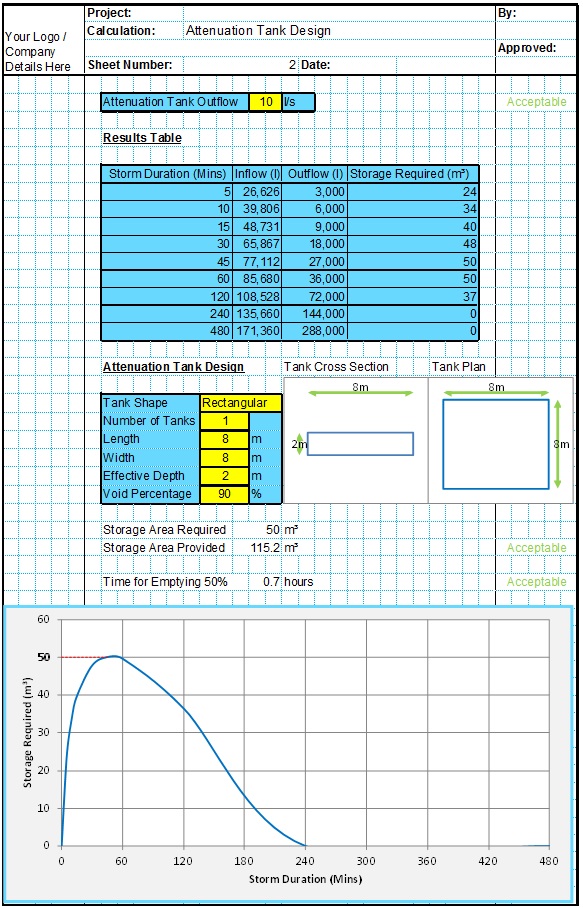
Attenuation Design Spreadsheet
This spreadsheet calculates the requirements for a attenuation system and assists the user to design a suitable system.
Learn More
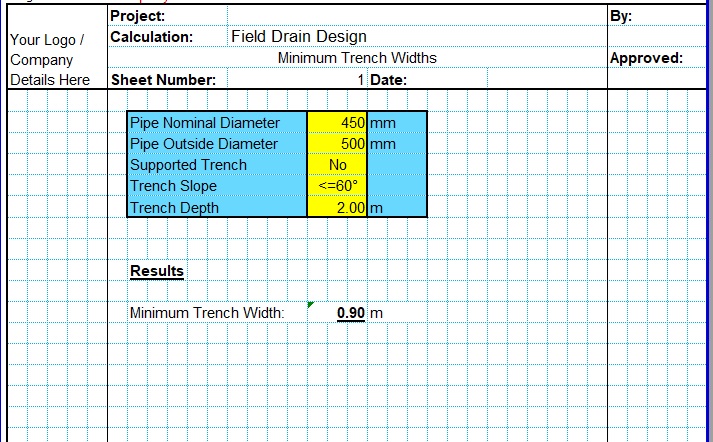
Field Drain Design Spreadsheet
This spreadsheet can be used to design field drains, typically subsurface drainage systems used to drain fields and open areas.
Learn More
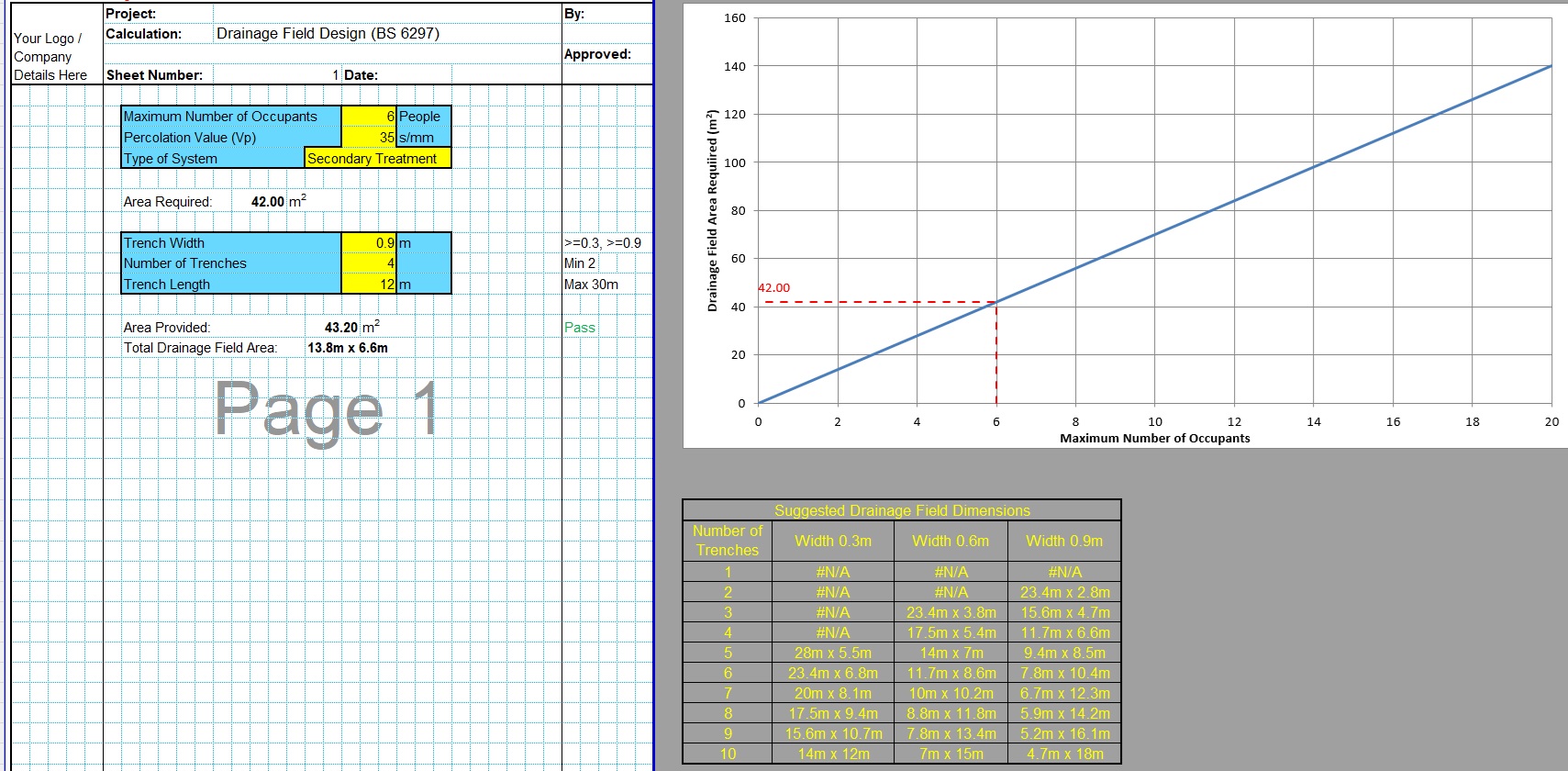
Drainage Field Design Spreadsheet
This spreadsheet can be used to design septic infiltration systems known as drainage fields, leach fields or septic drain fields.
Learn More
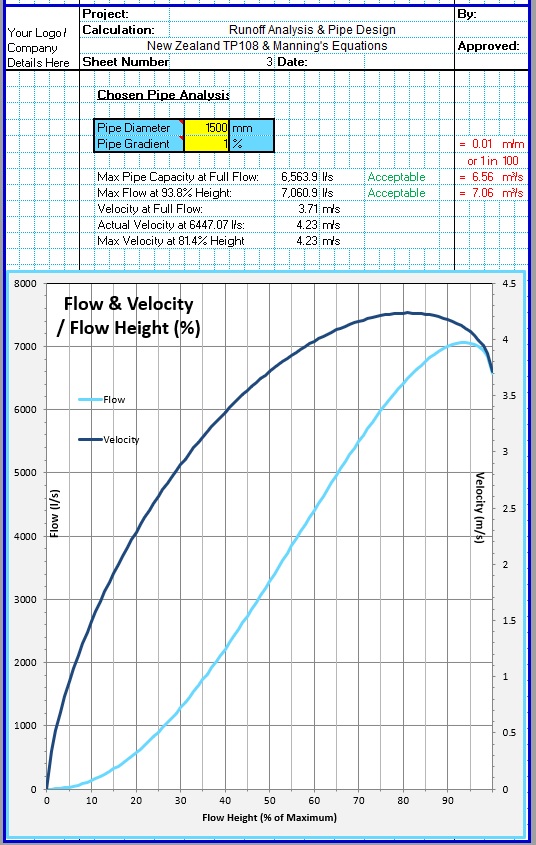
TP108 Spreadsheet
This spreadsheet calculates the rainfall for New Zealand catchments in accordance with TP108.
Learn More
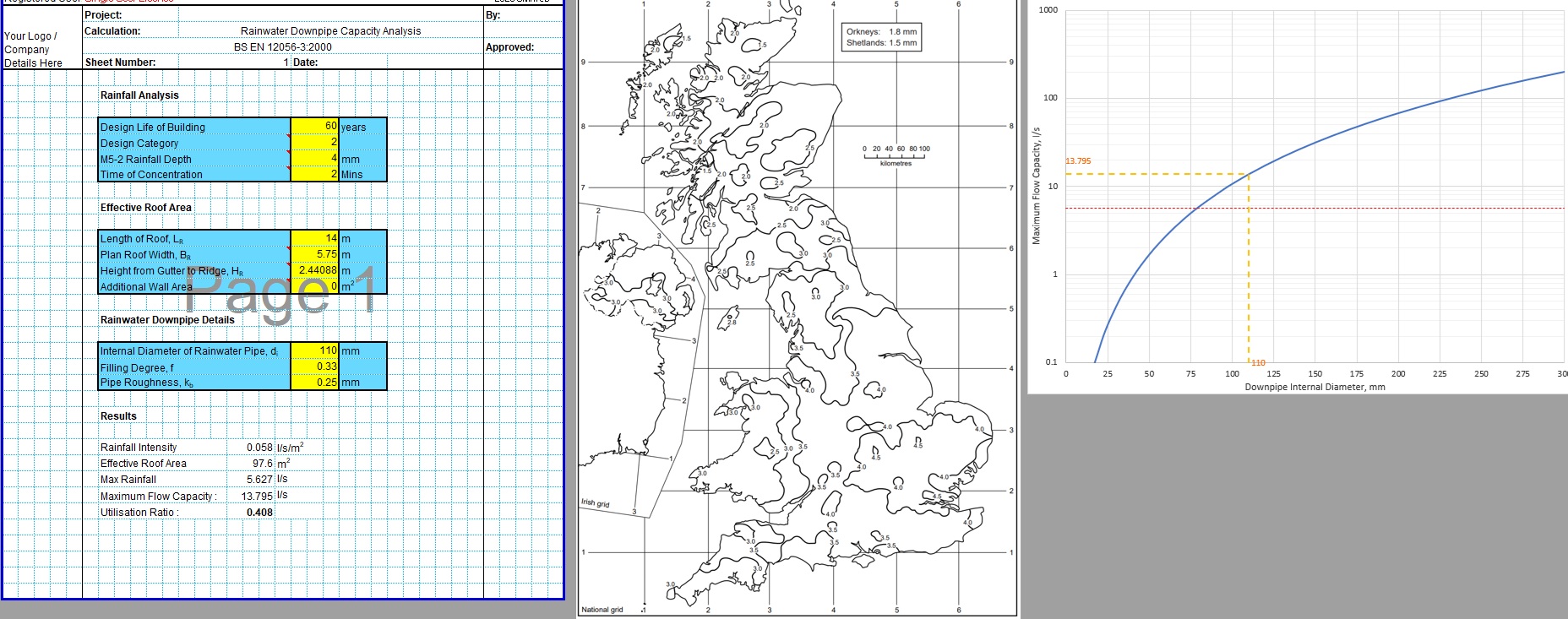
Roof Downpipe Calculator Spreadsheet
This spreadsheet calculates the size of roof drainage downpipes depending on the roof catchment and rainfall requirements.
Learn More
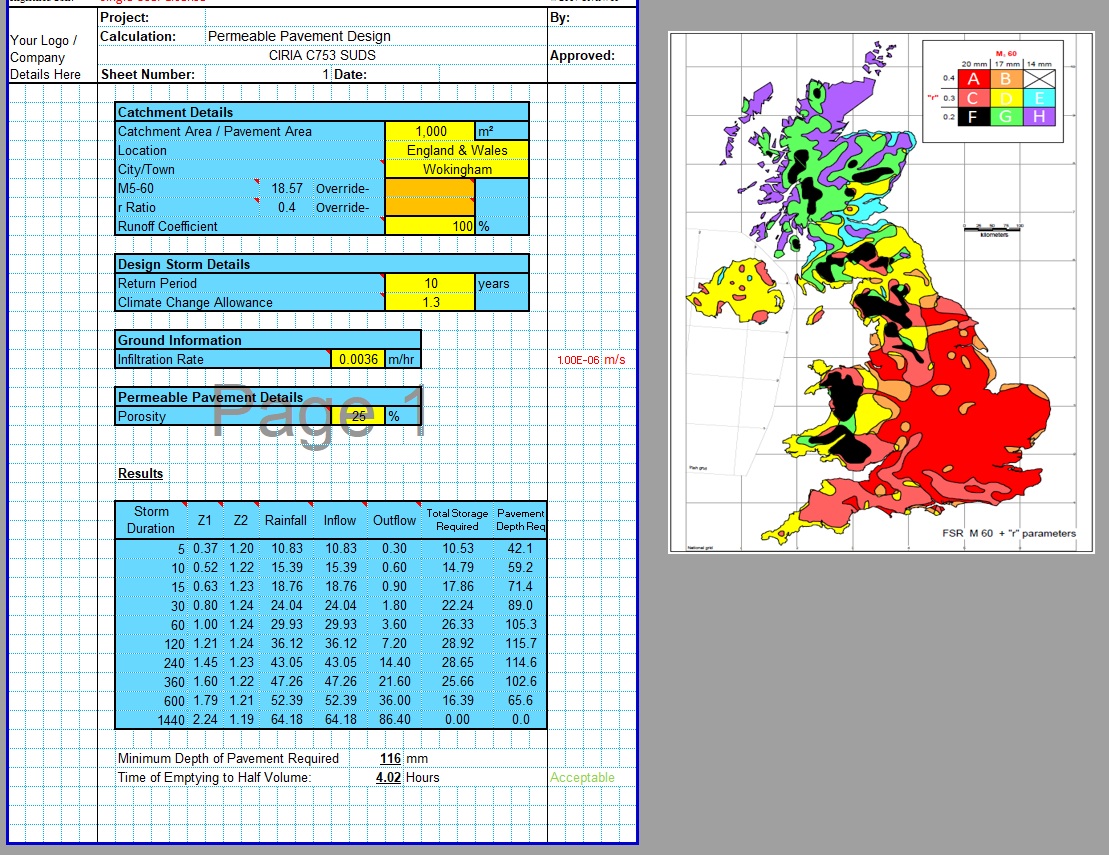
Permeable Pavement Design Spreadsheet
This spreadsheet is designed to determine the size and characteristics of permeable pavements.
Learn More
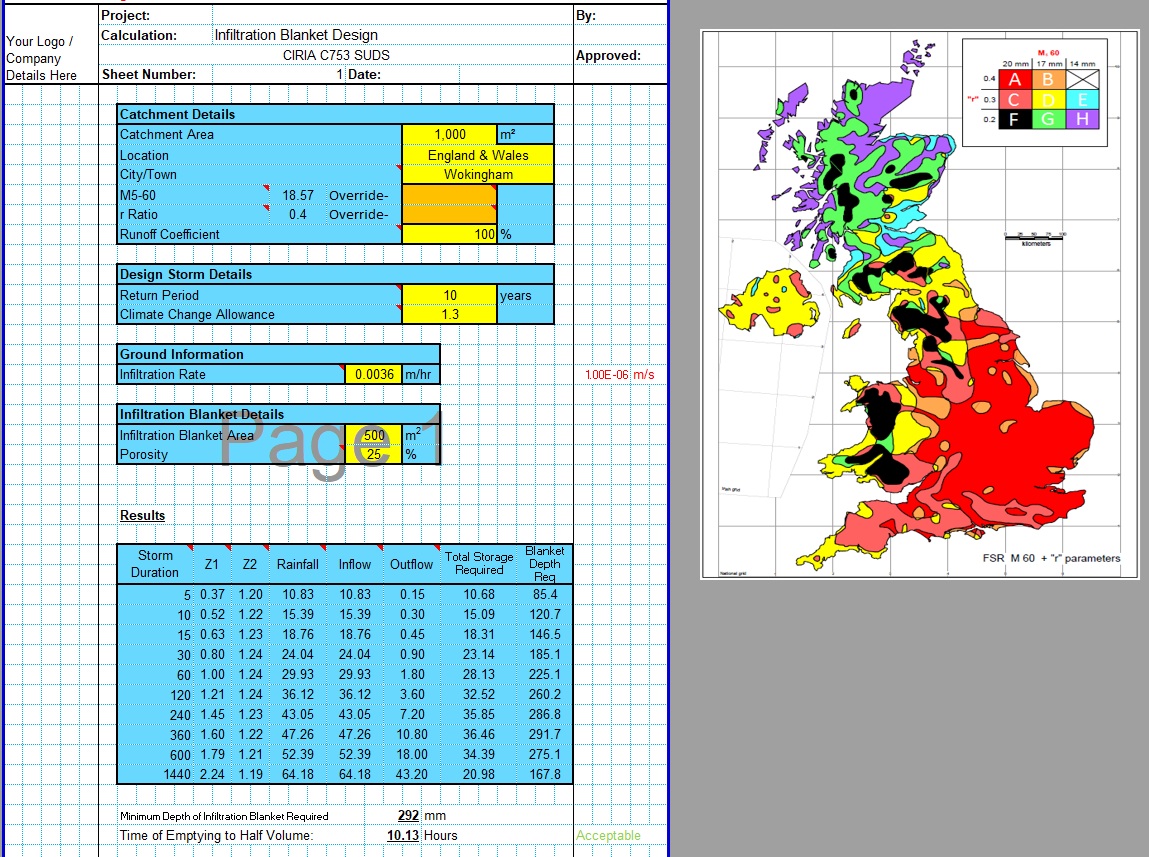
Infiltration Blanket Design Spreadsheet
This spreadsheet can be used to design thin depth infiltration systems, typically called infiltration blanket systems.
Learn More
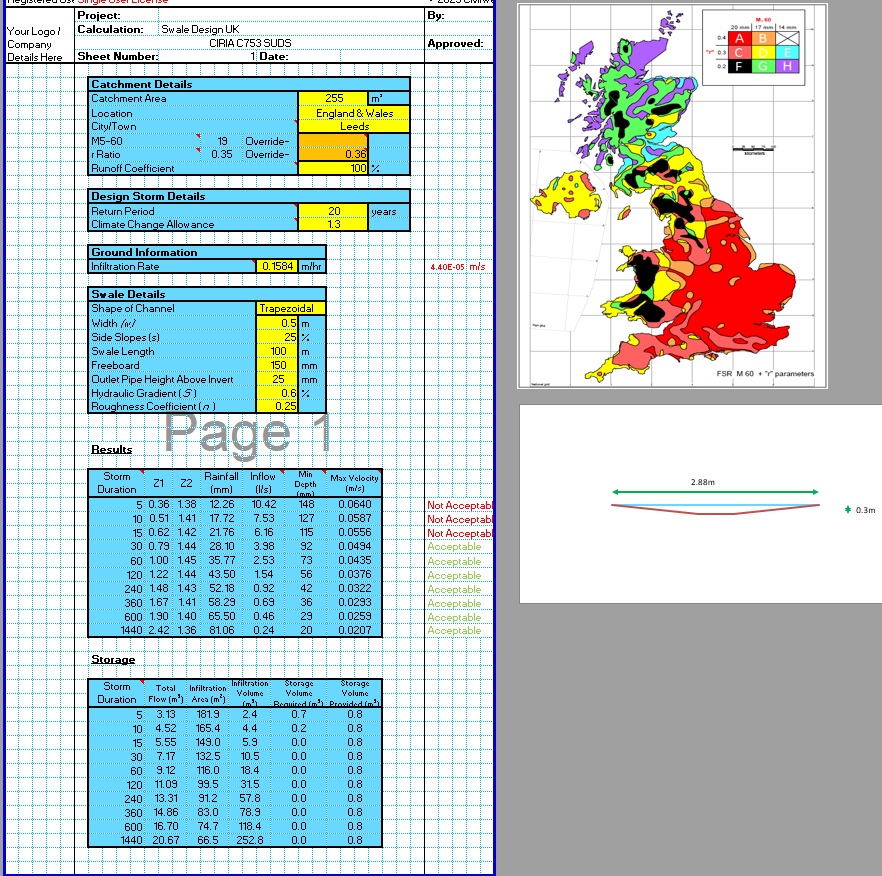
Swale Design Spreadsheet
This spreadsheet can be used to design swales. These linear grassed channels can be used both to convey, infiltrate and filter surface drainage runoff.
Learn More
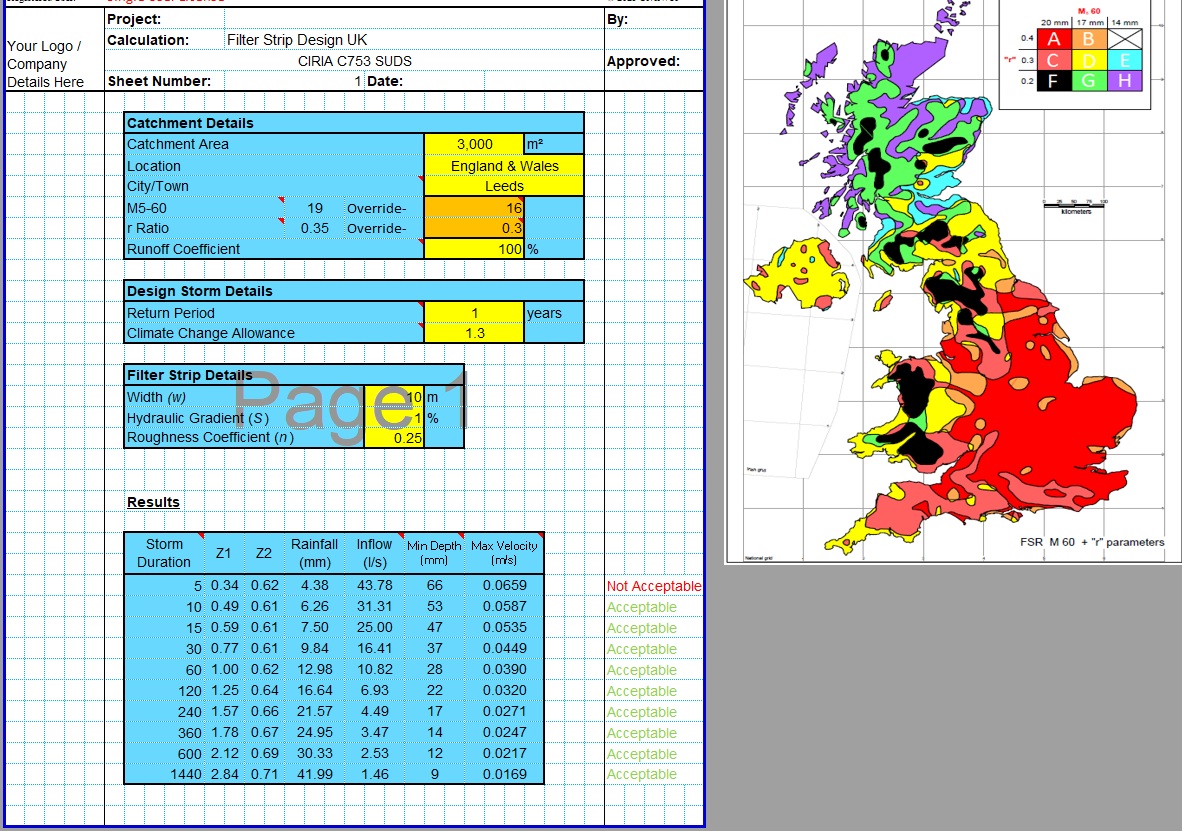
Filter Strip Design Spreadsheet
This spreadsheet is designed to analyse surface water filter strips and to determine the max flow depth and max flow velocity and determine whether they are in accordance with relevant standards.
Learn More
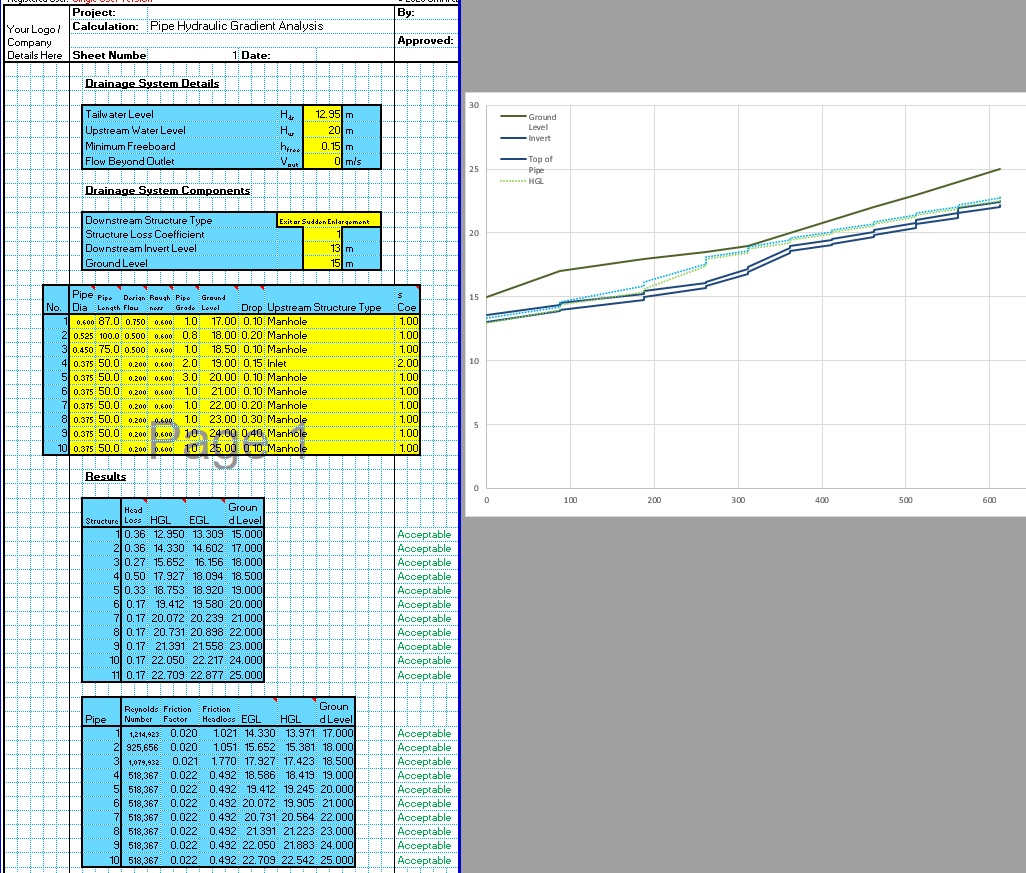
Hydraulic Gradient Analysis Spreadsheet
This spreadsheet analyses the hydraulic and energy grade lines for drainage systems with up to 10 drainage runs.
Learn More
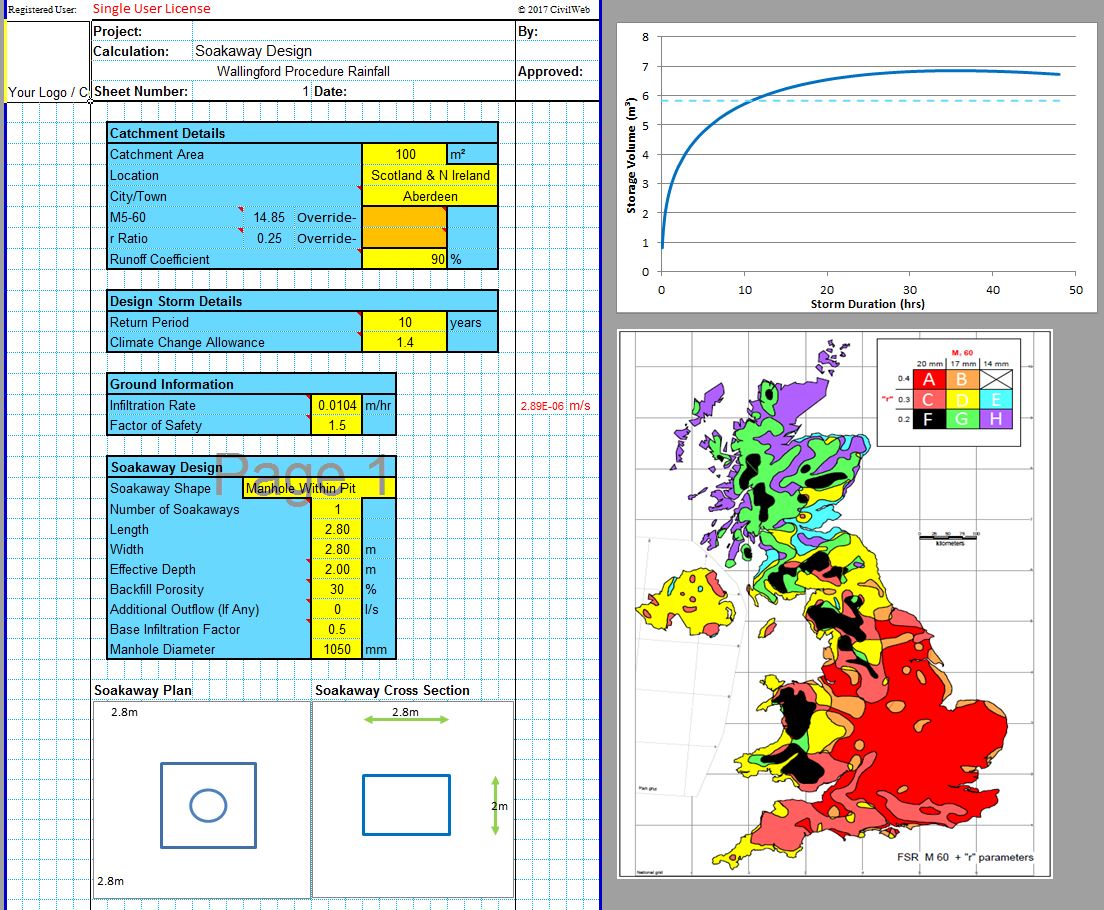
Soakaway Design Spreadsheet
This spreadsheet calculates the requirements for a soakaway system and assists the user to design a suitable system.
Learn More
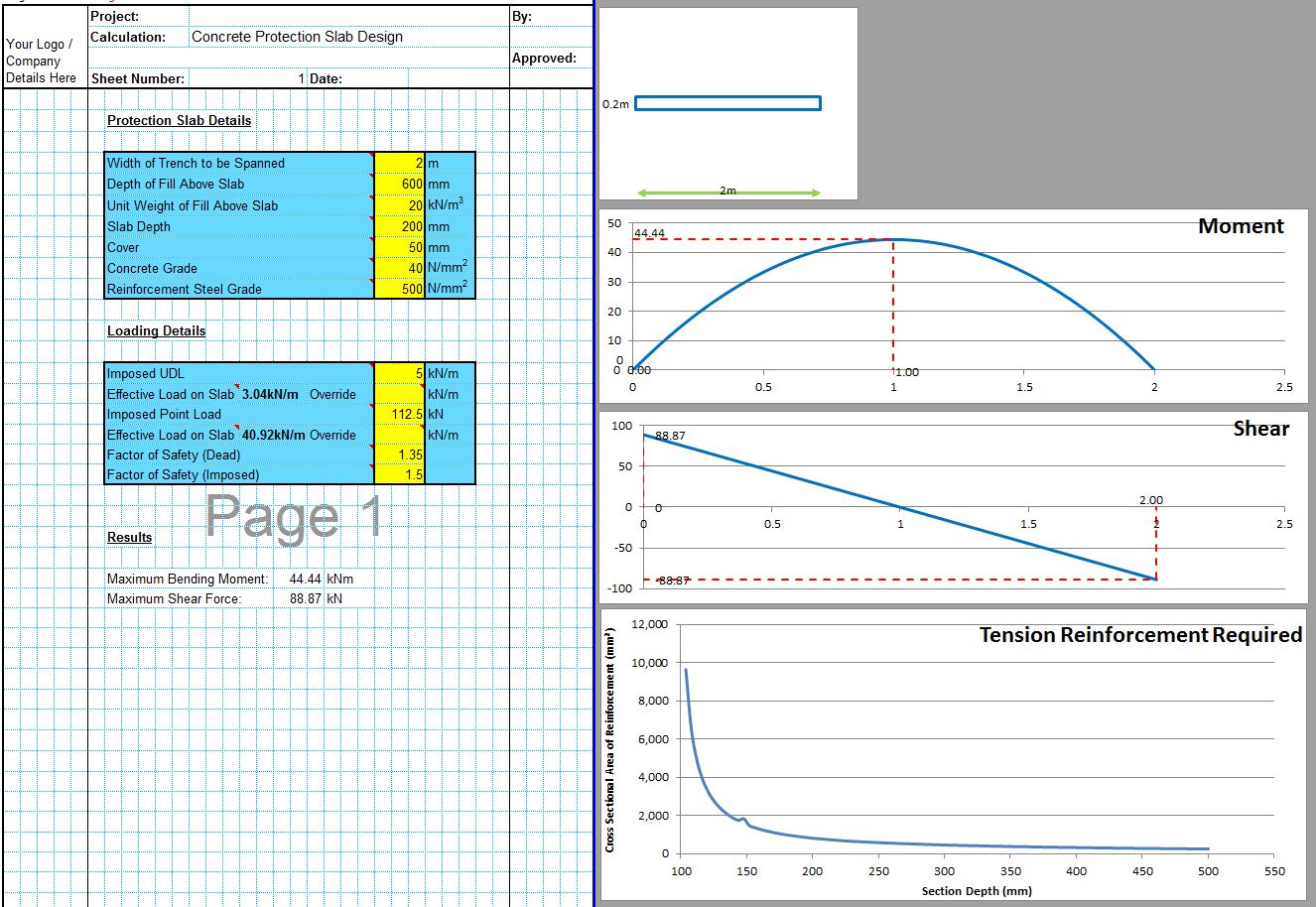
Concrete Protection Slab
This detailed design spreadsheet designs a protection slab commonly installed to protect shallow pipes.
Learn More
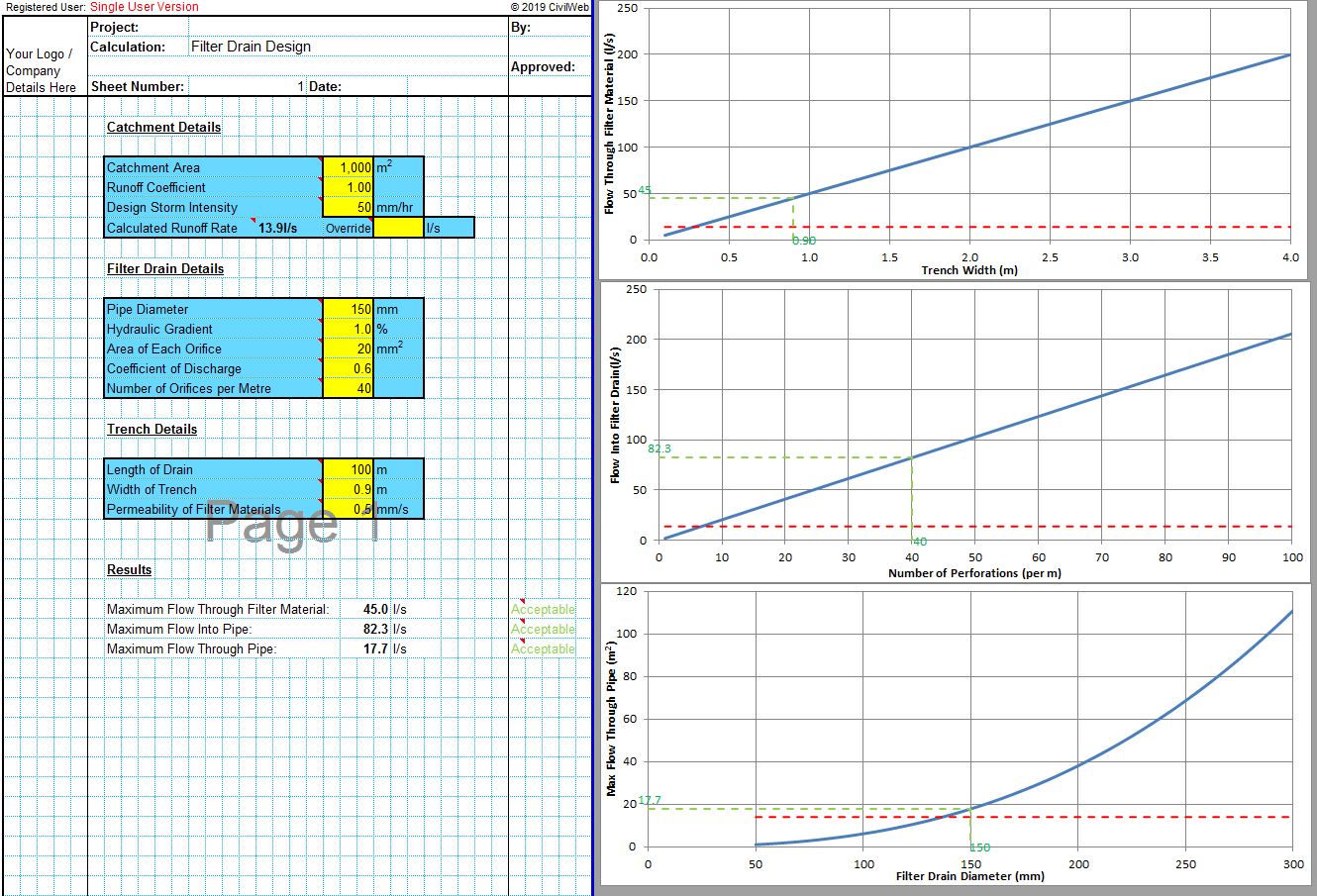
French Drain Design
This spreadsheet completes French Drain Design in accordance with the SUDS Manual.
Learn More
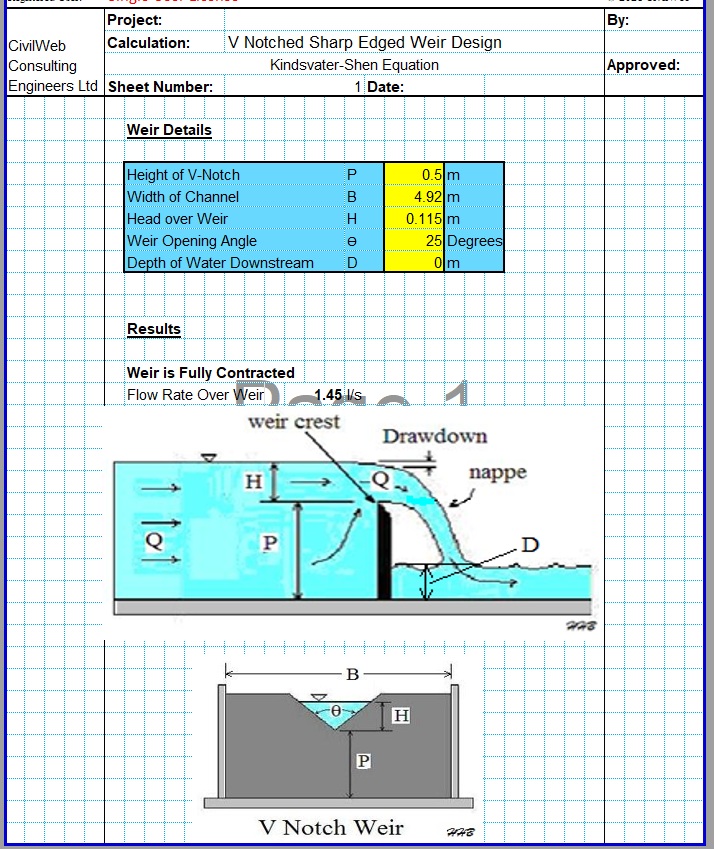
Sharp Crested Weir Flow Calculator Spreadsheets
This suite of 5 separate spreadsheets calculates the flow over sharp crested weirs of all shapes and sizes.
Learn More
Drainage Design Spreadsheet
This is the full suite of drainage design spreadsheets, available at a massive discount for only £49.99.