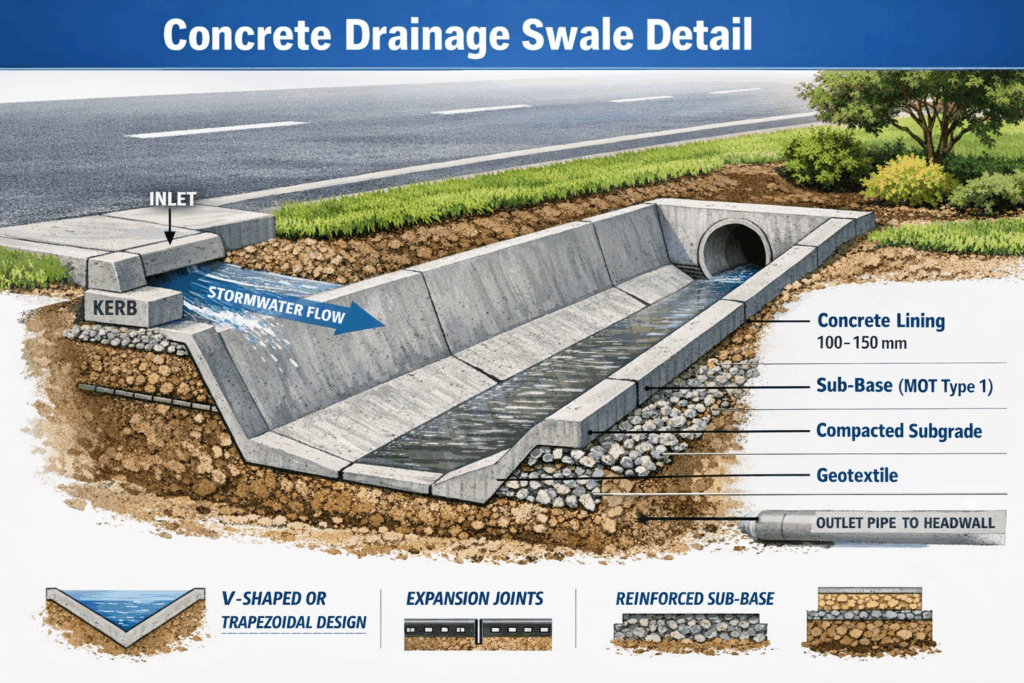
Concrete drainage swale detail refers to the engineered layout, dimensions, and construction layers of a concrete-lined swale used to convey surface water runoff. In the UK, these are often used in highways, industrial sites, and retrofit SuDS schemes where erosion resistance and low maintenance are critical.
The CivilWeb Swale Design Spreadsheet can save hours of repetitive calculations while ensuring compliance with CIRIA C753 SUDS Manual in the UK, CSIRO 1999 in Australia or MSMA in Malaysia, reliable accuracy and even optimisation tools which can save money on materials during the construction phase.
🚧 What Is a Concrete Drainage Swale?
A concrete drainage swale is a shallow, channelised structure lined with concrete to convey stormwater runoff. It may be cast in-situ, precast, or formed using bituminous concrete. These swales are typically used where:
- Flow velocities are high
- Vegetation is impractical
- Maintenance access is limited
- Erosion risk is significant
They are common in:
- Highways and motorways
- Industrial yards
- Car parks
- Retrofit schemes with limited space
📐 Concrete Swale Geometry & Dimensions
| Parameter | Typical Range | Notes |
| Top Width | 0.6–2.0 m | Wider for higher flows |
| Base Width | 0.3–1.0 m | Flat or V-shaped |
| Depth | 150–450 mm | Based on flow volume |
| Side Slopes | 1:3 to 1:6 | Steeper if lined with concrete |
| Longitudinal Slope | 1–5% | Use check dams if steeper |
| Surface Finish | Broomed or trowelled | For slip resistance |
Cross-section types:
- V-shaped: Efficient for low flows
- Trapezoidal: Easier to construct and maintain
- U-shaped (precast): Modular and rapid install
🧱 Concrete Drainage Swale Detail: Layer Breakdown
1. Subgrade Preparation
- Excavate to design depth
- Compact native soil
- Apply geotextile if required
2. Sub-base Layer (100–200 mm)
- Material: MOT Type 1 or Type 3
- Purpose: Load distribution and frost protection
- Compaction: 95% MDD minimum
3. Concrete Lining (100–150 mm)
- Type: C25/30 or C30/37 concrete
- Reinforcement: Optional mesh or fibres
- Finish: Broomed for slip resistance
- Joints: Expansion joints every 6–10 m
4. Edge Restraints
- Options: Concrete haunching, kerbs, or flush edging
- Purpose: Prevent lateral movement and erosion
5. Inlets & Outlets
- Inlet: Curb cut or grated inlet
- Outlet: Headwall, pipe, or soakaway
- Overflow: Optional pipe or spillway
🛠️ Construction Sequence
- Excavation & Subgrade Prep
- - Excavate to swale profile
- - Compact and level subgrade
- Install Sub-base
- - Lay and compact granular material
- - Check levels and falls
- Formwork & Reinforcement
- - Install timber or steel formwork
- - Place mesh or fibre reinforcement
- Pour Concrete
- - Use ready-mix or site-batched concrete
- - Vibrate and finish surface
- Curing & Jointing
- - Apply curing compound
- - Cut joints to control cracking
- Edge Restraints & Landscaping
- - Install kerbs or haunching
- - Backfill and tidy edges
🧪 Hydraulic Performance
Concrete swales are designed for conveyance, not infiltration. Key hydraulic considerations include:
- Flow velocity: Up to 3 m/s with concrete lining
- Capacity: Based on rainfall intensity and catchment area
- Erosion resistance: High due to rigid lining
- Overflow provision: Critical in urban settings
Use CIRIA C753 and Highways England DMRB for design guidance.
📋 Example Specification Table
| Component | Specification | Purpose |
| Sub-base | MOT Type 1, 150 mm | Load support |
| Concrete | C25/30, 100 mm | Durable lining |
| Reinforcement | A142 mesh or fibres | Crack control |
| Side Slopes | 1:3 | Stability |
| Inlet | Curb cut with apron | Flow entry |
| Outlet | Headwall with pipe | Flow exit |
🧼 Maintenance Requirements
Concrete swales are low-maintenance but require periodic inspection:
Monthly
- Remove debris and litter
- Check for ponding or blockages
Annually
- Inspect joints and surface condition
- Reapply curing compound if needed
- Check edge restraints
🎯 When to Use a Concrete Swale vs Vegetated Swale
| Feature | Concrete Swale | Vegetated Swale |
| Flow Capacity | High | Moderate |
| Erosion Resistance | Excellent | Moderate |
| Water Quality Treatment | Low | High |
| Maintenance | Low | Moderate |
| Aesthetic Value | Low | High |
| Infiltration | None | Possible |
Get Started Today
Save hours of repetitive calculation time. Whether you’re working on a major project or a small renovation, this tool will give you clarity, accuracy, and confidence.
Buy the CivilWeb Swale Design Spreadsheet now for only £19.99.
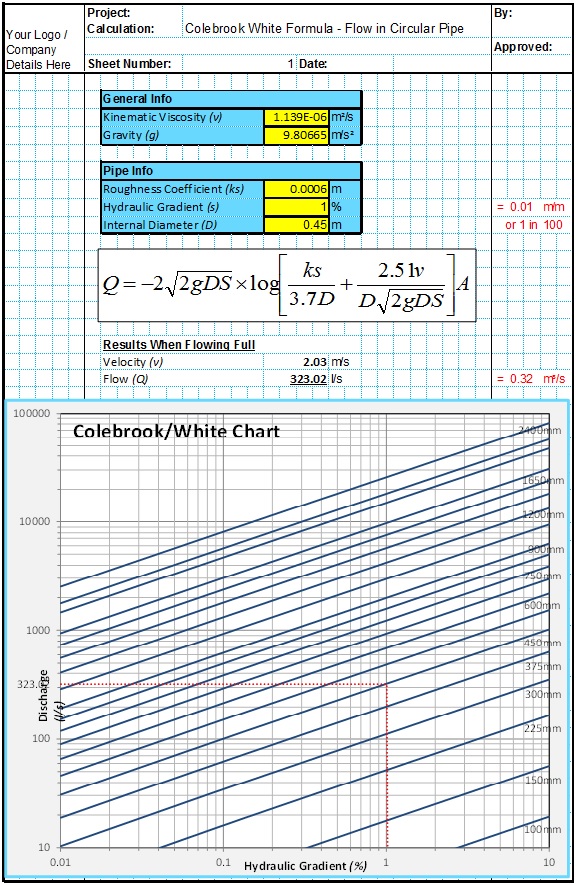
PIPE FLOW CALCULATOR
This spreadsheet uses the Colebrook-White and Manning Equations to calculate the flow capacity and velocity in pipes acting under gravity.
Find Out More
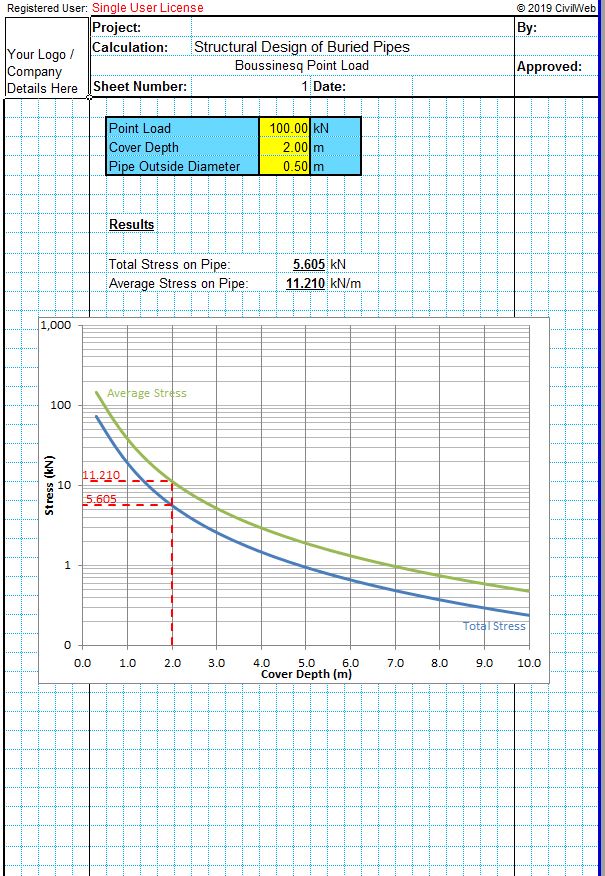
Buried Pipe Design Spreadsheet
This spreadsheet can be used to design concrete, steel, plastic and other buried pipes in accordance with BS EN 1295-1.
Learn More
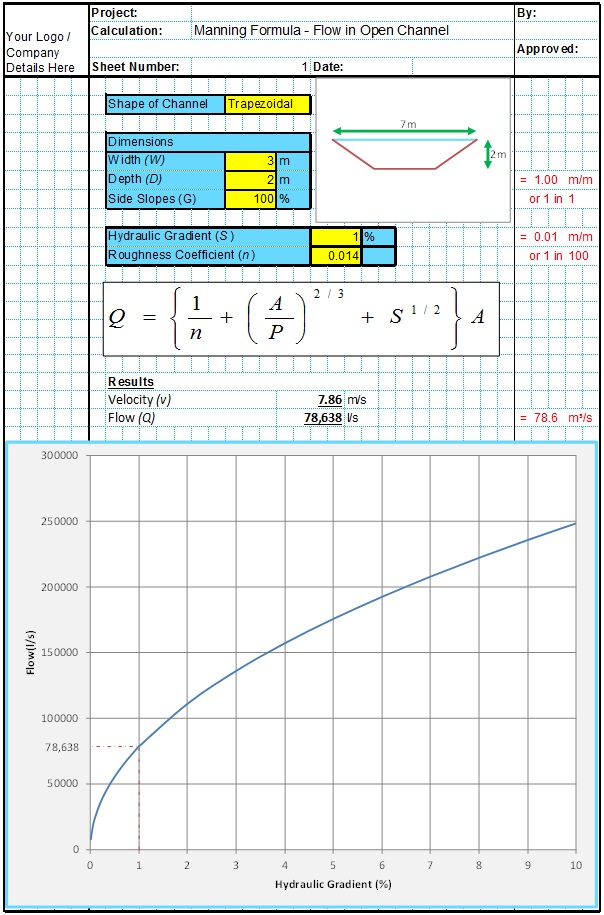
Manning Open Channel Design Spreadsheet
This spreadsheet uses the Manning formula to calculate the flow conditions in an open channel acting under gravity only.
Learn More
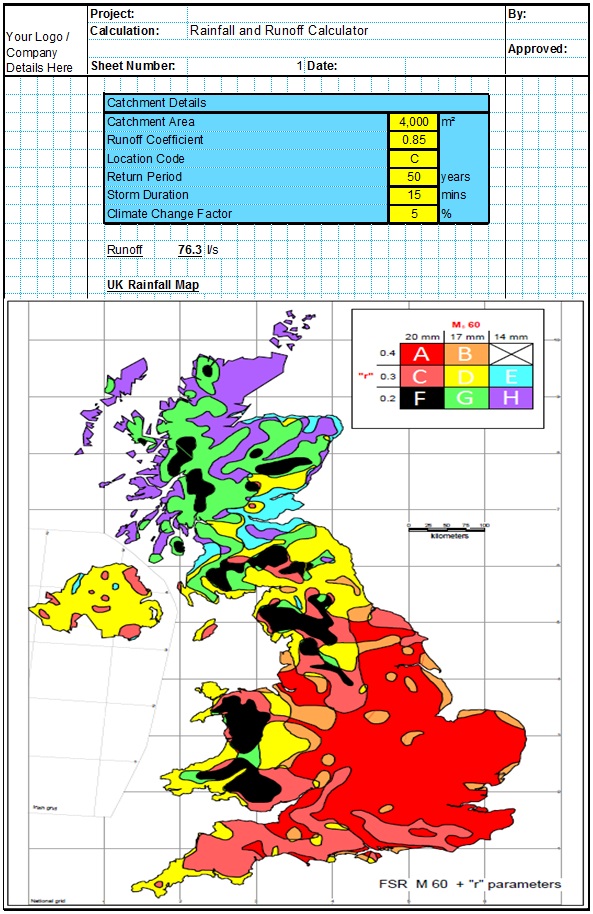
Runoff Calculator Spreadsheet
This spreadsheet calculates the design runoff flow for a site in accordance with the Flood Estimation Handbook.
Learn More
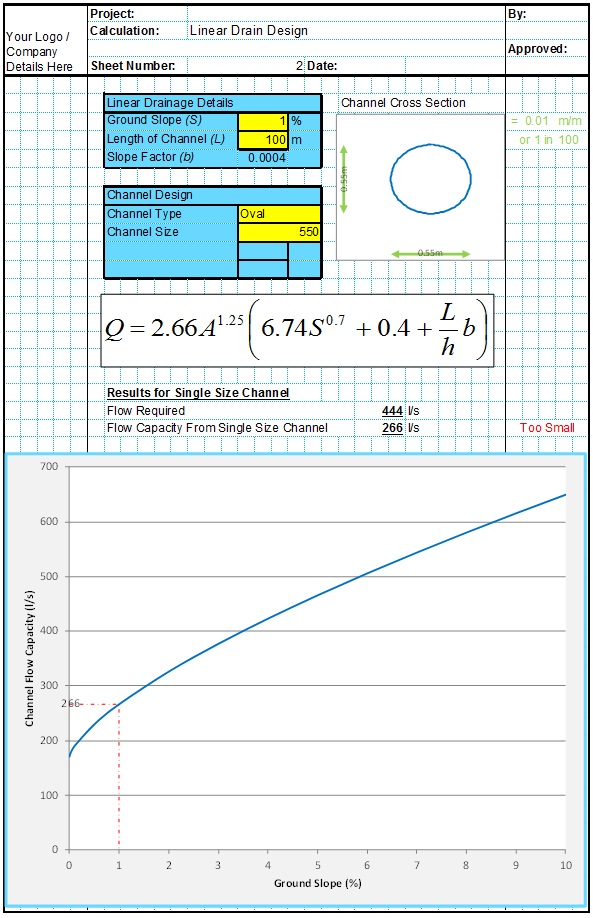
Linear Drainage Design Spreadsheet
This spreadsheet calculates the maximum flow from a specified linear drainage channel and checks whether the channel is sufficient for the specified site and storm conditions.
Learn More
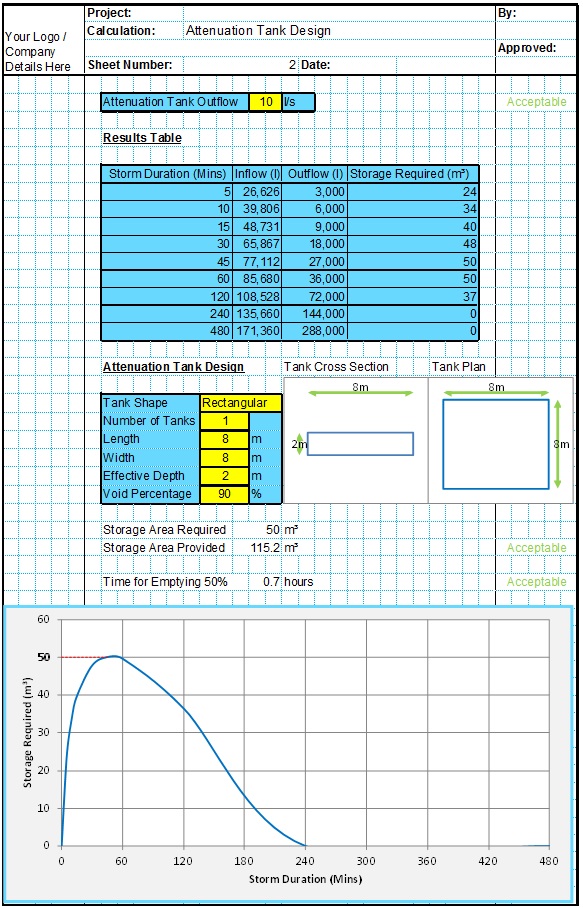
Attenuation Design Spreadsheet
This spreadsheet calculates the requirements for a attenuation system and assists the user to design a suitable system.
Learn More
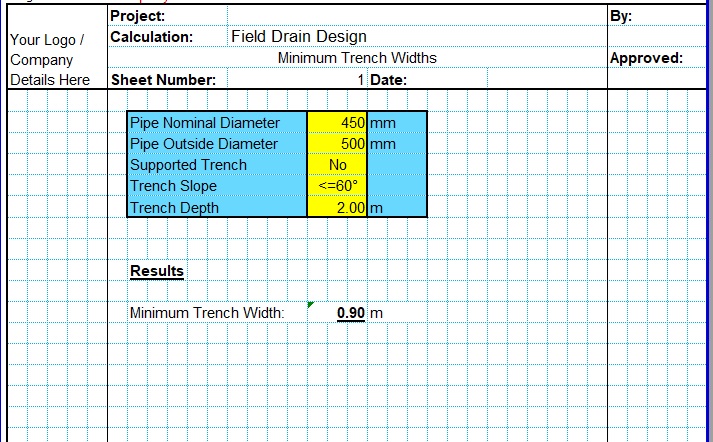
Field Drain Design Spreadsheet
This spreadsheet can be used to design field drains, typically subsurface drainage systems used to drain fields and open areas.
Learn More
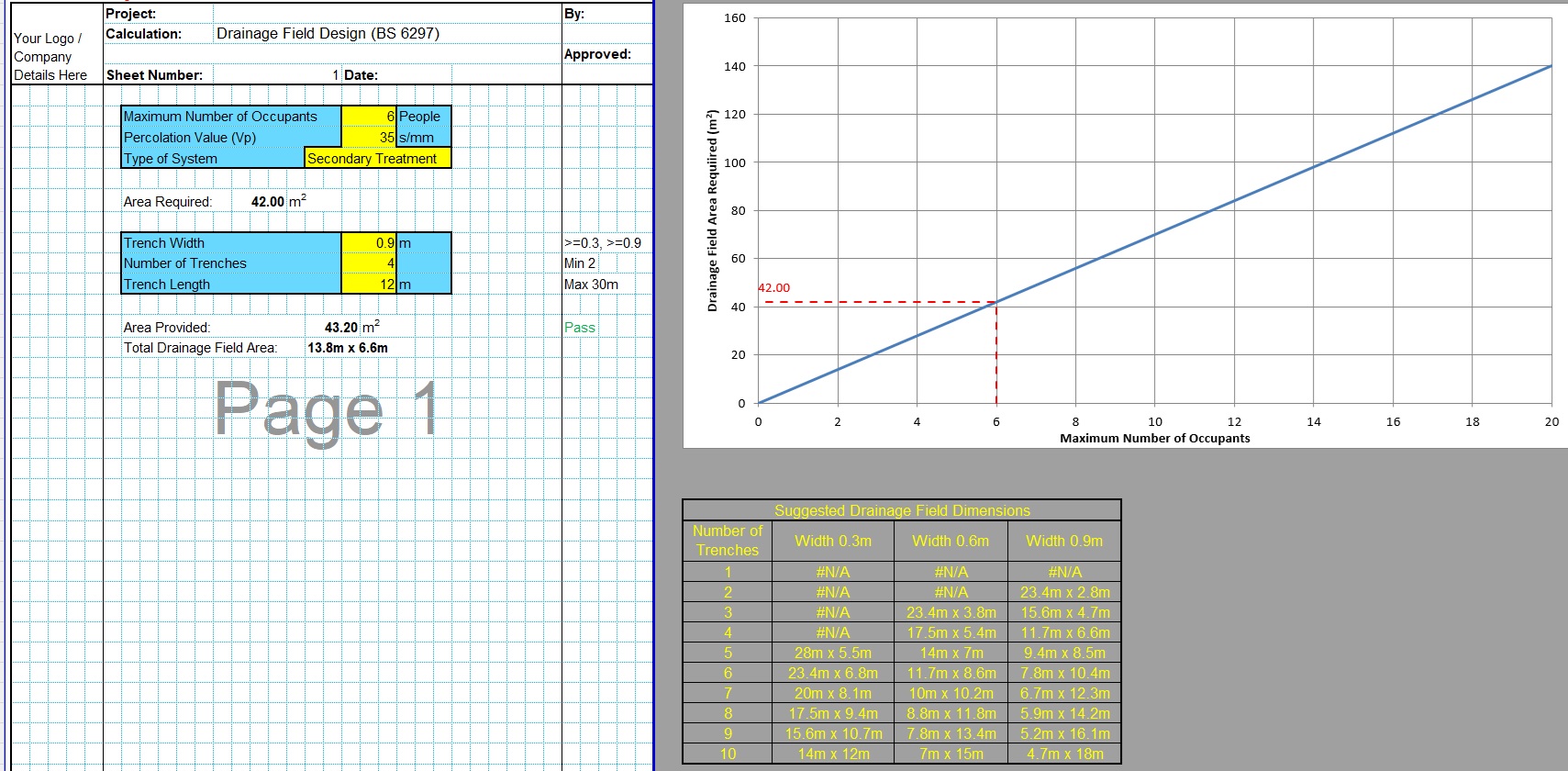
Drainage Field Design Spreadsheet
This spreadsheet can be used to design septic infiltration systems known as drainage fields, leach fields or septic drain fields.
Learn More
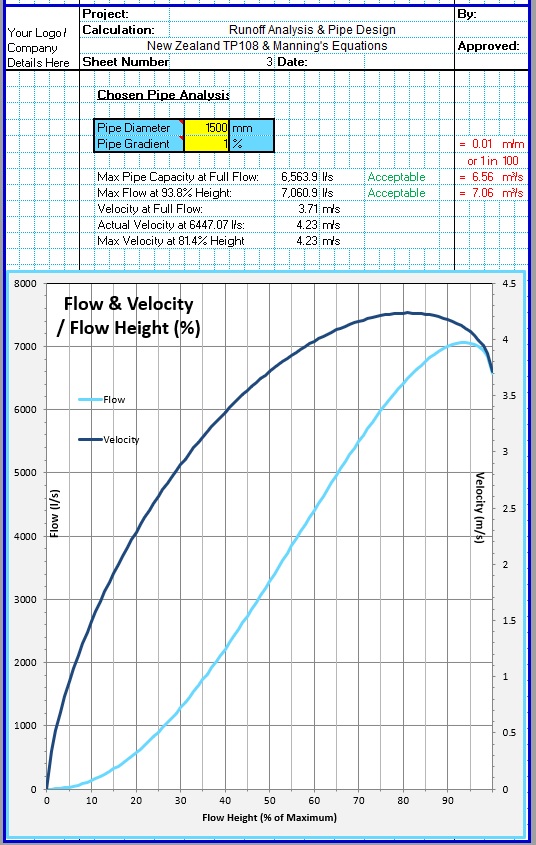
TP108 Spreadsheet
This spreadsheet calculates the rainfall for New Zealand catchments in accordance with TP108.
Learn More
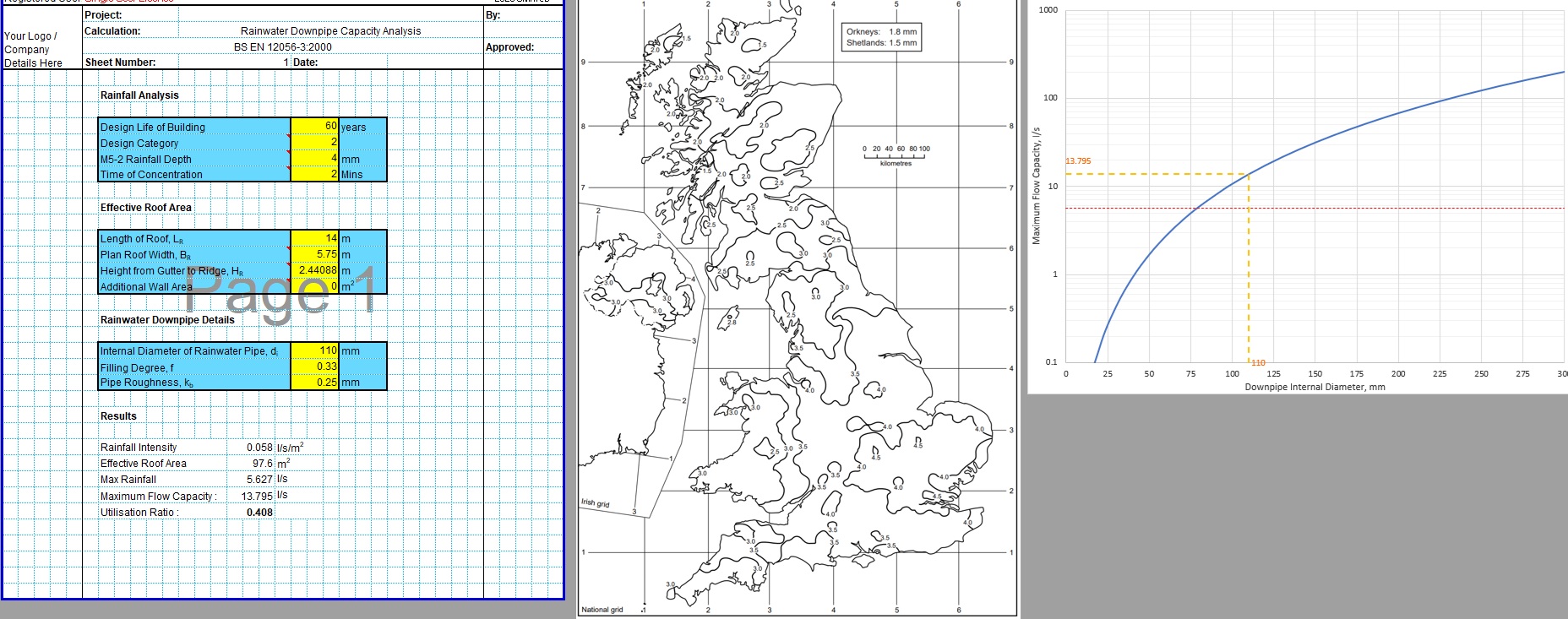
Roof Downpipe Calculator Spreadsheet
This spreadsheet calculates the size of roof drainage downpipes depending on the roof catchment and rainfall requirements.
Learn More
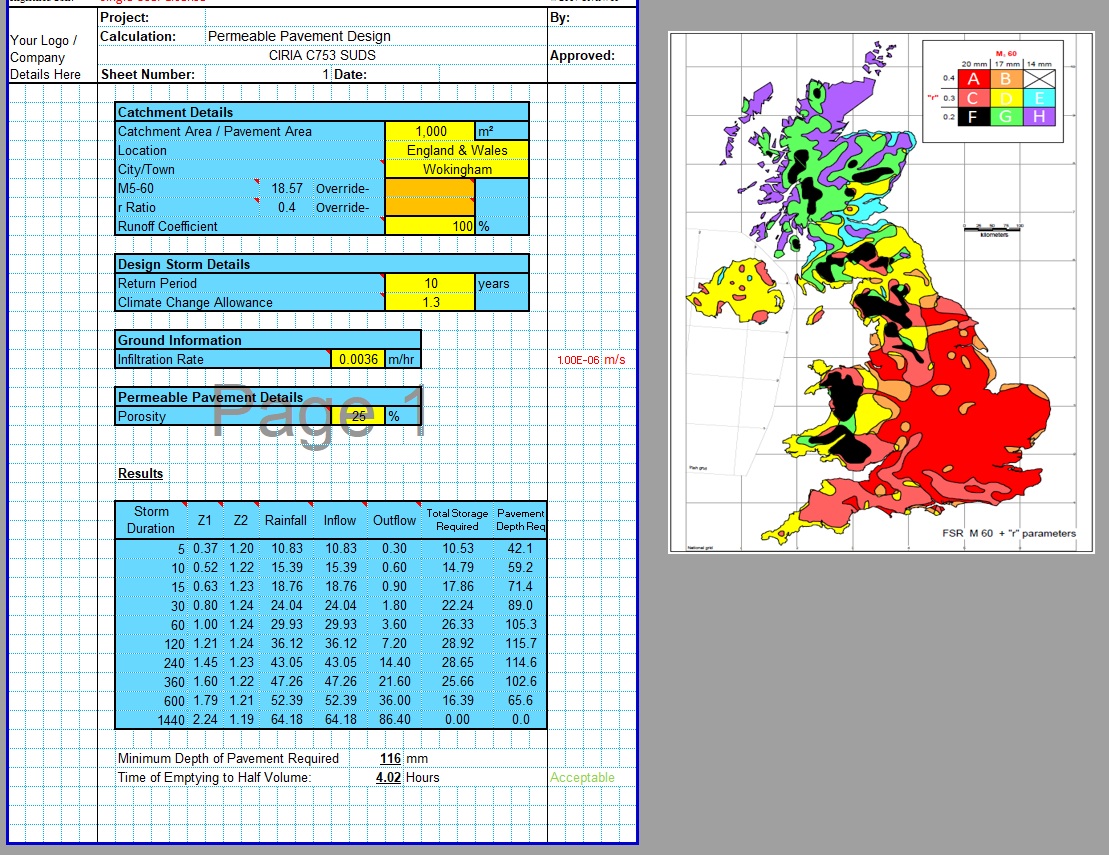
Permeable Pavement Design Spreadsheet
This spreadsheet is designed to determine the size and characteristics of permeable pavements.
Learn More
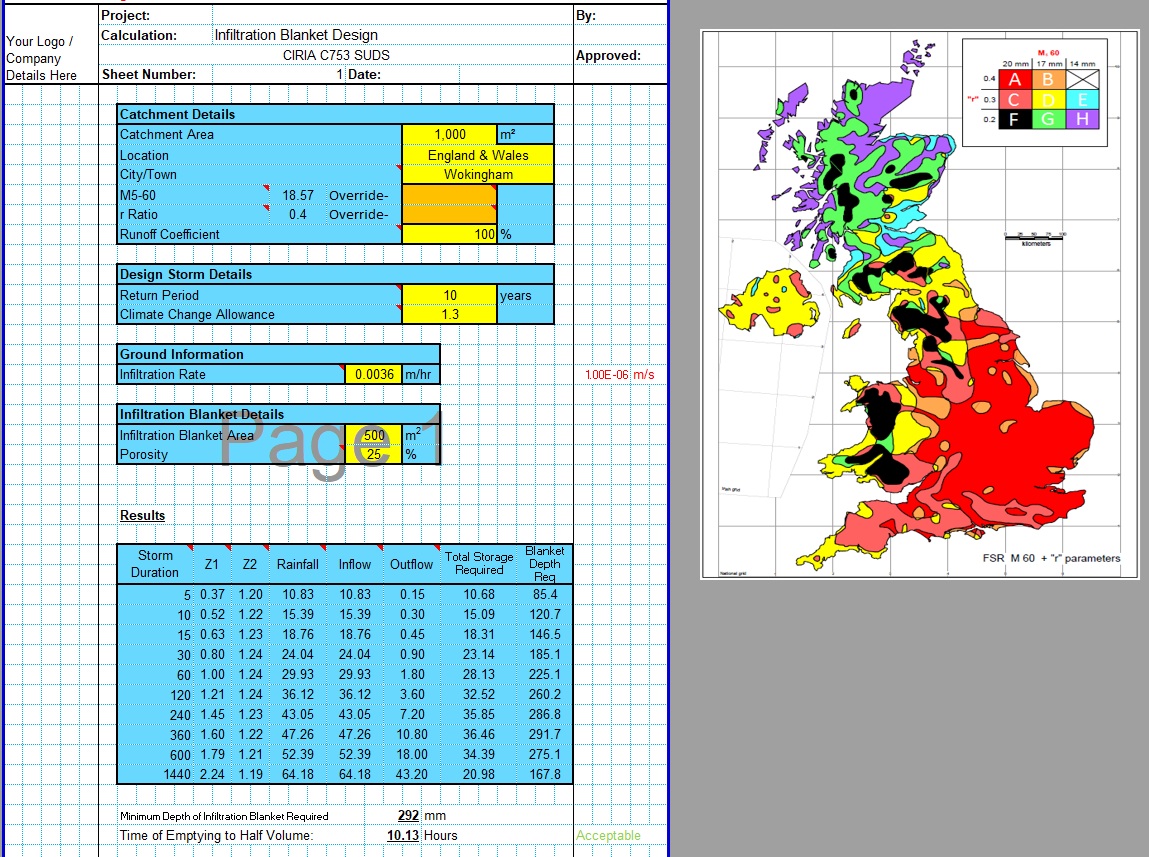
Infiltration Blanket Design Spreadsheet
This spreadsheet can be used to design thin depth infiltration systems, typically called infiltration blanket systems.
Learn More
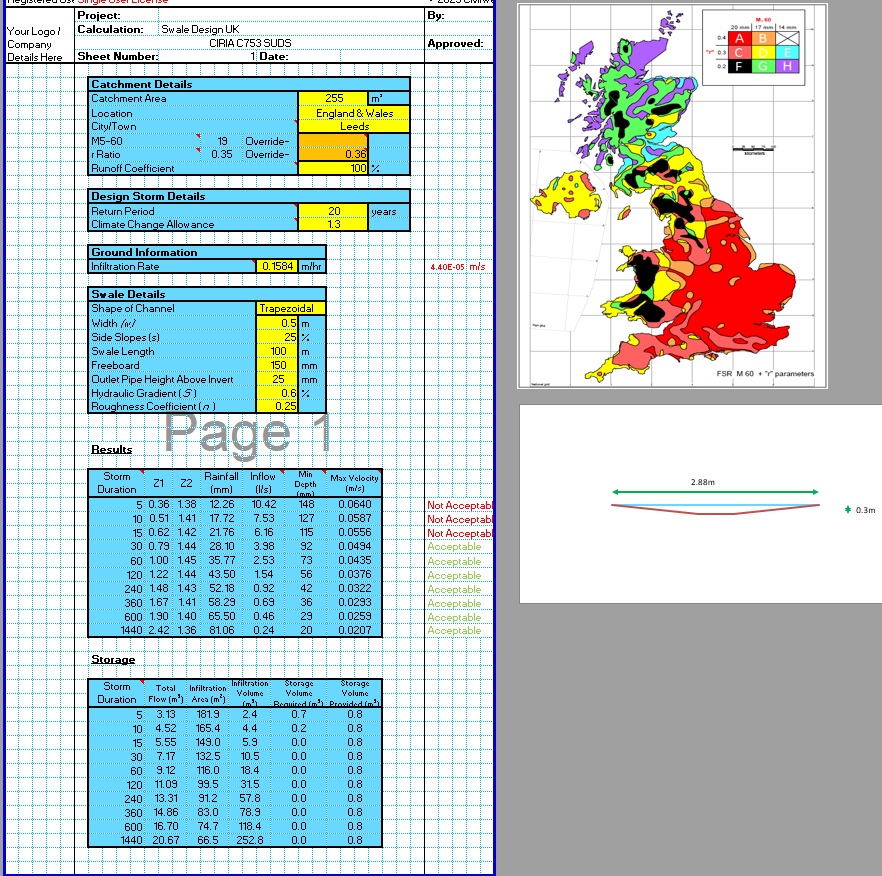
Swale Design Spreadsheet
This spreadsheet can be used to design swales. These linear grassed channels can be used both to convey, infiltrate and filter surface drainage runoff.
Learn More
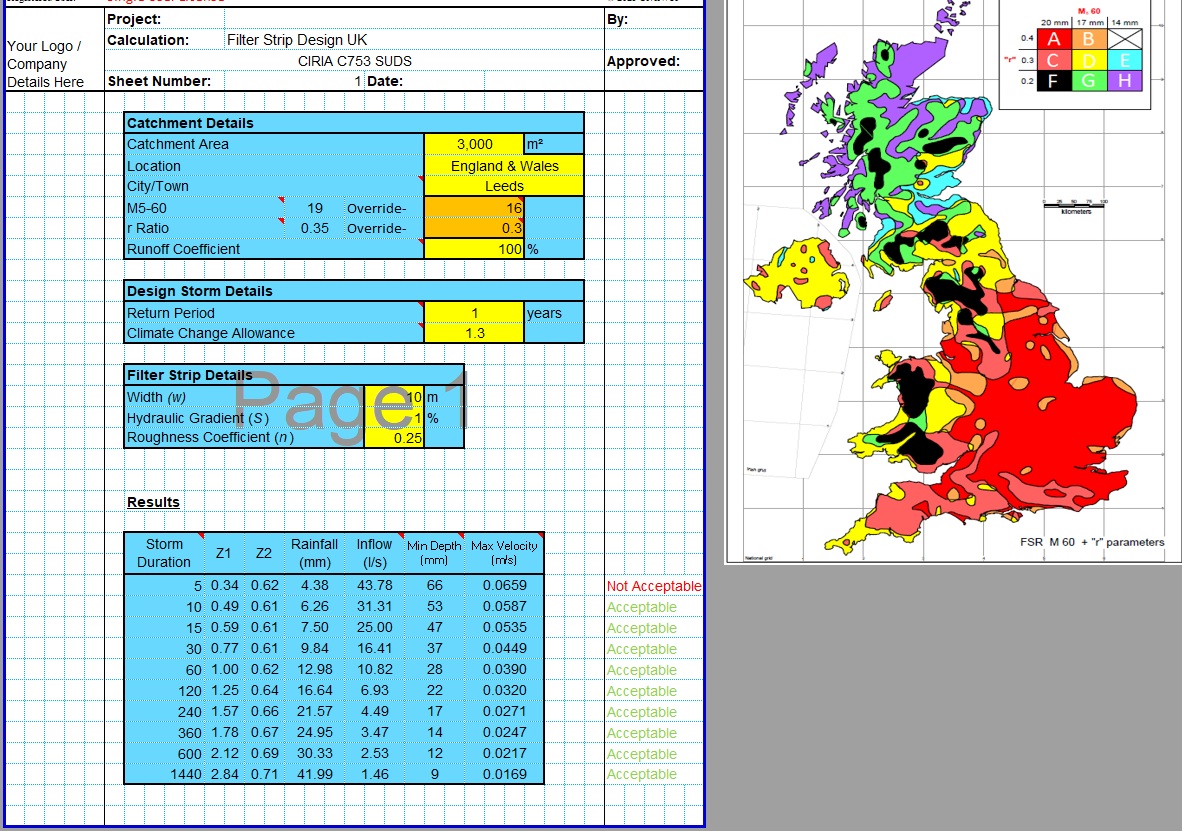
Filter Strip Design Spreadsheet
This spreadsheet is designed to analyse surface water filter strips and to determine the max flow depth and max flow velocity and determine whether they are in accordance with relevant standards.
Learn More
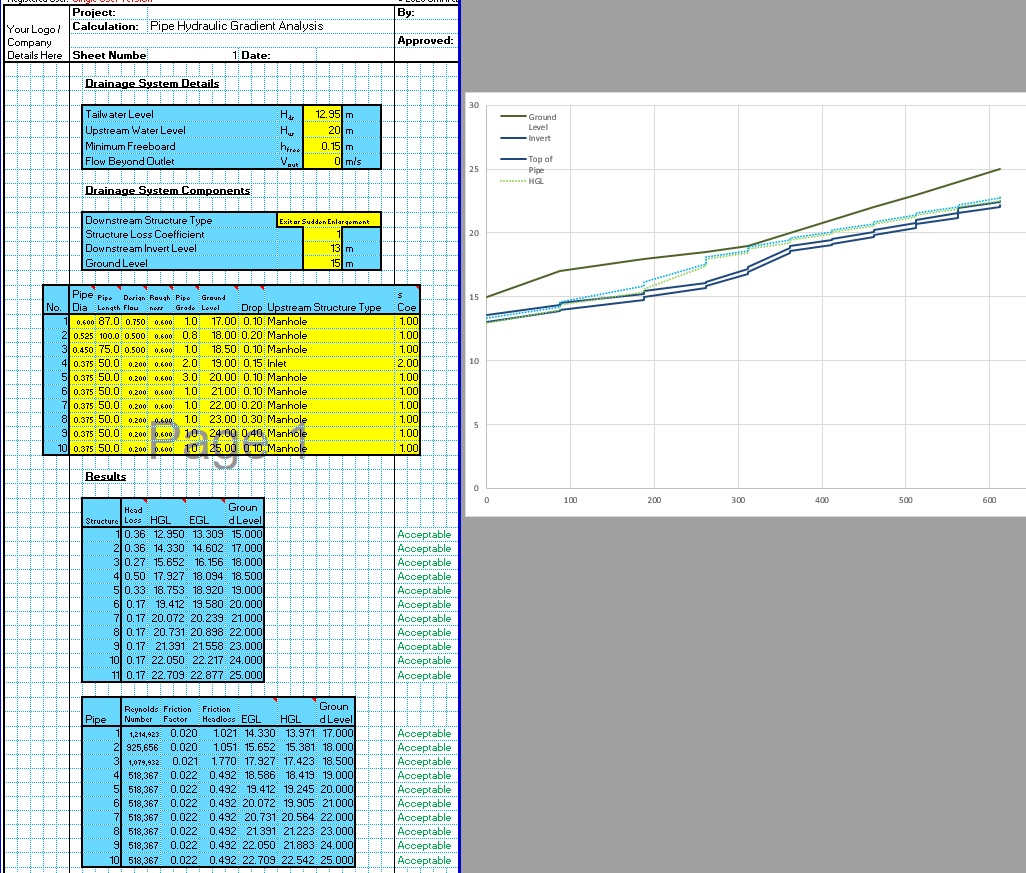
Hydraulic Gradient Analysis Spreadsheet
This spreadsheet analyses the hydraulic and energy grade lines for drainage systems with up to 10 drainage runs.
Learn More
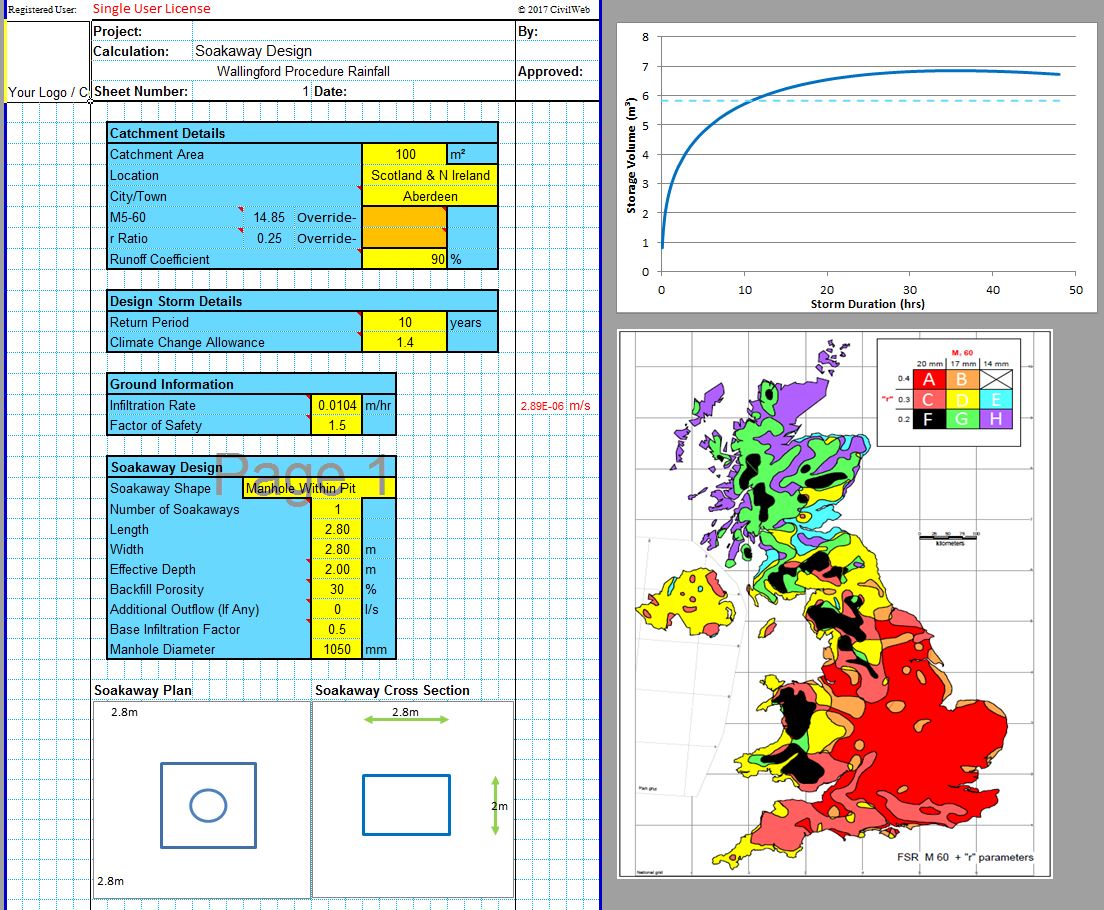
Soakaway Design Spreadsheet
This spreadsheet calculates the requirements for a soakaway system and assists the user to design a suitable system.
Learn More
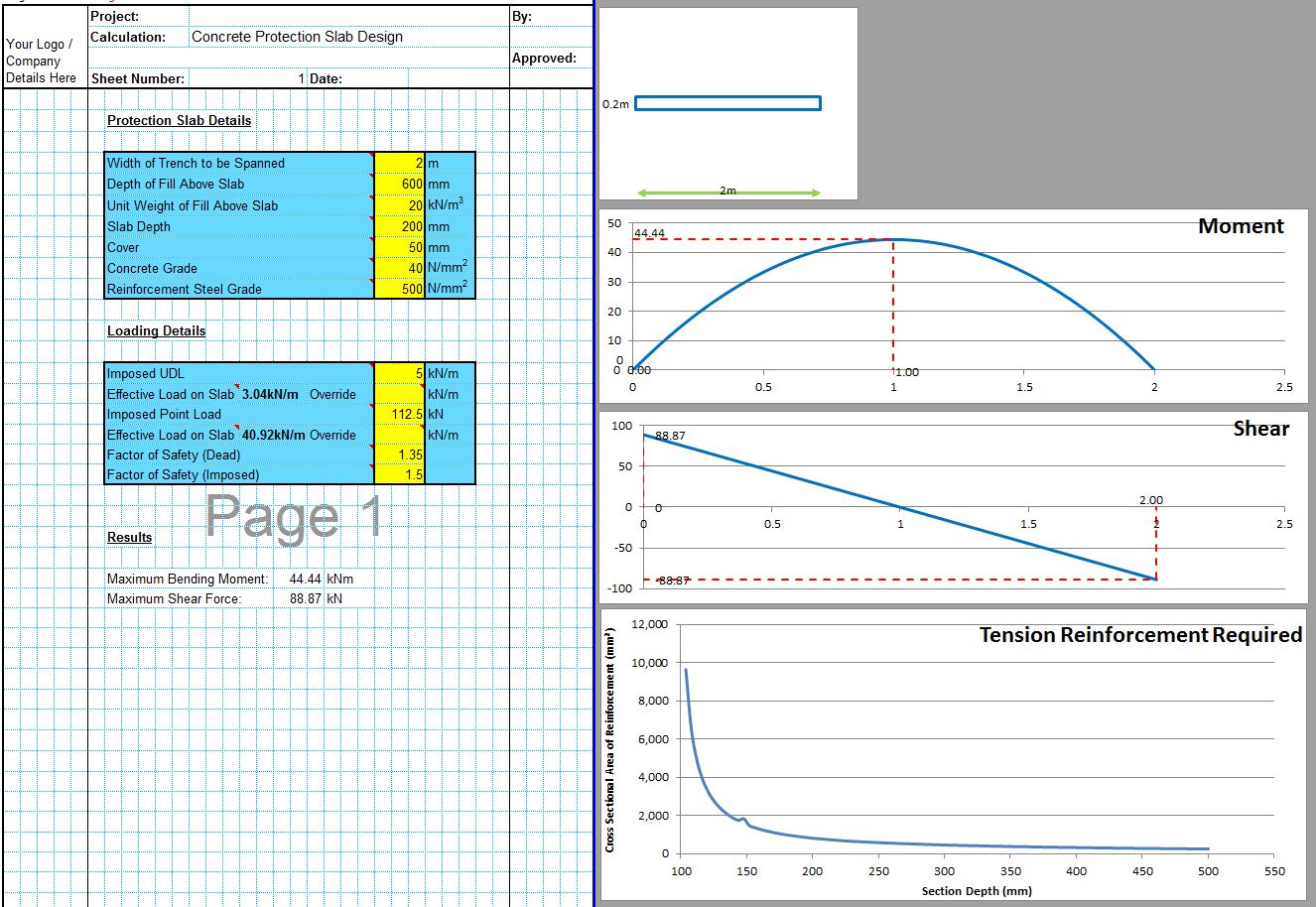
Concrete Protection Slab
This detailed design spreadsheet designs a protection slab commonly installed to protect shallow pipes.
Learn More
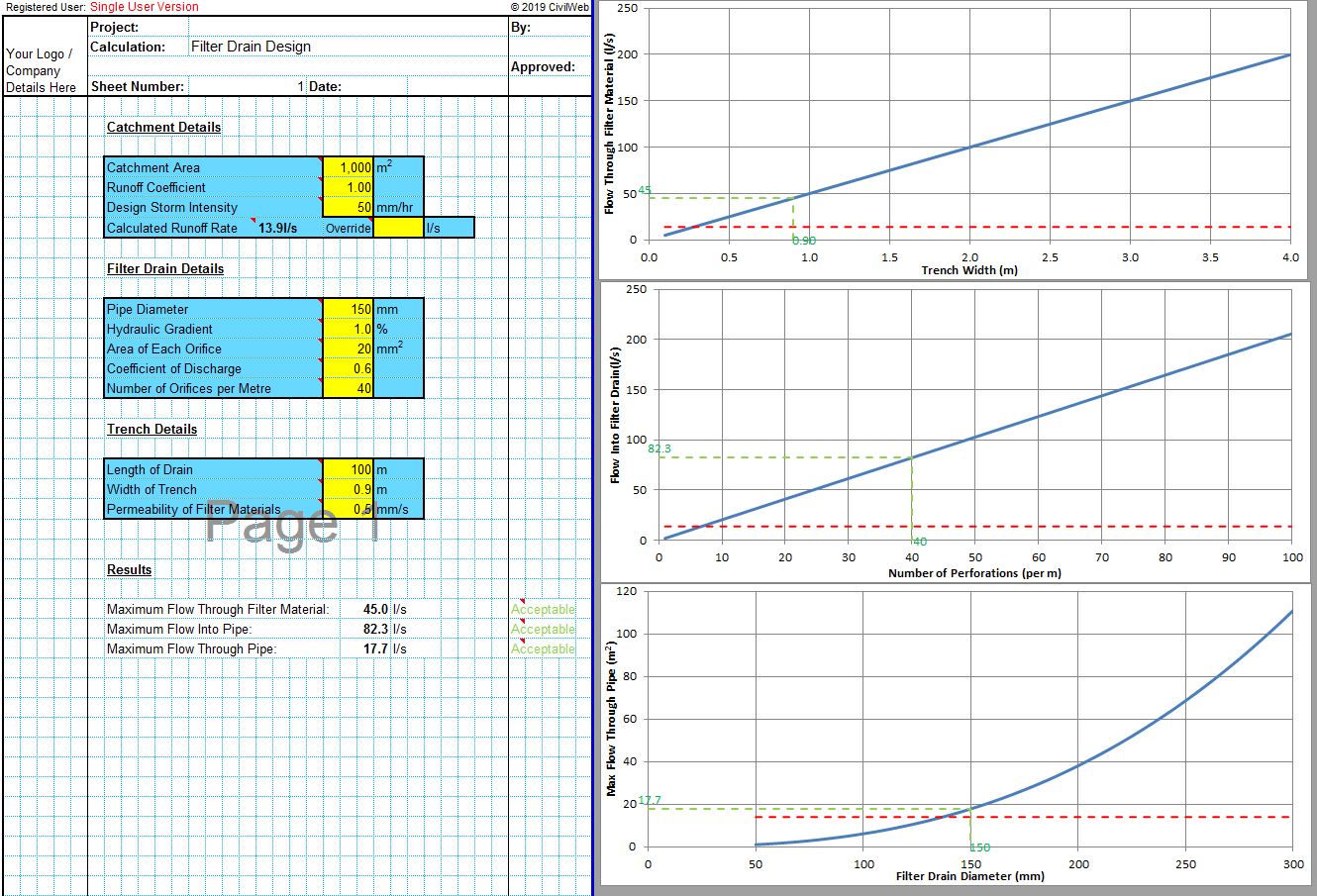
French Drain Design
This spreadsheet completes French Drain Design in accordance with the SUDS Manual.
Learn More
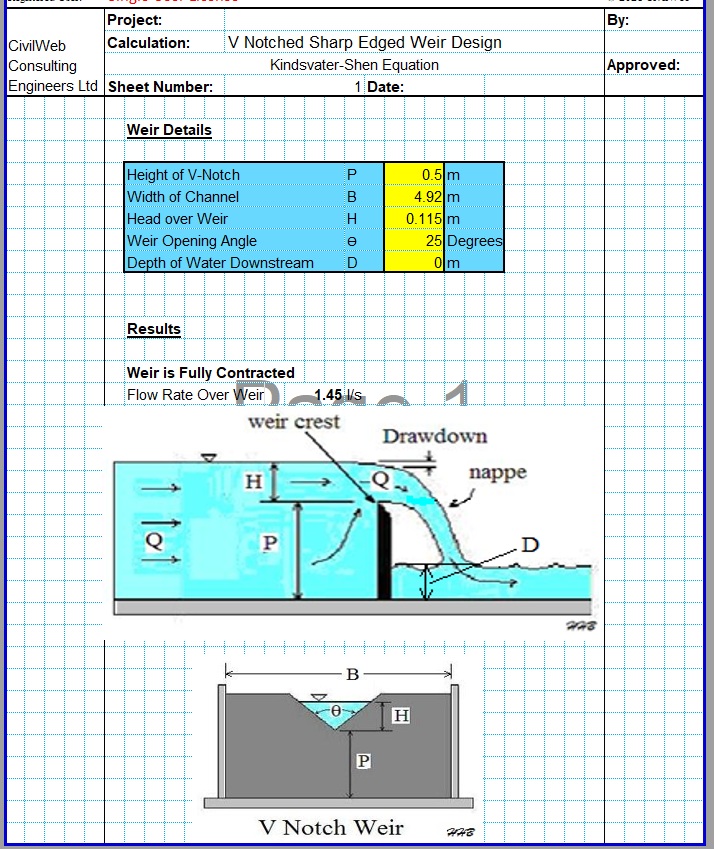
Sharp Crested Weir Flow Calculator Spreadsheets
This suite of 5 separate spreadsheets calculates the flow over sharp crested weirs of all shapes and sizes.
Learn More
Drainage Design Spreadsheet
This is the full suite of drainage design spreadsheets, available at a massive discount for only £49.99.