Permaculture swale design is a powerful technique for capturing rainwater, preventing erosion, and building resilient landscapes—especially on sloped sites. The key is building swales on contour with flat bottoms, using vegetation to stabilise soil and slow runoff.
The CivilWeb Swale Design Spreadsheet can save hours of repetitive calculations while ensuring compliance with CIRIA C753 SUDS Manual in the UK, CSIRO 1999 in Australia or MSMA in Malaysia, reliable accuracy and even optimisation tools which can save money on materials during the construction phase.
💧 What Is a Permaculture Swale?
A permaculture swale is a shallow trench dug on contour—meaning it follows the natural elevation line of the land. It’s designed to capture rainwater, slow runoff, and allow water to infiltrate into the soil.
Key Functions
- Passive irrigation for trees and crops
- Erosion control on sloped land
- Groundwater recharge
- Improved soil health and fertility
- Microclimate creation for biodiversity
Swales are often paired with:
- Tree belts or food forests
- Ponds, dams, or greywater systems
- Mulch basins and infiltration trenches
📐 Swale Design Principles
| Design Element | Typical Practice | Notes |
| Contour Alignment | Laser level or A-frame | Critical for even water spread |
| Width | 0.5–2.0 m | Depends on rainfall and slope |
| Depth | 150–300 mm | Deeper for high rainfall zones |
| Side Slopes | 1:2 to 1:3 | Gentle for stability |
| Bottom Shape | Flat | Prevents channeling and erosion |
| Spacing | 5–20 m apart | Based on slope and soil type |
🛠️ How to Build a Permaculture Swale
1. Site Assessment
- - Use contour mapping tools (A-frame, laser level, or GPS)
- - Identify slope direction, soil type, and water flow paths
- - Avoid areas with high clay or waterlogging risk
2. Mark the Contour
- - Use flags or stakes to mark the level line
- - Double-check with a spirit level or water tube
3. Excavation
- - Dig a trench along the contour
- - Pile excavated soil on the downhill side to form a berm
- - Keep the bottom flat and level
4. Vegetation & Mulch
- - Plant deep-rooted trees and shrubs on the berm
- - Use mulch to suppress weeds and retain moisture
- - Add cover crops or wildflowers for biodiversity
5. Overflow Management
- - Include spillways or level sills to direct excess water
- - Use stone aprons or grassed outlets to prevent erosion
🌱 Best Plants for Swale Berms (UK Climate)
| Plant Type | Examples | Function |
| Trees | Hazel, alder, apple, plum | Stabilise berm, provide yield |
| Shrubs | Currants, gooseberries, dog rose | Erosion control, habitat |
| Groundcovers | Clover, comfrey, creeping thyme | Soil health, weed suppression |
| Grasses | Meadow mix, fescue | Root mass for stability |
🧪 Soil & Water Considerations
- Soil Type: Sandy loam is ideal; clay may need amendments
- Rainfall: Swale size should match local rainfall intensity
- Slope: Steeper slopes require narrower, more frequent swales
- Infiltration Rate: Test with a simple percolation hole
📋 Example Swale Specification (UK Garden)
| Component | Detail |
| Width | 1.2 m |
| Depth | 250 mm |
| Berm Height | 300 mm |
| Berm Vegetation | Hazel, comfrey, clover |
| Overflow | Level sill with stone apron |
| Mulch | Woodchip and leaf litter |
🧼 Maintenance Tips
- Annually: Check for erosion, re-level bottom, replant bare spots
- After heavy rain: Inspect overflow and berm stability
- Seasonally: Add mulch, prune vegetation, monitor infiltration
🎯 When to Use Permaculture Swales
Ideal for:
- Sloped gardens and smallholdings
- Agroforestry and food forest systems
- Rainwater harvesting and drought resilience
- Soil regeneration and rewilding projects
Avoid in:
- Flat, waterlogged areas
- Sites with high clay and poor infiltration
- Urban areas without space for overflow
🧭 Swale vs Other Earthworks
| Feature | Swale | Infiltration Basin | French Drain |
| Water Capture | High | Moderate | Low |
| Infiltration | Passive | Passive | Directed |
| Vegetation | Yes | Optional | No |
| Maintenance | Low | Moderate | Moderate |
| Aesthetic | Natural | Engineered | Hidden |
Get Started Today
Save hours of repetitive calculation time. Whether you’re working on a major project or a small renovation, this tool will give you clarity, accuracy, and confidence.
Buy the CivilWeb Swale Design Spreadsheet now for only £19.99.
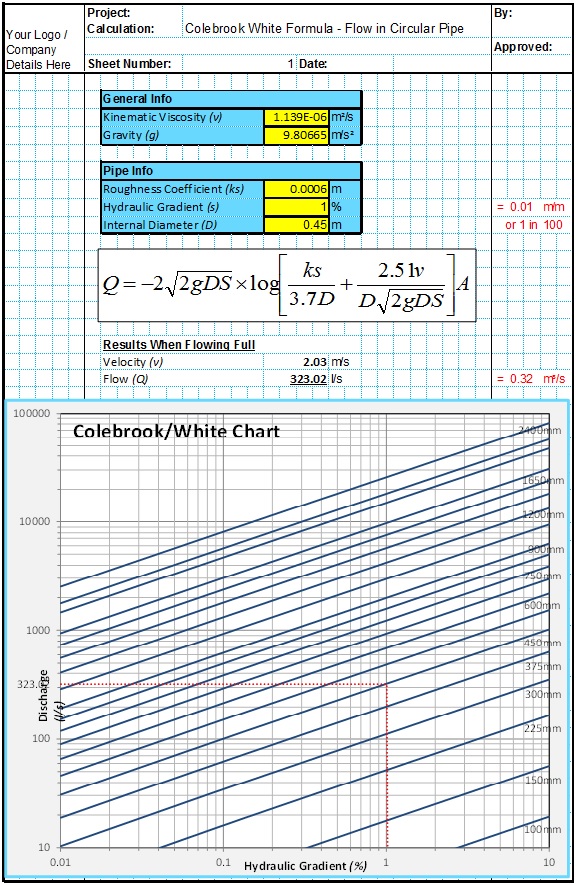
PIPE FLOW CALCULATOR
This spreadsheet uses the Colebrook-White and Manning Equations to calculate the flow capacity and velocity in pipes acting under gravity.
Find Out More
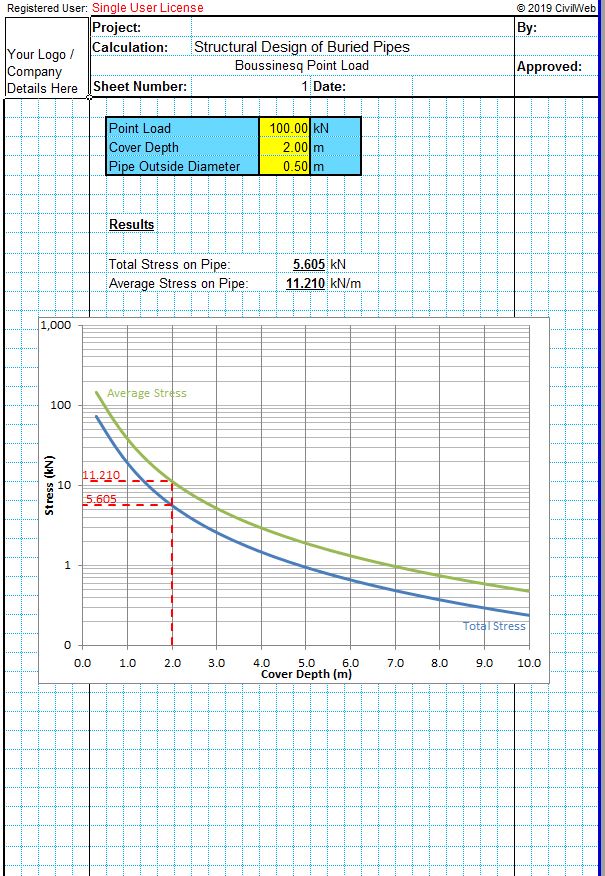
Buried Pipe Design Spreadsheet
This spreadsheet can be used to design concrete, steel, plastic and other buried pipes in accordance with BS EN 1295-1.
Learn More
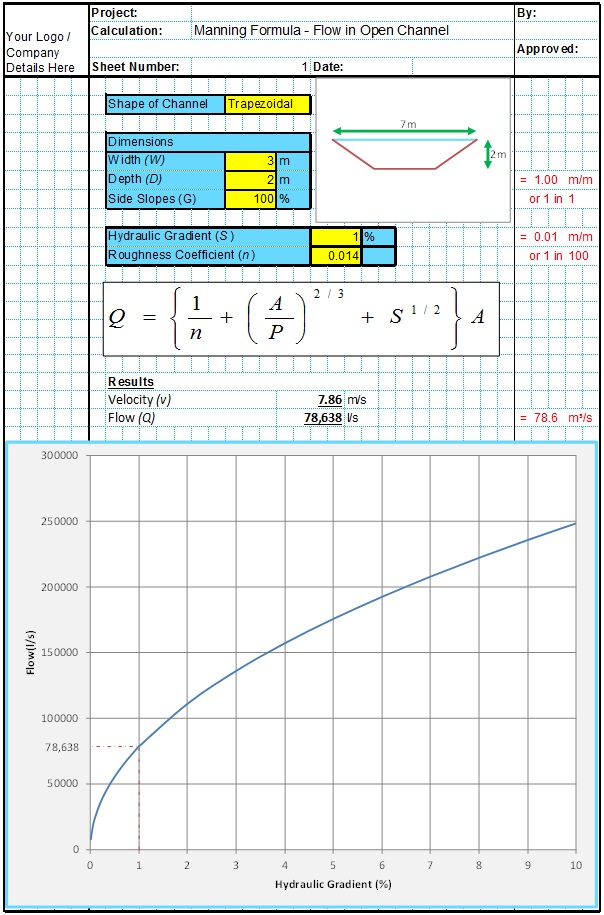
Manning Open Channel Design Spreadsheet
This spreadsheet uses the Manning formula to calculate the flow conditions in an open channel acting under gravity only.
Learn More
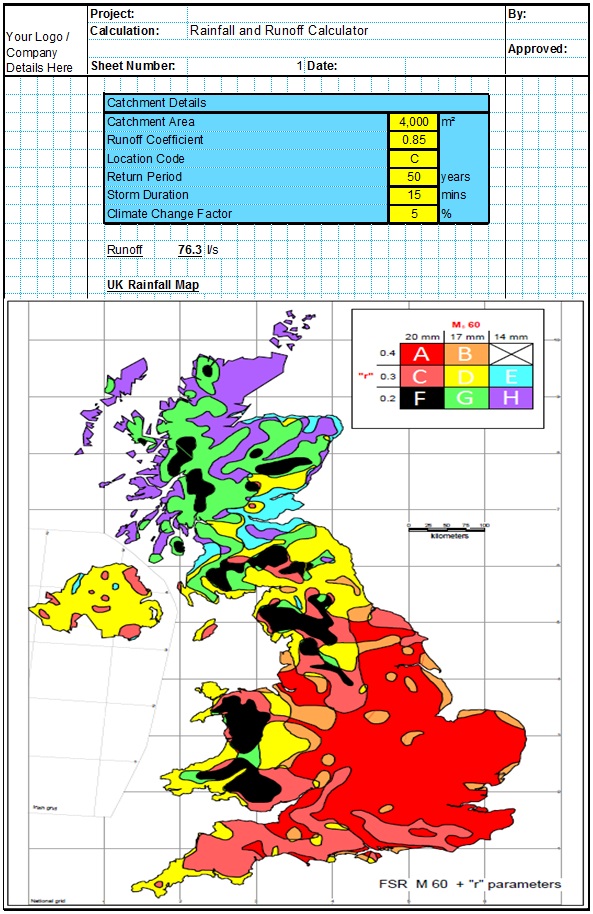
Runoff Calculator Spreadsheet
This spreadsheet calculates the design runoff flow for a site in accordance with the Flood Estimation Handbook.
Learn More
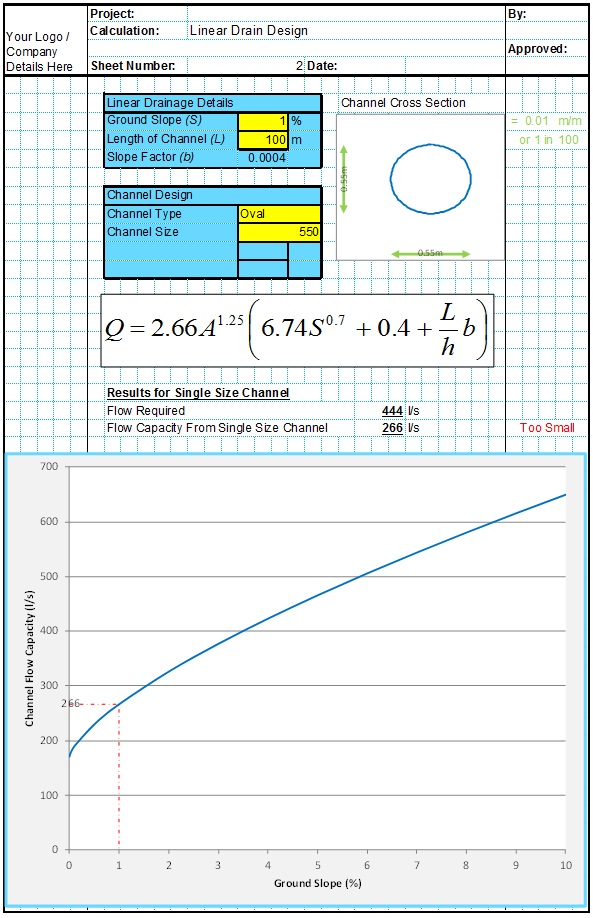
Linear Drainage Design Spreadsheet
This spreadsheet calculates the maximum flow from a specified linear drainage channel and checks whether the channel is sufficient for the specified site and storm conditions.
Learn More
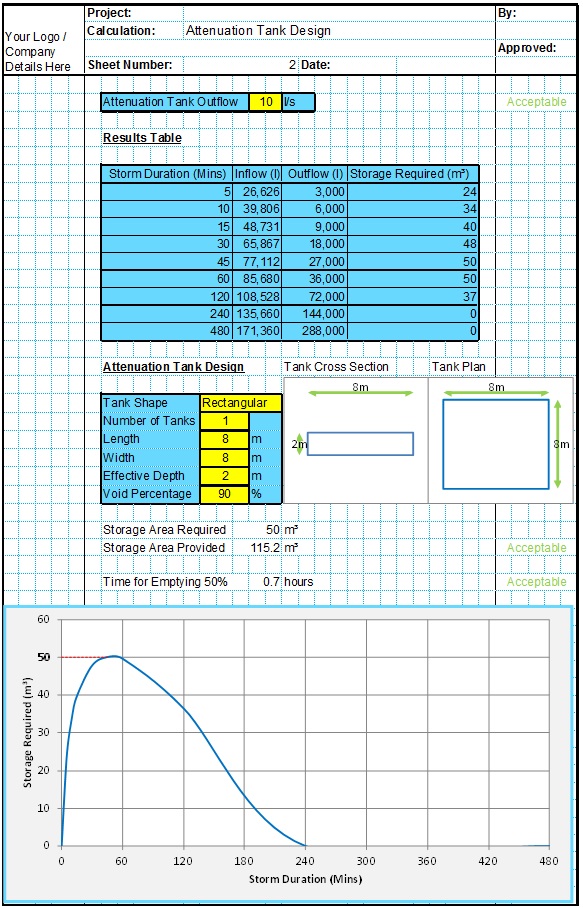
Attenuation Design Spreadsheet
This spreadsheet calculates the requirements for a attenuation system and assists the user to design a suitable system.
Learn More
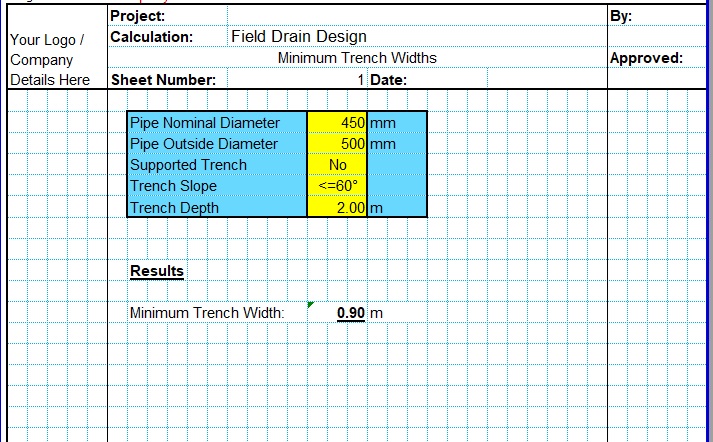
Field Drain Design Spreadsheet
This spreadsheet can be used to design field drains, typically subsurface drainage systems used to drain fields and open areas.
Learn More
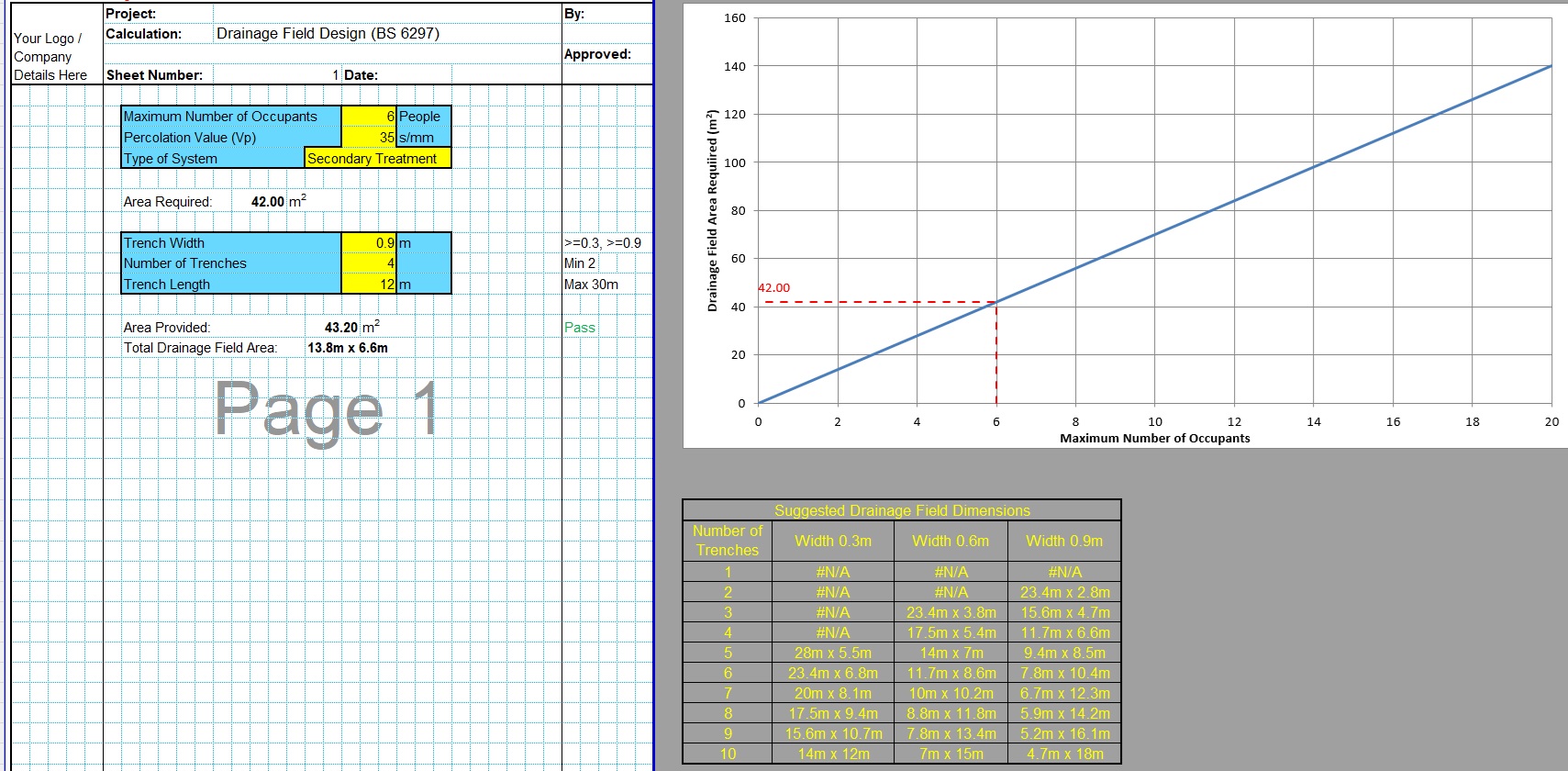
Drainage Field Design Spreadsheet
This spreadsheet can be used to design septic infiltration systems known as drainage fields, leach fields or septic drain fields.
Learn More
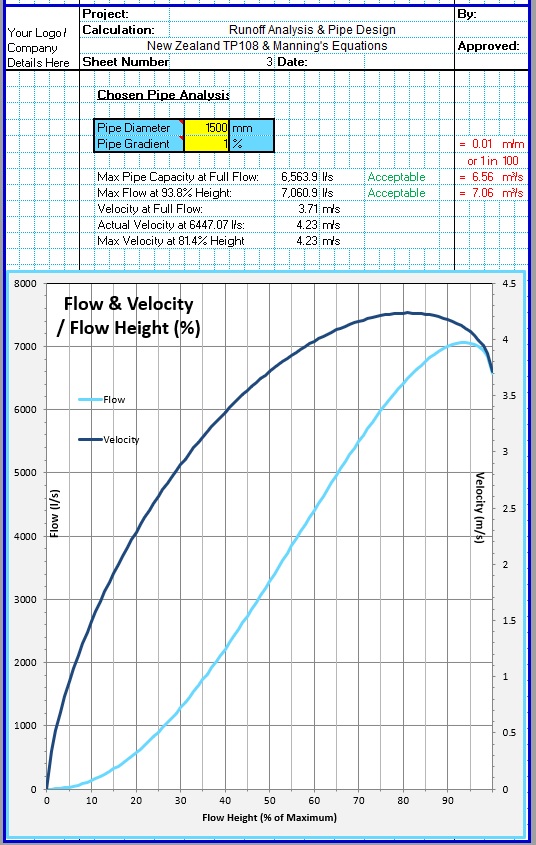
TP108 Spreadsheet
This spreadsheet calculates the rainfall for New Zealand catchments in accordance with TP108.
Learn More
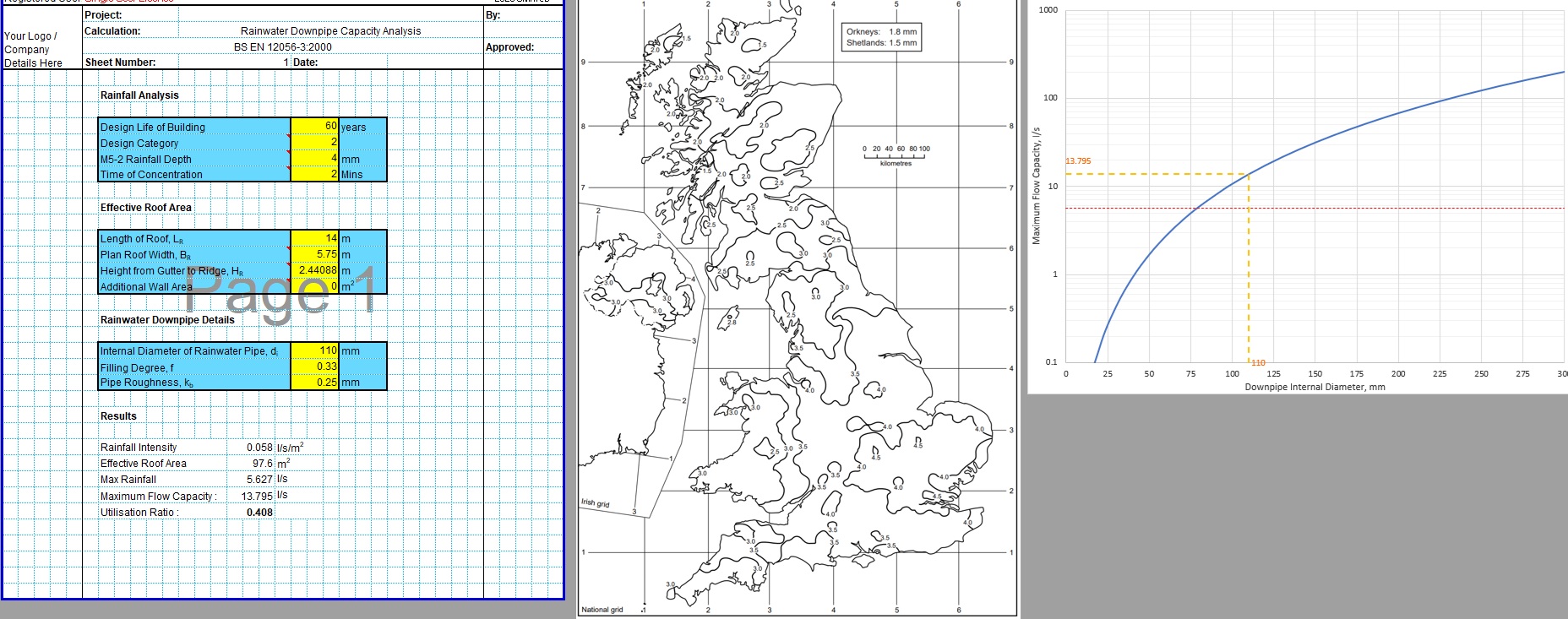
Roof Downpipe Calculator Spreadsheet
This spreadsheet calculates the size of roof drainage downpipes depending on the roof catchment and rainfall requirements.
Learn More
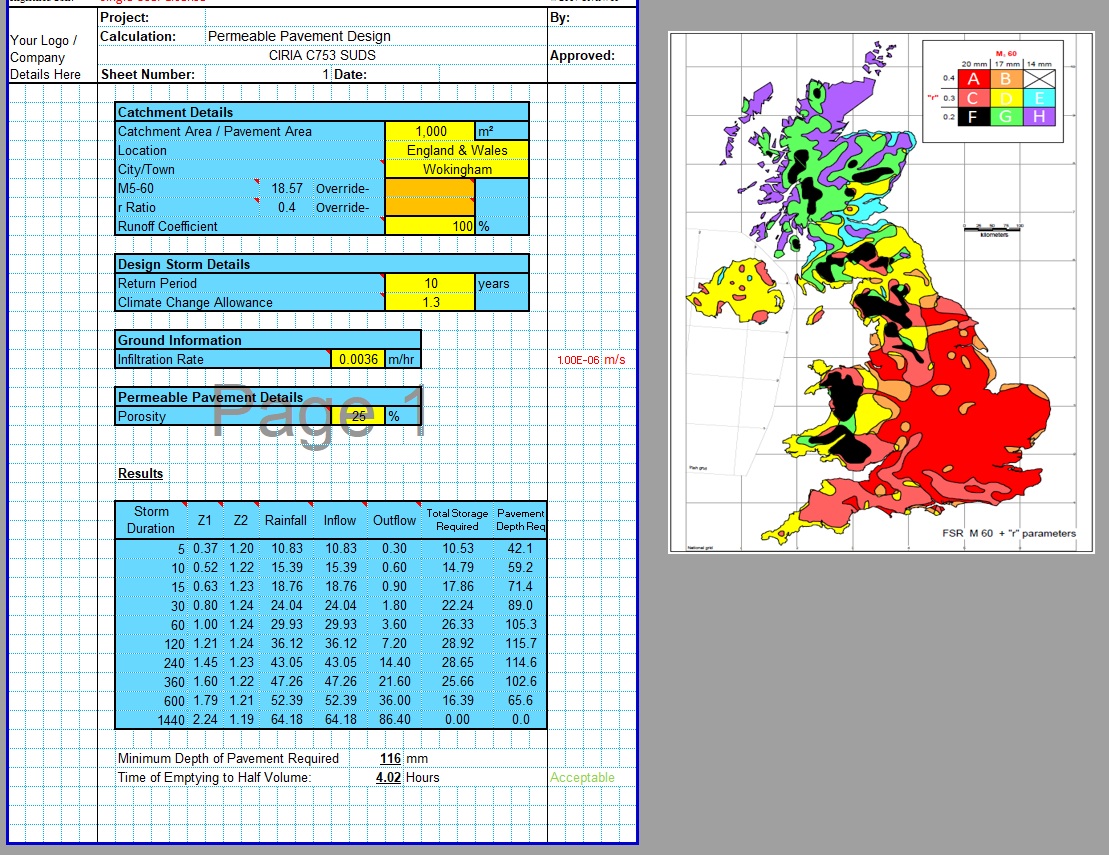
Permeable Pavement Design Spreadsheet
This spreadsheet is designed to determine the size and characteristics of permeable pavements.
Learn More
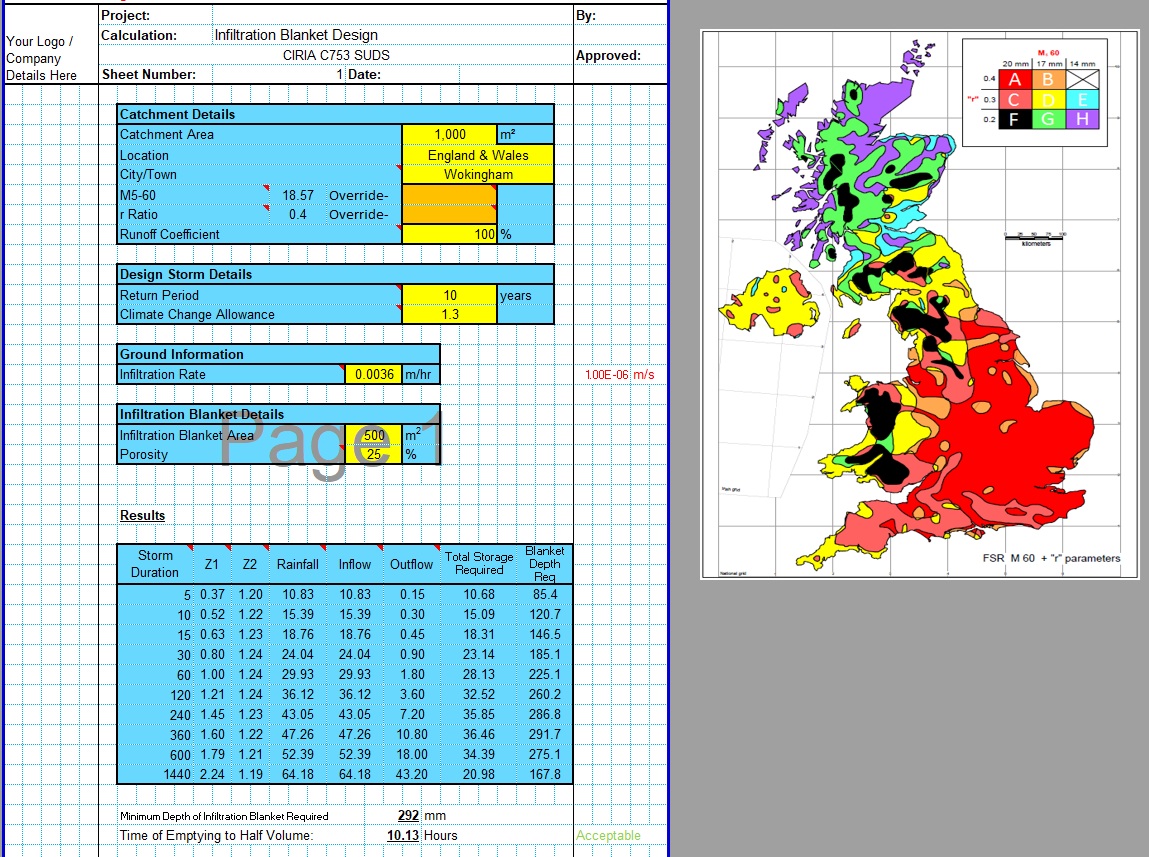
Infiltration Blanket Design Spreadsheet
This spreadsheet can be used to design thin depth infiltration systems, typically called infiltration blanket systems.
Learn More
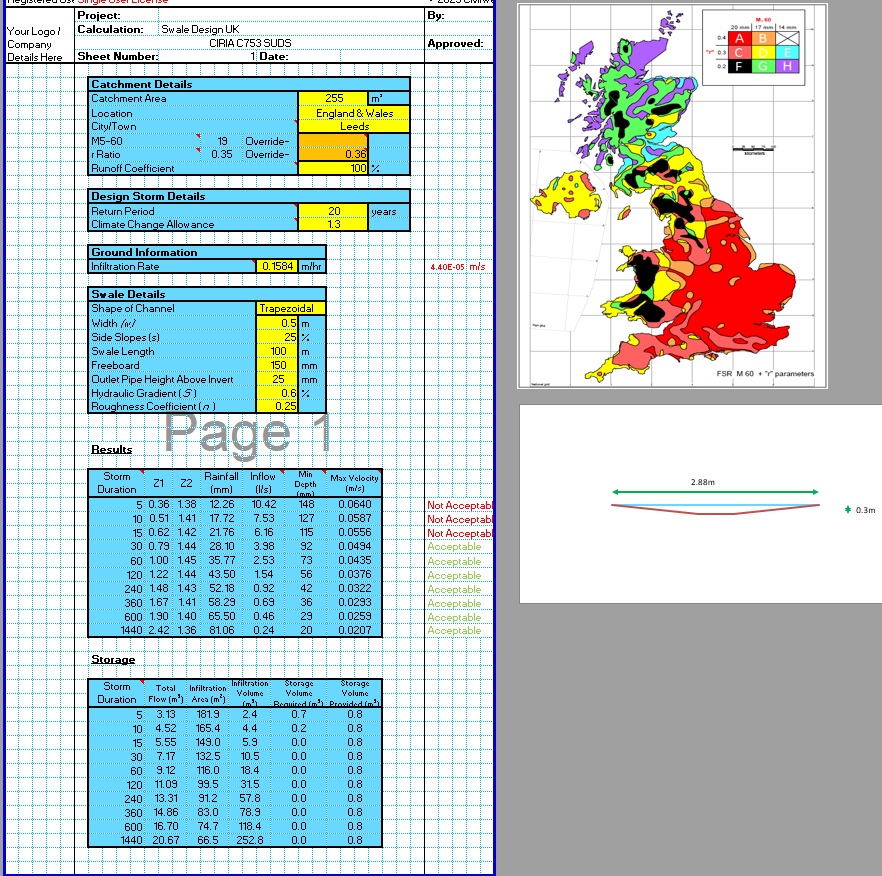
Swale Design Spreadsheet
This spreadsheet can be used to design swales. These linear grassed channels can be used both to convey, infiltrate and filter surface drainage runoff.
Learn More
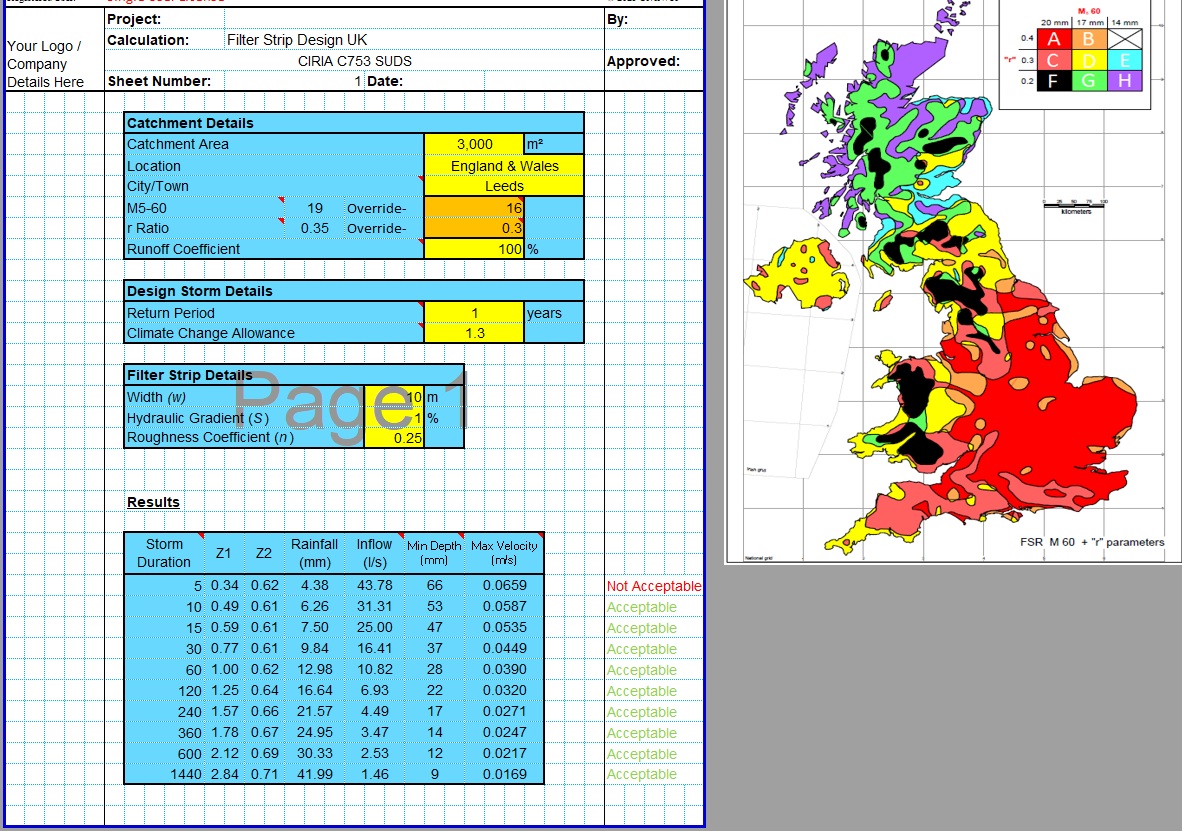
Filter Strip Design Spreadsheet
This spreadsheet is designed to analyse surface water filter strips and to determine the max flow depth and max flow velocity and determine whether they are in accordance with relevant standards.
Learn More

Hydraulic Gradient Analysis Spreadsheet
This spreadsheet analyses the hydraulic and energy grade lines for drainage systems with up to 10 drainage runs.
Learn More
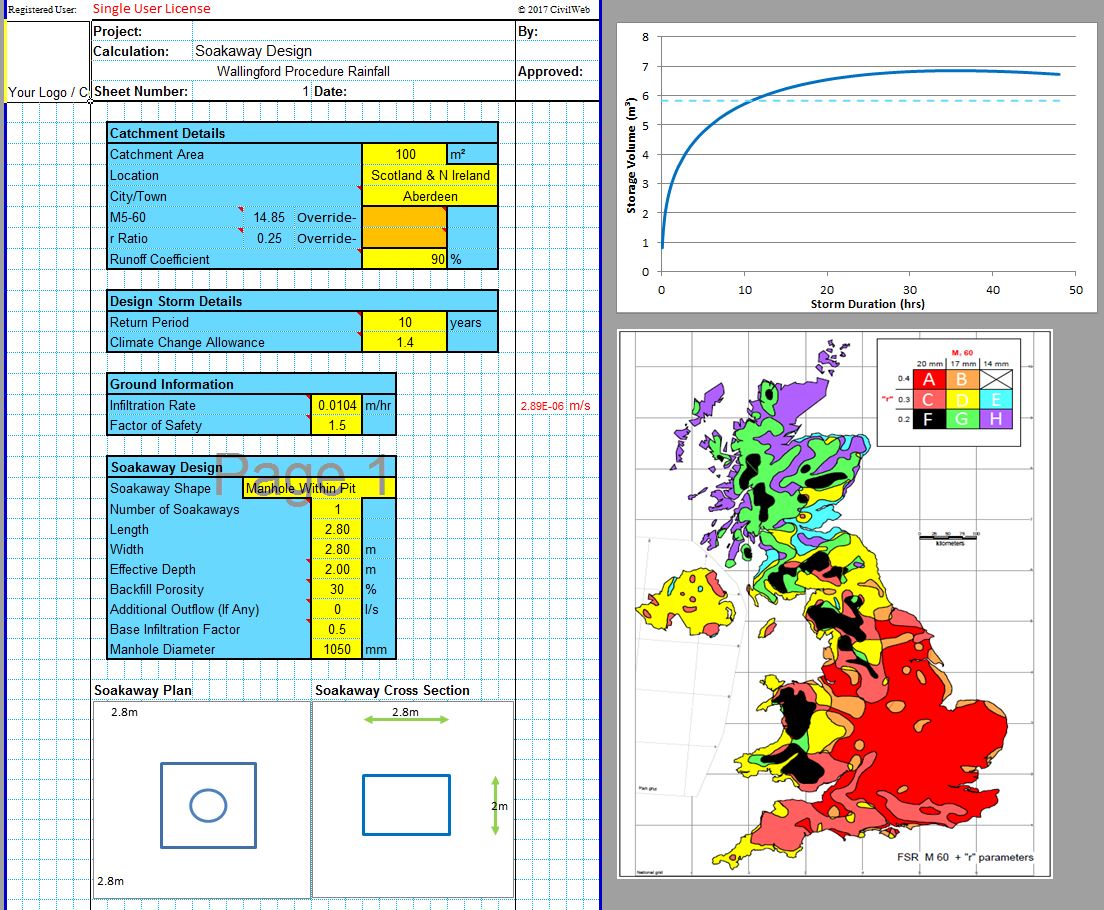
Soakaway Design Spreadsheet
This spreadsheet calculates the requirements for a soakaway system and assists the user to design a suitable system.
Learn More
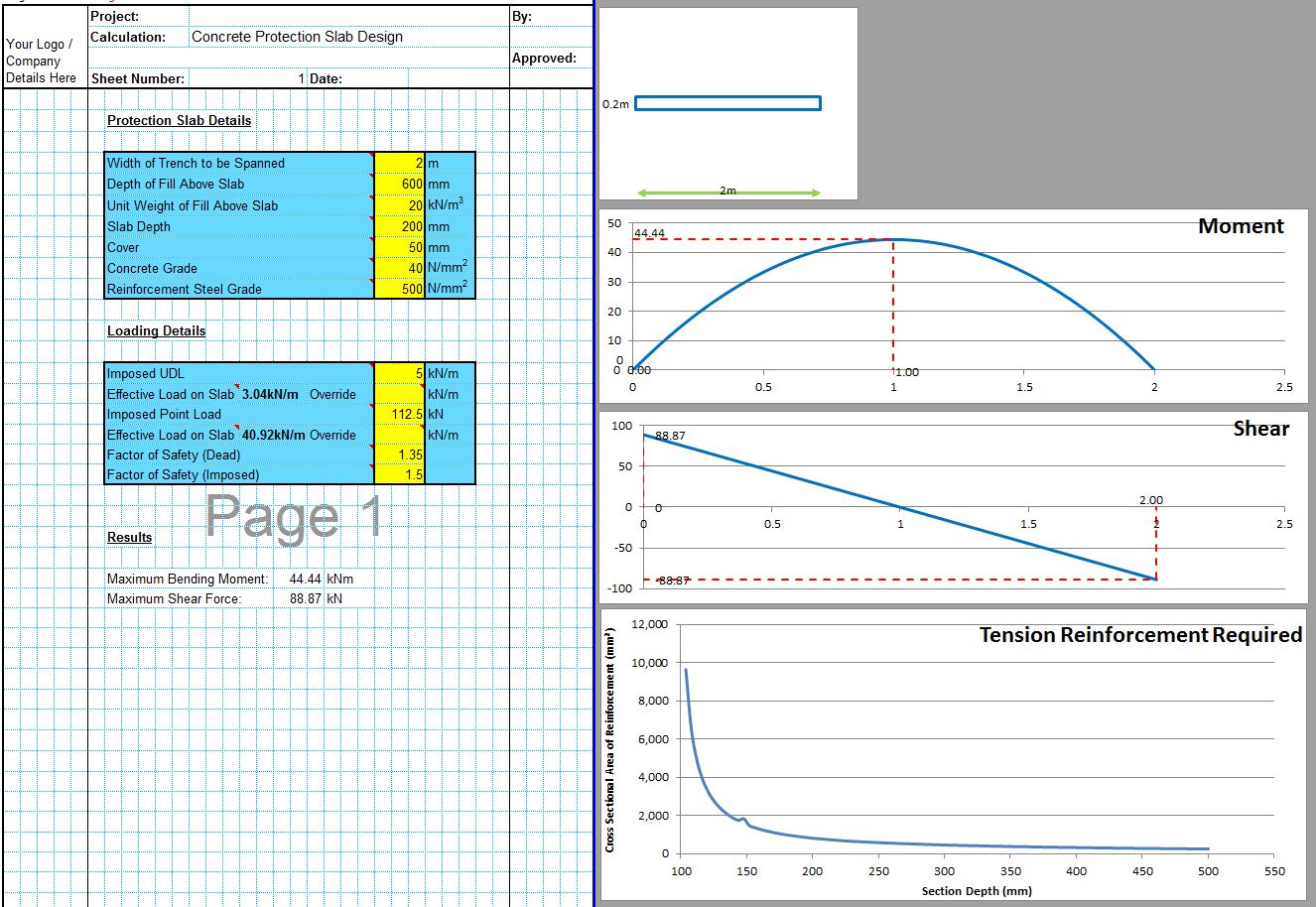
Concrete Protection Slab
This detailed design spreadsheet designs a protection slab commonly installed to protect shallow pipes.
Learn More
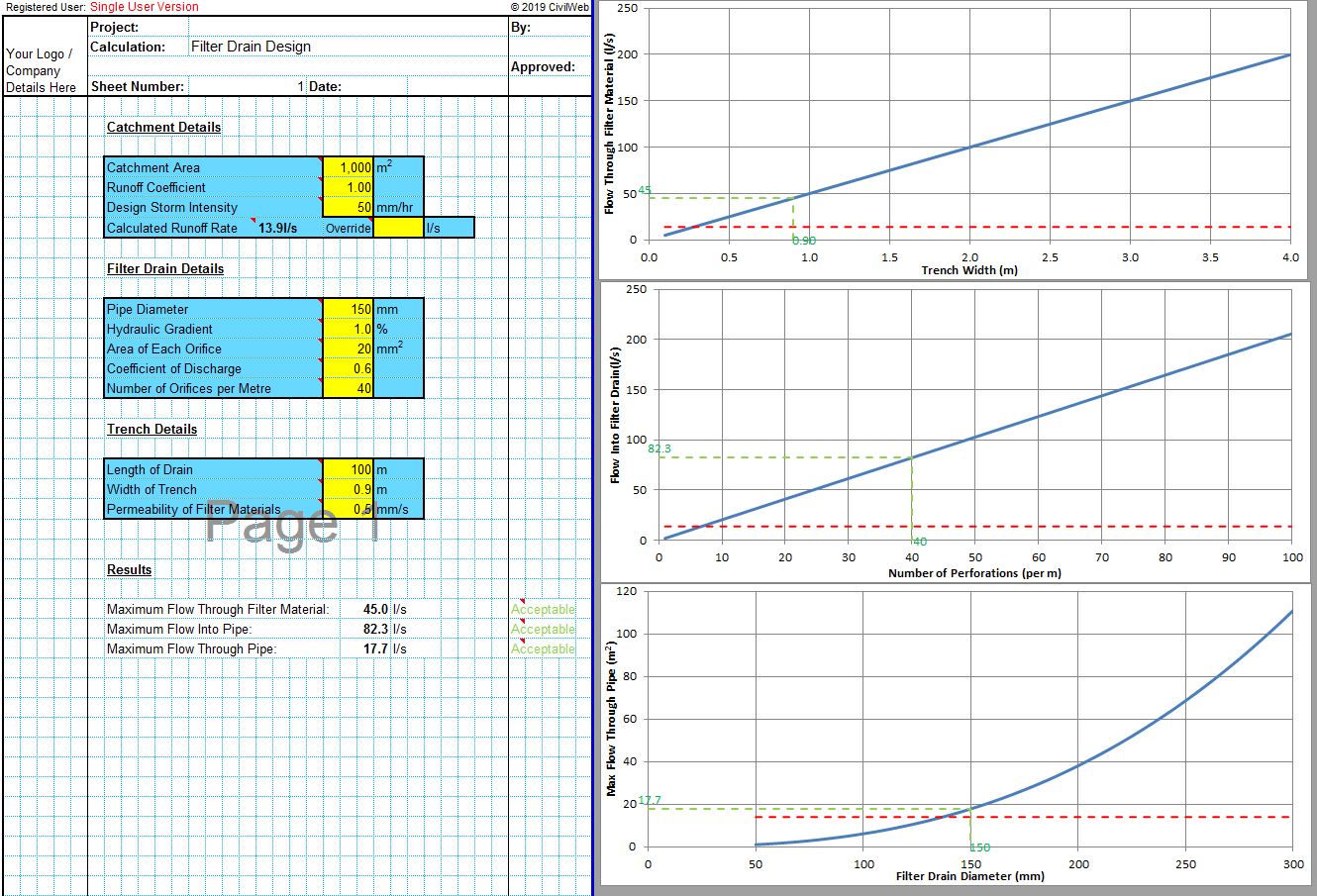
French Drain Design
This spreadsheet completes French Drain Design in accordance with the SUDS Manual.
Learn More
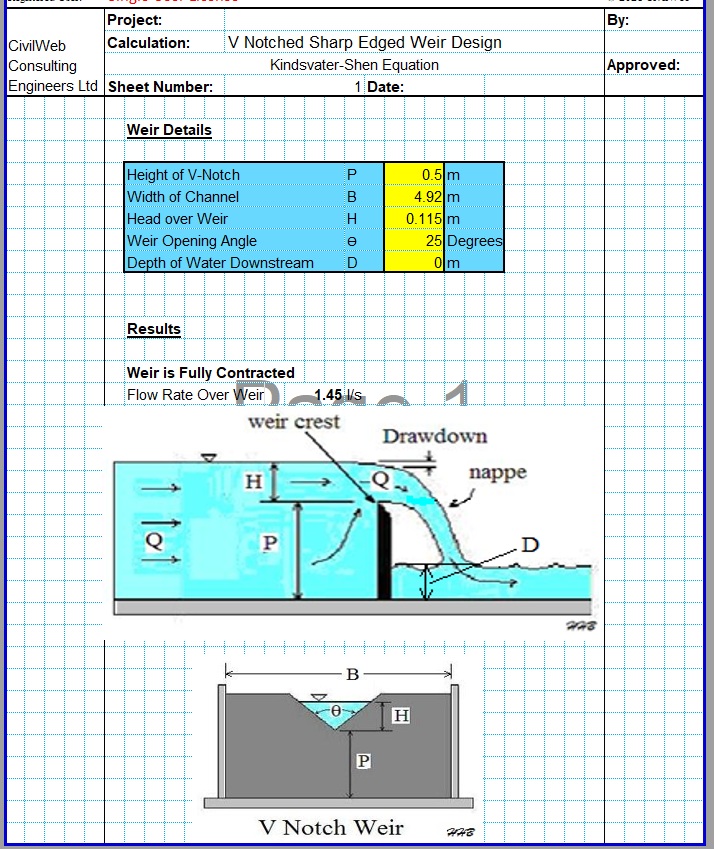
Sharp Crested Weir Flow Calculator Spreadsheets
This suite of 5 separate spreadsheets calculates the flow over sharp crested weirs of all shapes and sizes.
Learn More
Drainage Design Spreadsheet
This is the full suite of drainage design spreadsheets, available at a massive discount for only £49.99.