The weir flow equation is one of the most widely used tools in open‑channel hydraulics. Whether you’re designing a SuDS outfall, assessing a spillway, or measuring flow in a channel, understanding how weir equations work is essential for producing reliable, defensible hydraulic calculations.
This guide breaks down the principles behind the weir flow equation, explains how different weir types use different forms of the equation, and provides practical examples to help you apply it correctly.
The CivilWeb Sharp Crested Weir Calculator Spreadsheet Suite includes all 5 separate weir flow calculator spreadsheets in one handy package. The suite includes US unit versions along with the standard metric versions. The full suite can be purchased lower down this page for only £29.99.
🌊 What Is the Weir Flow Equation?
At its core, the weir flow equation expresses the relationship between:
- the head of water upstream of the crest
- the geometry of the weir
- a discharge coefficient that accounts for real‑world behaviour
The general form of the weir flow equation is:
Q = C · L · Hⁿ
Where:
- Q = discharge (m³/s)
- C = discharge coefficient
- L = crest length (m)
- H = head over the crest (m)
- n = exponent depending on weir type (commonly 1.5 or 2.5)
📐 Why Weirs Are So Useful for Flow Measurement
Weirs are popular because they create a predictable head–discharge relationship. Once the crest geometry is fixed, the upstream water level becomes a reliable indicator of flow.
Engineers use weirs for:
- SuDS discharge control
- Flow monitoring
- Spillway design
- Channel capacity assessment
- Laboratory flumes
Types of Weirs and Their Flow Equations
🔺 1. V‑Notch (Triangular) Weir Flow Equation
Q = 1.38 · H^(5/2)
This comes from the general triangular‑weir equation:
Q = C · H^(5/2)
Where C depends on the notch angle.
Why it’s useful:
The H^(5/2) term makes the weir extremely responsive to small changes in head.
▭ 2. Rectangular Weir Flow Equation
Q = C · L · H^(3/2)
Suppressed: Q = 1.84 · L · H^(3/2)
Contracted: L_eff = L - 0.2H
Why it’s useful:
Simple geometry, robust behaviour, and widely validated coefficients.
🧱 3. Broad‑Crested Weir Flow Equation
Q = C · L · H · √(2gH)
Why it’s useful:
Stable at high flows and ideal for rivers, culverts, and spillways.
🧮 Worked Example Using the Weir Flow Equation
Problem:
A rectangular sharp‑crested weir has:
- Crest length L = 0.5 m
- Head H = 0.16 m
- Suppressed geometry
Solution:
Q = 1.84 · 0.5 · (0.16)^(3/2)
Q = 1.84 · 0.5 · 0.064 = 0.0589 m³/s
That’s 59 L/s.
🛠️ Key Factors Affecting Weir Flow Accuracy
- Submergence – If downstream water levels rise too high, the weir becomes drowned and the equation overestimates flow.
2. Crest condition – Sharp‑crested weirs require clean edges, vertical upstream faces, and smooth approach flow.
3. Approach velocity – High approach velocity adds kinetic energy and may require correction.
4. Head measurement location – Measure at least 4 × H upstream of the crest.
5. Debris and maintenance – Especially important in SuDS features.
📊 Which Weir Flow Equation Should You Use?
| Situation | Best Weir Type | Equation |
| Low flows | V‑notch | Q = 1.38H^(5/2) |
| Medium flows | Rectangular | Q = C L H^(3/2) |
| High flows | Broad‑crested | Q = C L H √(2gH) |
| Limited space | Cipolletti | Trapezoidal equation |
🧭 Conclusion
The weir flow equation is a fundamental tool in hydraulic engineering. By understanding how head, geometry, and discharge coefficients interact, you can select the right weir type and apply the correct equation for accurate flow estimation.
For SuDS, drainage design, and open‑channel hydraulics—especially in UK site work—mastering these equations gives you a strong foundation for reliable, defensible design.
Buy the CivilWeb Sharp Crested Weir Flow Calculator Spreadsheets Suite now for only £29.99.
PIPE FLOW CALCULATOR
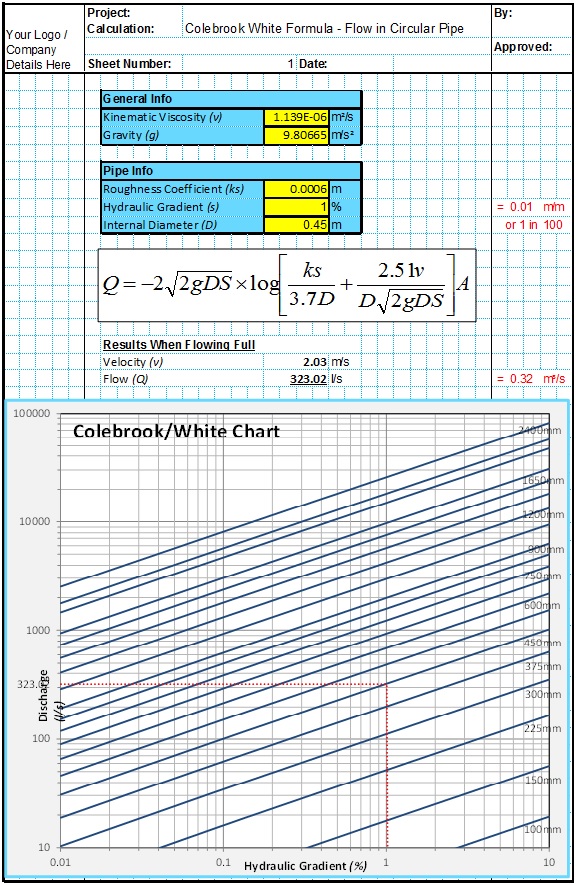
This spreadsheet uses the Colebrook-White and Manning Equations to calculate the flow capacity and velocity in pipes acting under gravity.
Find Out More
Buried Pipe Design Spreadsheet
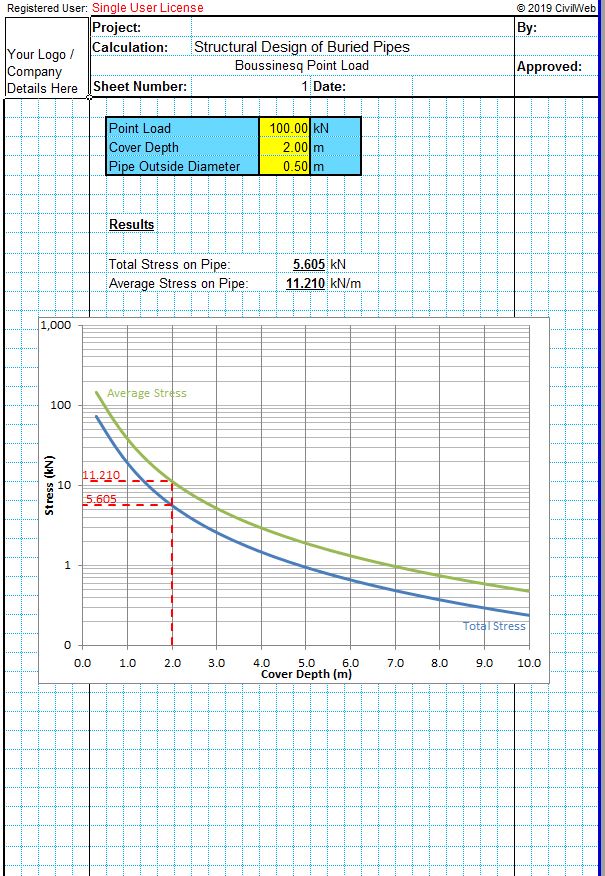
This spreadsheet can be used to design concrete, steel, plastic and other buried pipes in accordance with BS EN 1295-1.
Learn More
Manning Open Channel Design Spreadsheet
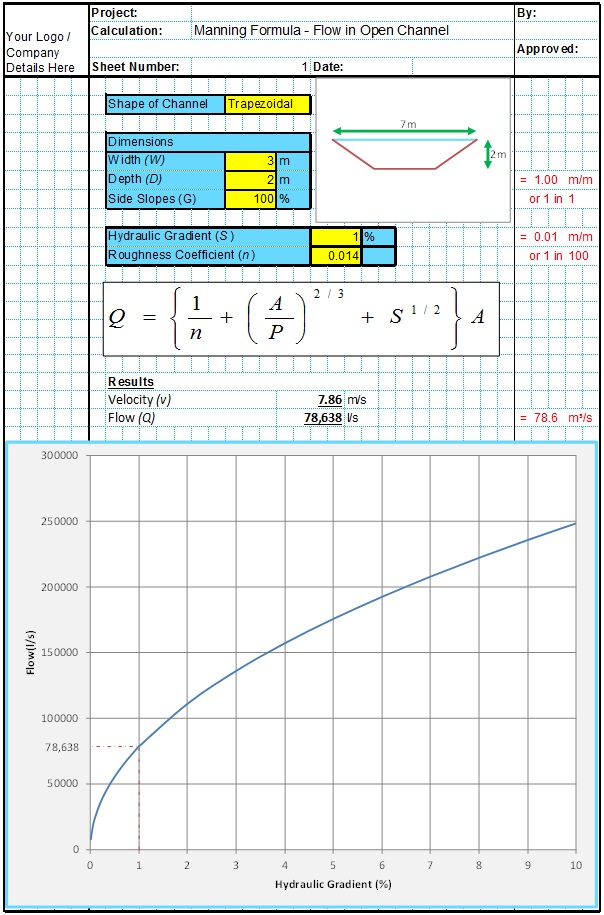
This spreadsheet uses the Manning formula to calculate the flow conditions in an open channel acting under gravity only.
Learn More
Runoff Calculator Spreadsheet
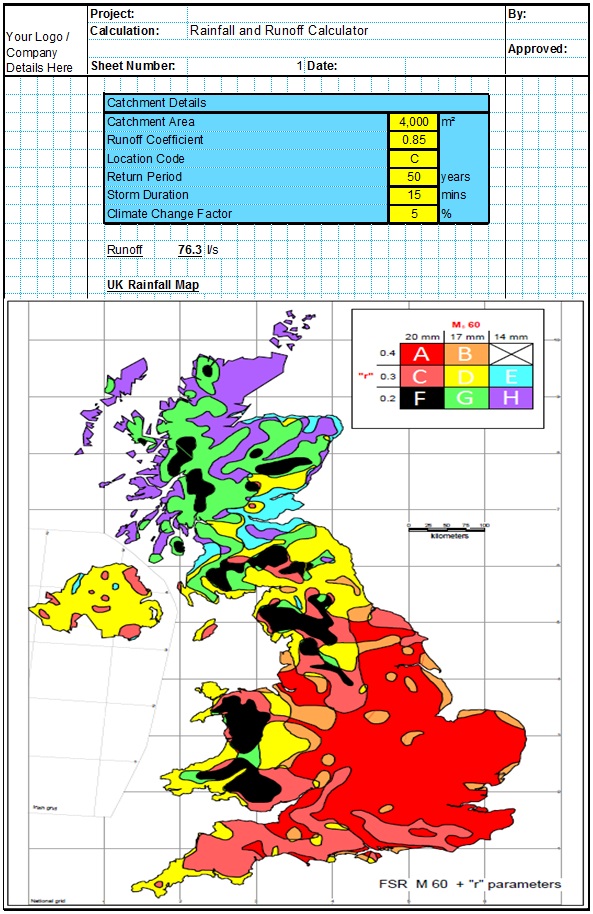
This spreadsheet calculates the design runoff flow for a site in accordance with the Flood Estimation Handbook.
Learn More
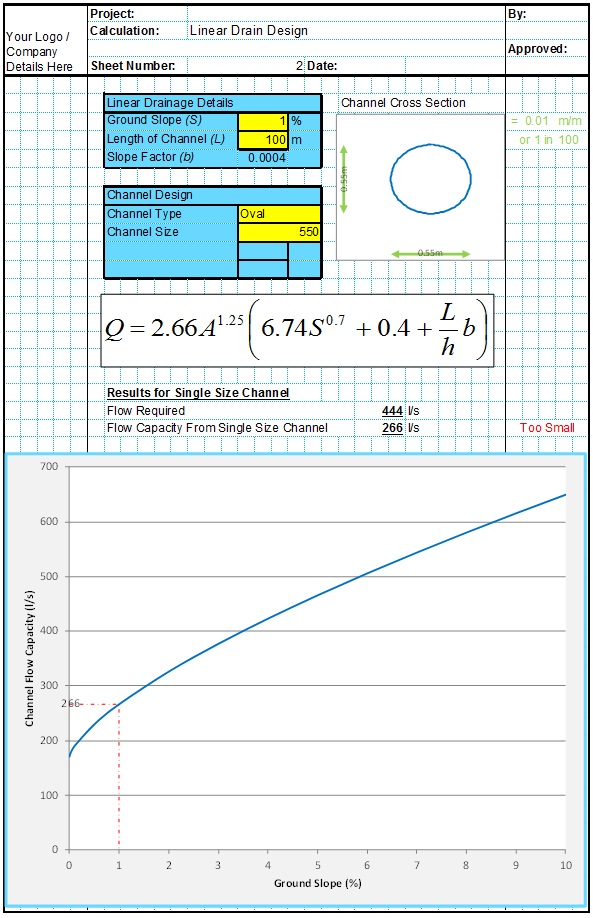
Linear Drainage Design Spreadsheet
This spreadsheet calculates the maximum flow from a specified linear drainage channel and checks whether the channel is sufficient for the specified site and storm conditions.
Learn More
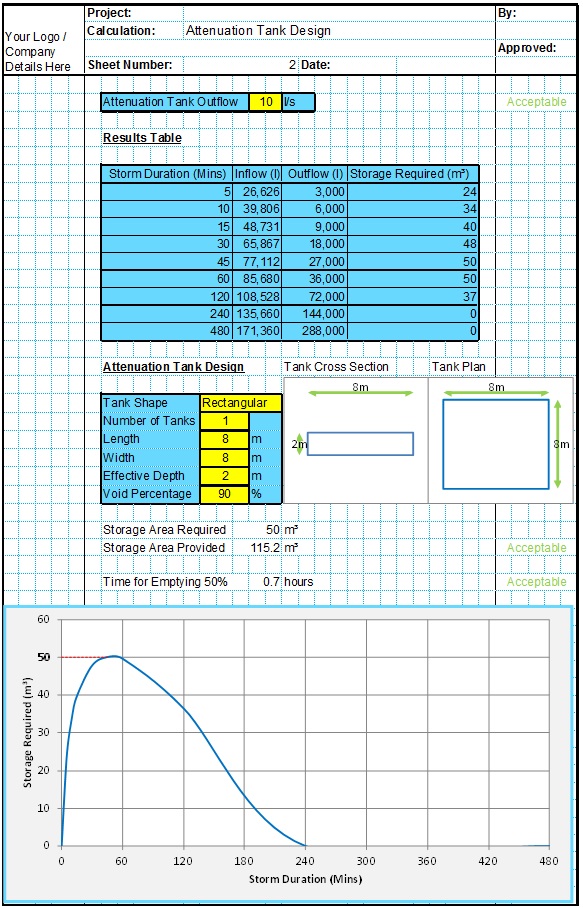
Attenuation Design Spreadsheet
This spreadsheet calculates the requirements for a attenuation system and assists the user to design a suitable system.
Learn More
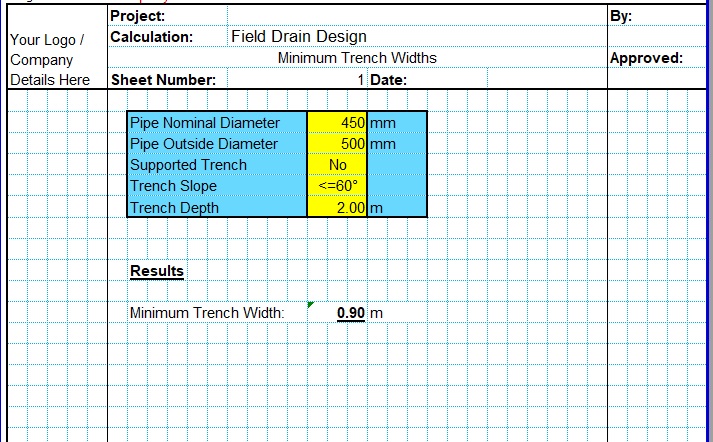
Field Drain Design Spreadsheet
This spreadsheet can be used to design field drains, typically subsurface drainage systems used to drain fields and open areas.
Learn More
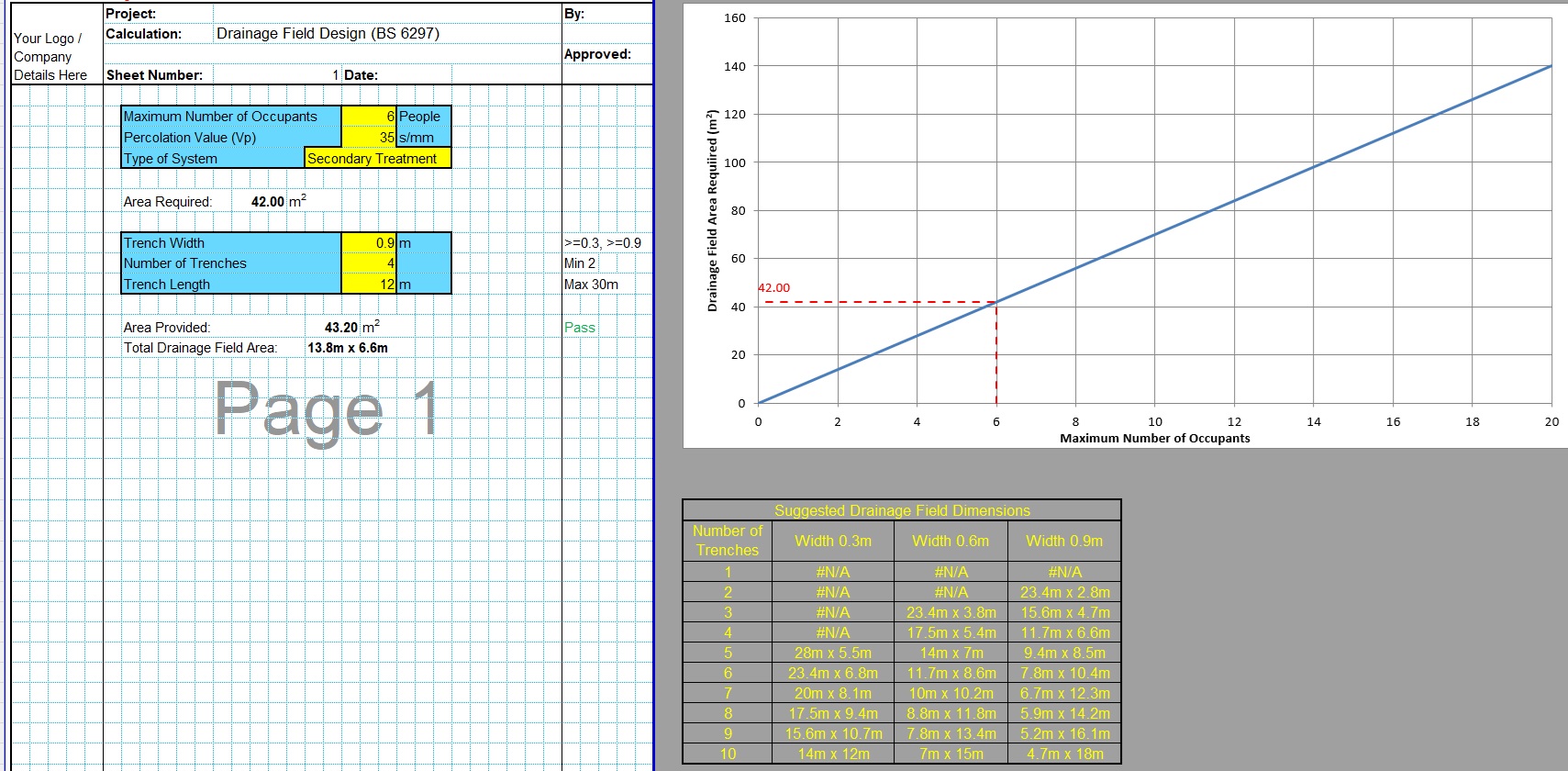
Drainage Field Design Spreadsheet
This spreadsheet can be used to design septic infiltration systems known as drainage fields, leach fields or septic drain fields.
Learn More
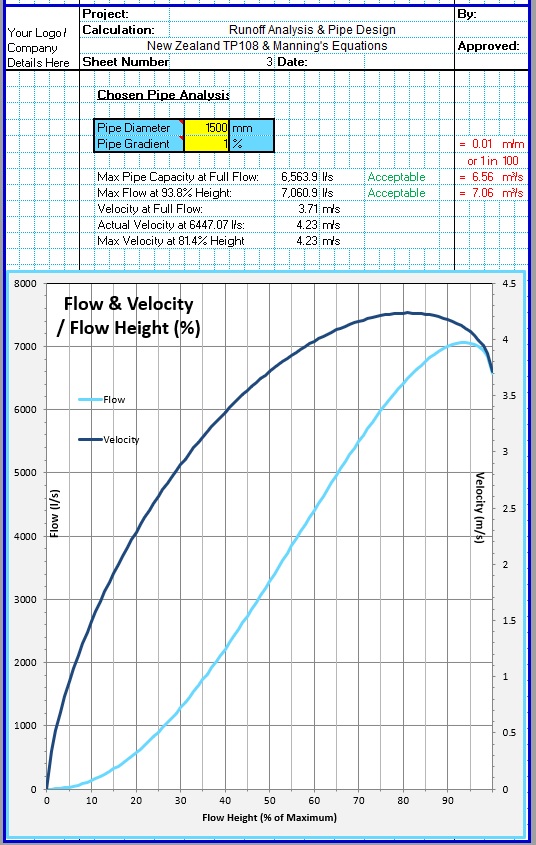
TP108 Spreadsheet
This spreadsheet calculates the rainfall for New Zealand catchments in accordance with TP108.
Learn More
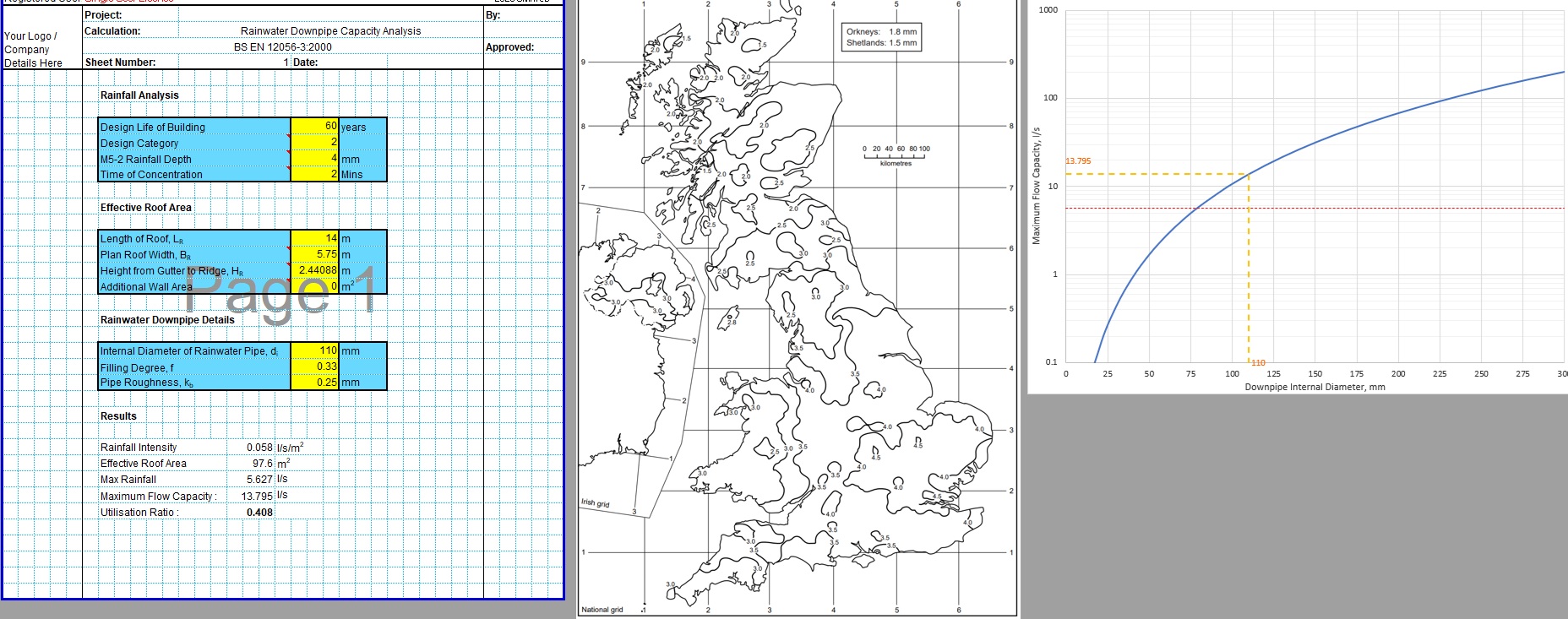
Roof Downpipe Calculator Spreadsheet
This spreadsheet calculates the size of roof drainage downpipes depending on the roof catchment and rainfall requirements.
Learn More
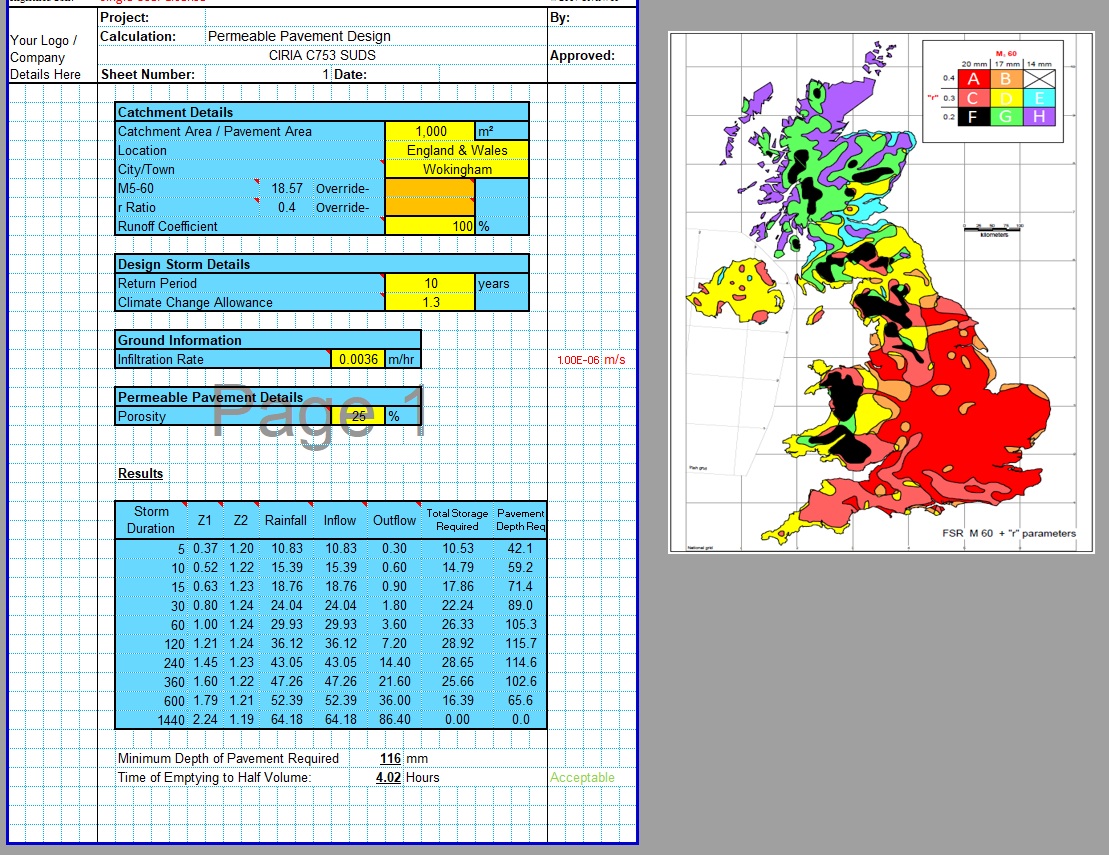
Permeable Pavement Design Spreadsheet
This spreadsheet is designed to determine the size and characteristics of permeable pavements.
Learn More
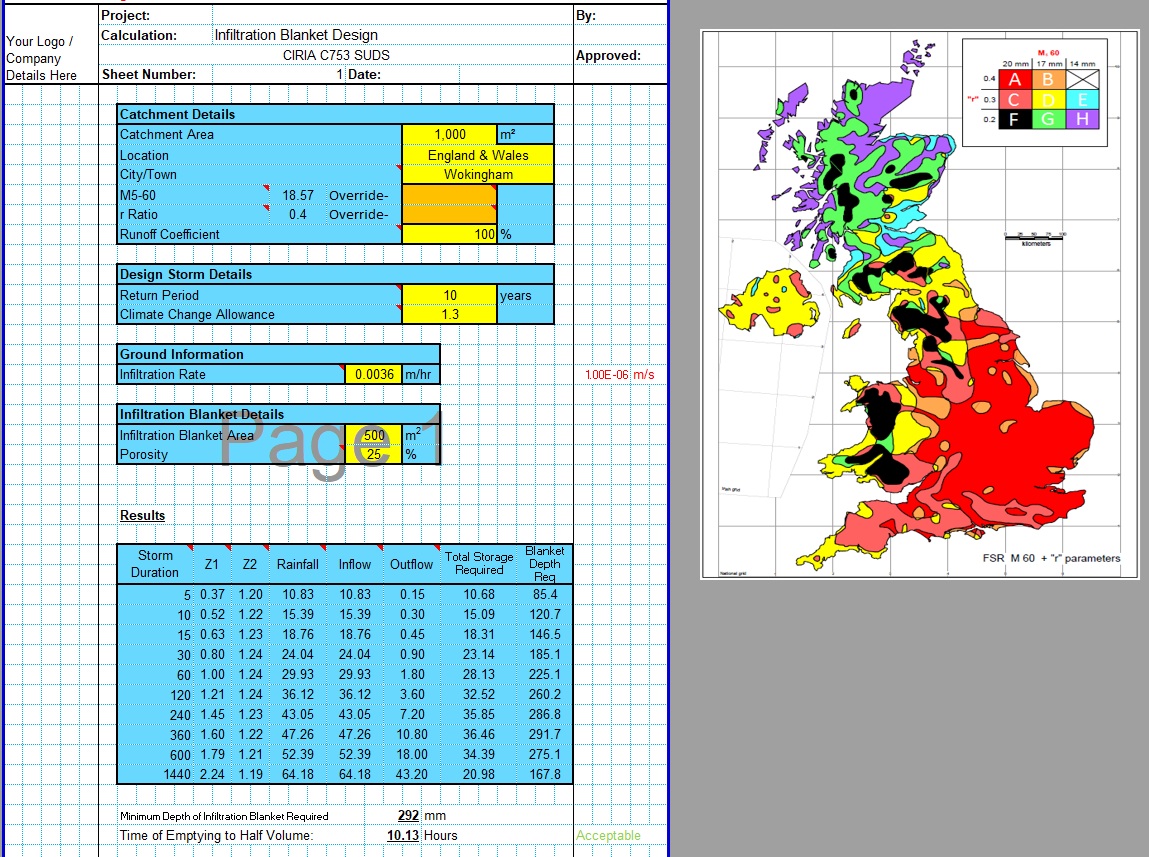
Infiltration Blanket Design Spreadsheet
This spreadsheet can be used to design thin depth infiltration systems, typically called infiltration blanket systems.
Learn More
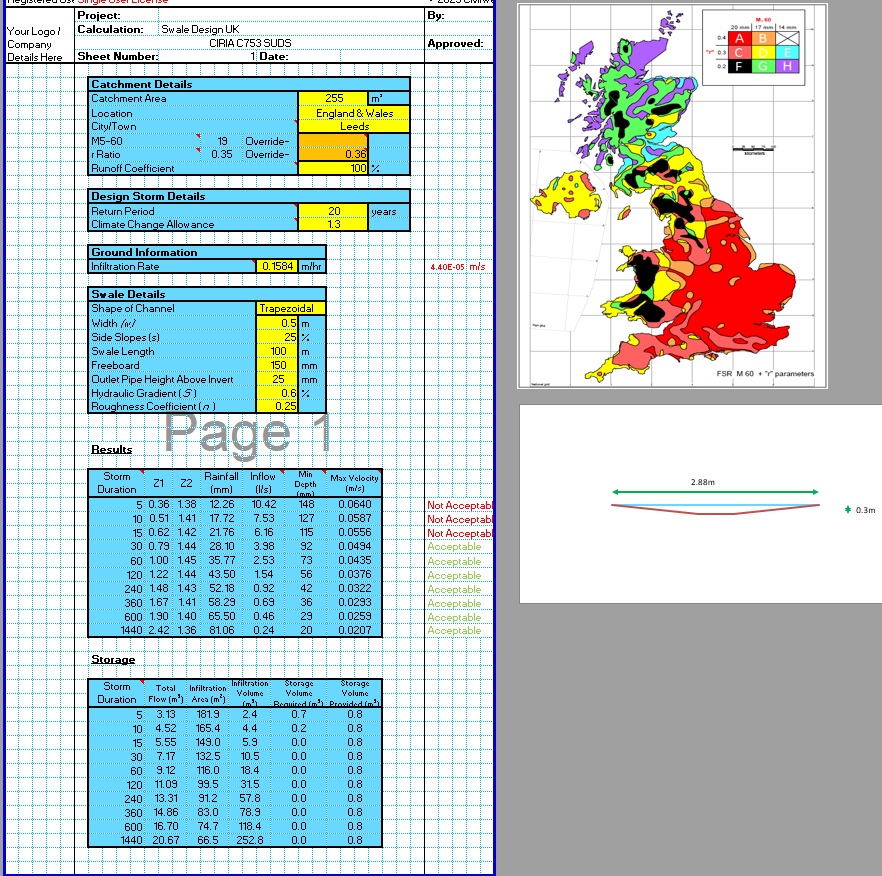
Swale Design Spreadsheet
This spreadsheet can be used to design swales. These linear grassed channels can be used both to convey, infiltrate and filter surface drainage runoff.
Learn More
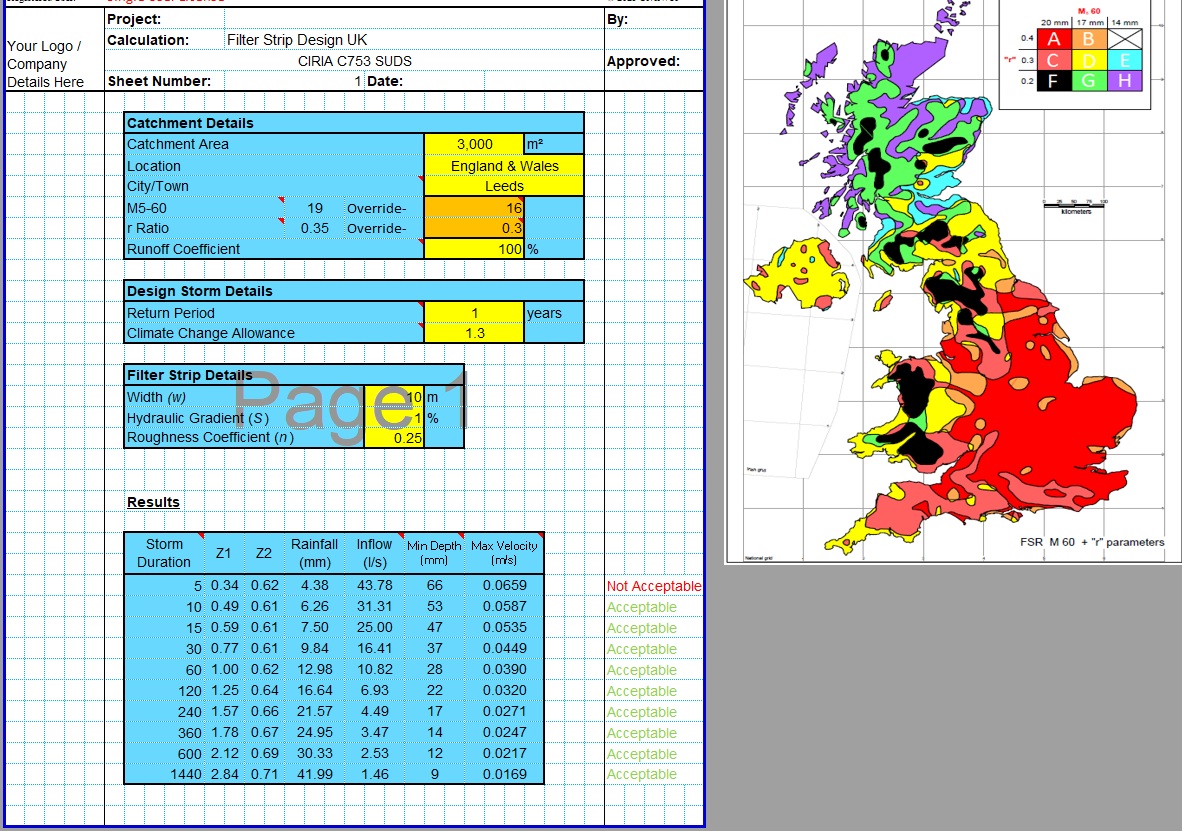
Filter Strip Design Spreadsheet
This spreadsheet is designed to analyse surface water filter strips and to determine the max flow depth and max flow velocity and determine whether they are in accordance with relevant standards.
Learn More
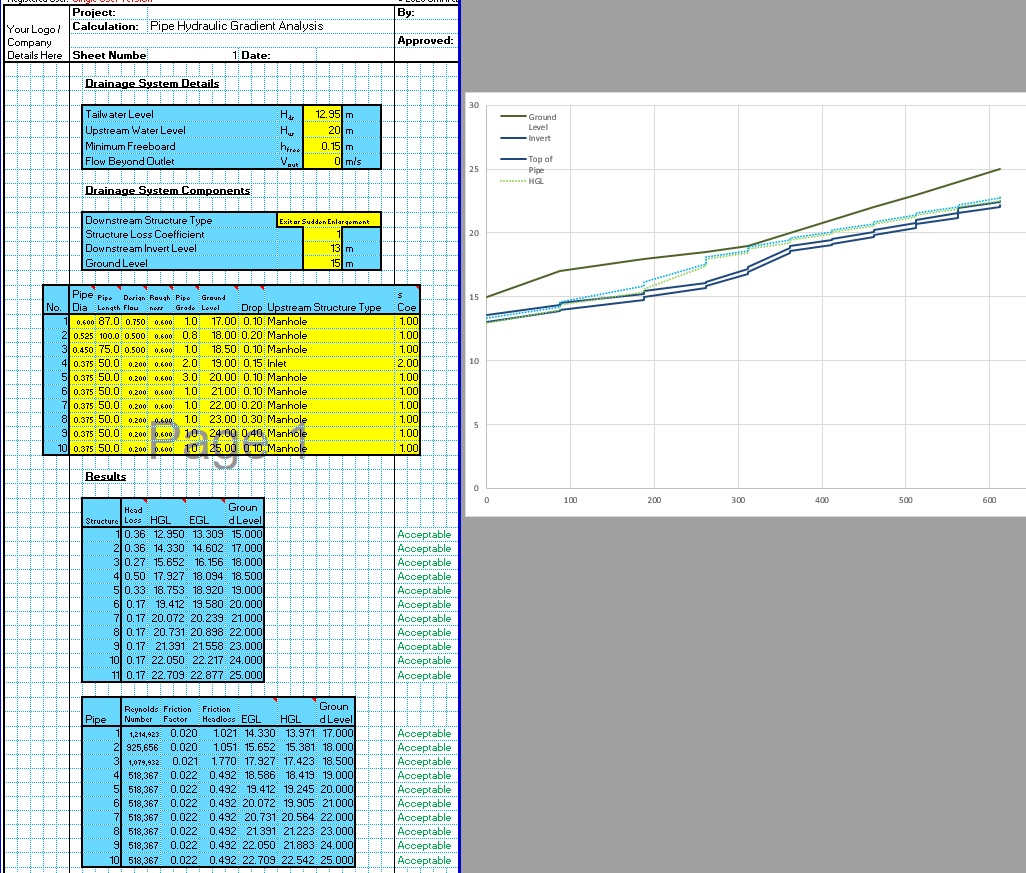
Hydraulic Gradient Analysis Spreadsheet
This spreadsheet analyses the hydraulic and energy grade lines for drainage systems with up to 10 drainage runs.
Learn More
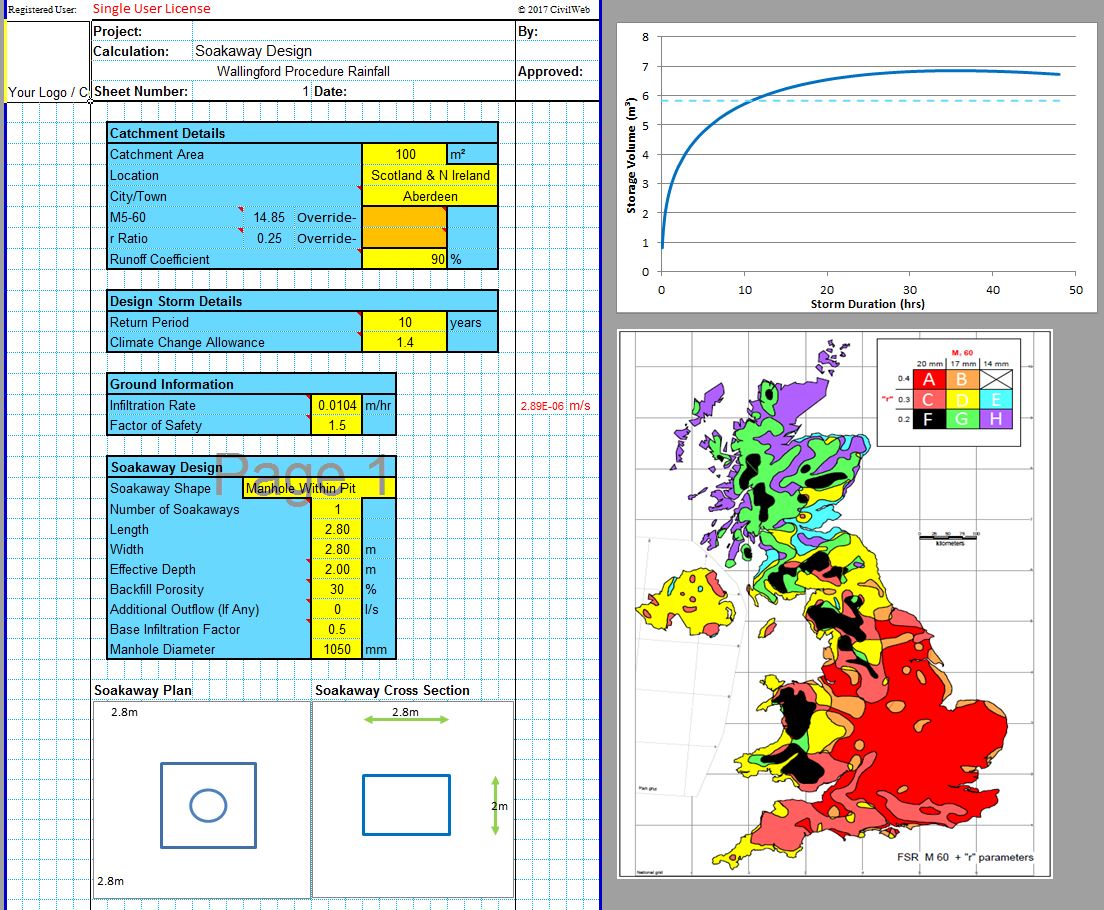
Soakaway Design Spreadsheet
This spreadsheet calculates the requirements for a soakaway system and assists the user to design a suitable system.
Learn More
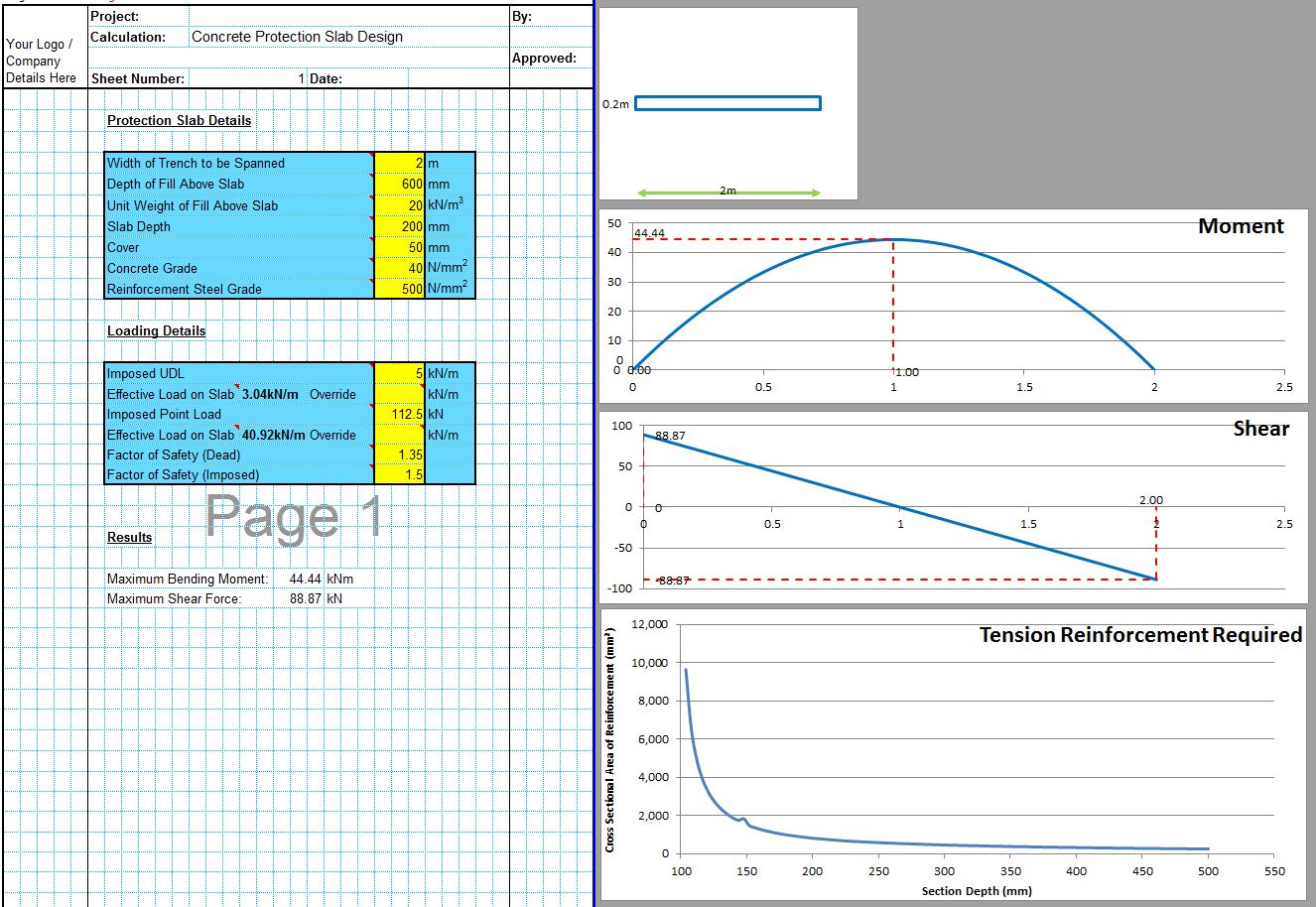
Concrete Protection Slab
This detailed design spreadsheet designs a protection slab commonly installed to protect shallow pipes.
Learn More
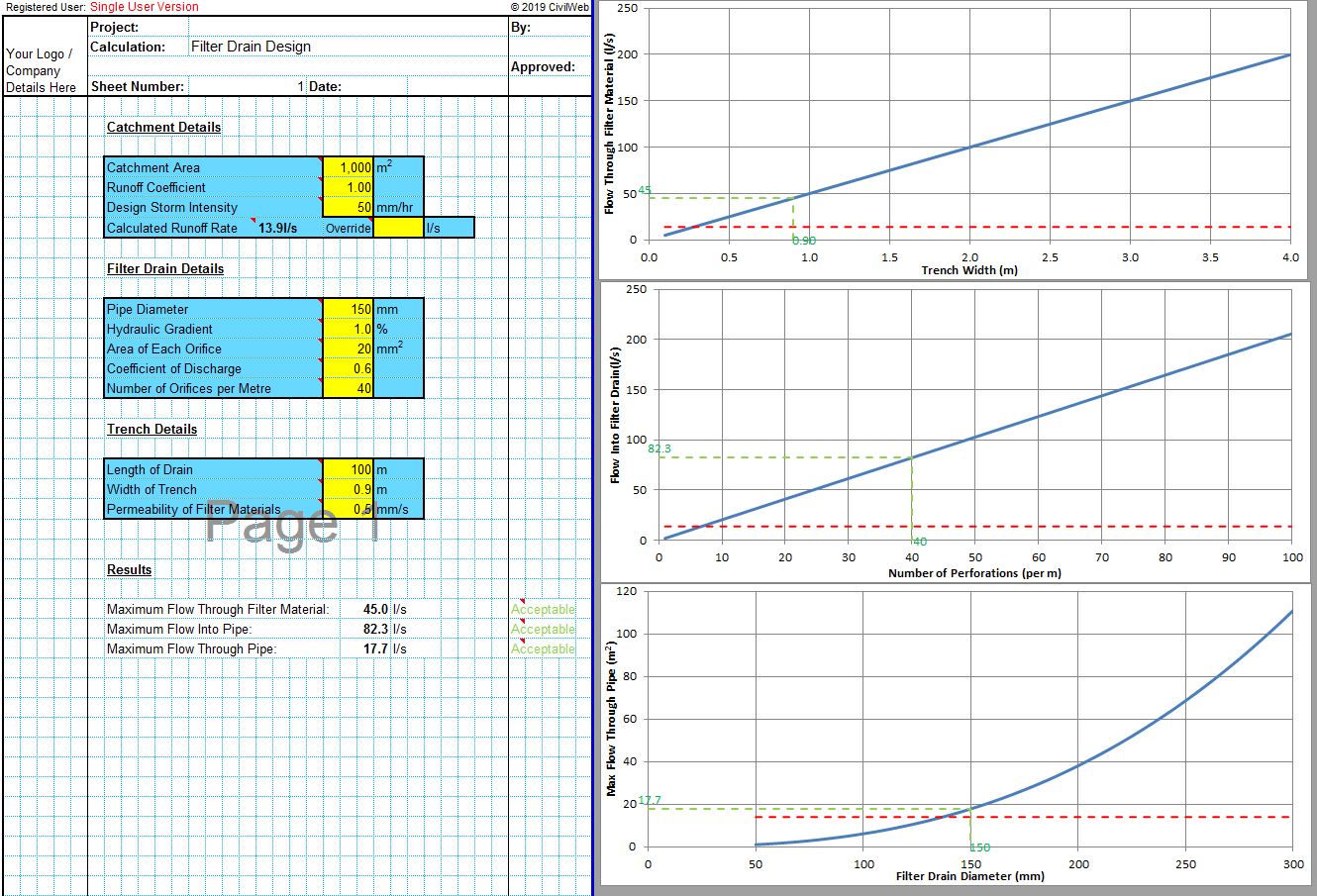
French Drain Design
This spreadsheet completes French Drain Design in accordance with the SUDS Manual.
Learn More
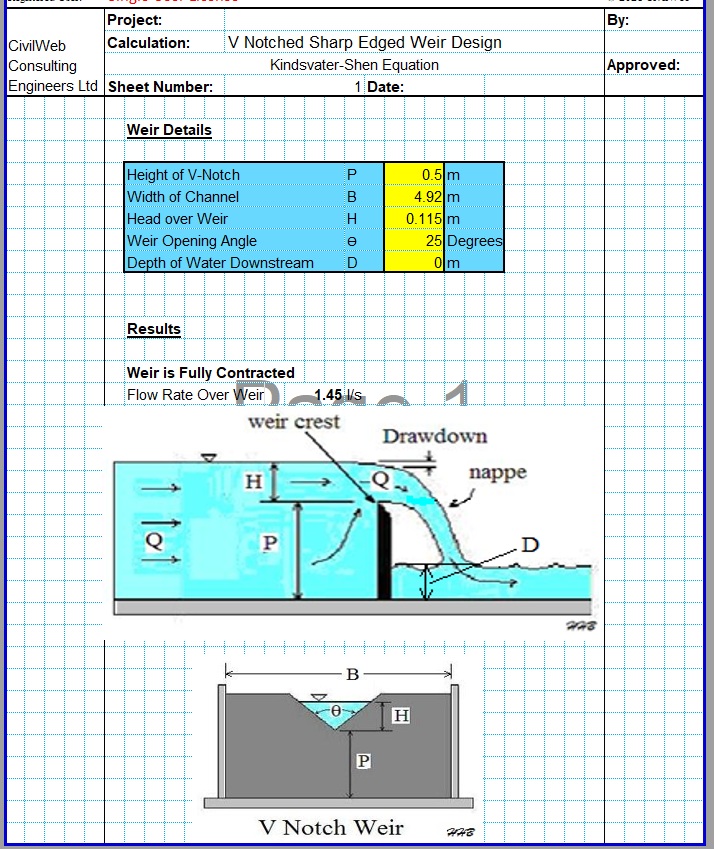
Sharp Crested Weir Flow Calculator Spreadsheets
This suite of 5 separate spreadsheets calculates the flow over sharp crested weirs of all shapes and sizes.
Learn More
Drainage Design Spreadsheet
This is the full suite of drainage design spreadsheets, available at a massive discount for only £49.99.