A strong BS 6297 drainage field design starts with understanding what the standard actually governs: the safe, compliant disposal of effluent from septic tanks and small sewage treatment plants into the ground. BS 6297:2007+A1:2008 sets out how drainage fields must be tested, sized, and constructed so they protect groundwater, avoid pollution, and operate reliably over the long term. It is the core reference for infiltration systems used for foul effluent in the UK, and it is distinct from BRE 365, which applies only to surface‑water soakaways.
The CivilWeb Drainage Field Design Spreadsheet is able to complete all the required calculations fully in accordance with BS 6297:2007+A1:2008, and includes unique optimization tools to speed up the design.
🌿 Purpose of a BS 6297 Drainage Field
A drainage field disperses treated effluent into the soil through a network of perforated pipes laid in shallow trenches. The soil provides the final stage of treatment through aerobic biological processes. Guidance emphasises that correct design and installation are essential to avoid polluting the environment and to ensure systems operate correctly.
📐 Core Requirements Under BS 6297
- **Shallow installation depth** — Trenches must sit in the upper soil layers (typically the top 700–800 mm) to maintain aerobic conditions needed for treatment.
- **Percolation testing (Vp)** — A mandatory infiltration test determines soil porosity and is used to calculate trench length and total field area.
- **Effluent loading** — The field must be sized to disperse the maximum daily discharge from the property, based on occupancy and treatment‑plant output.
- **Pipe layout** — Perforated pipes are placed in gravel-filled trenches arranged in loops or parallel lines to ensure even distribution.
- **Groundwater and siting constraints** — Minimum distances from buildings, boundaries, watercourses, and groundwater levels are required to protect the environment.
- **Regulatory alignment** — BS 6297 works alongside Building Regulations and Environment Agency rules, which require correctly sized and constructed drainage fields for foul effluent disposal.
📊 Testing and Sizing Under BS 6297
- **Trial hole assessment** — Confirms soil profile, groundwater depth, and suitability.
- **Percolation test (Vp)** — Measures how quickly water drains through the soil.
- **Area calculation** — Uses Vp and daily flow to determine trench length and total infiltration area.
- **Environmental checks** — Ensures the site meets groundwater protection and siting requirements, as reinforced in government infiltration‑system guidance.
- Sandy soils typically require shorter trench lengths, while clay‑rich soils may require much larger areas or may be unsuitable altogether.
🛠️ Construction Standards
- Trenches must be filled with **clean, washed gravel** to support even flow.
- Pipes must be laid level to avoid overloading one section of the field.
- Soil compaction must be avoided to preserve infiltration capacity.
- Native soil structure should remain undisturbed to maintain aerobic treatment.
- Inspection and maintenance access must be incorporated.
🌍 Environmental Protection and Compliance
Drainage fields designed under BS 6297 play a critical role in protecting groundwater. They ensure effluent is treated before reaching deeper soil layers and help meet environmental regulations that prohibit the use of traditional soakaways for foul effluent, which must instead be dispersed through a properly designed drainage field.
A compliant system reduces pollution risk, supports planning approval, and ensures long‑term system reliability. Understanding BS 6297 is essential for designing drainage fields that meet both regulatory expectations and environmental responsibilities.
The CivilWeb Drainage Field Design Spreadsheet is able to complete all the required calculations fully in accordance with BS 6297:2007+A1:2008, and includes unique optimization tools to speed up the design.
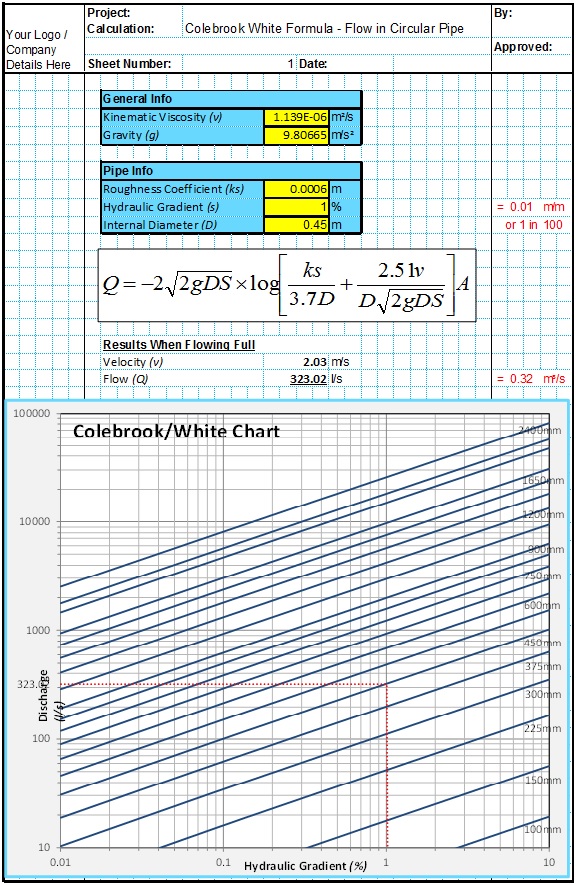
PIPE FLOW CALCULATOR
This spreadsheet uses the Colebrook-White and Manning Equations to calculate the flow capacity and velocity in pipes acting under gravity.
Find Out More
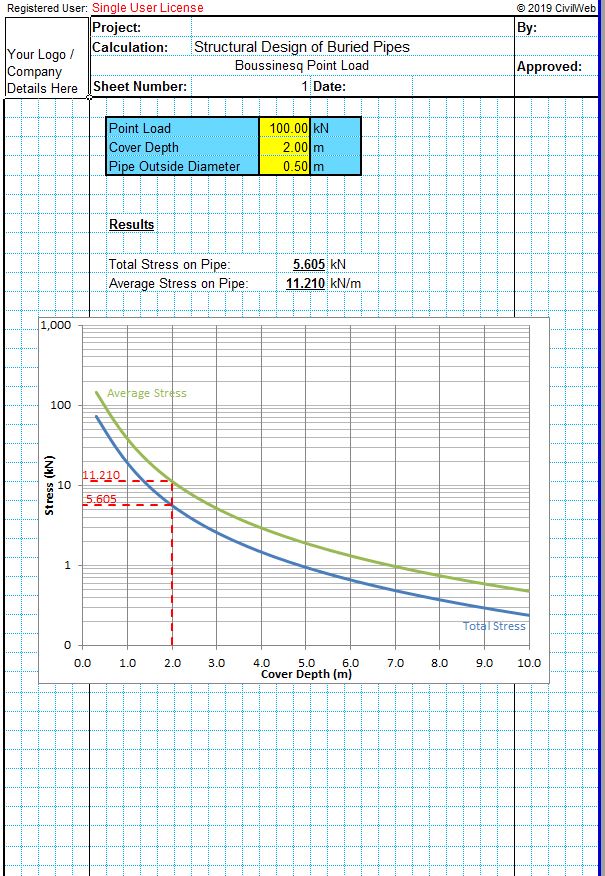
Buried Pipe Design Spreadsheet
This spreadsheet can be used to design concrete, steel, plastic and other buried pipes in accordance with BS EN 1295-1.
Learn More
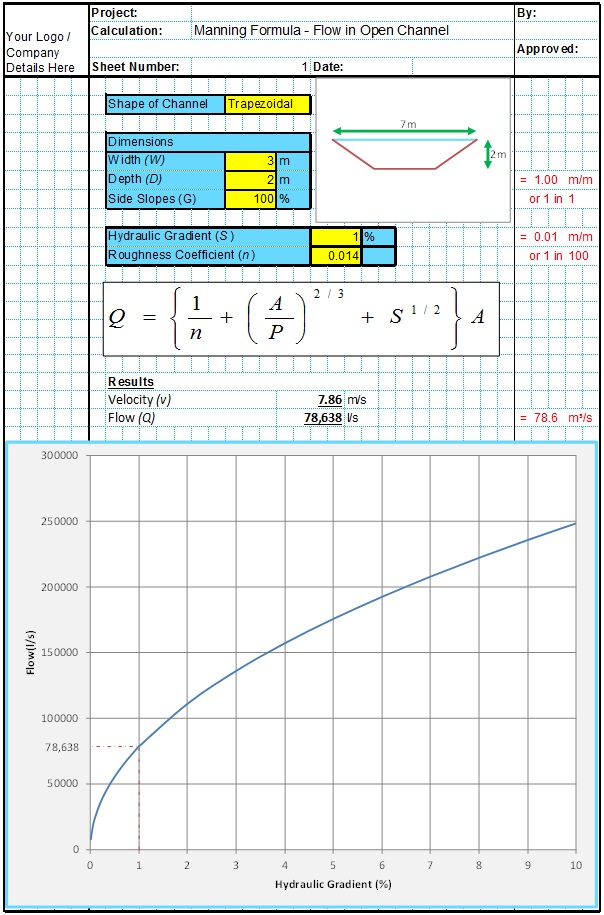
Manning Open Channel Design Spreadsheet
This spreadsheet uses the Manning formula to calculate the flow conditions in an open channel acting under gravity only.
Learn More
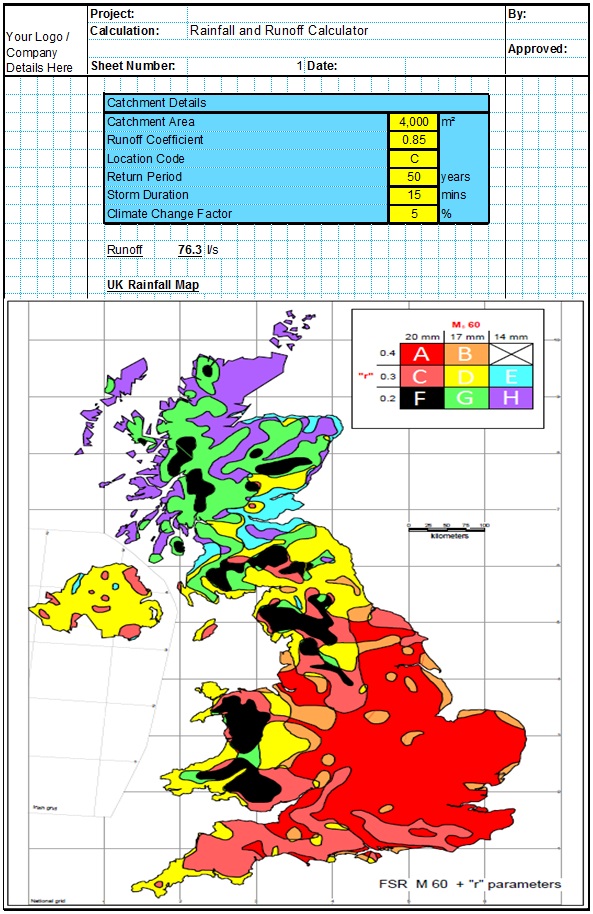
Runoff Calculator Spreadsheet
This spreadsheet calculates the design runoff flow for a site in accordance with the Flood Estimation Handbook.
Learn More
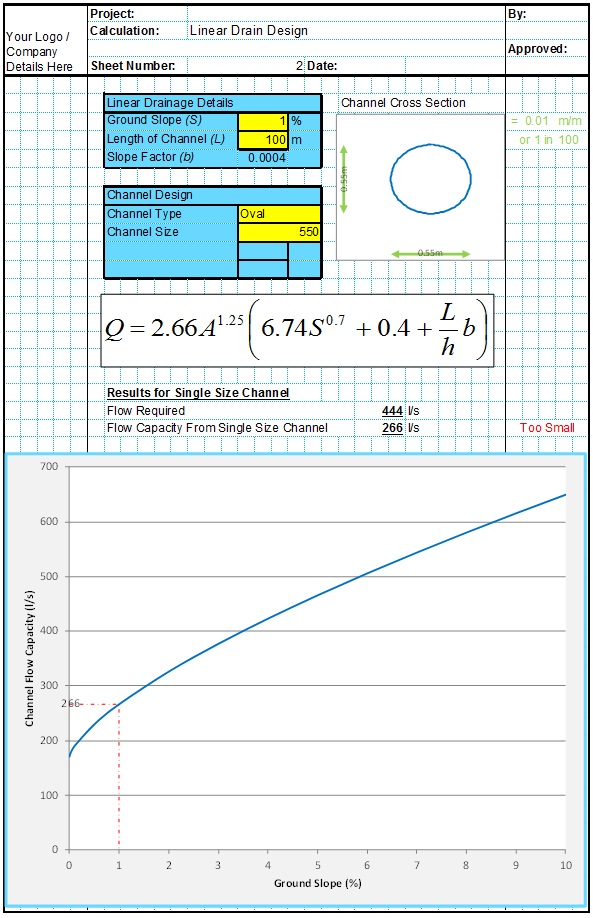
Linear Drainage Design Spreadsheet
This spreadsheet calculates the maximum flow from a specified linear drainage channel and checks whether the channel is sufficient for the specified site and storm conditions.
Learn More
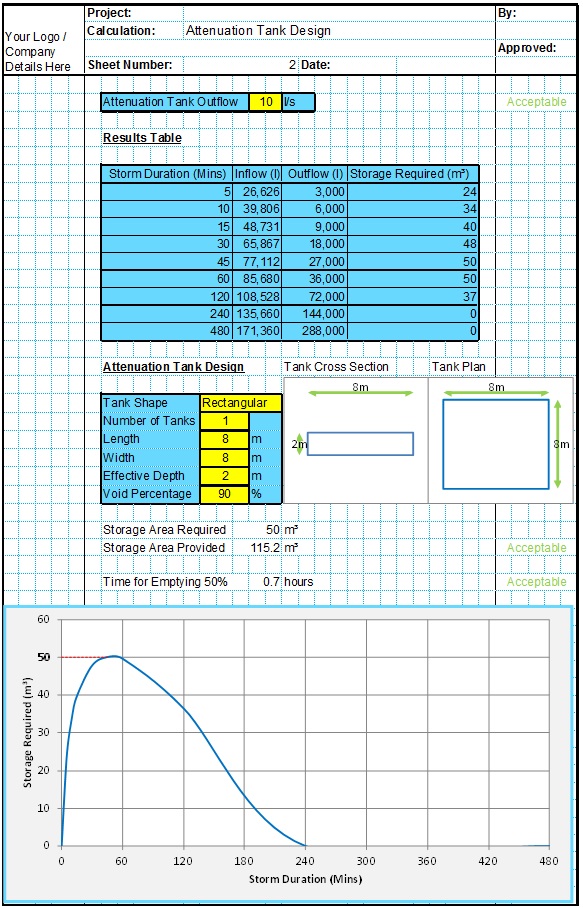
Attenuation Design Spreadsheet
This spreadsheet calculates the requirements for a attenuation system and assists the user to design a suitable system.
Learn More
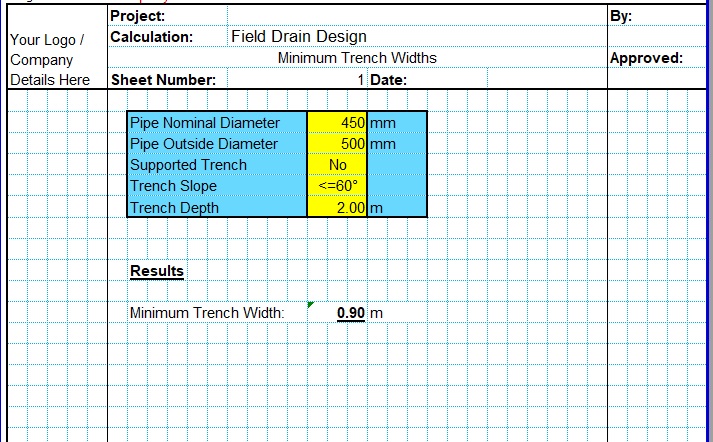
Field Drain Design Spreadsheet
This spreadsheet can be used to design field drains, typically subsurface drainage systems used to drain fields and open areas.
Learn More
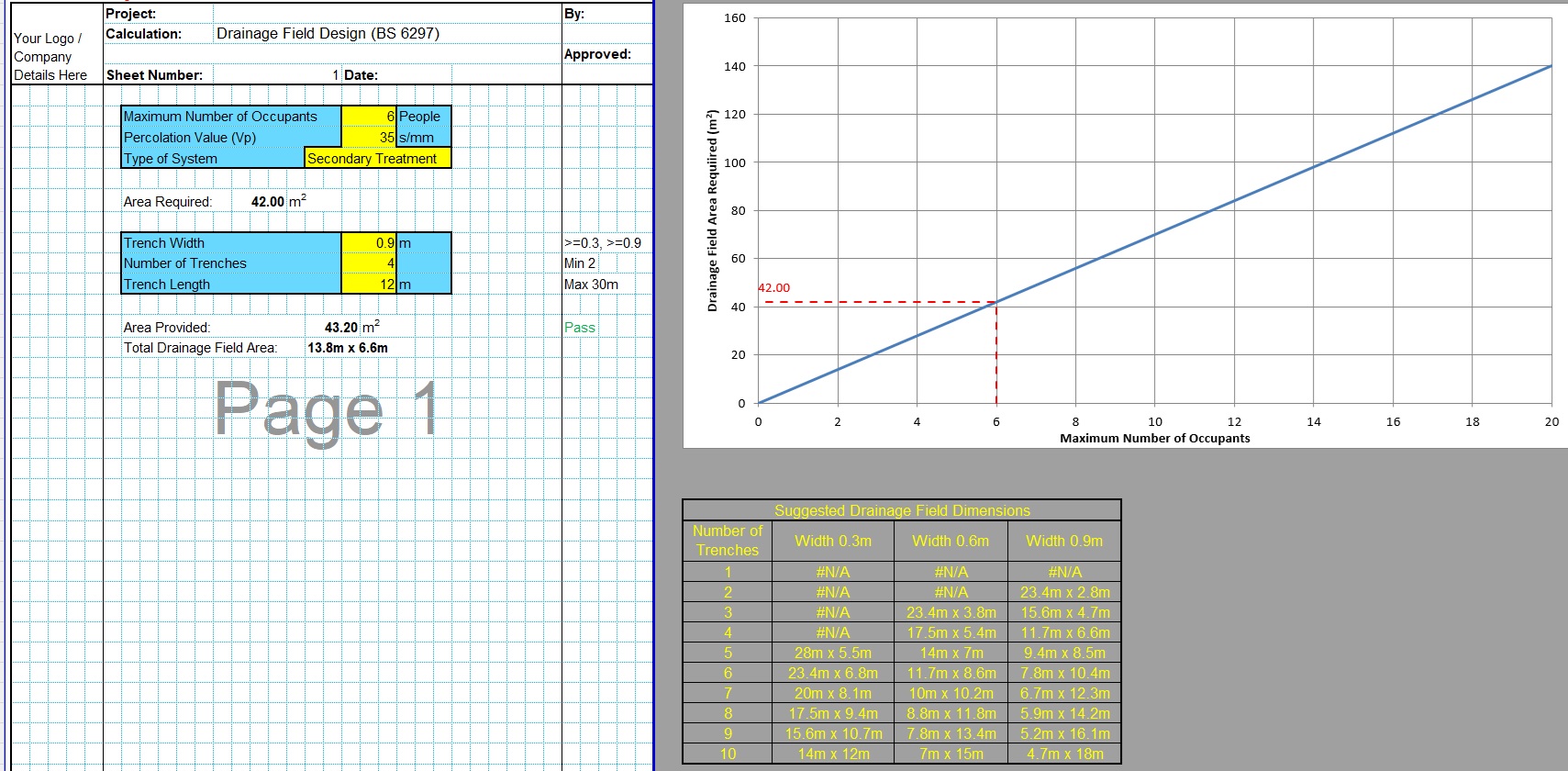
Drainage Field Design Spreadsheet
This spreadsheet can be used to design septic infiltration systems known as drainage fields, leach fields or septic drain fields.
Learn More
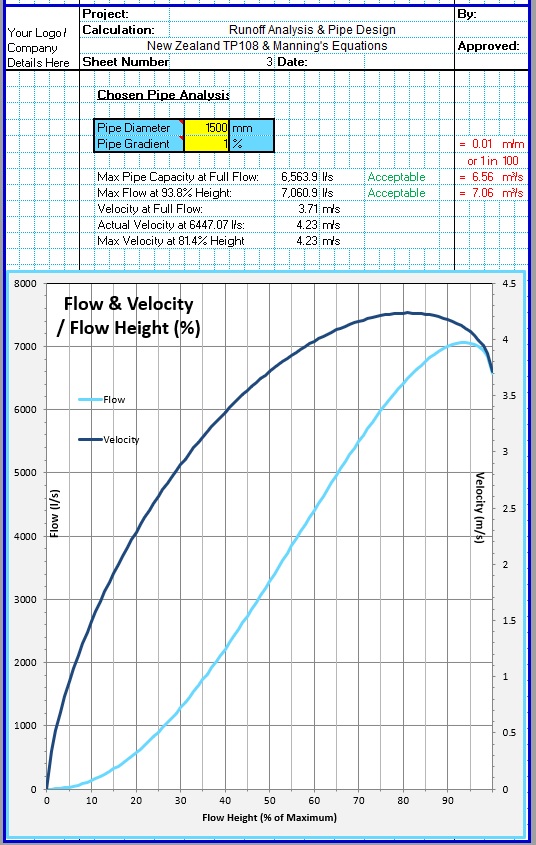
TP108 Spreadsheet
This spreadsheet calculates the rainfall for New Zealand catchments in accordance with TP108.
Learn More
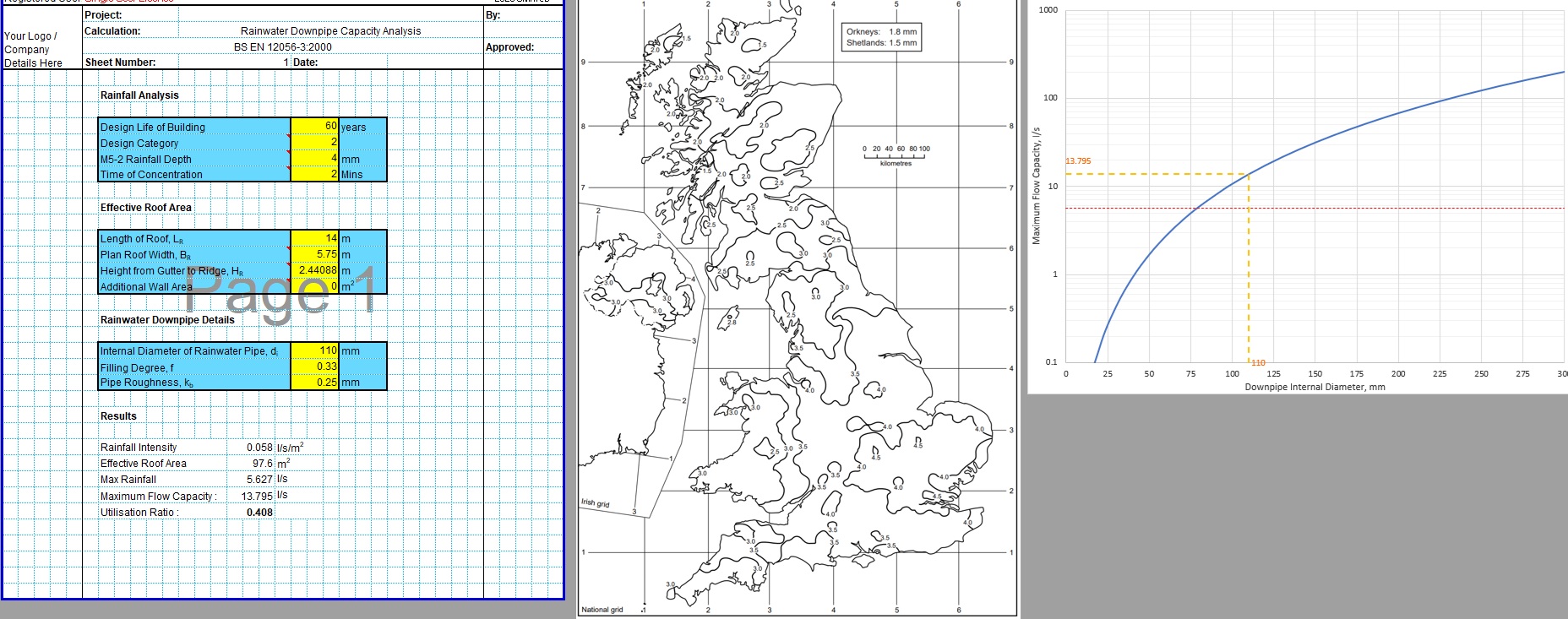
Roof Downpipe Calculator Spreadsheet
This spreadsheet calculates the size of roof drainage downpipes depending on the roof catchment and rainfall requirements.
Learn More
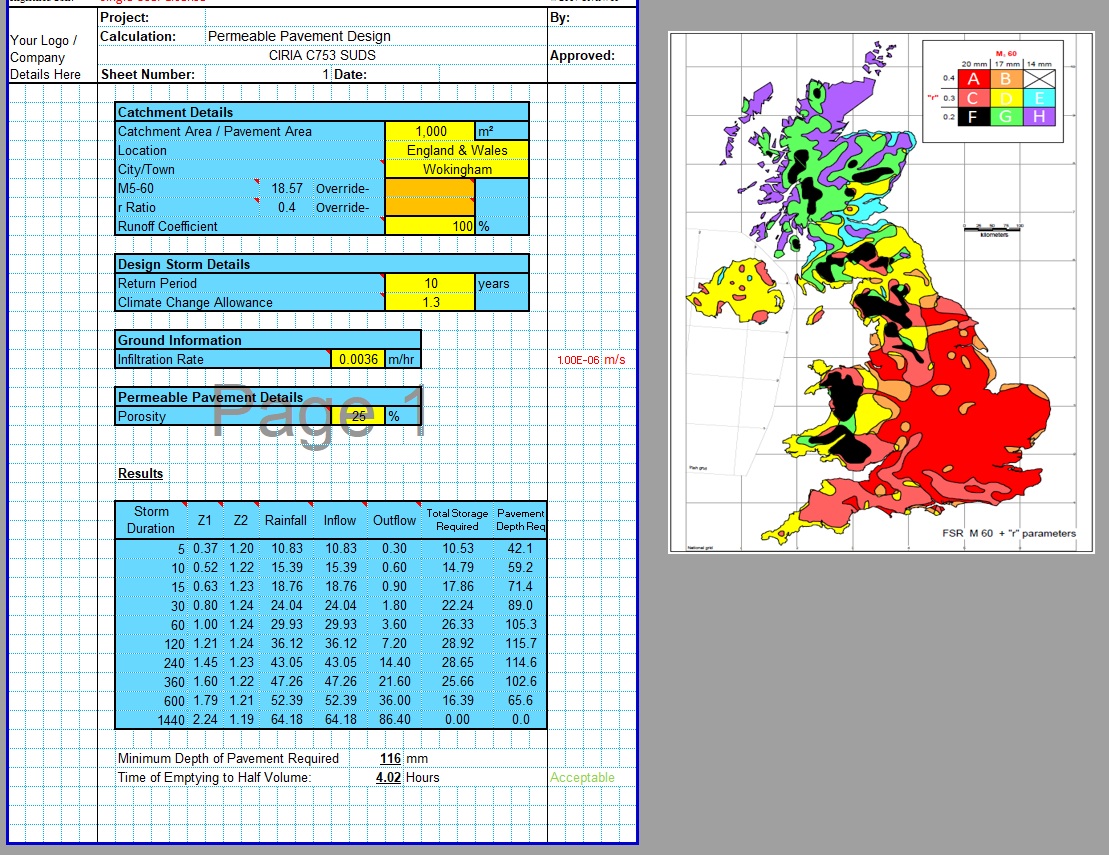
Permeable Pavement Design Spreadsheet
This spreadsheet is designed to determine the size and characteristics of permeable pavements.
Learn More
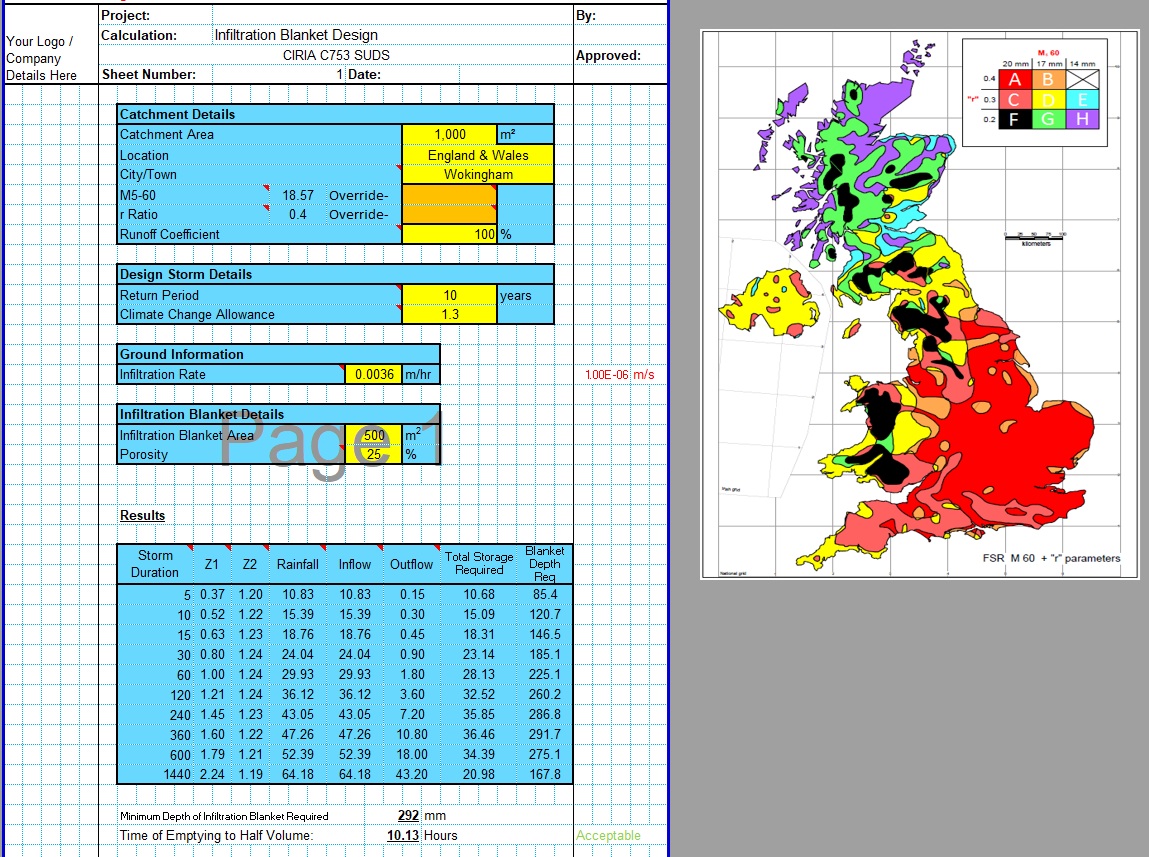
Infiltration Blanket Design Spreadsheet
This spreadsheet can be used to design thin depth infiltration systems, typically called infiltration blanket systems.
Learn More
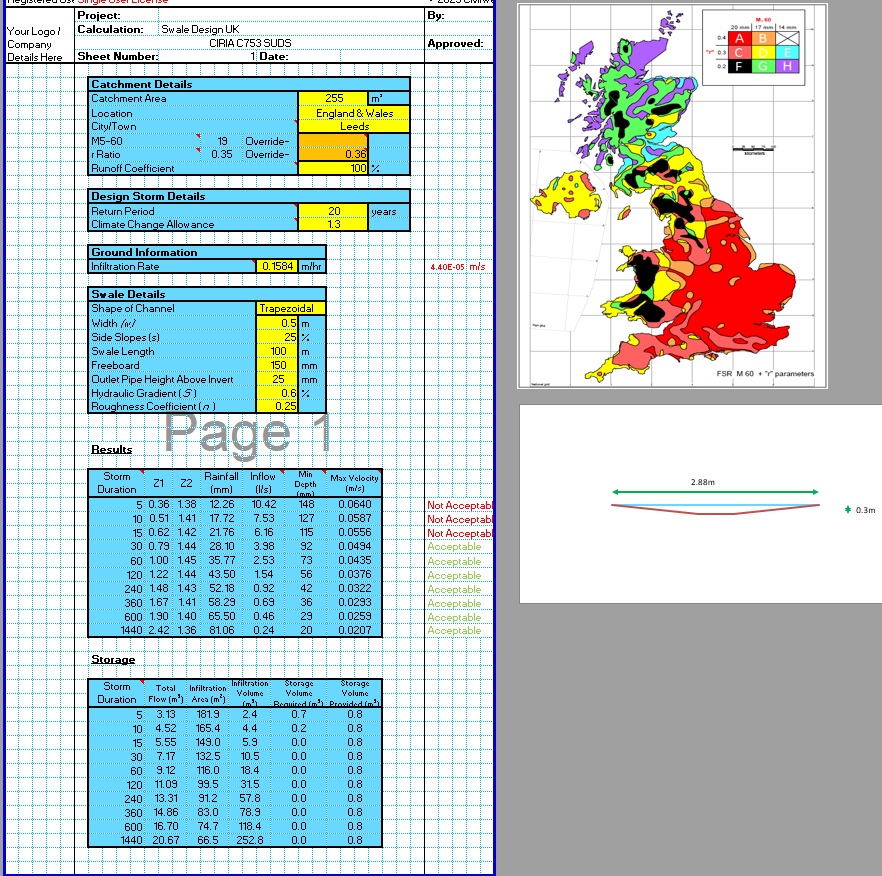
Swale Design Spreadsheet
This spreadsheet can be used to design swales. These linear grassed channels can be used both to convey, infiltrate and filter surface drainage runoff.
Learn More
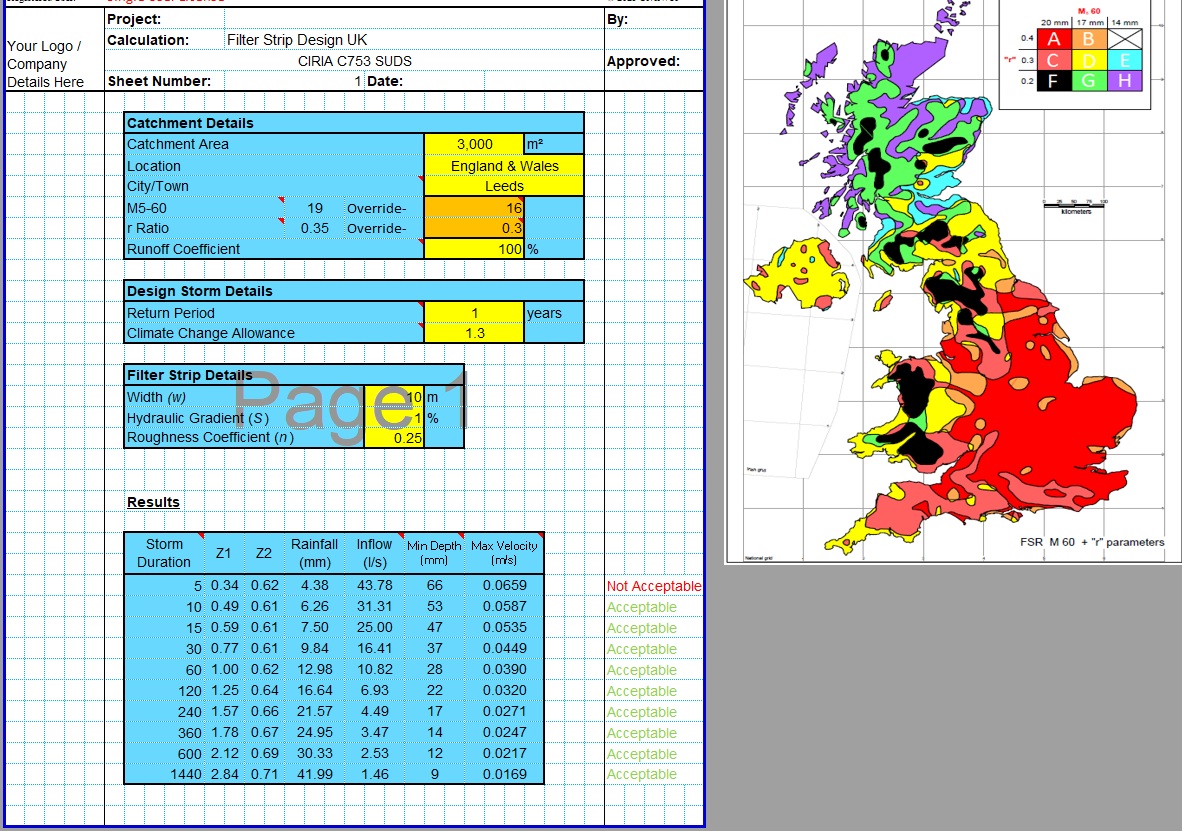
Filter Strip Design Spreadsheet
This spreadsheet is designed to analyse surface water filter strips and to determine the max flow depth and max flow velocity and determine whether they are in accordance with relevant standards.
Learn More
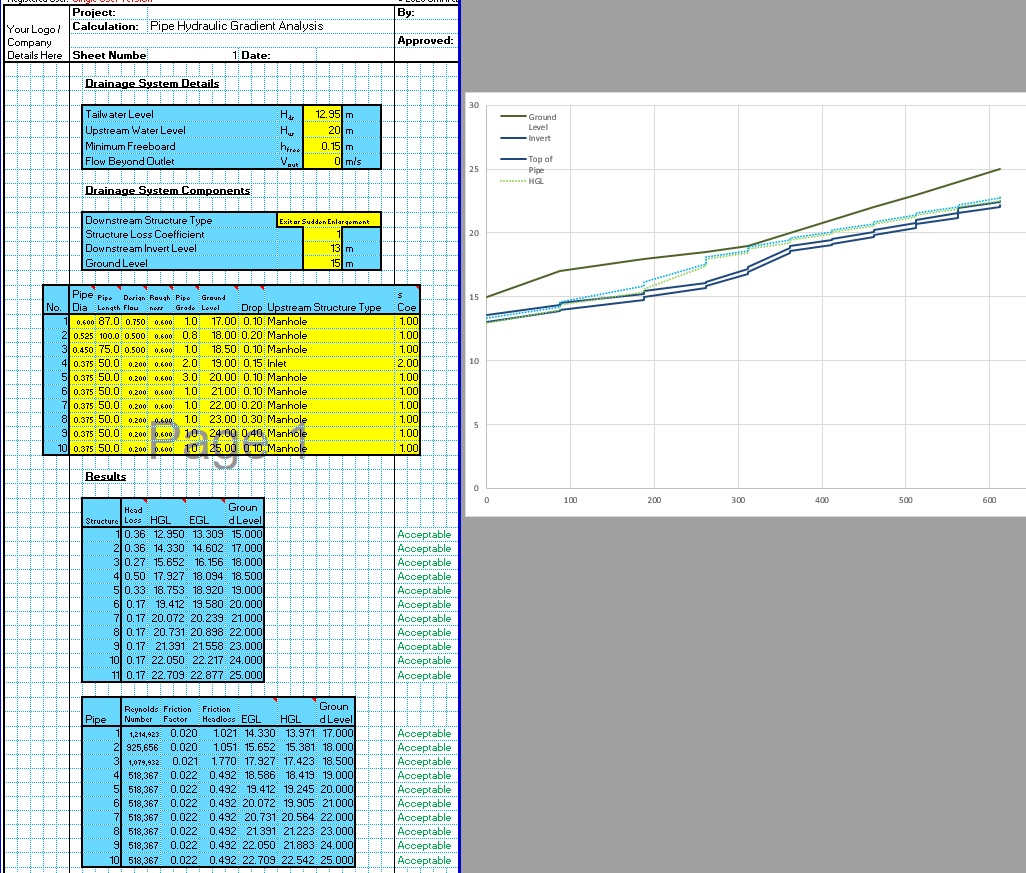
Hydraulic Gradient Analysis Spreadsheet
This spreadsheet analyses the hydraulic and energy grade lines for drainage systems with up to 10 drainage runs.
Learn More
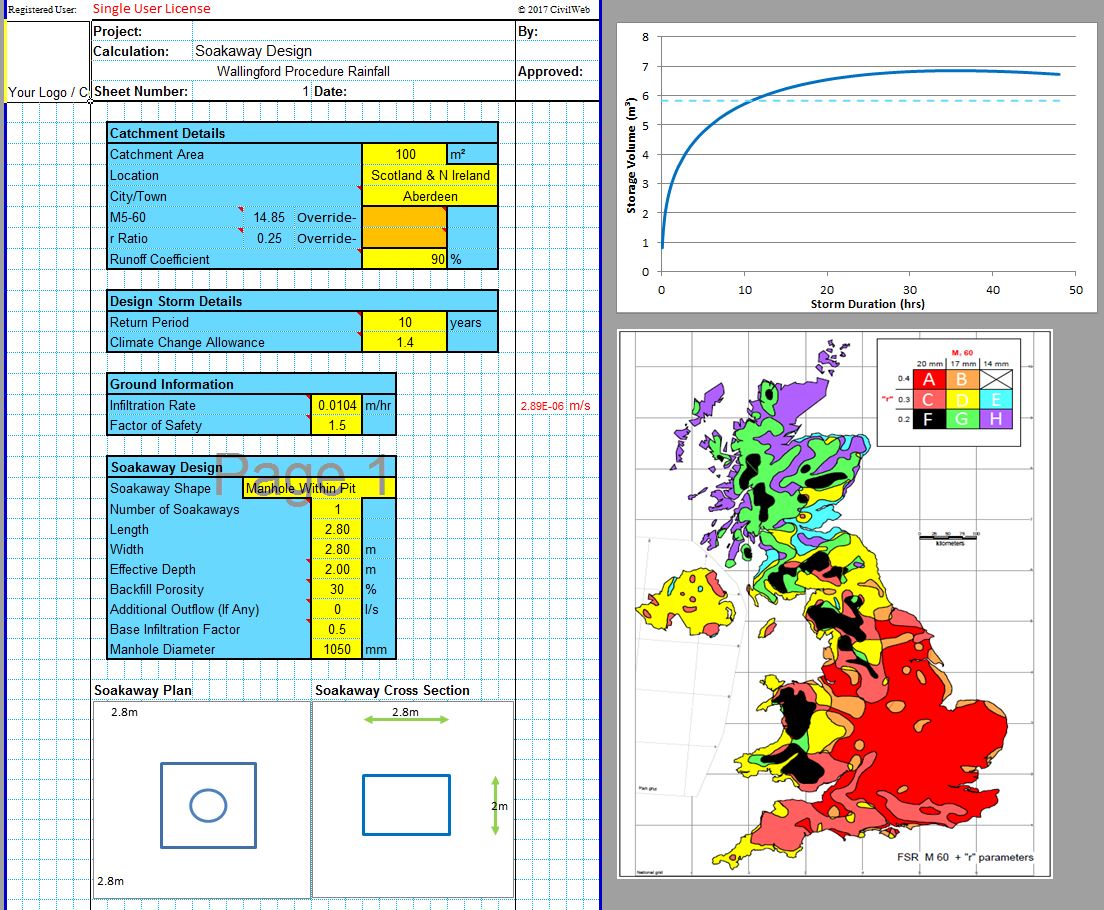
Soakaway Design Spreadsheet
This spreadsheet calculates the requirements for a soakaway system and assists the user to design a suitable system.
Learn More
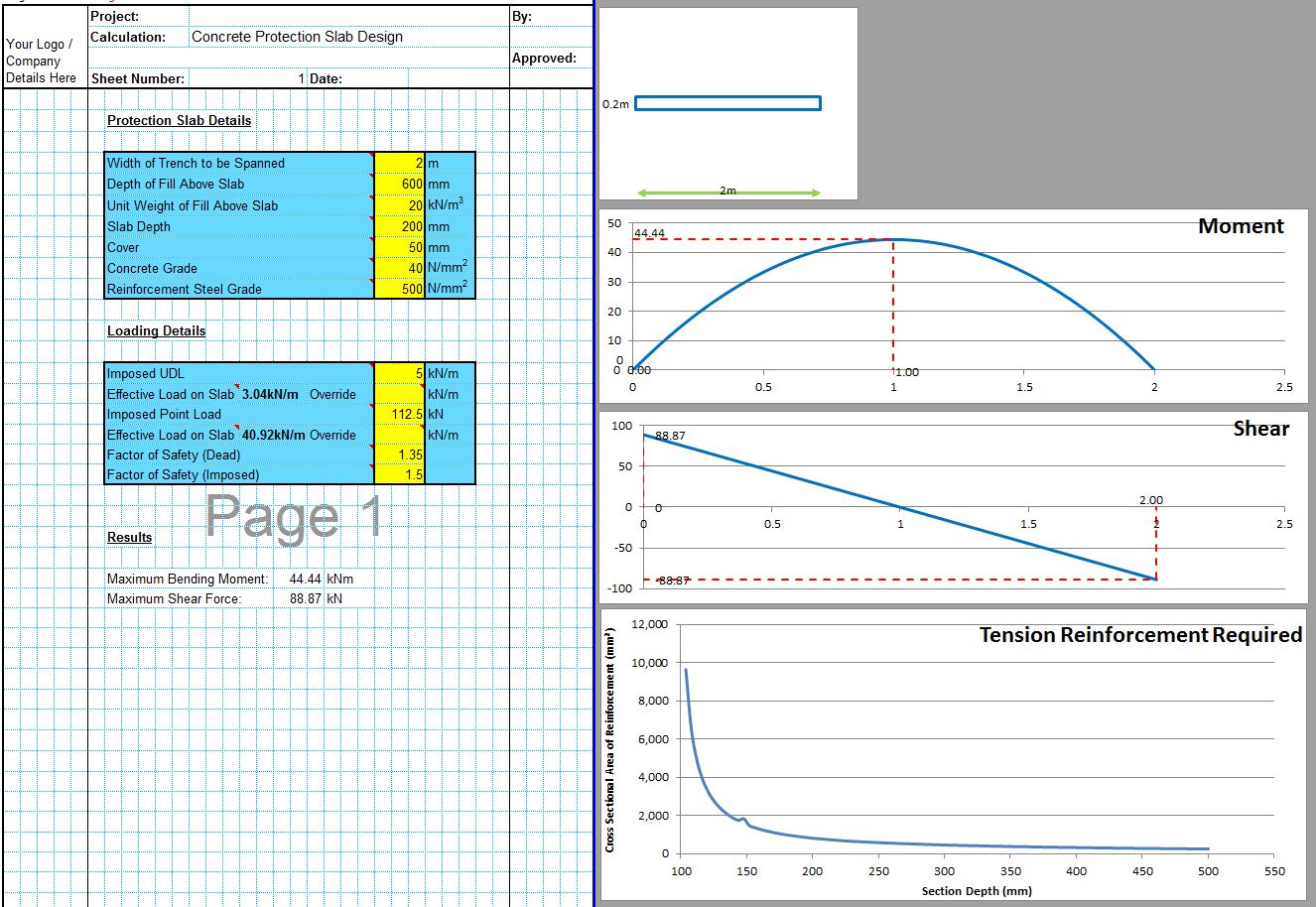
Concrete Protection Slab
This detailed design spreadsheet designs a protection slab commonly installed to protect shallow pipes.
Learn More
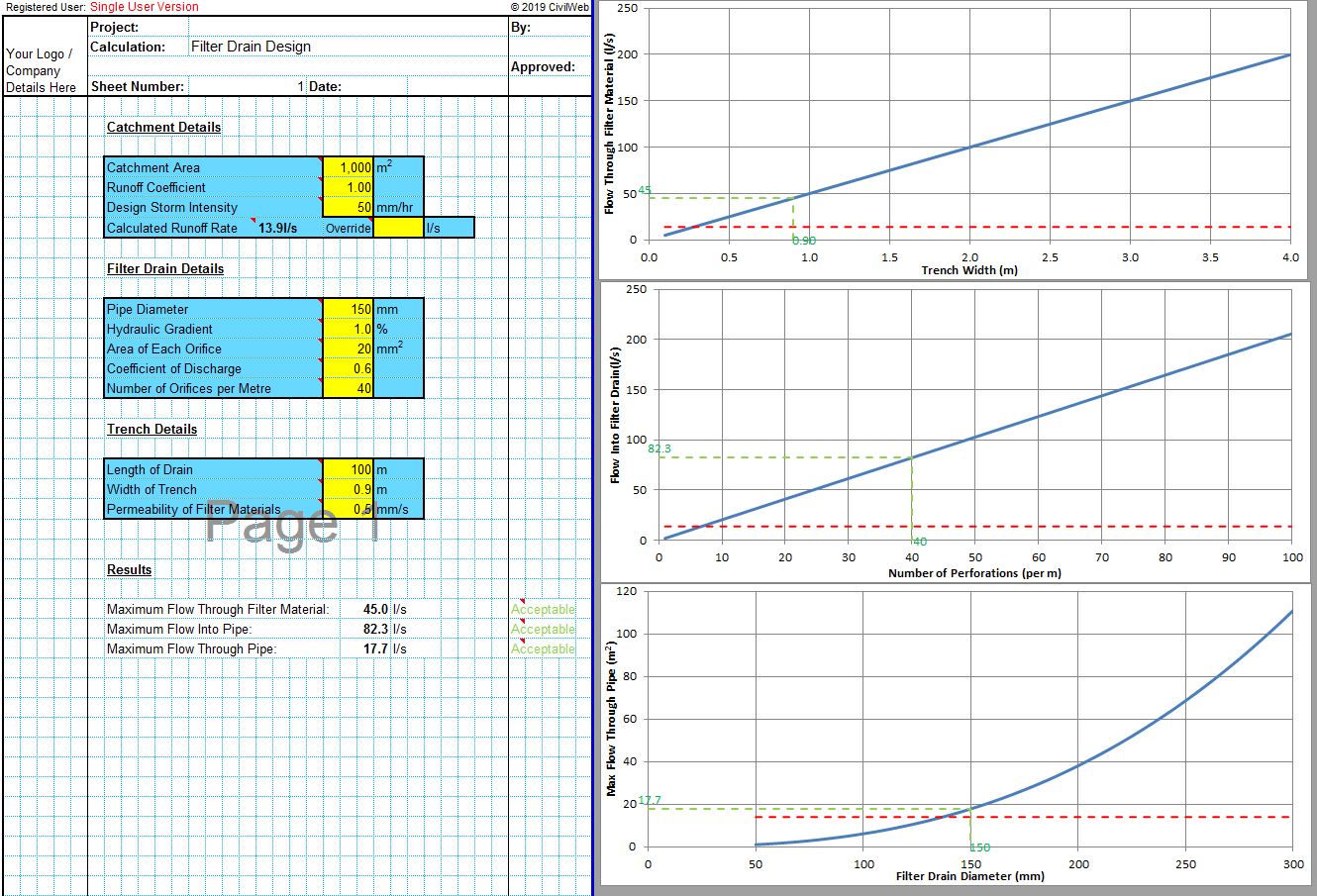
French Drain Design
This spreadsheet completes French Drain Design in accordance with the SUDS Manual.
Learn More
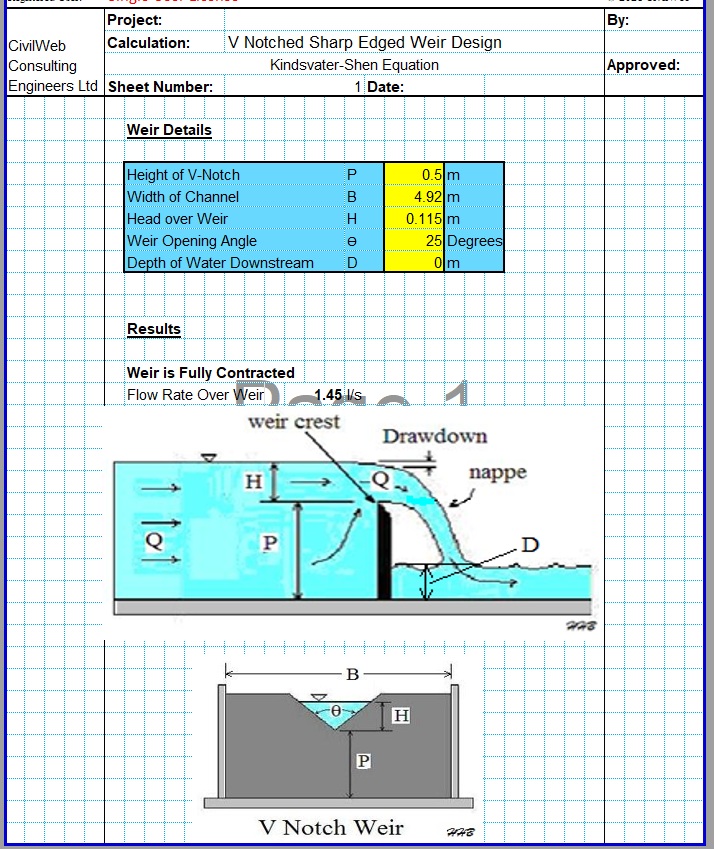
Sharp Crested Weir Flow Calculator Spreadsheets
This suite of 5 separate spreadsheets calculates the flow over sharp crested weirs of all shapes and sizes.
Learn More
Drainage Design Spreadsheet
This is the full suite of drainage design spreadsheets, available at a massive discount for only £49.99.