Choosing the right downpipe sizing is one of the most important decisions in a rainwater drainage system because the diameter of the pipe directly determines how efficiently water can leave the guttering during heavy rainfall. Undersized downpipes lead to overflowing gutters, damp walls, and long‑term structural issues, while oversized systems add unnecessary cost and can look visually unbalanced.
The CivilWeb Roof Downpipe Design Spreadsheet can complete all the calculations required for accurate downpipe sizing. The spreadsheet can be purchased lower down this page for only £19.99.
🌧️ Why downpipe sizing matters
A downpipe’s capacity must match the volume of water coming off the roof. When rainfall intensity increases, the system needs enough flow area to prevent water backing up into the gutter. Homeowners and specifiers often underestimate this, but guidance stresses that correct sizing is essential for reliable drainage and long‑term performance.
Several factors influence the required size:
- **Roof area** — Larger catchment areas generate more runoff.
- **Rainfall intensity** — Regional rainfall patterns affect peak flow.
- **Gutter capacity** — The downpipe must be compatible with the gutter profile.
- **Number of outlets** — More outlets reduce the load on each downpipe.
📐 Common downpipe sizes and materials
Downpipes are available in a range of diameters and materials, each suited to different applications:
- **Round 68 mm** — Standard for most UK domestic homes.
- **Round 76–110 mm** — Used for larger roofs or higher rainfall areas.
- **Square 65–75 mm** — Popular for modern aesthetics but with slightly different flow characteristics.
- **PVC (uPVC)** — Lightweight, affordable, corrosion‑resistant, and available in multiple colours.
- **Metal (steel, aluminium)** — Durable and visually appealing for heritage or high‑end projects.
Material choice affects longevity and appearance, but diameter is the key performance driver.
🧮 How to calculate the correct downpipe size
Sizing typically follows a simple logic: match the downpipe’s flow capacity to the runoff from the largest roof area draining to a single gutter run. Tools and calculators based on **BS EN 12056‑3:2000** help determine whether a chosen gutter and downpipe combination can handle expected rainfall.
The process usually involves:
- **Measuring roof area** — Using horizontal plan dimensions.
- **Applying rainfall intensity** — Based on regional data.
- **Checking gutter capacity** — Ensuring the gutter can deliver water to the outlet.
- **Selecting a downpipe diameter** — Large enough to handle peak flow without surcharge.
🛠️ Practical considerations during installation
Even the correct size can underperform if installed poorly. Key practices include:
- Keeping downpipes as straight as possible to reduce flow resistance.
- Avoiding unnecessary bends or constrictions.
- Ensuring outlets are correctly aligned with gutter falls.
- Using brackets at appropriate spacing to prevent movement or sagging.
- Checking that the discharge point (soakaway, drain, or gully) can accept the flow.
These details help maintain the designed flow capacity and prevent blockages.
🏠 How many downpipes do you need?
The number of downpipes depends on roof size and layout. Guidance for homeowners notes that multiple downpipes may be required to distribute flow evenly and prevent overloading a single outlet.
For complex or large roofs, splitting the drainage into several zones improves resilience and reduces the risk of overflow.
🌦️ Matching gutters and downpipes
Downpipe sizing must always be considered alongside gutter selection. Oversized gutters with undersized downpipes—or vice versa—create bottlenecks. Expert guidance highlights that correct pairing is essential to avoid overflow, damp, and premature system failure.
A balanced system ensures:
- Smooth flow from gutter to downpipe
- No standing water
- Reduced maintenance
- Longer system lifespan
A well‑sized downpipe is the backbone of a reliable rainwater system, especially in regions with frequent heavy rainfall like the North East.
The CivilWeb Roof Downpipe Design Spreadsheet can be purchased lower down this page for only £19.99. Or why not buy our best value bundle? Our Full Drainage Design Spreadsheet Suite can be purchased at the bottom of this page for only £49.99. This suite includes all of our drainage design spreadsheets, more than 20, and represents an incredible saving of more than 85%.
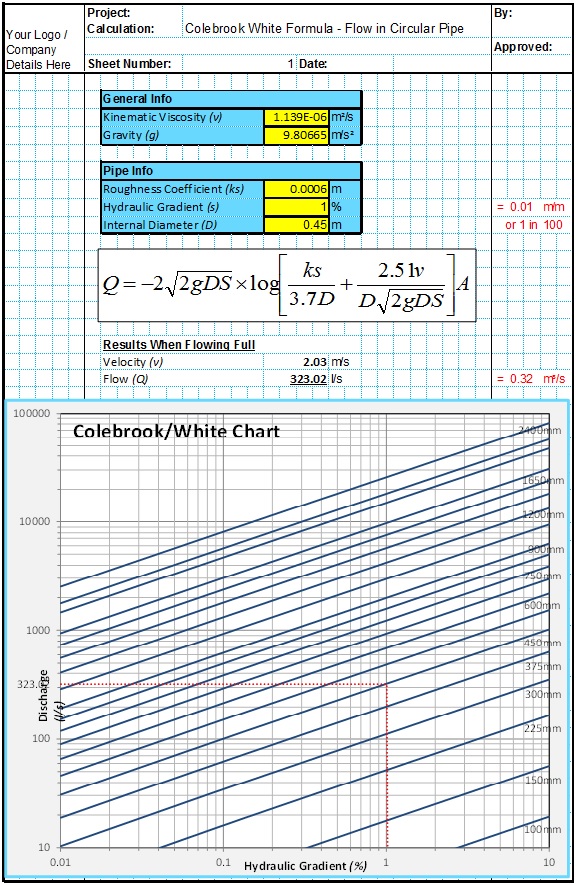
PIPE FLOW CALCULATOR
This spreadsheet uses the Colebrook-White and Manning Equations to calculate the flow capacity and velocity in pipes acting under gravity.
Find Out More
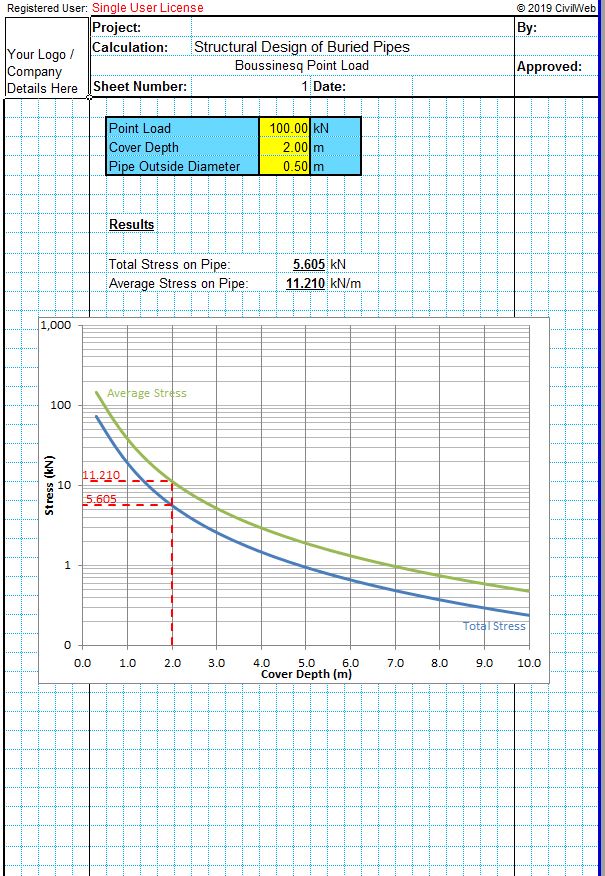
Buried Pipe Design Spreadsheet
This spreadsheet can be used to design concrete, steel, plastic and other buried pipes in accordance with BS EN 1295-1.
Learn More
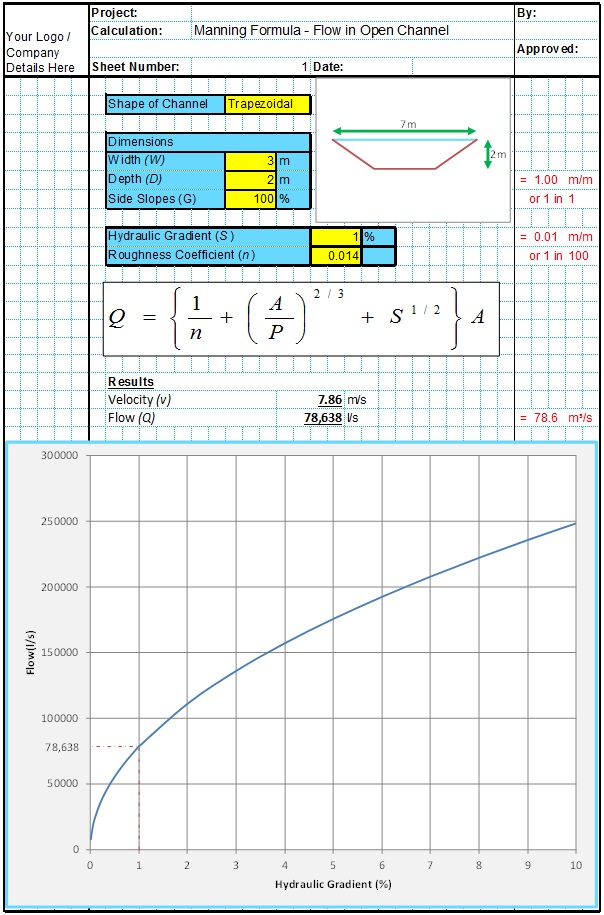
Manning Open Channel Design Spreadsheet
This spreadsheet uses the Manning formula to calculate the flow conditions in an open channel acting under gravity only.
Learn More
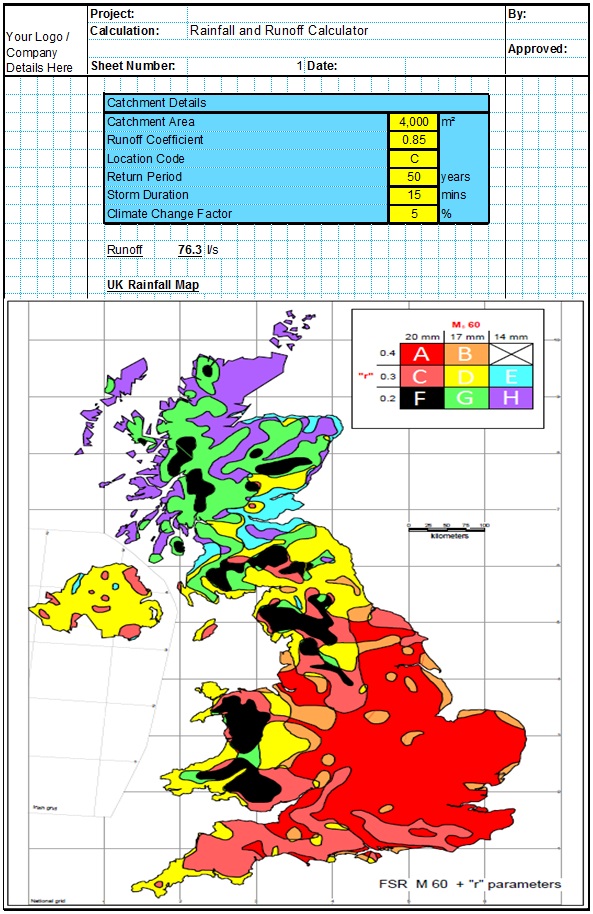
Runoff Calculator Spreadsheet
This spreadsheet calculates the design runoff flow for a site in accordance with the Flood Estimation Handbook.
Learn More
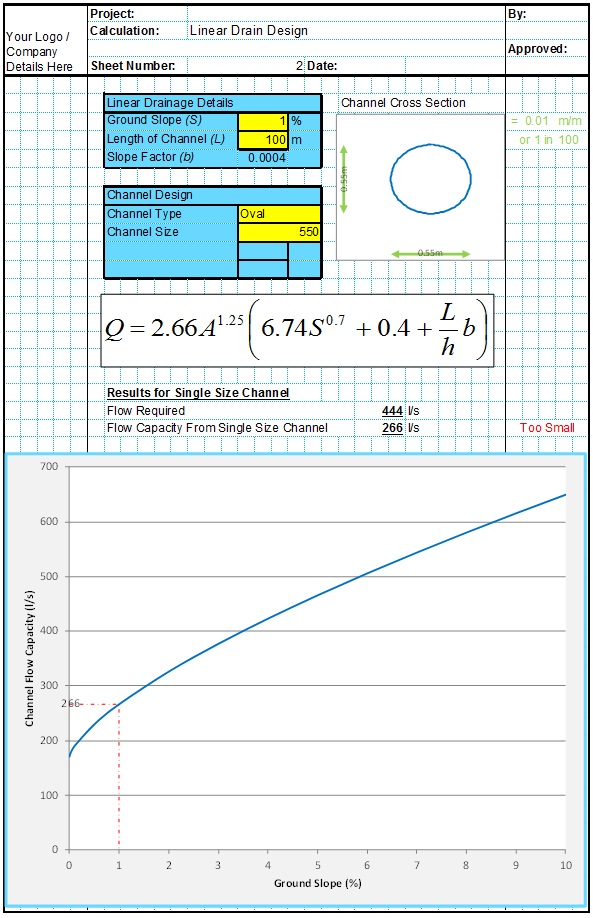
Linear Drainage Design Spreadsheet
This spreadsheet calculates the maximum flow from a specified linear drainage channel and checks whether the channel is sufficient for the specified site and storm conditions.
Learn More
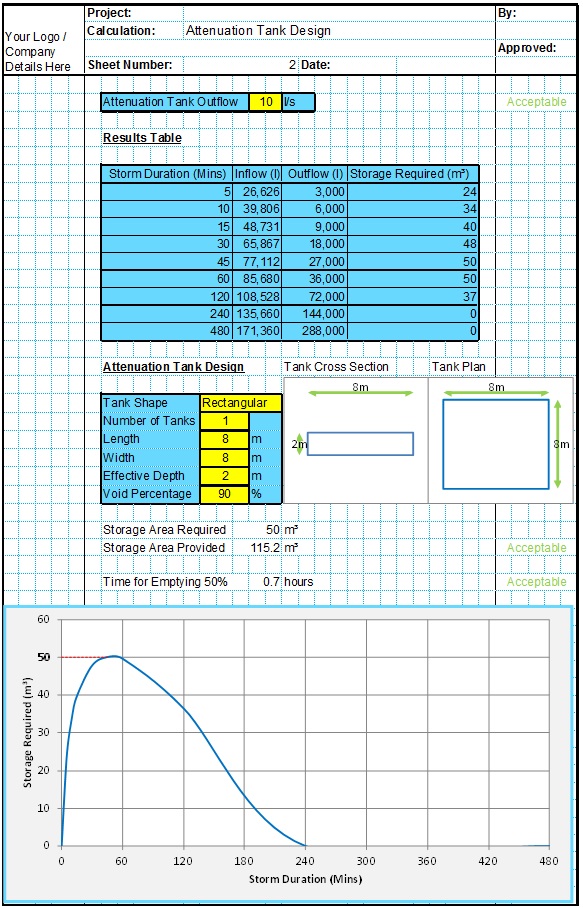
Attenuation Design Spreadsheet
This spreadsheet calculates the requirements for a attenuation system and assists the user to design a suitable system.
Learn More
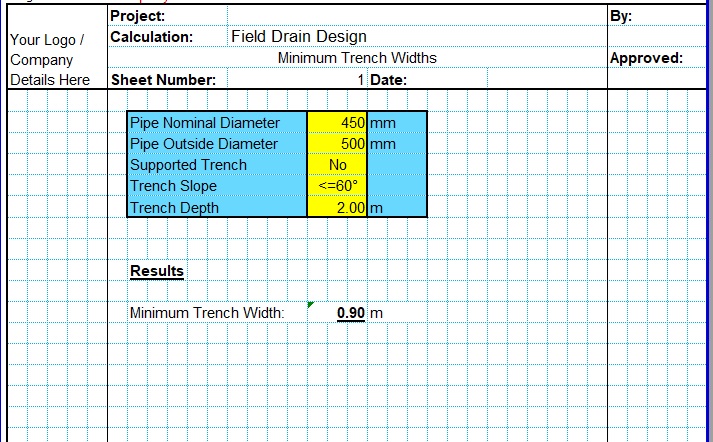
Field Drain Design Spreadsheet
This spreadsheet can be used to design field drains, typically subsurface drainage systems used to drain fields and open areas.
Learn More
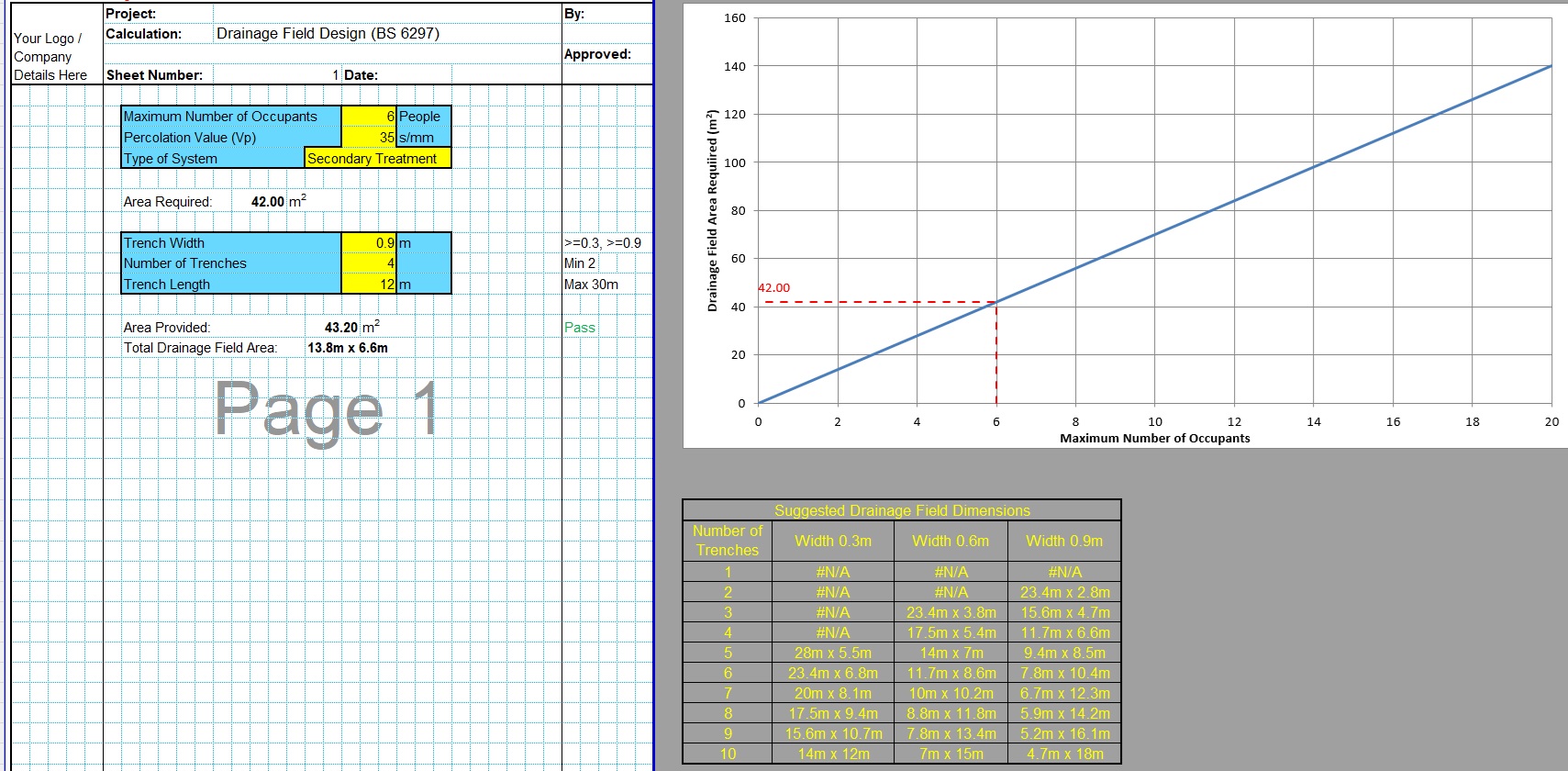
Drainage Field Design Spreadsheet
This spreadsheet can be used to design septic infiltration systems known as drainage fields, leach fields or septic drain fields.
Learn More
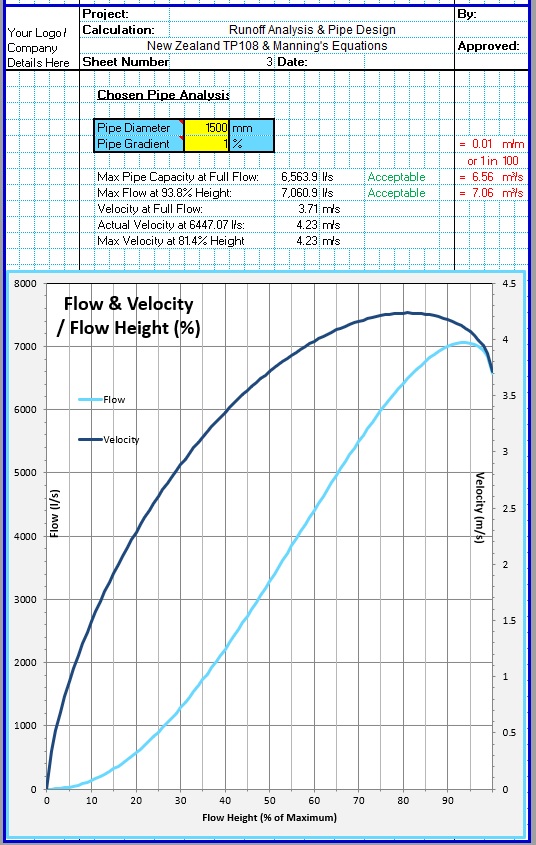
TP108 Spreadsheet
This spreadsheet calculates the rainfall for New Zealand catchments in accordance with TP108.
Learn More
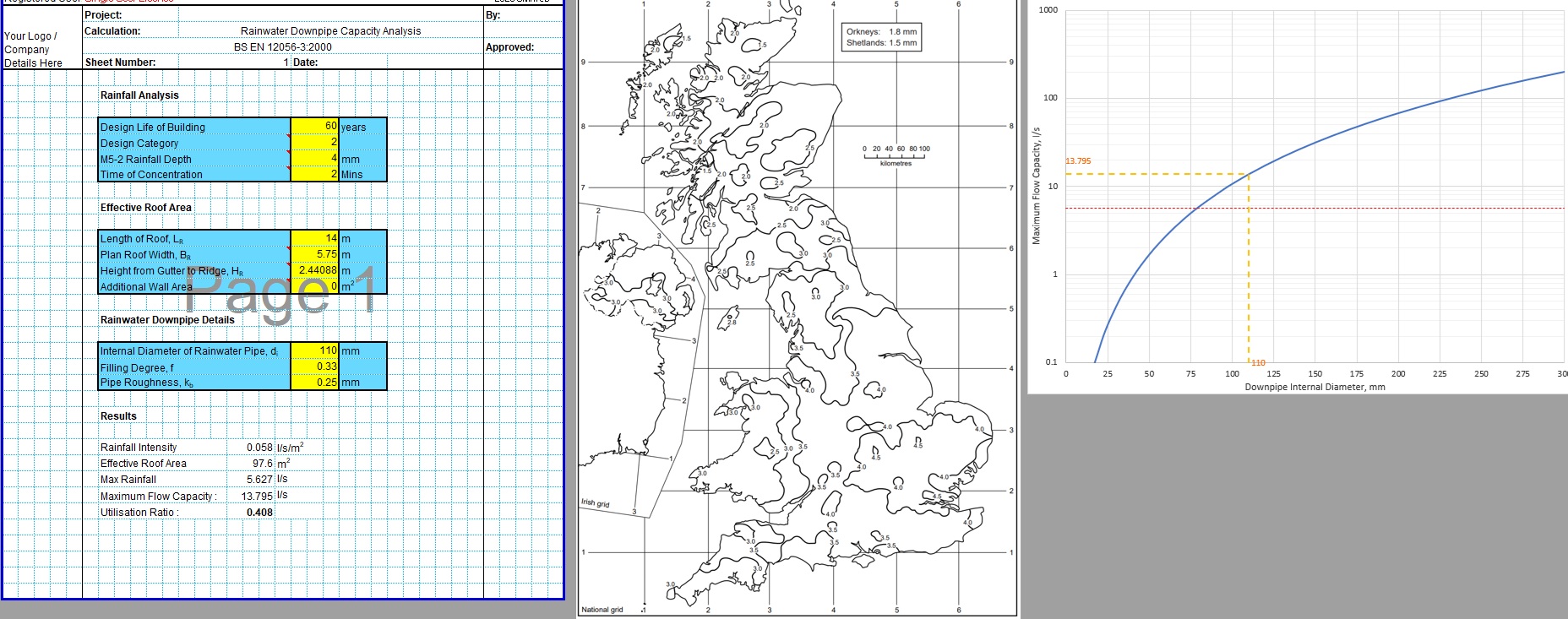
Roof Downpipe Calculator Spreadsheet
This spreadsheet calculates the size of roof drainage downpipes depending on the roof catchment and rainfall requirements.
Learn More
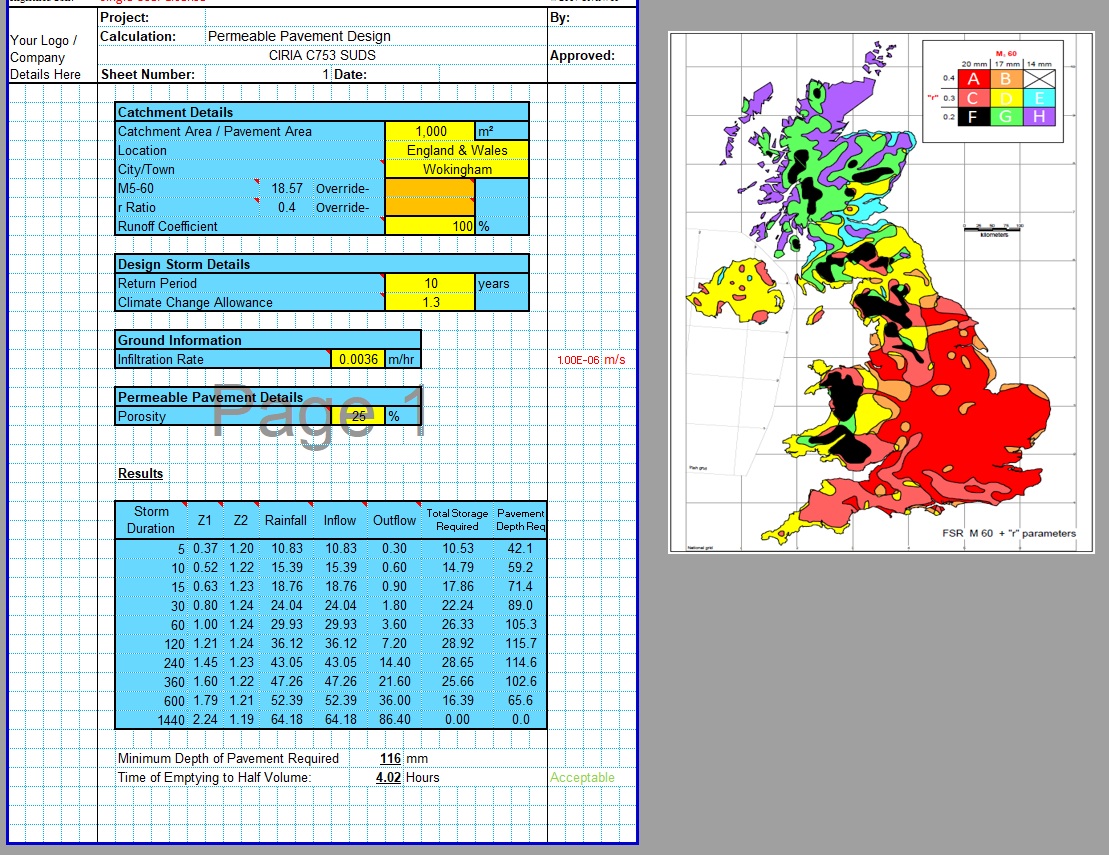
Permeable Pavement Design Spreadsheet
This spreadsheet is designed to determine the size and characteristics of permeable pavements.
Learn More
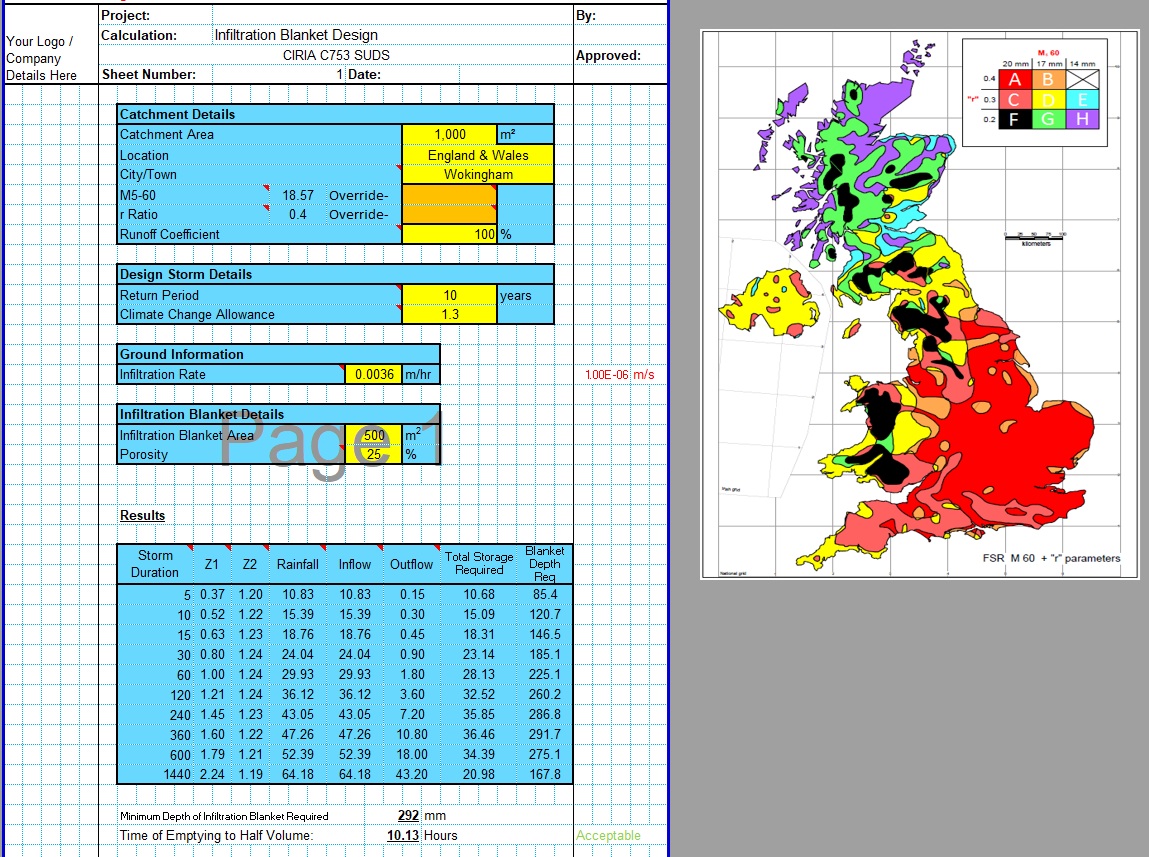
Infiltration Blanket Design Spreadsheet
This spreadsheet can be used to design thin depth infiltration systems, typically called infiltration blanket systems.
Learn More
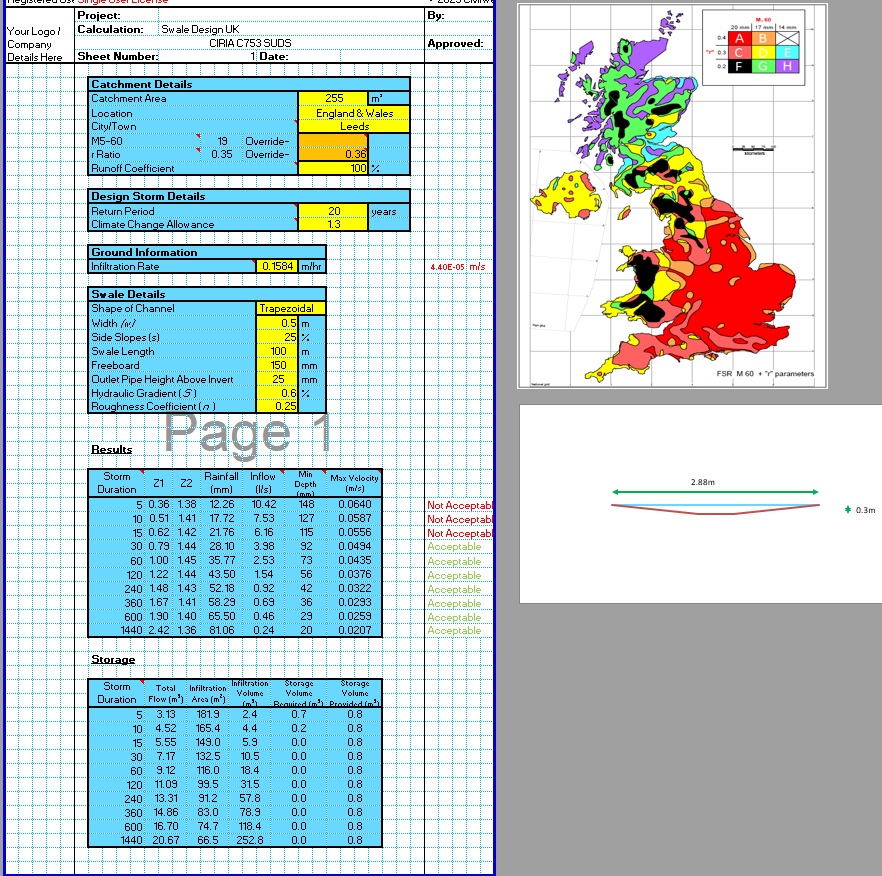
Swale Design Spreadsheet
This spreadsheet can be used to design swales. These linear grassed channels can be used both to convey, infiltrate and filter surface drainage runoff.
Learn More
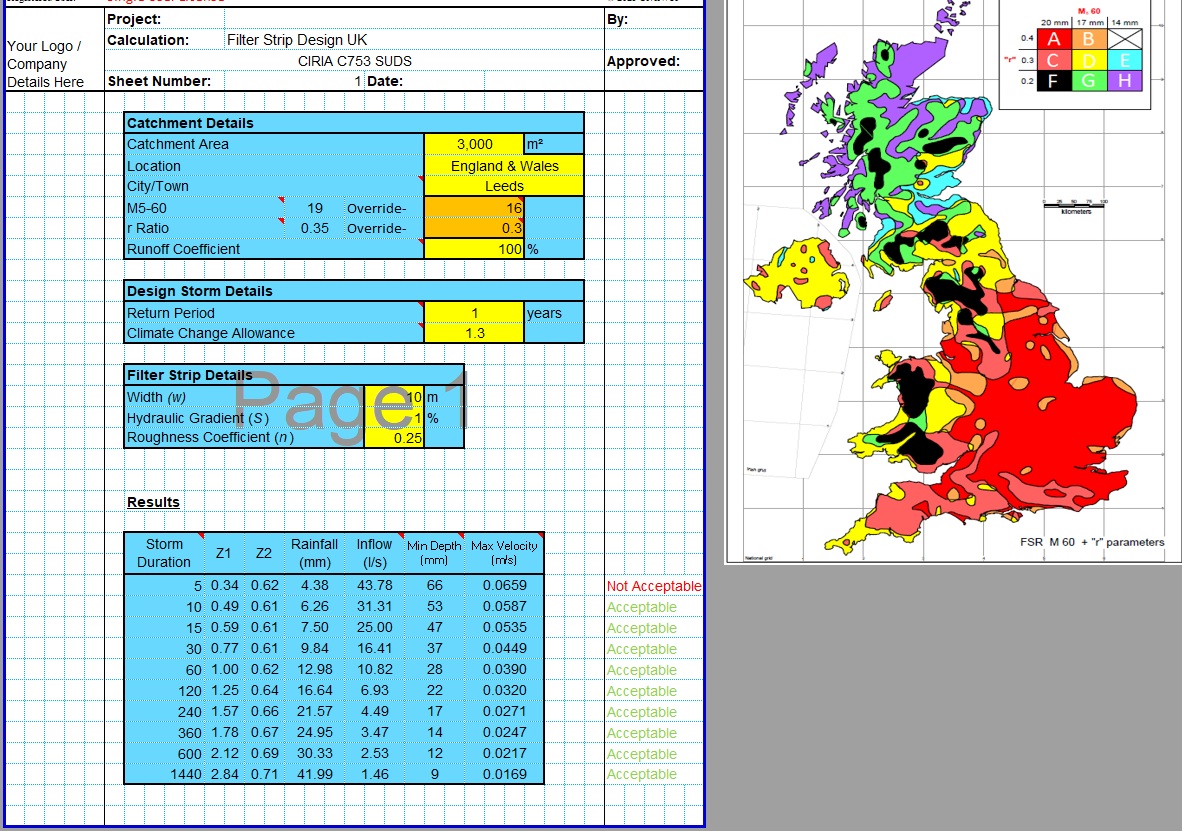
Filter Strip Design Spreadsheet
This spreadsheet is designed to analyse surface water filter strips and to determine the max flow depth and max flow velocity and determine whether they are in accordance with relevant standards.
Learn More
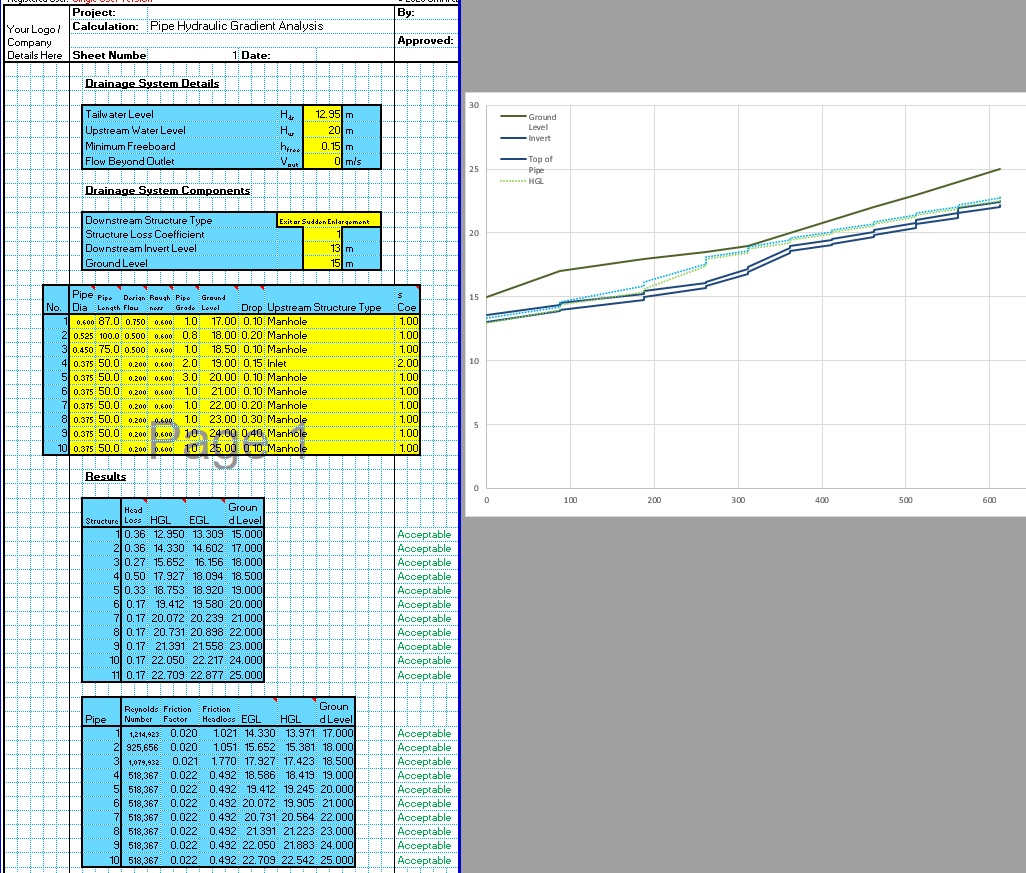
Hydraulic Gradient Analysis Spreadsheet
This spreadsheet analyses the hydraulic and energy grade lines for drainage systems with up to 10 drainage runs.
Learn More
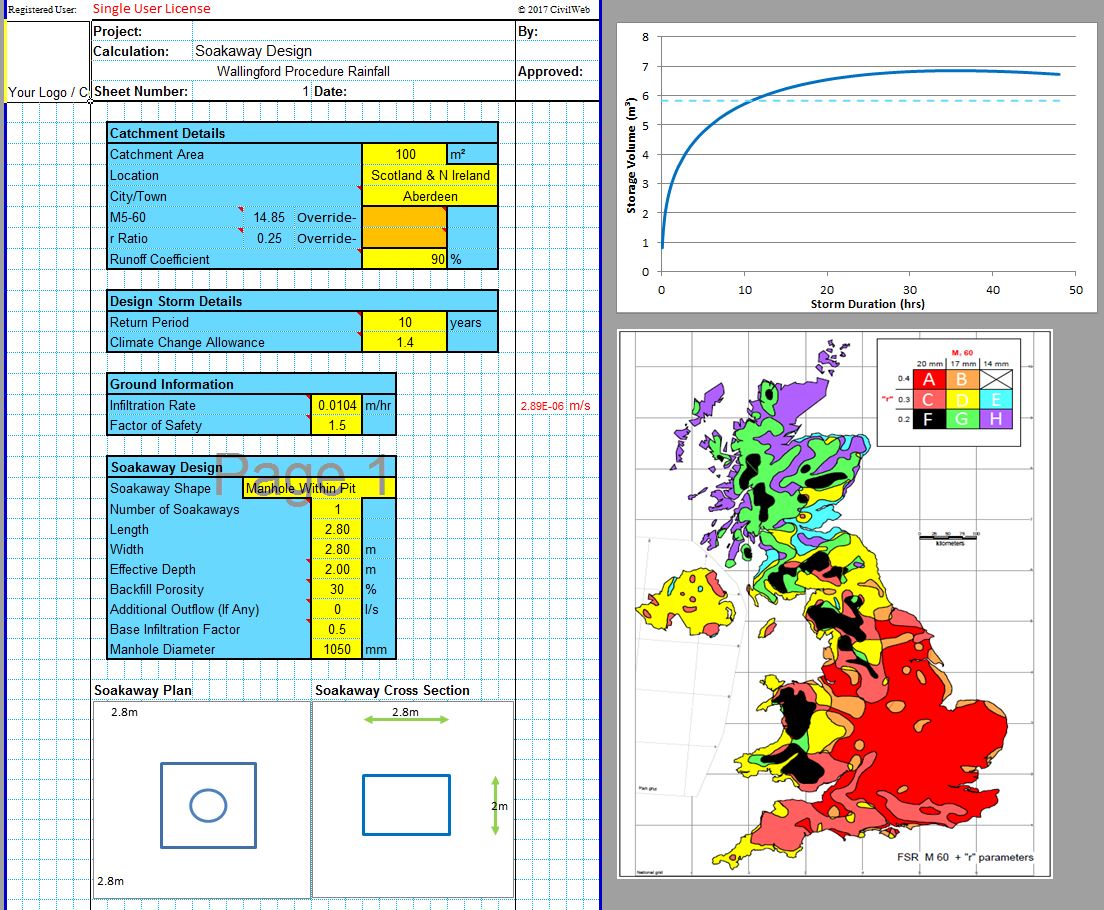
Soakaway Design Spreadsheet
This spreadsheet calculates the requirements for a soakaway system and assists the user to design a suitable system.
Learn More
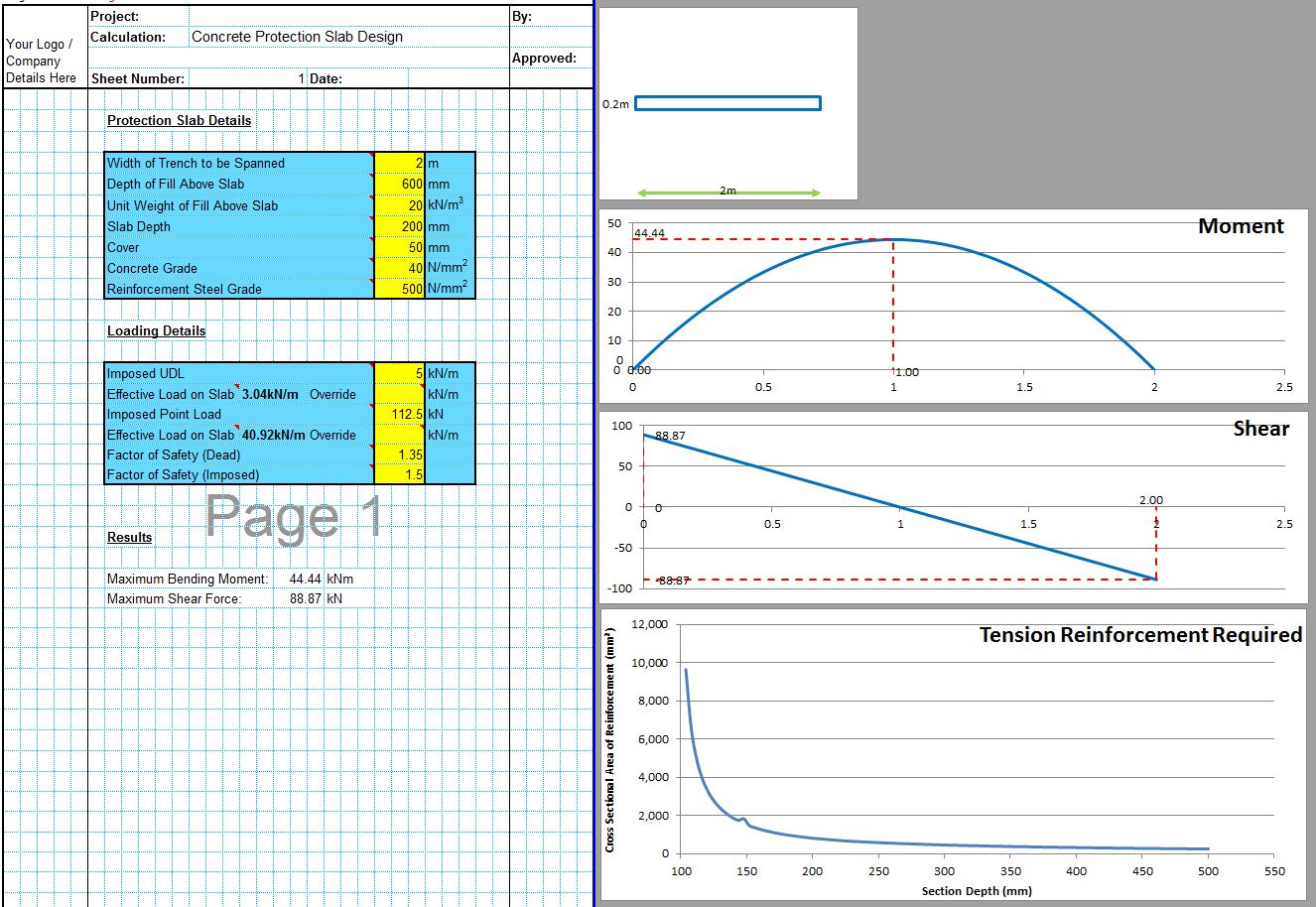
Concrete Protection Slab
This detailed design spreadsheet designs a protection slab commonly installed to protect shallow pipes.
Learn More
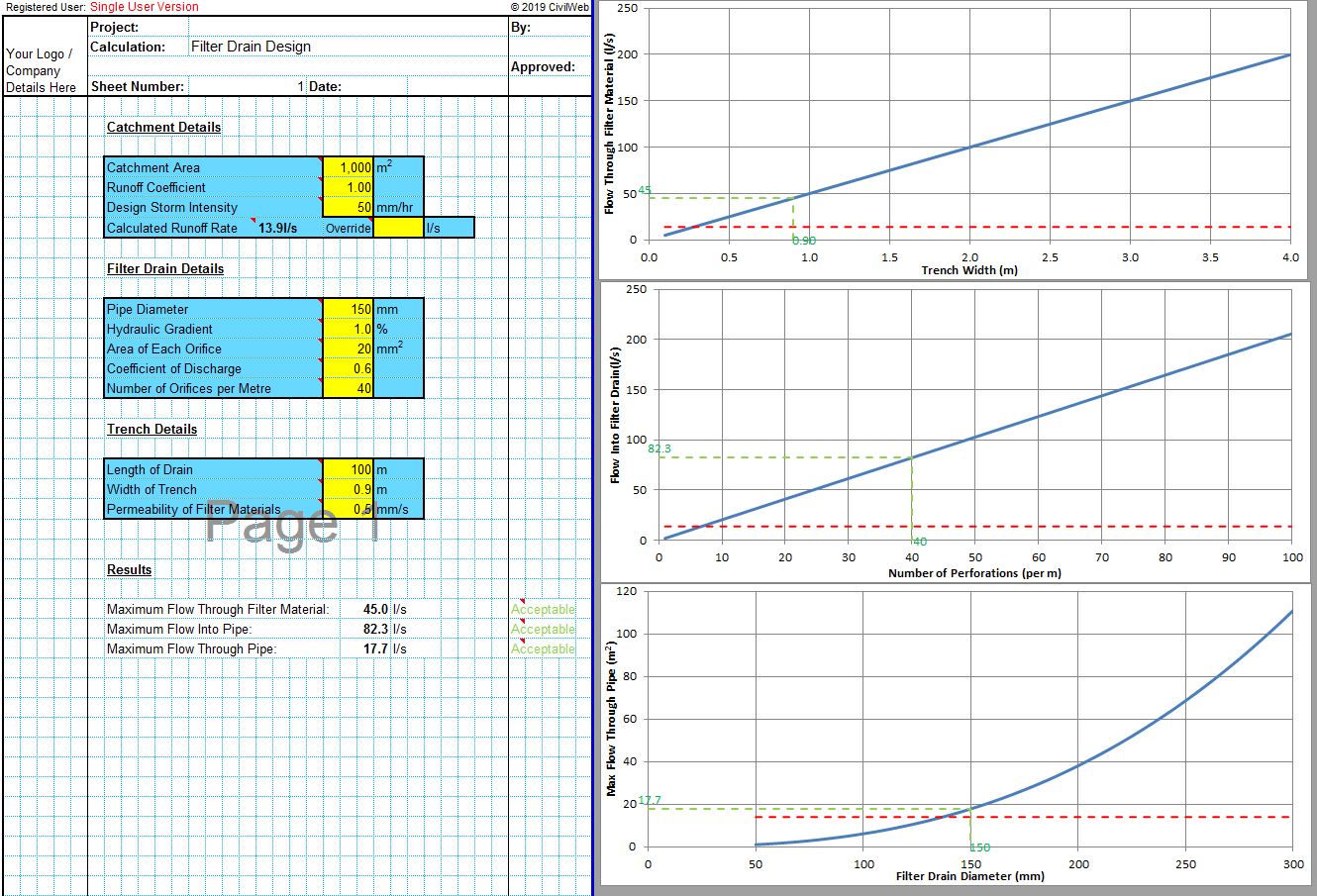
French Drain Design
This spreadsheet completes French Drain Design in accordance with the SUDS Manual.
Learn More
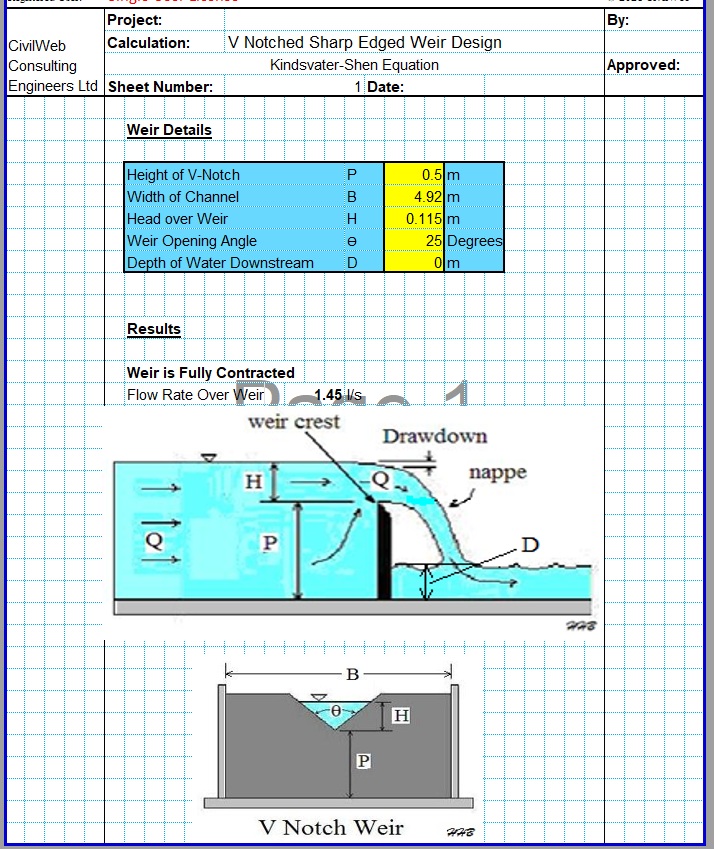
Sharp Crested Weir Flow Calculator Spreadsheets
This suite of 5 separate spreadsheets calculates the flow over sharp crested weirs of all shapes and sizes.
Learn More
Drainage Design Spreadsheet
This is the full suite of drainage design spreadsheets, available at a massive discount for only £49.99.