A clear understanding of filling degree is essential in rainwater downpipe design because it determines how much of the pipe’s cross‑section is allowed to run full during peak rainfall. In UK practice, this concept comes directly from BS EN 12056‑3:2000, the core standard for roof drainage design. It defines how gutters and downpipes should be sized based on rainfall intensity, catchment area, and the hydraulic capacity of the system.
The CivilWeb Roof Downpipe Design Spreadsheet can complete all the calculations required for accurate downpipe sizing. The spreadsheet can be purchased lower down this page for only £19.99.
🌧️ What filling degree means in downpipe design
The filling degree describes the proportion of a downpipe that is permitted to run full under design rainfall conditions. A filling degree of 1.0 means the pipe is completely full; a filling degree of 0.33 means only one‑third of the diameter is flowing with water.
In gravity rainwater systems, the filling degree is intentionally limited to ensure:
- Stable, predictable flow without surging
- Air movement within the pipe, preventing siphoning or gurgling
- Reduced risk of blockage, since debris can still pass
- Lower pressure fluctuations, protecting joints and seals
BS EN 12056‑3 uses filling degree as a core parameter when checking whether a downpipe can carry the runoff from a given roof area.
📐 Why filling degree matters for performance
A downpipe that runs too full behaves unpredictably. Water accelerates, air becomes trapped, and the system can oscillate between free‑surface flow and surcharged flow. This increases the risk of:
- Gutter overflow during peak storms
- Noise and vibration in the pipe
- Back‑pressure at the gutter outlet
- Premature wear on joints and fixings
By limiting the filling degree, designers ensure the pipe operates in a controlled hydraulic regime, even during short‑duration, high‑intensity storms—the type used for UK design rainfall calculations.
🧮 How filling degree influences downpipe sizing
When calculating downpipe size, the designer must match:
- Peak rainfall intensity (from the standard’s maps)
- Effective roof area
- Gutter outlet capacity
- Downpipe diameter and filling degree
A lower filling degree means the pipe carries less water for a given diameter, so a larger pipe may be required. Conversely, allowing a higher filling degree increases capacity but reduces system stability.
Most UK rainwater systems are sized with a filling degree well below 1.0 to maintain free‑surface flow and avoid surcharge. This is why domestic downpipes often appear oversized relative to typical rainfall—they are designed for short, intense storms with strict flow limits.
🛠️ Practical implications for real‑world design
Filling degree affects several practical decisions:
- Downpipe diameter — A lower filling degree pushes designers toward larger diameters (e.g., 68 mm → 76 mm).
- Number of downpipes — Adding more outlets reduces the load on each pipe, keeping filling degree within limits.
- Gutter selection — A gutter that cannot deliver water efficiently to the outlet will cause the downpipe to surcharge regardless of diameter.
- Layout and alignment — Bends, offsets, and long vertical drops can increase the effective filling degree by restricting airflow.
These considerations ensure the system remains stable during the two‑minute design storm used in UK calculations.
🌦️ How filling degree fits into the wider BS EN 12056 approach
The standard treats roof drainage as a complete system: gutter, outlet, and downpipe must all be checked together. Filling degree is the link between these components, ensuring that:
- Gutters do not back up
- Downpipes do not run surcharged
- Air can move freely through the system
- Flow remains predictable and safe
This holistic approach is why many UK design tools and calculators include filling degree as a built‑in parameter.
A clear grasp of filling degree helps you choose the right downpipe size and avoid hidden performance issues. What roof area or gutter profile are you working with so we can look at the appropriate filling degree range for your design?
The CivilWeb Roof Downpipe Design Spreadsheet can be purchased lower down this page for only £19.99. Or why not buy our best value bundle? Our Full Drainage Design Spreadsheet Suite can be purchased at the bottom of this page for only £49.99. This suite includes all of our drainage design spreadsheets, more than 20, and represents an incredible saving of more than 85%.
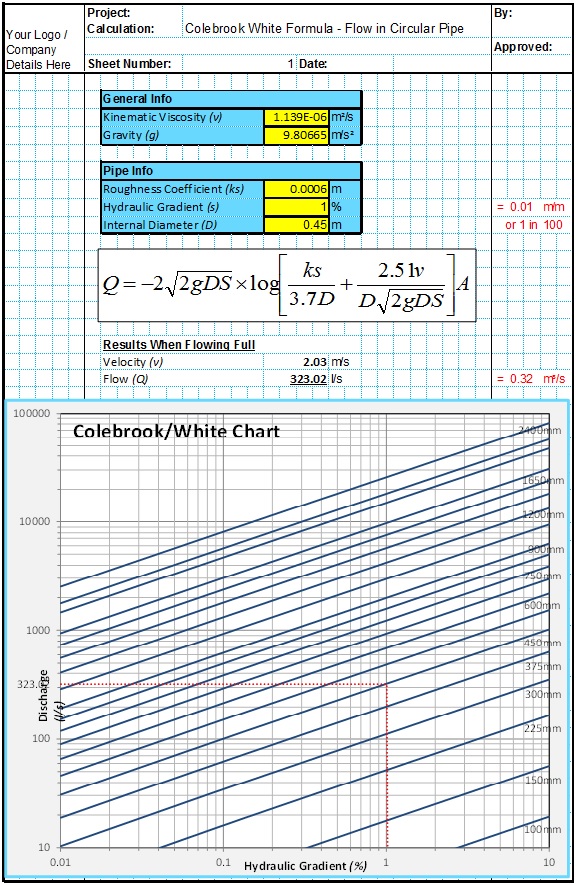
PIPE FLOW CALCULATOR
This spreadsheet uses the Colebrook-White and Manning Equations to calculate the flow capacity and velocity in pipes acting under gravity.
Find Out More
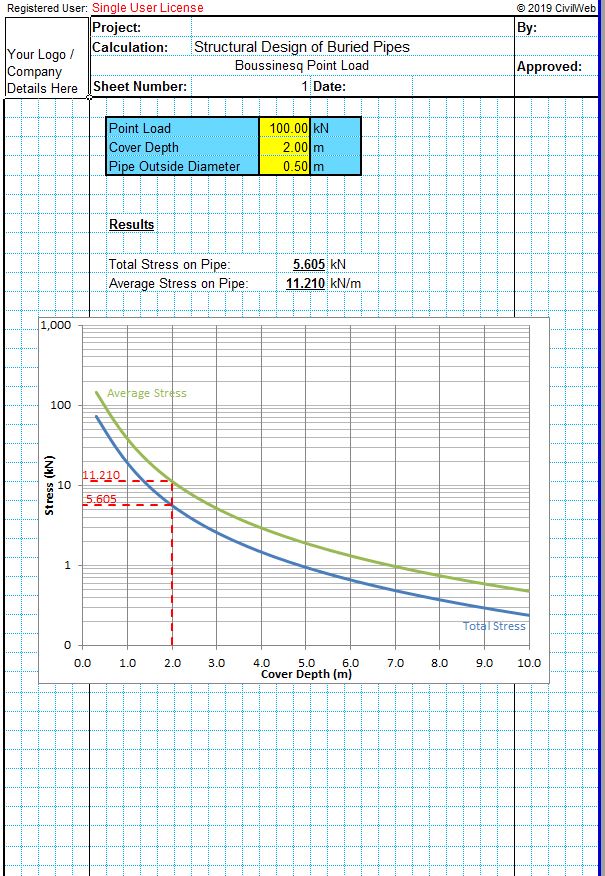
Buried Pipe Design Spreadsheet
This spreadsheet can be used to design concrete, steel, plastic and other buried pipes in accordance with BS EN 1295-1.
Learn More
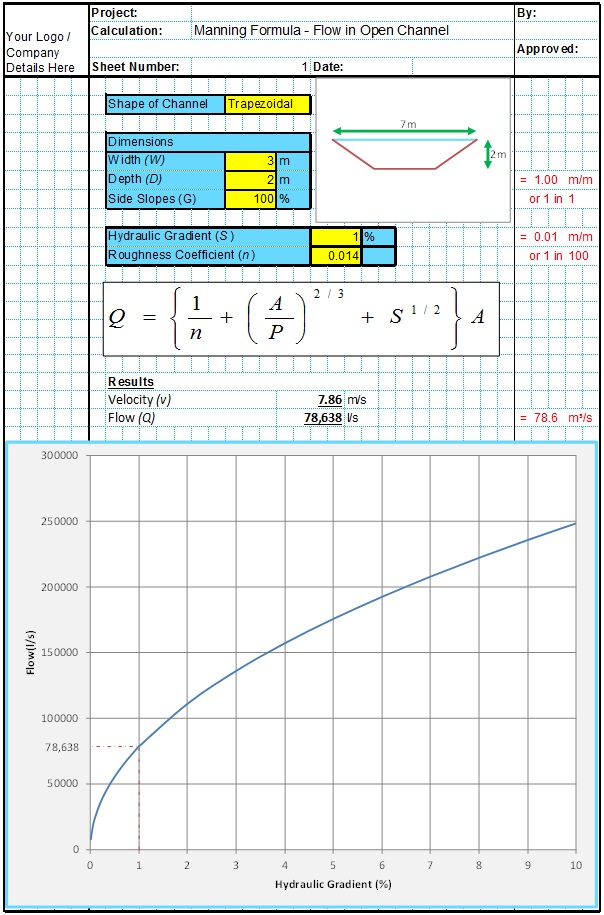
Manning Open Channel Design Spreadsheet
This spreadsheet uses the Manning formula to calculate the flow conditions in an open channel acting under gravity only.
Learn More
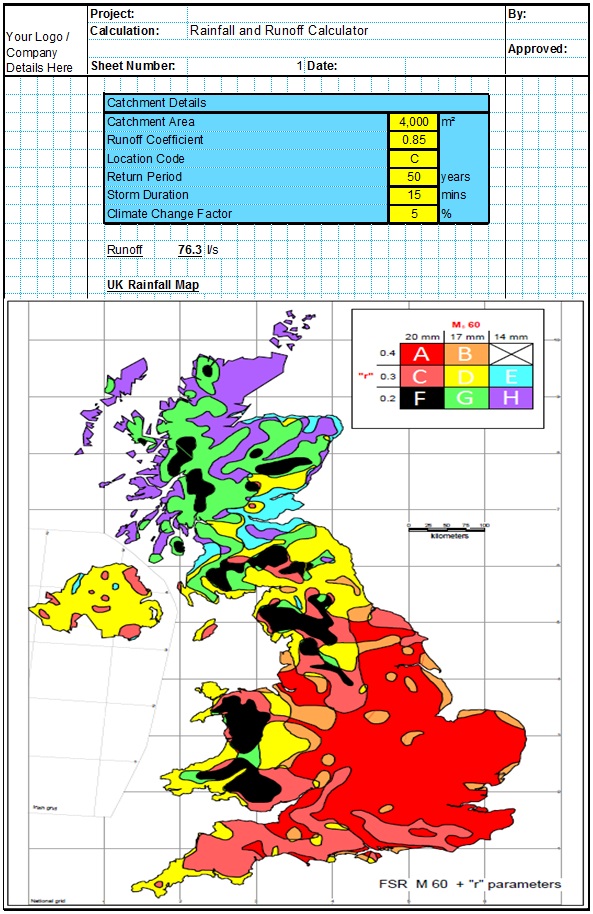
Runoff Calculator Spreadsheet
This spreadsheet calculates the design runoff flow for a site in accordance with the Flood Estimation Handbook.
Learn More
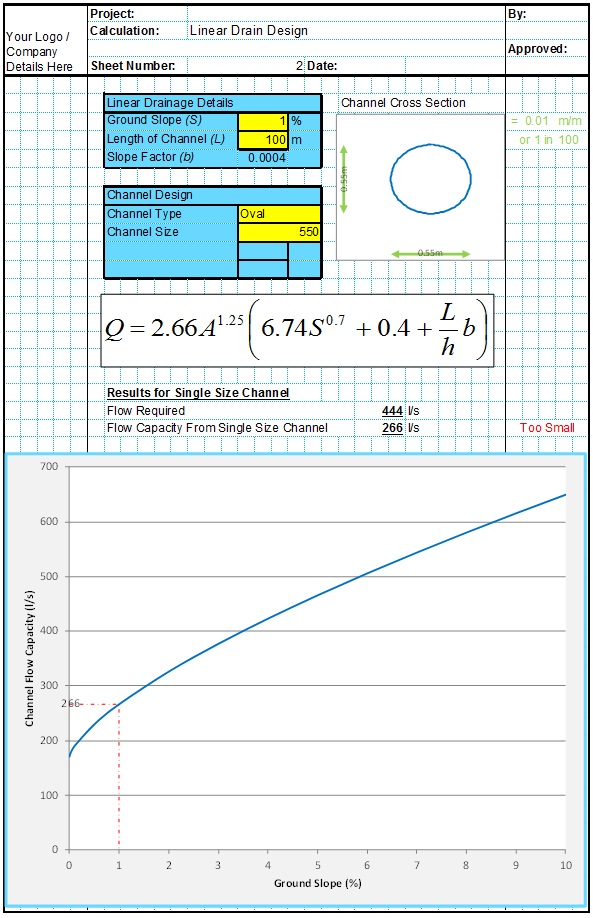
Linear Drainage Design Spreadsheet
This spreadsheet calculates the maximum flow from a specified linear drainage channel and checks whether the channel is sufficient for the specified site and storm conditions.
Learn More
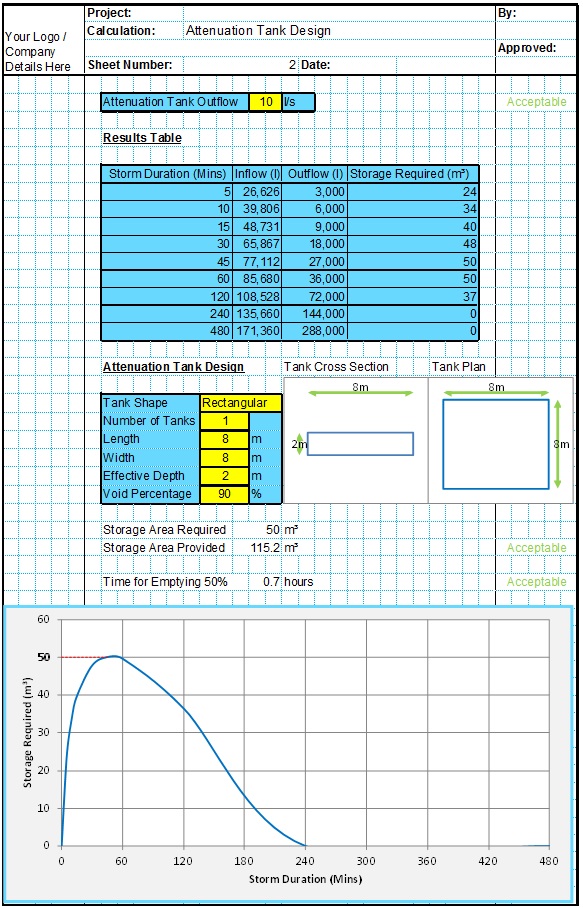
Attenuation Design Spreadsheet
This spreadsheet calculates the requirements for a attenuation system and assists the user to design a suitable system.
Learn More
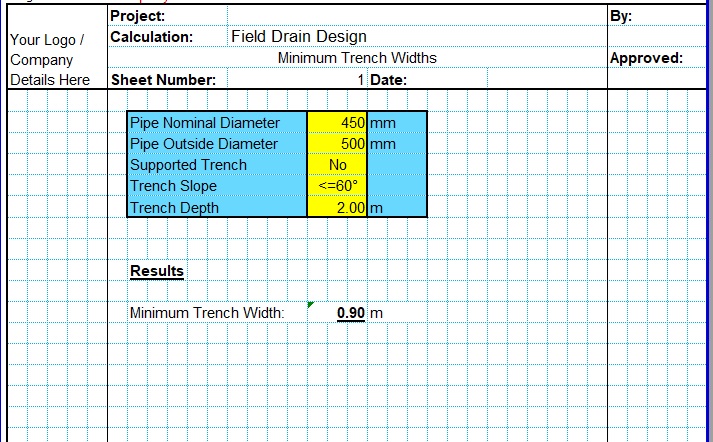
Field Drain Design Spreadsheet
This spreadsheet can be used to design field drains, typically subsurface drainage systems used to drain fields and open areas.
Learn More
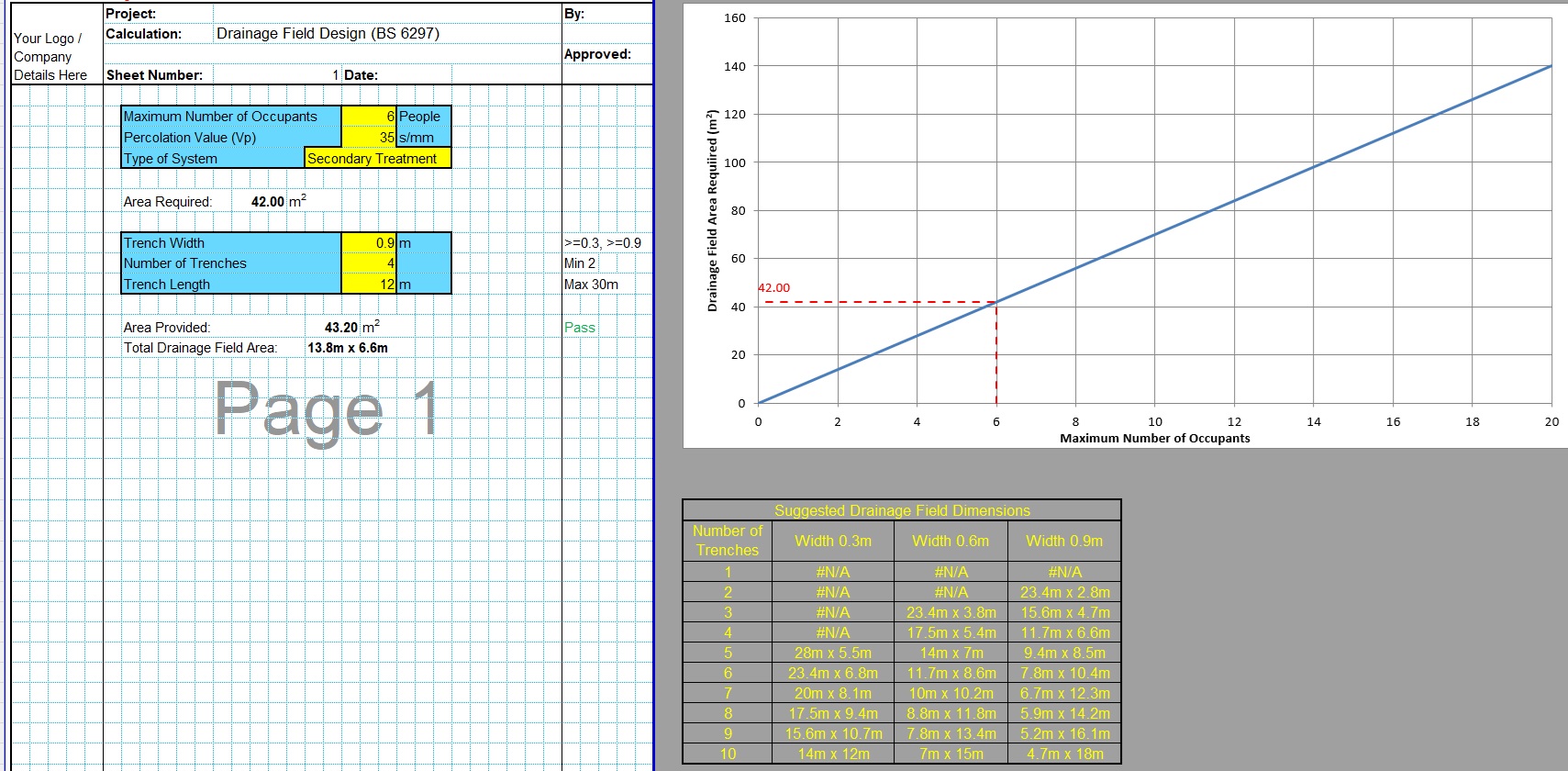
Drainage Field Design Spreadsheet
This spreadsheet can be used to design septic infiltration systems known as drainage fields, leach fields or septic drain fields.
Learn More
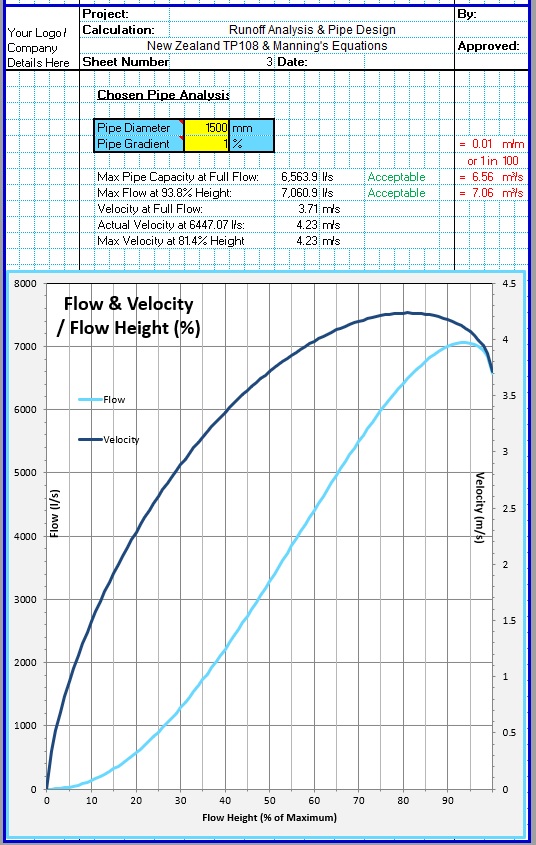
TP108 Spreadsheet
This spreadsheet calculates the rainfall for New Zealand catchments in accordance with TP108.
Learn More
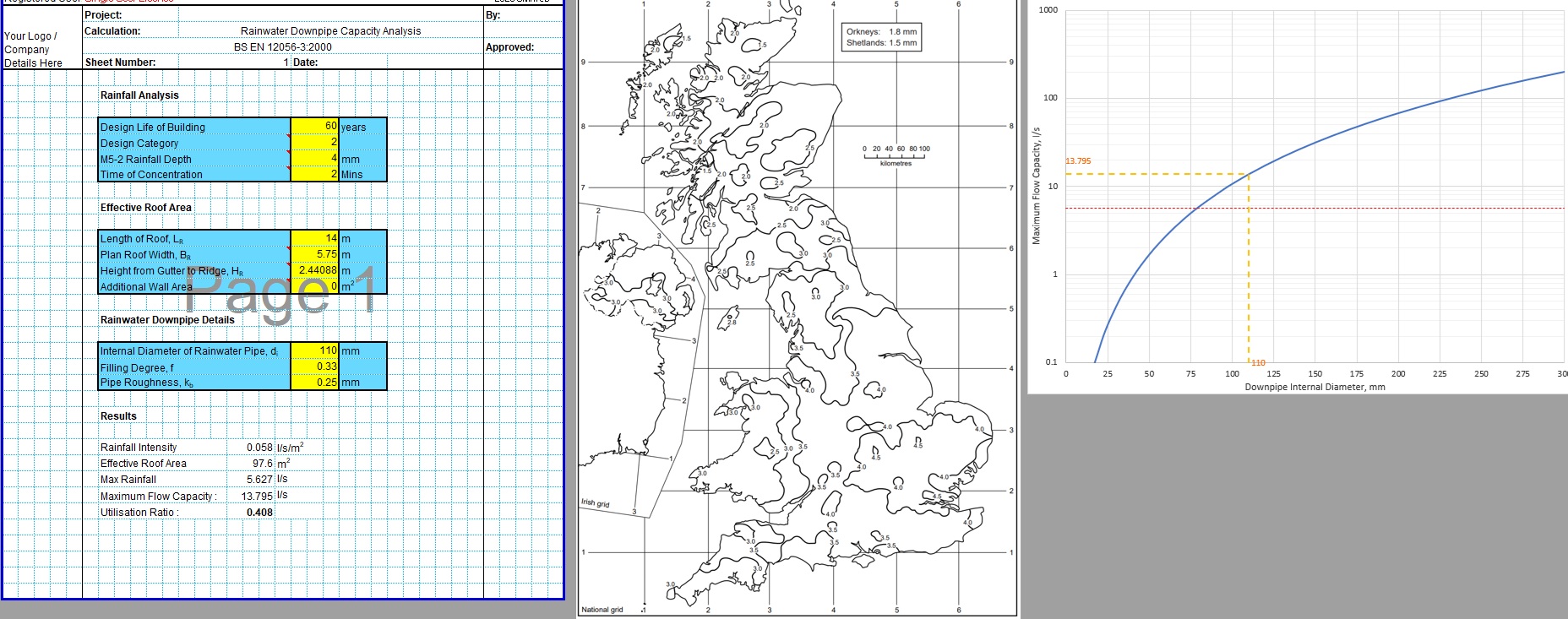
Roof Downpipe Calculator Spreadsheet
This spreadsheet calculates the size of roof drainage downpipes depending on the roof catchment and rainfall requirements.
Learn More
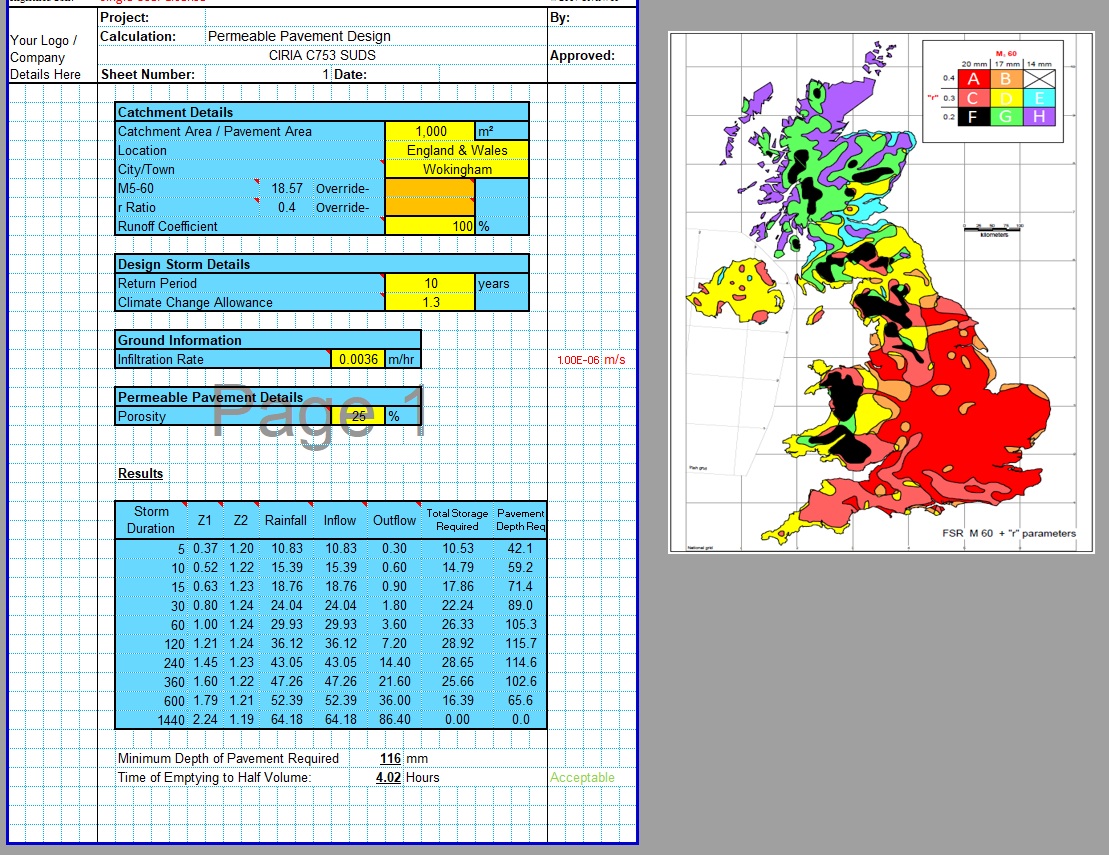
Permeable Pavement Design Spreadsheet
This spreadsheet is designed to determine the size and characteristics of permeable pavements.
Learn More
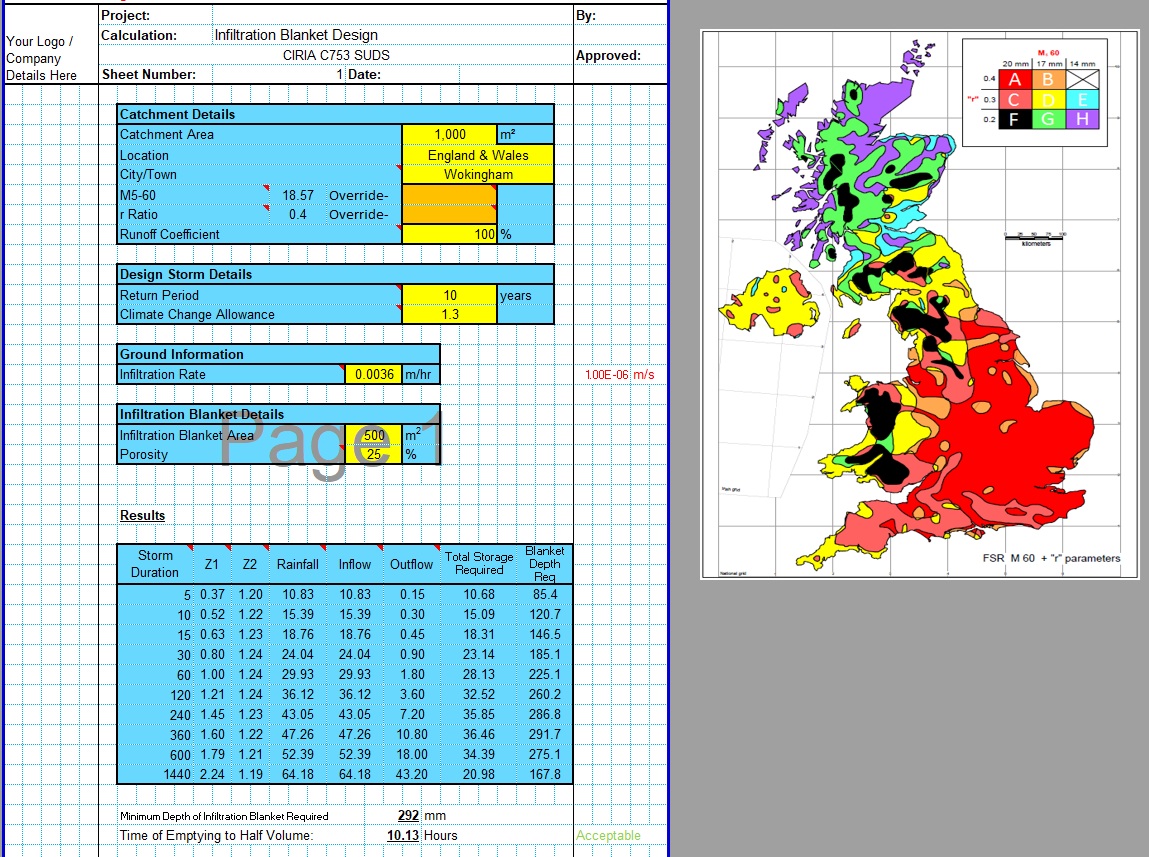
Infiltration Blanket Design Spreadsheet
This spreadsheet can be used to design thin depth infiltration systems, typically called infiltration blanket systems.
Learn More
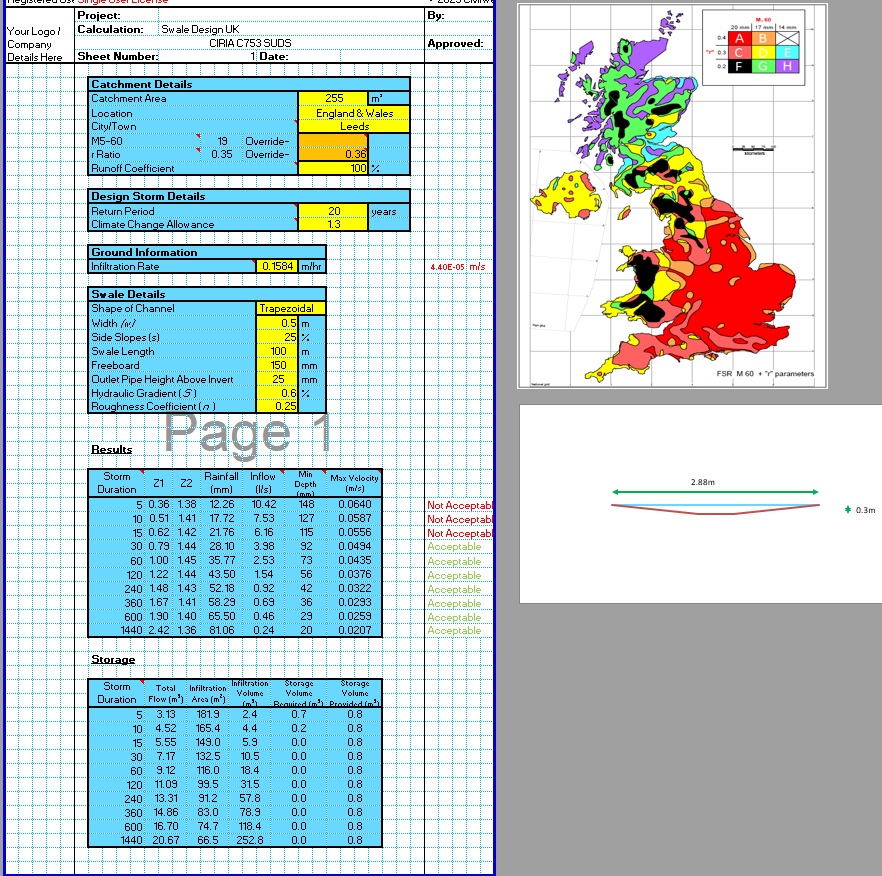
Swale Design Spreadsheet
This spreadsheet can be used to design swales. These linear grassed channels can be used both to convey, infiltrate and filter surface drainage runoff.
Learn More
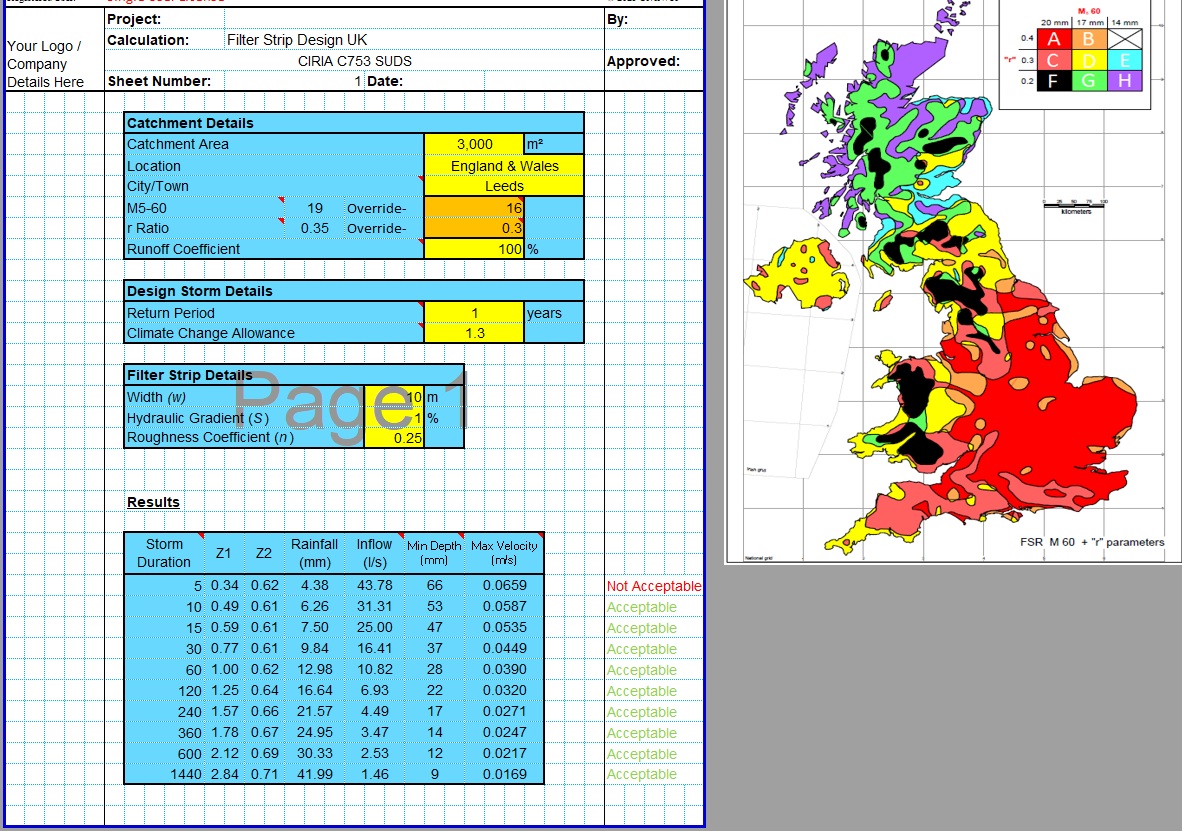
Filter Strip Design Spreadsheet
This spreadsheet is designed to analyse surface water filter strips and to determine the max flow depth and max flow velocity and determine whether they are in accordance with relevant standards.
Learn More
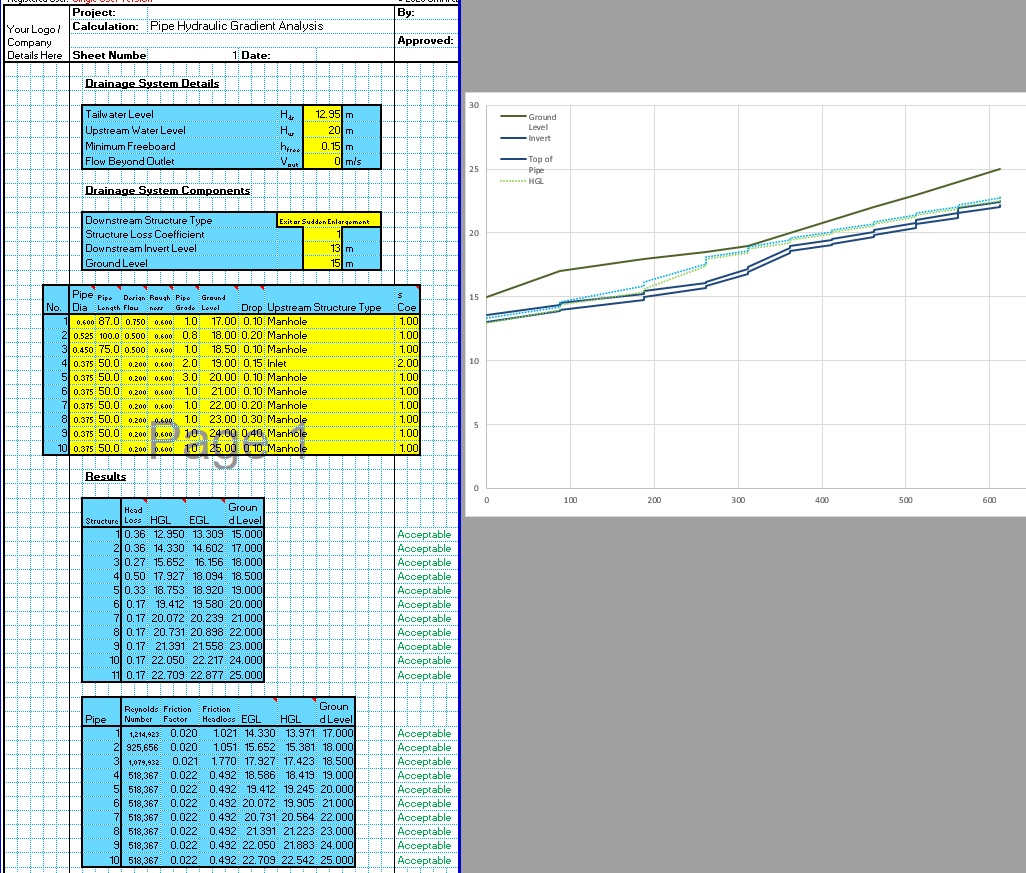
Hydraulic Gradient Analysis Spreadsheet
This spreadsheet analyses the hydraulic and energy grade lines for drainage systems with up to 10 drainage runs.
Learn More
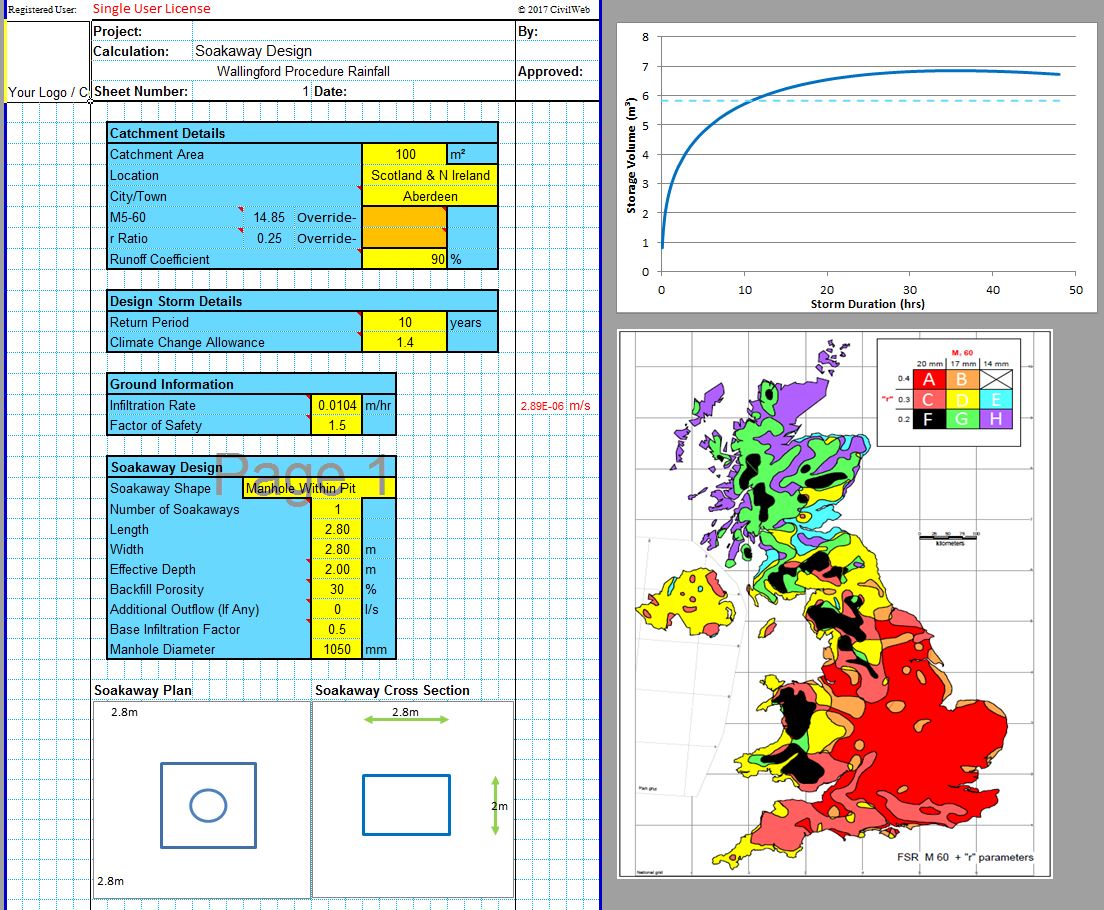
Soakaway Design Spreadsheet
This spreadsheet calculates the requirements for a soakaway system and assists the user to design a suitable system.
Learn More
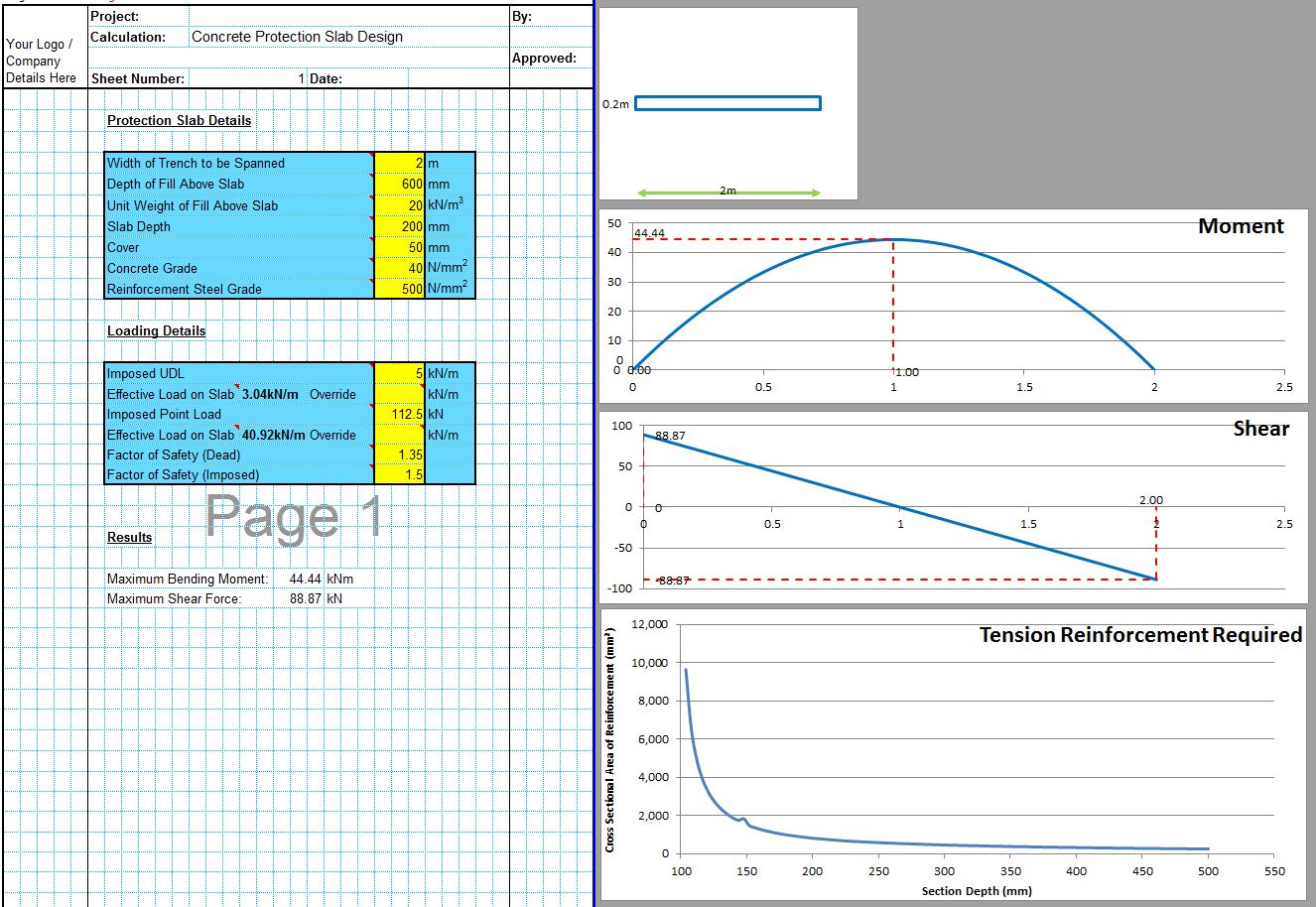
Concrete Protection Slab
This detailed design spreadsheet designs a protection slab commonly installed to protect shallow pipes.
Learn More
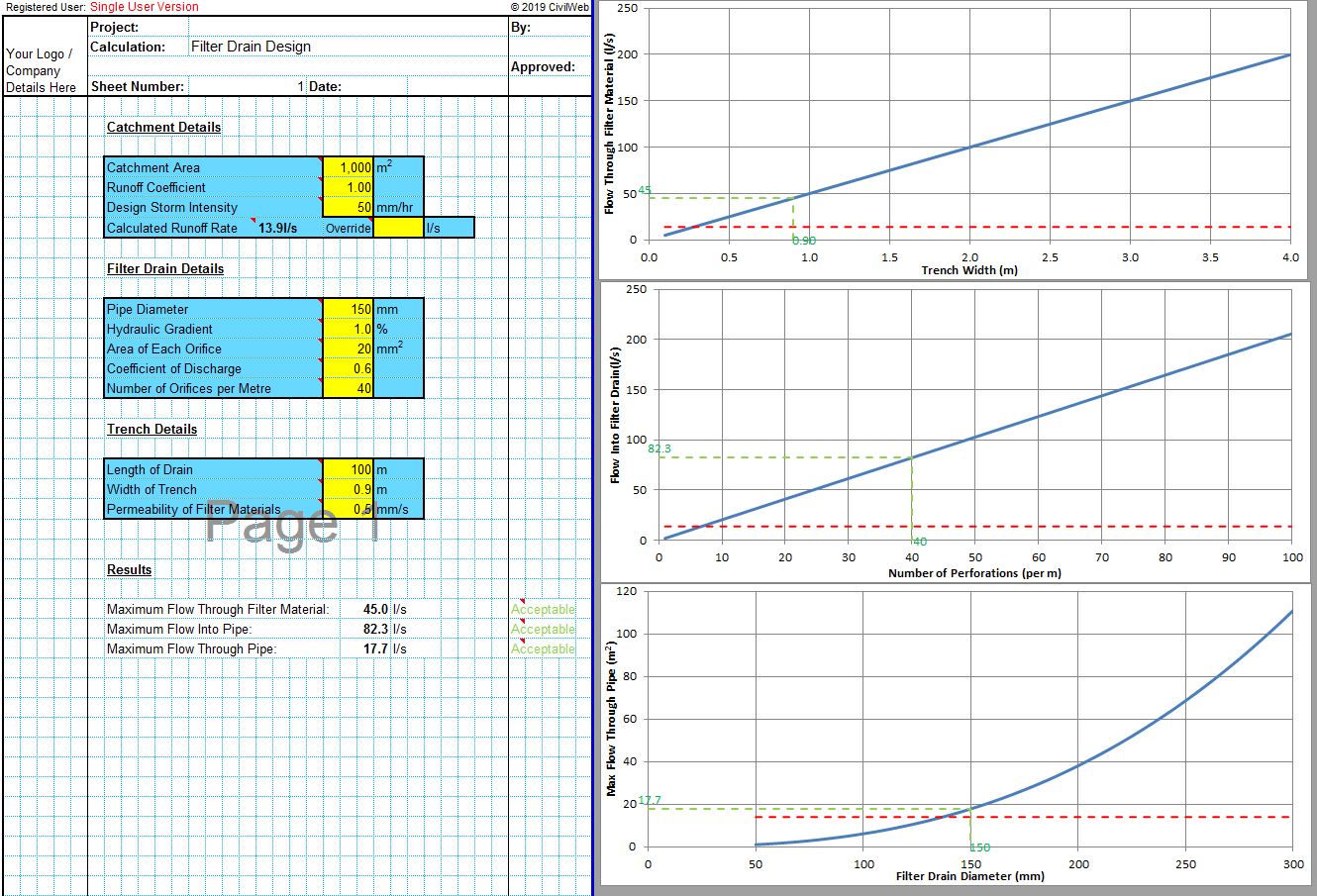
French Drain Design
This spreadsheet completes French Drain Design in accordance with the SUDS Manual.
Learn More
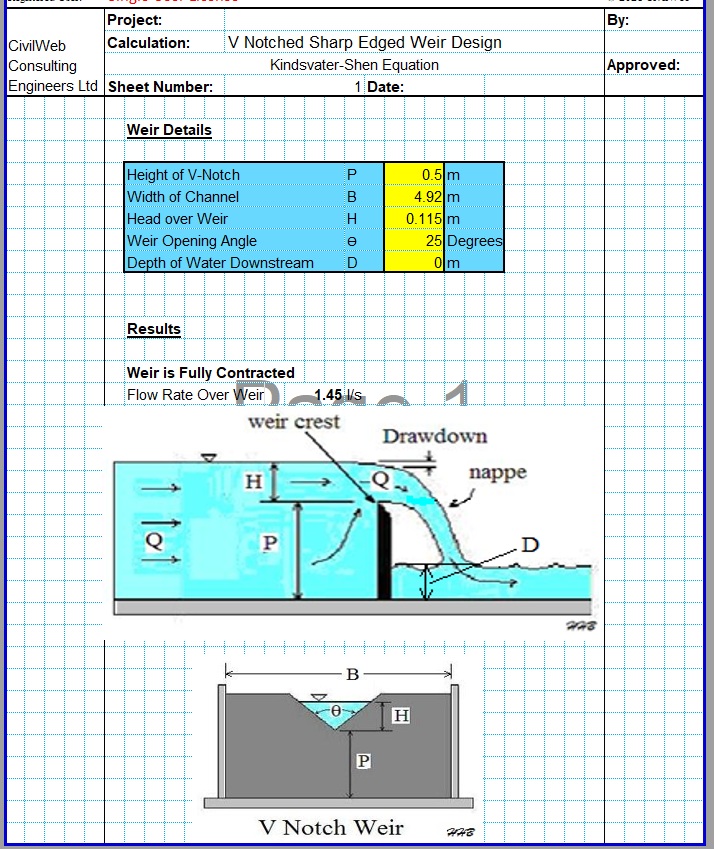
Sharp Crested Weir Flow Calculator Spreadsheets
This suite of 5 separate spreadsheets calculates the flow over sharp crested weirs of all shapes and sizes.
Learn More
Drainage Design Spreadsheet
This is the full suite of drainage design spreadsheets, available at a massive discount for only £49.99.