Understanding the hydraulic gradient formula is essential in civil engineering, drainage design, groundwater flow analysis, and pipe hydraulics. Whether you’re working on SuDS, sewer networks, or open‑channel systems, the hydraulic gradient tells you how steeply water is losing energy as it flows.
This guide breaks down the formula, explains how to calculate it, and shows how it applies in real‑world engineering.
The CivilWeb Hydraulic Gradient Analysis Design Spreadsheet can save hours of repetitive calculations while ensuring compliance with the relevant standards, reliable accuracy and even optimisation tools which can save money on materials during the construction phase.
💧 What Is the Hydraulic Gradient?
The hydraulic gradient (often written as i or HGL slope) represents the change in hydraulic head per unit length of flow.
👉 It tells you how much energy water loses as it moves from one point to another.
A steeper gradient means faster flow and higher energy loss. A flatter gradient means slower flow and lower energy loss.
🧮 Hydraulic Gradient Formula
The standard hydraulic gradient formula is:
i = (h₁ - h₂) / L
Where:
| Symbol | Meaning |
| h₁ | Hydraulic head at Point 1 |
| h₂ | Hydraulic head at Point 2 |
| L | Distance between the two points |
| i | Hydraulic gradient (dimensionless) |
Hydraulic head includes:
- Elevation head
- Pressure head
- Velocity head (in some applications)
In drainage and groundwater design, velocity head is often negligible.
📌 Example Calculation
Given:
- Hydraulic head at Point A: 102.5 m
- Hydraulic head at Point B: 98.0 m
- Distance between points: 250 m
Apply the formula:
i = (102.5 - 98.0) / 250 = 4.5 / 250 = 0.018
Hydraulic gradient = 0.018 (or 1.8%)
This means the water loses 1.8 m of head for every 100 m of travel.
🌊 Why the Hydraulic Gradient Matters
✔ Pipe Flow
Used to determine friction losses and required pipe gradients.
✔ Groundwater Flow
Darcy’s Law uses hydraulic gradient to calculate seepage velocity.
✔ SuDS & Drainage
Swales, filter drains, and infiltration systems rely on gradients to ensure stable, non‑erosive flow.
✔ Open Channels
Helps determine flow depth, velocity, and stability.
🔧 Hydraulic Gradient in Darcy’s Law
The hydraulic gradient is a key part of Darcy’s Law, which governs groundwater flow:
Q = k × i × A
Where:
- Q = flow rate
- k = hydraulic conductivity
- i = hydraulic gradient
- A = cross‑sectional area
This is widely used in geotechnical engineering and infiltration design.
📐 Hydraulic Gradient vs Energy Gradient
These two terms are often confused:
| Term | Definition | Used In |
| Hydraulic Gradient Line (HGL) | Pressure head + elevation head | Water distribution, drainage |
| Energy Gradient Line (EGL) | HGL + velocity head | High‑velocity systems, pumps |
In low‑velocity drainage systems, HGL ≈ EGL.
🛠 Practical Engineering Rules of Thumb
- Gravity sewers: hydraulic gradient typically 1–5%
- Filter drains: 0.5–2%
- Swales: 1–4% (use check dams if steeper)
- Groundwater flow: gradients often <1%
📊 Worked Example: Pipe Flow
A 150 mm pipe carries water between two manholes 40 m apart.
- Upstream HGL: 55.20 m
- Downstream HGL: 54.65 m
i = (55.20 - 54.65) / 40 = 0.55 / 40 = 0.01375
Hydraulic gradient = 0.01375 (1.375%)
This value feeds into Manning’s equation or Colebrook‑White to calculate velocity and capacity.
🧭 Common Mistakes to Avoid
- ❌ Using ground level instead of hydraulic head
- ❌ Forgetting to include pressure head in pressurised systems
- ❌ Mixing units (m vs mm, m vs km)
- ❌ Assuming HGL = pipe invert (only true for full pipes)
🎯 Summary
The hydraulic gradient formula is simple but fundamental:
i = Δh / L
It underpins:
- Pipe design
- Groundwater modelling
- SuDS and drainage systems
- Open‑channel hydraulics
Mastering it gives you a clearer understanding of how water behaves in engineered and natural systems.
Get Started Today
Save hours of repetitive calculation time. Whether you’re working on a major project or a small renovation, this tool will give you clarity, accuracy, and confidence.
Buy the CivilWeb Hydraulic Gradient Analysis Spreadsheet now for only £19.99.
Or alternatively big savings are available with our Hydraulic Gradient Analysis and Pipe Flow design bundle. Get both spreadsheets for only £29.99.
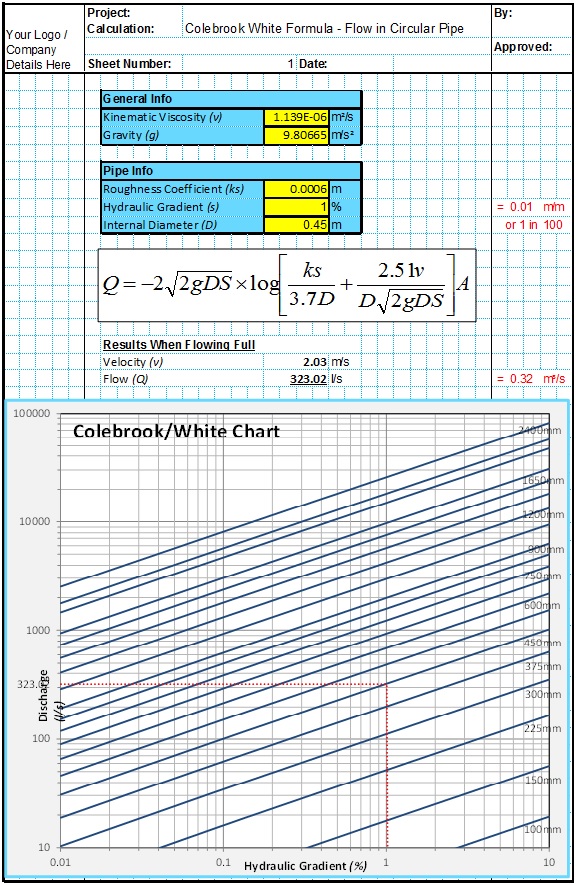
PIPE FLOW CALCULATOR
This spreadsheet uses the Colebrook-White and Manning Equations to calculate the flow capacity and velocity in pipes acting under gravity.
Find Out More
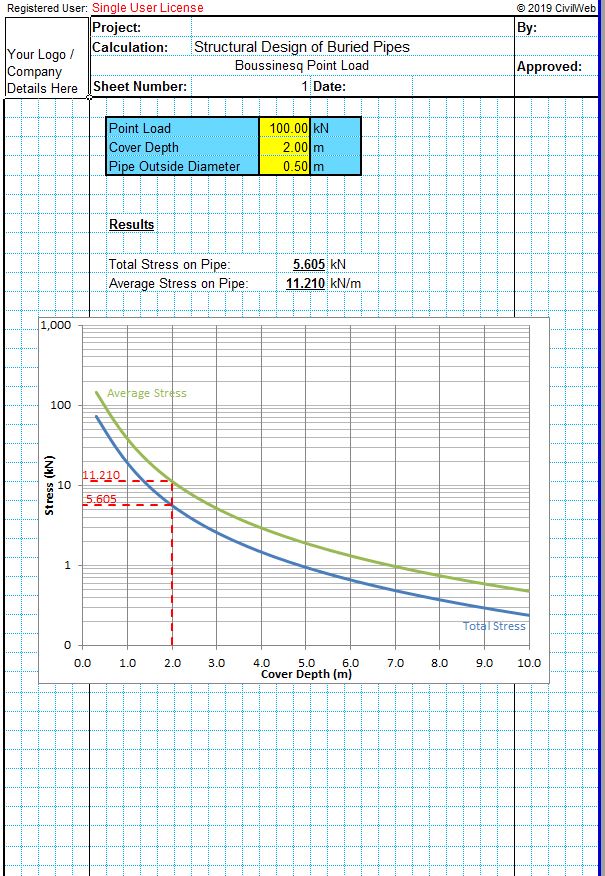
Buried Pipe Design Spreadsheet
This spreadsheet can be used to design concrete, steel, plastic and other buried pipes in accordance with BS EN 1295-1.
Learn More
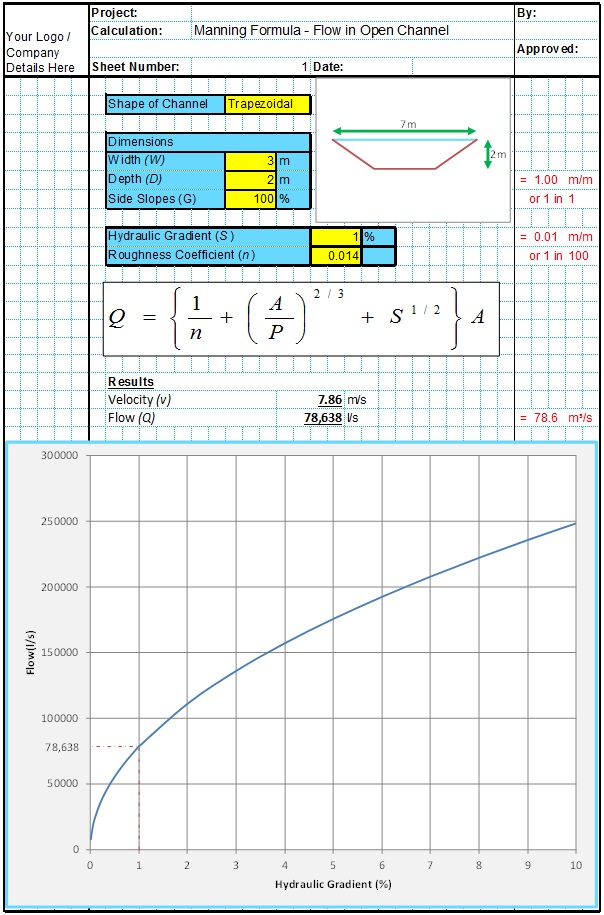
Manning Open Channel Design Spreadsheet
This spreadsheet uses the Manning formula to calculate the flow conditions in an open channel acting under gravity only.
Learn More
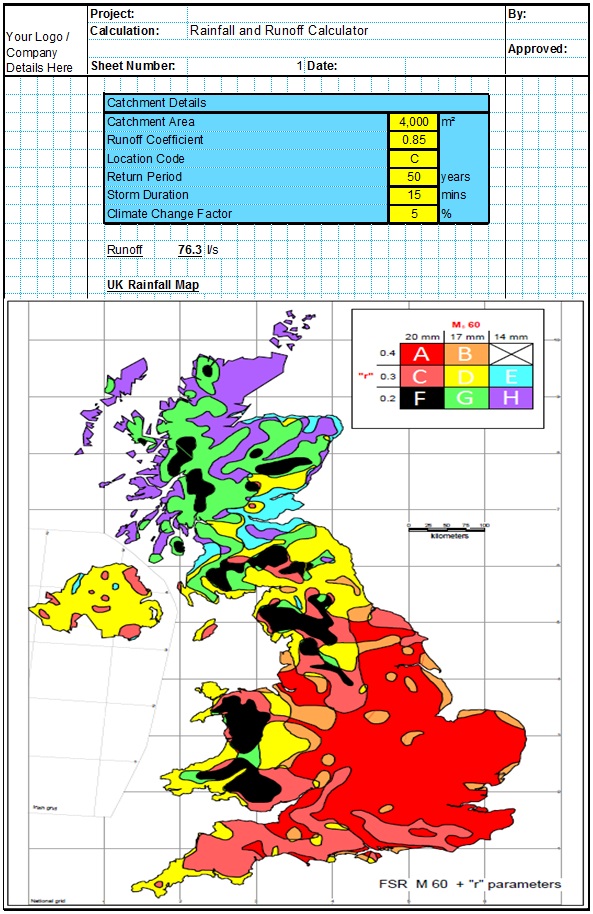
Runoff Calculator Spreadsheet
This spreadsheet calculates the design runoff flow for a site in accordance with the Flood Estimation Handbook.
Learn More
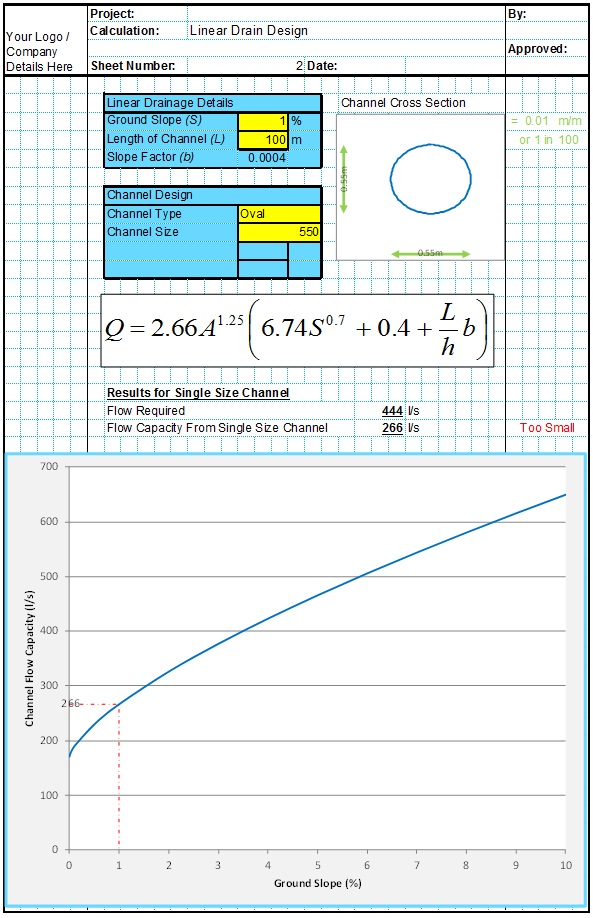
Linear Drainage Design Spreadsheet
This spreadsheet calculates the maximum flow from a specified linear drainage channel and checks whether the channel is sufficient for the specified site and storm conditions.
Learn More
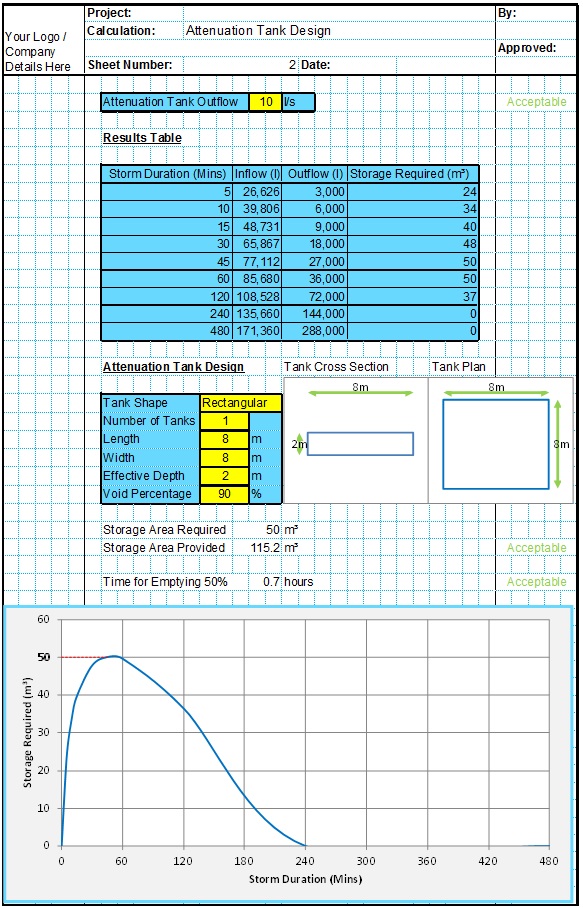
Attenuation Design Spreadsheet
This spreadsheet calculates the requirements for a attenuation system and assists the user to design a suitable system.
Learn More
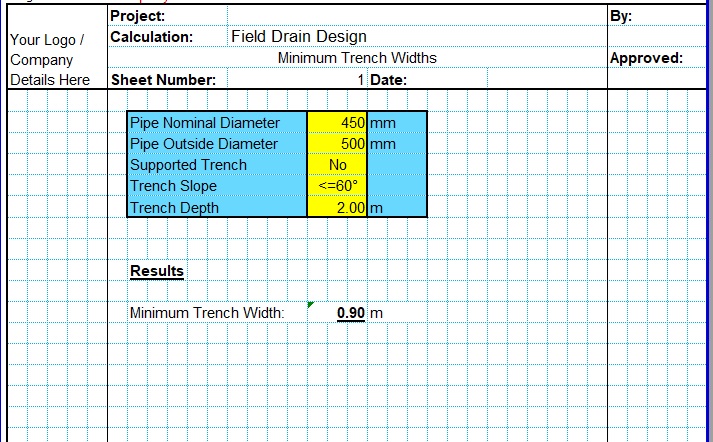
Field Drain Design Spreadsheet
This spreadsheet can be used to design field drains, typically subsurface drainage systems used to drain fields and open areas.
Learn More
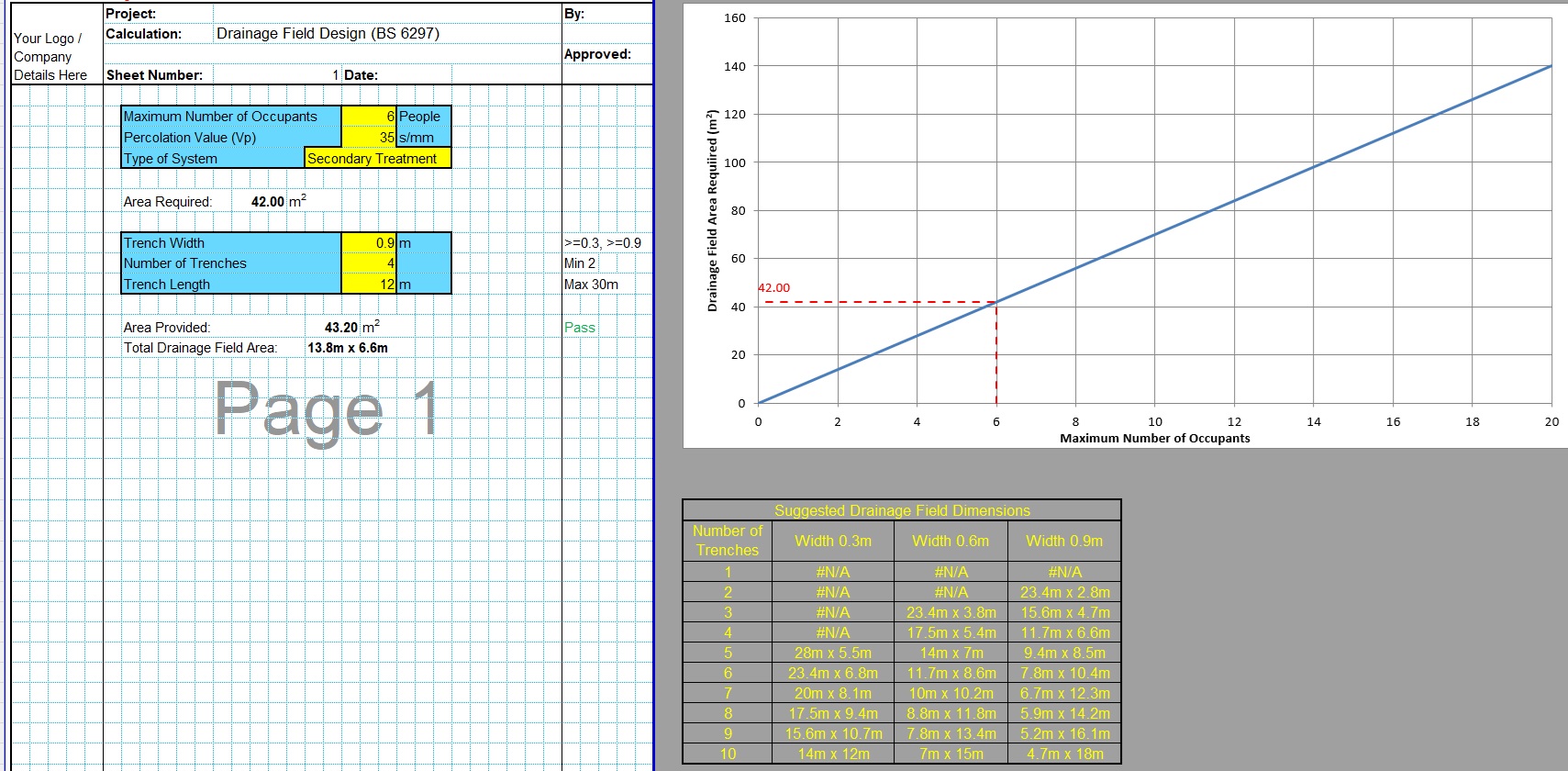
Drainage Field Design Spreadsheet
This spreadsheet can be used to design septic infiltration systems known as drainage fields, leach fields or septic drain fields.
Learn More
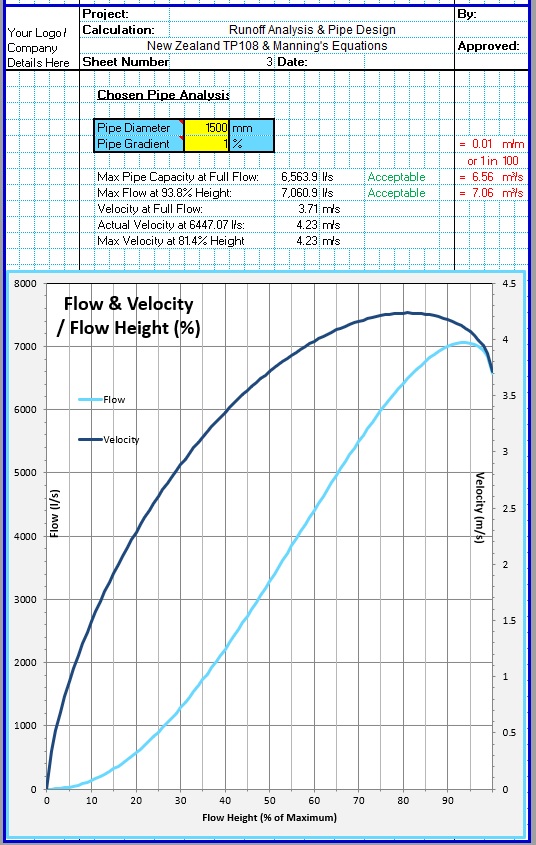
TP108 Spreadsheet
This spreadsheet calculates the rainfall for New Zealand catchments in accordance with TP108.
Learn More
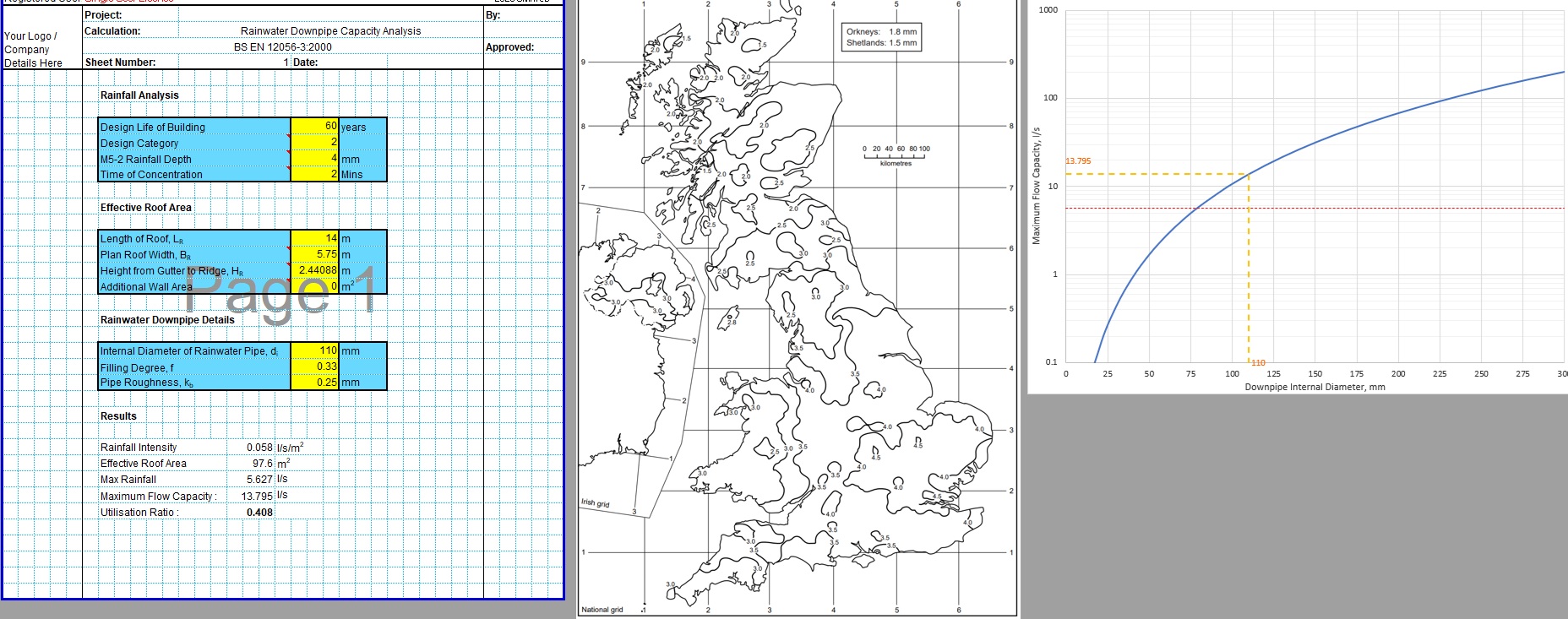
Roof Downpipe Calculator Spreadsheet
This spreadsheet calculates the size of roof drainage downpipes depending on the roof catchment and rainfall requirements.
Learn More
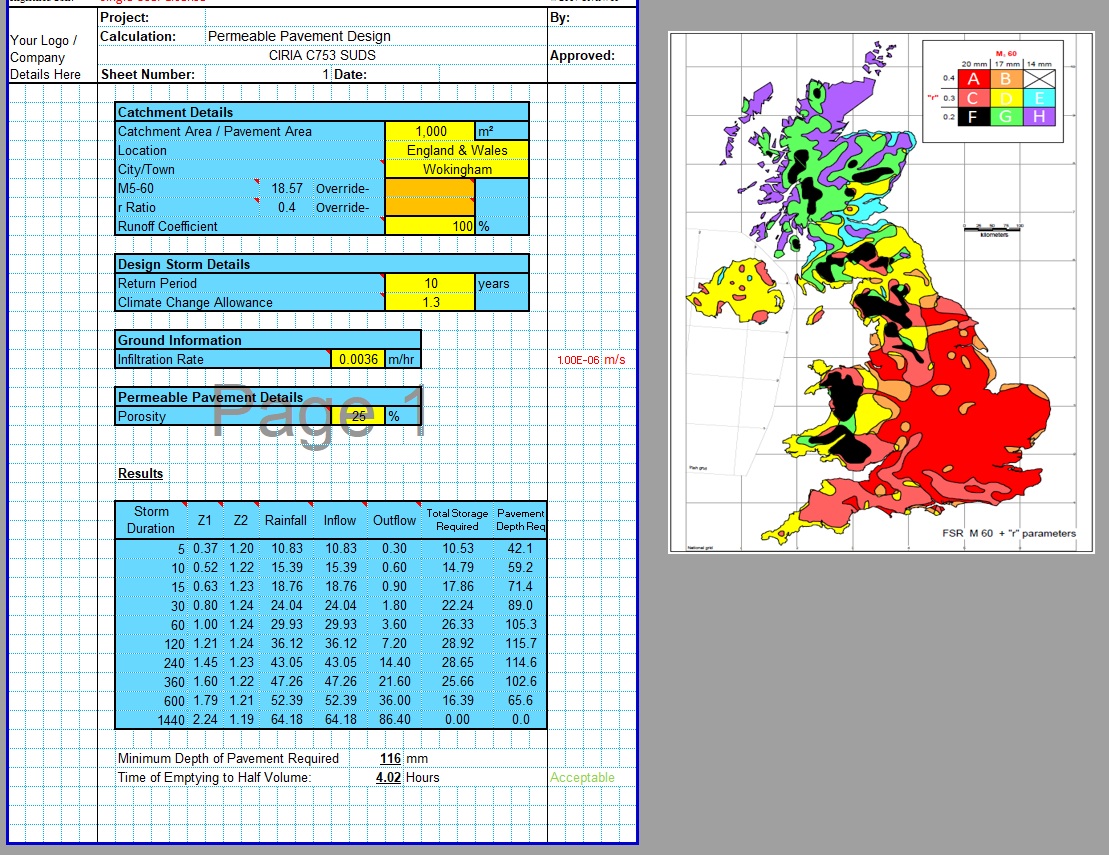
Permeable Pavement Design Spreadsheet
This spreadsheet is designed to determine the size and characteristics of permeable pavements.
Learn More
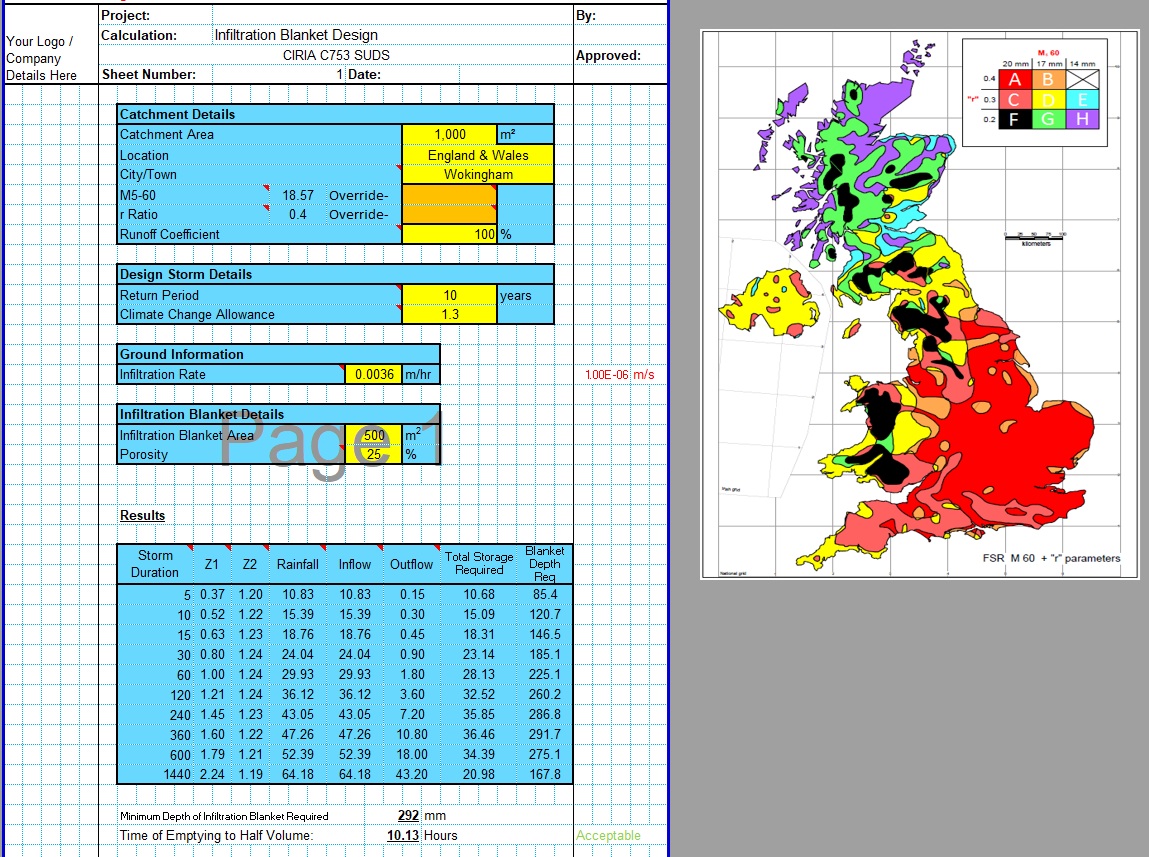
Infiltration Blanket Design Spreadsheet
This spreadsheet can be used to design thin depth infiltration systems, typically called infiltration blanket systems.
Learn More
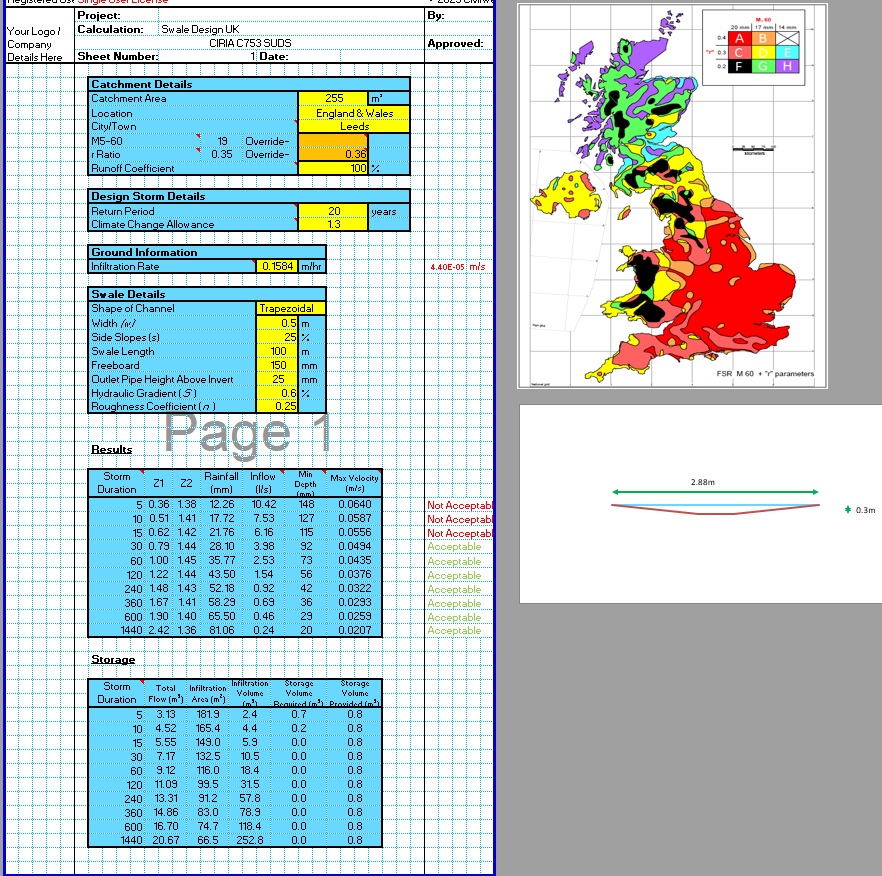
Swale Design Spreadsheet
This spreadsheet can be used to design swales. These linear grassed channels can be used both to convey, infiltrate and filter surface drainage runoff.
Learn More
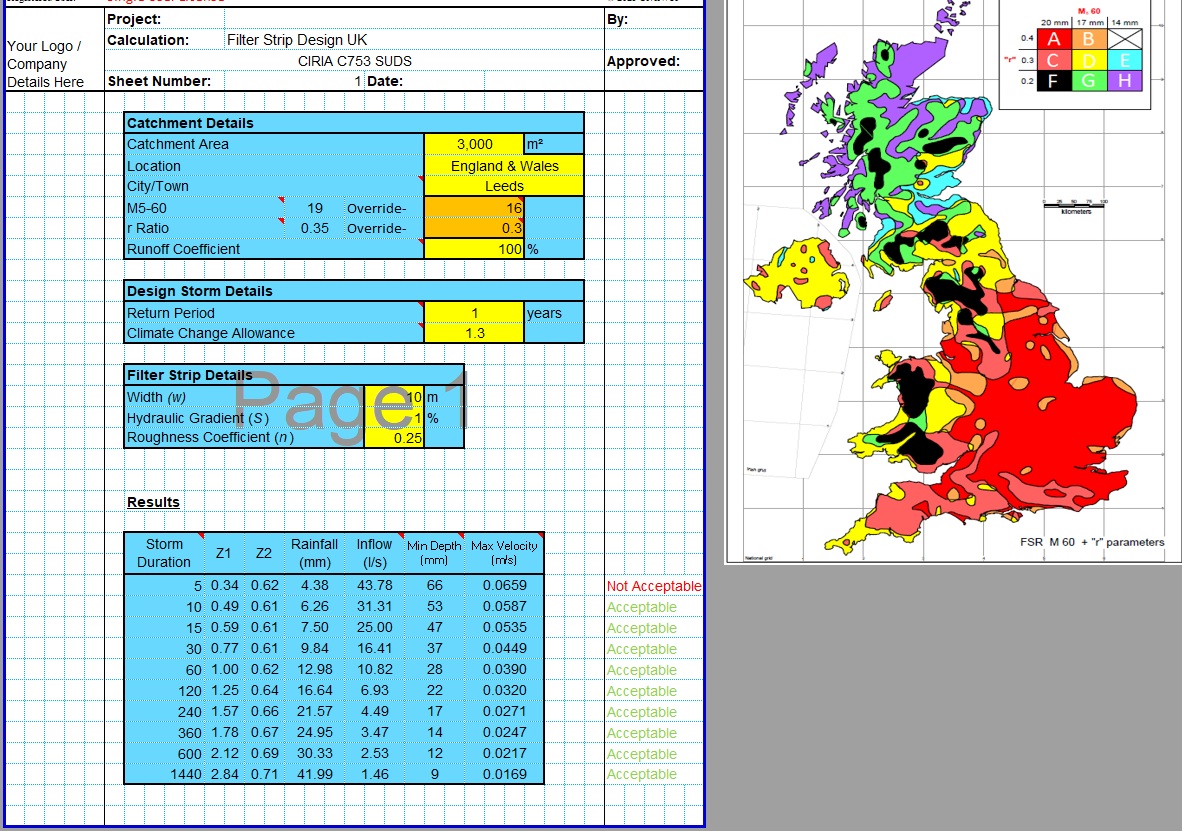
Filter Strip Design Spreadsheet
This spreadsheet is designed to analyse surface water filter strips and to determine the max flow depth and max flow velocity and determine whether they are in accordance with relevant standards.
Learn More
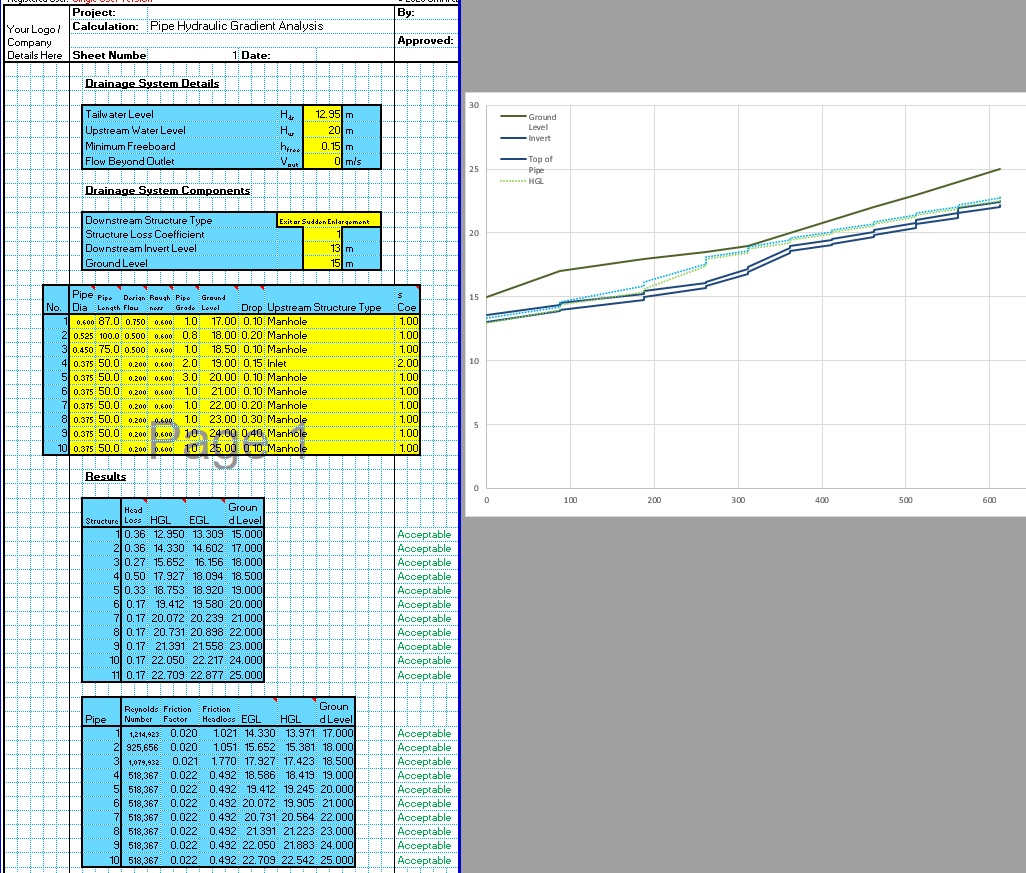
Hydraulic Gradient Analysis Spreadsheet
This spreadsheet analyses the hydraulic and energy grade lines for drainage systems with up to 10 drainage runs.
Learn More
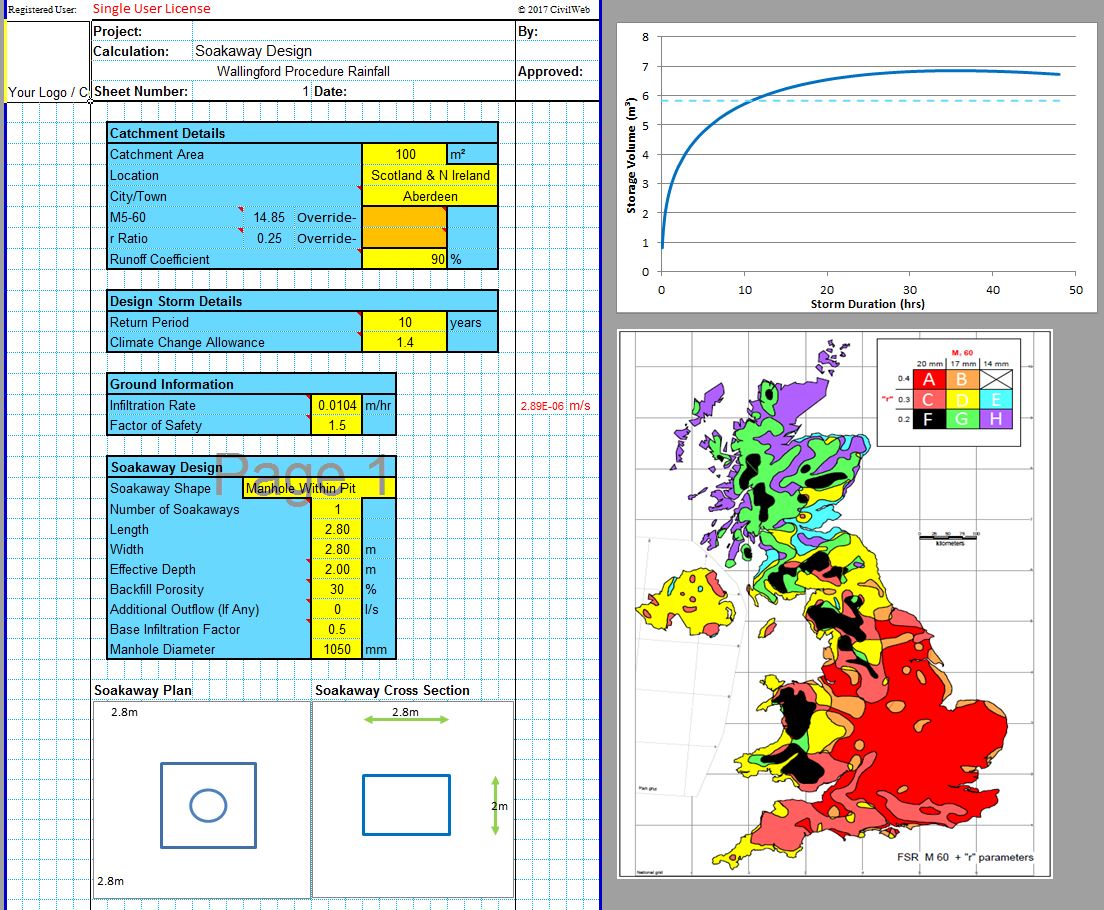
Soakaway Design Spreadsheet
This spreadsheet calculates the requirements for a soakaway system and assists the user to design a suitable system.
Learn More
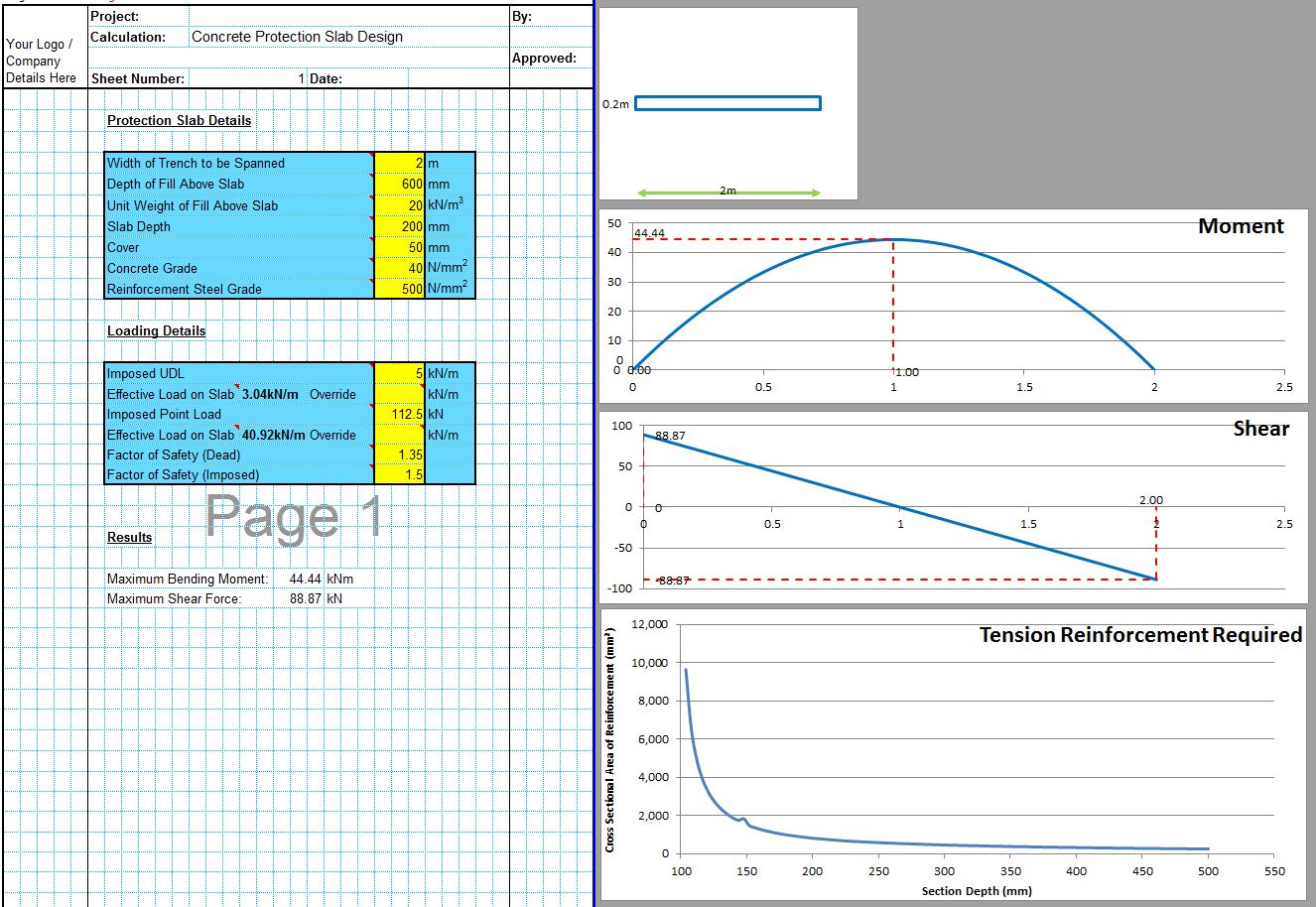
Concrete Protection Slab
This detailed design spreadsheet designs a protection slab commonly installed to protect shallow pipes.
Learn More
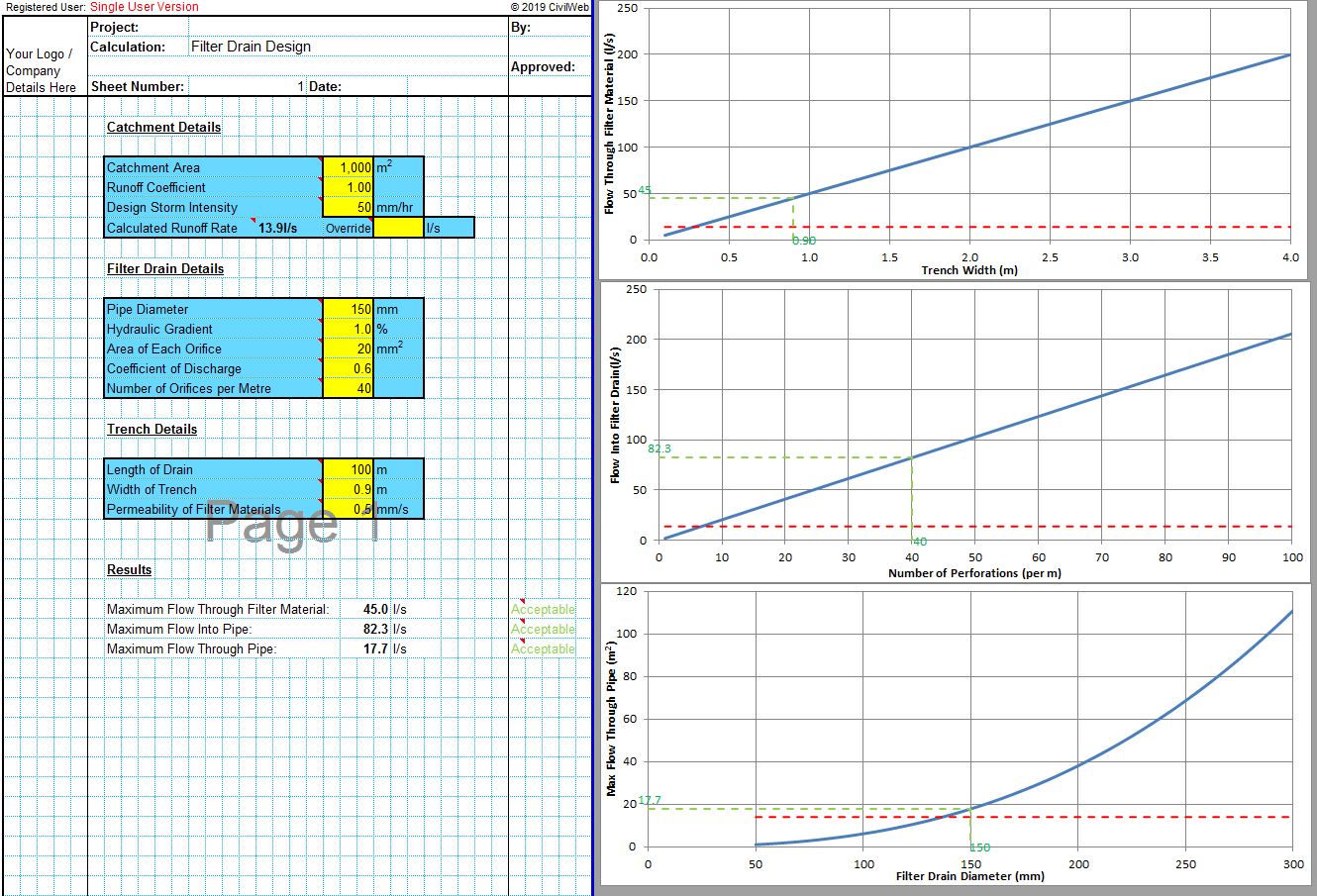
French Drain Design
This spreadsheet completes French Drain Design in accordance with the SUDS Manual.
Learn More
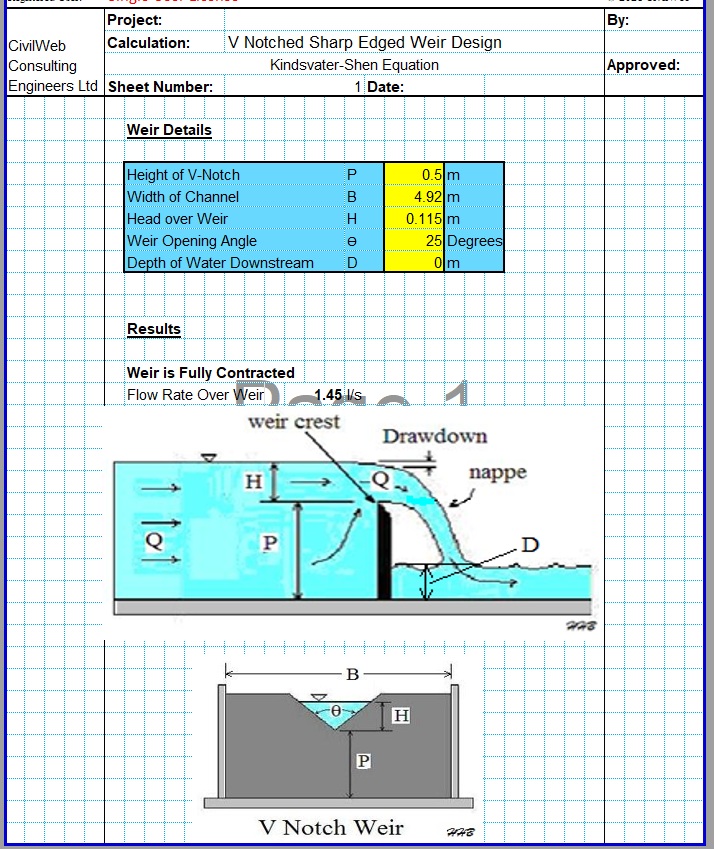
Sharp Crested Weir Flow Calculator Spreadsheets
This suite of 5 separate spreadsheets calculates the flow over sharp crested weirs of all shapes and sizes.
Learn More
Drainage Design Spreadsheet
This is the full suite of drainage design spreadsheets, available at a massive discount for only £49.99.