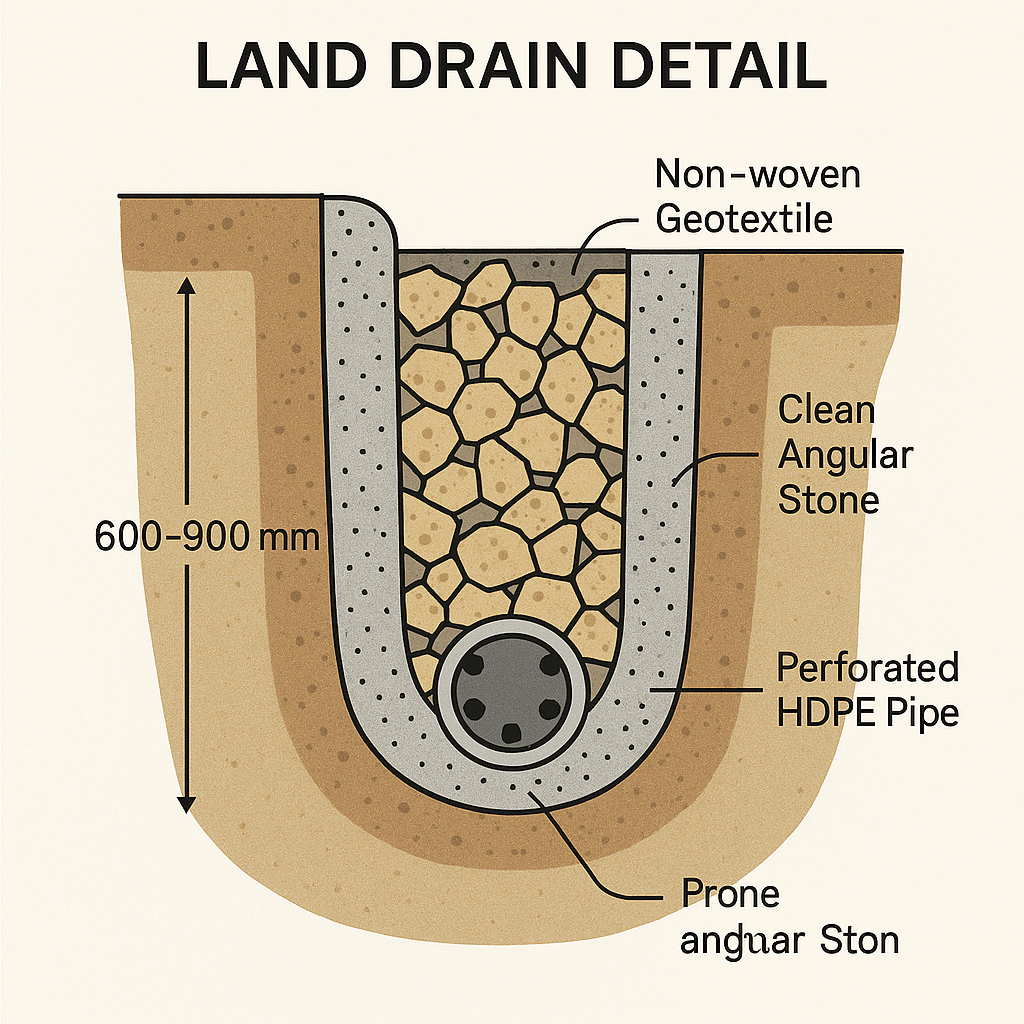
A land drain detail describes the specific arrangement, materials, and construction method used to move excess water away from soil, foundations, or landscaped areas. It’s the technical backbone of any subsurface drainage system, ensuring water is collected efficiently and discharged safely. A clear, well‑designed detail improves long‑term performance, reduces waterlogging, and protects structures from moisture‑related damage.
The CivilWeb Field Drain Design Spreadsheet can be used to accurately and quickly design all kinds of field drains.
Understanding what a land drain detail includes
A land drain detail typically brings together the geometry of the trench, the type and placement of the perforated pipe, the filter media, and the outfall arrangement. These components work together to relieve saturated ground and maintain soil stability. Land drainage is widely used in gardens, fields, and development plots to remove surplus water and prevent waterlogging.
A complete detail usually covers:
- Trench dimensions — depth, width, and side slopes.
- Pipe specification — diameter, perforation pattern, and material.
- Filter layer — clean angular stone that promotes flow and prevents clogging.
- Geotextile wrap — a non‑woven membrane that stops fines entering the system.
- Outfall design — how and where the collected water is discharged.
Why land drain details matter
A well‑considered detail ensures the system performs consistently over time. It helps:
- Prevent waterlogging in gardens, paddocks, and fields.
- Protect foundations from moisture.
- Improve soil conditions for planting and turf.
- Reduce surface flooding and standing water.
- Support wider drainage strategies on development sites.
Without a proper detail, drains can clog, settle unevenly, or fail to move water effectively.
Key components explained
Perforated pipe
Land drains use perforated pipes buried underground to collect and move water. These pipes are typically surrounded by gravel or backfill material to allow water to enter freely.
Common choices include:
- 80–100 mm perforated HDPE pipe for domestic gardens.
- 100–160 mm pipe for larger areas or collector drains.
Gravel surround
Clean angular stone (20–40 mm) provides void space for water movement and prevents soil from entering the pipe. This layer is essential for long‑term performance.
Geotextile membrane
A non‑woven geotextile wrap prevents fines from clogging the gravel and pipe. It maintains permeability while extending the life of the system.
Trench layout
The trench is usually installed along the natural fall of the land. In some cases, layouts such as herringbone or grid systems are used to maximise water capture across larger areas.
Where land drains should be installed
Land drains are most effective in areas where the ground becomes waterlogged due to excess rainfall or impermeable soils such as clay. They are commonly used in domestic gardens, agricultural land, and landscaped areas to prevent standing water and improve irrigation.
Typical installation locations include:
- Along the base of slopes to intercept groundwater.
- Around buildings to protect foundations.
- Beneath lawns and planting beds.
- Across fields to improve soil structure and crop performance.
Installation considerations
Gradient
A gentle fall of 1:100 to 1:200 ensures water flows freely through the pipe without causing erosion or siltation.
Depth
Depth varies depending on purpose, but drains are often installed 600–900 mm deep in gardens and deeper for agricultural or structural applications.
Outfall
Collected water must be discharged to:
- A soakaway,
- A watercourse,
- A surface water sewer (with permission).
The outfall must be protected with rodent guards and erosion control.
Common variations of land drain details
Different site conditions call for different configurations. Common variations include:
- French drains — gravel‑filled trenches with or without pipes.
- Filter drains — perforated pipes surrounded by granular media.
- Carrier drains — solid pipes used to move water without collecting it.
- Soakaway‑fed drains — systems designed to store and infiltrate water locally.
Each variation uses the same core principles but adapts the detail to suit soil type, water volume, and available outfall.
Practical applications and benefits
Land drain details are used to:
- Improve garden usability by removing standing water.
- Protect hard landscaping such as patios and driveways.
- Support SuDS strategies by managing groundwater.
- Enhance agricultural productivity by improving soil aeration.
These systems are especially valuable in areas with clay soils or high rainfall, where natural infiltration is limited.
Bringing it all together
A land drain detail is more than a sketch—it’s a technical specification that ensures the drainage system performs reliably for years. By defining the trench geometry, pipe type, filter media, and outfall, you create a robust solution for managing excess water in gardens, fields, and development sites.
The CivilWeb Field Drain Design Spreadsheet can be used to accurately and quickly design all kinds of field drains.
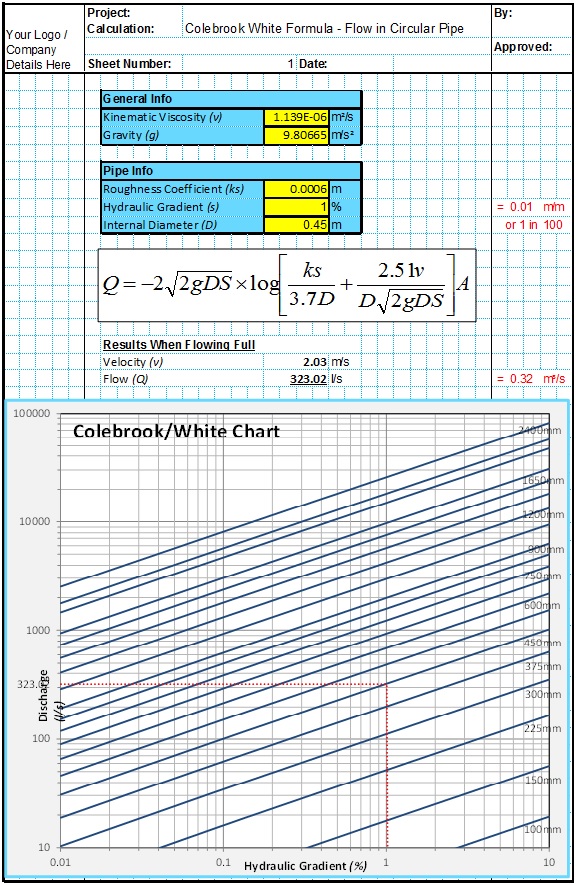
PIPE FLOW CALCULATOR
This spreadsheet uses the Colebrook-White and Manning Equations to calculate the flow capacity and velocity in pipes acting under gravity.
Find Out More
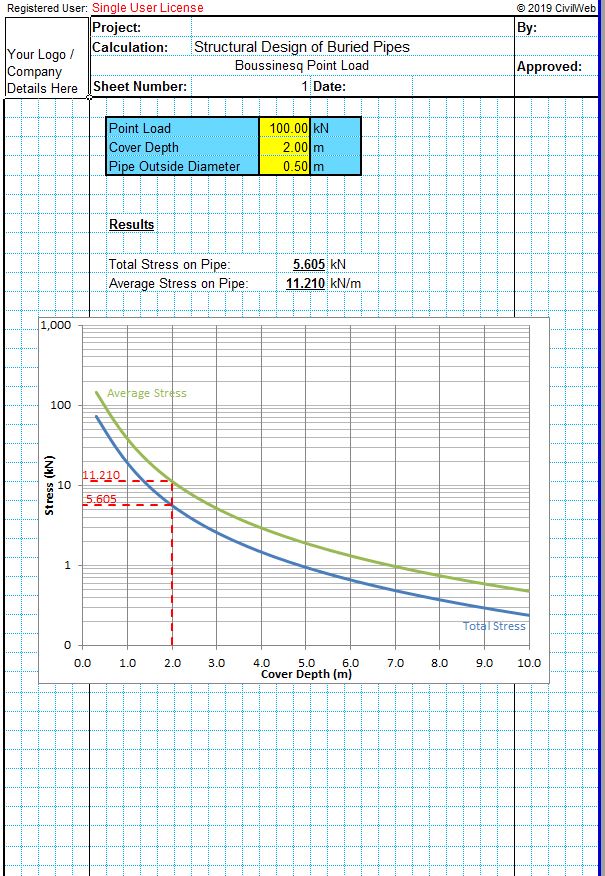
Buried Pipe Design Spreadsheet
This spreadsheet can be used to design concrete, steel, plastic and other buried pipes in accordance with BS EN 1295-1.
Learn More
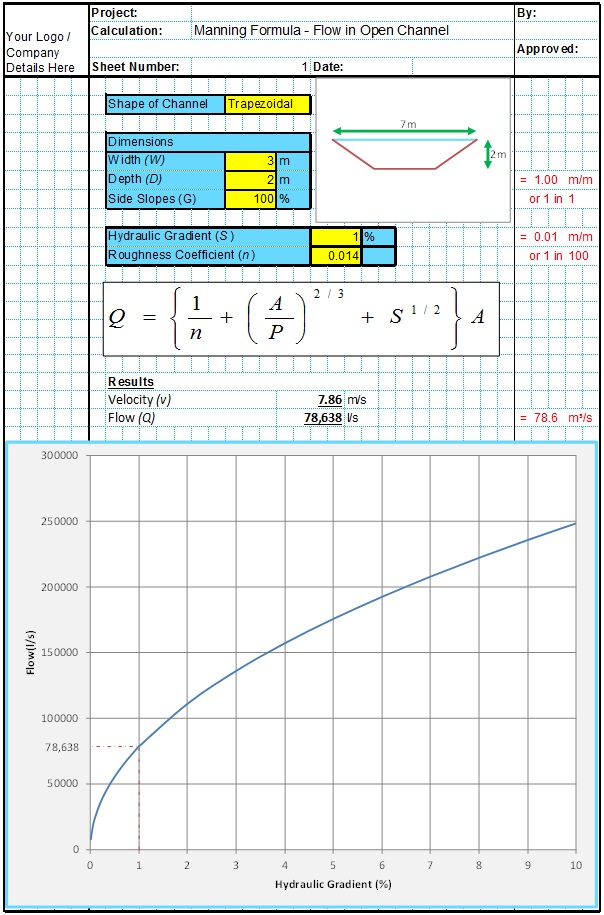
Manning Open Channel Design Spreadsheet
This spreadsheet uses the Manning formula to calculate the flow conditions in an open channel acting under gravity only.
Learn More
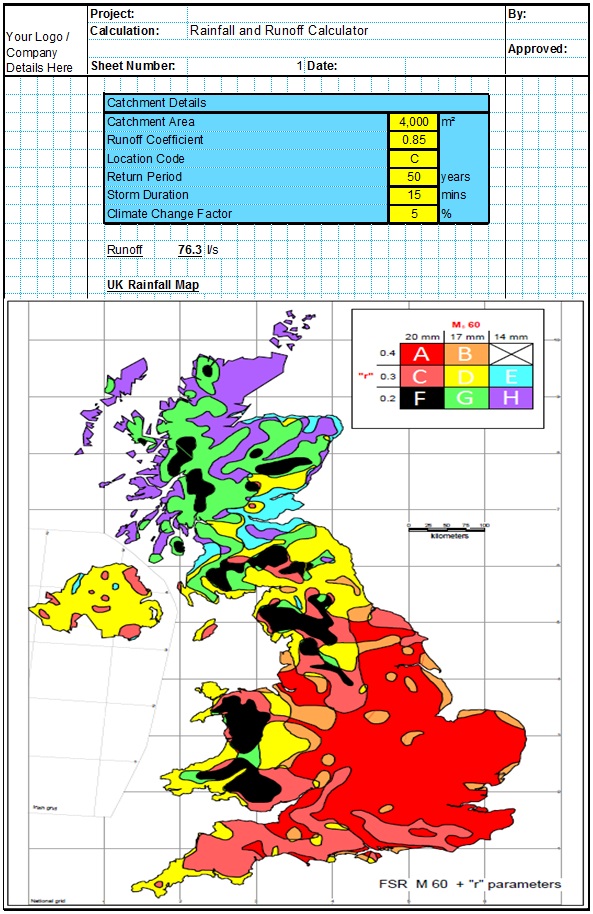
Runoff Calculator Spreadsheet
This spreadsheet calculates the design runoff flow for a site in accordance with the Flood Estimation Handbook.
Learn More
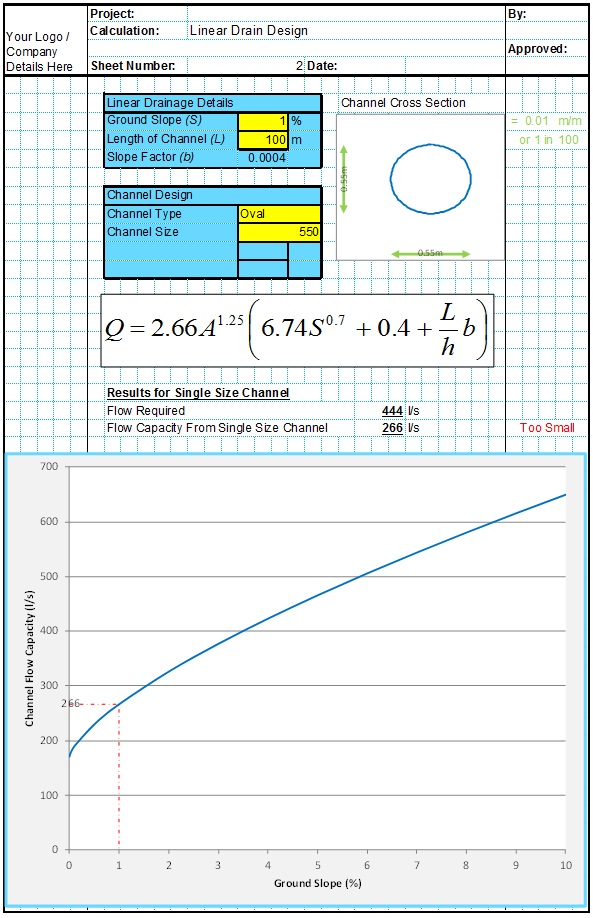
Linear Drainage Design Spreadsheet
This spreadsheet calculates the maximum flow from a specified linear drainage channel and checks whether the channel is sufficient for the specified site and storm conditions.
Learn More
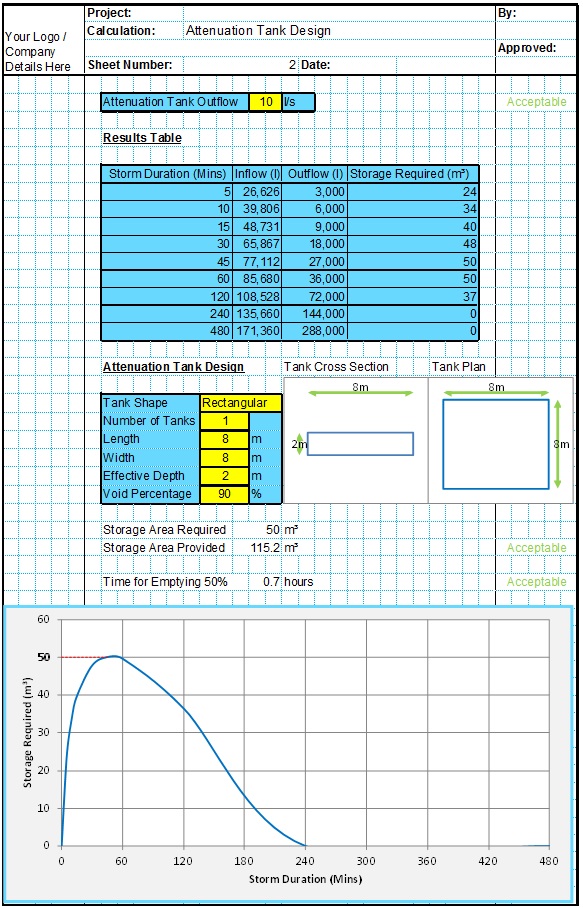
Attenuation Design Spreadsheet
This spreadsheet calculates the requirements for a attenuation system and assists the user to design a suitable system.
Learn More
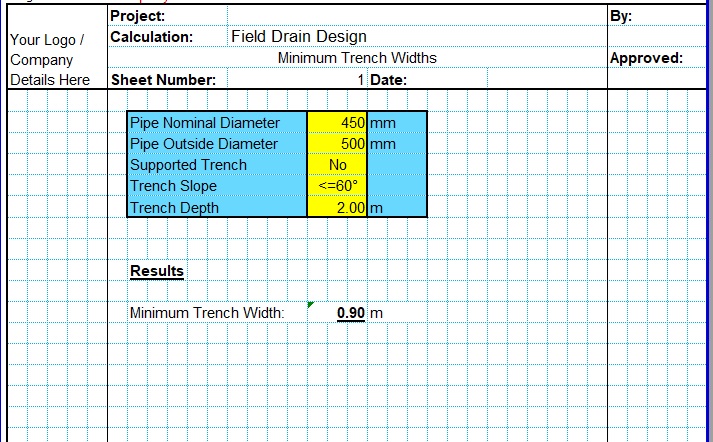
Field Drain Design Spreadsheet
This spreadsheet can be used to design field drains, typically subsurface drainage systems used to drain fields and open areas.
Learn More
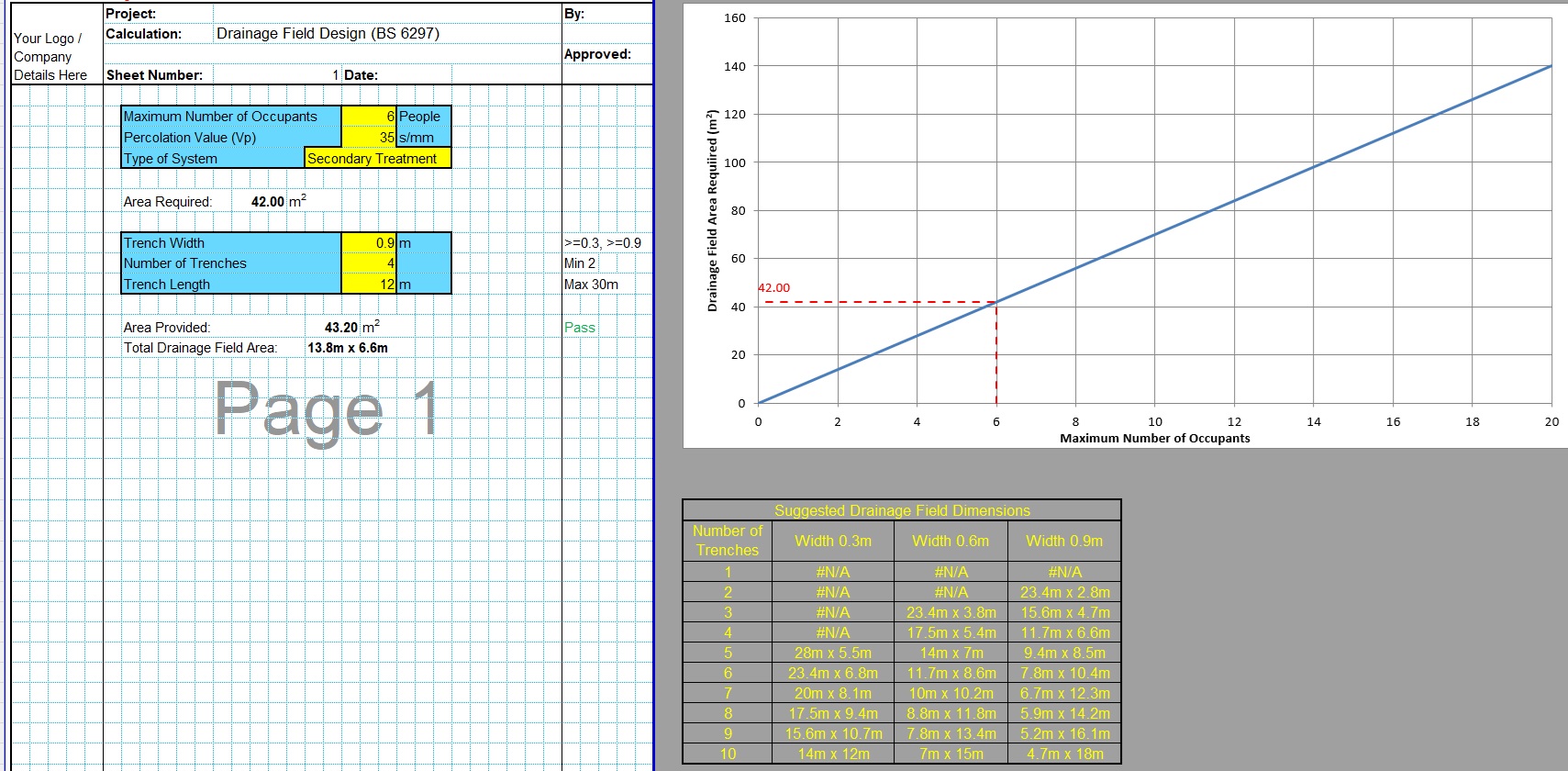
Drainage Field Design Spreadsheet
This spreadsheet can be used to design septic infiltration systems known as drainage fields, leach fields or septic drain fields.
Learn More
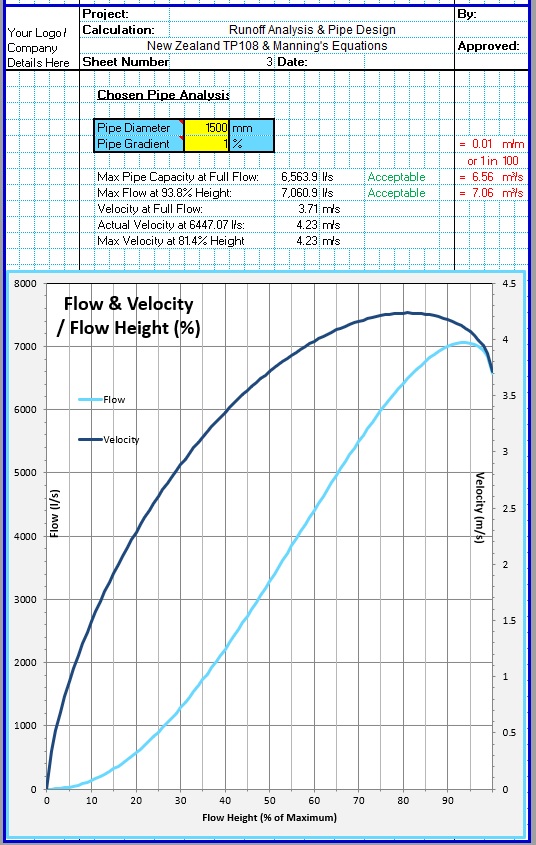
TP108 Spreadsheet
This spreadsheet calculates the rainfall for New Zealand catchments in accordance with TP108.
Learn More
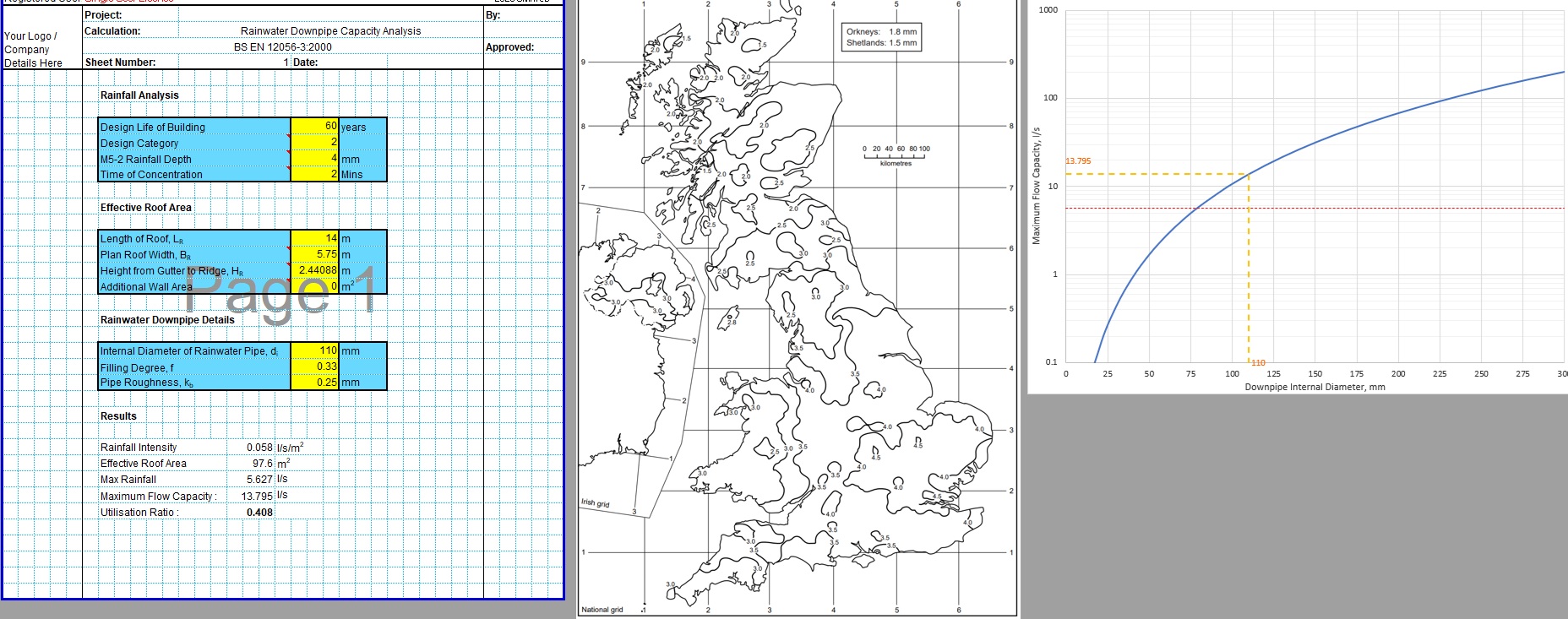
Roof Downpipe Calculator Spreadsheet
This spreadsheet calculates the size of roof drainage downpipes depending on the roof catchment and rainfall requirements.
Learn More
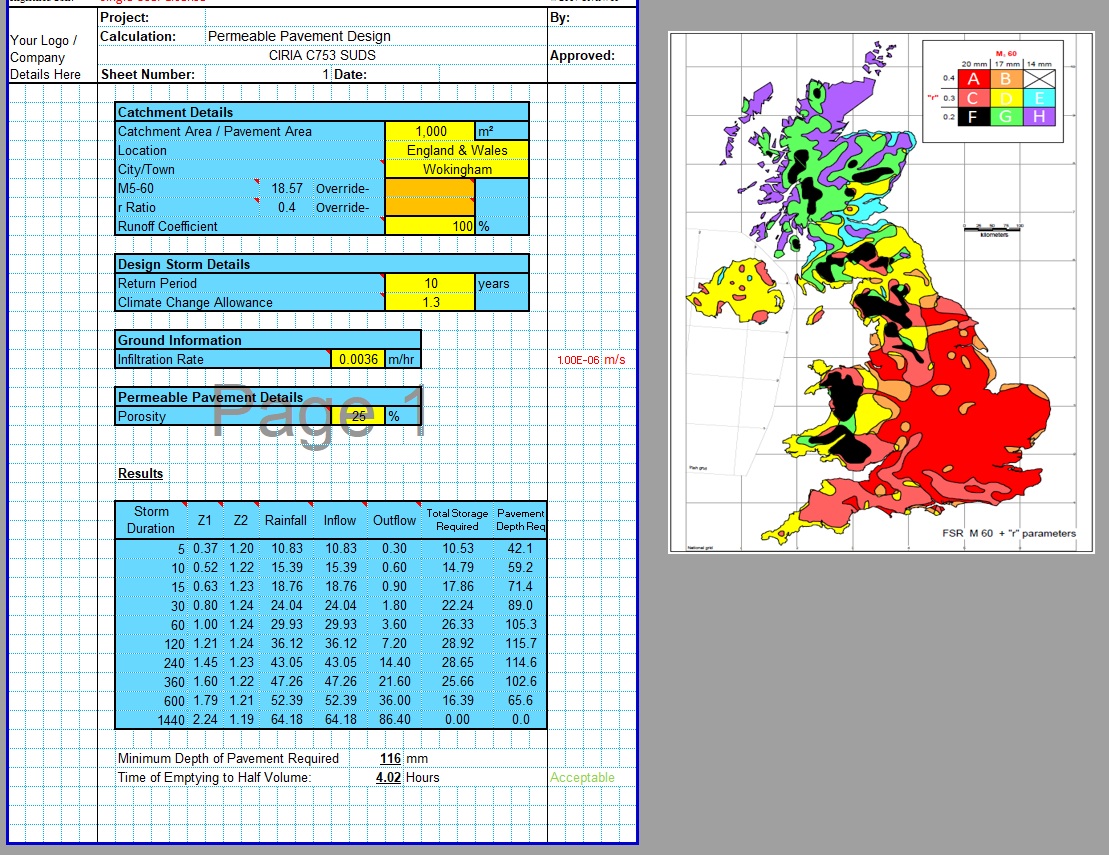
Permeable Pavement Design Spreadsheet
This spreadsheet is designed to determine the size and characteristics of permeable pavements.
Learn More
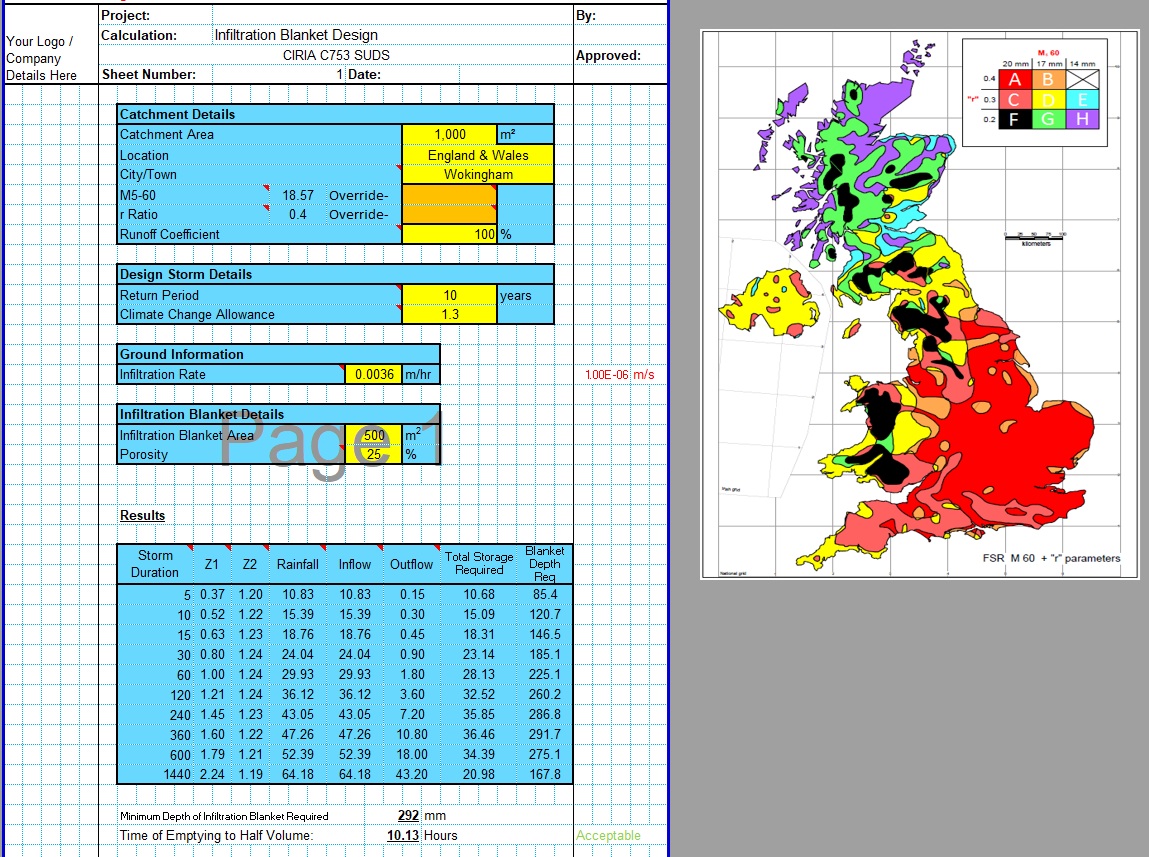
Infiltration Blanket Design Spreadsheet
This spreadsheet can be used to design thin depth infiltration systems, typically called infiltration blanket systems.
Learn More
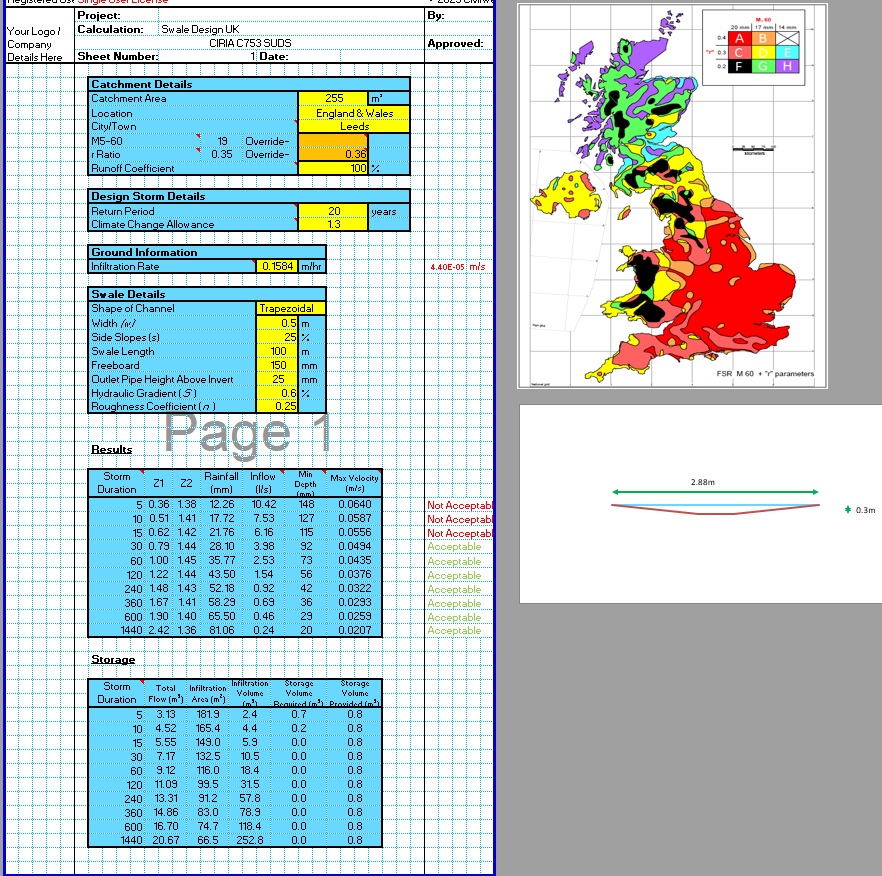
Swale Design Spreadsheet
This spreadsheet can be used to design swales. These linear grassed channels can be used both to convey, infiltrate and filter surface drainage runoff.
Learn More
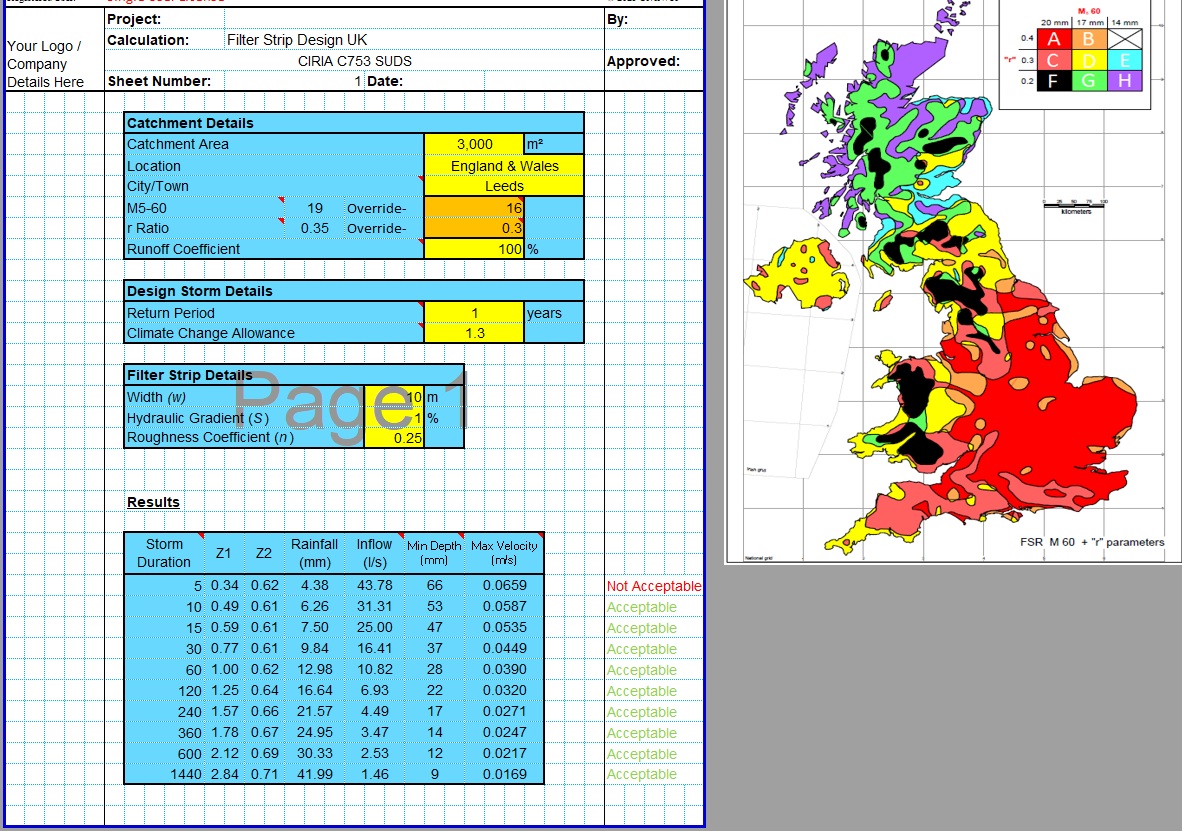
Filter Strip Design Spreadsheet
This spreadsheet is designed to analyse surface water filter strips and to determine the max flow depth and max flow velocity and determine whether they are in accordance with relevant standards.
Learn More
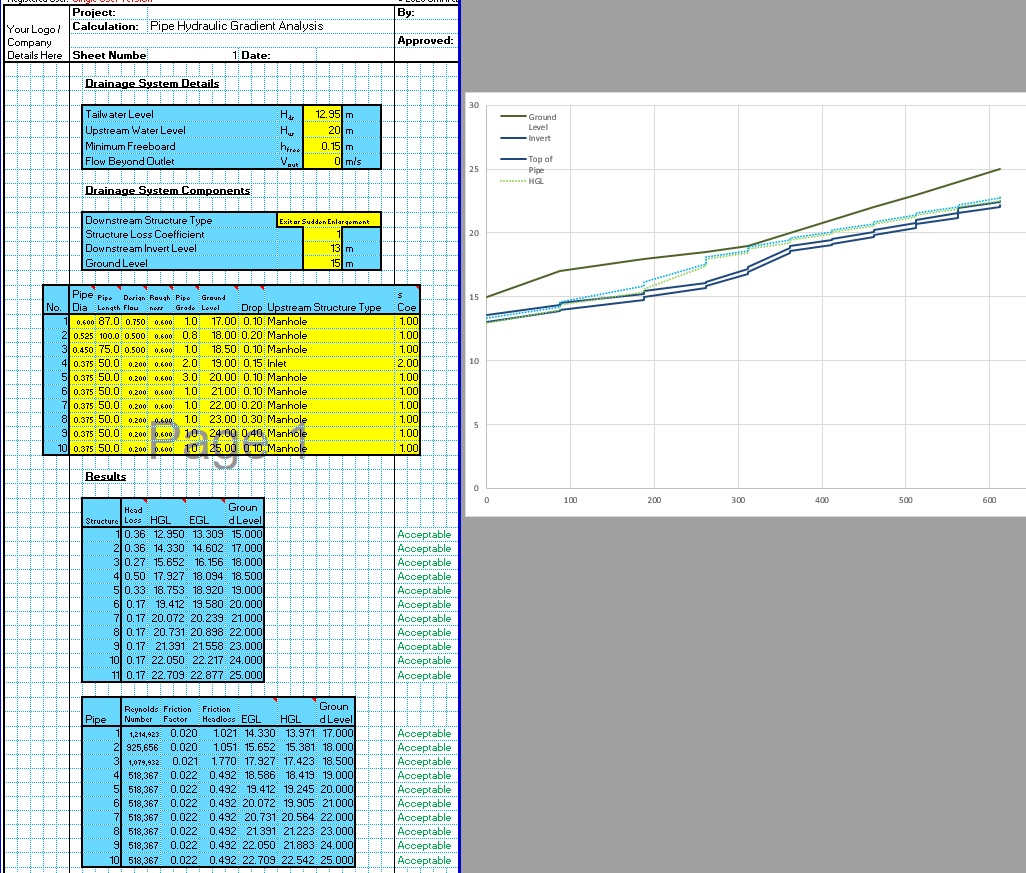
Hydraulic Gradient Analysis Spreadsheet
This spreadsheet analyses the hydraulic and energy grade lines for drainage systems with up to 10 drainage runs.
Learn More
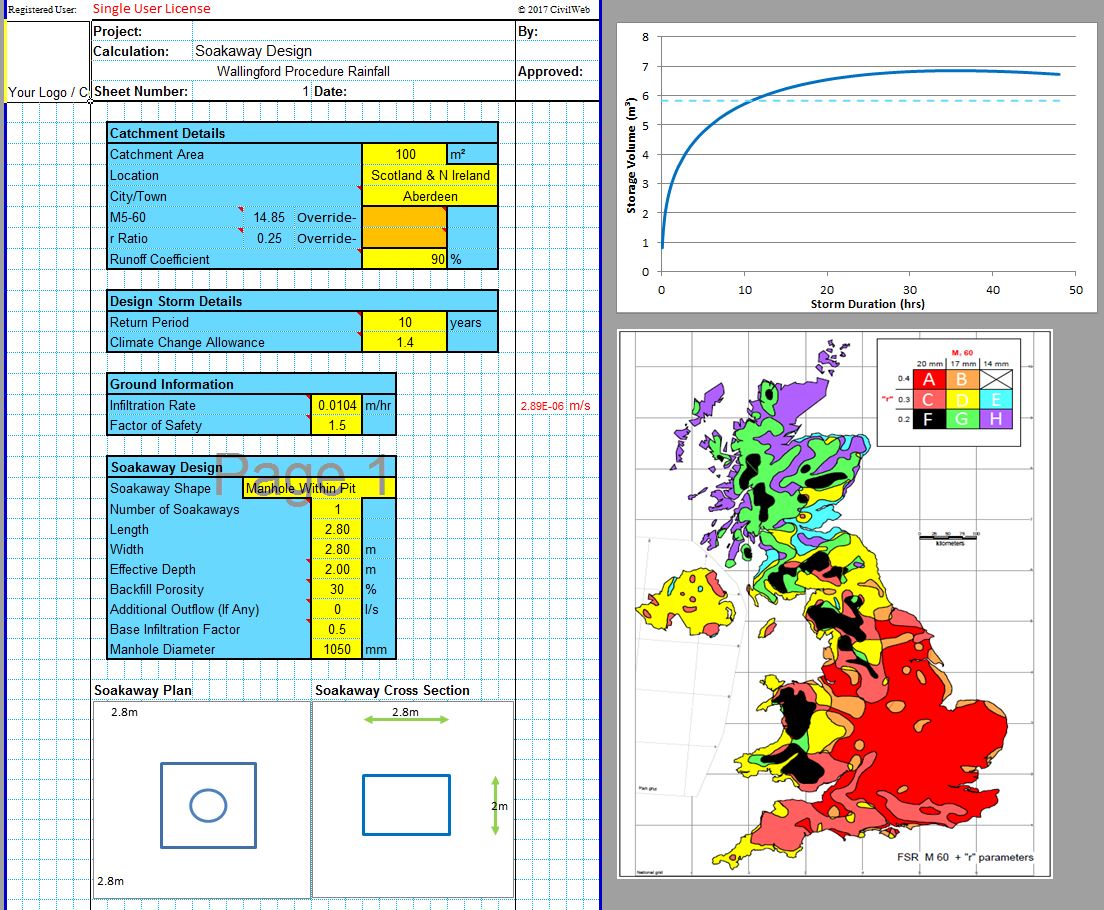
Soakaway Design Spreadsheet
This spreadsheet calculates the requirements for a soakaway system and assists the user to design a suitable system.
Learn More
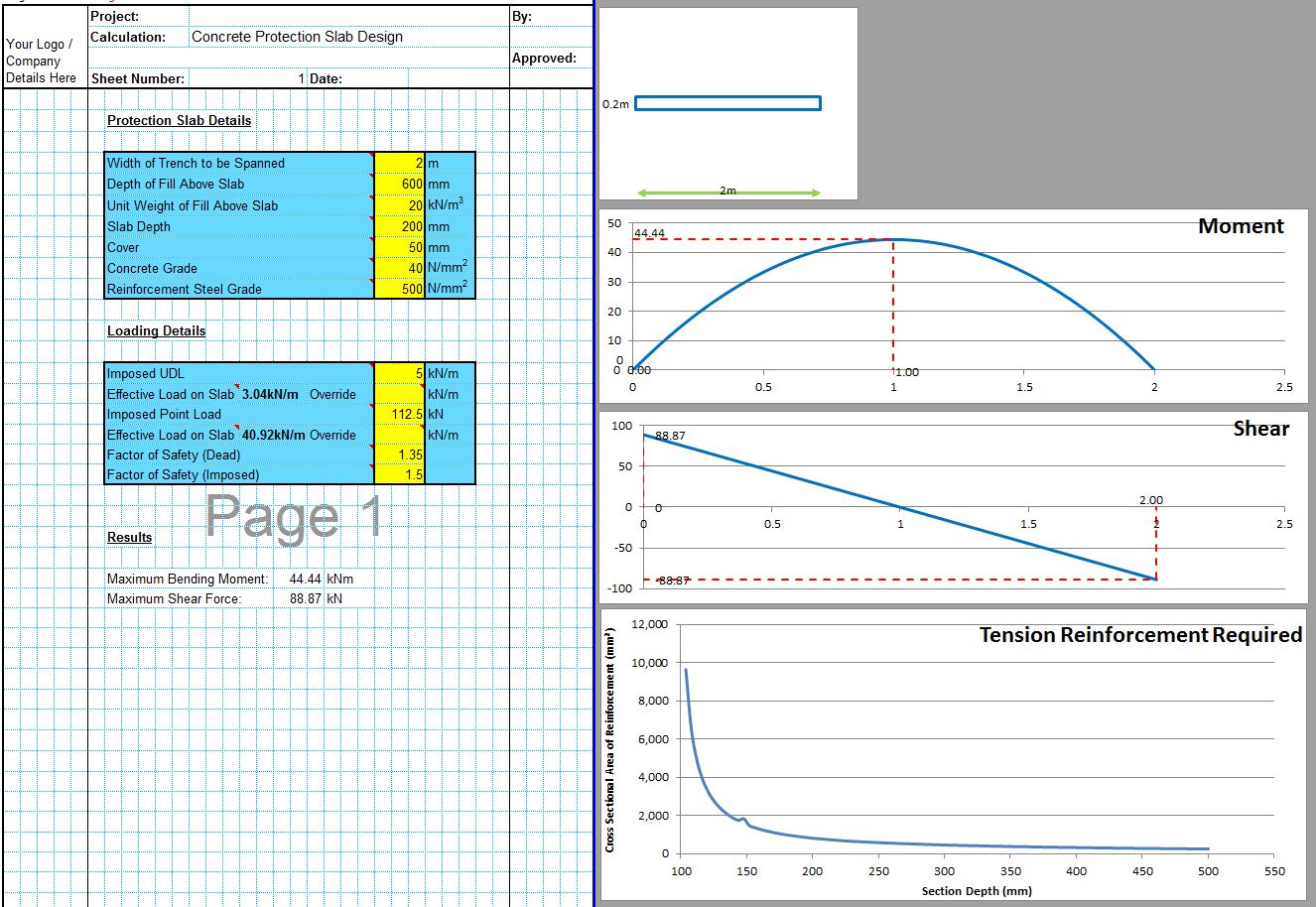
Concrete Protection Slab
This detailed design spreadsheet designs a protection slab commonly installed to protect shallow pipes.
Learn More
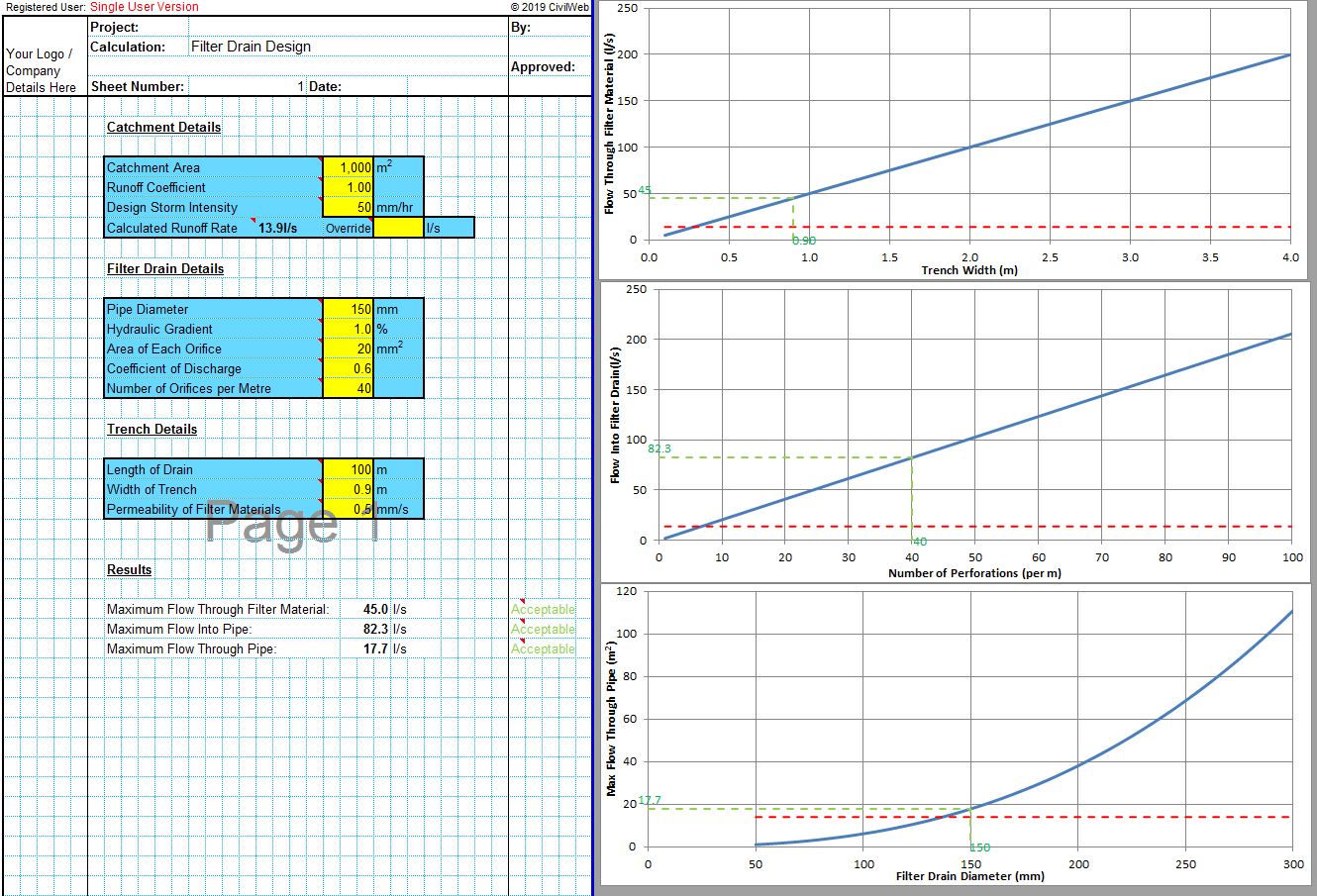
French Drain Design
This spreadsheet completes French Drain Design in accordance with the SUDS Manual.
Learn More
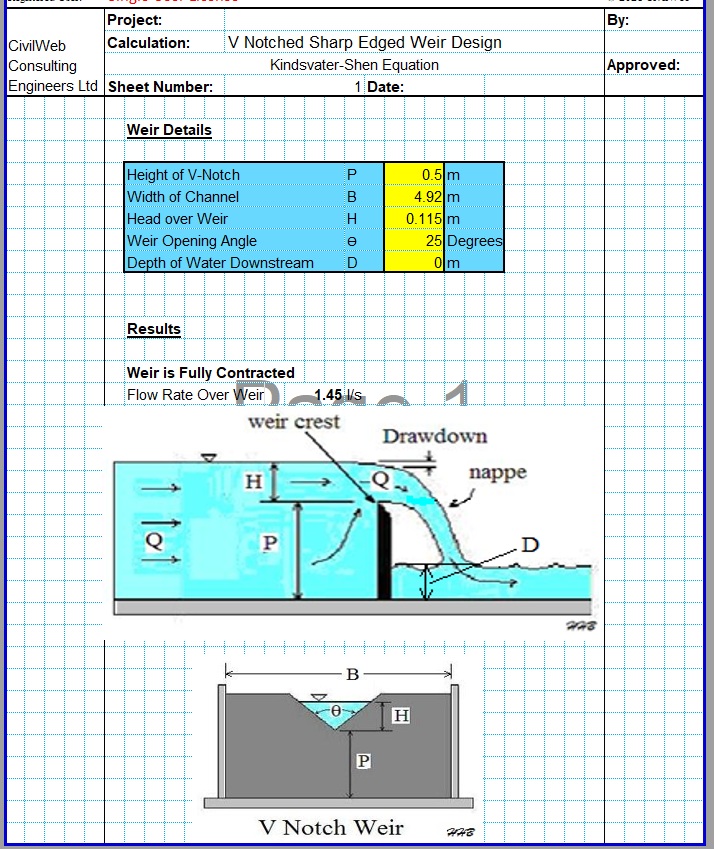
Sharp Crested Weir Flow Calculator Spreadsheets
This suite of 5 separate spreadsheets calculates the flow over sharp crested weirs of all shapes and sizes.
Learn More
Drainage Design Spreadsheet
This is the full suite of drainage design spreadsheets, available at a massive discount for only £49.99.