Permeable driveway design is one of the most effective ways for UK homeowners to reduce surface‑water runoff, prevent flooding, and meet SuDS and planning requirements. With the right design, a permeable driveway can be both attractive and high‑performing, offering long‑term drainage benefits without sacrificing durability.
This guide explains how permeable driveways work, the design principles behind them, and the best materials and construction methods for reliable performance.
The CivilWeb Permeable Pavement Design Spreadsheet can save hours of repetitive calculations while ensuring compliance with CIRIA C753 SUDS Manual, reliable accuracy and even optimization tools which can save money on materials during the construction phase.
🌧️ What Is a Permeable Driveway and Why Use One?
A permeable driveway is designed to let rainwater drain through the surface into a free‑draining sub‑base, where it can infiltrate into the soil or be conveyed via an underdrain. This reduces pressure on public drainage systems and helps prevent localised flooding.
Key benefits
- Reduced runoff and improved flood resilience
- Better water quality through filtration
- Groundwater recharge where soils allow
- Compliance with SuDS and planning rules
- Attractive, modern surface options
In the UK, permeable driveways are often the simplest way to avoid planning permission for front‑garden paving, provided the surface is genuinely permeable.
🧱 Permeable Driveway Material Options
| Material | How It Works | Best For | Considerations |
| Permeable concrete block paving (PCBP) | Water drains through widened joints | Domestic driveways | Needs regular sweeping to prevent joint clogging |
| Porous asphalt | Water passes through the asphalt matrix | Larger driveways, shared access | Requires specialist installation |
| Resin‑bound permeable systems | Water drains through resin‑bound aggregate | Decorative domestic driveways | Not suitable for heavy vehicles |
| Gravel over cellular grids | Water drains through gravel and open cells | Low‑cost domestic driveways | Requires good subgrade and edging |
📐 Key Design Parameters for Permeable Driveway Design
1. Site Assessment
Before designing the driveway, assess:
- Soil infiltration rate
- Groundwater level
- Contamination risk
- Available depth for sub‑base
- Expected traffic loading
Clay soils may require an underdrain or partial infiltration design.
2. Hydraulic Design
Hydraulic performance depends on:
- Design rainfall intensity
- Void ratio of the sub‑base (typically 30–40%)
- Required storage volume
- Infiltration rate of the subgrade
The sub‑base must be sized to store the design storm—often a 1:30 or 1:100 event depending on planning requirements.
3. Structural Design
Permeable driveways must support vehicle loads while maintaining void space for drainage.
Structural design considers:
- Sub‑base thickness (often 200–450 mm for cars)
- Aggregate type (open‑graded, angular stone)
- Geotextiles or geogrids for separation and reinforcement
- Freeze–thaw durability
The final design thickness is whichever is greater: hydraulic requirement or structural requirement.
⚠️ Common Risks and How to Avoid Them
Clogging
Sediment accumulation reduces infiltration.
Solution: regular sweeping, edge filters, and good construction controls.
Poor infiltration
Clay soils slow drain‑down.
Solution: add an underdrain or design for partial infiltration.
Settlement or rutting
Occurs when sub‑base is poorly compacted.
Solution: follow manufacturer compaction guidance and use correct aggregate.
Contamination
Avoid permeable systems where runoff contains oils or pollutants unless treatment stages are included.
🛠️ Step‑by‑Step Permeable Driveway Design Process
- Carry out infiltration testing (BRE 365 or equivalent).
- Determine design rainfall and required storage volume.
- Select driveway material based on traffic and aesthetics.
- Size the sub‑base for both structural and hydraulic needs.
- Specify geotextiles/geogrids for separation and stability.
- Include an underdrain if infiltration is limited.
- Prepare a maintenance plan (sweeping, sediment control).
- Document SuDS compliance for planning approval.
The CivilWeb Permeable Pavement Design Spreadsheet can be used to complete all the required calculations in accordance with CIRIA C753 SUDS Manual.
🏁 Final Thoughts
Permeable driveway design is a practical, attractive, and sustainable drainage solution for UK homes. When designed correctly, it provides long‑term infiltration, structural stability, and full SuDS compliance. The key is balancing hydraulic storage, structural strength, and maintenance planning from the outset.
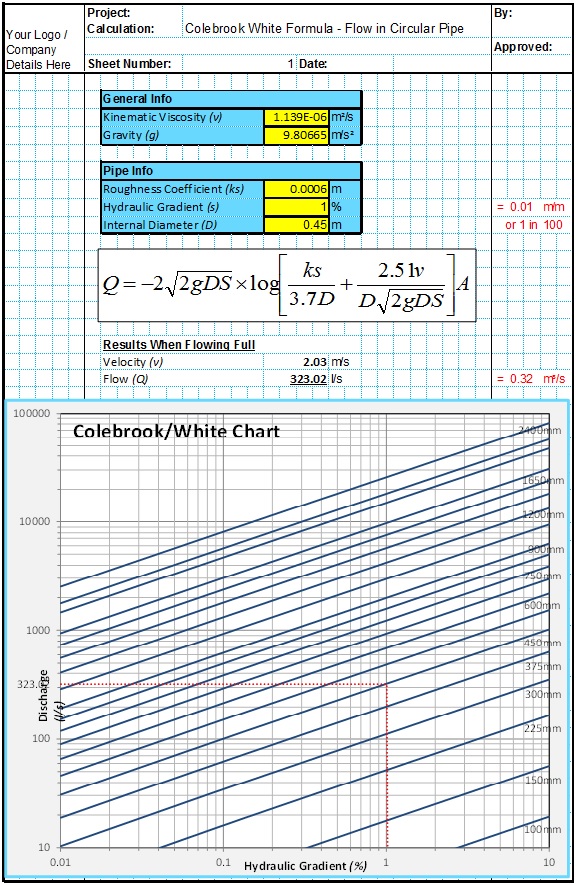
PIPE FLOW CALCULATOR
This spreadsheet uses the Colebrook-White and Manning Equations to calculate the flow capacity and velocity in pipes acting under gravity.
Find Out More
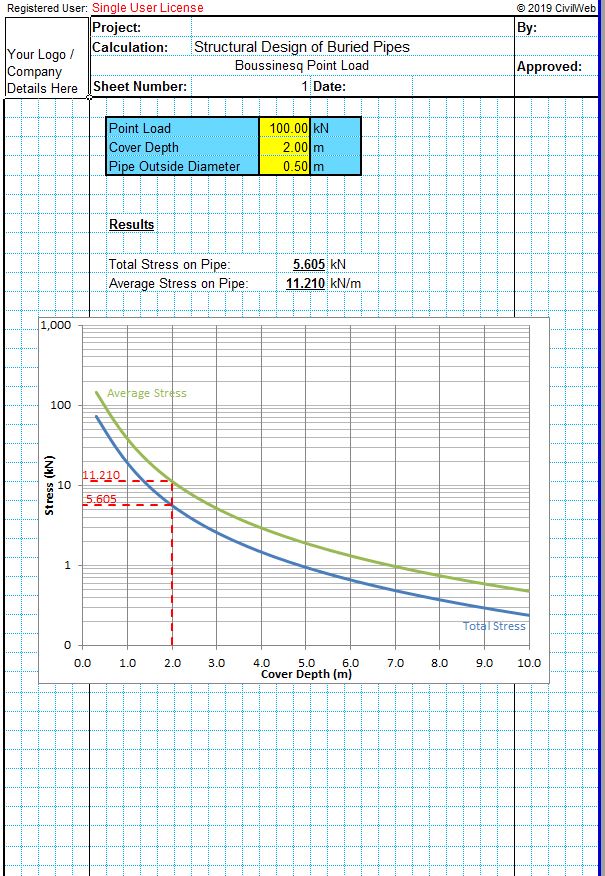
Buried Pipe Design Spreadsheet
This spreadsheet can be used to design concrete, steel, plastic and other buried pipes in accordance with BS EN 1295-1.
Learn More
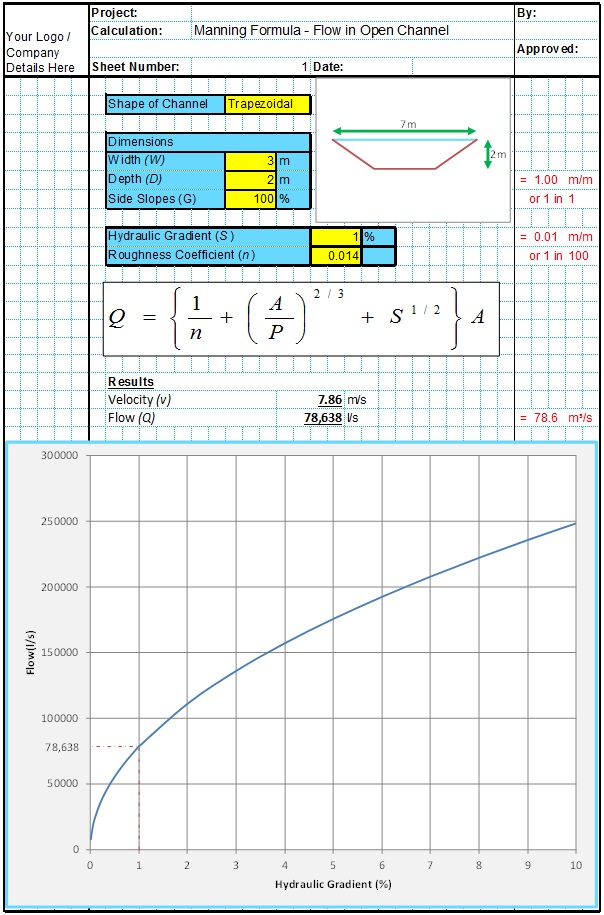
Manning Open Channel Design Spreadsheet
This spreadsheet uses the Manning formula to calculate the flow conditions in an open channel acting under gravity only.
Learn More
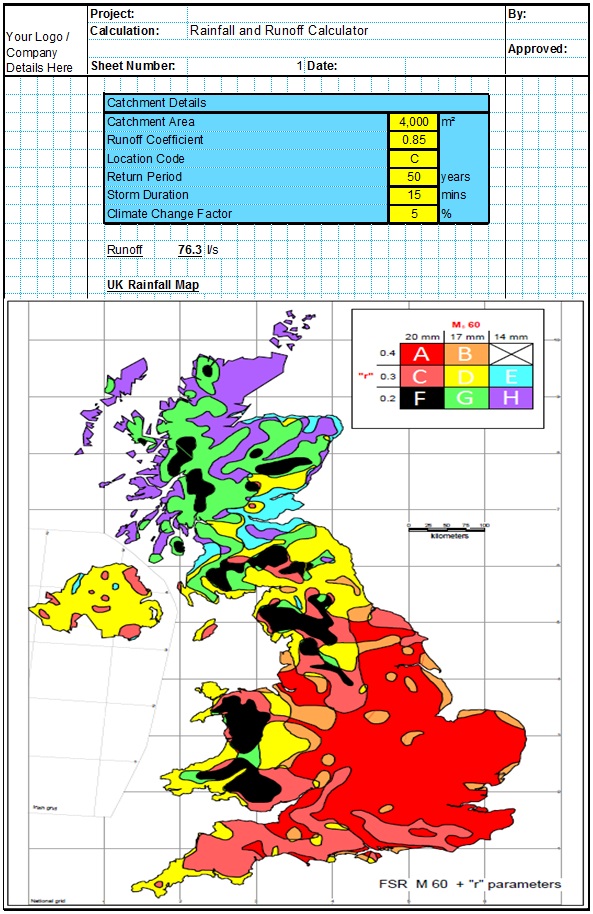
Runoff Calculator Spreadsheet
This spreadsheet calculates the design runoff flow for a site in accordance with the Flood Estimation Handbook.
Learn More
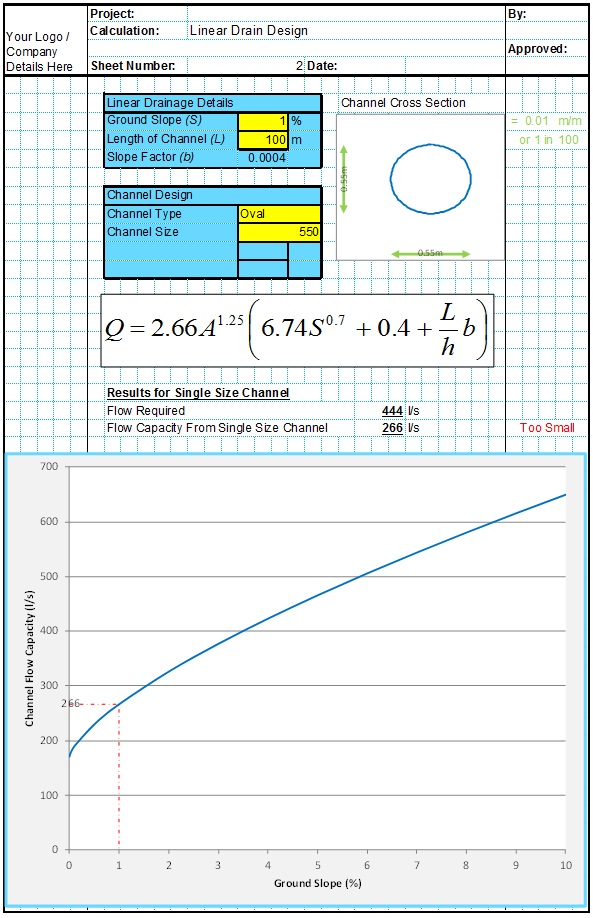
Linear Drainage Design Spreadsheet
This spreadsheet calculates the maximum flow from a specified linear drainage channel and checks whether the channel is sufficient for the specified site and storm conditions.
Learn More
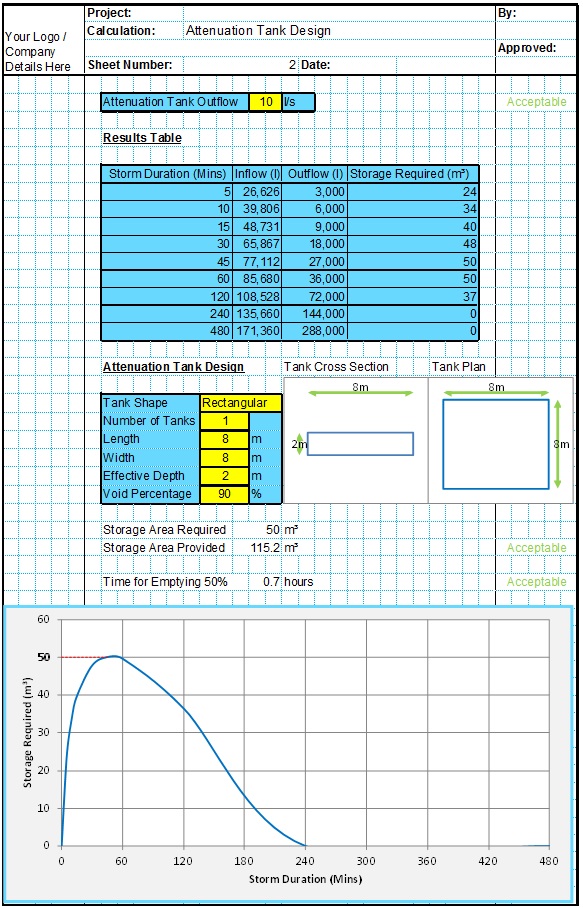
Attenuation Design Spreadsheet
This spreadsheet calculates the requirements for a attenuation system and assists the user to design a suitable system.
Learn More
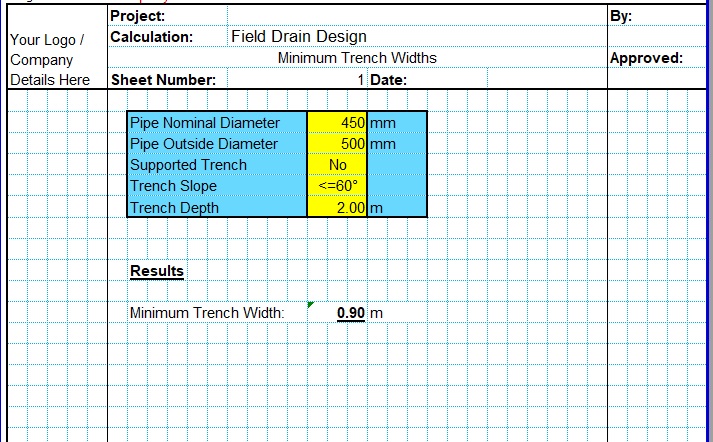
Field Drain Design Spreadsheet
This spreadsheet can be used to design field drains, typically subsurface drainage systems used to drain fields and open areas.
Learn More
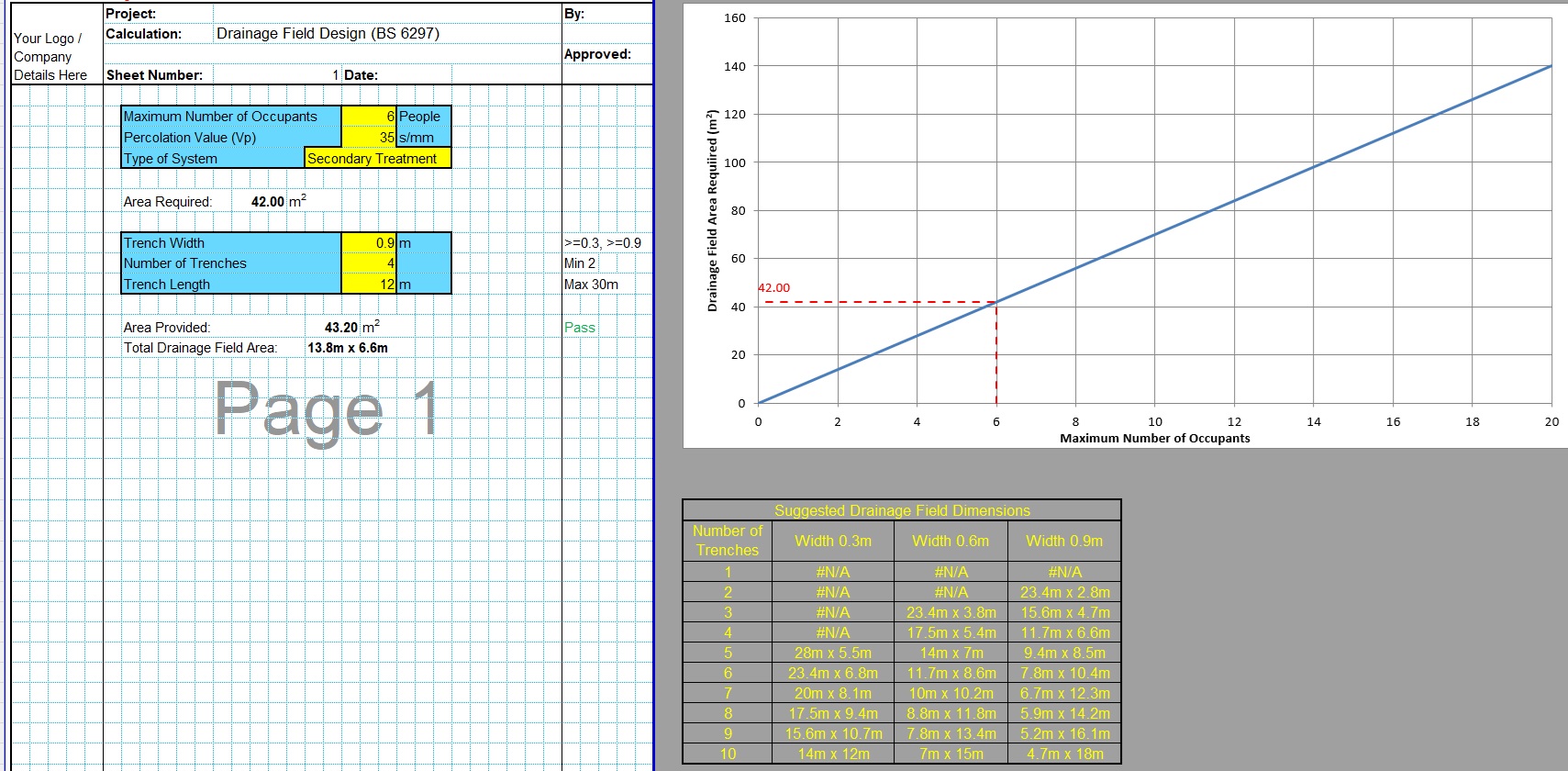
Drainage Field Design Spreadsheet
This spreadsheet can be used to design septic infiltration systems known as drainage fields, leach fields or septic drain fields.
Learn More
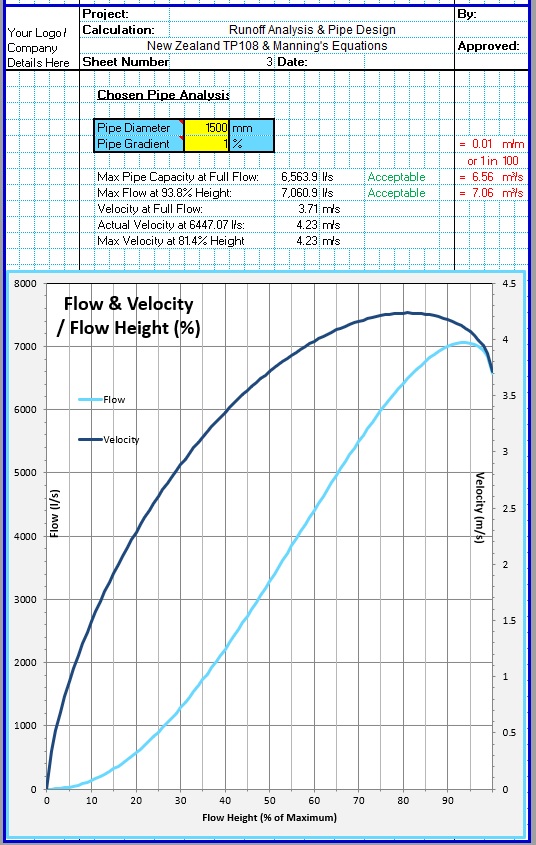
TP108 Spreadsheet
This spreadsheet calculates the rainfall for New Zealand catchments in accordance with TP108.
Learn More
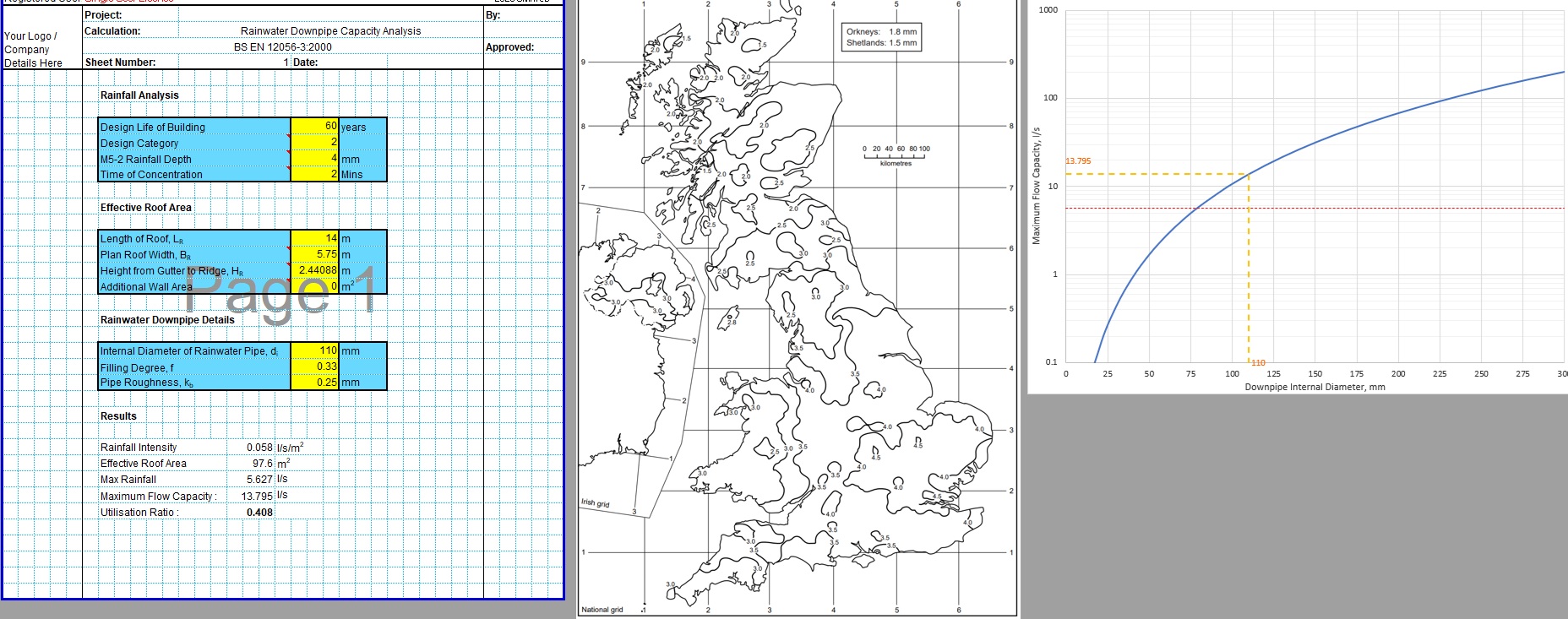
Roof Downpipe Calculator Spreadsheet
This spreadsheet calculates the size of roof drainage downpipes depending on the roof catchment and rainfall requirements.
Learn More
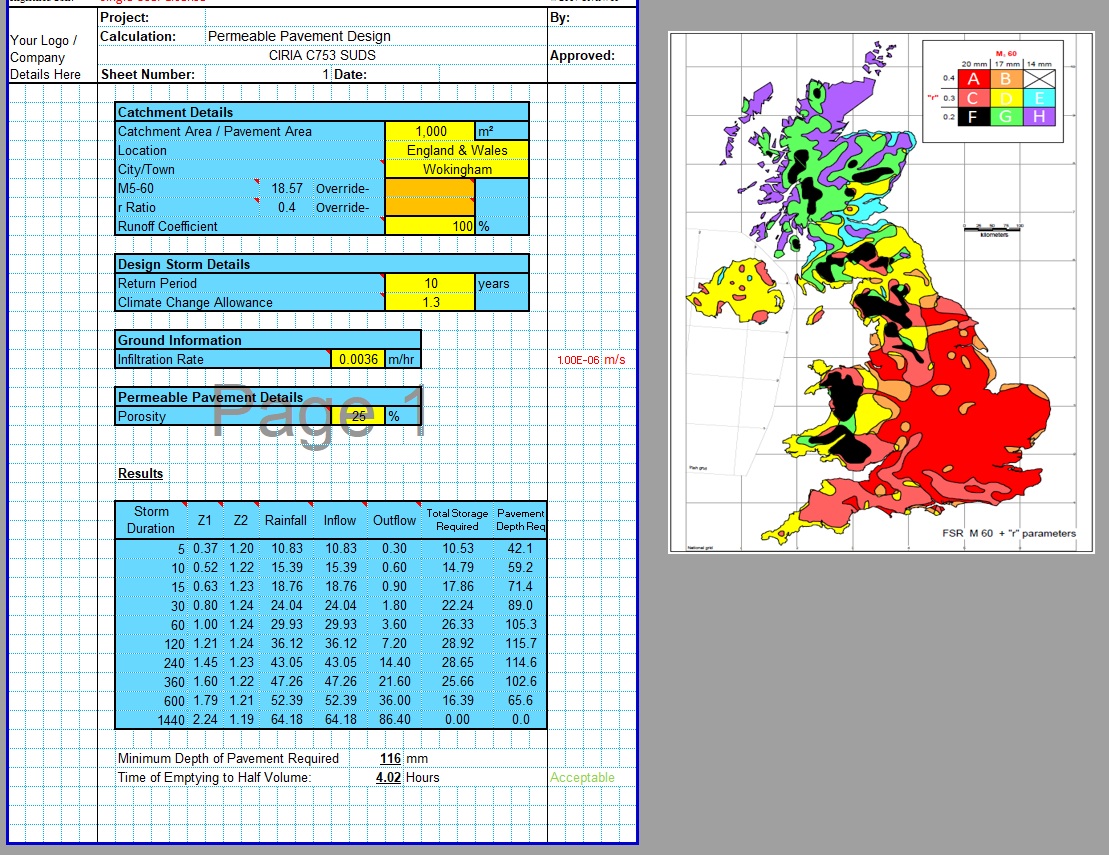
Permeable Pavement Design Spreadsheet
This spreadsheet is designed to determine the size and characteristics of permeable pavements.
Learn More
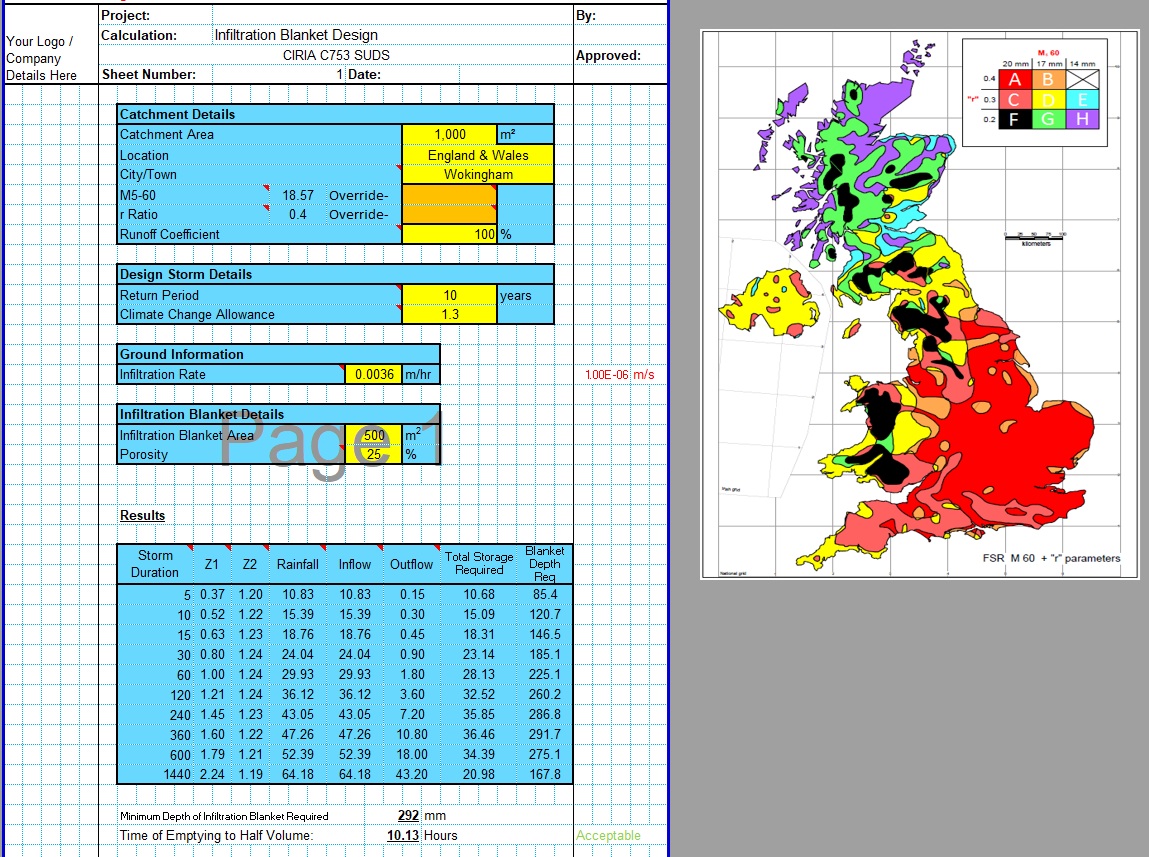
Infiltration Blanket Design Spreadsheet
This spreadsheet can be used to design thin depth infiltration systems, typically called infiltration blanket systems.
Learn More
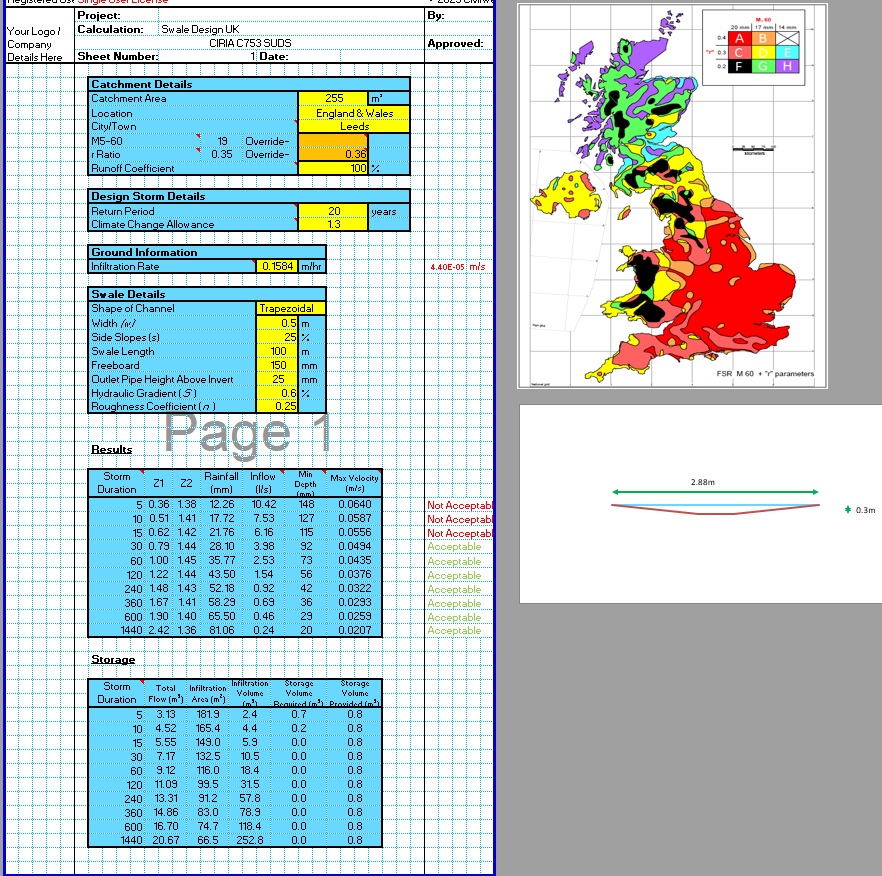
Swale Design Spreadsheet
This spreadsheet can be used to design swales. These linear grassed channels can be used both to convey, infiltrate and filter surface drainage runoff.
Learn More
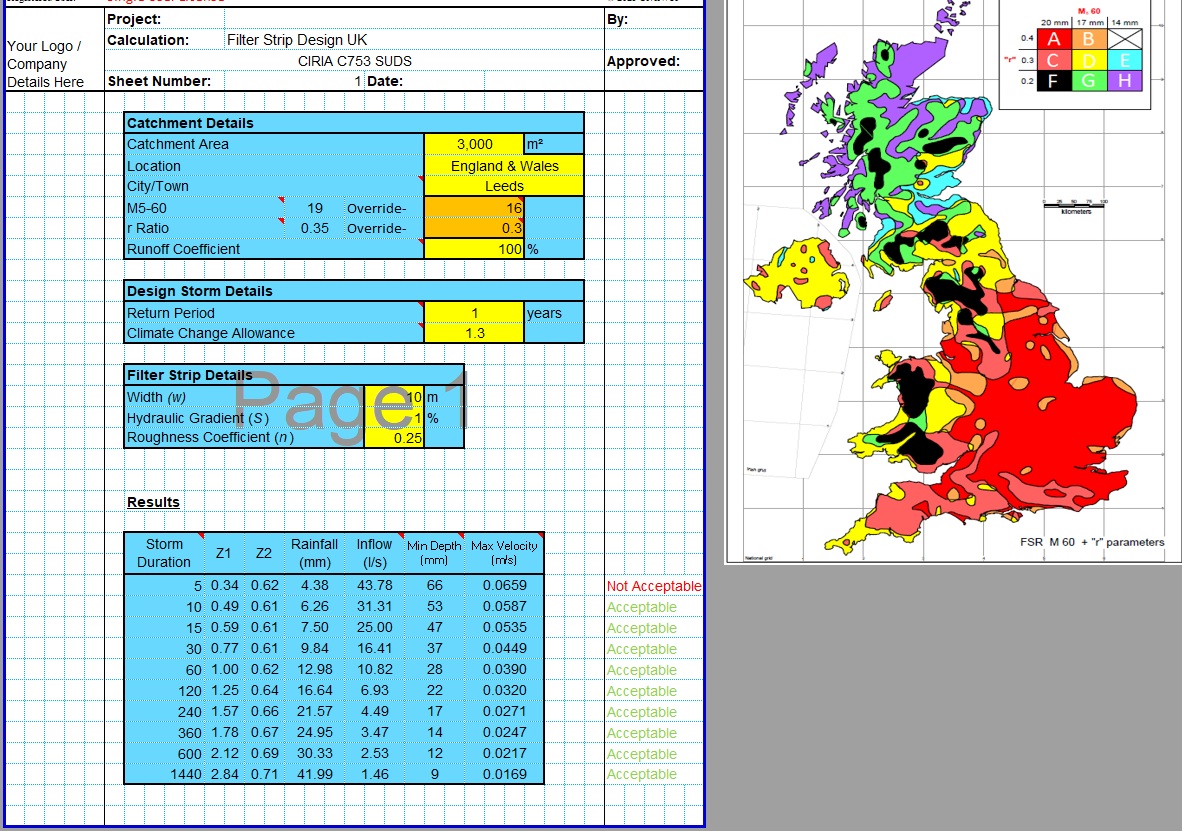
Filter Strip Design Spreadsheet
This spreadsheet is designed to analyse surface water filter strips and to determine the max flow depth and max flow velocity and determine whether they are in accordance with relevant standards.
Learn More

Hydraulic Gradient Analysis Spreadsheet
This spreadsheet analyses the hydraulic and energy grade lines for drainage systems with up to 10 drainage runs.
Learn More
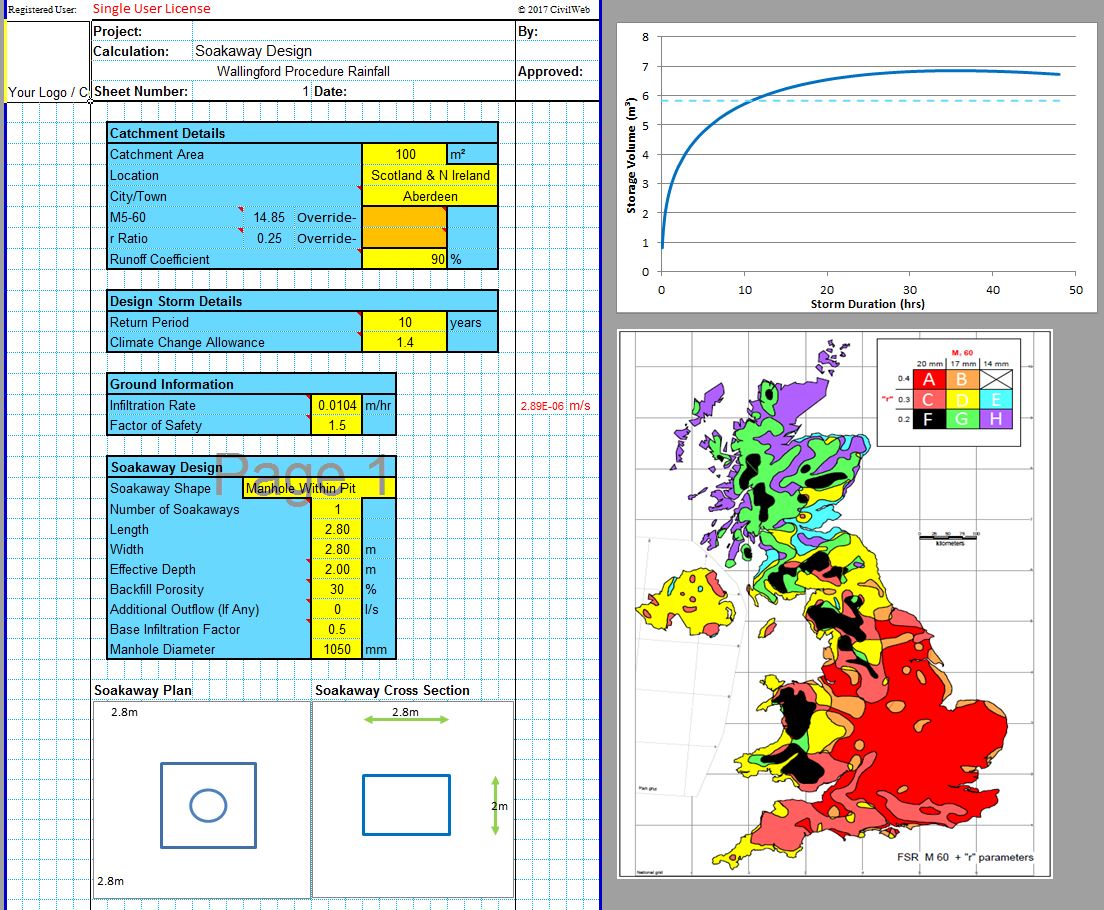
Soakaway Design Spreadsheet
This spreadsheet calculates the requirements for a soakaway system and assists the user to design a suitable system.
Learn More
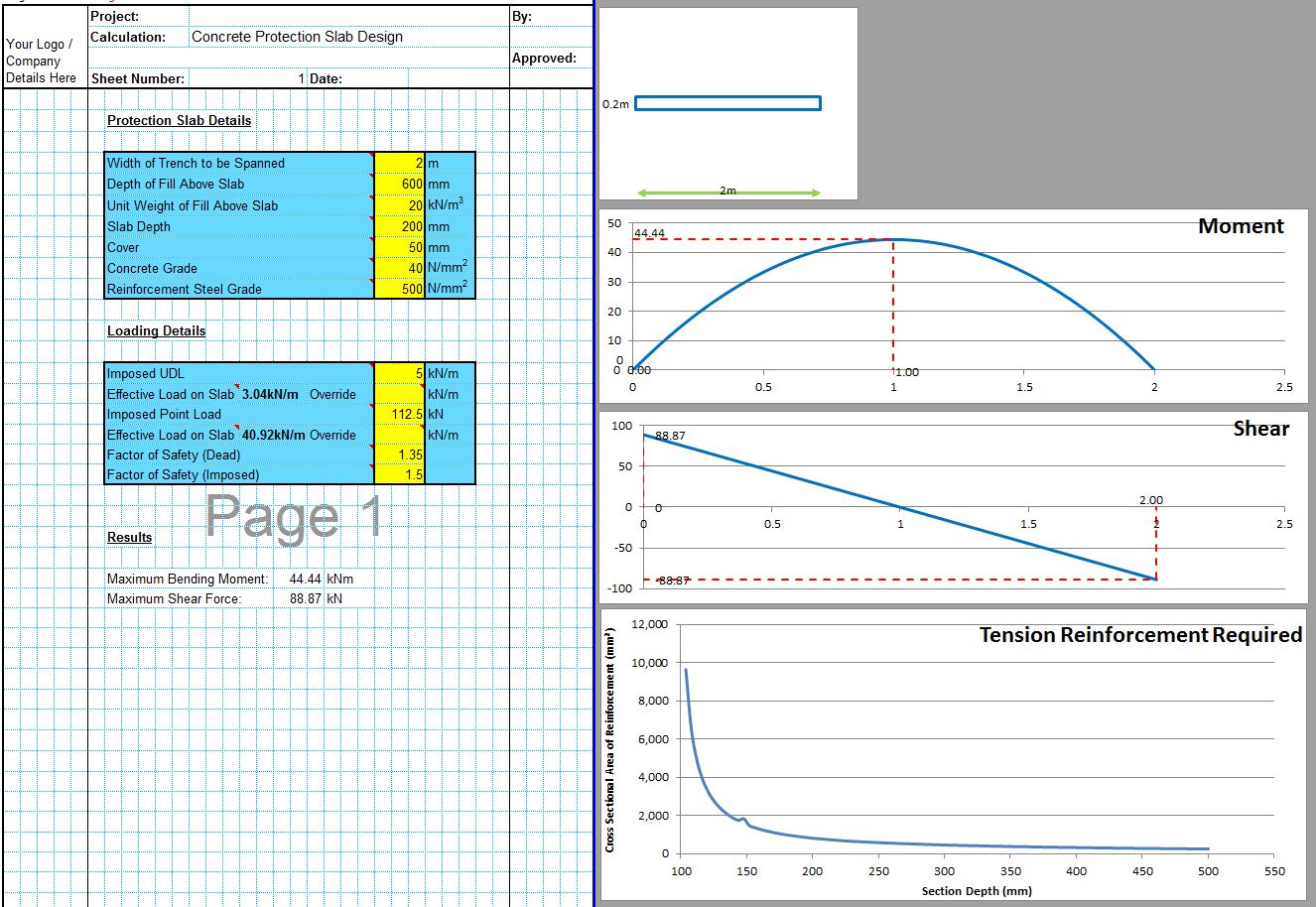
Concrete Protection Slab
This detailed design spreadsheet designs a protection slab commonly installed to protect shallow pipes.
Learn More
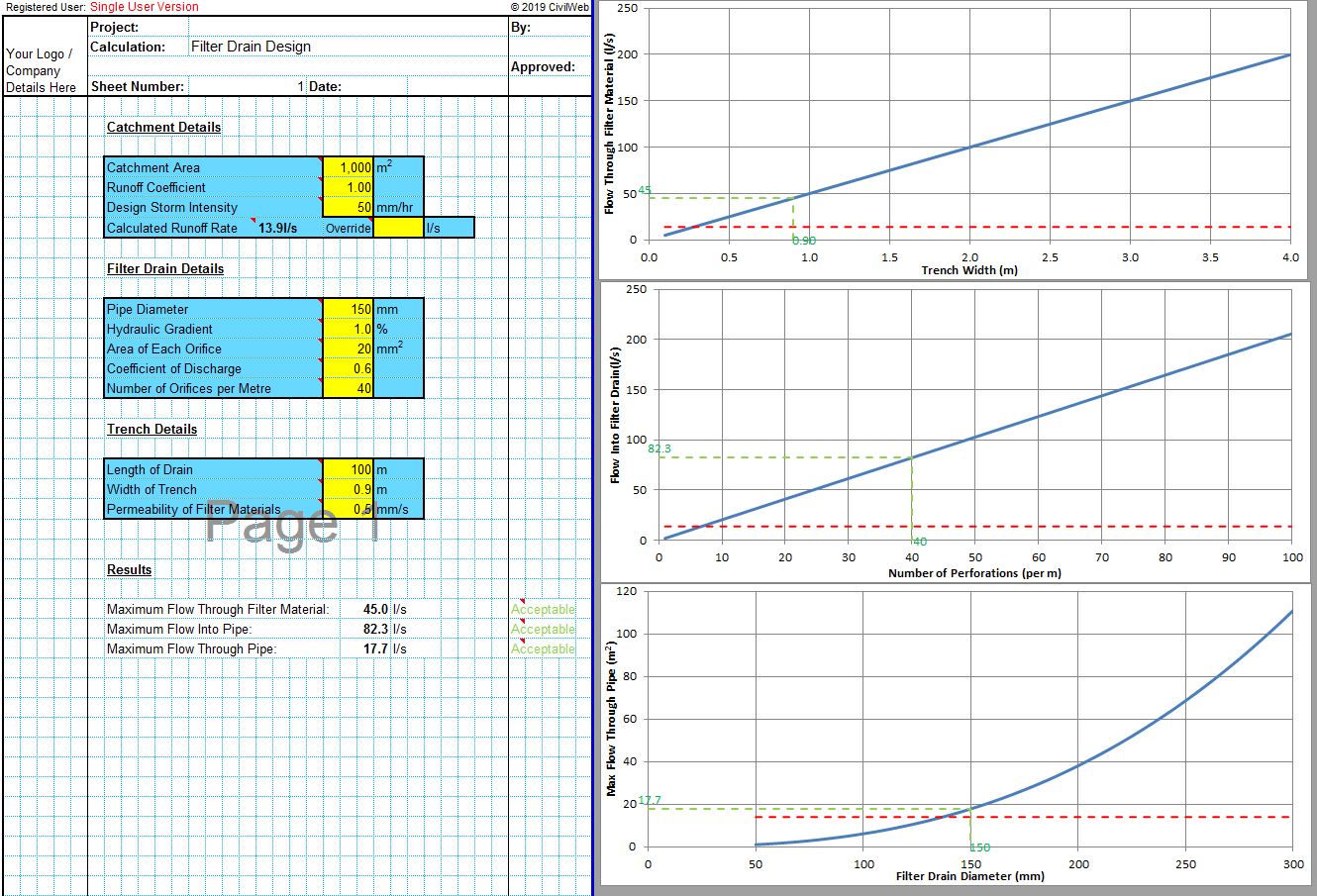
French Drain Design
This spreadsheet completes French Drain Design in accordance with the SUDS Manual.
Learn More
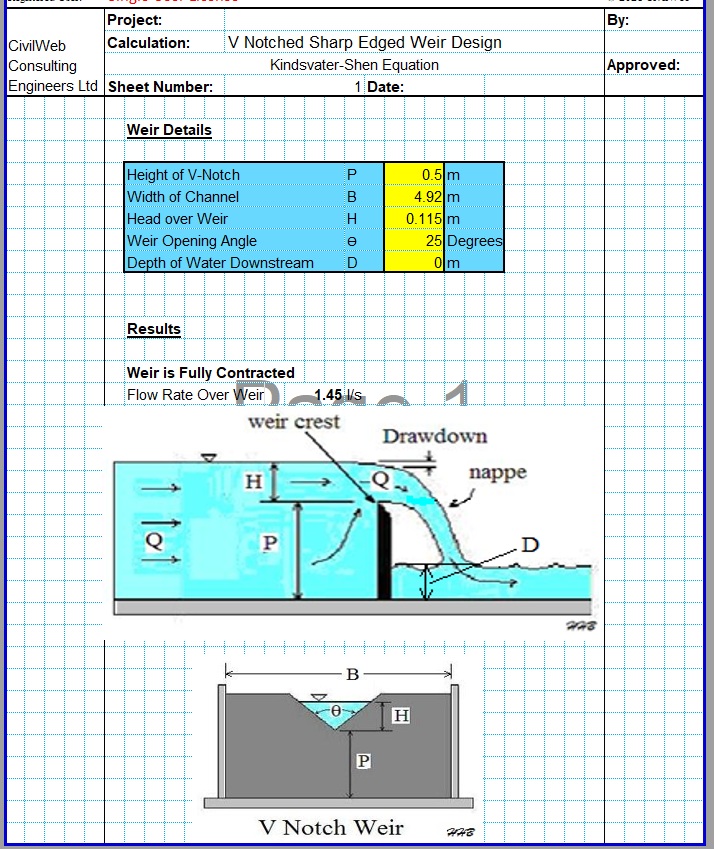
Sharp Crested Weir Flow Calculator Spreadsheets
This suite of 5 separate spreadsheets calculates the flow over sharp crested weirs of all shapes and sizes.
Learn More
Drainage Design Spreadsheet
This is the full suite of drainage design spreadsheets, available at a massive discount for only £49.99.