Roof downpipe design is an oft neglected aspect of surface drainage design of new and existing buildings. Vertical pipes have a large variation in practical flow capacity and using standard pipe diameters can lead to oversizing of more critically under sizing of pipes, leading to flooding risks during high rainfall events.
The CivilWeb Roof Downpipe Calculator Spreadsheet can save hours of repetitive calculations while ensuring compliance with BS EN 12056-3, reliable accuracy and even optimization tools which can save money on materials during the construction phase.
The CivilWeb Roof Downpipe Calculator Spreadsheet can be purchased lower down this page for only £19.99. Or why not buy our best value bundle? Our Full Drainage Design Spreadsheet Suite can be purchased at the bottom of this page for only £49.99. This suite includes all of our drainage design spreadsheets, more than 20, and represents an incredible saving of more than 85%.
Roof Downpipe Design: Purpose, Methods, and Spreadsheet Tools
A roof downpipe is one of the simplest parts of a drainage system, but the design behind it is more technical than most people realise. Getting it right affects everything from how well a roof drains during a storm to how long the building envelope lasts. The sections below walk through what a downpipe is, how designers size and configure them, and why spreadsheets have become a practical tool for doing the calculations accurately.
What is a Roof Downpipe?
A roof downpipe is the vertical pipe that carries rainwater from the gutter system down to ground level, where it discharges into a drain, soakaway, rainwater tank, or stormwater system. Its job is to move water quickly and safely away from the building so that gutters don’t overflow and walls or foundations aren’t exposed to excess moisture.
They are usually provided in standard sizes by manufacturers and are typically circular in cross section though they can be square or rectangular.
Downpipes are typically made from uPVC, aluminium, steel, or cast iron, and their performance depends on several factors: the roof area they serve, the intensity of local rainfall, the gutter capacity, and the height and layout of the building. A well‑designed downpipe ensures that even during heavy storms, water flows freely without backing up into the gutter.
Key functions include:
- Protecting walls and foundations from water damage
- Preventing gutter overflow during peak rainfall
- Directing water to controlled discharge points
- Supporting long‑term building durability
Common Roof Downpipe Design Methods
Downpipe design involves selecting the right pipe size, number of downpipes, and layout to handle expected rainfall. Several methods are commonly used:
**Rainfall Intensity Method** — Designers calculate peak flow using local rainfall intensity data (e.g., mm/hr) and the effective roof catchment area. This determines the minimum downpipe diameter needed to carry the flow without surcharge.
**Gutter‑to‑Downpipe Ratio Method** — Some standards specify maximum lengths of gutter that can feed a single downpipe. This aims to ensure water doesn’t accumulate faster than the downpipe can remove it, though can be too rigid in most cases.
**Hydraulic Capacity Tables** — Manufacturers often provide flow‑rate tables for different downpipe diameters and materials. Designers match expected flow to the appropriate pipe size.
**Multiple Downpipe Distribution** — Large roofs often require several downpipes spaced evenly to reduce the load on any single point and minimise gutter sagging or overflow.
**Siphonic vs. Gravity Systems** — While most homes use gravity downpipes, commercial buildings sometimes use siphonic systems that allow smaller pipes and higher flow rates. These require more detailed hydraulic modelling.
Each method must consider roof slope, gutter shape, pipe friction losses, bends, and discharge conditions to ensure the system performs reliably during peak storms.
How Does the CivilWeb Roof Downpipe Design Spreadsheet Work?
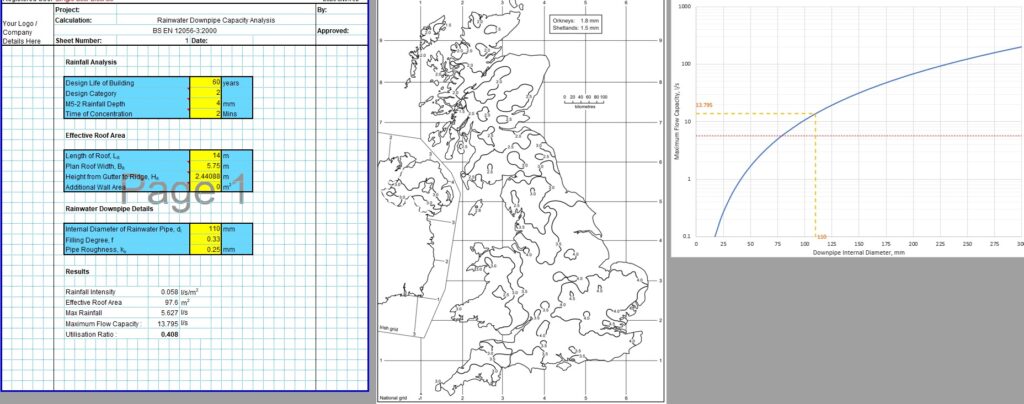
The spreadsheet uses the methodology provided in BS EN 12056-3 to accurately calculate the expected rainfall rate and hydraulic capacity of gravity downpipes.
- Firstly the rainfall rate is calculated. This uses the design life of the building, roof type and rainfall depth. The rainfall depth is based on the location of the building and can be taken from a rainfall map of the UK provided in the spreadsheet.
- Next the spreadsheet calculates the effective roof area. This is taken from the user inputs of roof length, width, height and any additional wall areas to be drained.
- Finally the user inputs the downpipe details including the pipe diameter, pipe roughness and filling degree for the spreadsheet to calculate the flow capacity.
The spreadsheet then simply compares the required flow with the flow capacity of the downpipe, and presents the user with a simple utilization ratio. In addition, the spreadsheet includes a unique optimization tool in the form of a graph showing the required flow and the flow capacity of any downpipe diameter. This allows the user to determine the optimal downpipe diameter at a glance, removing the need for repeated or iterative calculations.
Why Use a Roof Downpipe Design Spreadsheet?
A design spreadsheet helps streamline the calculations involved in sizing downpipes and checking gutter performance. Because rainfall intensity, roof geometry, and pipe hydraulics all interact, a spreadsheet reduces the risk of errors and speeds up the design process.
Advantages include:
- **Automated flow calculations** based on roof area and rainfall intensity
- **Quick comparison of pipe sizes** to find the most efficient option
- **Built‑in checks** for gutter capacity, downpipe spacing, and discharge requirements
- **Scenario testing** for different rainfall events or building layouts
- **Clear documentation** that supports compliance with building codes and standards
For architects, builders, and drainage designers, a spreadsheet becomes a practical tool that improves accuracy and ensures the roof drainage system performs well throughout the building’s life.
Get Started Today
Save hours of repetitive calculation time. Whether you’re working on a major project or a small renovation, this tool will give you clarity, accuracy, and confidence.
Buy the CivilWeb Roof Downpipe Calculator Spreadsheet now for only £19.99.
Or alternatively big savings are available with our Downpipe Calculator and Rainfall Analysis design bundle. Get both spreadsheets for only £29.99.
Or why not bundle with the CivilWeb UK Rainfall Analysis spreadsheet for only £10 extra?
Or save £50+ by buying our full Drainage Design Suite including all our drainage design spreadsheets.
Free Trial Version
Why not try the fully functional free trial version of this spreadsheet?
PIPE FLOW CALCULATOR
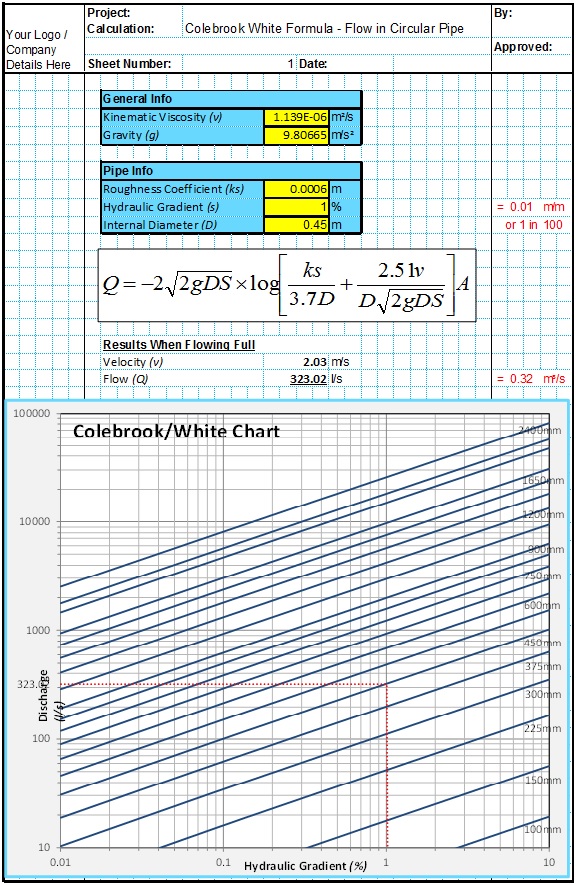
This spreadsheet uses the Colebrook-White and Manning Equations to calculate the flow capacity and velocity in pipes acting under gravity.
Find Out More
Buried Pipe Design Spreadsheet
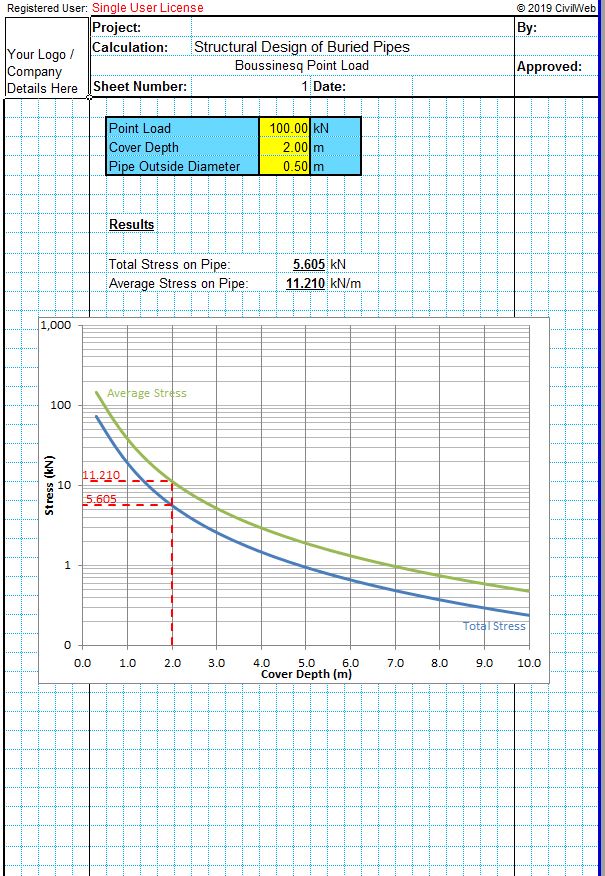
This spreadsheet can be used to design concrete, steel, plastic and other buried pipes in accordance with BS EN 1295-1.
Learn More
Manning Open Channel Design Spreadsheet
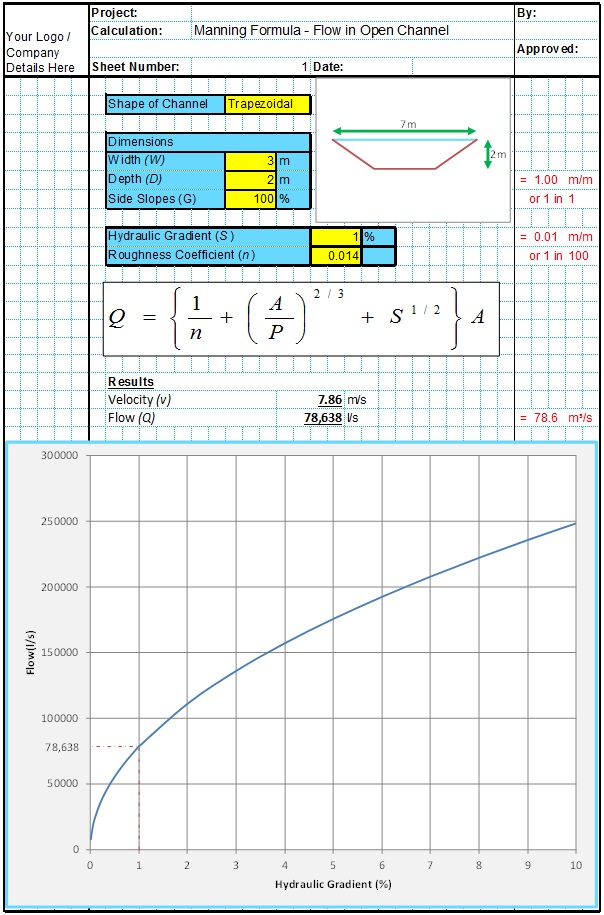
This spreadsheet uses the Manning formula to calculate the flow conditions in an open channel acting under gravity only.
Learn More
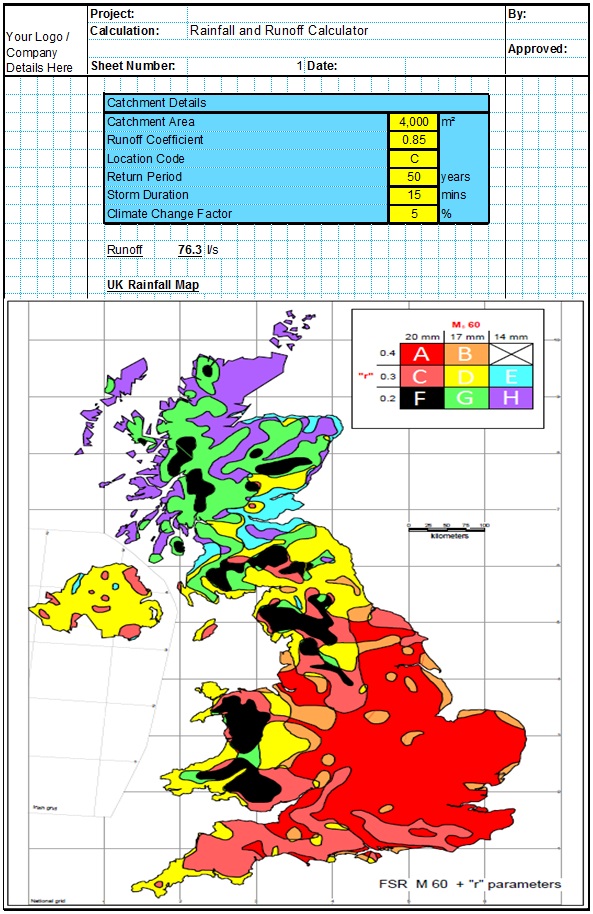
Runoff Calculator Spreadsheet
This spreadsheet calculates the design runoff flow for a site in accordance with the Flood Estimation Handbook.
Learn More
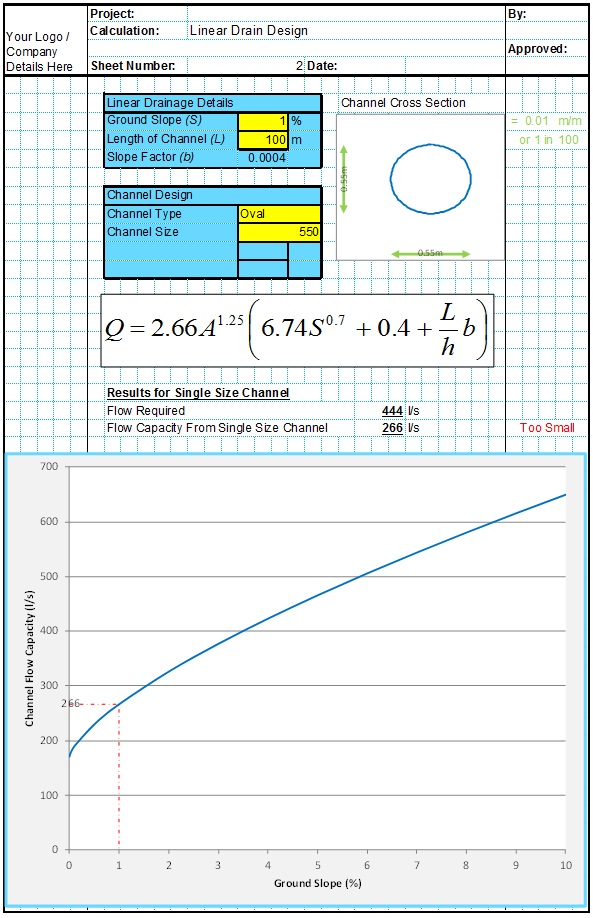
Linear Drainage Design Spreadsheet
This spreadsheet calculates the maximum flow from a specified linear drainage channel and checks whether the channel is sufficient for the specified site and storm conditions.
Learn More
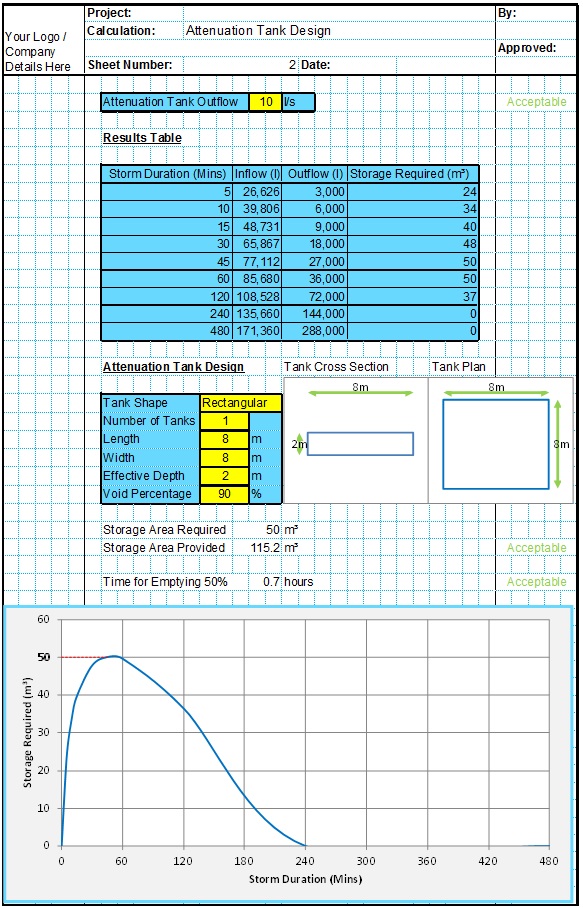
Attenuation Design Spreadsheet
This spreadsheet calculates the requirements for a attenuation system and assists the user to design a suitable system.
Learn More
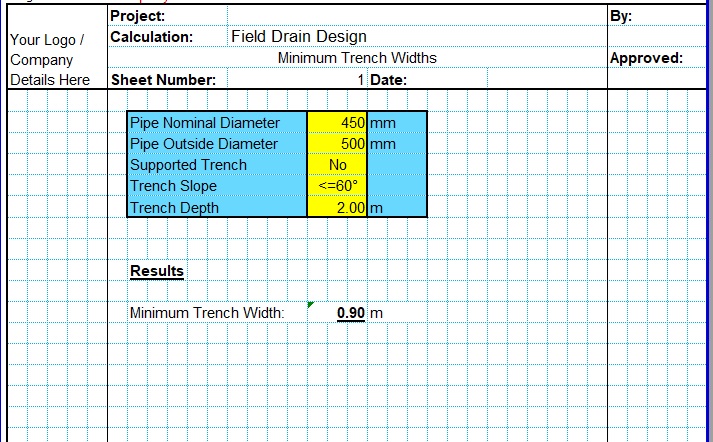
Field Drain Design Spreadsheet
This spreadsheet can be used to design field drains, typically subsurface drainage systems used to drain fields and open areas.
Learn More
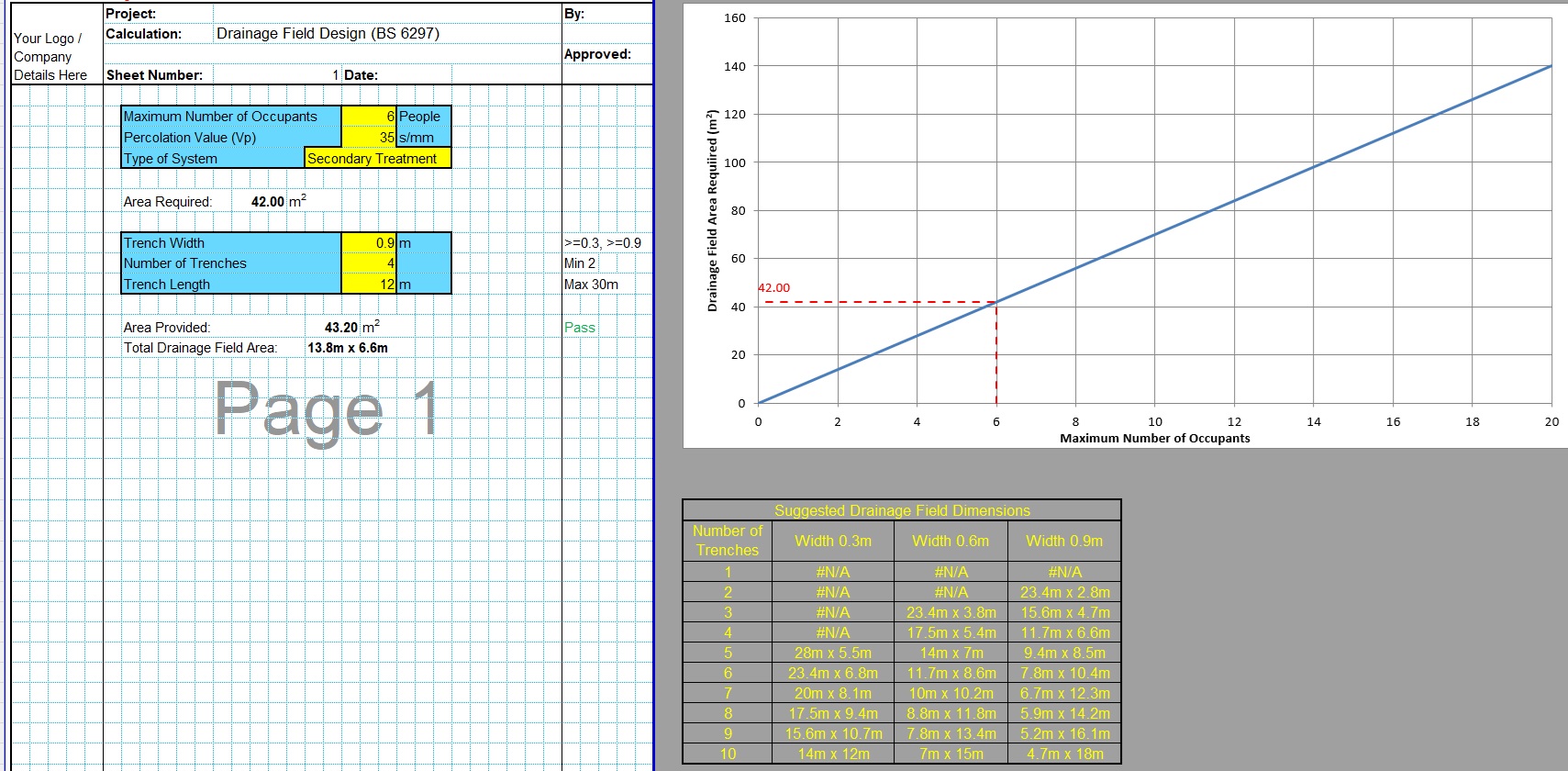
Drainage Field Design Spreadsheet
This spreadsheet can be used to design septic infiltration systems known as drainage fields, leach fields or septic drain fields.
Learn More
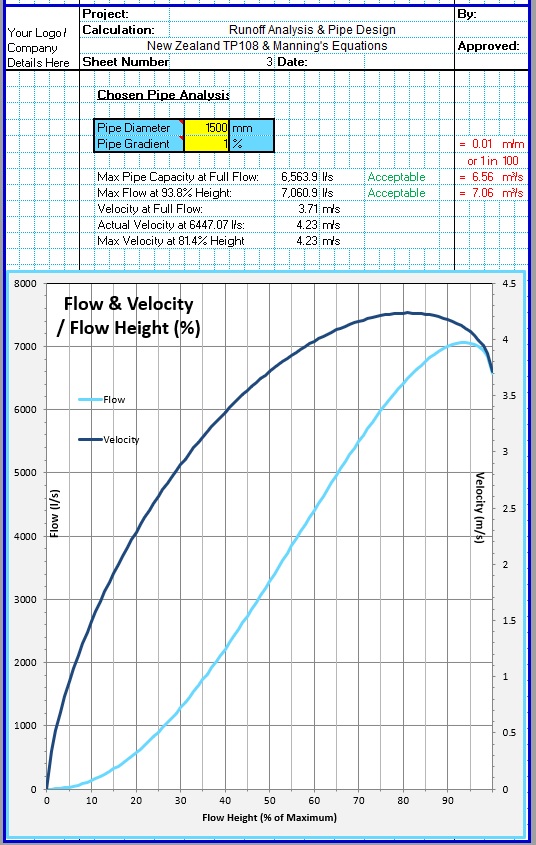
TP108 Spreadsheet
This spreadsheet calculates the rainfall for New Zealand catchments in accordance with TP108.
Learn More
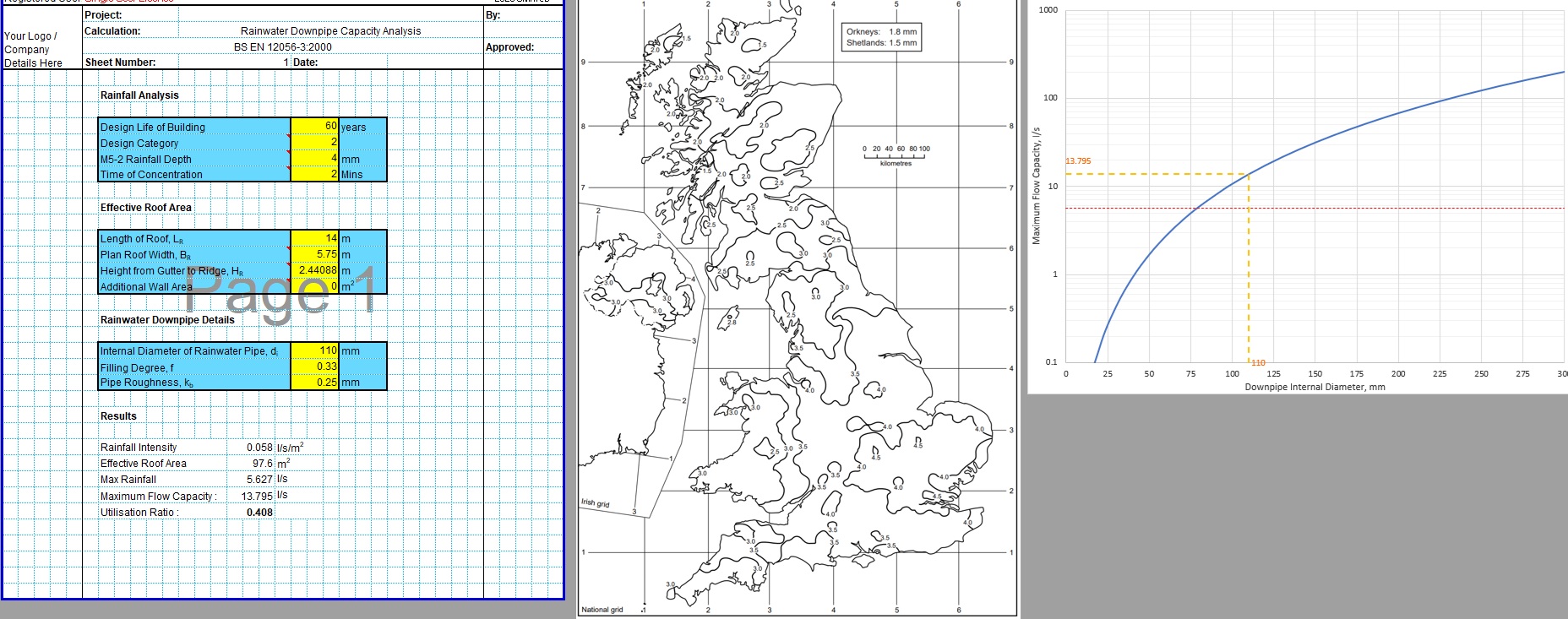
Roof Downpipe Calculator Spreadsheet
This spreadsheet calculates the size of roof drainage downpipes depending on the roof catchment and rainfall requirements.
Learn More
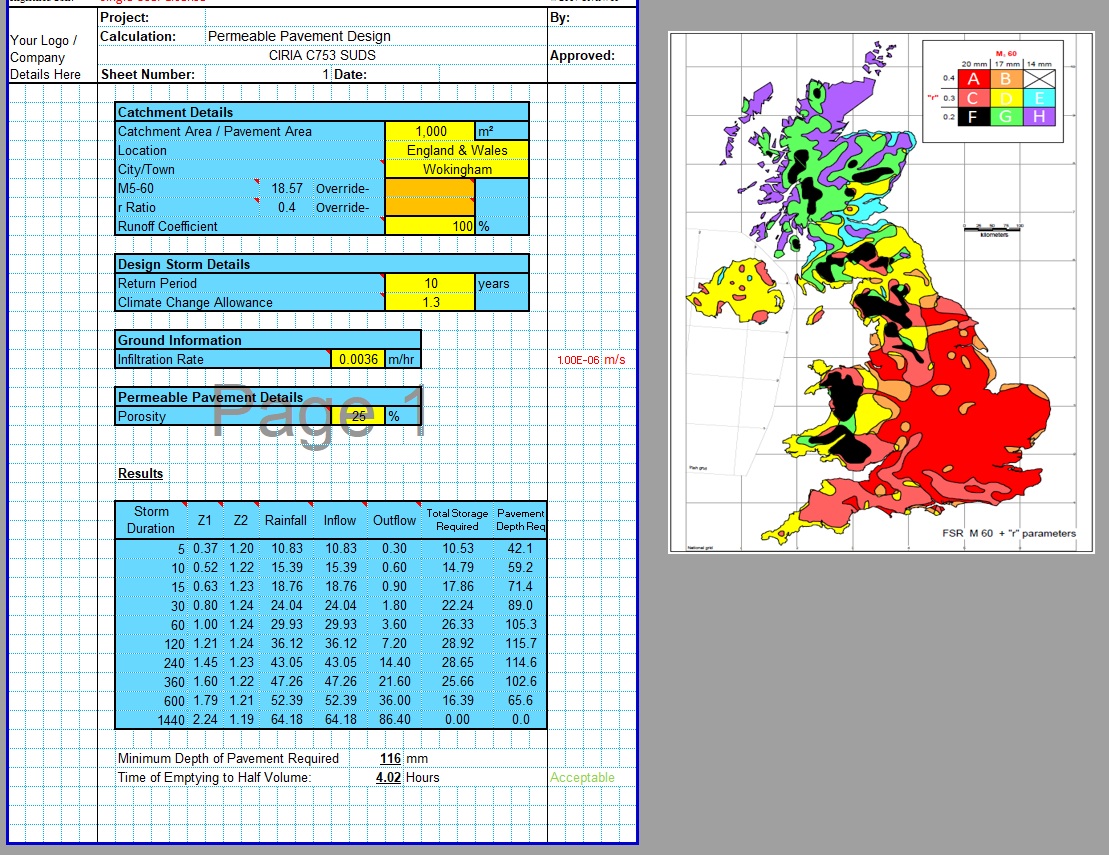
Permeable Pavement Design Spreadsheet
This spreadsheet is designed to determine the size and characteristics of permeable pavements.
Learn More
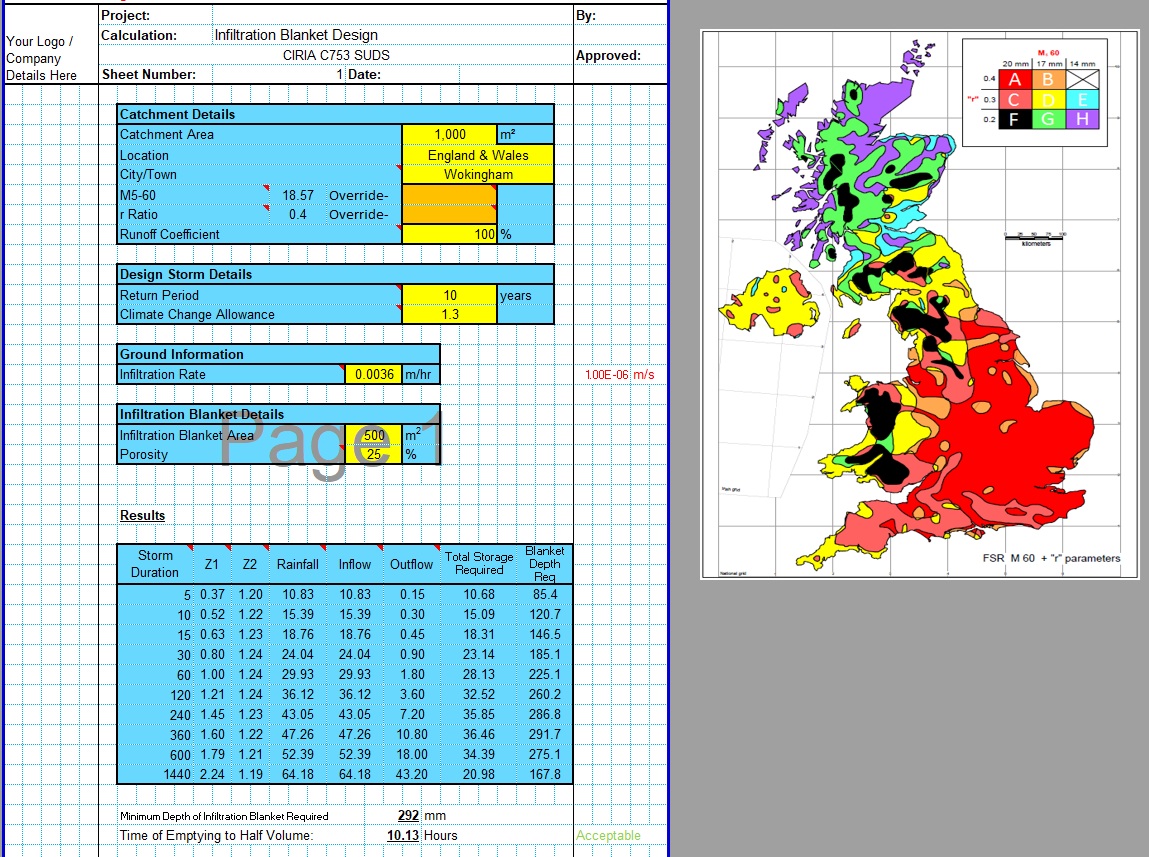
Infiltration Blanket Design Spreadsheet
This spreadsheet can be used to design thin depth infiltration systems, typically called infiltration blanket systems.
Learn More
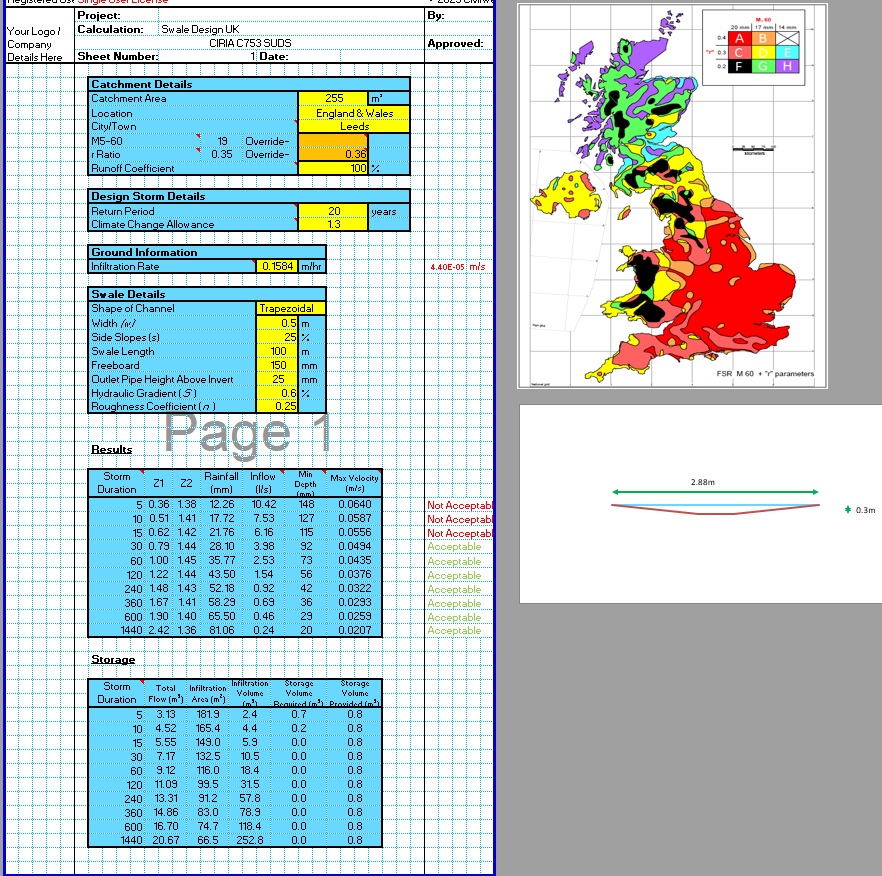
Swale Design Spreadsheet
This spreadsheet can be used to design swales. These linear grassed channels can be used both to convey, infiltrate and filter surface drainage runoff.
Learn More
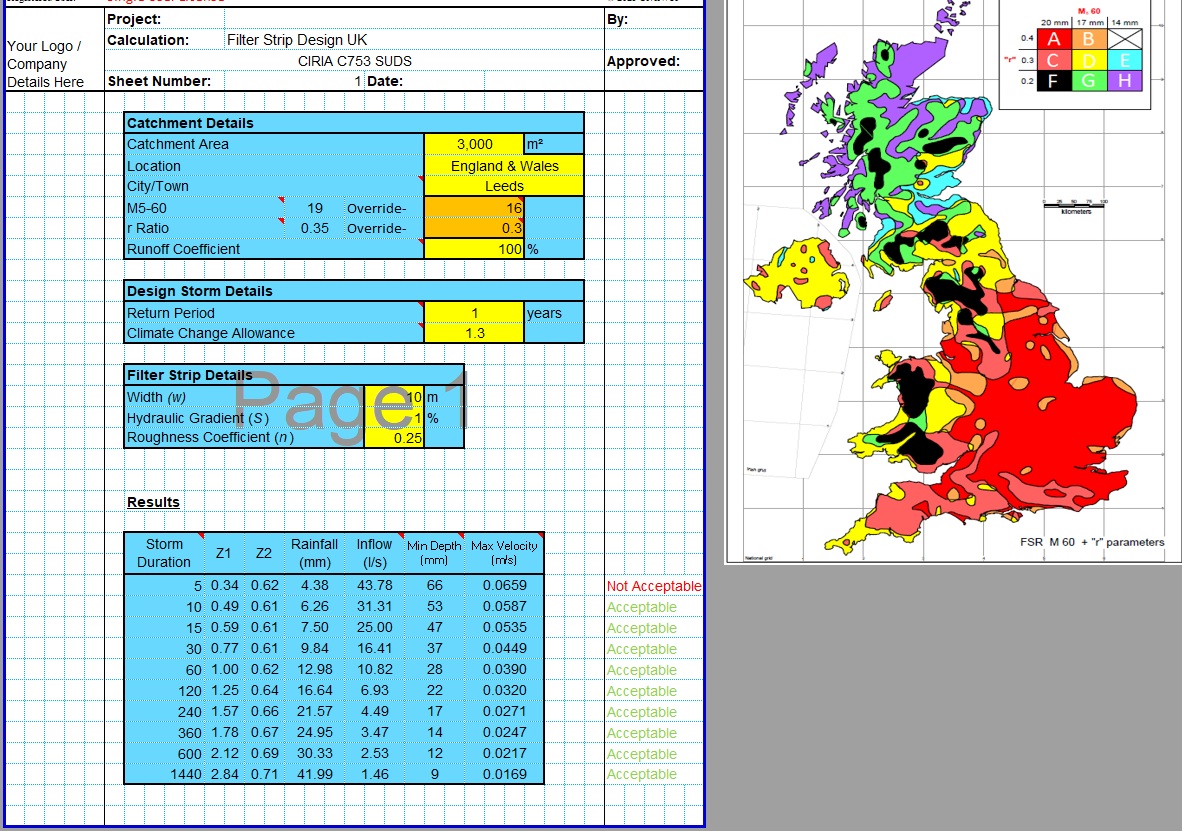
Filter Strip Design Spreadsheet
This spreadsheet is designed to analyse surface water filter strips and to determine the max flow depth and max flow velocity and determine whether they are in accordance with relevant standards.
Learn More
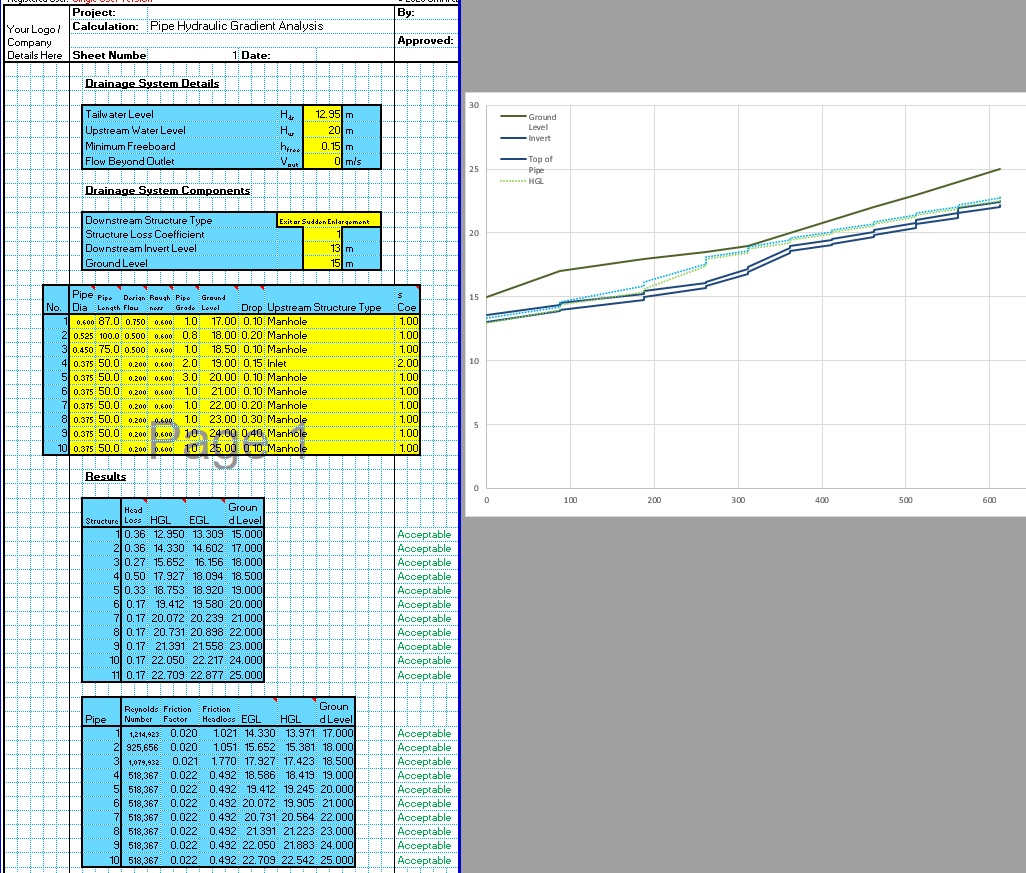
Hydraulic Gradient Analysis Spreadsheet
This spreadsheet analyses the hydraulic and energy grade lines for drainage systems with up to 10 drainage runs.
Learn More
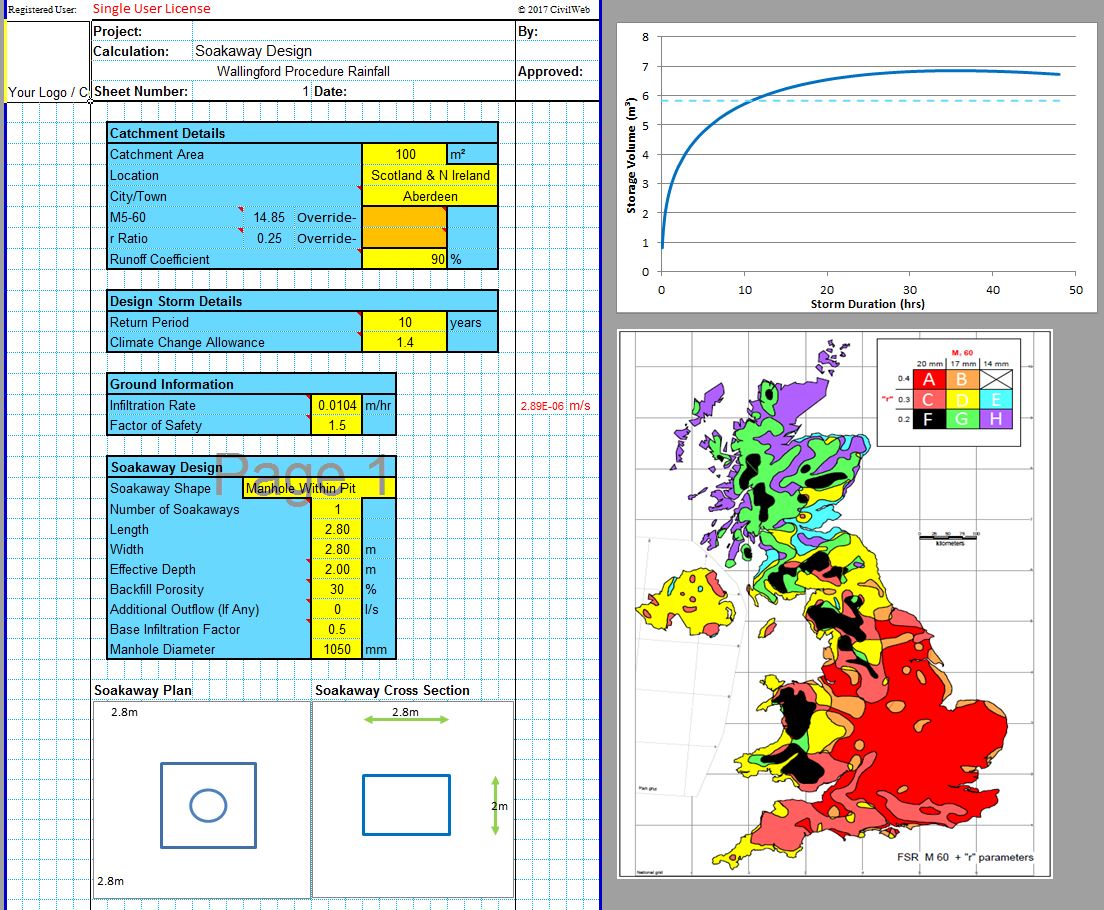
Soakaway Design Spreadsheet
This spreadsheet calculates the requirements for a soakaway system and assists the user to design a suitable system.
Learn More
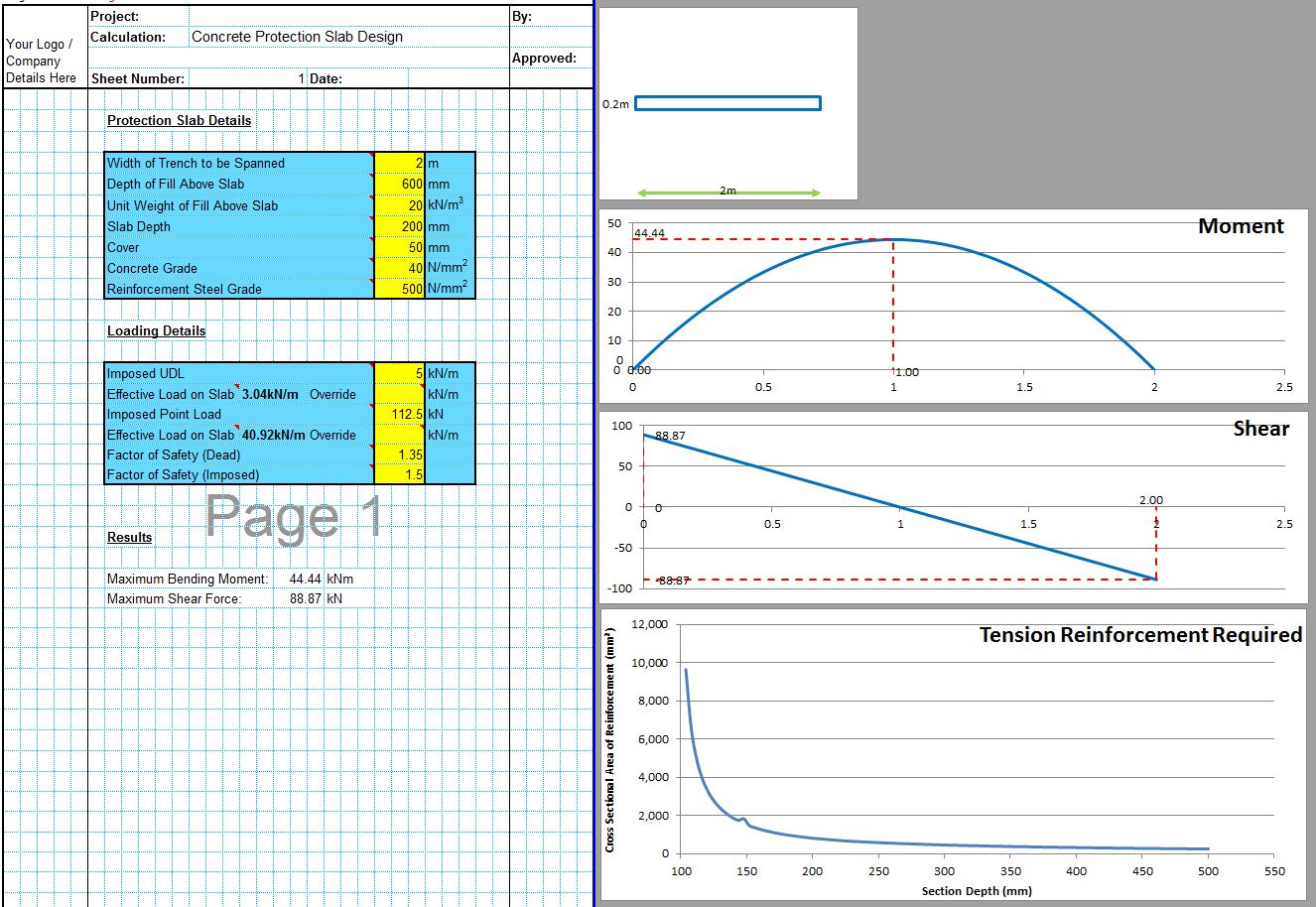
Concrete Protection Slab
This detailed design spreadsheet designs a protection slab commonly installed to protect shallow pipes.
Learn More
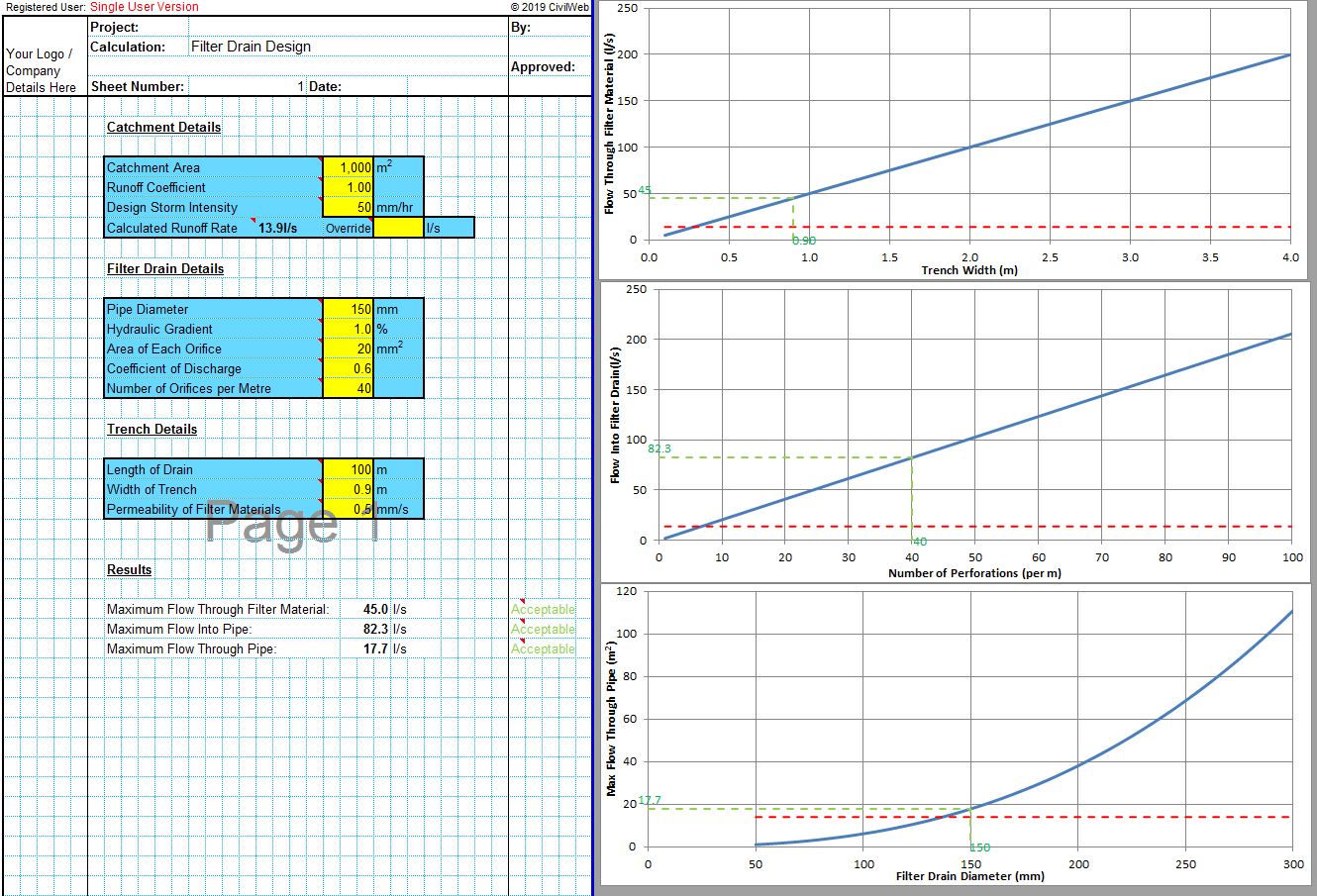
French Drain Design
This spreadsheet completes French Drain Design in accordance with the SUDS Manual.
Learn More
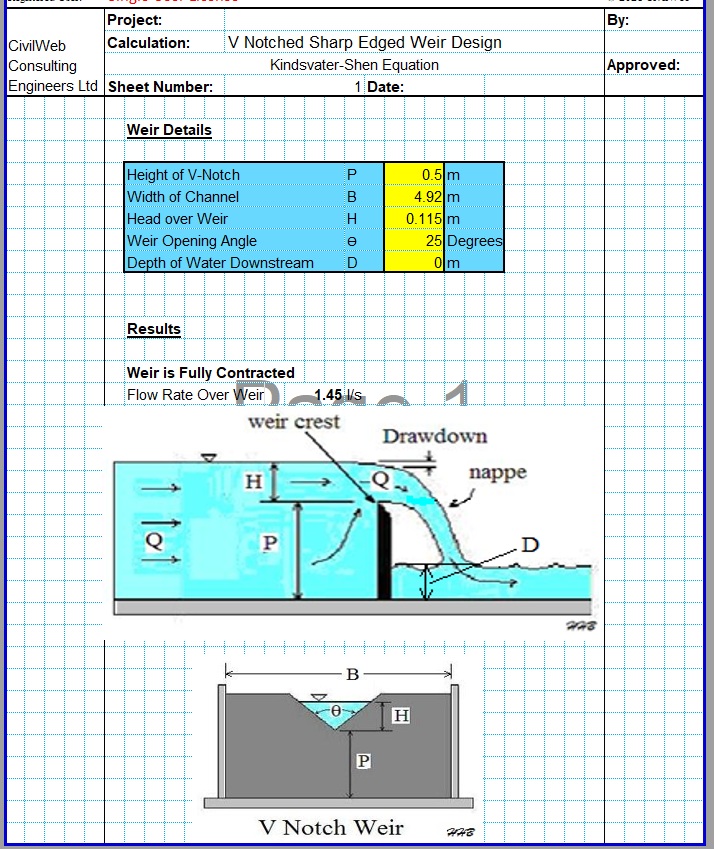
Sharp Crested Weir Flow Calculator Spreadsheets
This suite of 5 separate spreadsheets calculates the flow over sharp crested weirs of all shapes and sizes.
Learn More
Drainage Design Spreadsheet
This is the full suite of drainage design spreadsheets, available at a massive discount for only £49.99.