Square downpipes are a popular choice where aesthetic and space matter: they sit flush to façades, match modern architectural lines, and can be easier to route against walls than round profiles. But sizing a square downpipe is a hydraulic task first — the chosen profile must carry the roof runoff for the local design storm without surcharge or gutter overflow.
What a designer must know about square downpipes
- Shape changes flow characteristics. Square sections have a different hydraulic area and wetted perimeter than round pipes of the same nominal dimension, so capacity tables for round pipes do not directly apply.
- Material matters. Smooth materials (uPVC, aluminium) give better hydraulic performance than rougher metals as they age; this affects the effective capacity over time.
- Design is system‑wide. Downpipe size must be checked together with gutter outlet capacity, roof catchment area, and local design rainfall (BS EN 12056 approach).
Typical square downpipe sizes and practical uses
| Nominal size | External dimension (mm) | Typical use | Notes |
| 65 × 65 | 65 × 65 | Small domestic roofs | Common on modern homes; check capacity for larger catchments. |
| 68 × 68 | 68 × 68 | Standard domestic | Matches many gutter outlets; widely stocked. |
| 75 × 75 | 75 × 75 | Larger domestic / aesthetic choice | Step up for higher runoff or visual balance. |
| 100 × 75 | 100 × 75 | Large roofs / commercial façades | Used where one outlet must carry more flow. |
Table notes: manufacturers vary nominal dimensions and wall thickness; always confirm manufacturer capacity charts rather than relying on nominal size alone.
Design considerations that change the chosen size
- Roof catchment area and rainfall intensity. Calculate peak runoff using the local design rainfall and the effective horizontal roof area draining to the gutter run; this is the starting point for sizing.
- Filling degree and free‑surface flow. Designers limit the filling degree so pipes operate with a free surface (not fully surcharged). Square pipes reach surcharge differently to round pipes, so use square‑specific capacity tables or manufacturer data.
- Roughness and ageing. Allow for reduced capacity over time if using metal pipes that may corrode; choose a larger size or smoother material if long‑term performance is critical.
- Outlet alignment and gutter capacity. A small outlet or poorly aligned connection can bottleneck flow regardless of downpipe size; check the whole chain from eaves to discharge.
Installation and maintenance implications
- Keep runs straight and joints tight. Bends and misaligned joints increase turbulence and reduce effective capacity.
- Provide access for cleaning. Square profiles can trap debris at corners; inspection points or leaf guards at gutters reduce blockages.
- Match brackets and fixings to thermal movement. Square pipes fixed rigidly can stress joints in long vertical runs; use appropriate brackets and spacing.
Quick sizing checklist for square downpipe design
- Measure effective roof area draining to each gutter run.
- Obtain local design rainfall (two‑minute intensity per BS EN 12056 methodology).
- Check gutter outlet capacity and select a square profile with manufacturer capacity ≥ calculated peak flow.
- Allow for roughness and ageing by choosing a slightly larger size or smoother material if using metal.
- Verify filling degree and ensure the pipe will operate in free‑surface flow under design conditions.
Takeaway: square downpipes combine form and function, but sizing must be hydraulic first — use manufacturer capacity charts or BS EN 12056‑based tools, account for material roughness and filling degree, and always check gutter‑to‑downpipe compatibility.
The CivilWeb Roof Downpipe Design Spreadsheet can be purchased lower down this page for only £19.99. Or why not buy our best value bundle? Our Full Drainage Design Spreadsheet Suite can be purchased at the bottom of this page for only £49.99. This suite includes all of our drainage design spreadsheets, more than 20, and represents an incredible saving of more than 85%.
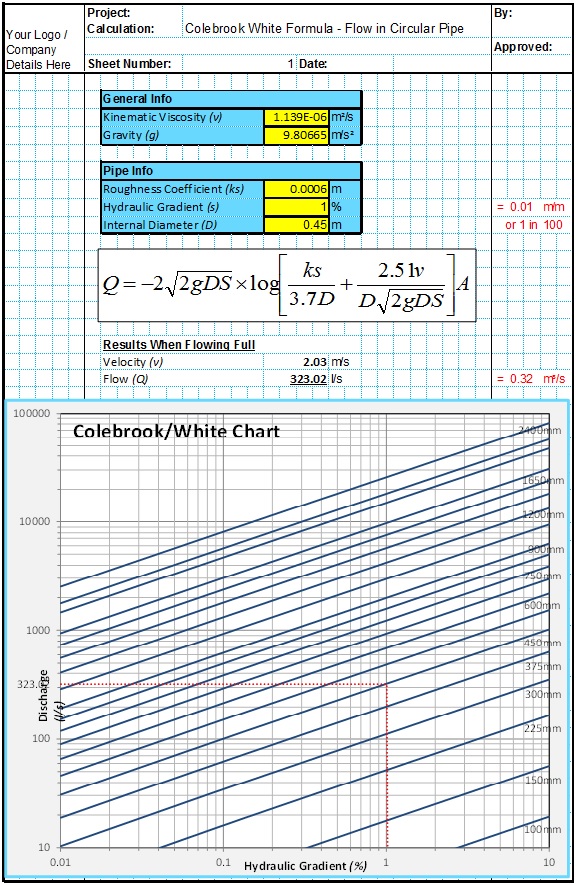
PIPE FLOW CALCULATOR
This spreadsheet uses the Colebrook-White and Manning Equations to calculate the flow capacity and velocity in pipes acting under gravity.
Find Out More
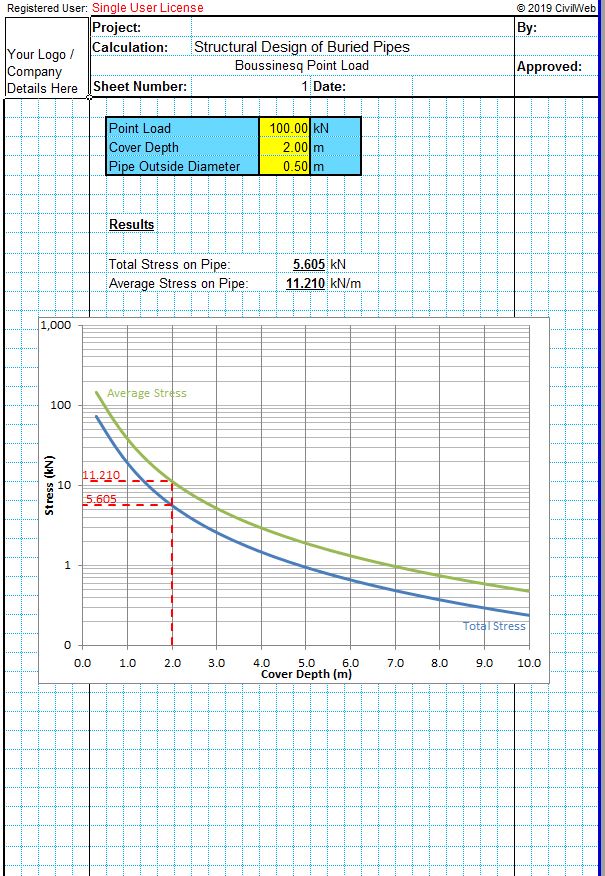
Buried Pipe Design Spreadsheet
This spreadsheet can be used to design concrete, steel, plastic and other buried pipes in accordance with BS EN 1295-1.
Learn More
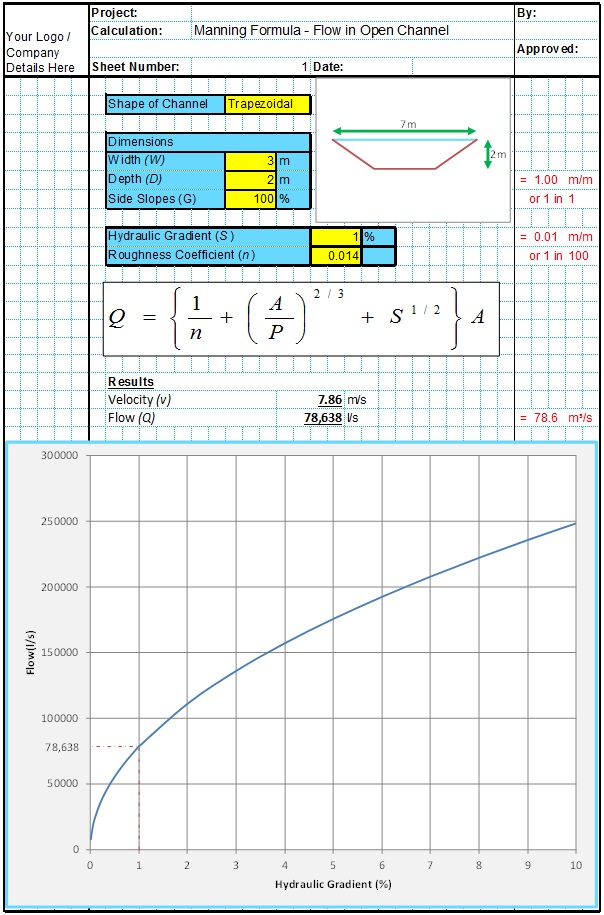
Manning Open Channel Design Spreadsheet
This spreadsheet uses the Manning formula to calculate the flow conditions in an open channel acting under gravity only.
Learn More
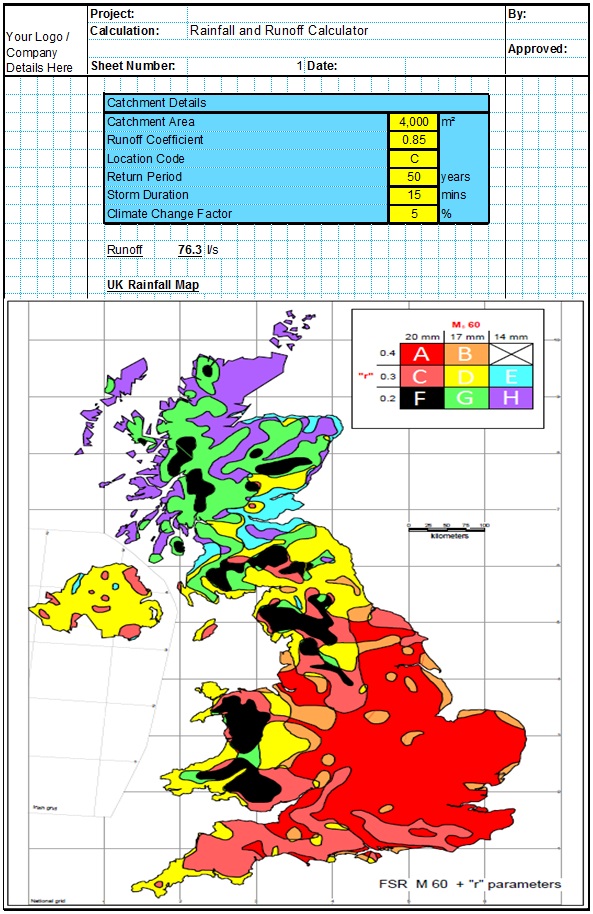
Runoff Calculator Spreadsheet
This spreadsheet calculates the design runoff flow for a site in accordance with the Flood Estimation Handbook.
Learn More
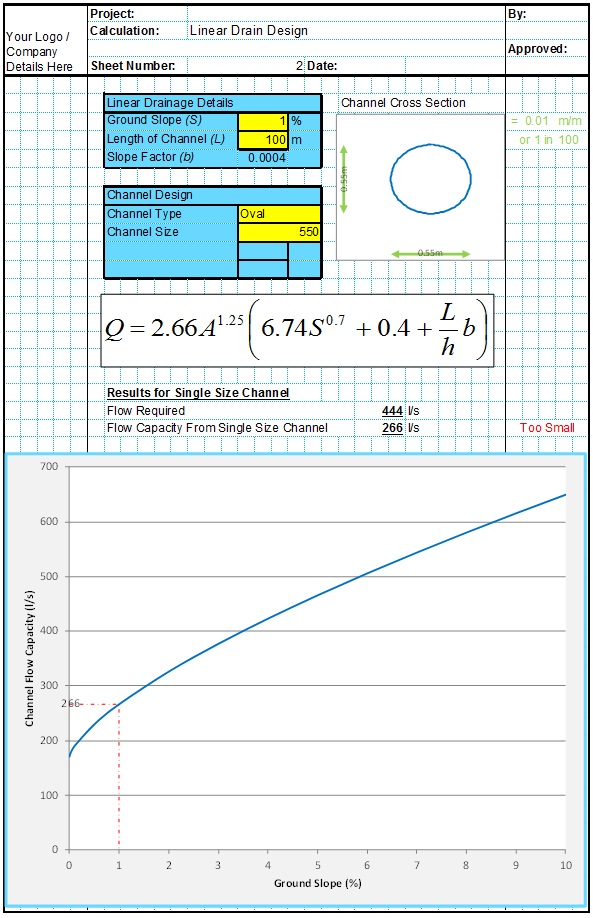
Linear Drainage Design Spreadsheet
This spreadsheet calculates the maximum flow from a specified linear drainage channel and checks whether the channel is sufficient for the specified site and storm conditions.
Learn More
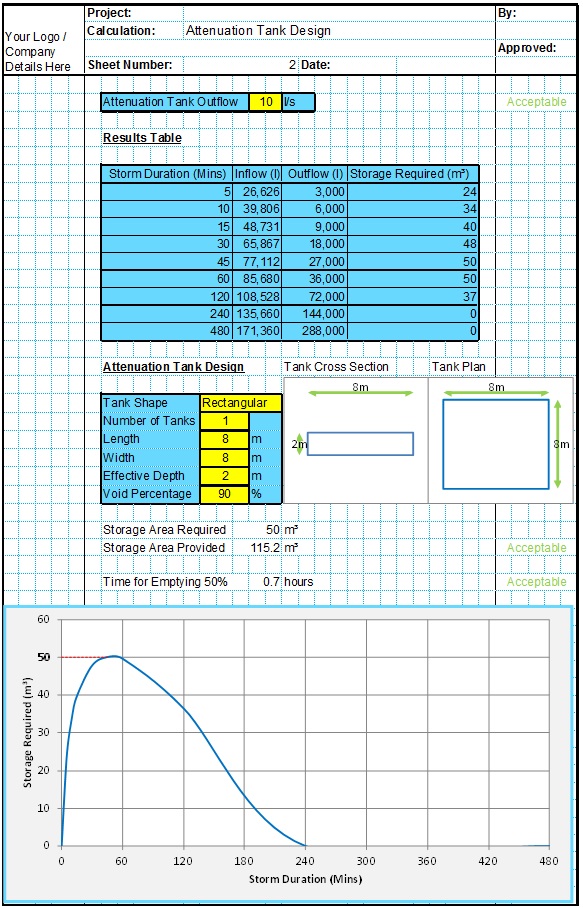
Attenuation Design Spreadsheet
This spreadsheet calculates the requirements for a attenuation system and assists the user to design a suitable system.
Learn More
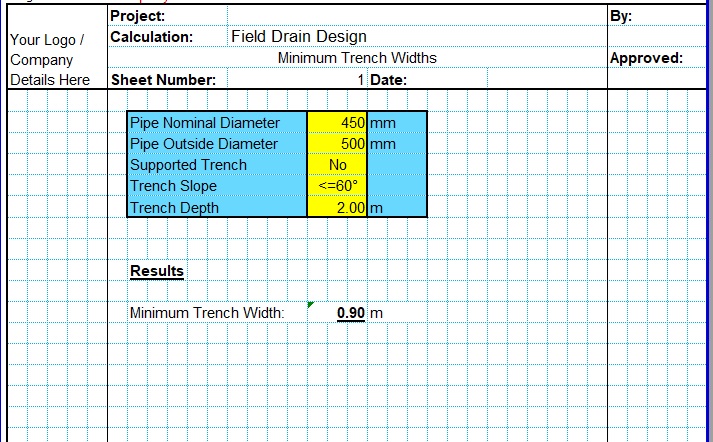
Field Drain Design Spreadsheet
This spreadsheet can be used to design field drains, typically subsurface drainage systems used to drain fields and open areas.
Learn More
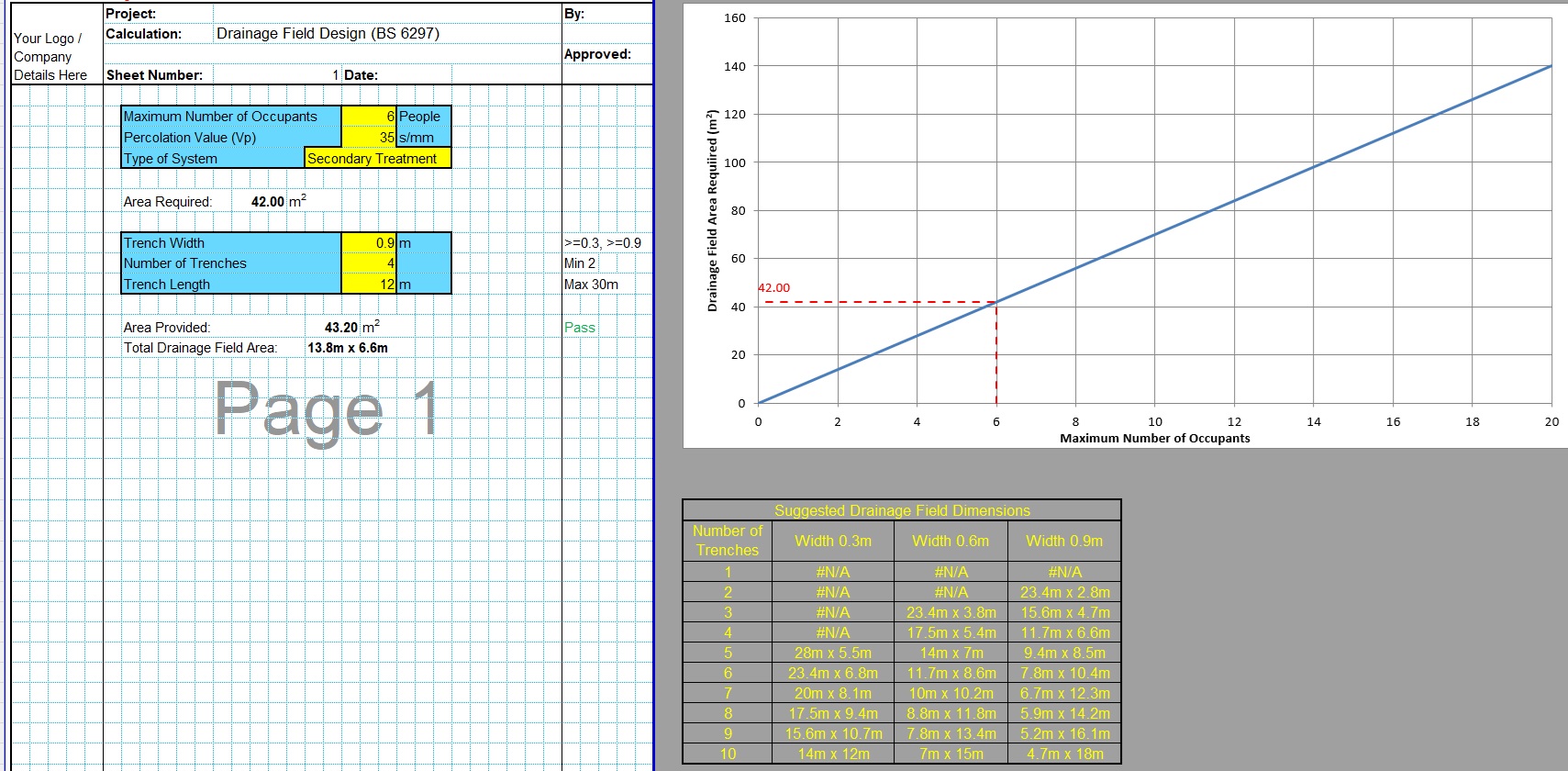
Drainage Field Design Spreadsheet
This spreadsheet can be used to design septic infiltration systems known as drainage fields, leach fields or septic drain fields.
Learn More
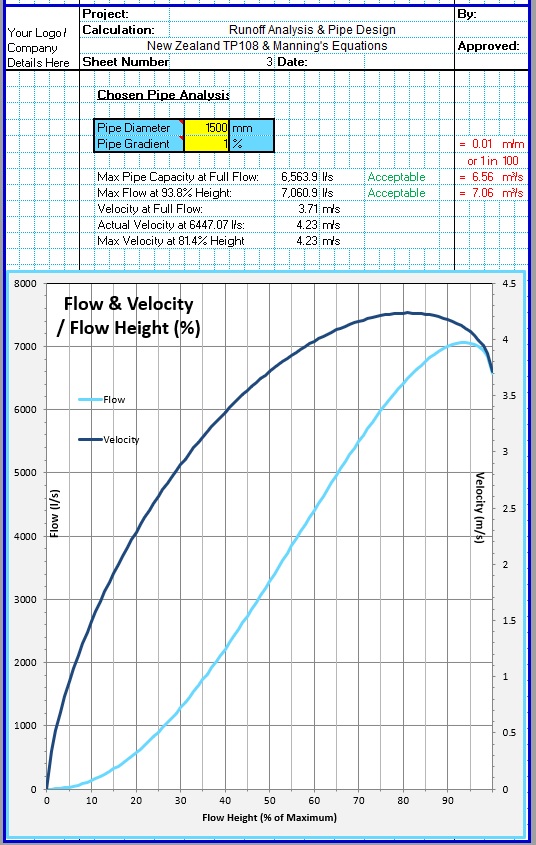
TP108 Spreadsheet
This spreadsheet calculates the rainfall for New Zealand catchments in accordance with TP108.
Learn More
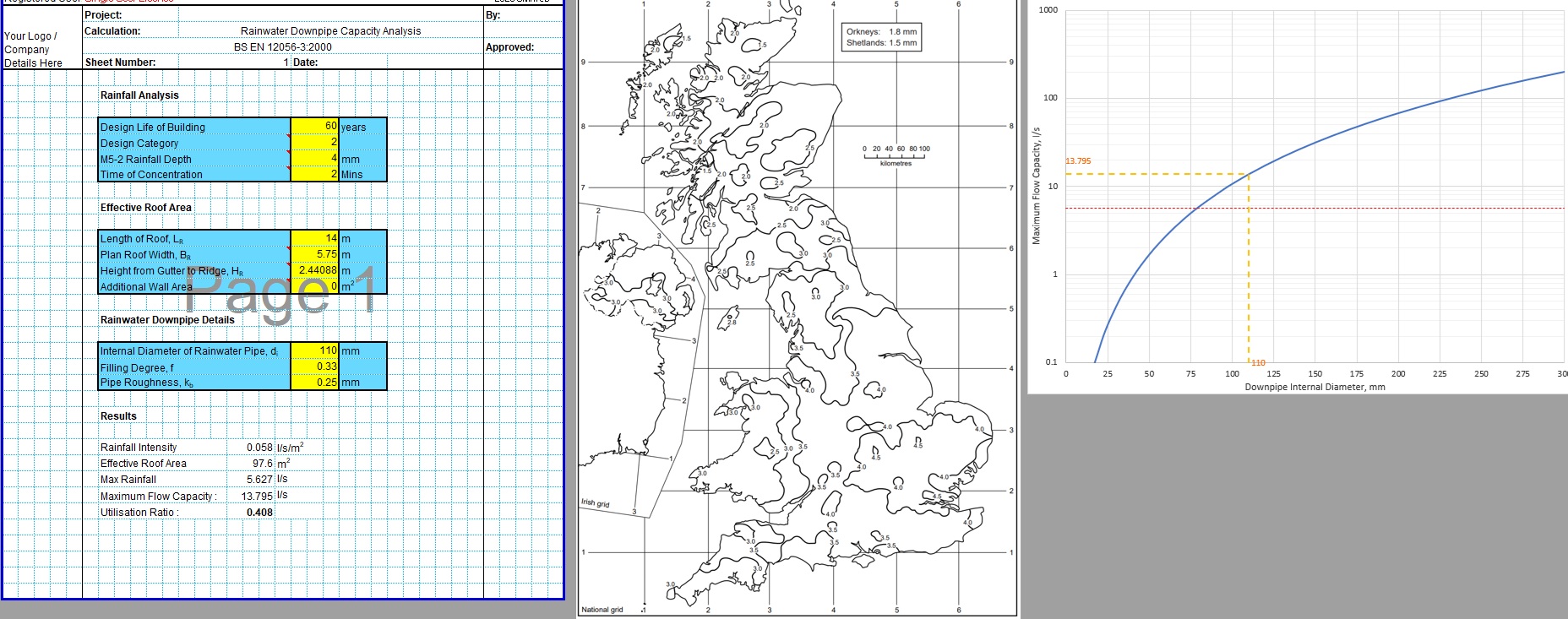
Roof Downpipe Calculator Spreadsheet
This spreadsheet calculates the size of roof drainage downpipes depending on the roof catchment and rainfall requirements.
Learn More
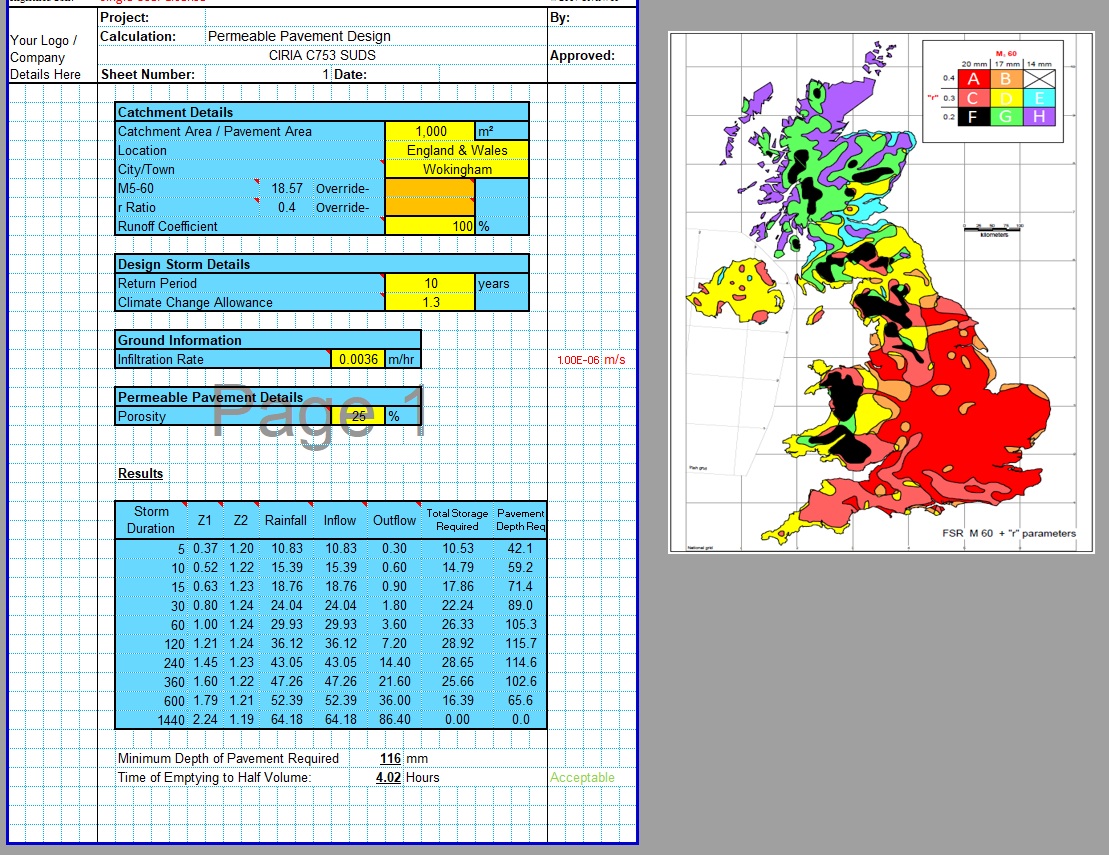
Permeable Pavement Design Spreadsheet
This spreadsheet is designed to determine the size and characteristics of permeable pavements.
Learn More
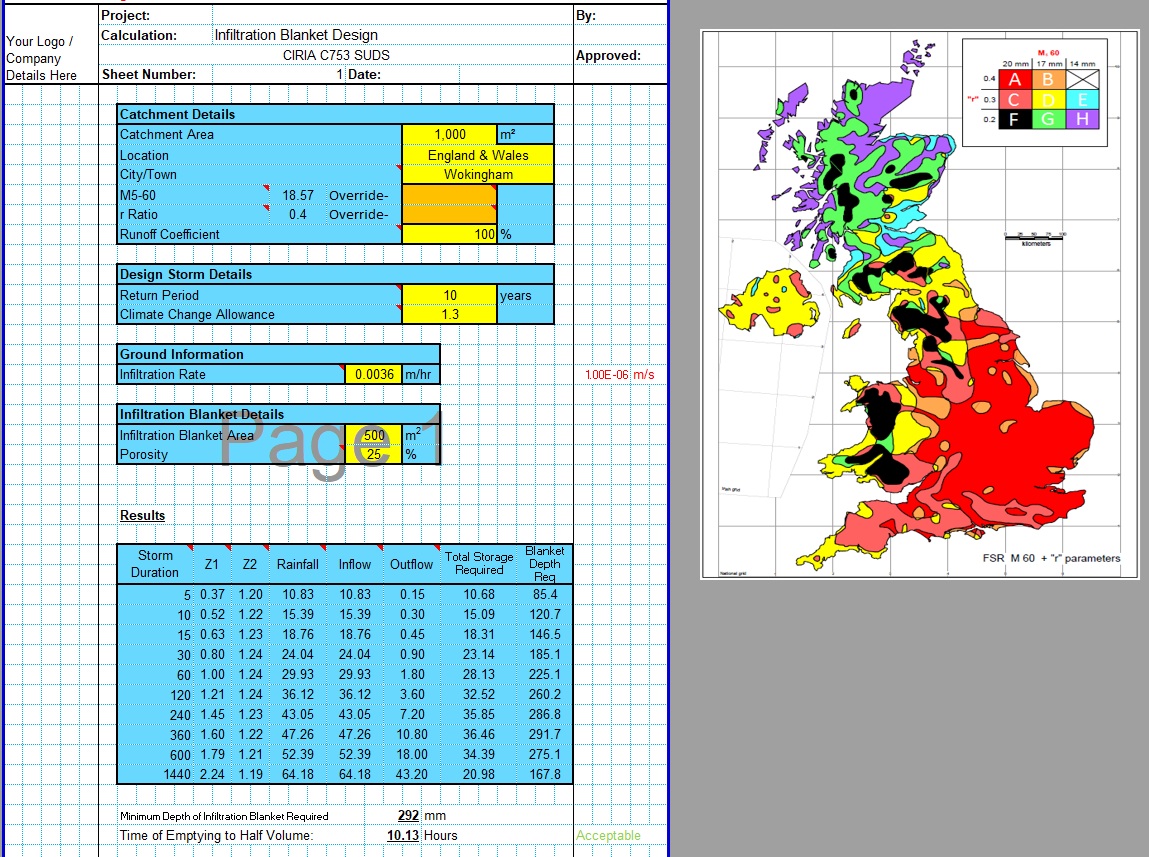
Infiltration Blanket Design Spreadsheet
This spreadsheet can be used to design thin depth infiltration systems, typically called infiltration blanket systems.
Learn More
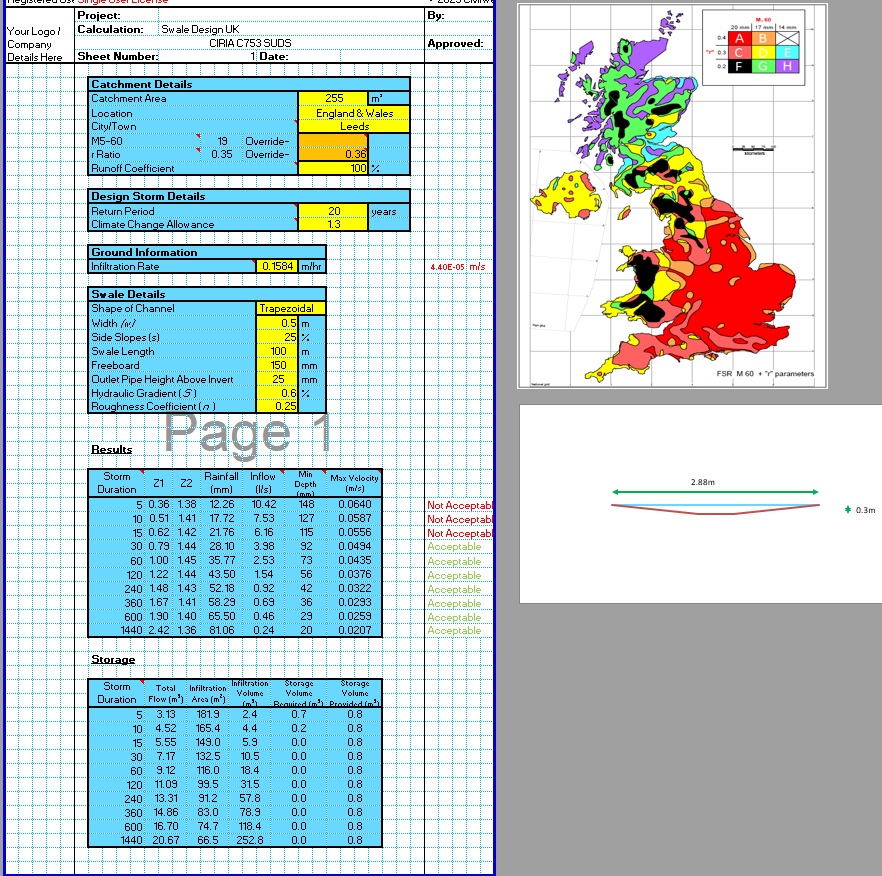
Swale Design Spreadsheet
This spreadsheet can be used to design swales. These linear grassed channels can be used both to convey, infiltrate and filter surface drainage runoff.
Learn More
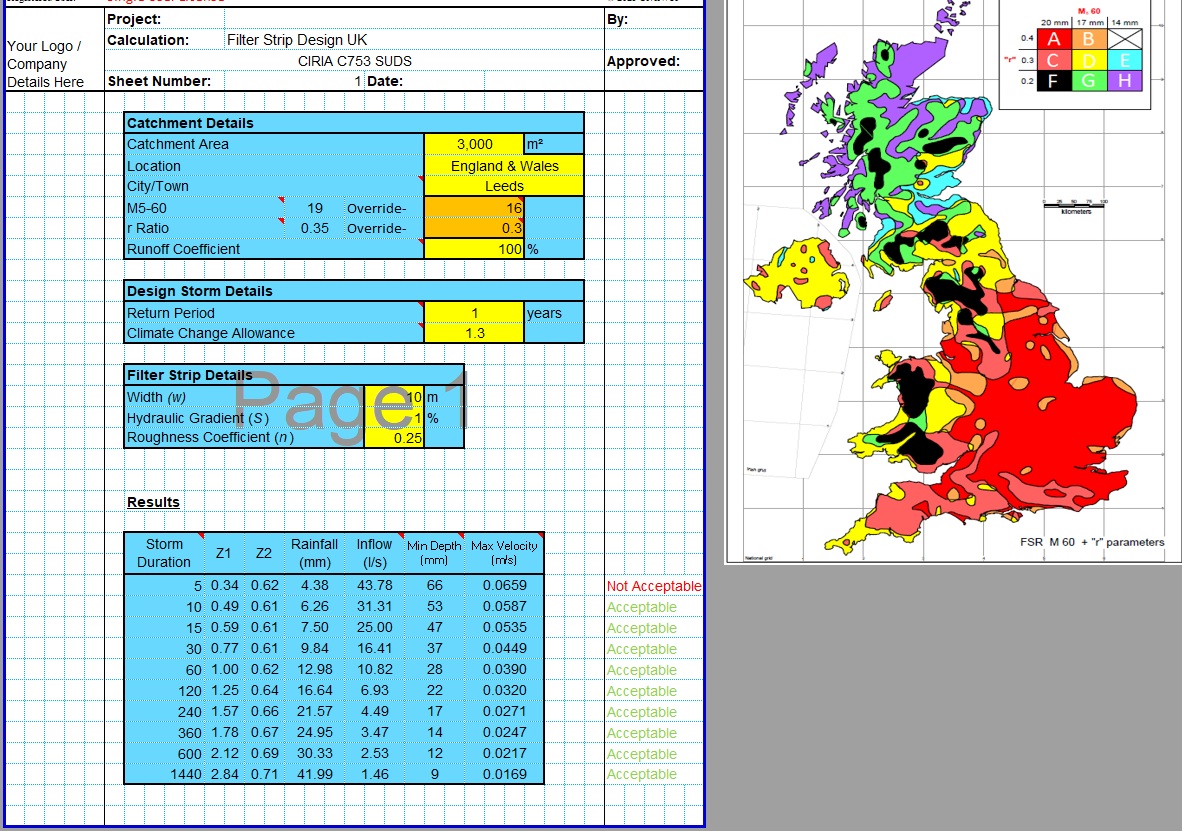
Filter Strip Design Spreadsheet
This spreadsheet is designed to analyse surface water filter strips and to determine the max flow depth and max flow velocity and determine whether they are in accordance with relevant standards.
Learn More
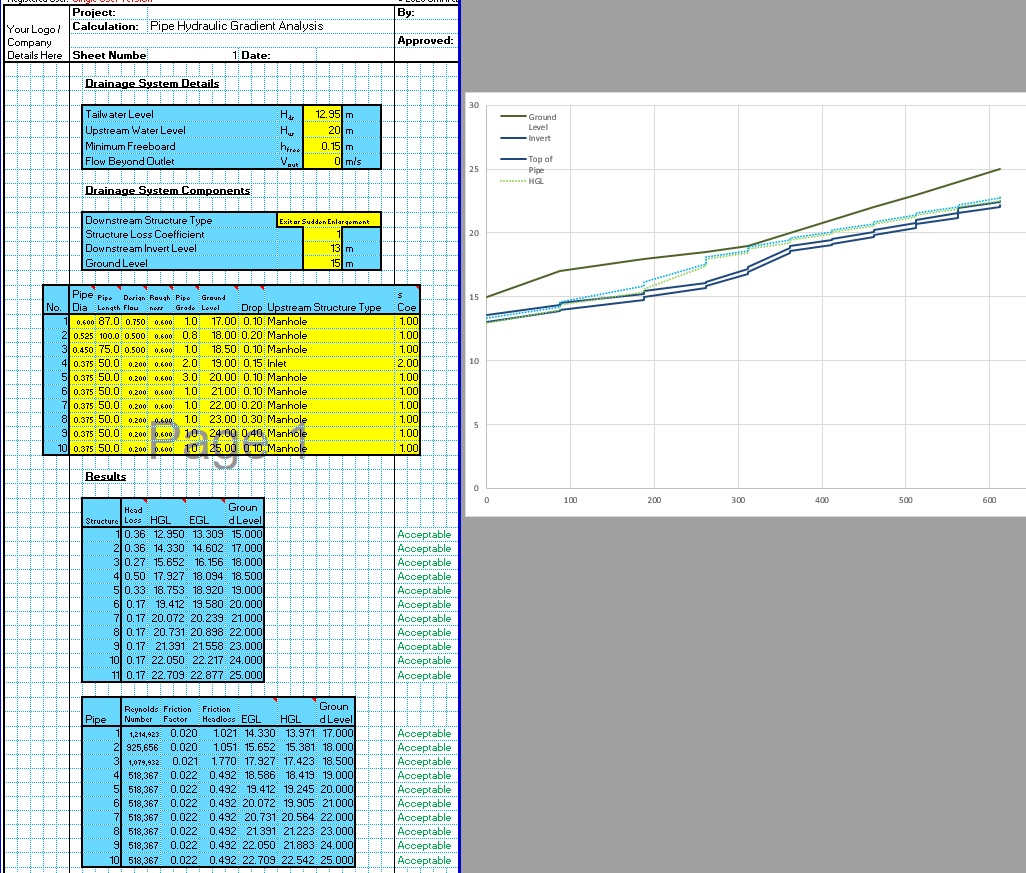
Hydraulic Gradient Analysis Spreadsheet
This spreadsheet analyses the hydraulic and energy grade lines for drainage systems with up to 10 drainage runs.
Learn More
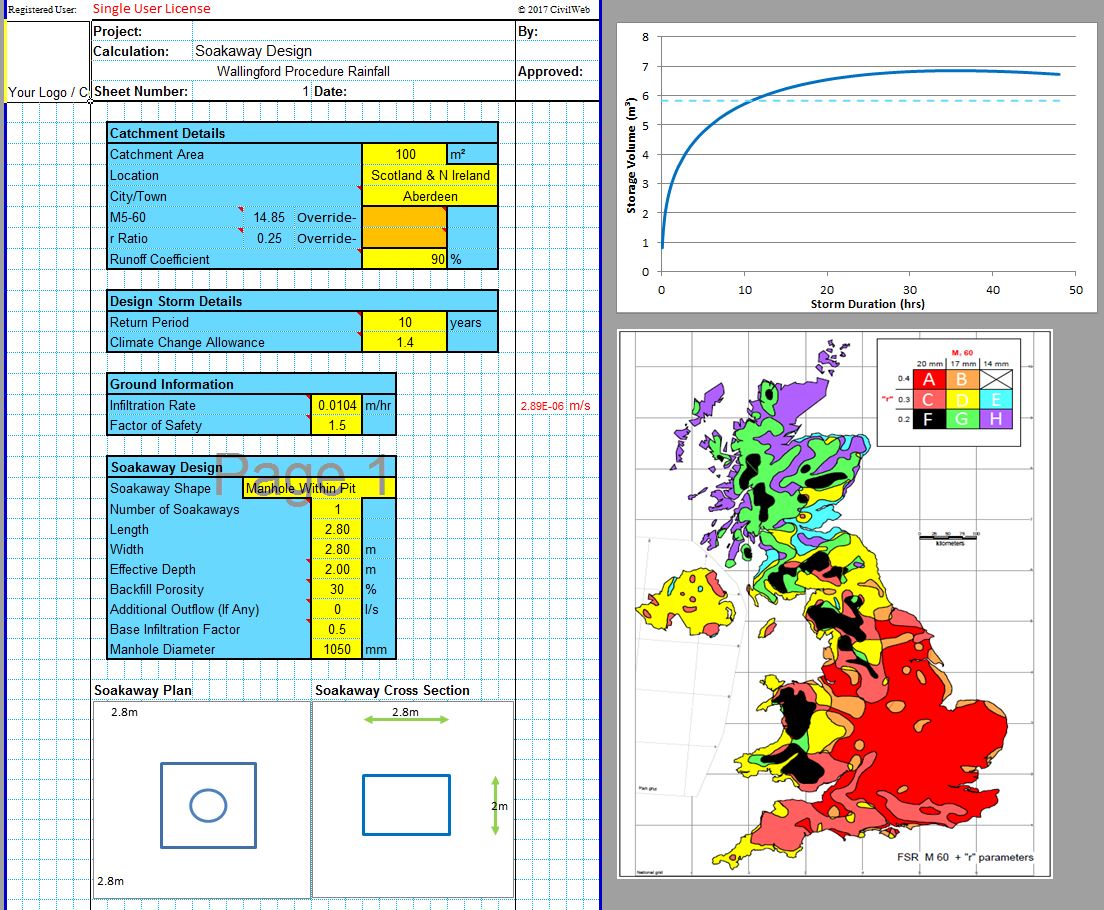
Soakaway Design Spreadsheet
This spreadsheet calculates the requirements for a soakaway system and assists the user to design a suitable system.
Learn More
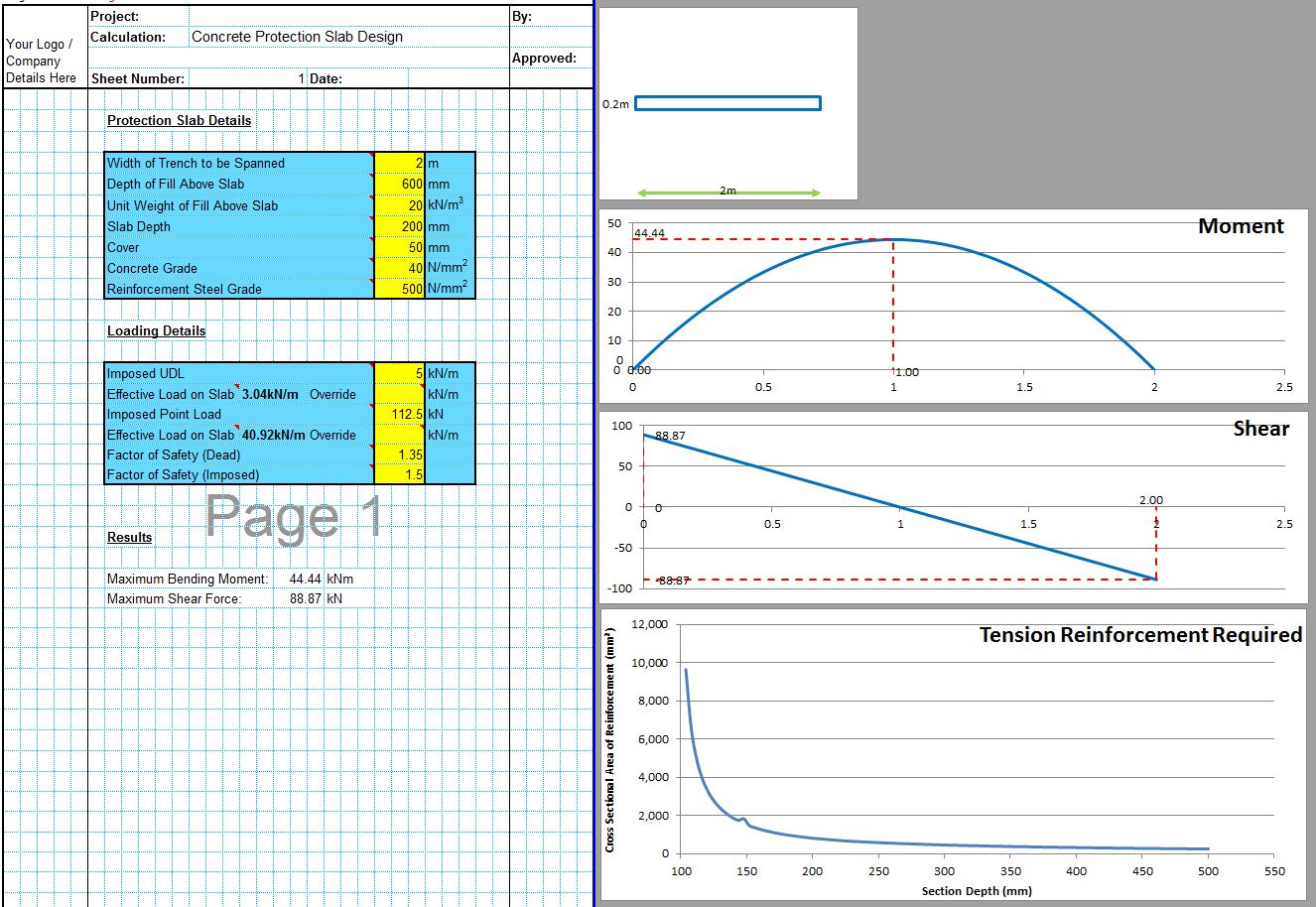
Concrete Protection Slab
This detailed design spreadsheet designs a protection slab commonly installed to protect shallow pipes.
Learn More
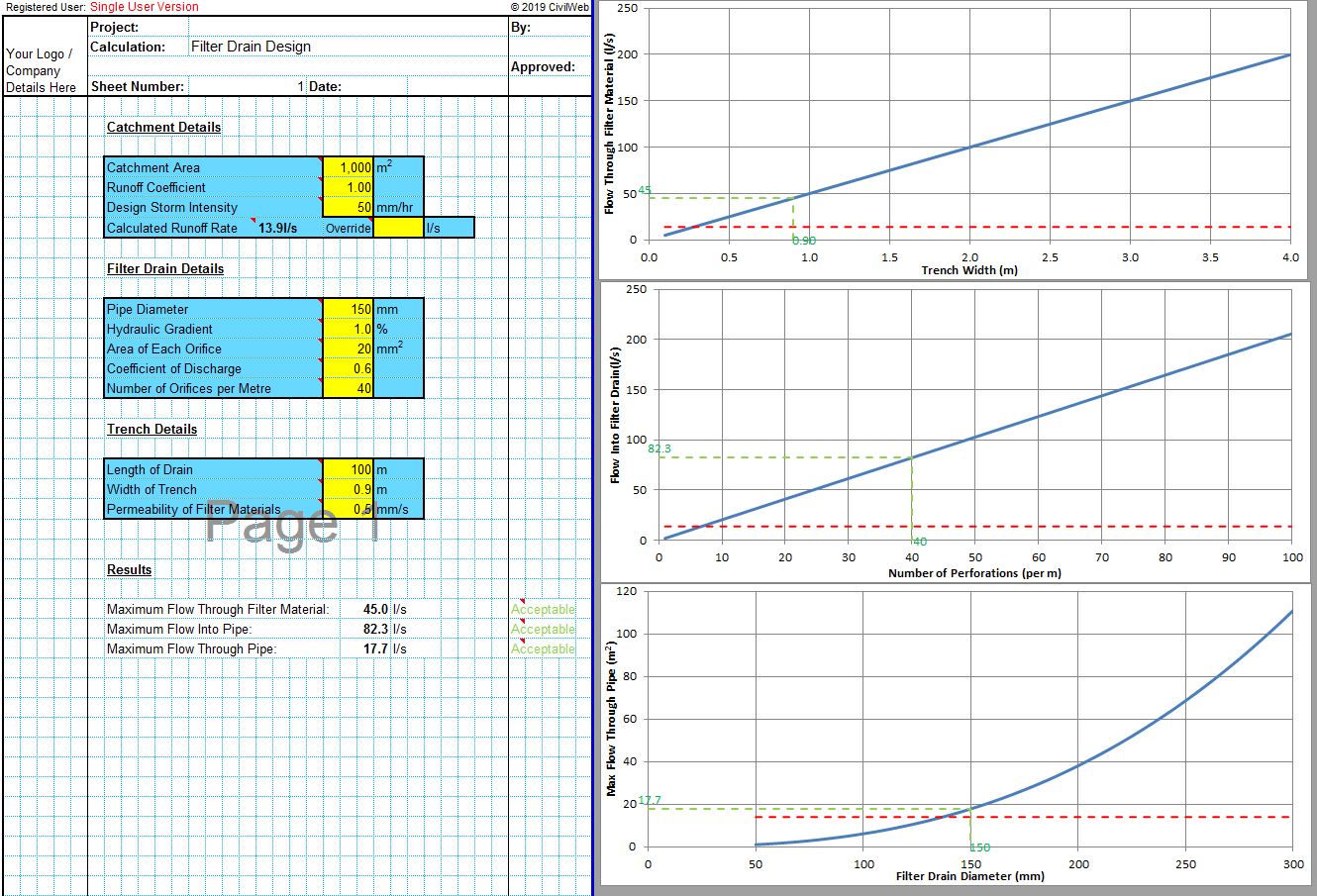
French Drain Design
This spreadsheet completes French Drain Design in accordance with the SUDS Manual.
Learn More
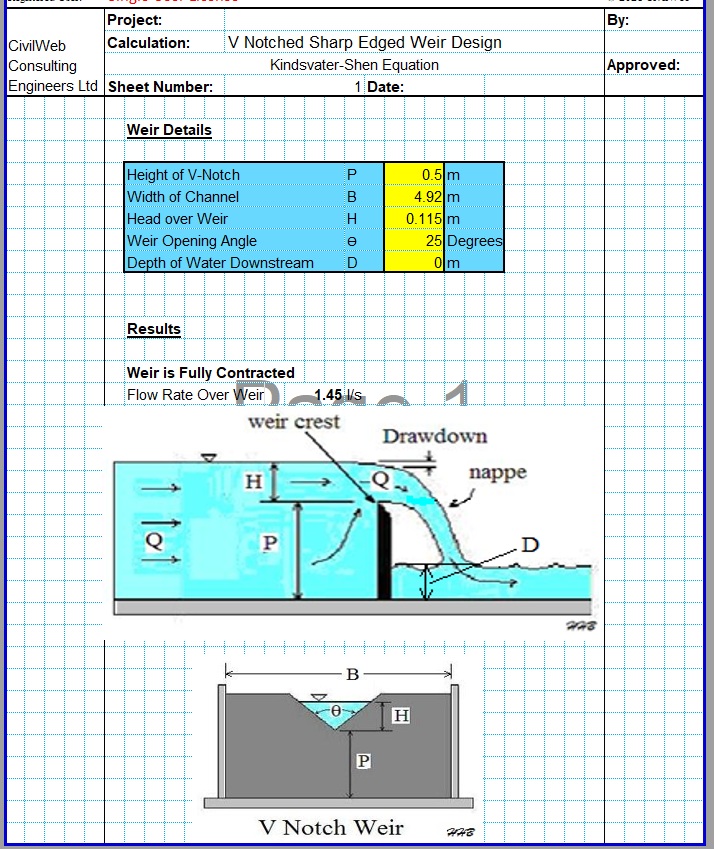
Sharp Crested Weir Flow Calculator Spreadsheets
This suite of 5 separate spreadsheets calculates the flow over sharp crested weirs of all shapes and sizes.
Learn More
Drainage Design Spreadsheet
This is the full suite of drainage design spreadsheets, available at a massive discount for only £49.99.