The performance of any field drainage system will depend on the frequency and quality of maintenance undertaken on the system.
It is very likely that fields in the UK with clay soils or in areas of heavy rainfall already have existing drainage systems installed. If there are problems with waterlogging in these areas the existing drainage system may not be functioning correctly.
The CivilWeb Field Drain Design Spreadsheet can be used to accurately and quickly design all kinds of field drains.
Ditches and Outfalls
Ditches and outfall need to be maintained in good condition in order for the rest of the field drainage scheme upstream to function. This can also increase the deterioration of upstream components such as lateral drains which can suffer from decreased performance and become blocked more quickly. A completely blocked outfall can cause significant flooding and waterlogging of large areas in wet weather.
Outfalls are a likely area where sediments are able to slowly build up over time. Clearing an outfall is usually a very simple procedure and can be undertaken very quickly with a spade. Ditches, swales and outfalls should be cleared in autumn to minimize the risk of soil and crop damage.
Ditches should be fenced off from livestock. This will prevent bank damage and erosion due to livestock. It also improves the water quality by preventing animal manures from entering the water.
Pipes
Any lateral and main drainage pipes included in the field drain design will need to be maintained in order to ensure that they continue to perform as designed.
Tree Roots
Tree roots should be prevented from entering the pipe. Any trees or hedges within the tree rooting zone or around 1.5m from the pipe should be removed before the pipe is installed if possible. If this is not possible a sealed pipe should be used for these areas rather than a perforated pipe.
If a pipe becomes blocked by tree roots it may be possible to expose the pipe and clear using rods. It is likely that the affected section of pipe will need to be replaced with a sealed pipe to prevent further blockages occurring in the future where tree roots are present.
Siltation
Siltation can occur in pipes. This is more likely to occur when the pipes have been left submerged or blocked for a period of time. This can also occur where a downstream blockage affects the hydraulic performance of the pipe. When this occurs the water in the pipe will be slowed down increasing the amount of sediments which are deposited. This can also be an issue where poor design or installation has allowed sediments to enter the pipe.
If there are maintenance accesses to the pipes they can sometimes be jetted or rodded to remove the sediments. If this is not possible the pipes may need to be replaced. When pipes are replaced they should be replaced with pipes of the same diameter in order to ensure they will perform as required. Increasing the pipe size is sometimes appropriate but can lead to flooding or erosion issues downstream.
Ochre
In addition to general siltation filed drains can also be at risk of ochre blocking. This occurs when soluble iron is able to leach out of surrounding soils and oxidises within the drainage pipe. This can lead to blockage of either the pipe itself or blockage of the pipe perforations preventing water from entering the pipe. Similar to siltation blocking this can sometimes be cleared using jetting or rodding, and sometimes the pipes will need to be replaced.
Where siltation or ochre blockages are expected, maintenance accesses to the pipes should be included in the field drain design and regular rodding or jetting of the pipes should be undertaken as a maintenance activity. The frequency of these visits should be determined by undertaking regular inspections of the pipes performance.
The CivilWeb Field Drain Design Spreadsheet can be used to accurately and quickly design all kinds of field drains.
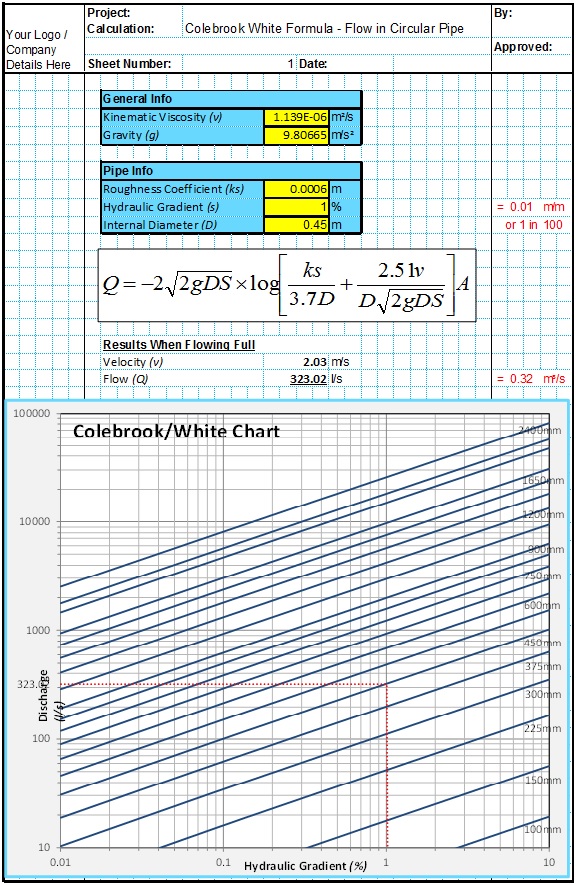
PIPE FLOW CALCULATOR
This spreadsheet uses the Colebrook-White and Manning Equations to calculate the flow capacity and velocity in pipes acting under gravity.
Find Out More
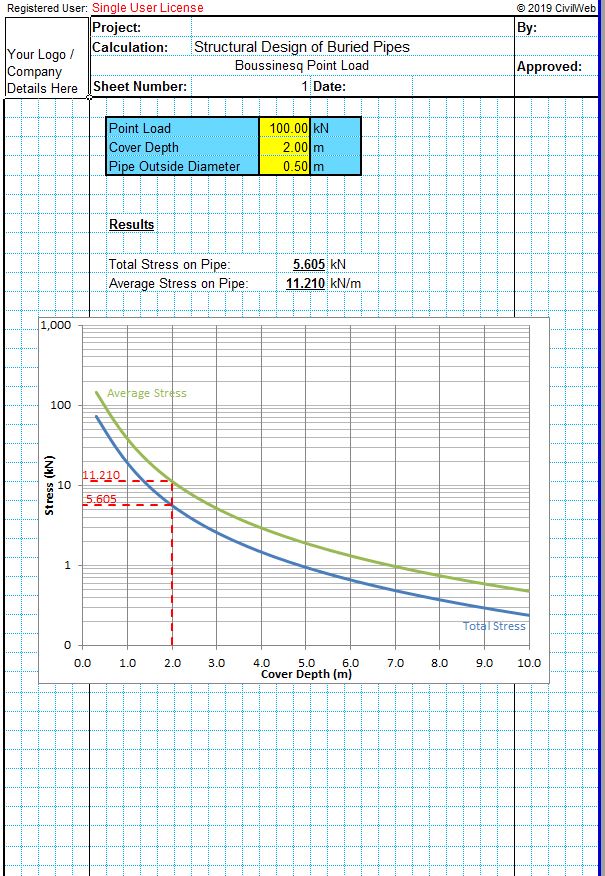
Buried Pipe Design Spreadsheet
This spreadsheet can be used to design concrete, steel, plastic and other buried pipes in accordance with BS EN 1295-1.
Learn More
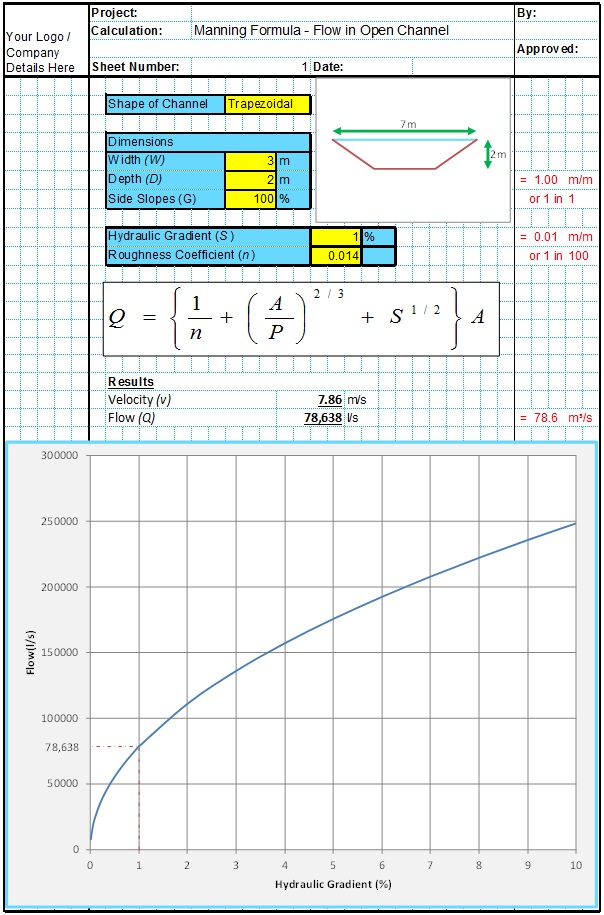
Manning Open Channel Design Spreadsheet
This spreadsheet uses the Manning formula to calculate the flow conditions in an open channel acting under gravity only.
Learn More
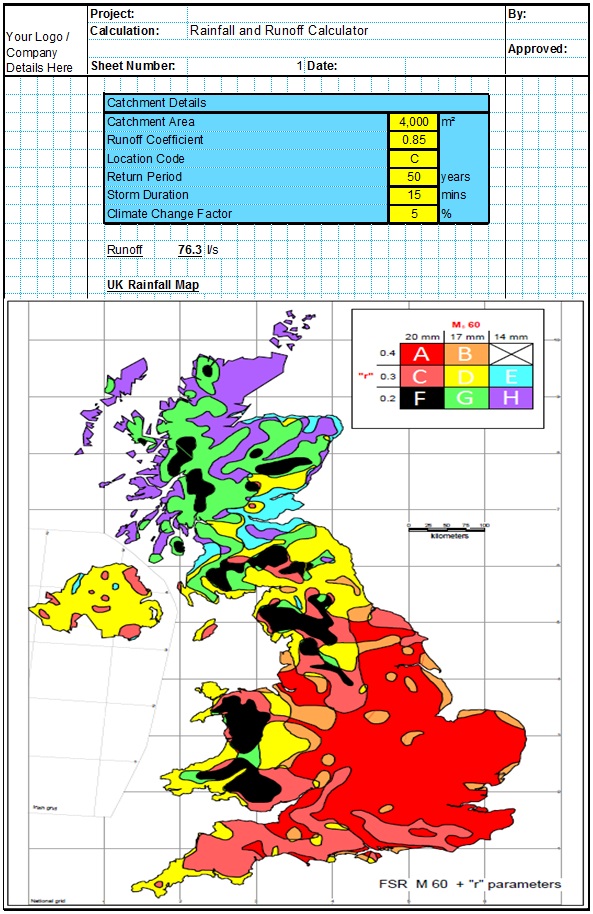
Runoff Calculator Spreadsheet
This spreadsheet calculates the design runoff flow for a site in accordance with the Flood Estimation Handbook.
Learn More
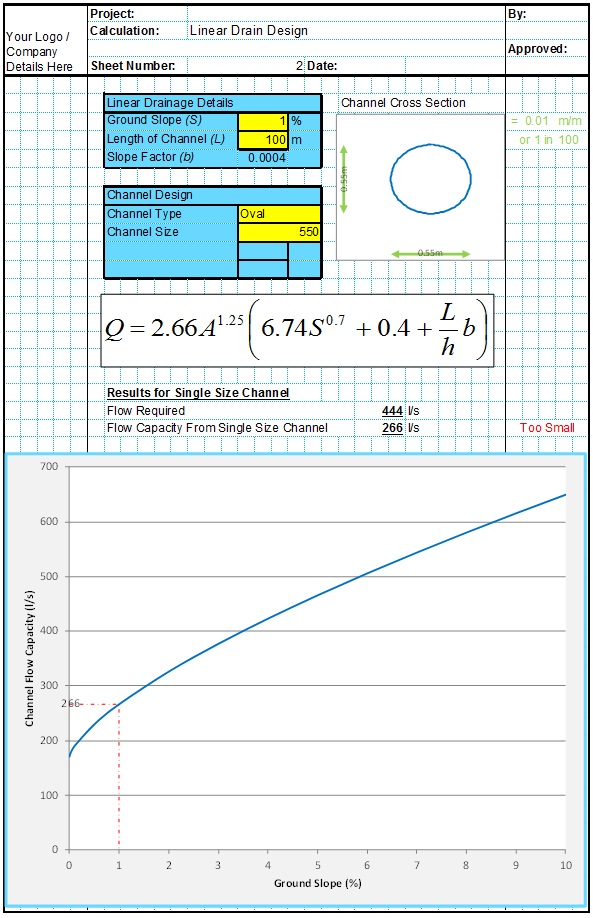
Linear Drainage Design Spreadsheet
This spreadsheet calculates the maximum flow from a specified linear drainage channel and checks whether the channel is sufficient for the specified site and storm conditions.
Learn More
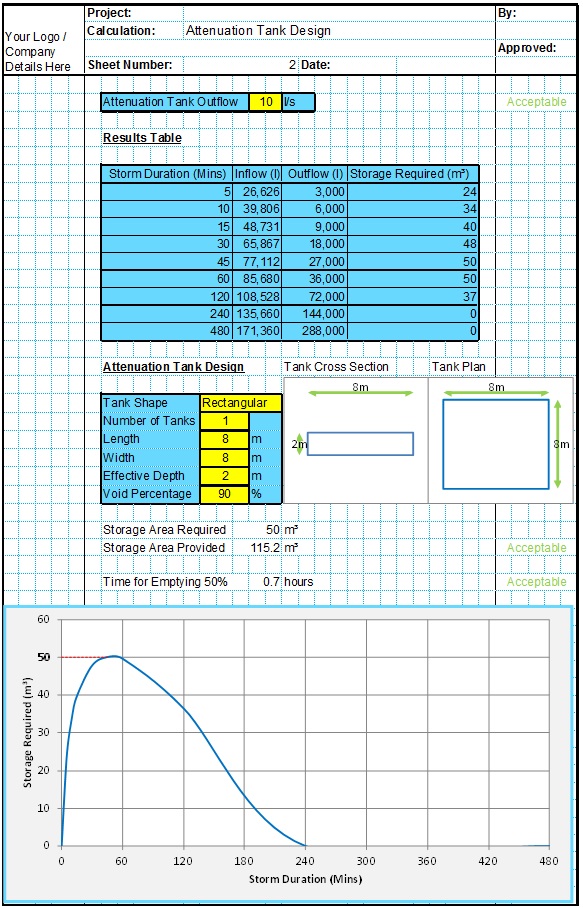
Attenuation Design Spreadsheet
This spreadsheet calculates the requirements for a attenuation system and assists the user to design a suitable system.
Learn More
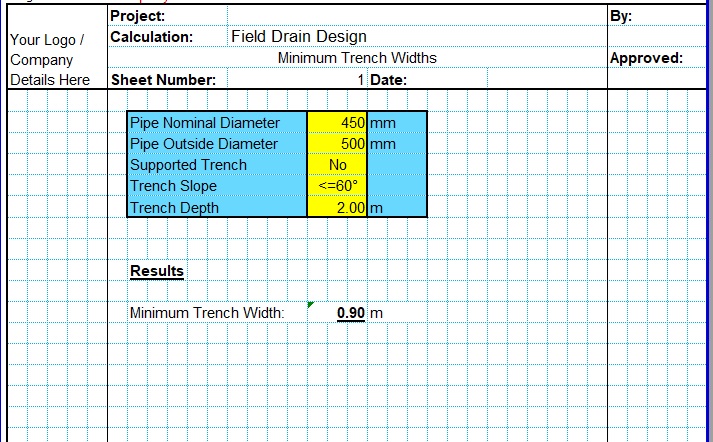
Field Drain Design Spreadsheet
This spreadsheet can be used to design field drains, typically subsurface drainage systems used to drain fields and open areas.
Learn More
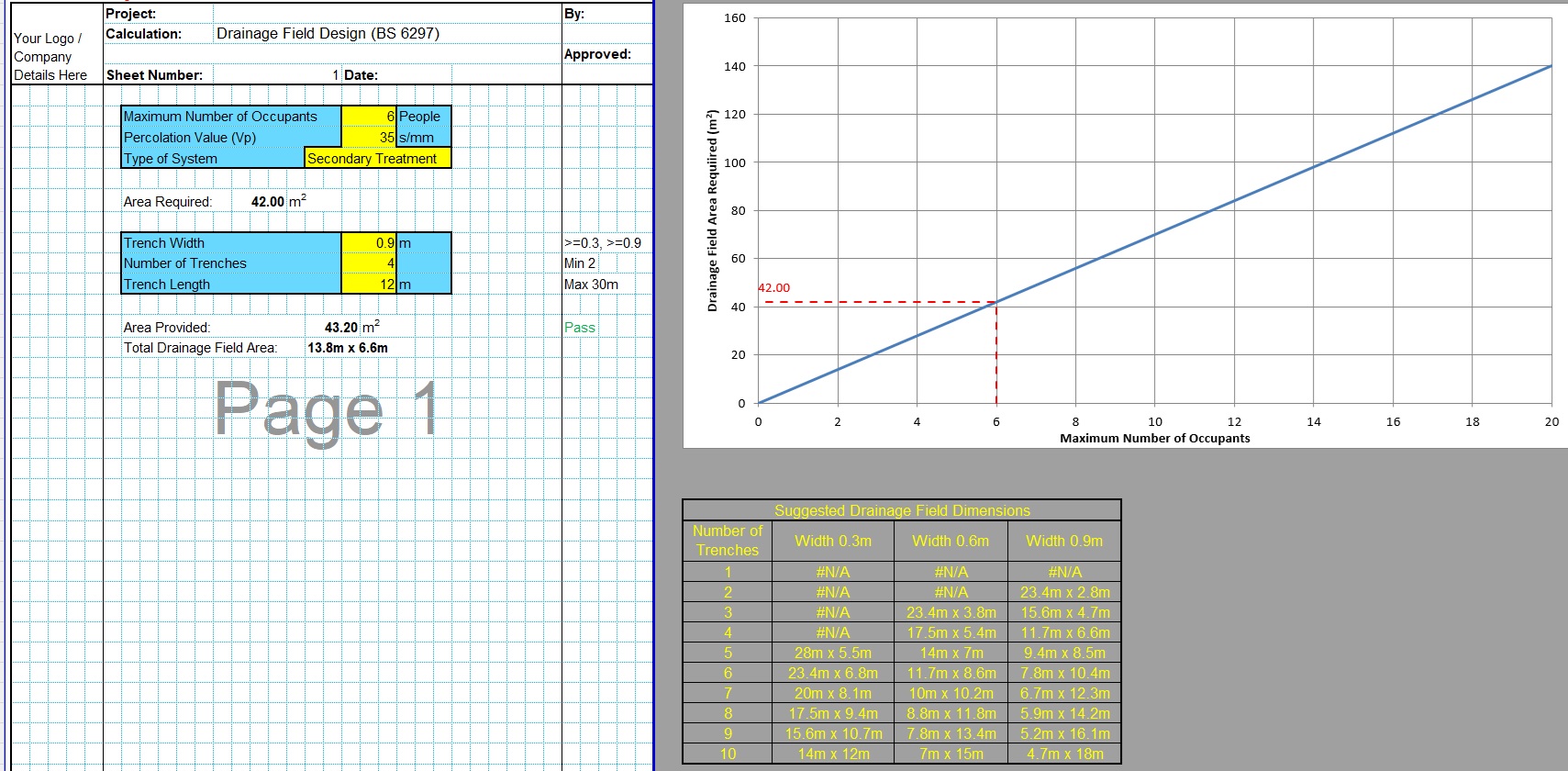
Drainage Field Design Spreadsheet
This spreadsheet can be used to design septic infiltration systems known as drainage fields, leach fields or septic drain fields.
Learn More
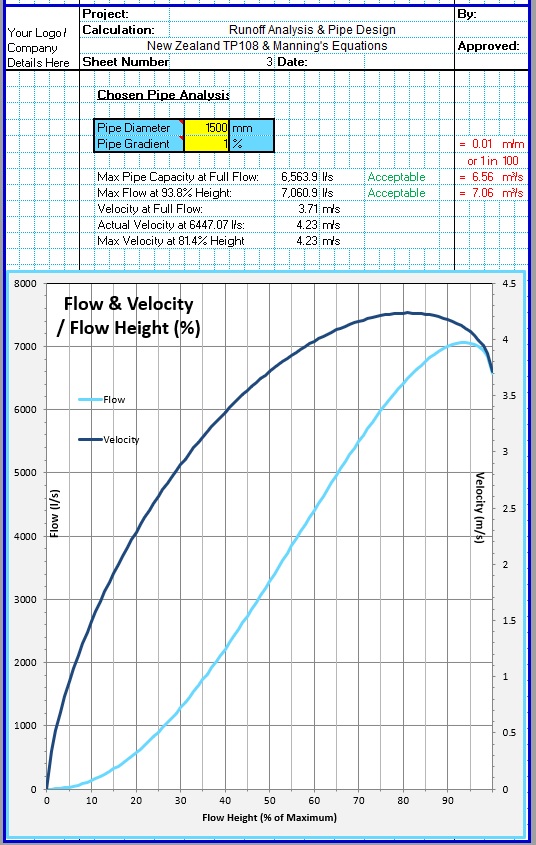
TP108 Spreadsheet
This spreadsheet calculates the rainfall for New Zealand catchments in accordance with TP108.
Learn More
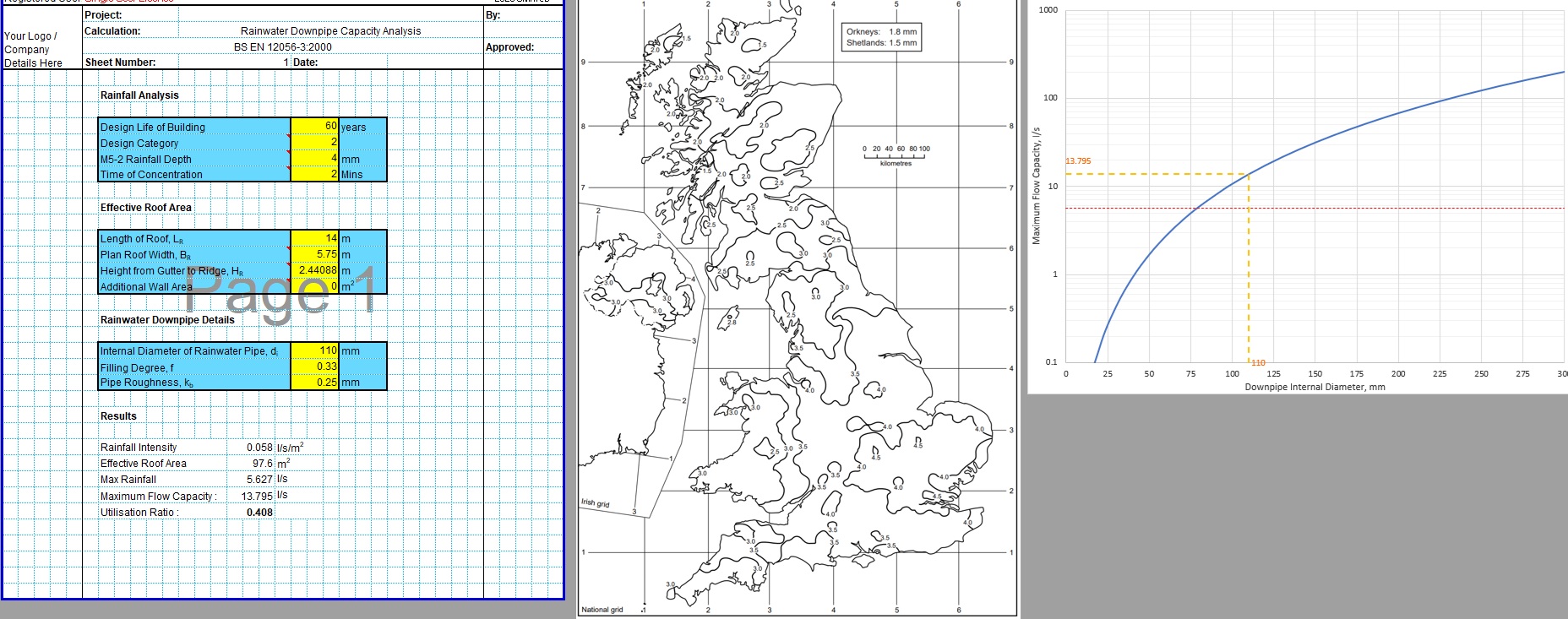
Roof Downpipe Calculator Spreadsheet
This spreadsheet calculates the size of roof drainage downpipes depending on the roof catchment and rainfall requirements.
Learn More
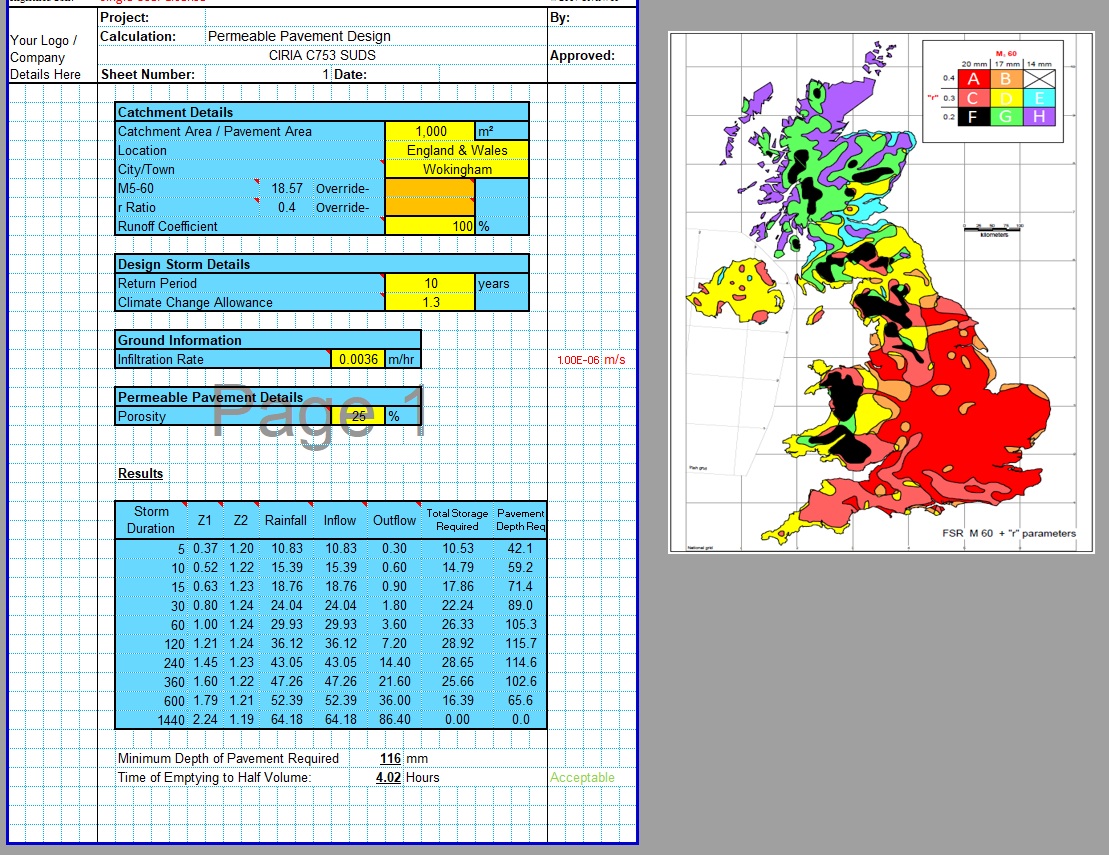
Permeable Pavement Design Spreadsheet
This spreadsheet is designed to determine the size and characteristics of permeable pavements.
Learn More
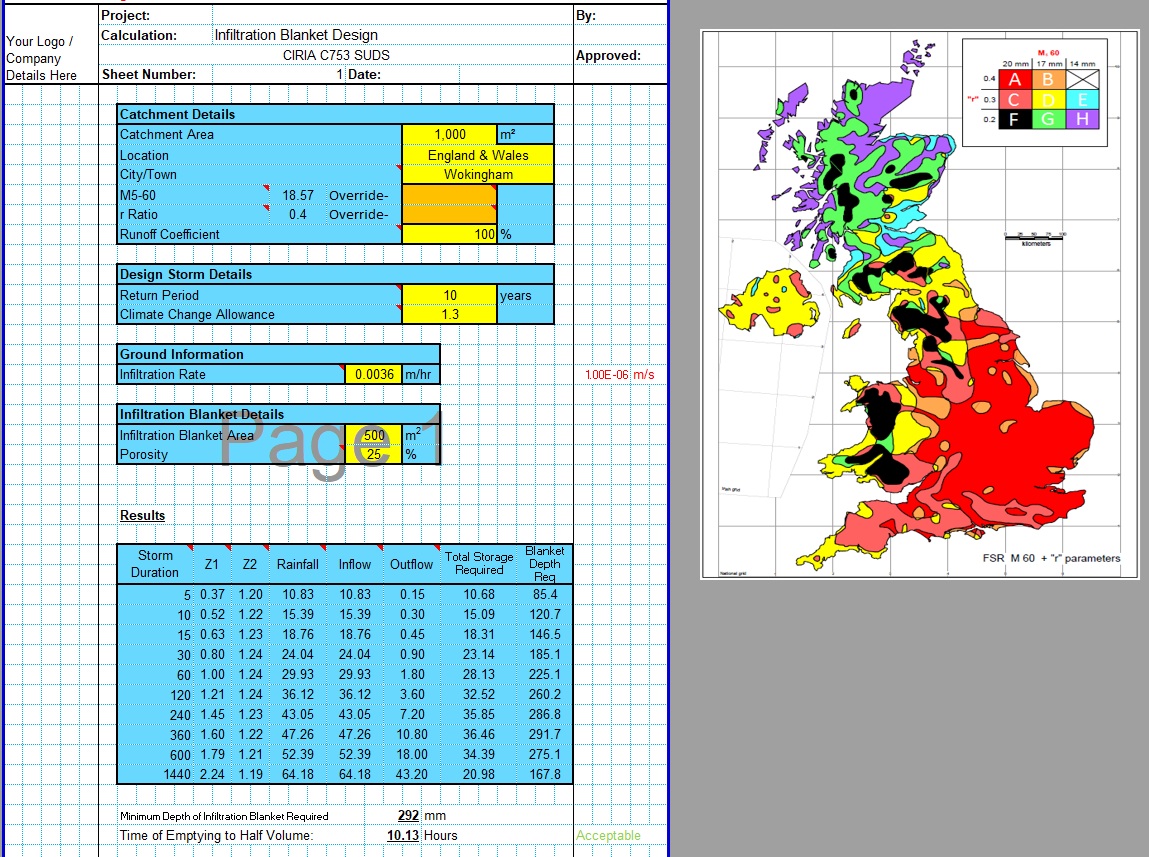
Infiltration Blanket Design Spreadsheet
This spreadsheet can be used to design thin depth infiltration systems, typically called infiltration blanket systems.
Learn More
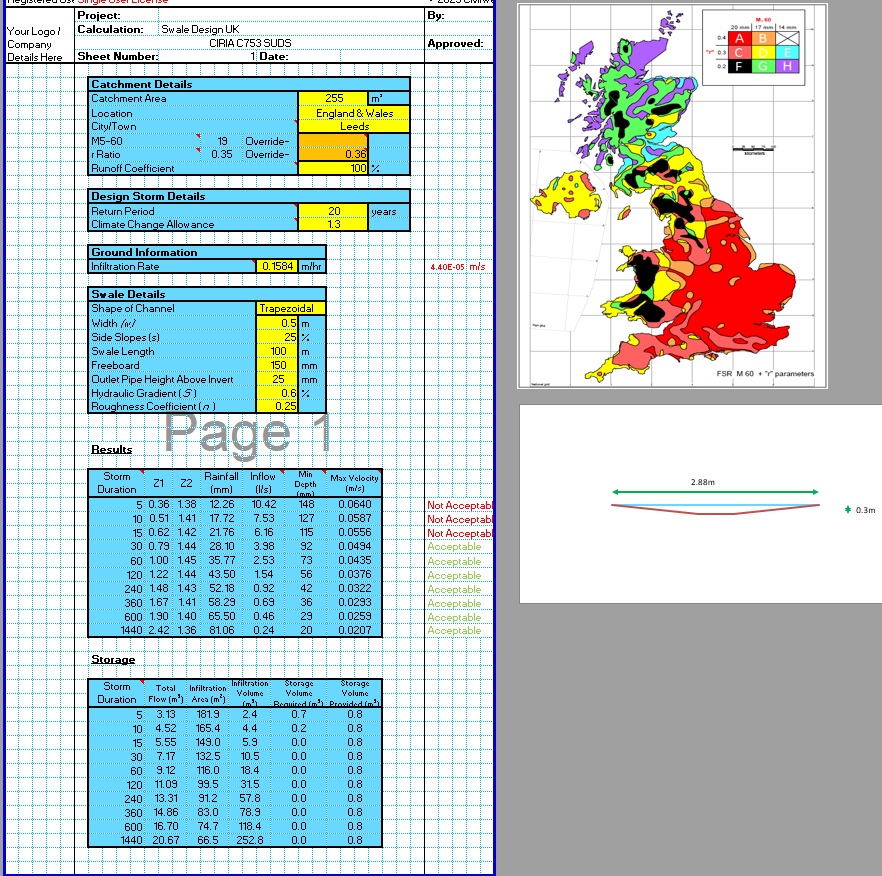
Swale Design Spreadsheet
This spreadsheet can be used to design swales. These linear grassed channels can be used both to convey, infiltrate and filter surface drainage runoff.
Learn More
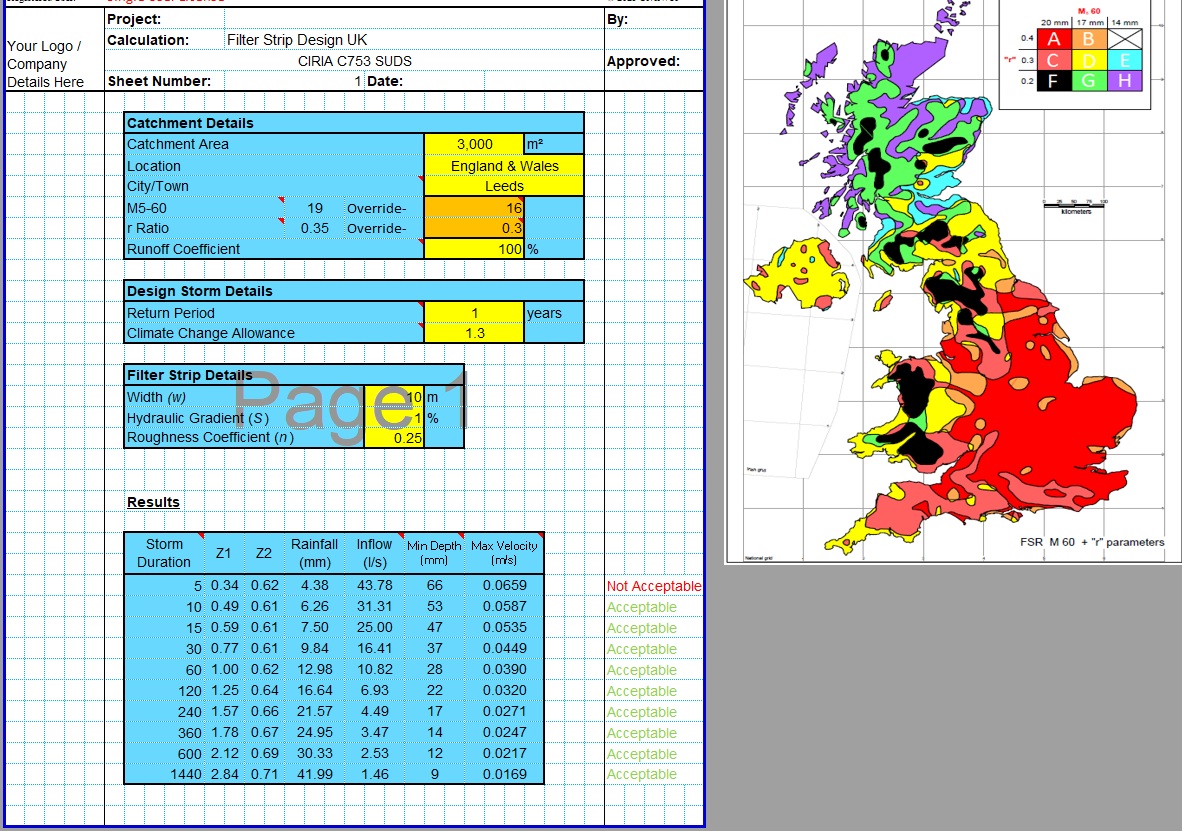
Filter Strip Design Spreadsheet
This spreadsheet is designed to analyse surface water filter strips and to determine the max flow depth and max flow velocity and determine whether they are in accordance with relevant standards.
Learn More
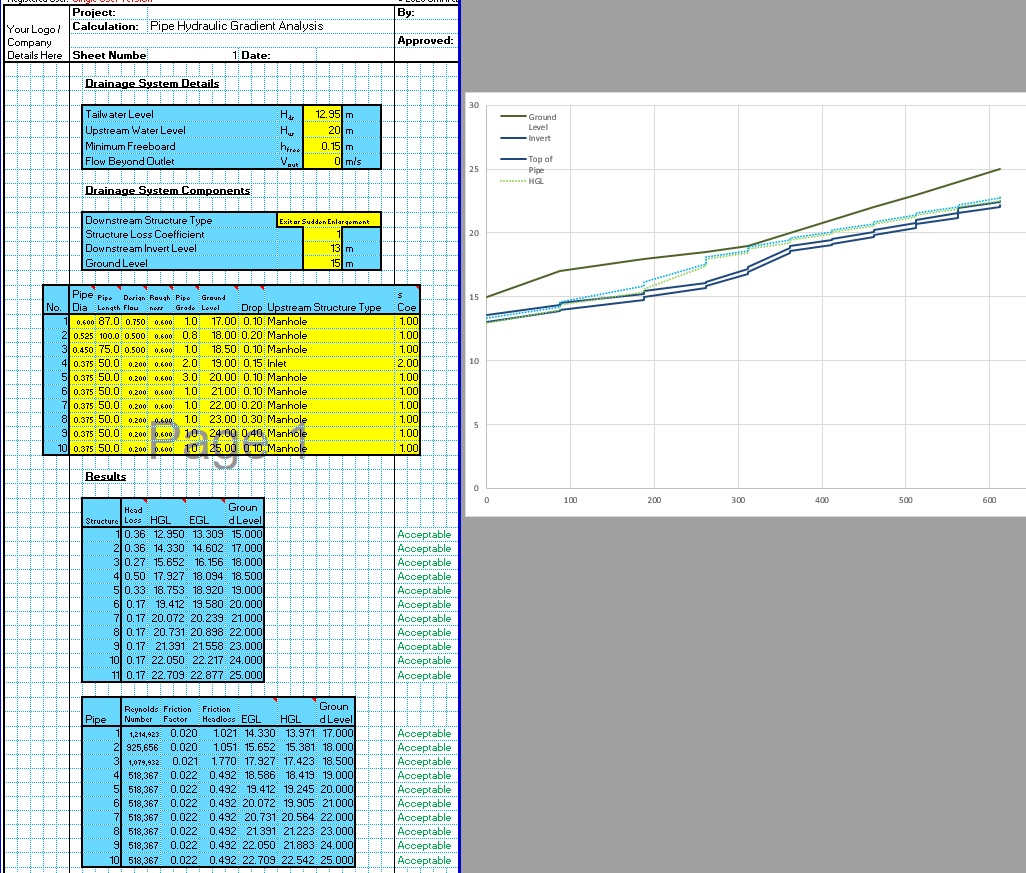
Hydraulic Gradient Analysis Spreadsheet
This spreadsheet analyses the hydraulic and energy grade lines for drainage systems with up to 10 drainage runs.
Learn More
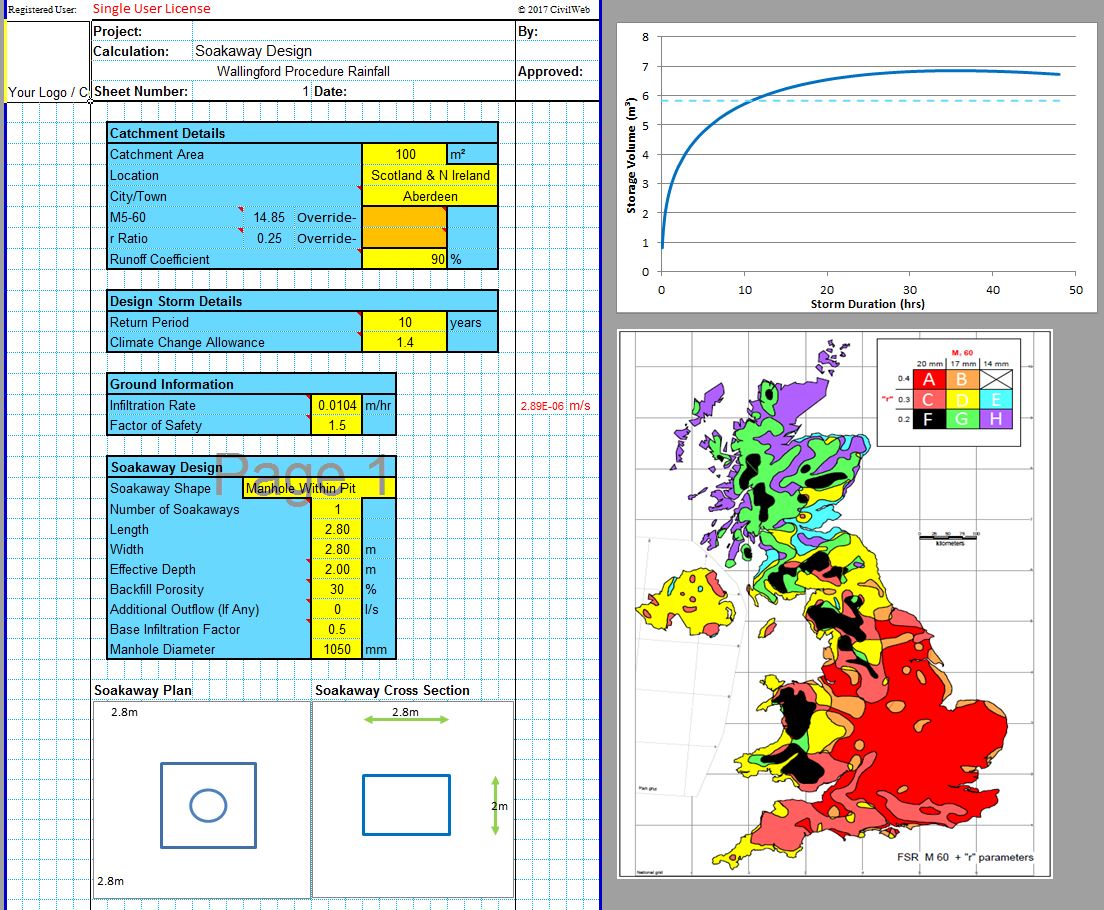
Soakaway Design Spreadsheet
This spreadsheet calculates the requirements for a soakaway system and assists the user to design a suitable system.
Learn More
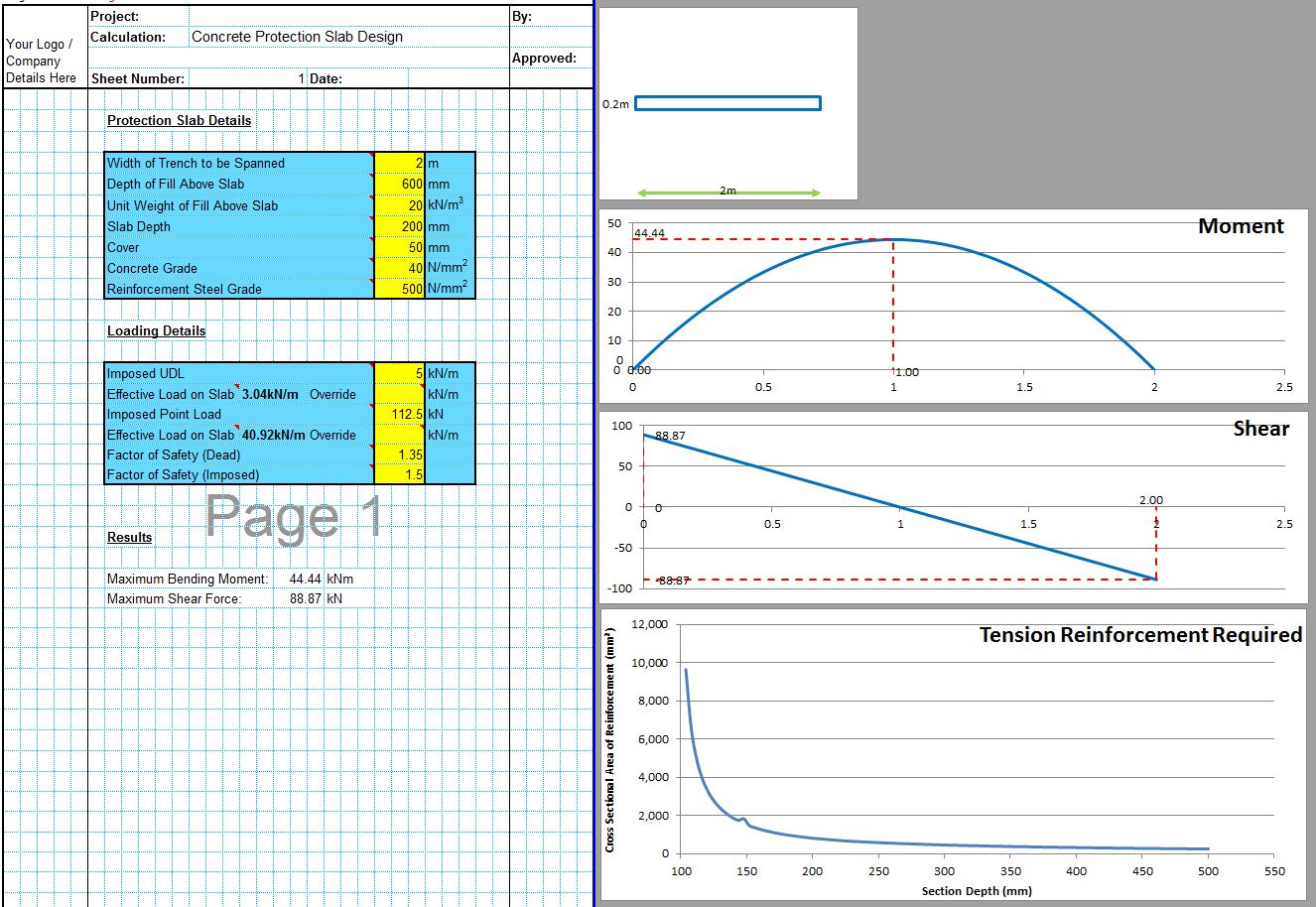
Concrete Protection Slab
This detailed design spreadsheet designs a protection slab commonly installed to protect shallow pipes.
Learn More
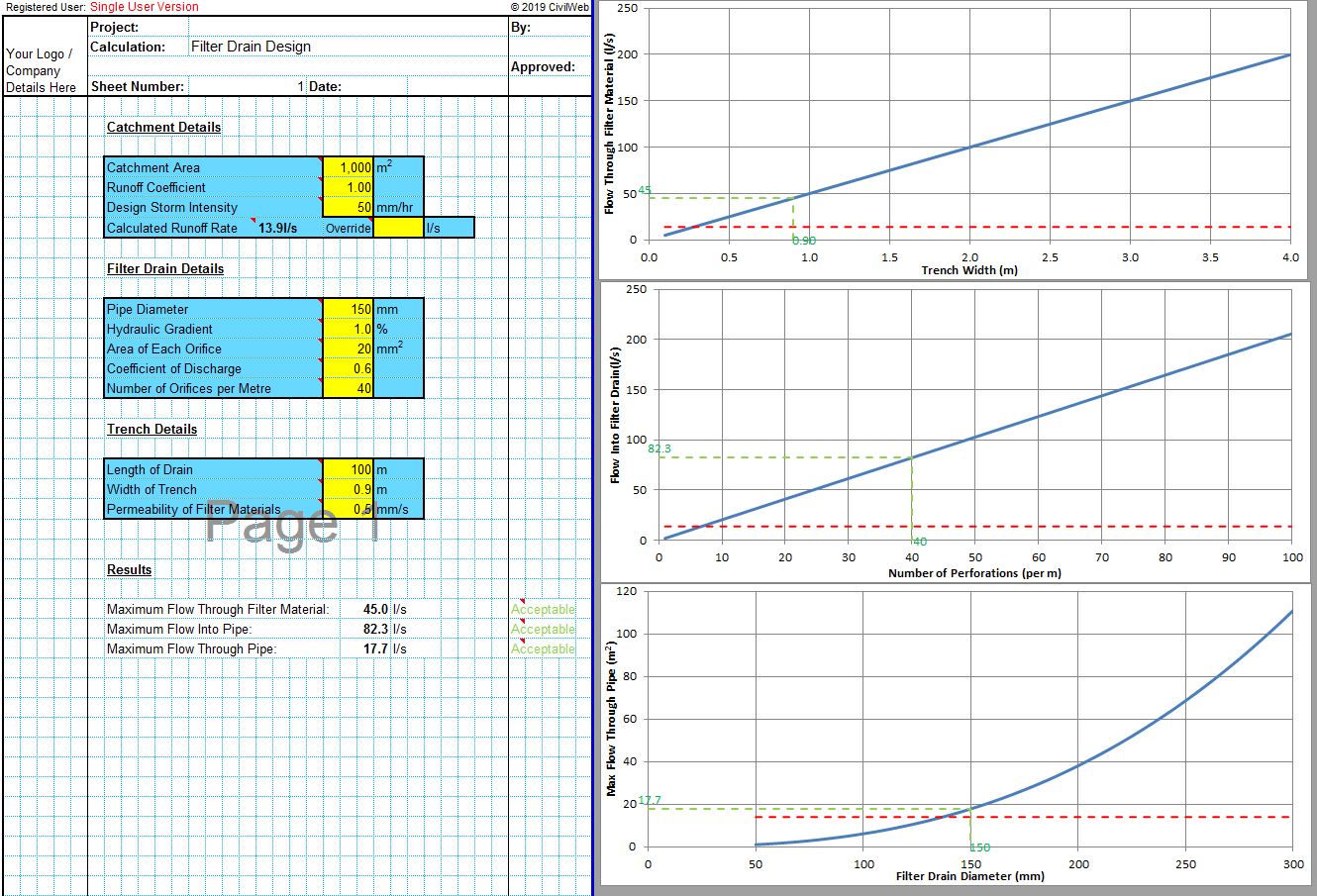
French Drain Design
This spreadsheet completes French Drain Design in accordance with the SUDS Manual.
Learn More
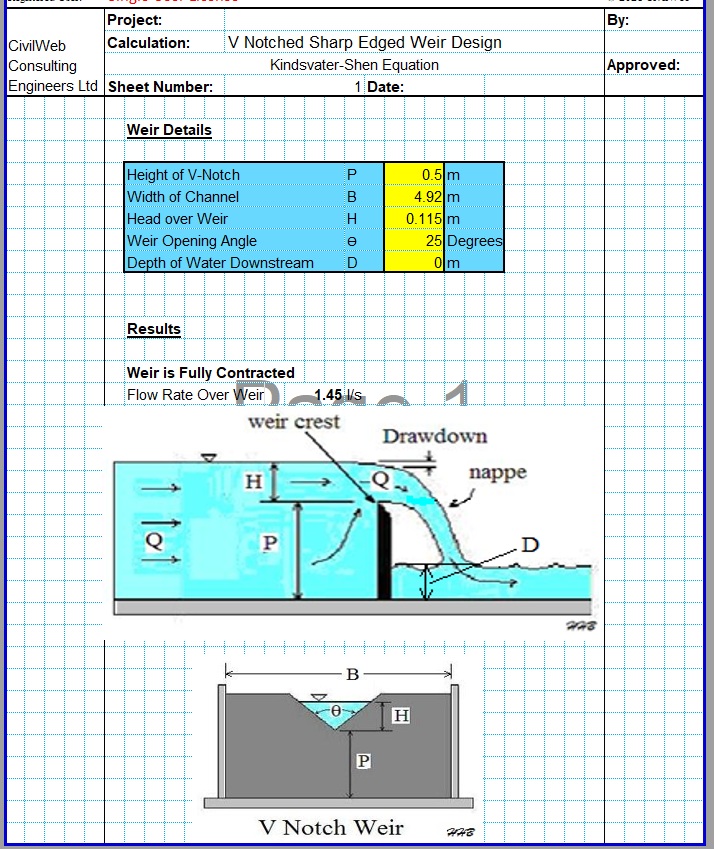
Sharp Crested Weir Flow Calculator Spreadsheets
This suite of 5 separate spreadsheets calculates the flow over sharp crested weirs of all shapes and sizes.
Learn More
Drainage Design Spreadsheet
This is the full suite of drainage design spreadsheets, available at a massive discount for only £49.99.