The most common type of large scale field drainage scheme involves the installation of a number of lateral perforated pipes installed in a permeable backfill. The permeability of the backfill and the perforations in the pipe allow rainwater to quickly percolate into the trench, through the backfill and into the lateral drain pipe. The water is then conveyed down the pipe into a main drain which in turn conveys the water to an outfall.
The CivilWeb Field Drain Design Spreadsheet can be used to accurately and quickly design all kinds of field drains.
Depth
The lateral drains need to be installed at a depth which will prevent them from being damaged by loading from plant and equipment on the surface and deep enough to avoid damage from soil implements. In general a depth of around 750mm below the soil surface is sufficient. Unless there is a specific need, for example due to a deeply rooted crop, the lateral drains should not be installed significantly deeper.
Where lateral drains are used to lower the groundwater table, deeper lateral drains can lead to increased spacings between drains. In these cases lateral drain depths of around 1.2m to 1.5m are common. The optimum depth and spacing of these drains should be acquired through calculation.
Drain Spacing
Drain spacing can be calculated using the CivilWeb Field Drain Design Spreadsheet. The spreadsheet will calculate if a proposed spacing is adequate by comparing the capacities of the lateral drains and the total capacity required. This is done in accordance with ADAS 345 as explained in the following section.
Typical spacings of around 20m to 25m are common for field drains installed in permeable soils. This is close enough to allow the rainwater to percolate through the soils to a lateral drain without waterlogging, even during prolonged wet weather.
Where heavy clay or impermeable soils are present field drains would need to be installed very closely together in order for the rainwater to percolate to a drain quickly enough to prevent waterlogging in wet weather. In these cases a system of mole drains is generally more appropriate, as explained below. These can be installed in conjunction with lateral drains installed at between 40m and 80m if required.
In some cases lateral drains are installed without imported permeable backfill. The trench is simply backfilled with the arisings after the perforated pipe has been installed. This is cheaper for a single trench but would require the spacings between lateral drains to drop to around 10m in order to prevent the risk of the area becoming waterlogged during prolonged wet weather. Generally it is more efficient to install lateral drains with permeable backfill at greater spacings.
Permeable Backfill Material
Generally the lateral drains should be installed with a permeable backfill material placed above and around the perforated pipe. This backfill material allows the rainwater to quickly percolate through to the perforated pipe. This increases the speed at which the rainwater can be removed from the soil and allows any runoff water to be transmitted from the surface vertically into the pipe.
One exception is where lateral drains are installed to lower the groundwater table in permeable soils. In this case the permeability of the soil below the pipe is more important than the permeability above, so the trench can simply be backfilled with the arisings.
The backfill also helps to keep the pathway to the pipe open. As the rainwater percolates towards the pipe it will deposit small sediments, particularly in the area around the pipe. If there is no permeable backfill installed this area can become blocked with sediments restricting the amount of water which can enter the pipe. This can lead to flooding during heavy rain.
Permeable backfill does add a significant cost to field drainage schemes, as shown in our costings section below. Even though the spacings for pipes with permeable backfill can be larger, it still tends to increase the overall costs of the scheme.
The permeable backfill should ideally extend up to the cultivated layer. This will allow rainwater to enter the pipe as easily as possible. Where mole drains or subsoiling are included, there must be a connection between the permeable backfill layer and the mole drains or the fissures caused by subsoiling.
The permeable backfill material needs to be structurally sound and should be primarily large coarse gravel, typically between 5mm and 50mm size. The percentage of fines within the material should be as low as possible and must not exceed 10%. This grading of material and lack of fines will ensure that the backfill is sufficiently permeable.
Installation
Lateral field drains can be installed using special plant designed for this purpose. These machines will excavate the trench, install the pipe and backfill automatically. This is the quickest, safest and usually cheapest method of installation. They can also be set to lay the drainage pipes at a consistent gradient which improves the hydraulic performance of the pipes.
Lateral drains can be installed by hand or by general construction plant but there are several disadvantages to this. The trench will need to be wider in order for the pipes to be installed which leads to more permeable backfill being used. It also takes longer and usually costs more.
The CivilWeb Field Drain Design Spreadsheet can be used to accurately and quickly design all kinds of field drains.
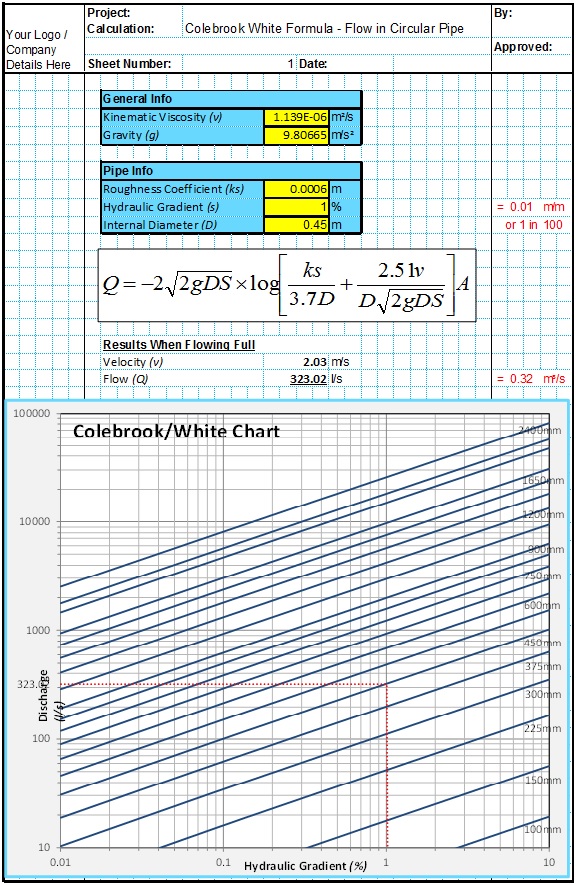
PIPE FLOW CALCULATOR
This spreadsheet uses the Colebrook-White and Manning Equations to calculate the flow capacity and velocity in pipes acting under gravity.
Find Out More
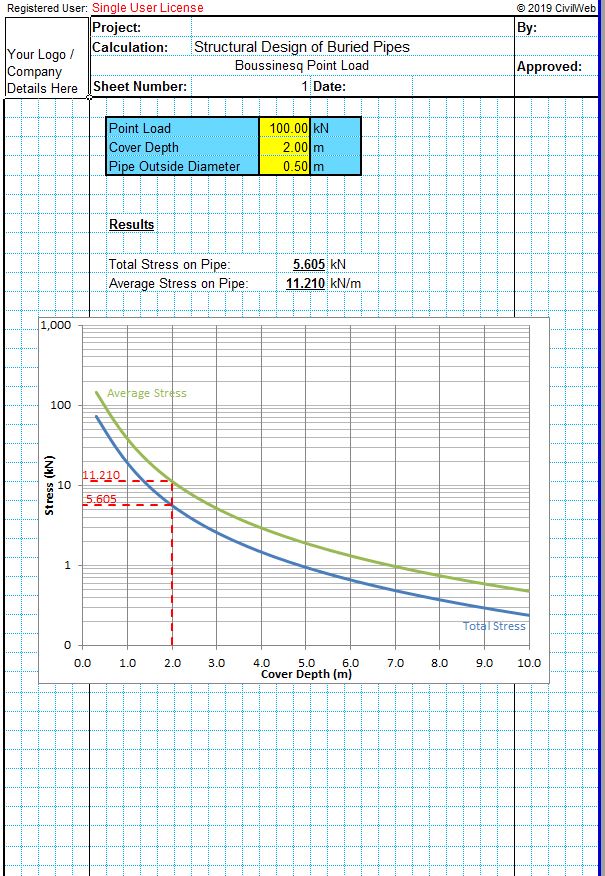
Buried Pipe Design Spreadsheet
This spreadsheet can be used to design concrete, steel, plastic and other buried pipes in accordance with BS EN 1295-1.
Learn More
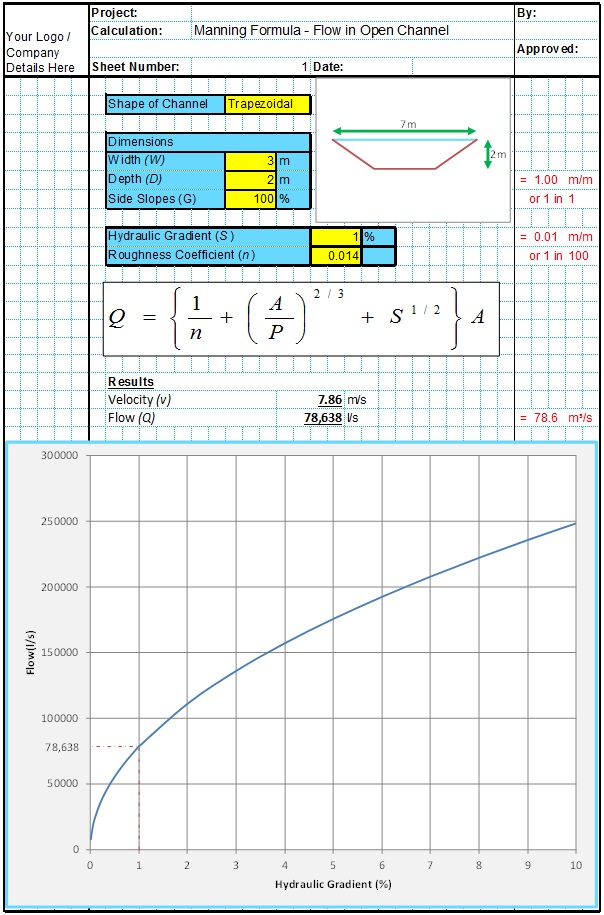
Manning Open Channel Design Spreadsheet
This spreadsheet uses the Manning formula to calculate the flow conditions in an open channel acting under gravity only.
Learn More
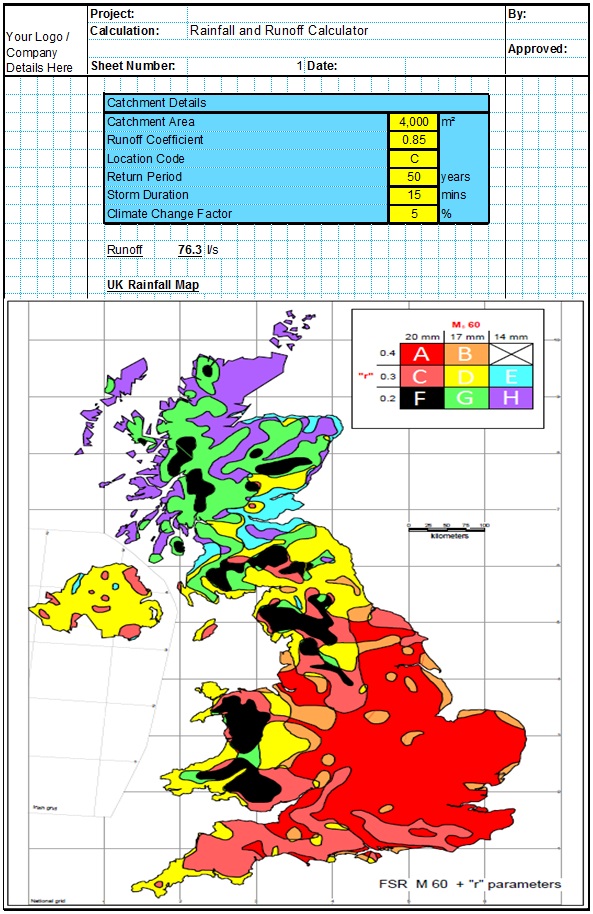
Runoff Calculator Spreadsheet
This spreadsheet calculates the design runoff flow for a site in accordance with the Flood Estimation Handbook.
Learn More
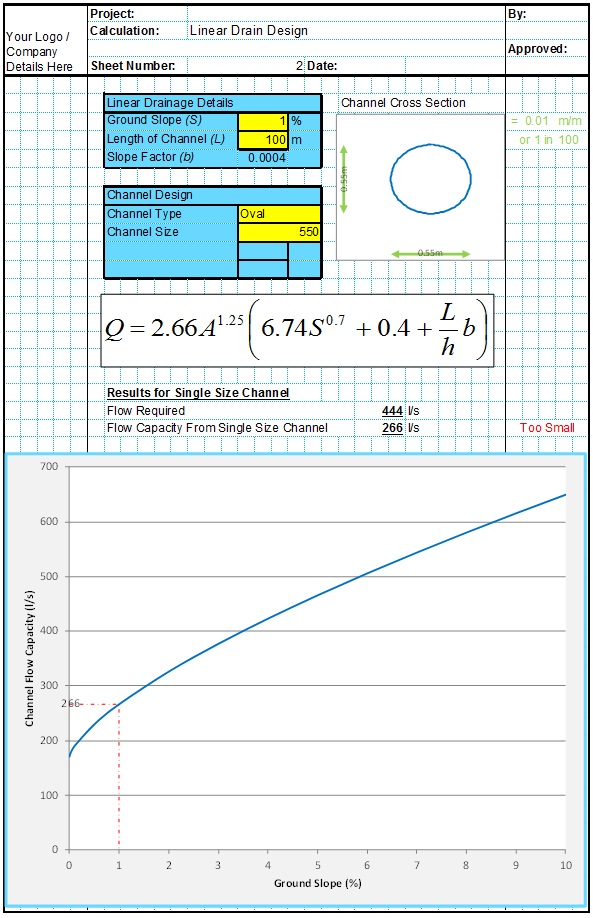
Linear Drainage Design Spreadsheet
This spreadsheet calculates the maximum flow from a specified linear drainage channel and checks whether the channel is sufficient for the specified site and storm conditions.
Learn More
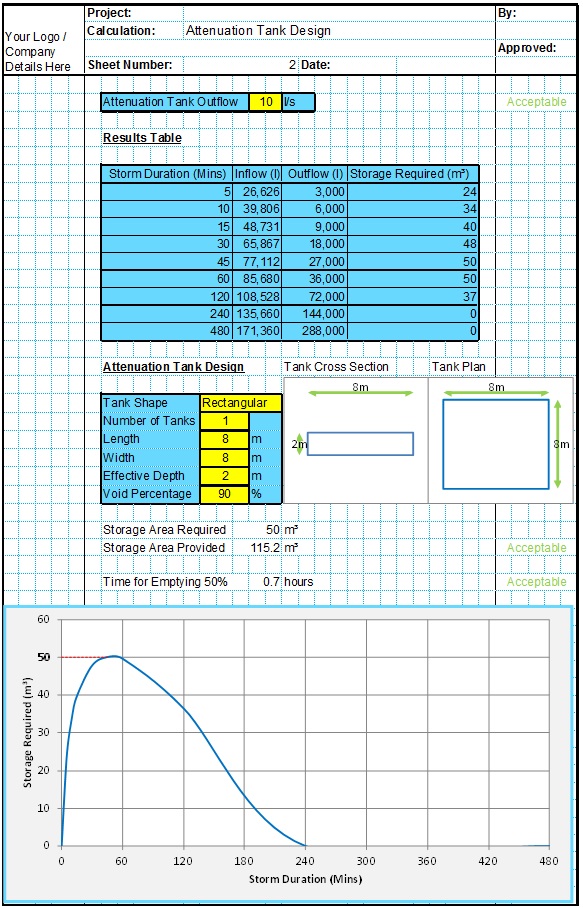
Attenuation Design Spreadsheet
This spreadsheet calculates the requirements for a attenuation system and assists the user to design a suitable system.
Learn More
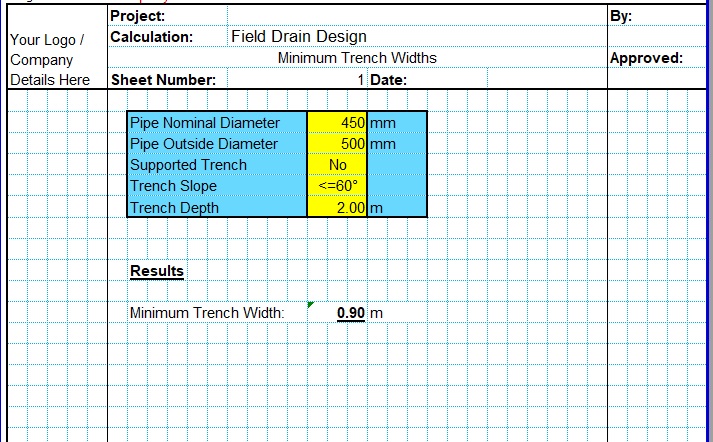
Field Drain Design Spreadsheet
This spreadsheet can be used to design field drains, typically subsurface drainage systems used to drain fields and open areas.
Learn More
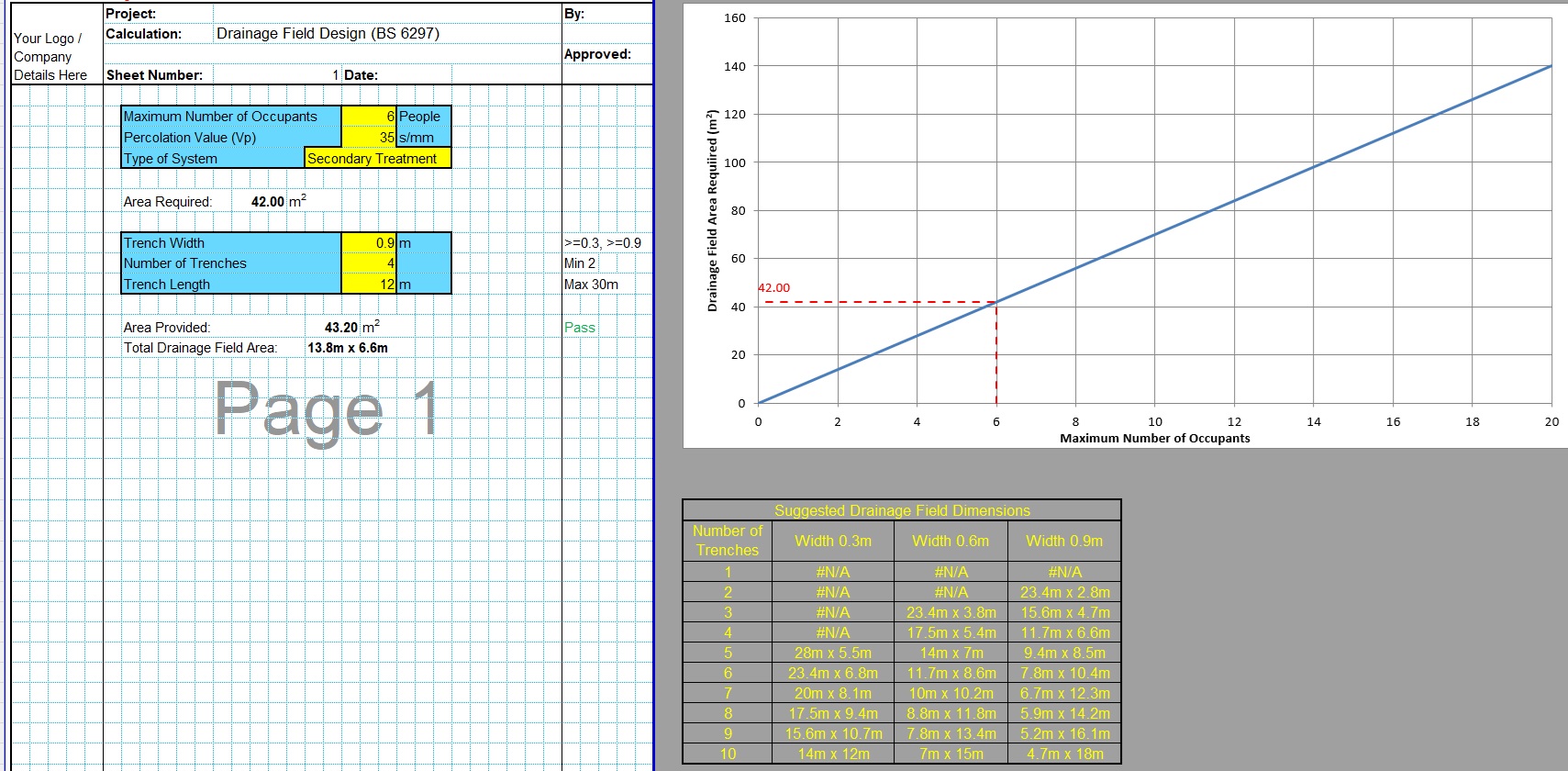
Drainage Field Design Spreadsheet
This spreadsheet can be used to design septic infiltration systems known as drainage fields, leach fields or septic drain fields.
Learn More
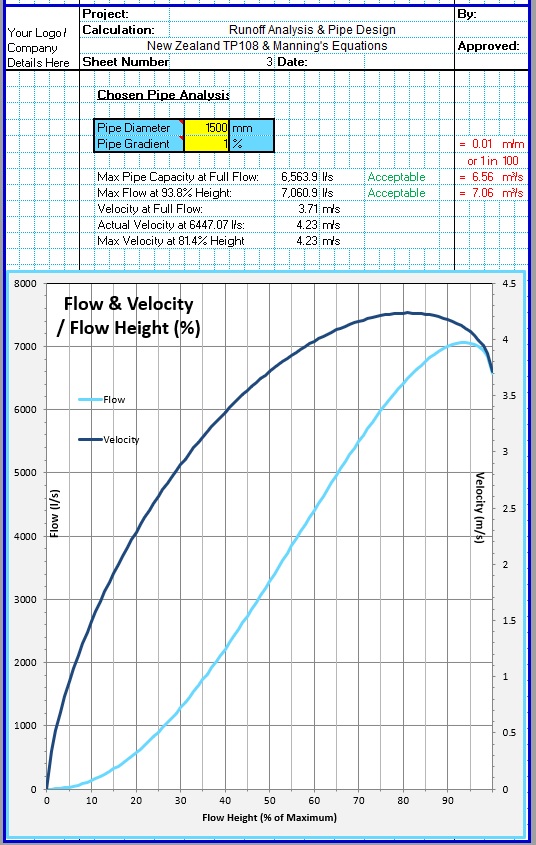
TP108 Spreadsheet
This spreadsheet calculates the rainfall for New Zealand catchments in accordance with TP108.
Learn More
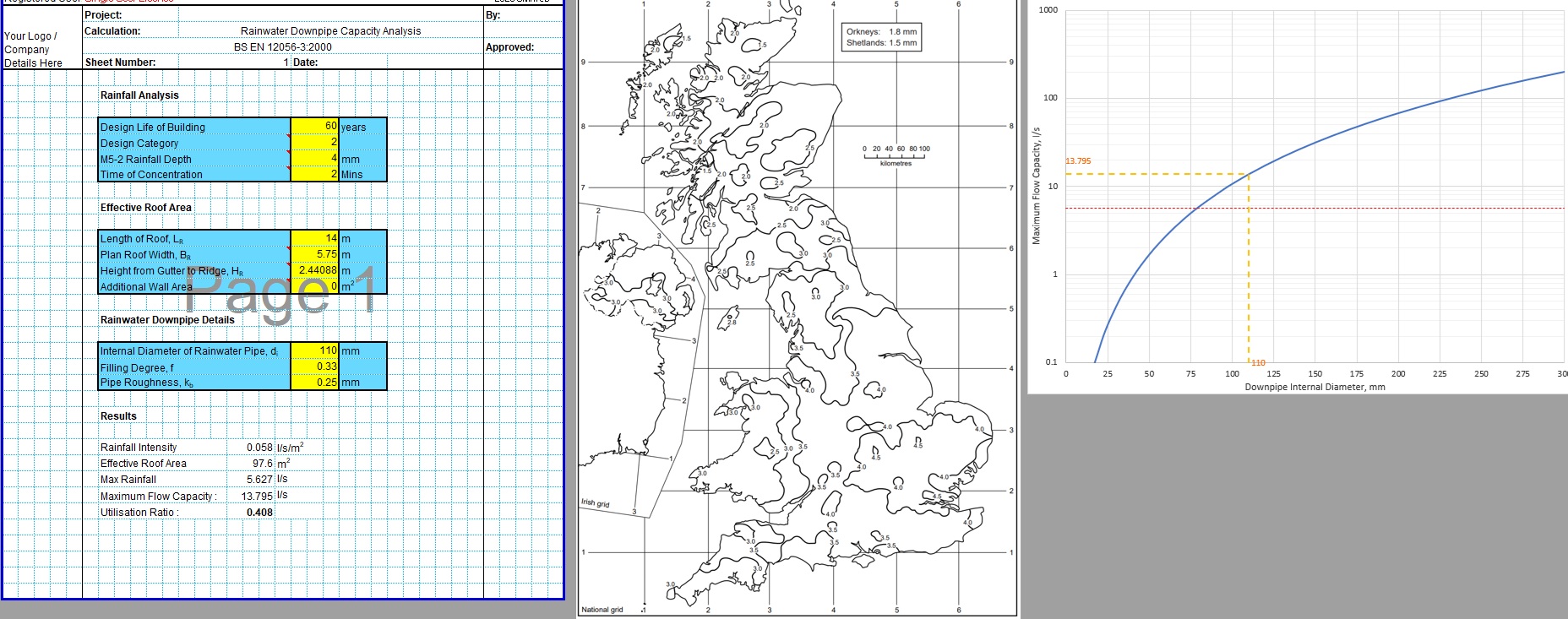
Roof Downpipe Calculator Spreadsheet
This spreadsheet calculates the size of roof drainage downpipes depending on the roof catchment and rainfall requirements.
Learn More
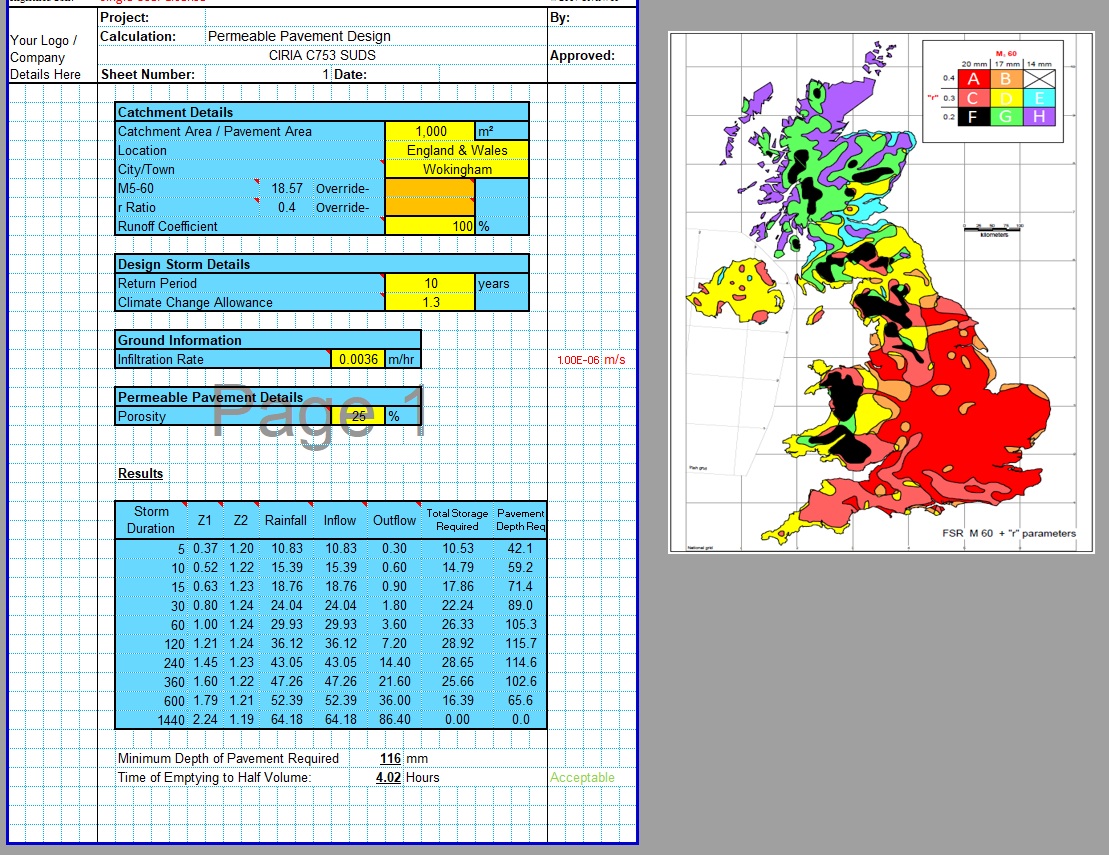
Permeable Pavement Design Spreadsheet
This spreadsheet is designed to determine the size and characteristics of permeable pavements.
Learn More
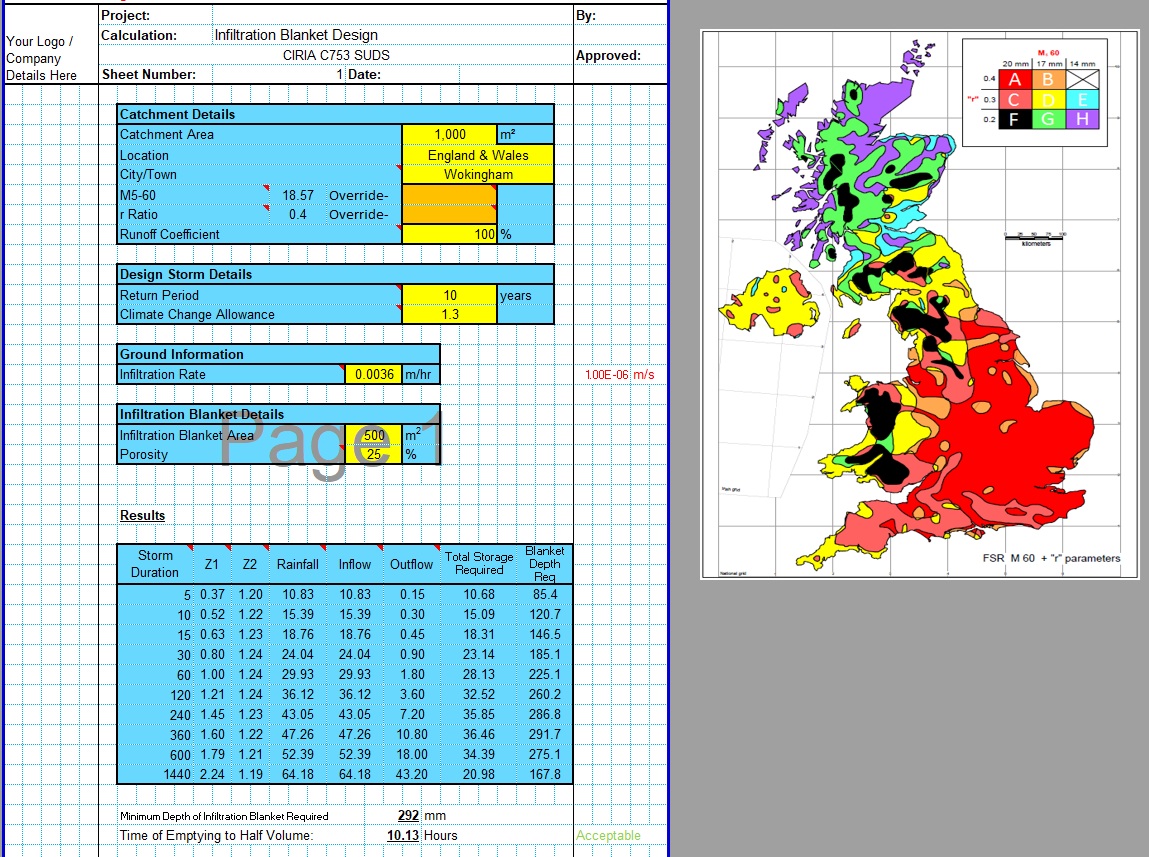
Infiltration Blanket Design Spreadsheet
This spreadsheet can be used to design thin depth infiltration systems, typically called infiltration blanket systems.
Learn More
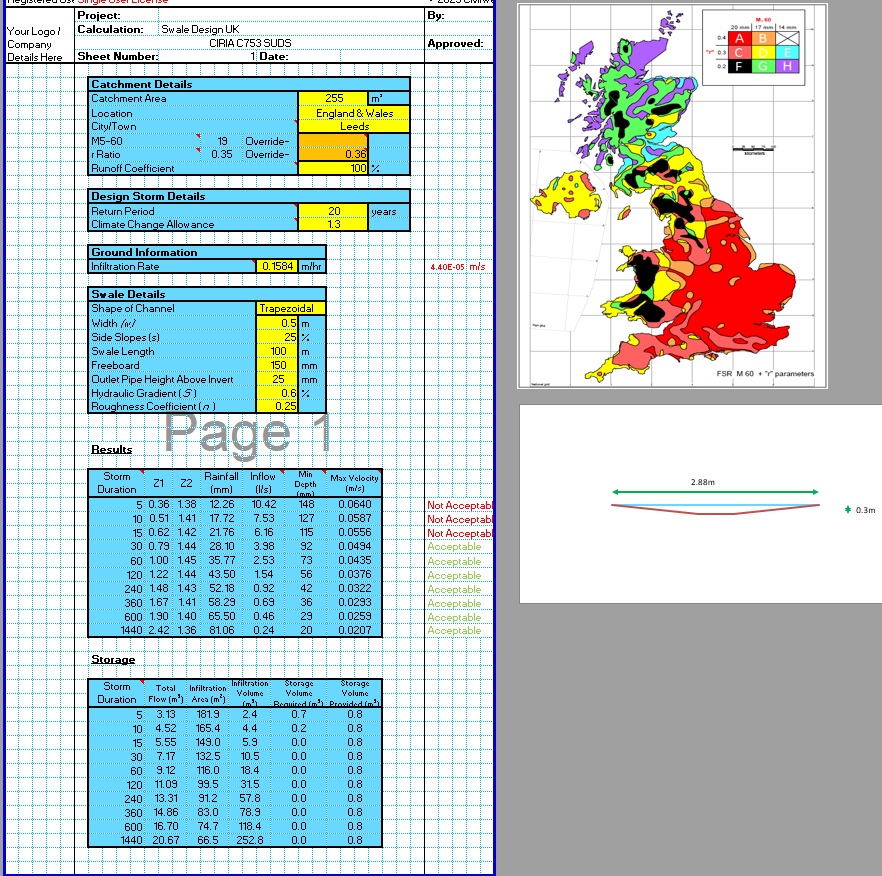
Swale Design Spreadsheet
This spreadsheet can be used to design swales. These linear grassed channels can be used both to convey, infiltrate and filter surface drainage runoff.
Learn More
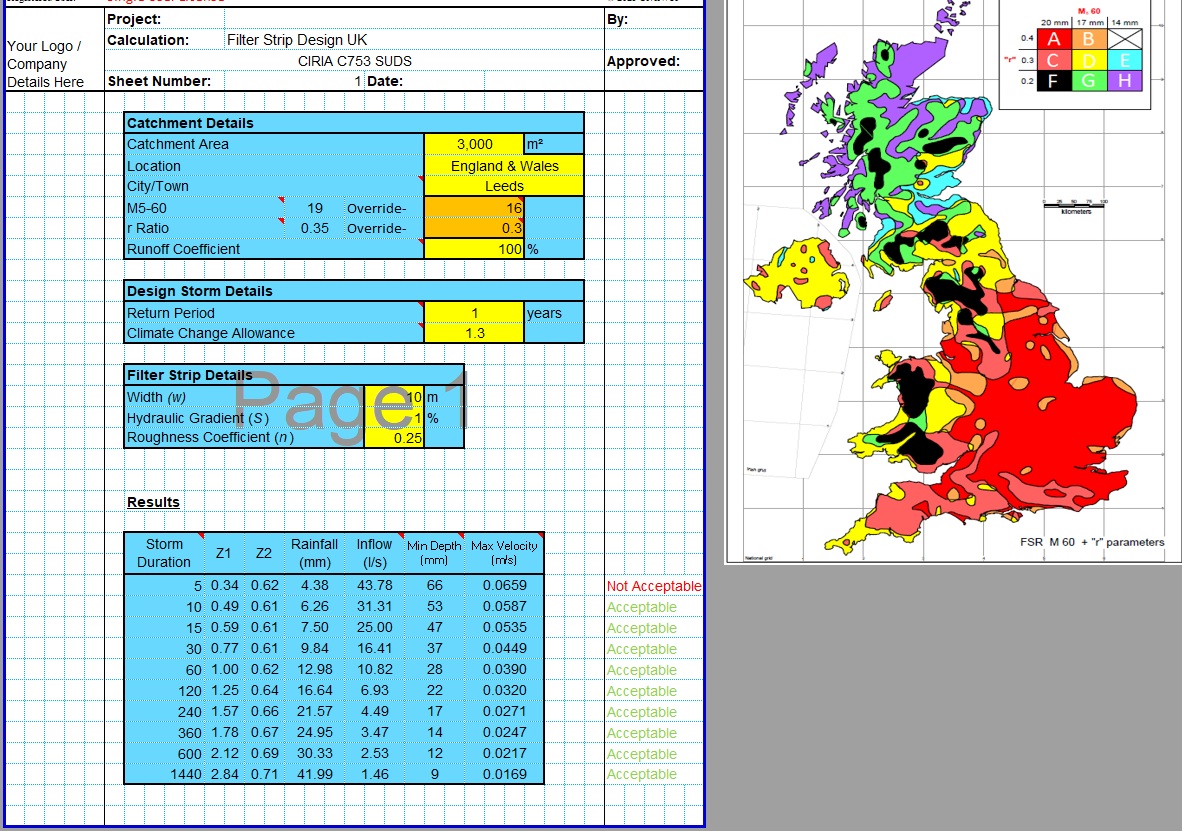
Filter Strip Design Spreadsheet
This spreadsheet is designed to analyse surface water filter strips and to determine the max flow depth and max flow velocity and determine whether they are in accordance with relevant standards.
Learn More
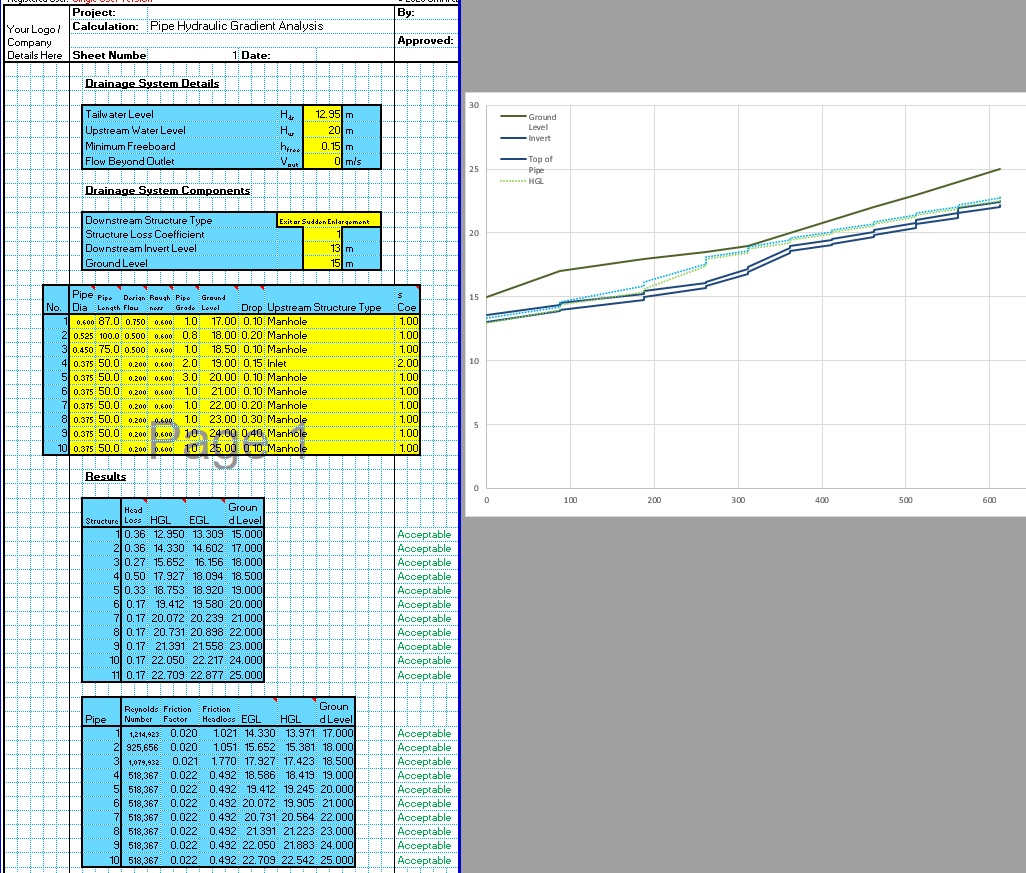
Hydraulic Gradient Analysis Spreadsheet
This spreadsheet analyses the hydraulic and energy grade lines for drainage systems with up to 10 drainage runs.
Learn More
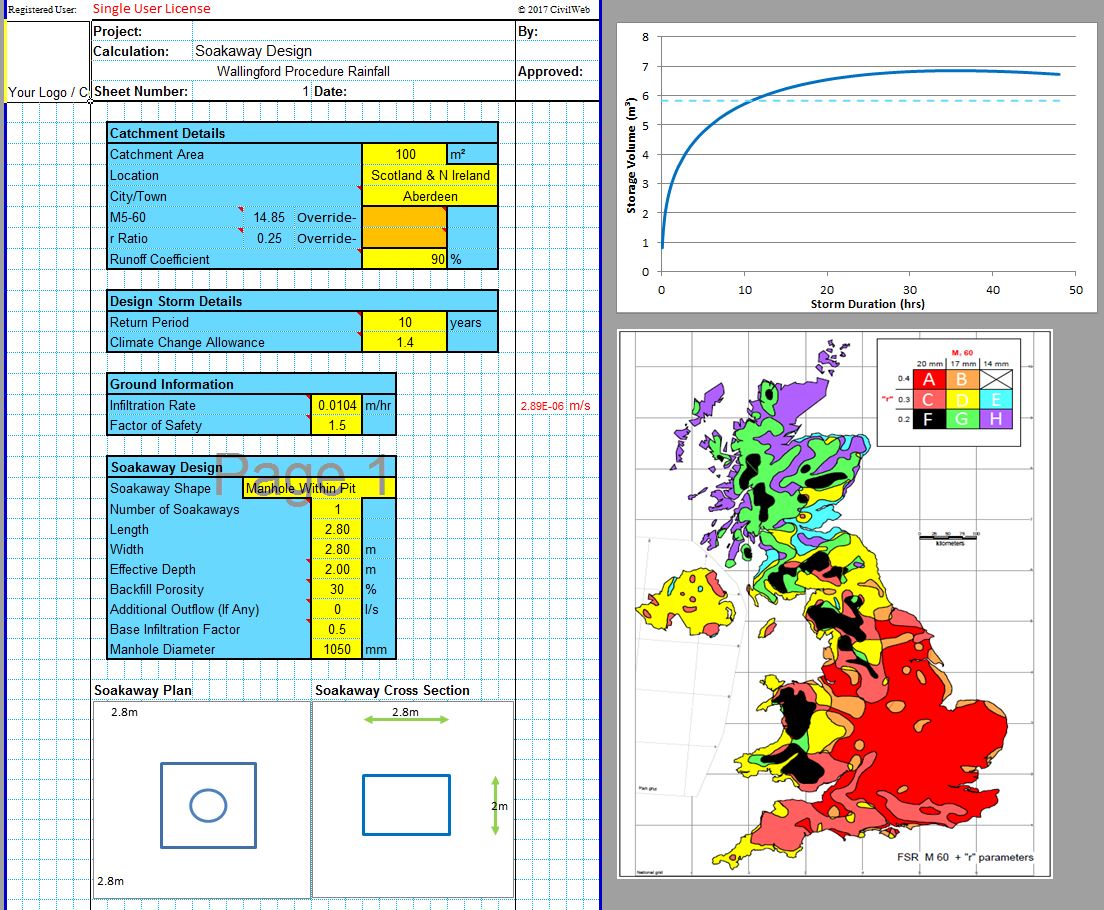
Soakaway Design Spreadsheet
This spreadsheet calculates the requirements for a soakaway system and assists the user to design a suitable system.
Learn More
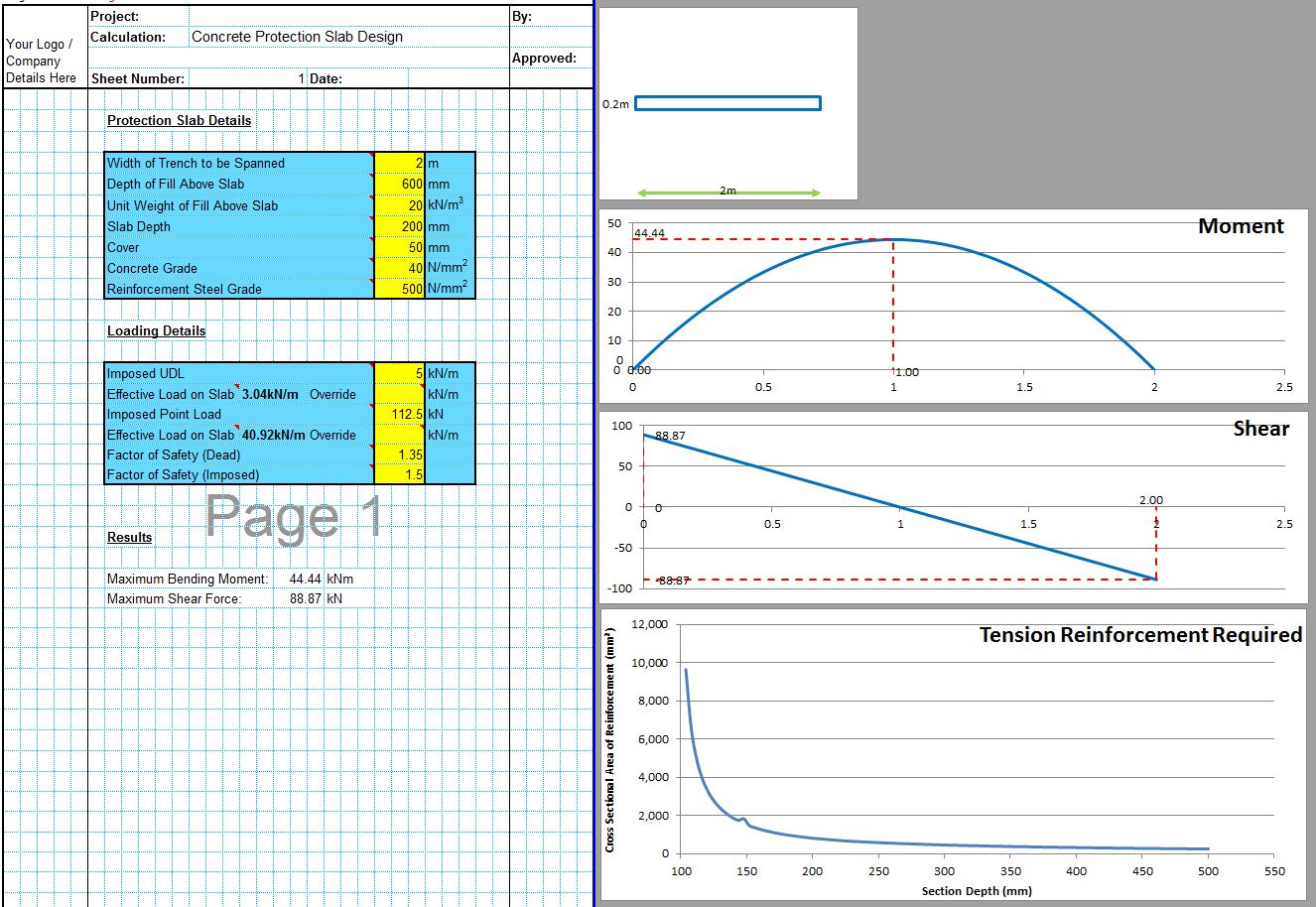
Concrete Protection Slab
This detailed design spreadsheet designs a protection slab commonly installed to protect shallow pipes.
Learn More
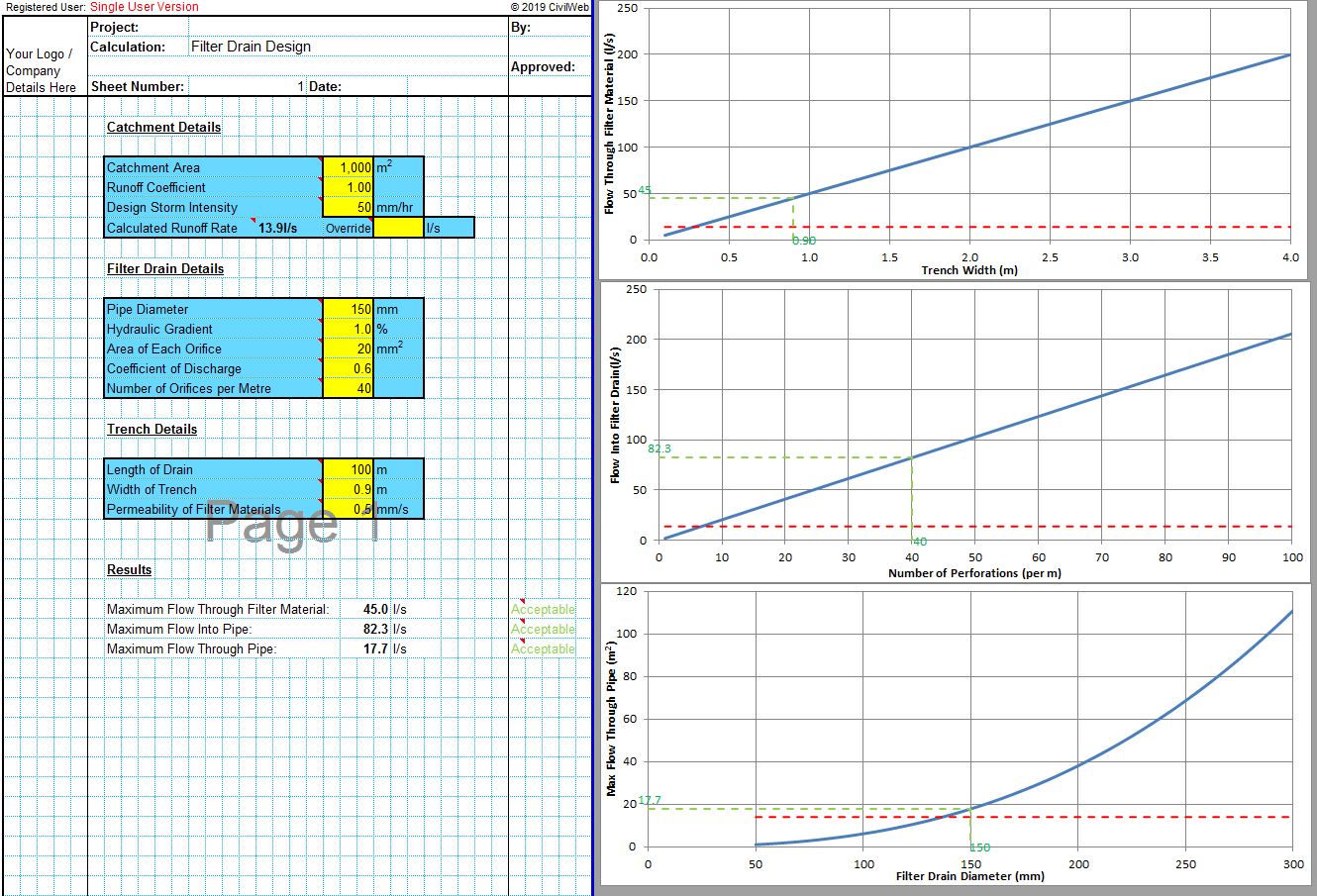
French Drain Design
This spreadsheet completes French Drain Design in accordance with the SUDS Manual.
Learn More
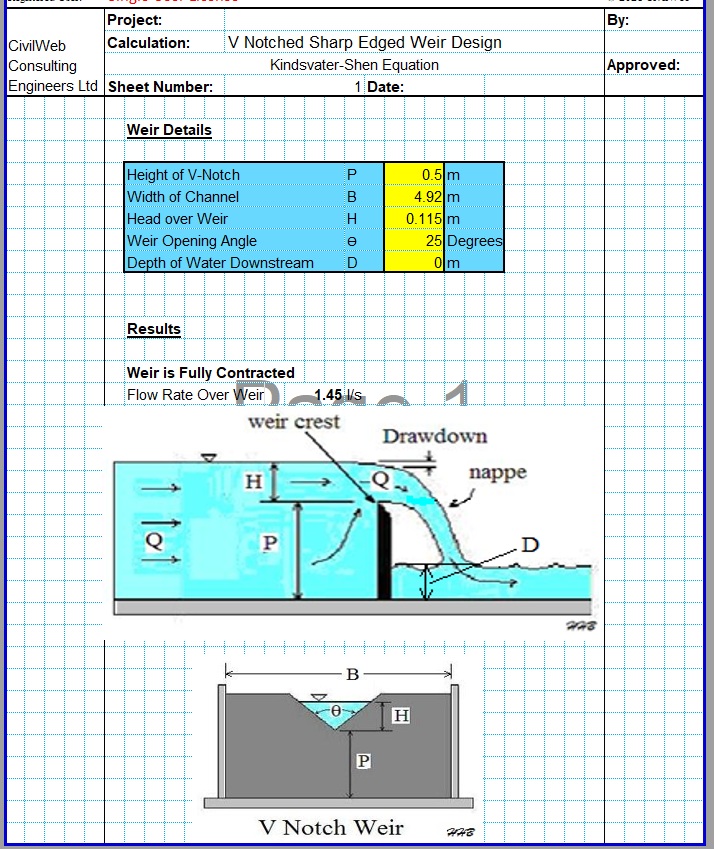
Sharp Crested Weir Flow Calculator Spreadsheets
This suite of 5 separate spreadsheets calculates the flow over sharp crested weirs of all shapes and sizes.
Learn More
Drainage Design Spreadsheet
This is the full suite of drainage design spreadsheets, available at a massive discount for only £49.99.