Mole drains are unlined underground channels typically formed in clay subsoils. These are used where traditional lateral pipes would need to be installed at very close centres in order to effectively drain impermeable clay layers. Mole drains act as closely spaced small diameter drains which allow the water to flow towards a main drain pipe or even straight into an open drainage ditch. They are often installed at centres between 2m and 3m, though this can be less on unstable soils.
The CivilWeb Field Drain Design Spreadsheet can be used to accurately and quickly design all kinds of field drains.
Mole drains work best in heavy clay soils as the cohesiveness of the clay is required to form stable circular conduits. Soils should be sufficiently plastic to form a worm without cracks when rolled by hand. Soils with a large proportion (>30%) of granular sands or other materials will not form mole drains well. Typically these soils do not require mole drains anyway as there permeability will allow lateral drains to be installed at reasonable centres.
Mole drains can last over 10 years in good conditions. The longevity achieved on a particular site will depend on the soil texture, calcium content, climate, slope and the moisture conditions when the mole drains were installed. Typically mole drains will last between 5 years and 10 years in average conditions.
Installation
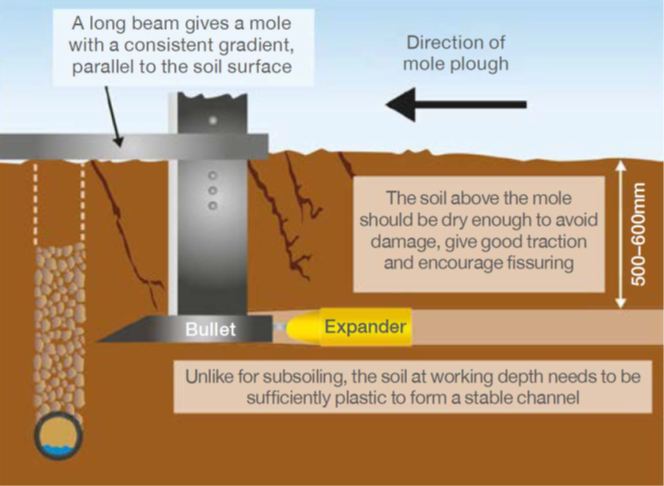
Mole drains are formed by dragging a steel bullet through the soil to form the void. An expander is pulled behind the bullet to form the void into a circular conduit of a particular diameter and to reduce the risk of the void collapsing.
The bullet is then drawn through to an open ditch or is drawn through the permeable backfill above a permanent main drain. This allows the water to enter the main drain system through the permeable backfill and the perforations in the pipe. The mole drains should also be pulled through the permeable backfill of any lateral drains which are intended to be connected to the mole drain system. The mole plough should be removed as soon as it has crossed the main drain. If dead end drains are created beyond the main drain these will fill with water.
The mole plough used should be in good condition, with no significant wear to the bullet. This will ensure that the mole drain conduits are formed correctly. The bullet must be parallel to the ground surface, otherwise the mole drain conduits will not be formed correctly and the draught required to pull the plough will be increased.
Heavy clay soils can be smeared as the bullet is pulled through the soil. This smearing effect closes the pores around the perimeter of the conduit restricting the ability of rainwater to enter the conduit. Removing the expander can reduce the risks of smearing in susceptible soils and reduce the draught requirements of pulling the mole plough.
In order to form the circular conduits the soil in the vicinity of the mole drain conduit needs to be sufficiently moist enough to form the channel. If the soil is too dry it will break up, if it is too wet the soil will be too soft and will form a slurry. The soil surface should however be dry enough to ensure good traction and to prevent the soils being compacted. The surface soils should also be dry enough to form fissures and cracks which allows rainwater to infiltrate through to the mole drain conduits.
These conditions are most likely to occur between May and September, depending on the location of the site and the soil conditions.
After installation, a small pit should be dug to expose the mole drains. This will allow the installer to verify that the mole drains have been formed correctly. This should show the mole drain conduits as circular and intact, with fracturing of the soils above. The mole drains can be reinstated after inspection with a short length of perforated pipe.
Depth
The best depth for mole drains to be installed is where the soil conditions are suitable as described above. Typical depths for mole drains are between 500mm and 600mm below the soil surface.
In some cases mole drains are installed at a shallower depth, particularly in untouched areas where the soil structure is poor and it is difficult to achieve greater depths with a tractor. As the soil structure improves the mole drains can be installed deeper, for example when the mole drains are renewed 5 – 10 years after the first installation. Shallower mole drains are however more likely to be damaged by plant and animals, particularly after heavy rains. Often shallower mole drains do not achieve the same design life as deeper mole drains which are better protected by their greater depth. Generally mole drains should be installed at a depth at least 7 times their diameter in order to reduce the risk of the drains being damaged.
Care must be taken that any underground services are not affected, particularly where mole drains deeper than 500mm are proposed.
Gravel Mole Drains
Some mole drains are installed with gravel used to fill the conduit. This gravel supports the channel which increases the design life of the mole drains and allows them to be spaced slightly further apart. The gravel does however make the installation much more expensive, up to ten times the cost of conventional mole drains. The gravel used should be washed aggregate between around 10mm and 20mm in size.
The CivilWeb Field Drain Design Spreadsheet can be used to accurately and quickly design all kinds of field drains.
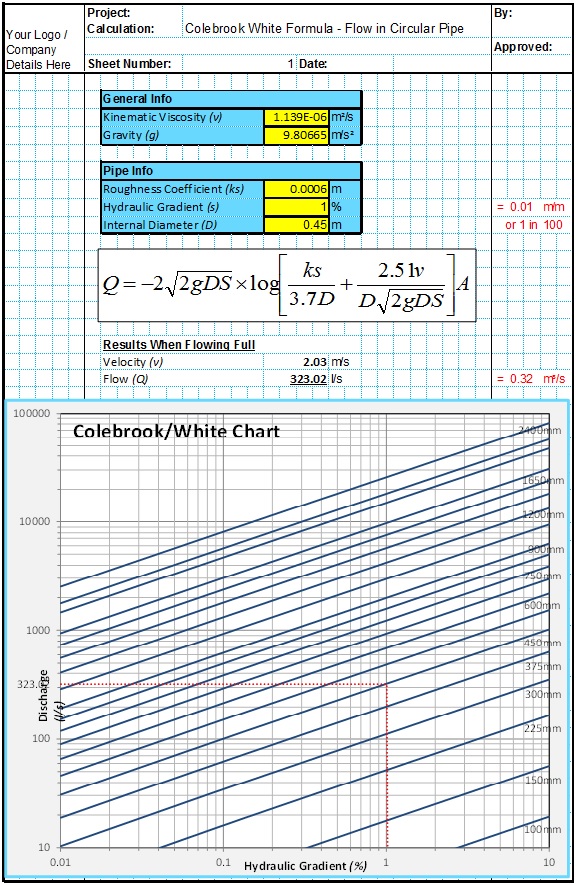
PIPE FLOW CALCULATOR
This spreadsheet uses the Colebrook-White and Manning Equations to calculate the flow capacity and velocity in pipes acting under gravity.
Find Out More
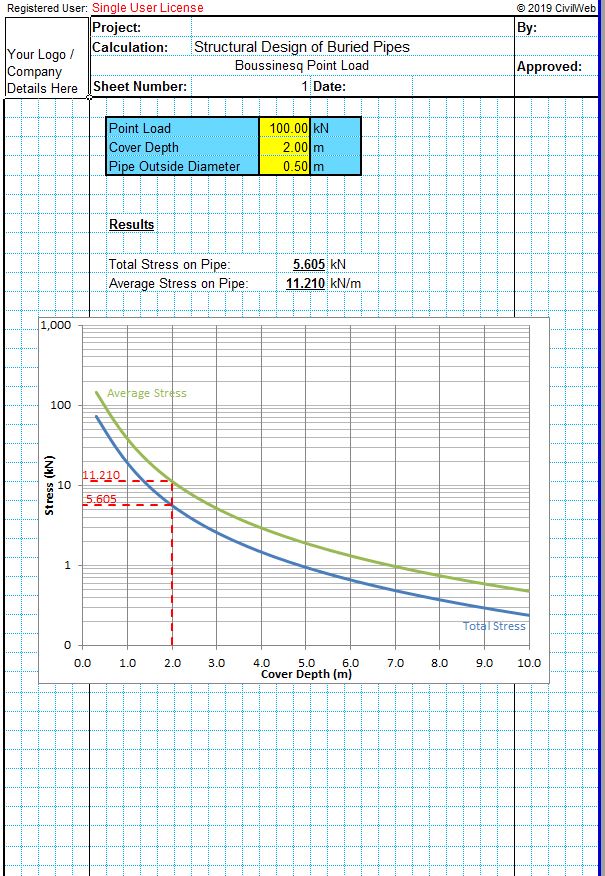
Buried Pipe Design Spreadsheet
This spreadsheet can be used to design concrete, steel, plastic and other buried pipes in accordance with BS EN 1295-1.
Learn More
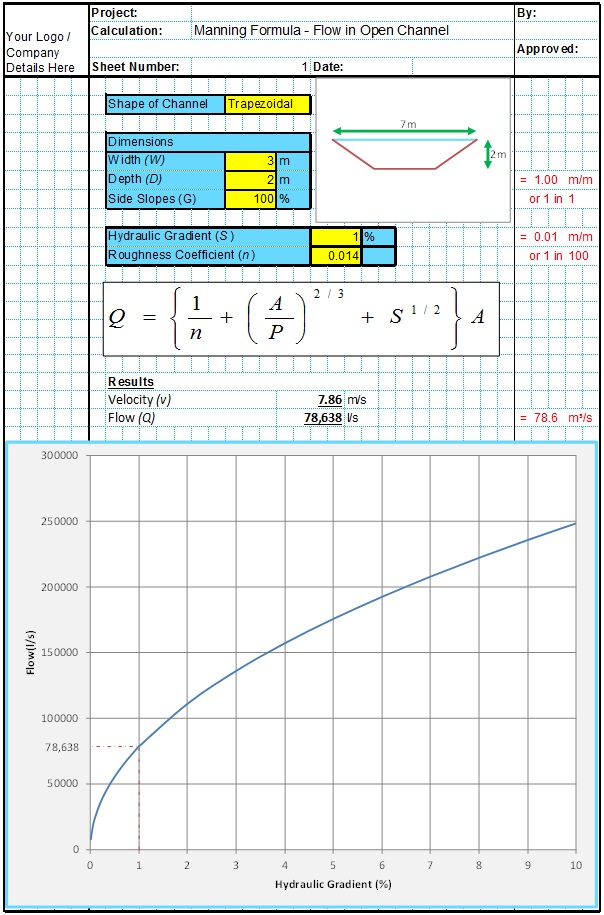
Manning Open Channel Design Spreadsheet
This spreadsheet uses the Manning formula to calculate the flow conditions in an open channel acting under gravity only.
Learn More
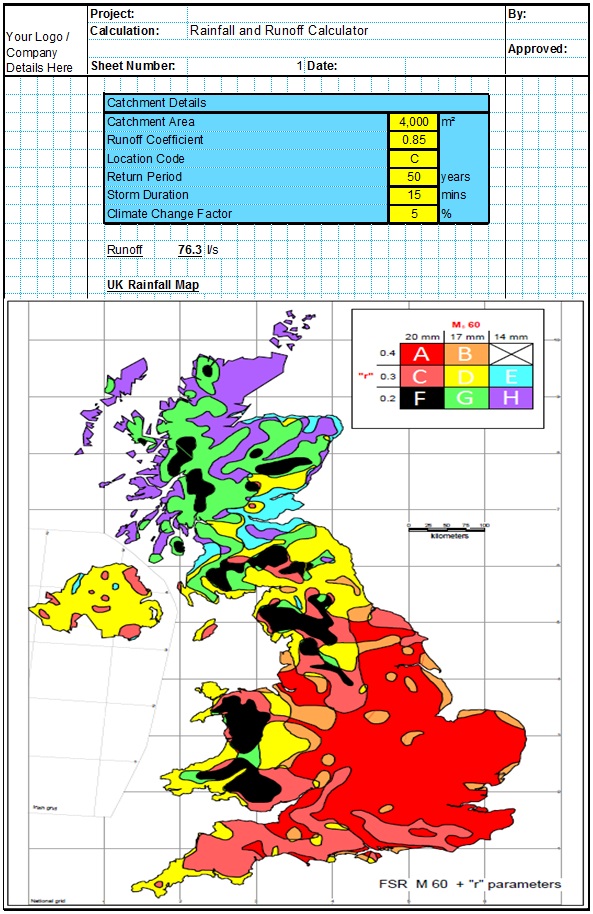
Runoff Calculator Spreadsheet
This spreadsheet calculates the design runoff flow for a site in accordance with the Flood Estimation Handbook.
Learn More
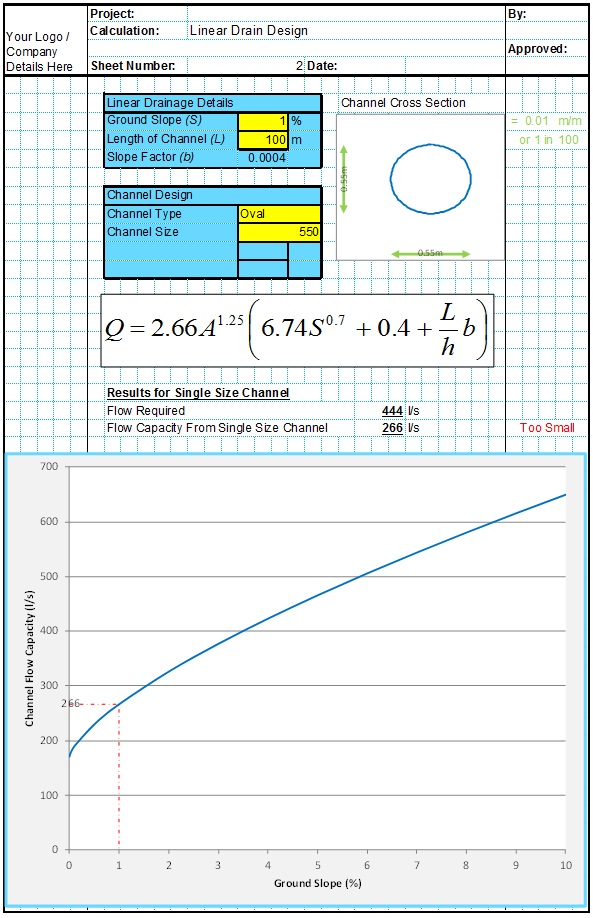
Linear Drainage Design Spreadsheet
This spreadsheet calculates the maximum flow from a specified linear drainage channel and checks whether the channel is sufficient for the specified site and storm conditions.
Learn More
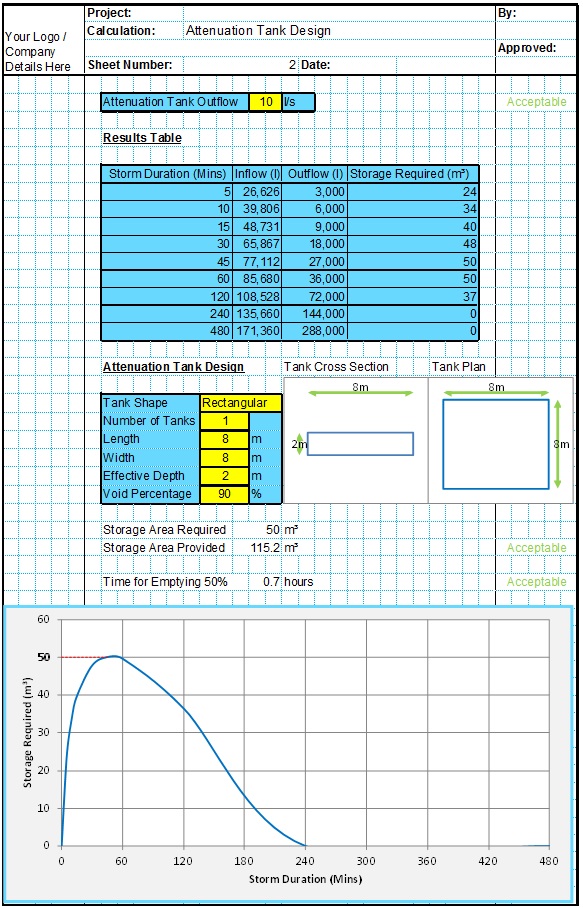
Attenuation Design Spreadsheet
This spreadsheet calculates the requirements for a attenuation system and assists the user to design a suitable system.
Learn More
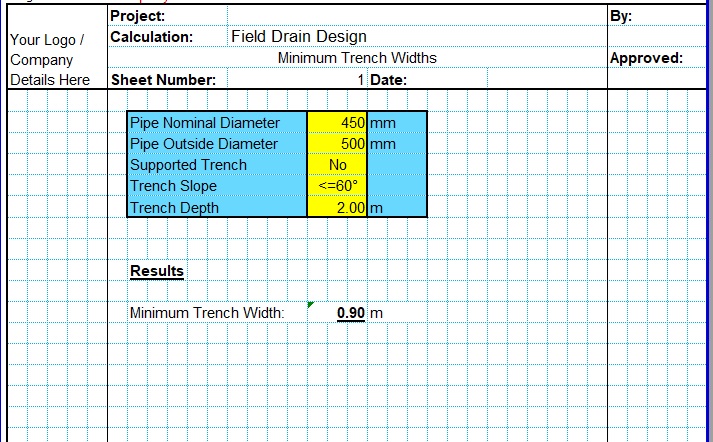
Field Drain Design Spreadsheet
This spreadsheet can be used to design field drains, typically subsurface drainage systems used to drain fields and open areas.
Learn More
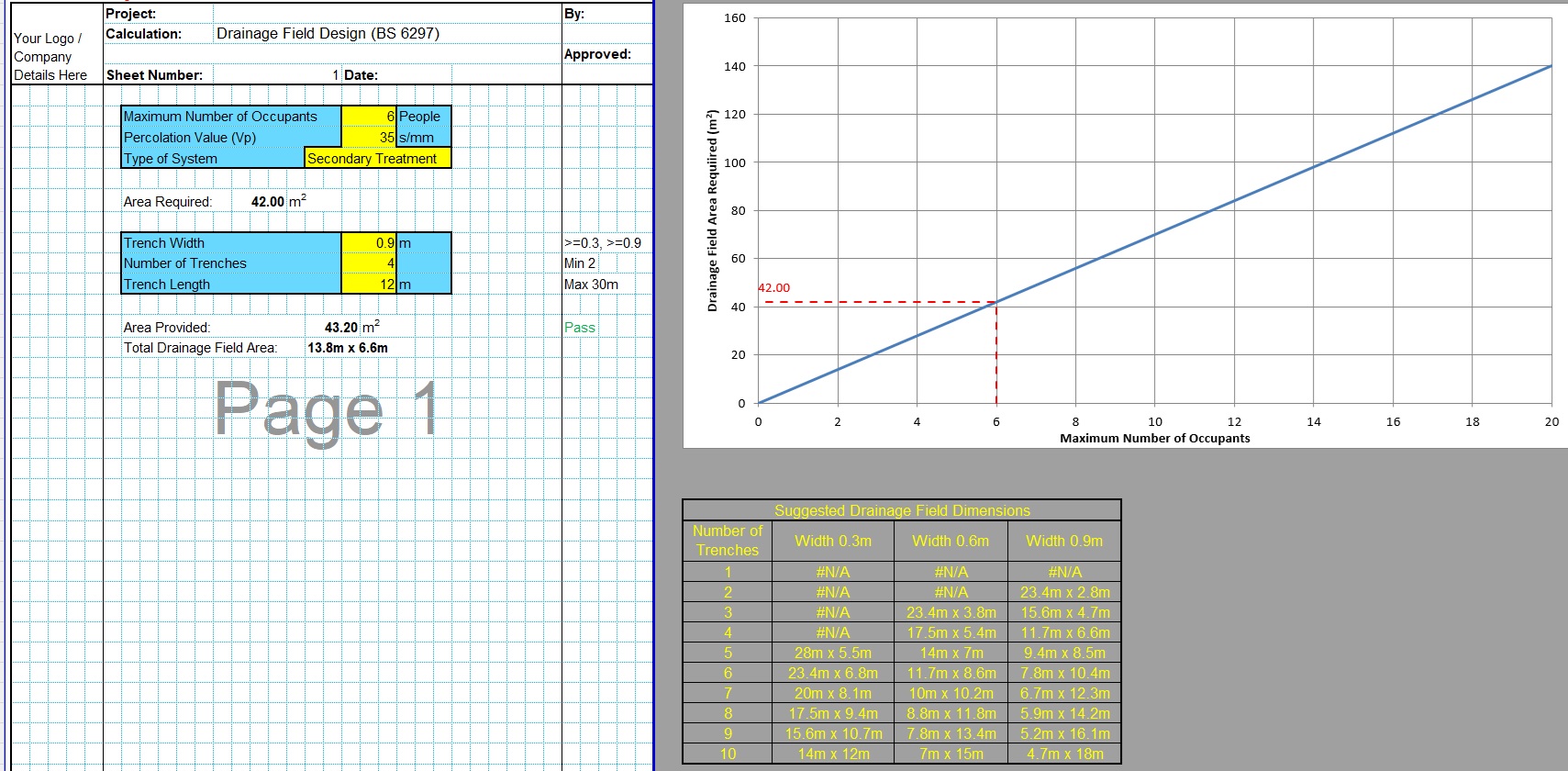
Drainage Field Design Spreadsheet
This spreadsheet can be used to design septic infiltration systems known as drainage fields, leach fields or septic drain fields.
Learn More
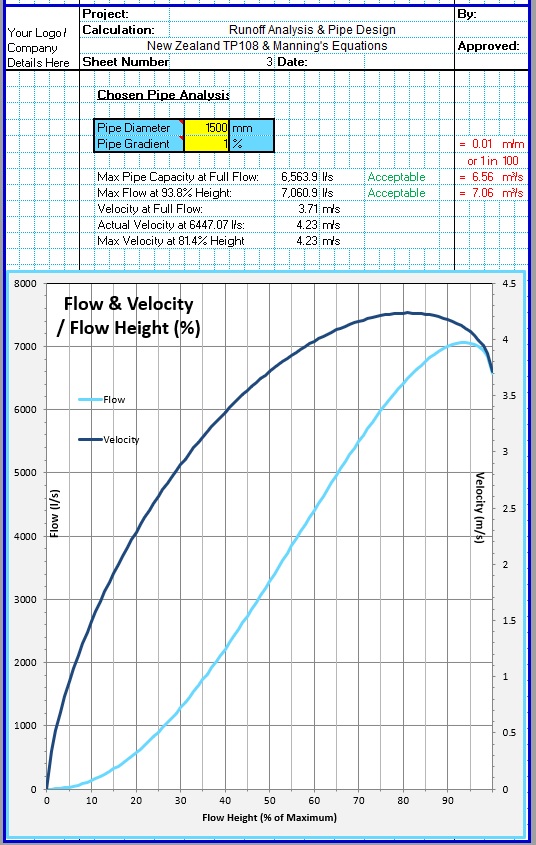
TP108 Spreadsheet
This spreadsheet calculates the rainfall for New Zealand catchments in accordance with TP108.
Learn More
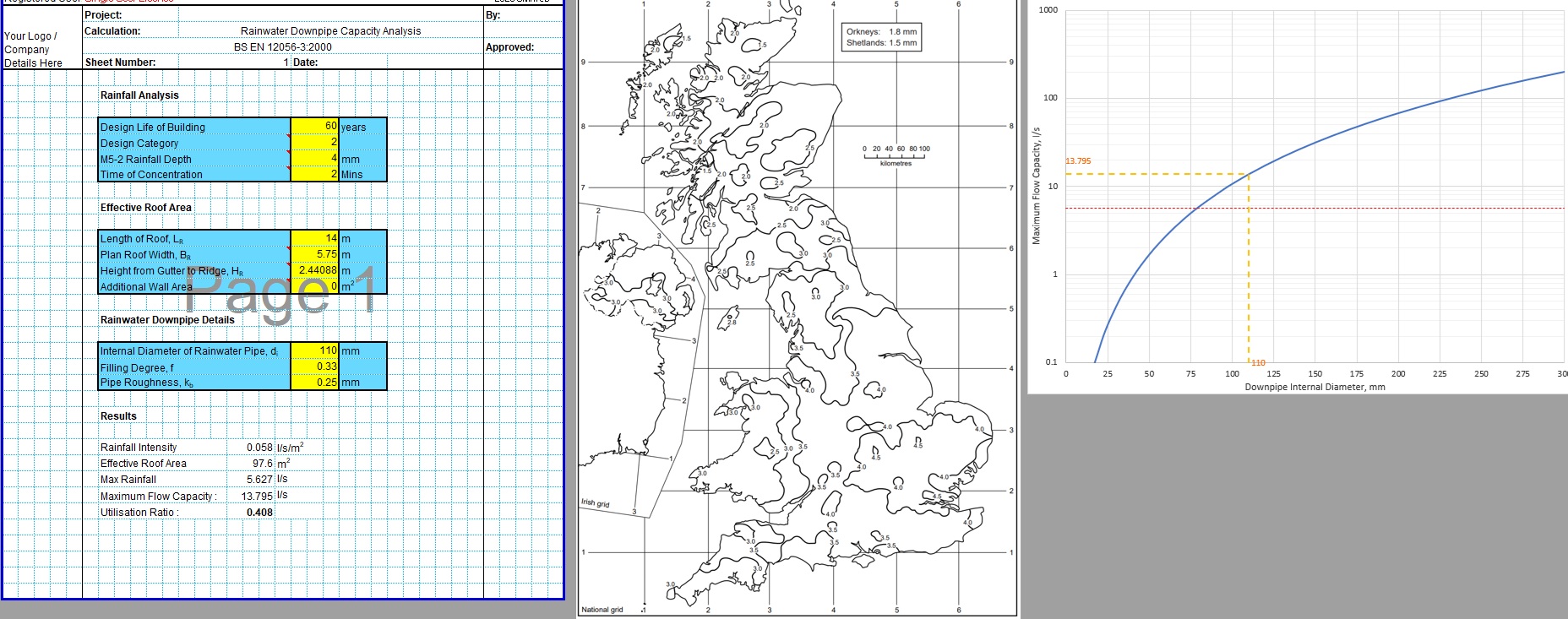
Roof Downpipe Calculator Spreadsheet
This spreadsheet calculates the size of roof drainage downpipes depending on the roof catchment and rainfall requirements.
Learn More
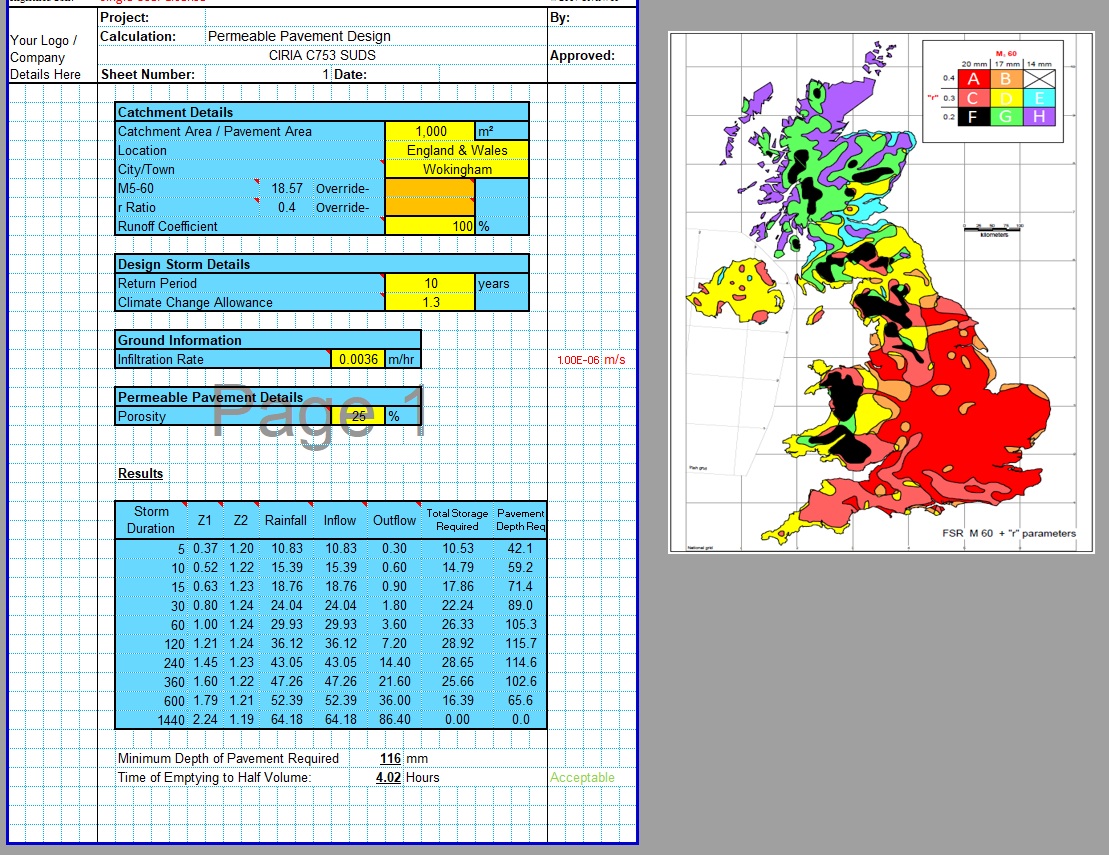
Permeable Pavement Design Spreadsheet
This spreadsheet is designed to determine the size and characteristics of permeable pavements.
Learn More
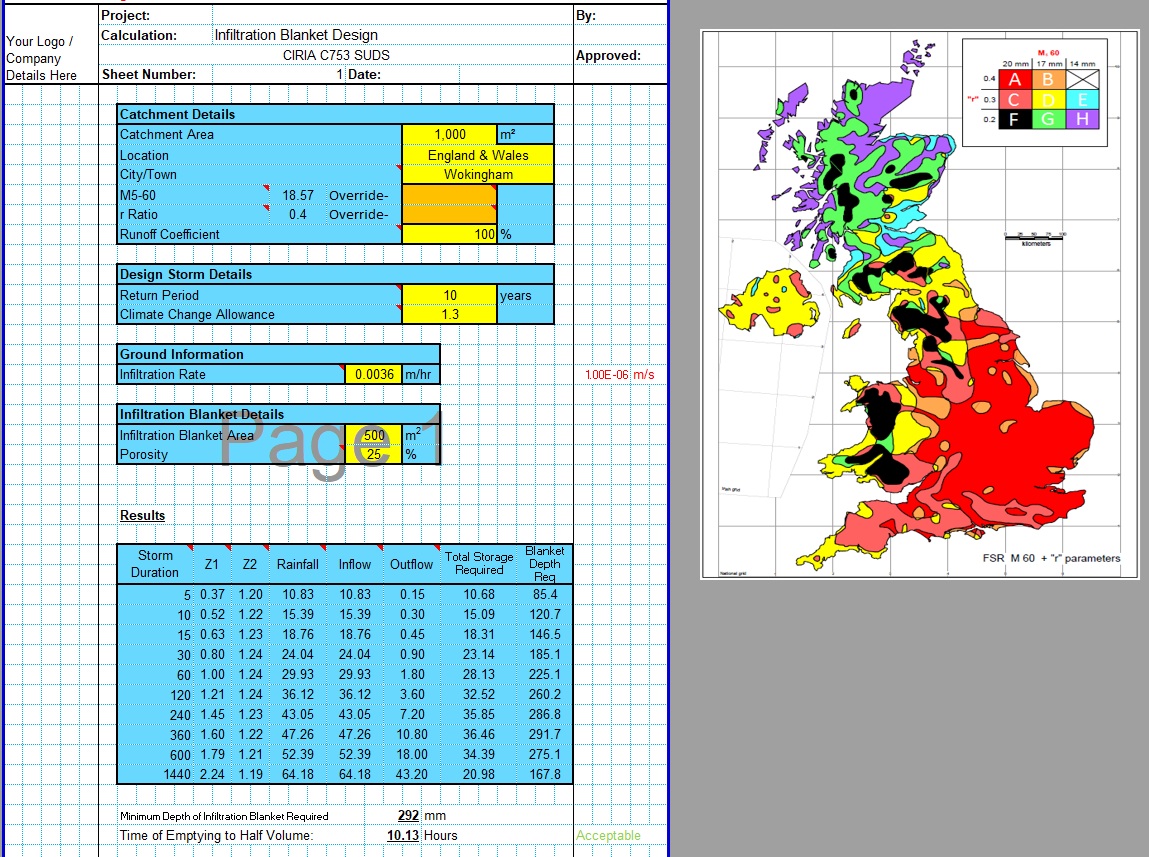
Infiltration Blanket Design Spreadsheet
This spreadsheet can be used to design thin depth infiltration systems, typically called infiltration blanket systems.
Learn More
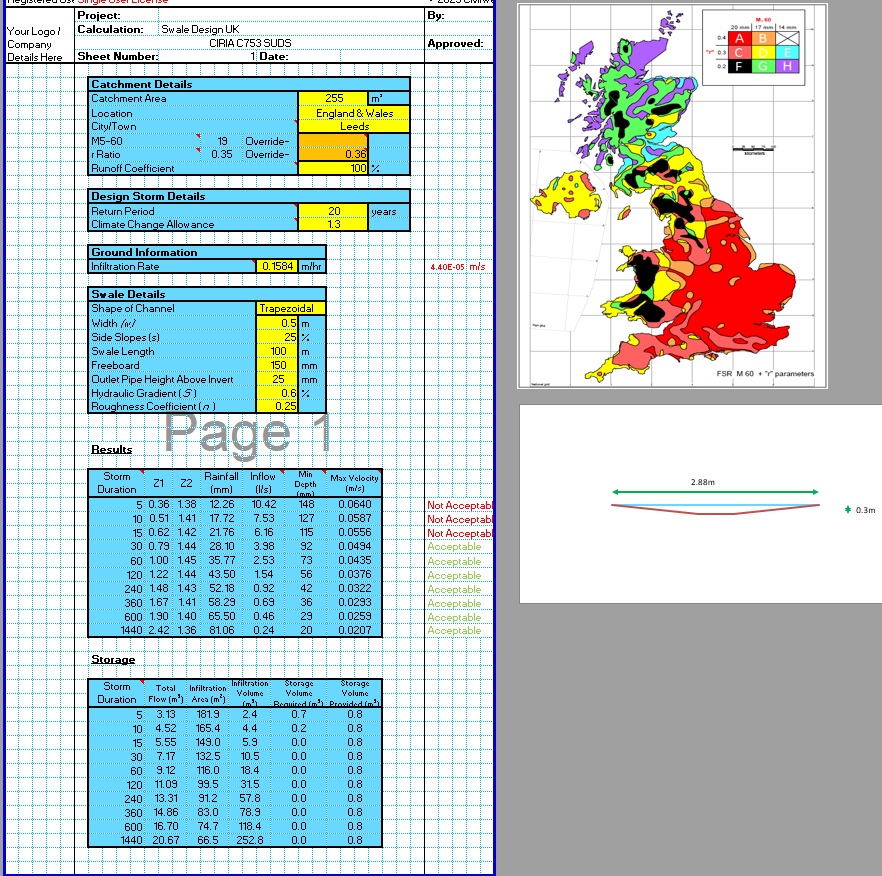
Swale Design Spreadsheet
This spreadsheet can be used to design swales. These linear grassed channels can be used both to convey, infiltrate and filter surface drainage runoff.
Learn More
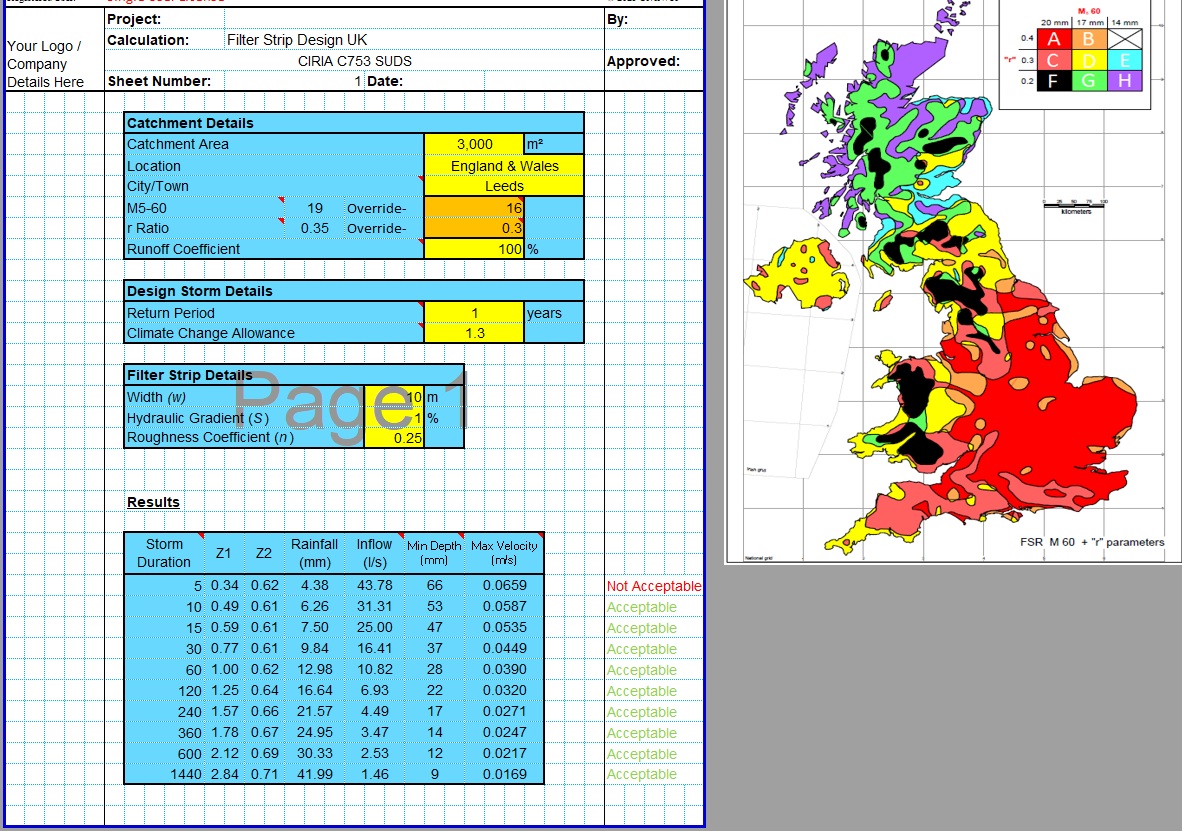
Filter Strip Design Spreadsheet
This spreadsheet is designed to analyse surface water filter strips and to determine the max flow depth and max flow velocity and determine whether they are in accordance with relevant standards.
Learn More
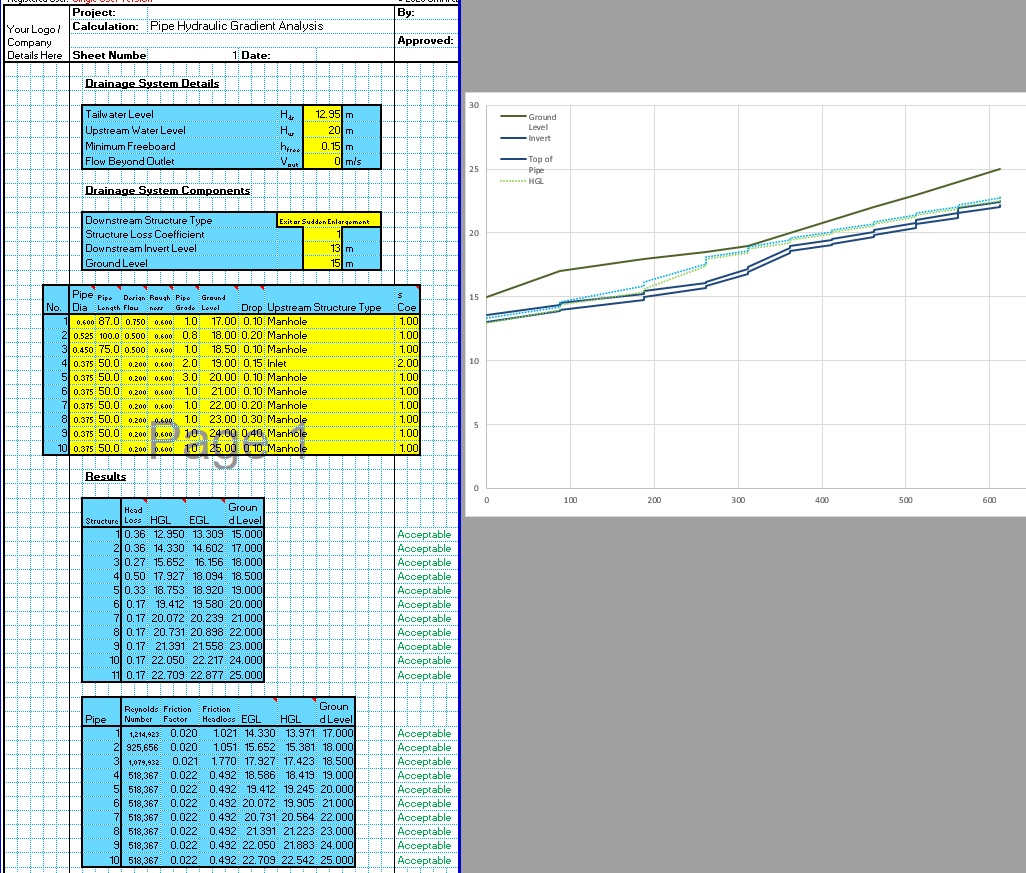
Hydraulic Gradient Analysis Spreadsheet
This spreadsheet analyses the hydraulic and energy grade lines for drainage systems with up to 10 drainage runs.
Learn More
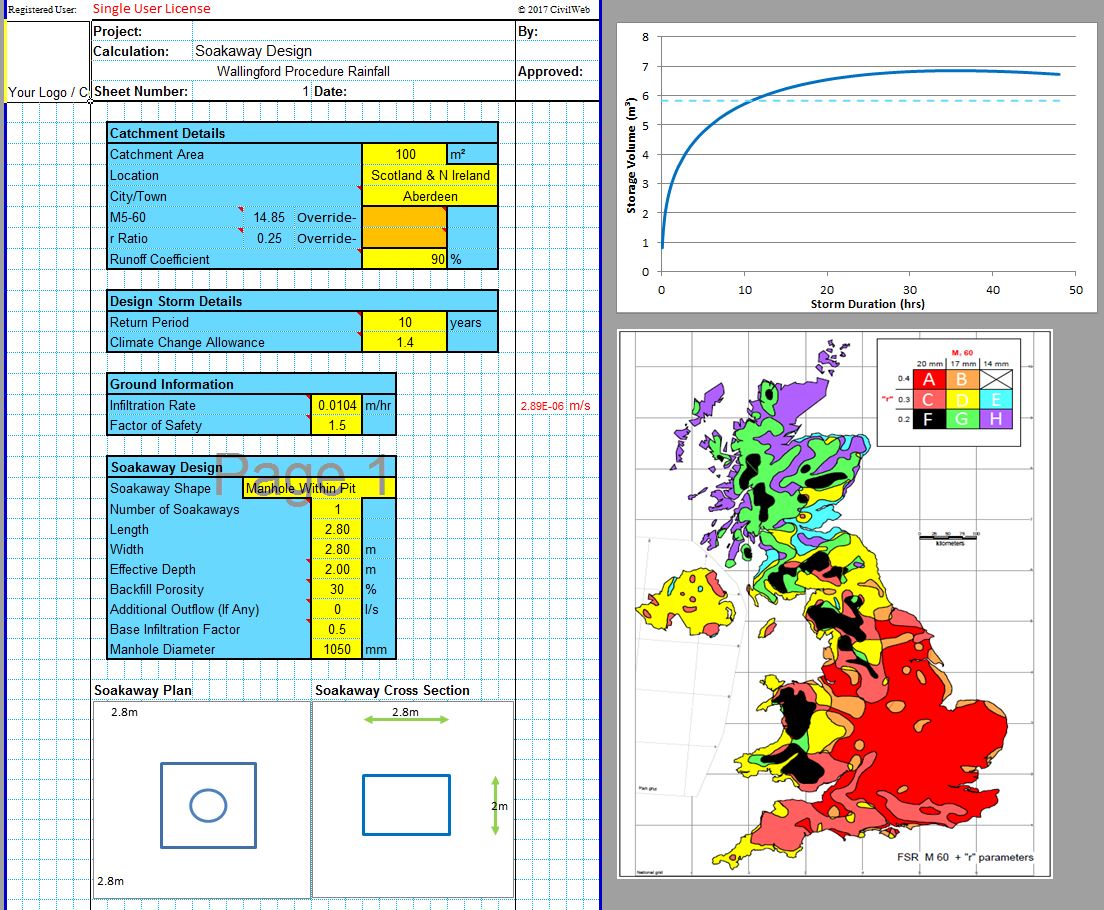
Soakaway Design Spreadsheet
This spreadsheet calculates the requirements for a soakaway system and assists the user to design a suitable system.
Learn More
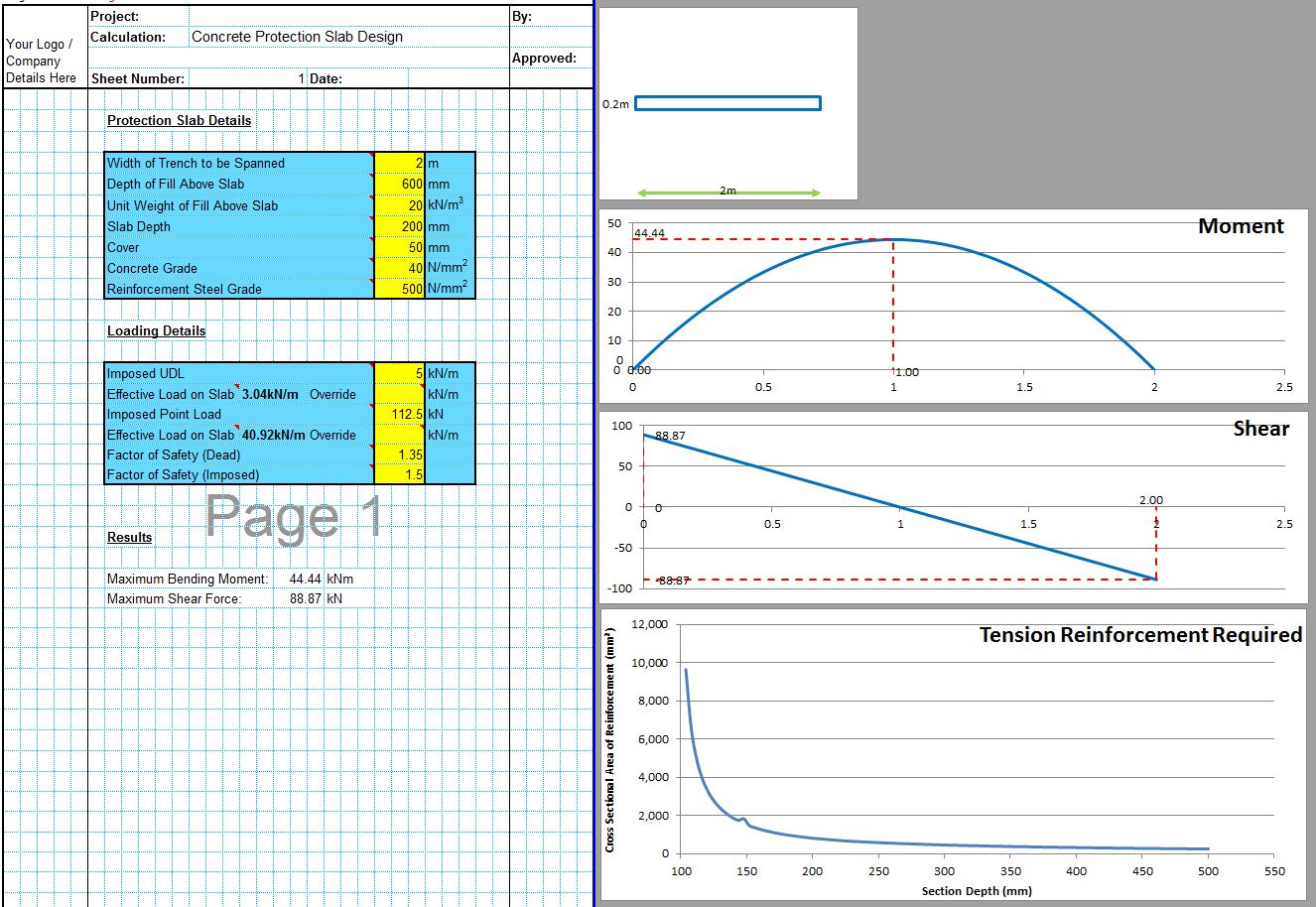
Concrete Protection Slab
This detailed design spreadsheet designs a protection slab commonly installed to protect shallow pipes.
Learn More
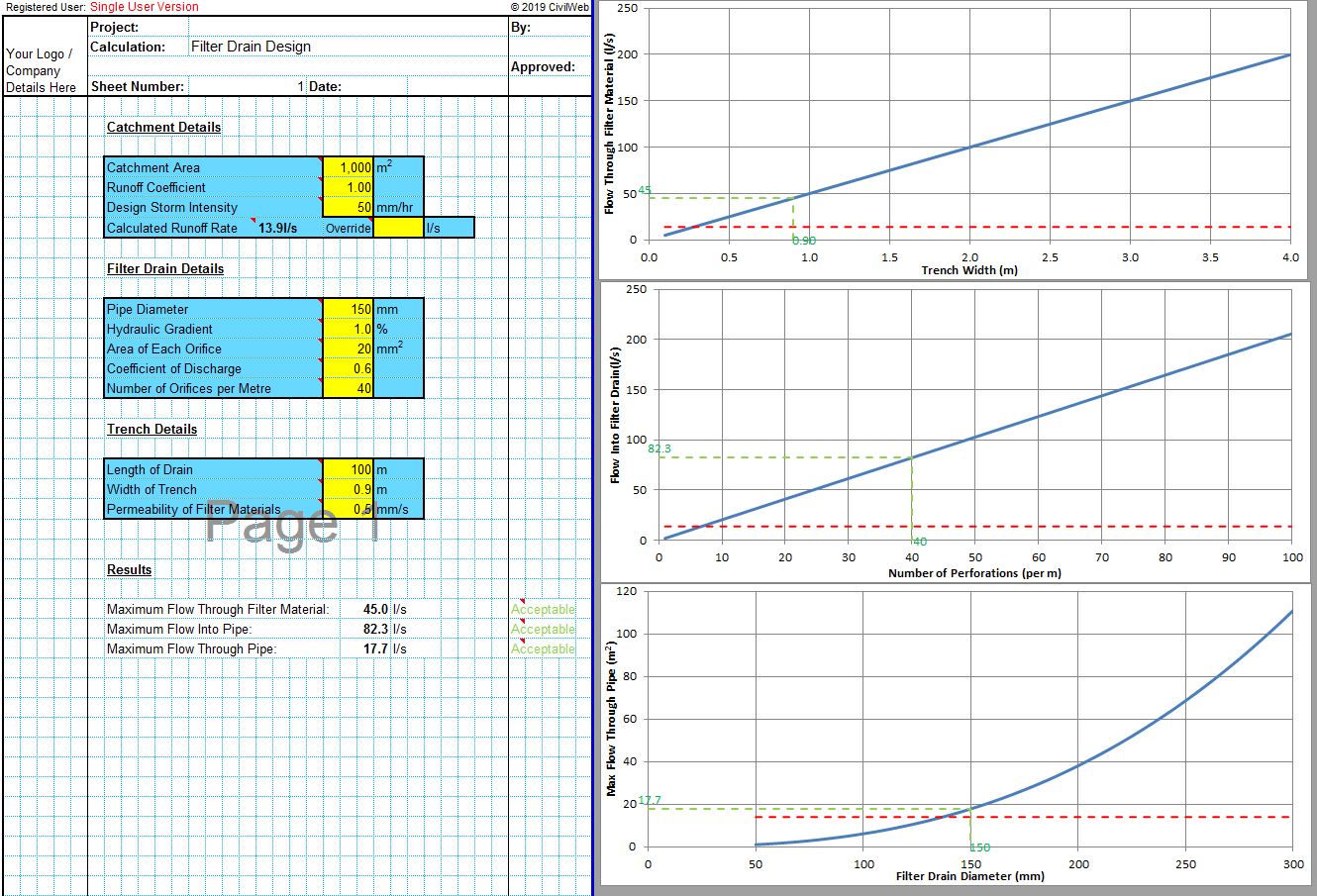
French Drain Design
This spreadsheet completes French Drain Design in accordance with the SUDS Manual.
Learn More
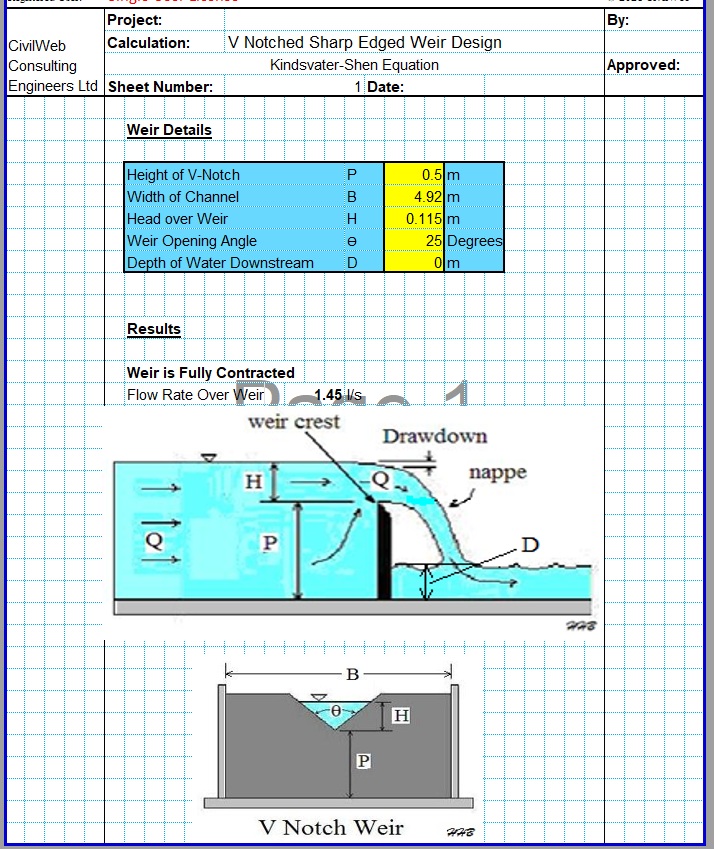
Sharp Crested Weir Flow Calculator Spreadsheets
This suite of 5 separate spreadsheets calculates the flow over sharp crested weirs of all shapes and sizes.
Learn More
Drainage Design Spreadsheet
This is the full suite of drainage design spreadsheets, available at a massive discount for only £49.99.