Land drain design is a core part of managing surface water on sites with poor infiltration, high groundwater, or persistent waterlogging. Whether you’re working on a residential garden, a commercial development, or a large-scale civil engineering project, a well‑designed land drain system prevents standing water, protects structures, and improves soil performance.
This guide explains how land drains work, when to use them, how to design them correctly, and the key considerations that determine long‑term performance.
The CivilWeb Field Drain Design Spreadsheet can be used to accurately and quickly design all kinds of field drains.
🌧️ What Is a Land Drain?
A land drain (often called a French drain, perforated pipe drain, or subsurface drain) is a gravel‑filled trench containing a perforated pipe that collects and redirects groundwater or infiltrated surface water. The goal is simple: lower the water table or relieve saturated ground so that the surface remains usable and stable.
Land drains are commonly used for:
- Waterlogged gardens and lawns
- Sports pitches and playing fields
- Agricultural land
- Development sites with clay soils
- Managing groundwater around buildings
- Relieving hydrostatic pressure behind retaining walls
🛠️ When You Should Consider Land Drain Design
Land drains are most effective when:
- The site has low‑permeability soils (e.g., clay) that trap water
- There is no space for above‑ground SuDS features
- You need to protect foundations or reduce groundwater uplift
- The ground is flat, preventing natural runoff
- You need to intercept water flowing from higher ground
They are not suitable when:
- The site has contaminated ground (risk of mobilising pollutants)
- There is no suitable outfall
- The drain would conflict with tree root protection zones
- The issue is caused by surface water runoff, not groundwater (in which case filter drains or swales may be better)
📐 Key Principles of Land Drain Design
Effective land drain design relies on a few core engineering principles. Getting these right ensures the system performs for decades rather than months.
- Understanding Soil Permeability
Soil type determines how quickly water can enter the drain.
- Clay soils: slow infiltration → drains act mainly as collectors
- Sandy soils: fast infiltration → drains can lower water table effectively
A simple infiltration test helps determine spacing and depth.
- Choosing the Correct Depth
Typical installation depth ranges from 600–1200 mm, depending on purpose:
- Gardens: 600–900 mm
- Sports pitches: 450–600 mm
- Groundwater control: 900–1500 mm
The pipe must sit below the problem layer, not within it.
- Pipe Selection
Use perforated HDPE or PVC pipes with:
- Slots or holes facing downwards
- Diameter typically 80–160 mm
- Flexibility for curves but rigidity for gradient control
Larger diameters are used for collector drains feeding multiple laterals.
- Gradient Requirements
A minimum fall of 1:200 to 1:100 is recommended to maintain flow and prevent siltation.
Flatter gradients can work but require careful filter selection.
- Filter Material and Geotextile
A graded aggregate envelope prevents fines entering the pipe.
Typical specification:
- 20–40 mm clean angular stone
- Wrapped in a non‑woven geotextile to prevent clogging
Avoid pea gravel—it compacts and reduces void space.
- Outfall Design
Every land drain needs a reliable outfall:
- Watercourse
- Soakaway (if infiltration allows)
- Surface water sewer (with approval)
- Attenuation system
Outfalls must be protected with:
- Rodent guards
- Headwalls
- Erosion control
🧮 Example Land Drain Layout
A typical layout includes:
- A central collector drain
- Lateral drains spaced 5–10 m apart (depending on soil permeability)
- A consistent fall toward the outfall
- Inspection chambers at key junctions
For larger sites, a full hydraulic design may be required, including:
- Groundwater modelling
- Drainage coefficients
- Pipe capacity checks using Manning’s equation
🌱 Integrating Land Drains with SuDS
Modern drainage design encourages combining land drains with sustainable drainage systems. Examples include:
- Filter drains to manage both surface and subsurface water
- Swales that intercept runoff before it reaches the land drain
- Permeable paving with underdrains
- Soakaways fed by land drains where infiltration is viable
This hybrid approach improves resilience and reduces reliance on piped systems.
🧩 Common Mistakes in Land Drain Design
Avoiding these issues dramatically improves performance:
- Installing drains too shallow or too deep
- Using unwrapped gravel, leading to siltation
- No gradient or backfalls in the pipe
- Outfalls that become blocked or submerged
- Using perforated pipe where a carrier drain is needed
- Installing drains to “fix” surface water problems caused by poor grading
📊 Cost Considerations
Costs vary depending on depth, soil type, and access, but typical ranges include:
- Domestic garden drains: £40–£80 per metre
- Sports pitches: £20–£40 per metre (economies of scale)
- Commercial sites: highly variable depending on specification
Long-term maintenance is minimal if the system is designed correctly.
🏁 Final Thoughts
A well‑designed land drain system can transform a waterlogged site into a functional, stable, and resilient space. The key is understanding soil behaviour, designing with the right gradients and materials, and ensuring a reliable outfall. When integrated with wider SuDS features, land drains become part of a robust, sustainable drainage strategy.
The CivilWeb Field Drain Design Spreadsheet can be used to accurately and quickly design all kinds of field drains.
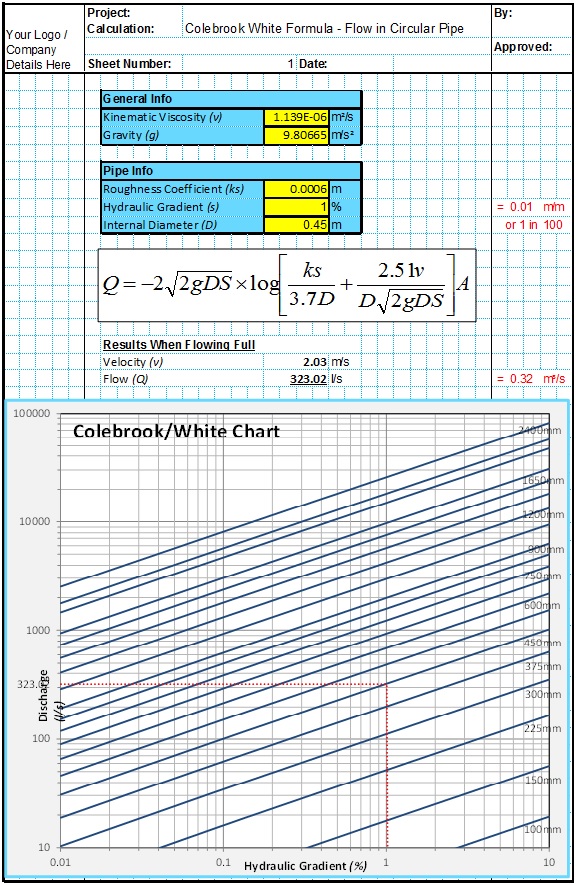
PIPE FLOW CALCULATOR
This spreadsheet uses the Colebrook-White and Manning Equations to calculate the flow capacity and velocity in pipes acting under gravity.
Find Out More
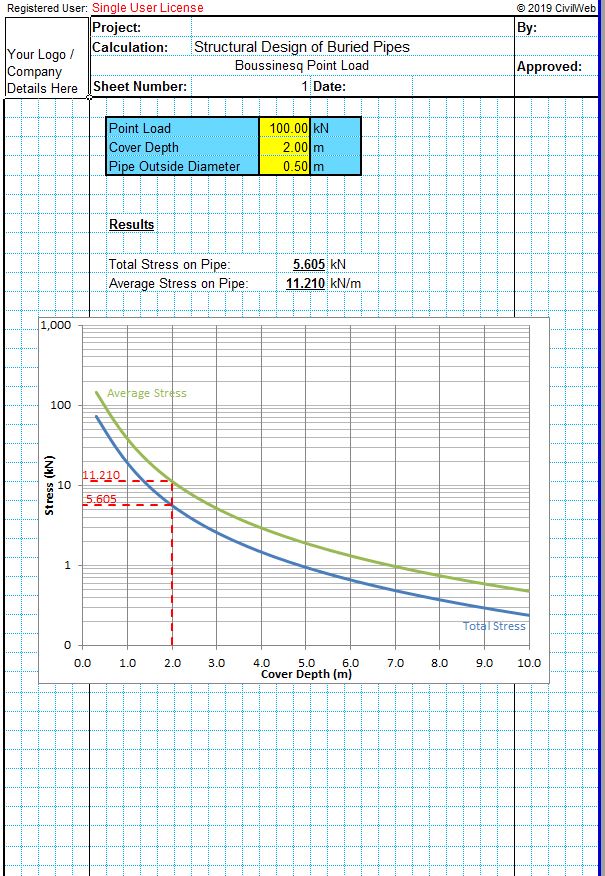
Buried Pipe Design Spreadsheet
This spreadsheet can be used to design concrete, steel, plastic and other buried pipes in accordance with BS EN 1295-1.
Learn More
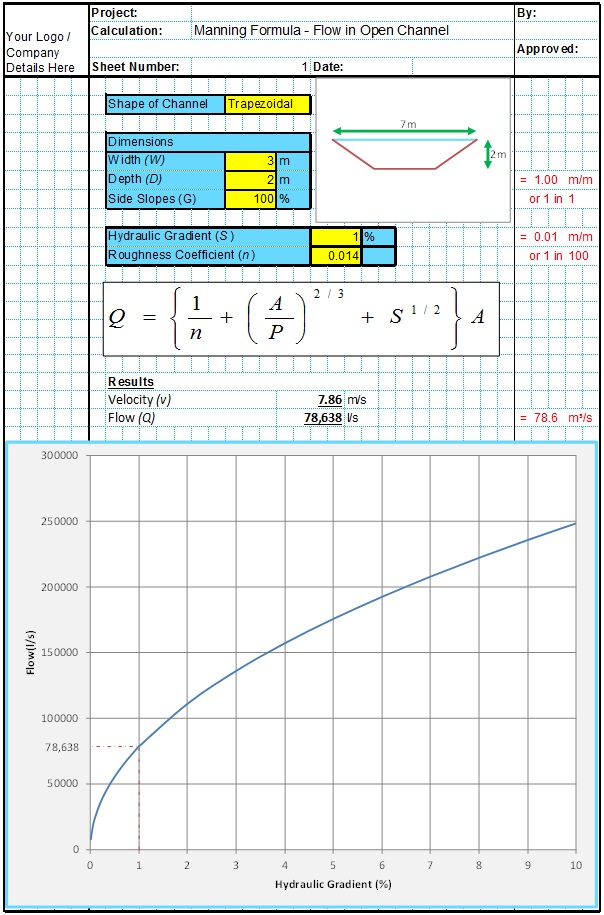
Manning Open Channel Design Spreadsheet
This spreadsheet uses the Manning formula to calculate the flow conditions in an open channel acting under gravity only.
Learn More
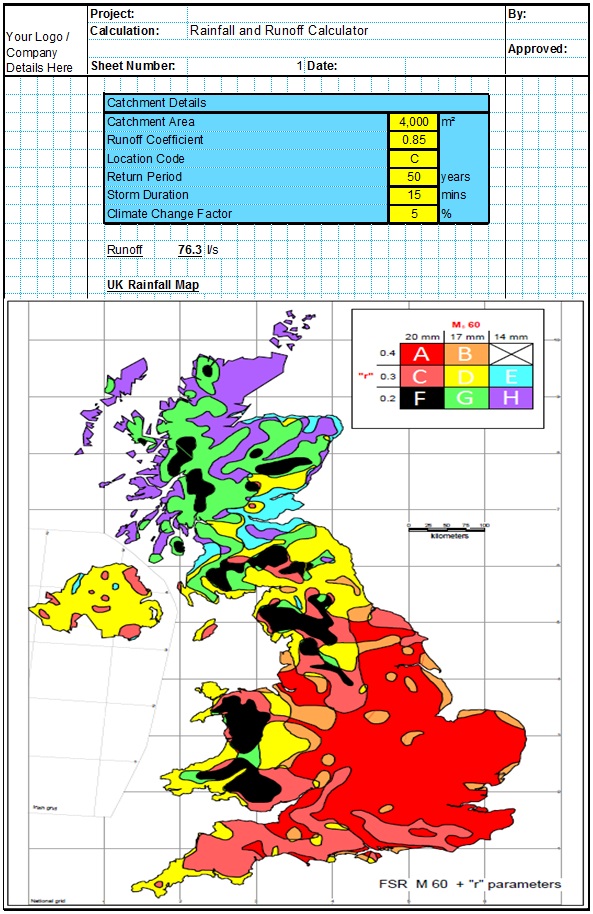
Runoff Calculator Spreadsheet
This spreadsheet calculates the design runoff flow for a site in accordance with the Flood Estimation Handbook.
Learn More
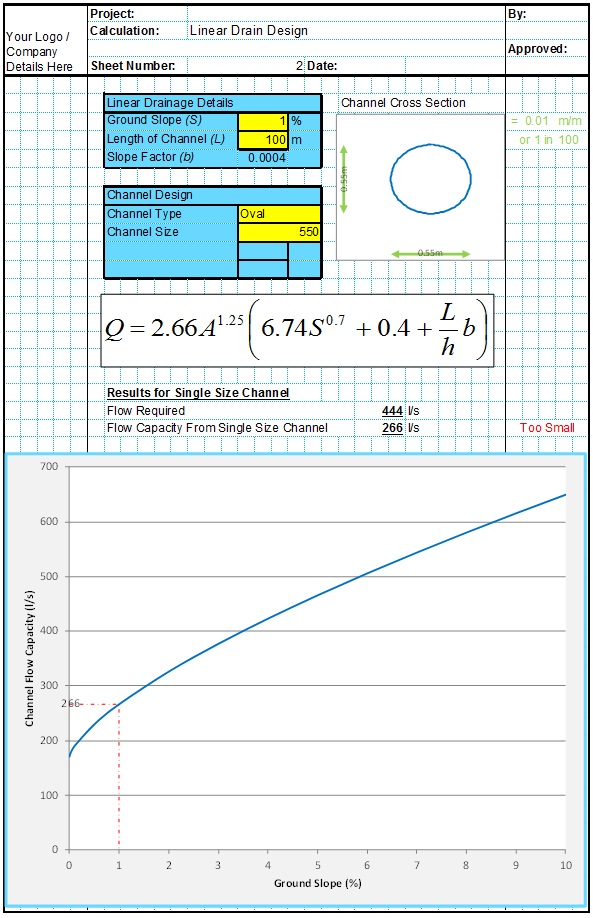
Linear Drainage Design Spreadsheet
This spreadsheet calculates the maximum flow from a specified linear drainage channel and checks whether the channel is sufficient for the specified site and storm conditions.
Learn More
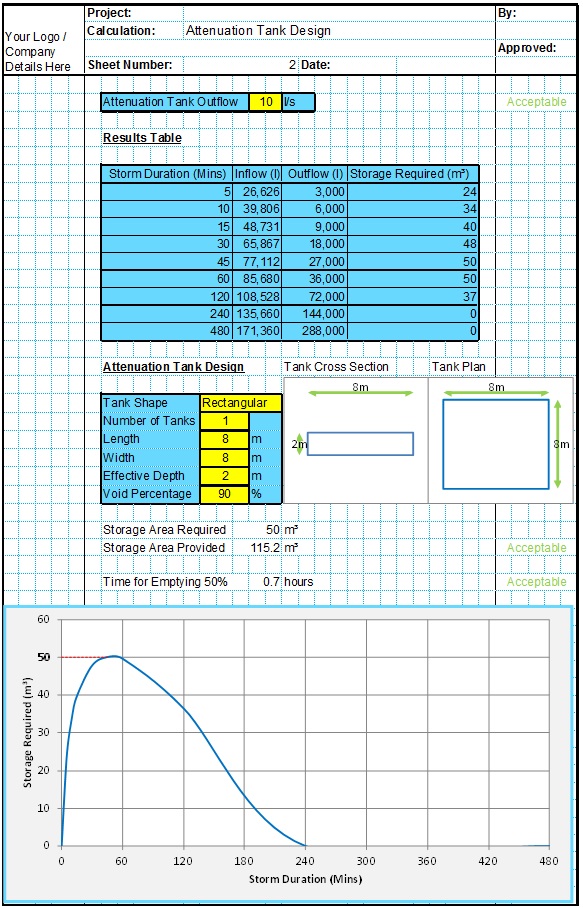
Attenuation Design Spreadsheet
This spreadsheet calculates the requirements for a attenuation system and assists the user to design a suitable system.
Learn More
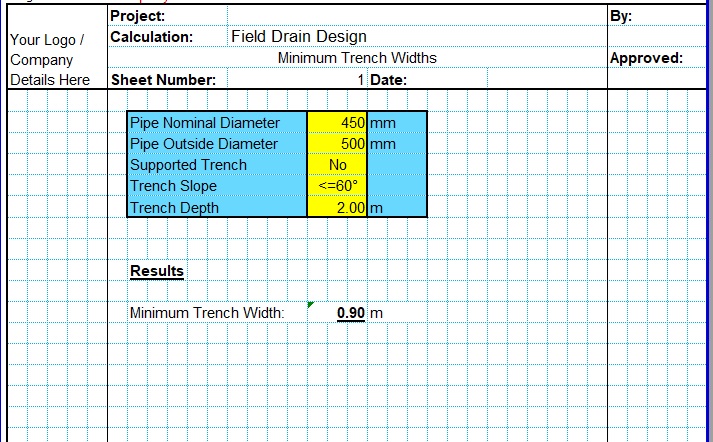
Field Drain Design Spreadsheet
This spreadsheet can be used to design field drains, typically subsurface drainage systems used to drain fields and open areas.
Learn More
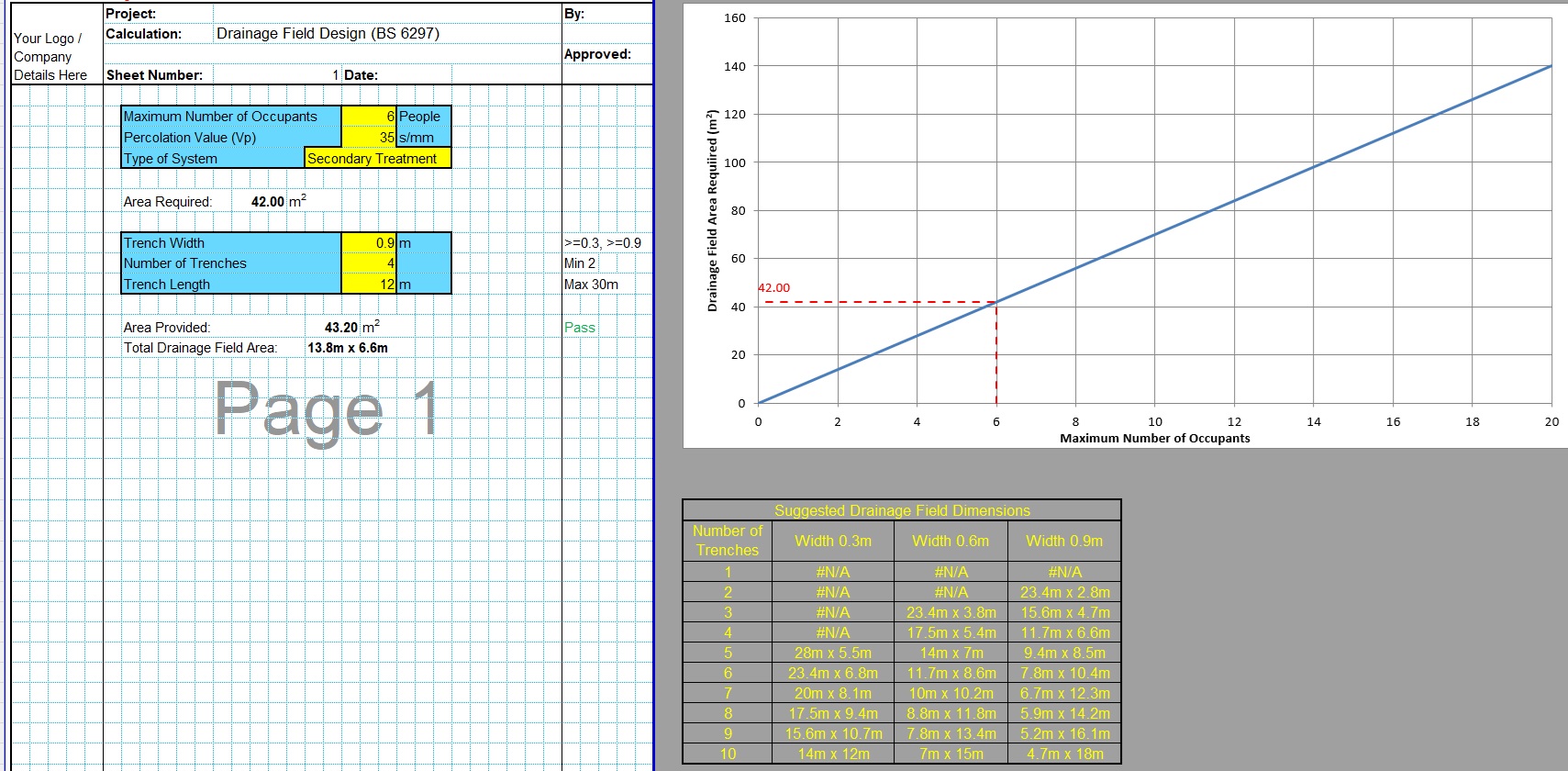
Drainage Field Design Spreadsheet
This spreadsheet can be used to design septic infiltration systems known as drainage fields, leach fields or septic drain fields.
Learn More
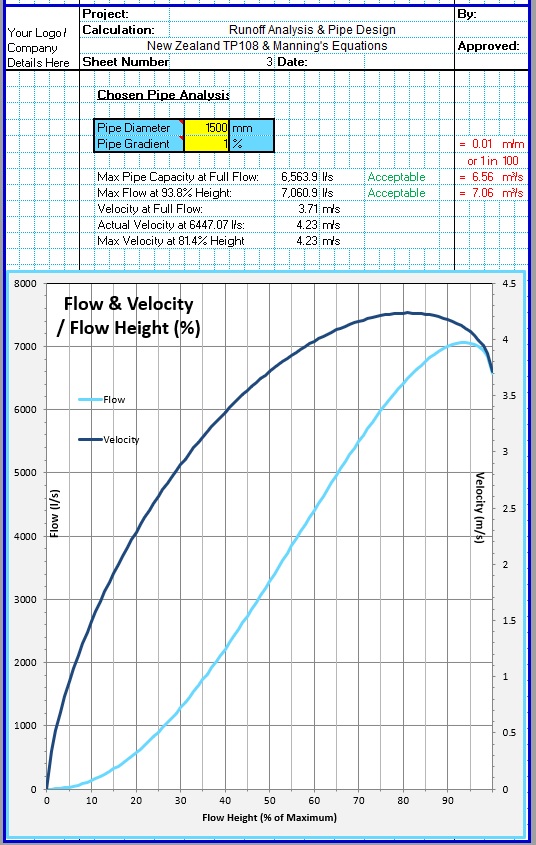
TP108 Spreadsheet
This spreadsheet calculates the rainfall for New Zealand catchments in accordance with TP108.
Learn More
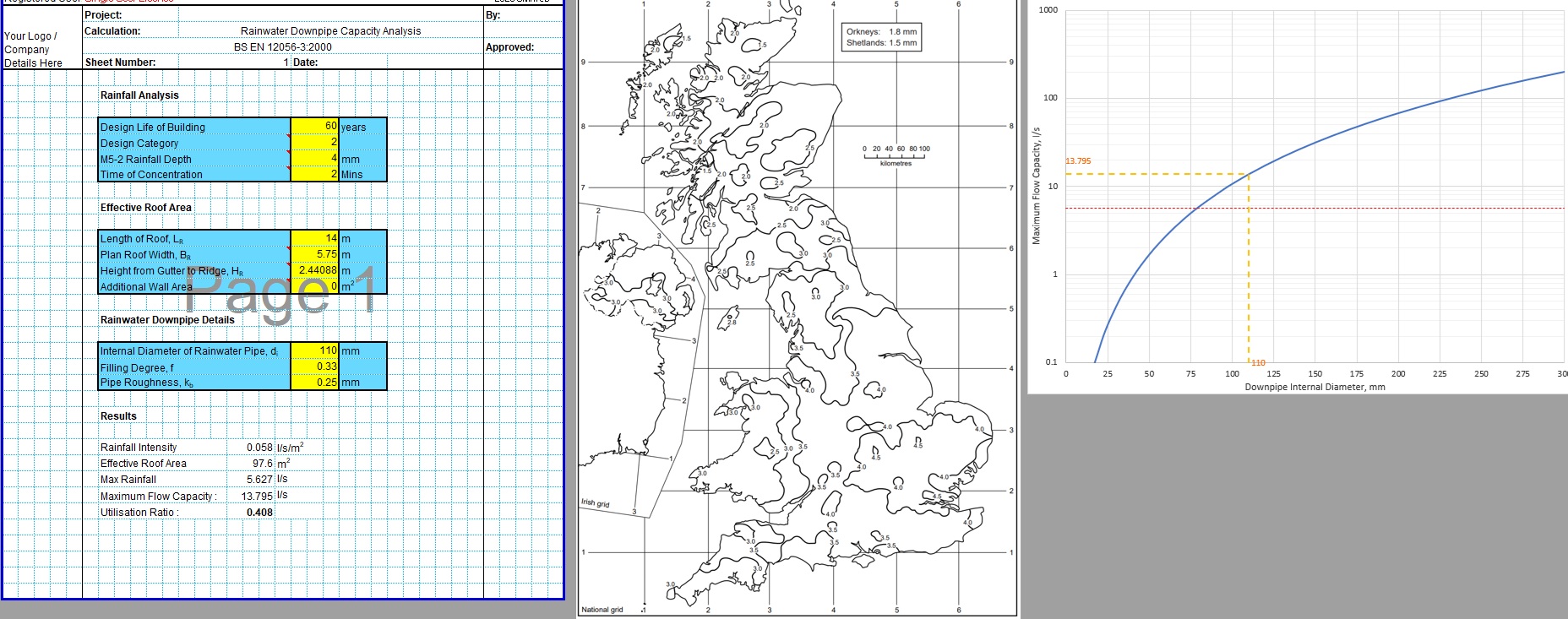
Roof Downpipe Calculator Spreadsheet
This spreadsheet calculates the size of roof drainage downpipes depending on the roof catchment and rainfall requirements.
Learn More
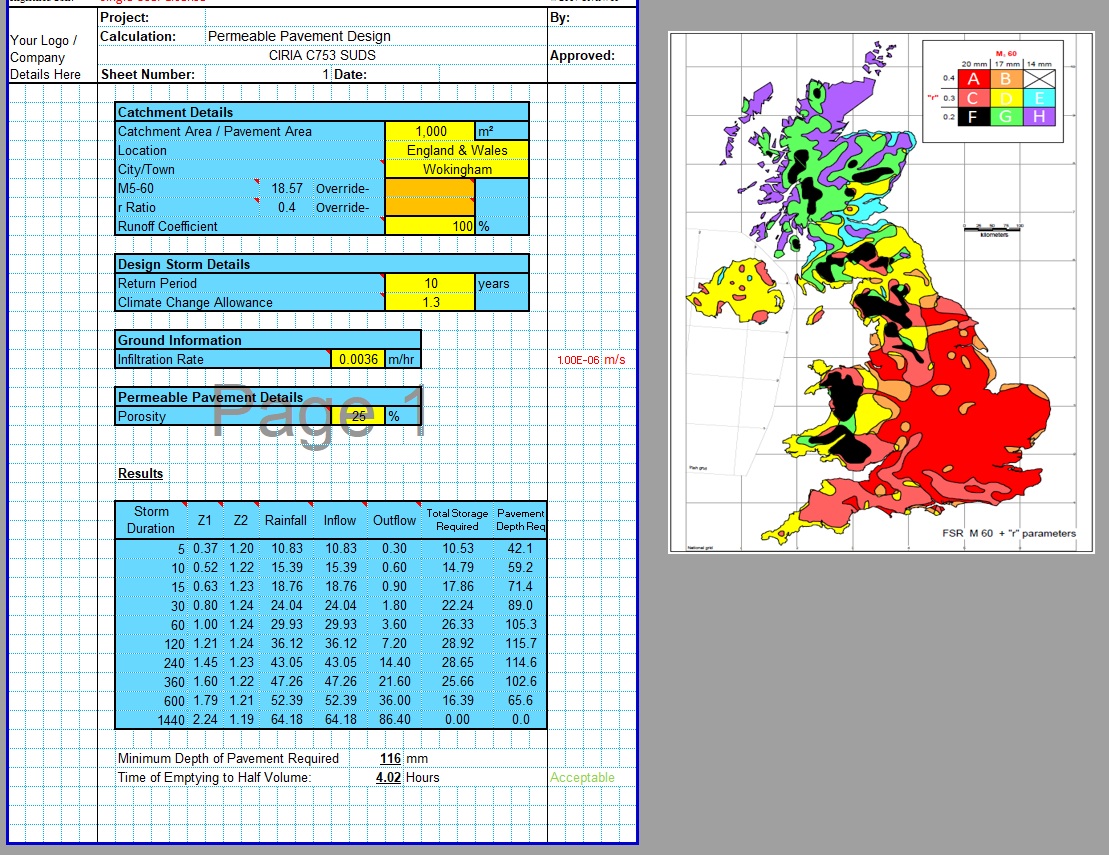
Permeable Pavement Design Spreadsheet
This spreadsheet is designed to determine the size and characteristics of permeable pavements.
Learn More
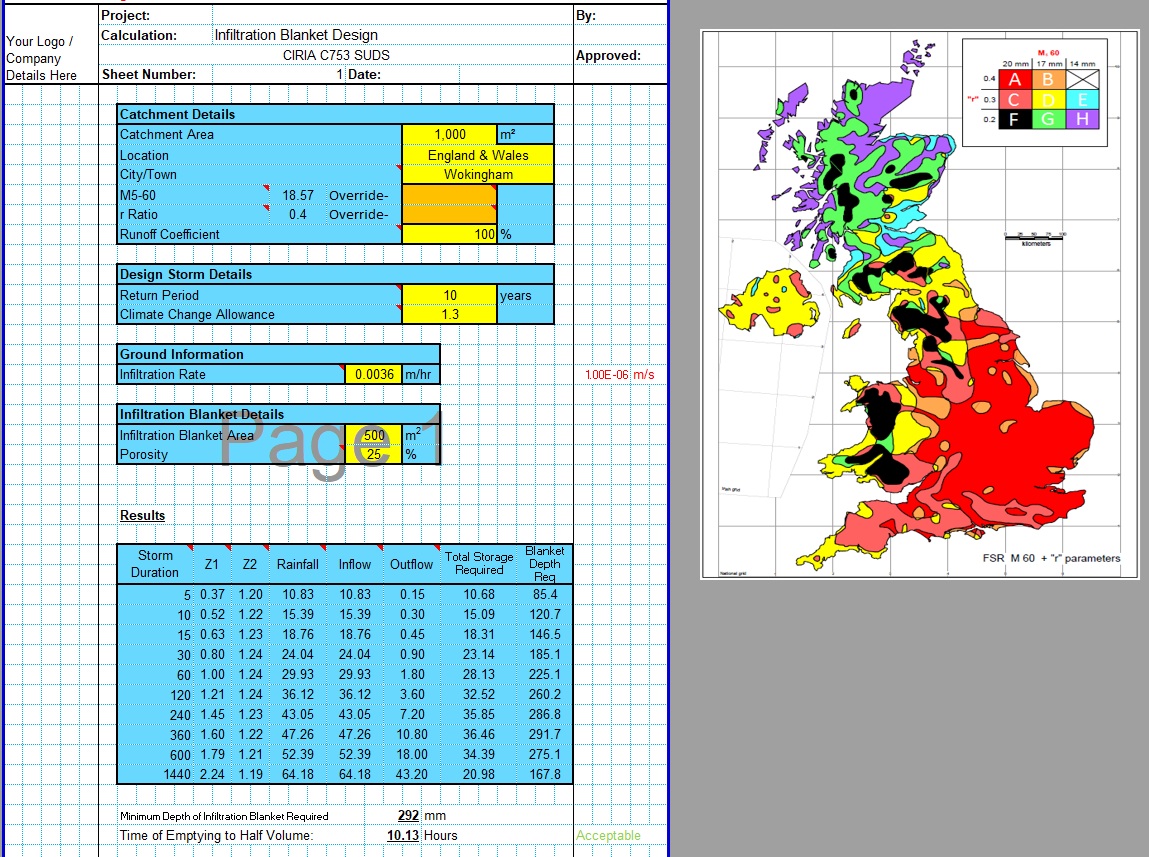
Infiltration Blanket Design Spreadsheet
This spreadsheet can be used to design thin depth infiltration systems, typically called infiltration blanket systems.
Learn More
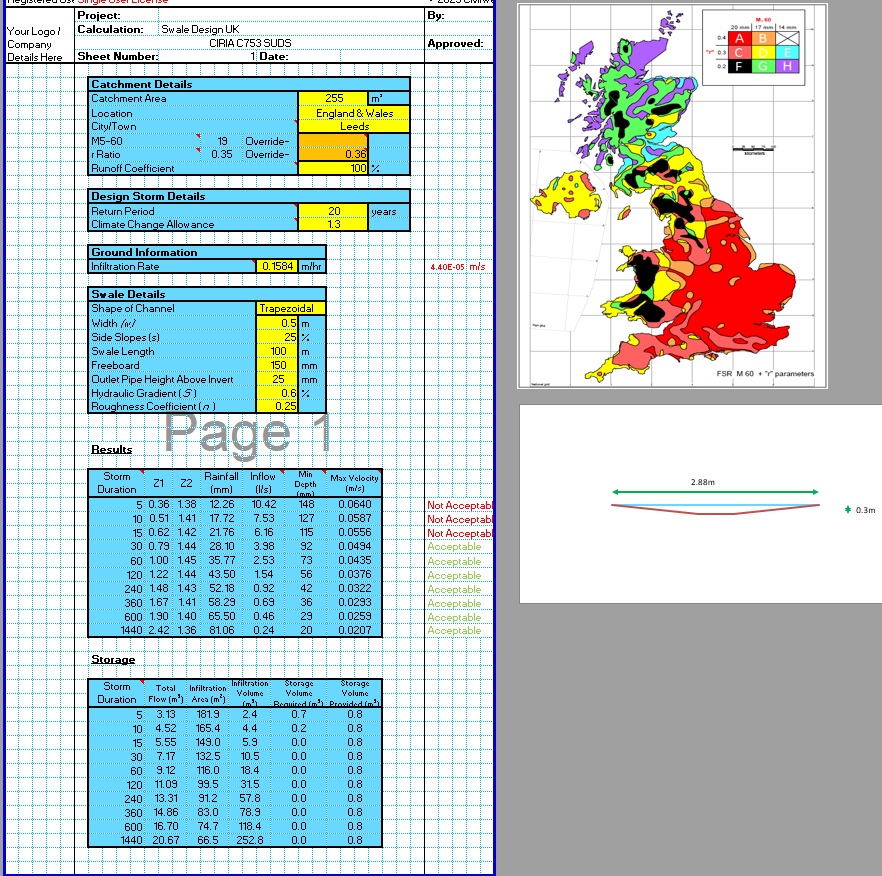
Swale Design Spreadsheet
This spreadsheet can be used to design swales. These linear grassed channels can be used both to convey, infiltrate and filter surface drainage runoff.
Learn More
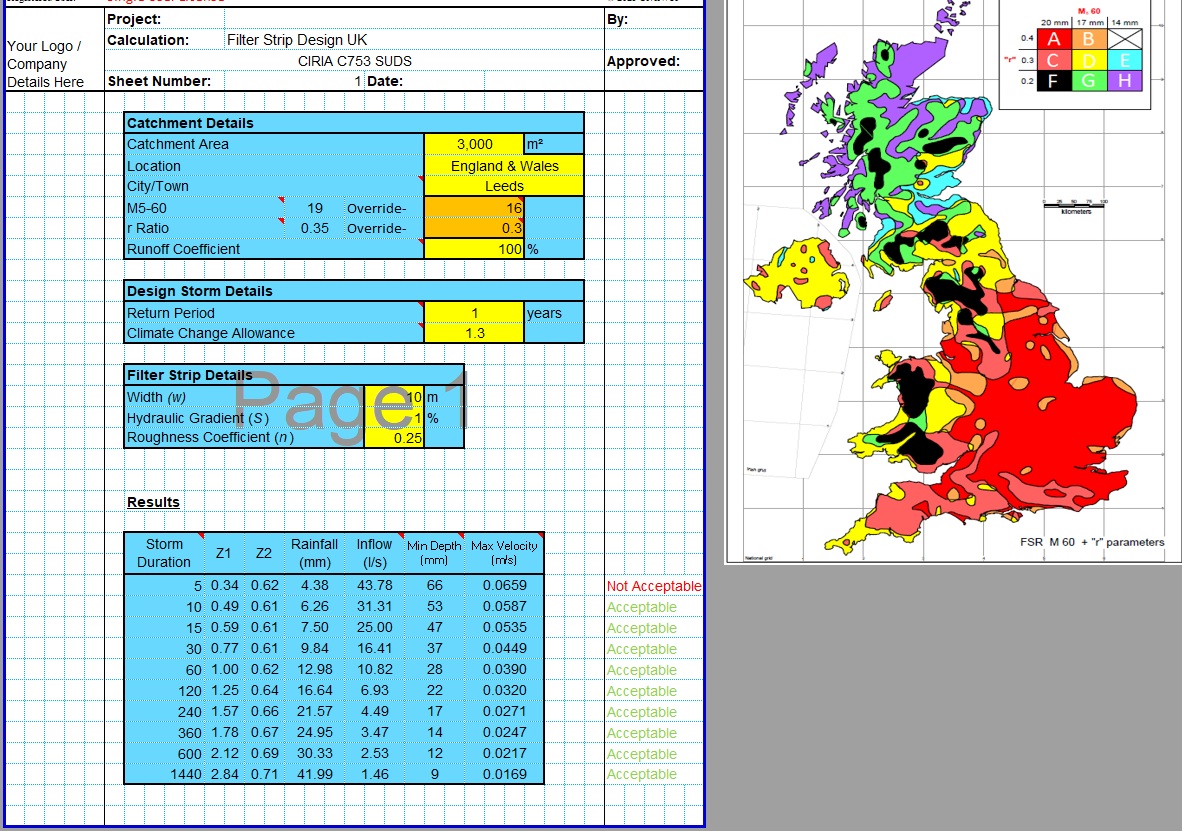
Filter Strip Design Spreadsheet
This spreadsheet is designed to analyse surface water filter strips and to determine the max flow depth and max flow velocity and determine whether they are in accordance with relevant standards.
Learn More
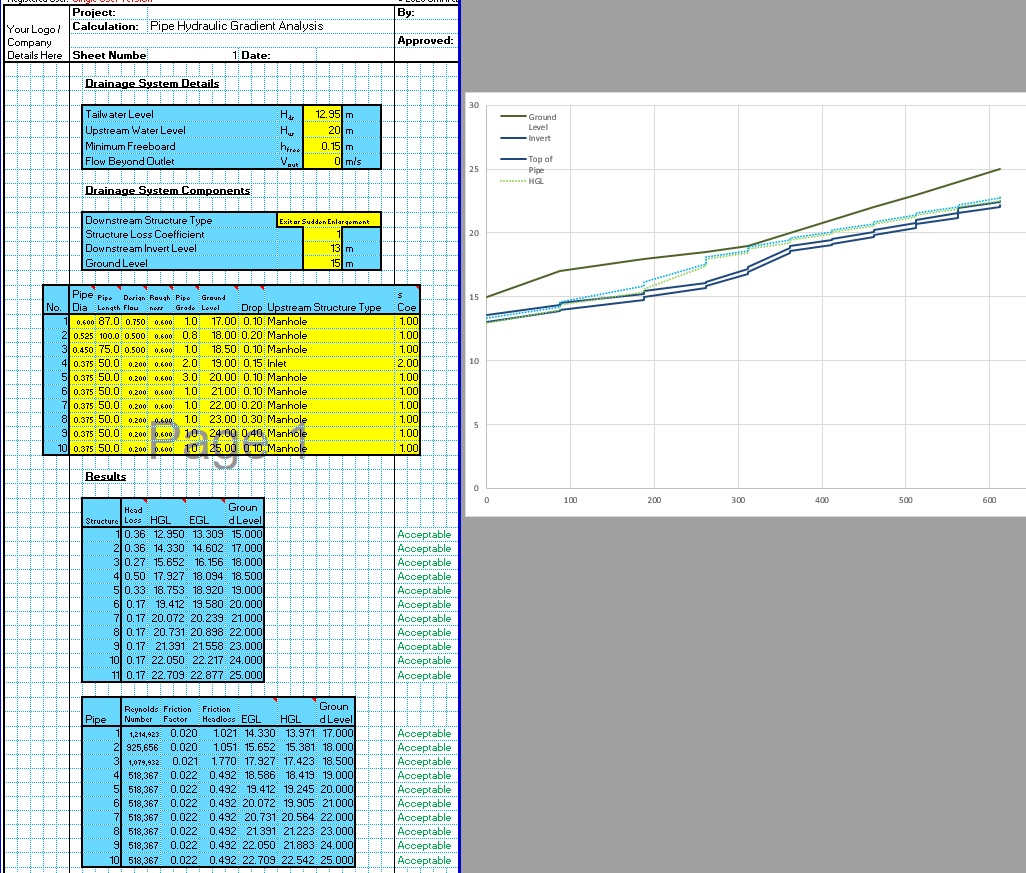
Hydraulic Gradient Analysis Spreadsheet
This spreadsheet analyses the hydraulic and energy grade lines for drainage systems with up to 10 drainage runs.
Learn More
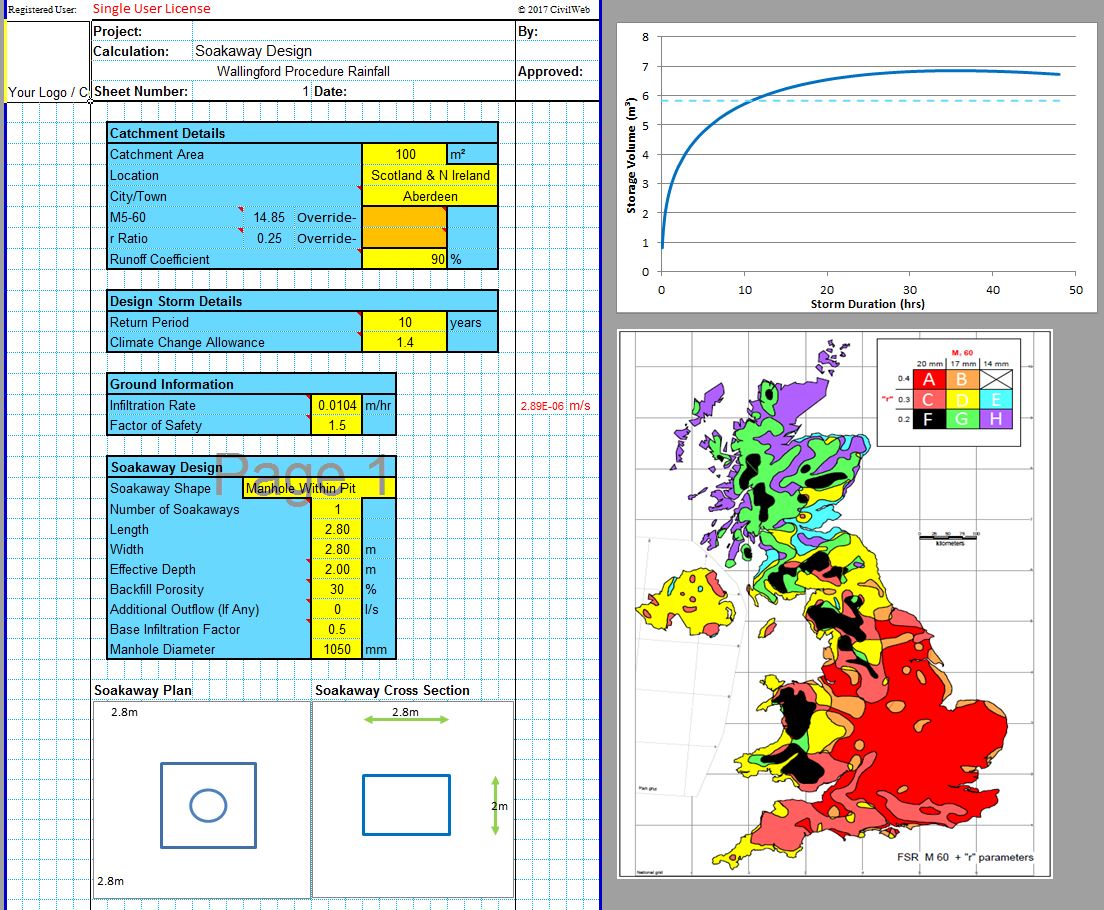
Soakaway Design Spreadsheet
This spreadsheet calculates the requirements for a soakaway system and assists the user to design a suitable system.
Learn More
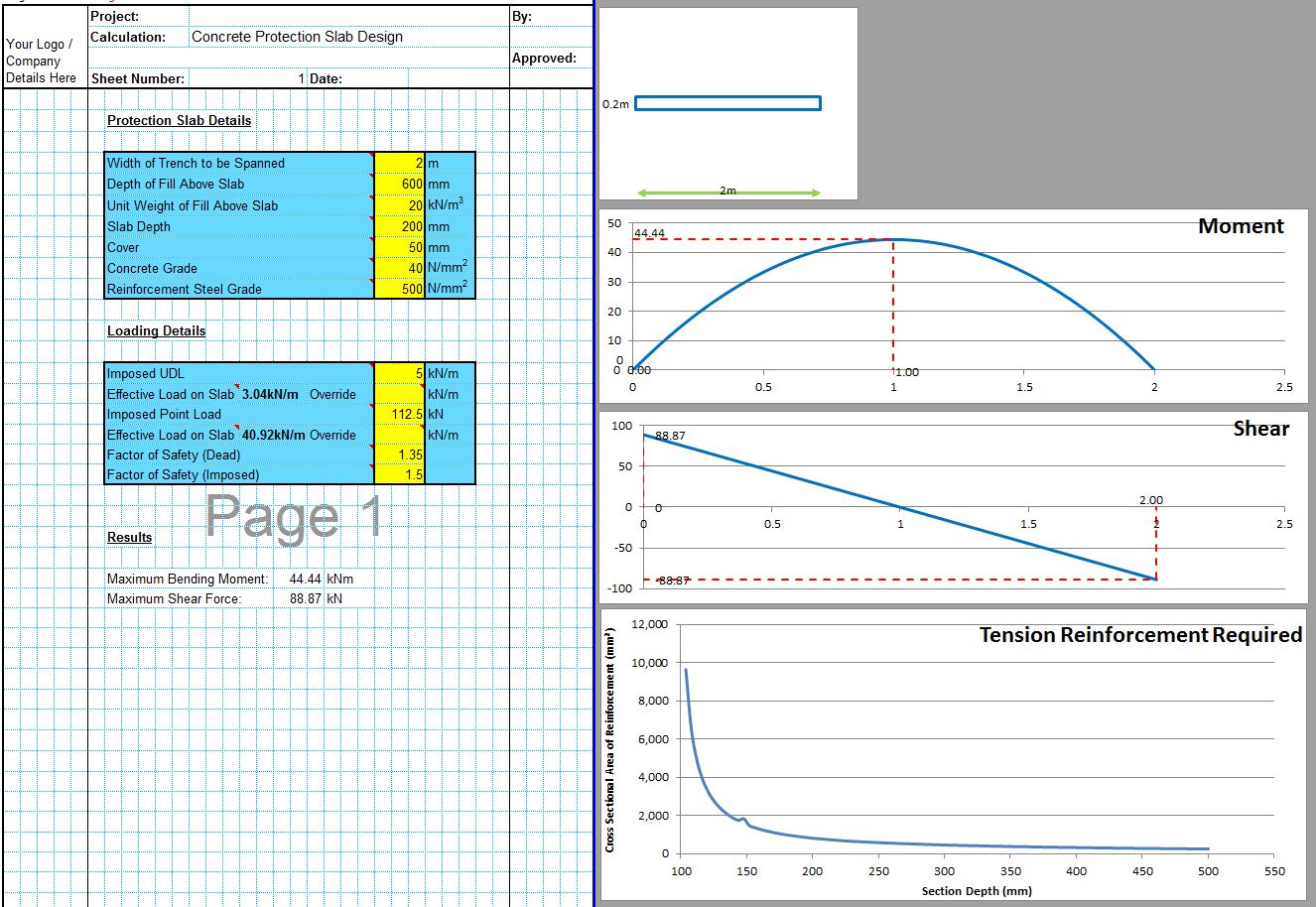
Concrete Protection Slab
This detailed design spreadsheet designs a protection slab commonly installed to protect shallow pipes.
Learn More
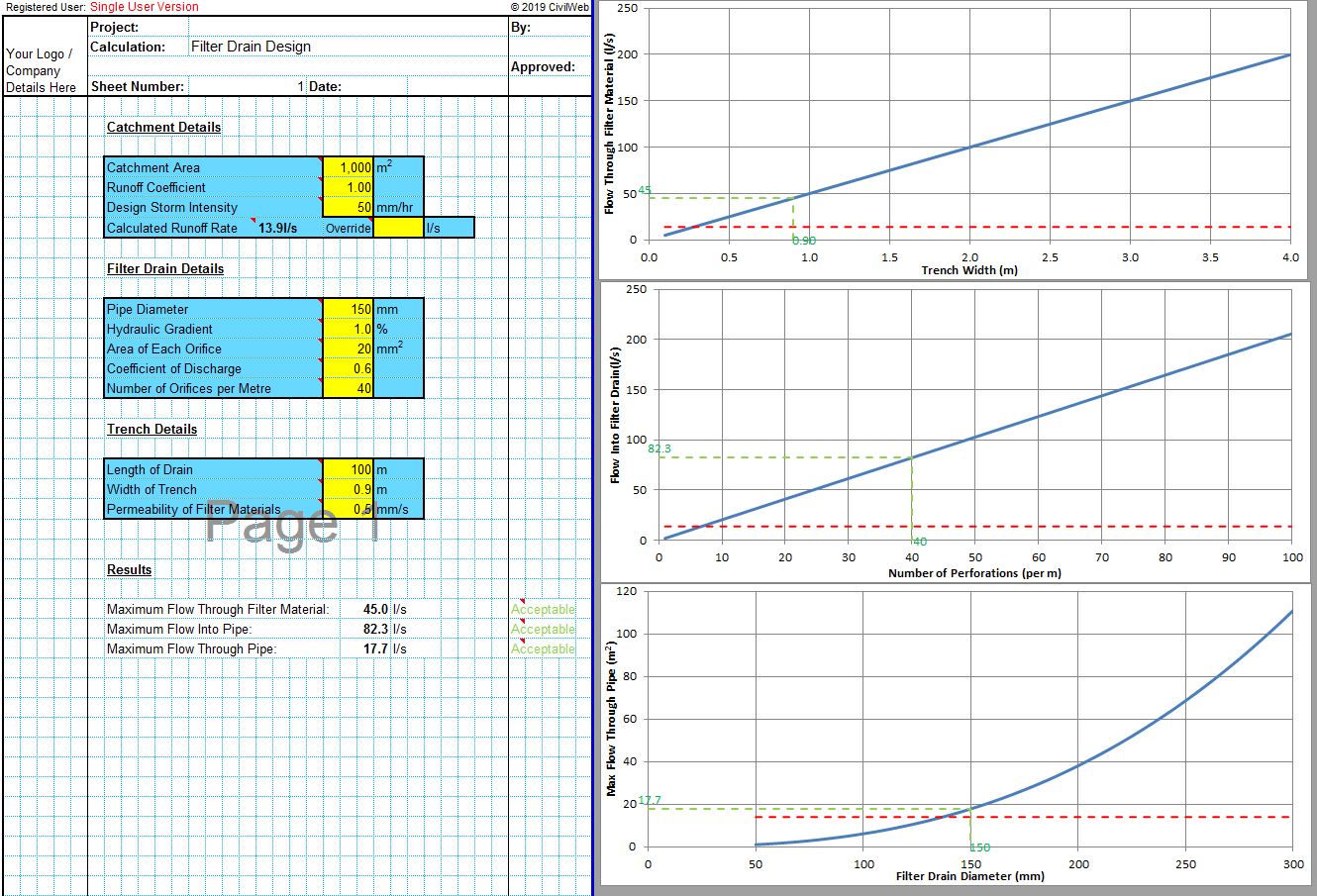
French Drain Design
This spreadsheet completes French Drain Design in accordance with the SUDS Manual.
Learn More
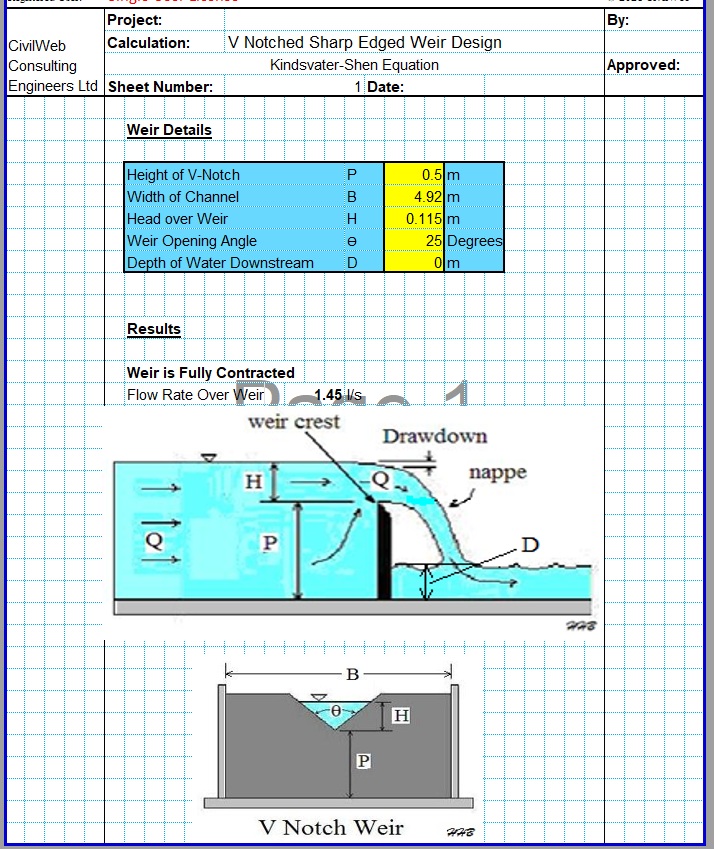
Sharp Crested Weir Flow Calculator Spreadsheets
This suite of 5 separate spreadsheets calculates the flow over sharp crested weirs of all shapes and sizes.
Learn More
Drainage Design Spreadsheet
This is the full suite of drainage design spreadsheets, available at a massive discount for only £49.99.