Subsoiling is a method of soil improvement which improves the soil structure and drainage through the soils. Waterlogged soils are easily damaged by plant and livestock and subsoiling can help to restore better soil structure.
The CivilWeb Field Drain Design Spreadsheet can be used to accurately and quickly design all kinds of field drains.
Soil Conditions
Subsoiling should only be carried out in dry conditions so that the soil can be fractured. If the soil is too wet it will simply smear without creating the cracks and fissures required for drainage. In arable soils both surface soils and the compacted layer should be dry. For grassland soils the surface soils should be slightly moist to allow the subsoiler to enter the soil without excessive tear, and the compacted soils are dry to enable lift and loosening.
Equipment
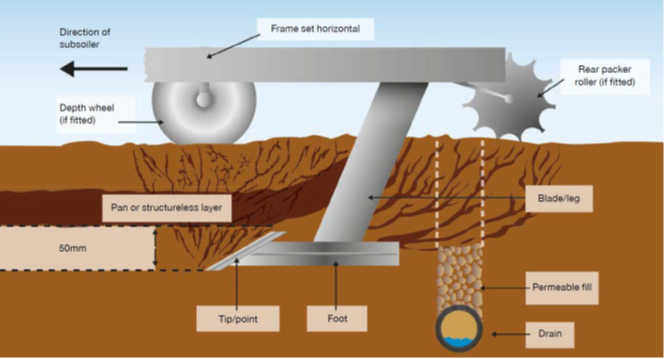
There are many different types of equipment commonly used for subsoiling. Winged subsoilers are able to fracture the soils much more effectively than older conventional subsoilers. The wings mean that they require greater draught forces to pull them through the soil, but they can disturb 2 or 3 times as much of the soil in a single pass.
Leading tines are often used to further increase the volume of soil disturbed without increasing the required draught. However they are not generally suitable for grassland soils as they will cause considerable disturbance of the surface soils. Topsoil looseners incorporating a leading disc and packer roller can be used on grasslands for a similar effect without the surface disturbance.
Recompaction
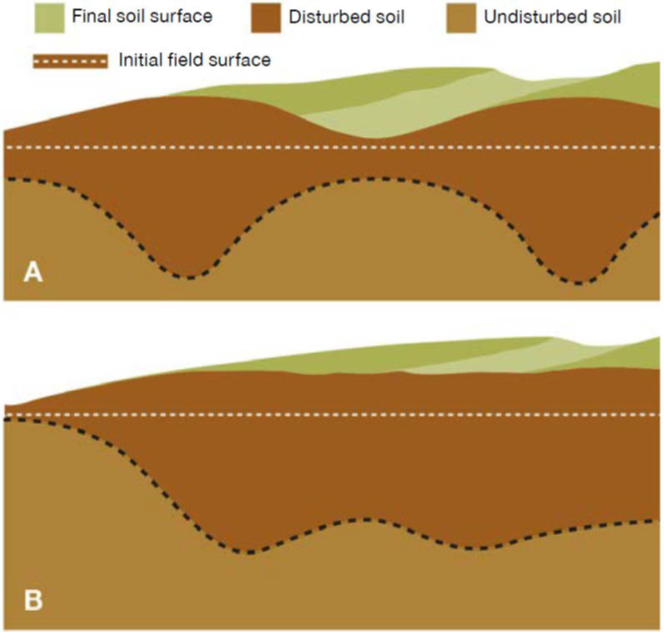
Newly disturbed soils are particularly vulnerable to recompaction. Use of plant and equipment on newly subsoiled fields should be avoided. The grazing of livestock on newly subsoiled lands should also be avoided with the grass cut rather than grazed in the first spring after subsoiling.
Depth
A depth wheel or rear packer should be included in order to maintain a consistent depth for the subsoiler. Generally the tines of the subsoiler should be set at a depth of around 25mm to 50mm below the base of the compacted layer, up to a maximum of around 450mm below the soil surface.
Where subsoiling is to be used alongside lateral drains to improve drainage, the subsoiling must be at sufficient depth to include some of the permeable backfill surrounding the lateral drains. This will allow the fractures in the soil to transmit rainwater through the surface soils and into the lateral drains.
Spacing
The spacing of the subsoiling should be close enough so that the fractures produced in the soil can link together. Typically this spacing should be around 1.5 times the depth for conventional subsoilers, around 2.0 times the depth for winged subsoilers and up to 2.5 times the depth for subsoilers with leading shallow tines. These spacings can be checked by excavating a pit following a trial run to check that the fractures in the soil are linking up.
Typical Layouts
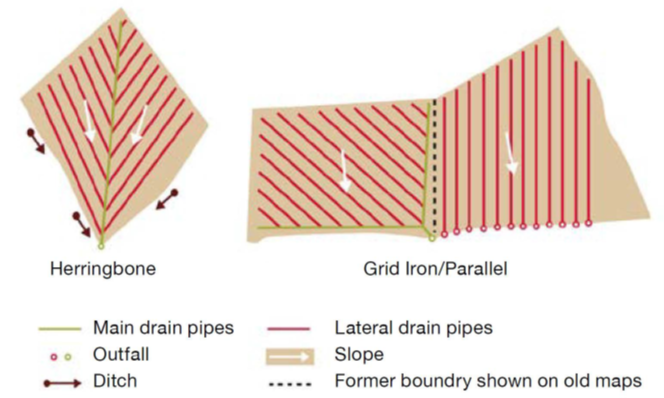
The layout of field drainage systems is important to ensure that the whole area is suitably covered by the drainage and that the water is efficiently removed to the main outfall drains. The layout chosen will depend on the topography of the site, the slope and the size and shape of the area.
The CivilWeb Field Drain Design Spreadsheet can be used to accurately and quickly design all kinds of field drains.
PIPE FLOW CALCULATOR
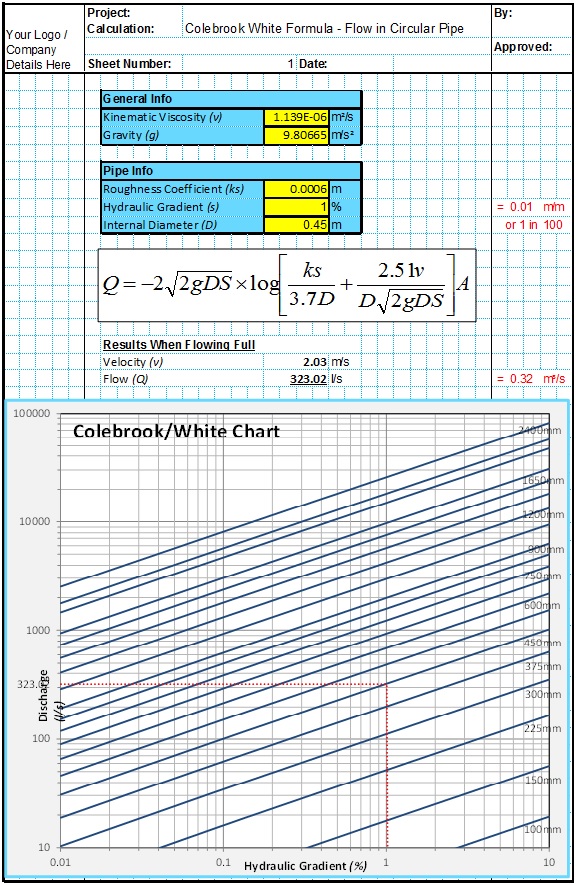
This spreadsheet uses the Colebrook-White and Manning Equations to calculate the flow capacity and velocity in pipes acting under gravity.
Find Out More
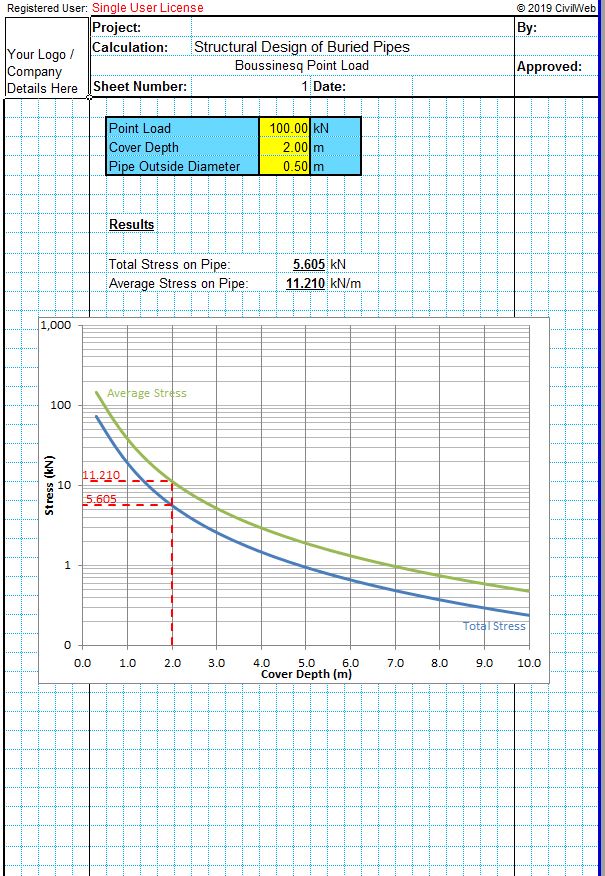
Buried Pipe Design Spreadsheet
This spreadsheet can be used to design concrete, steel, plastic and other buried pipes in accordance with BS EN 1295-1.
Learn More
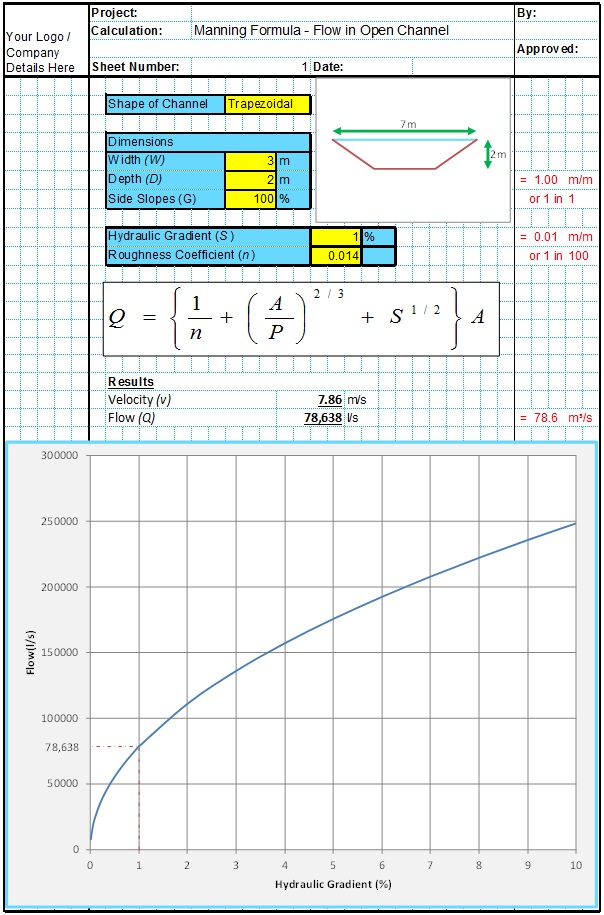
Manning Open Channel Design Spreadsheet
This spreadsheet uses the Manning formula to calculate the flow conditions in an open channel acting under gravity only.
Learn More
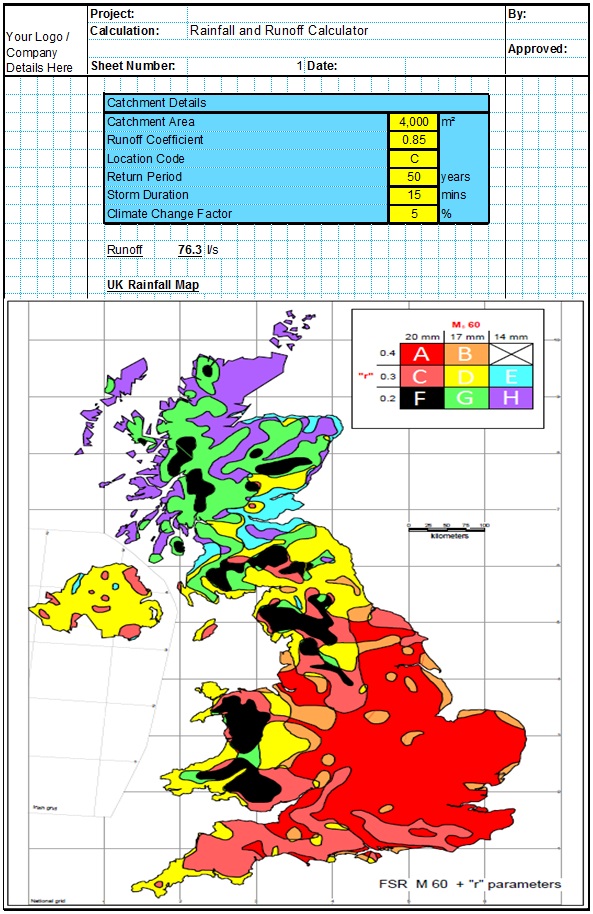
Runoff Calculator Spreadsheet
This spreadsheet calculates the design runoff flow for a site in accordance with the Flood Estimation Handbook.
Learn More
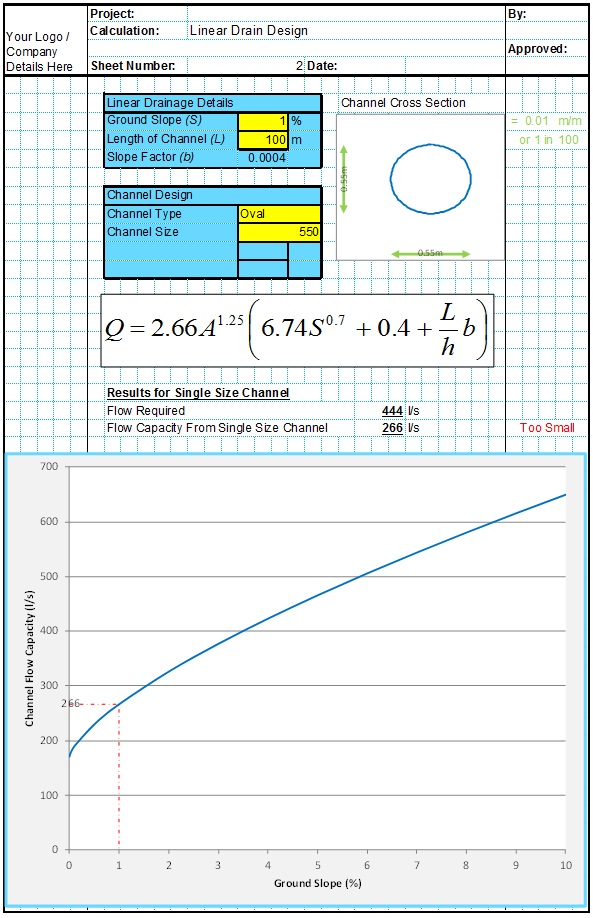
Linear Drainage Design Spreadsheet
This spreadsheet calculates the maximum flow from a specified linear drainage channel and checks whether the channel is sufficient for the specified site and storm conditions.
Learn More
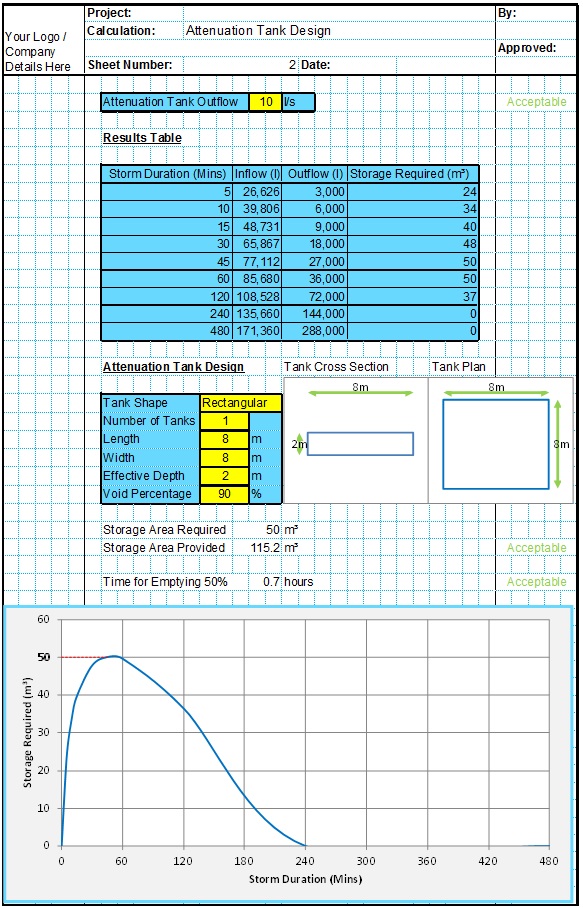
Attenuation Design Spreadsheet
This spreadsheet calculates the requirements for a attenuation system and assists the user to design a suitable system.
Learn More
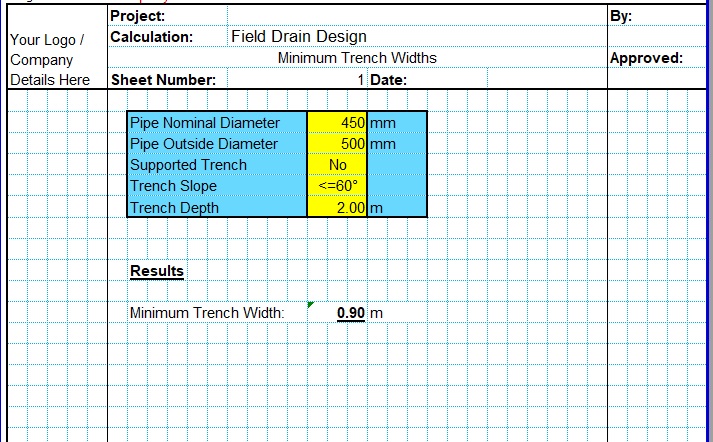
Field Drain Design Spreadsheet
This spreadsheet can be used to design field drains, typically subsurface drainage systems used to drain fields and open areas.
Learn More
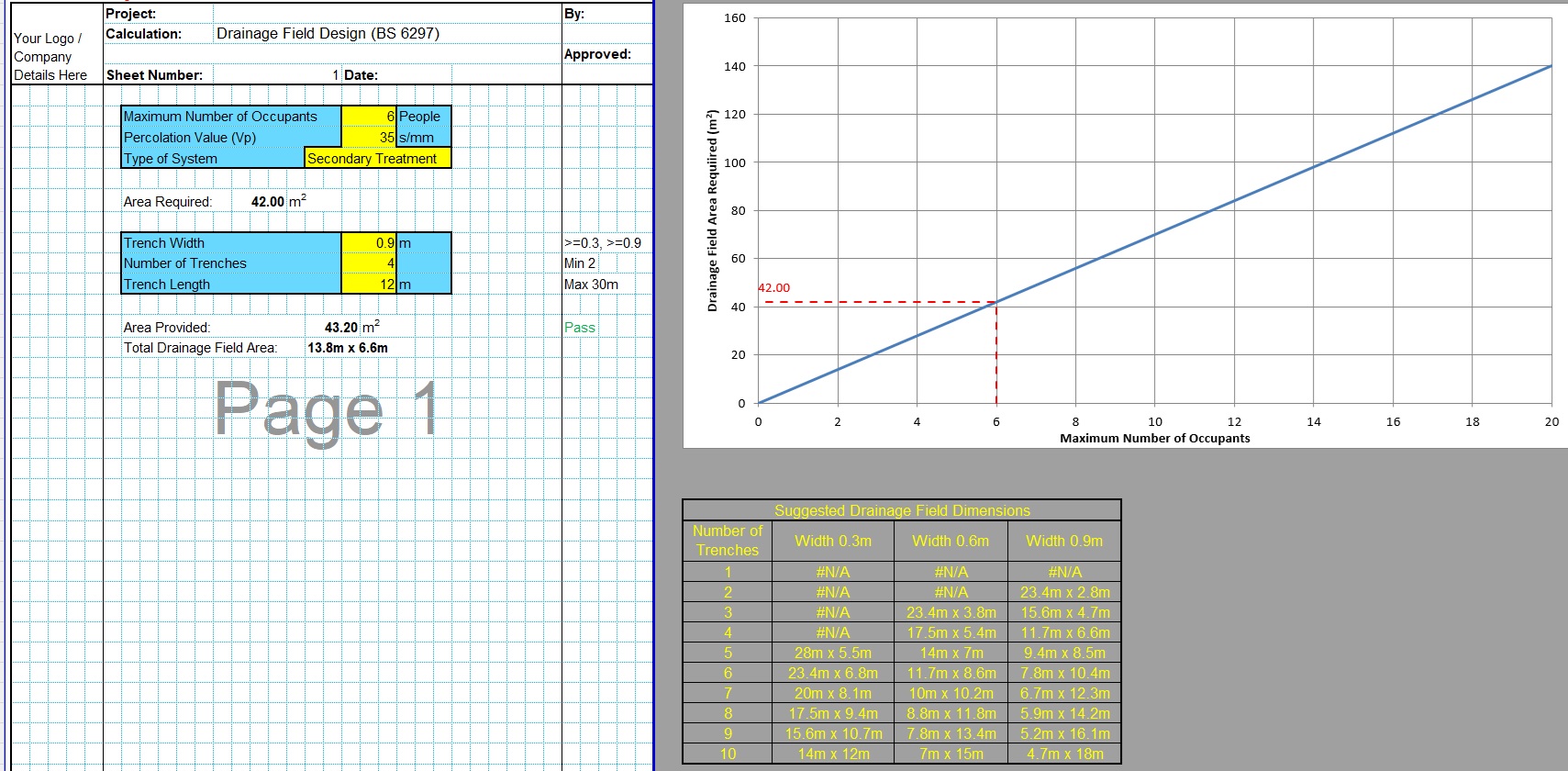
Drainage Field Design Spreadsheet
This spreadsheet can be used to design septic infiltration systems known as drainage fields, leach fields or septic drain fields.
Learn More
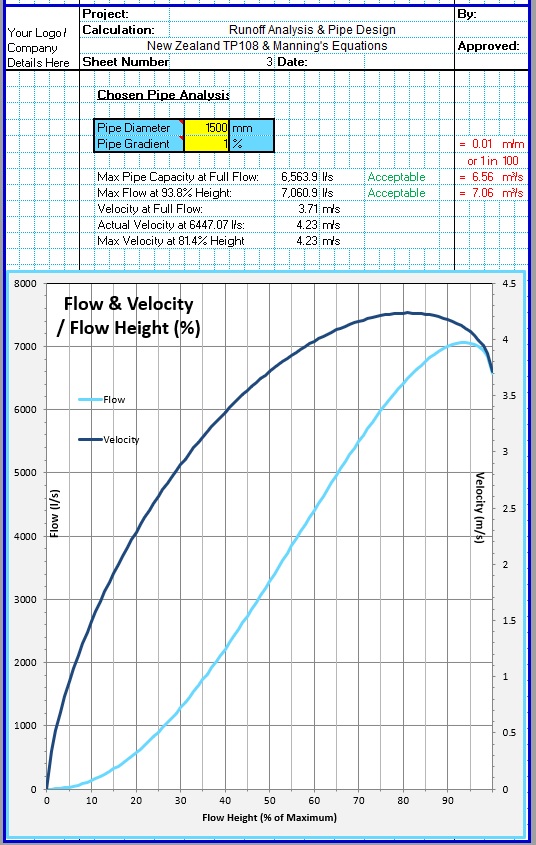
TP108 Spreadsheet
This spreadsheet calculates the rainfall for New Zealand catchments in accordance with TP108.
Learn More
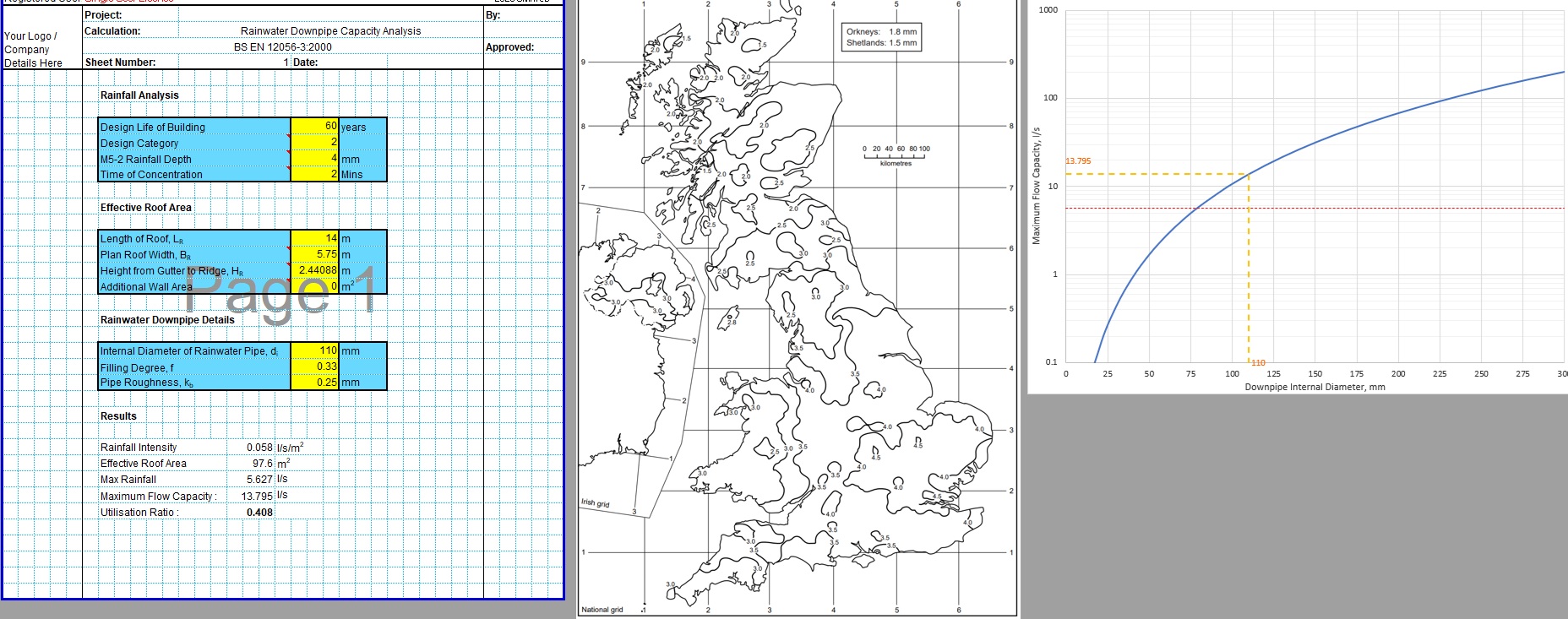
Roof Downpipe Calculator Spreadsheet
This spreadsheet calculates the size of roof drainage downpipes depending on the roof catchment and rainfall requirements.
Learn More
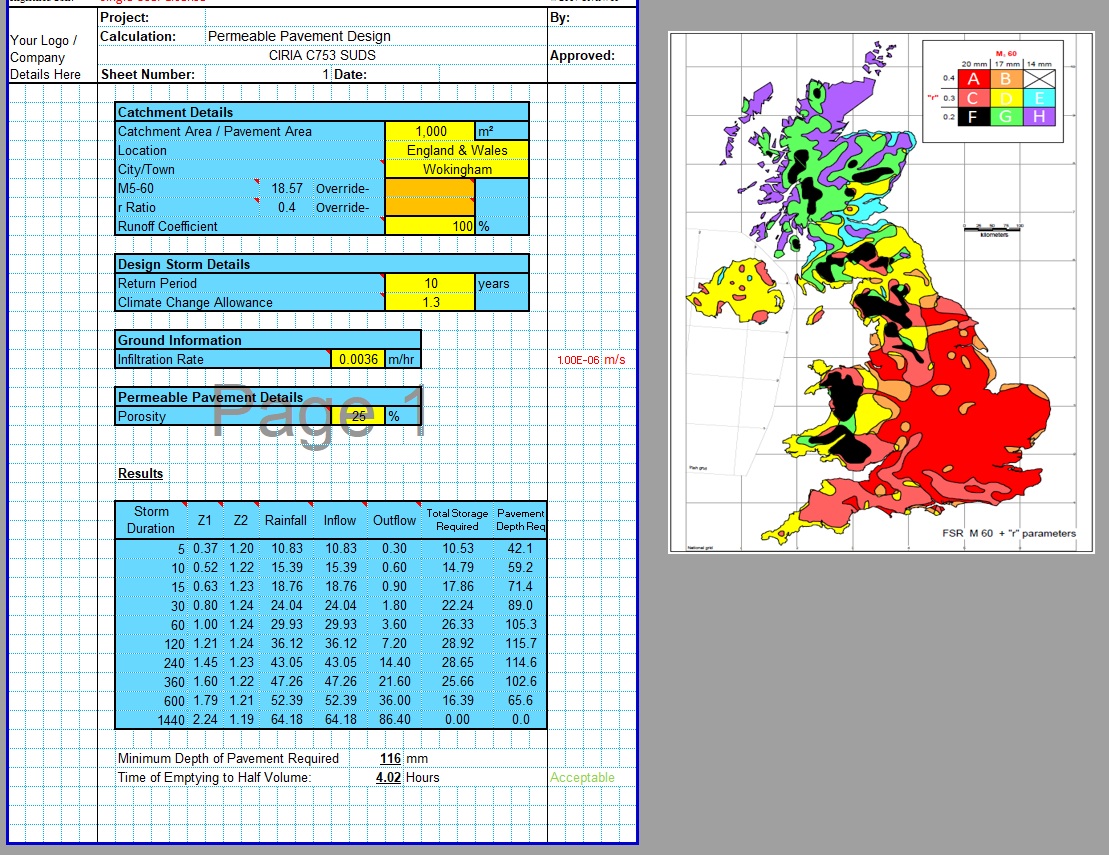
Permeable Pavement Design Spreadsheet
This spreadsheet is designed to determine the size and characteristics of permeable pavements.
Learn More
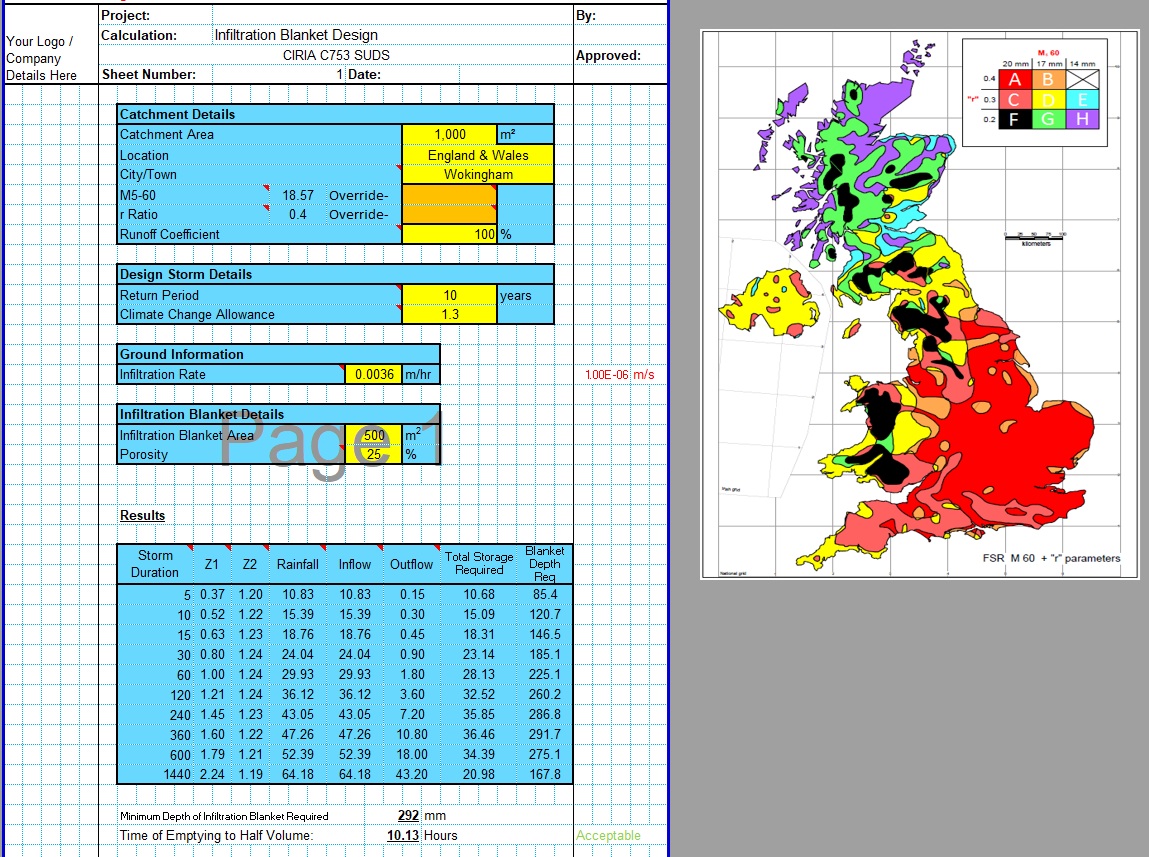
Infiltration Blanket Design Spreadsheet
This spreadsheet can be used to design thin depth infiltration systems, typically called infiltration blanket systems.
Learn More
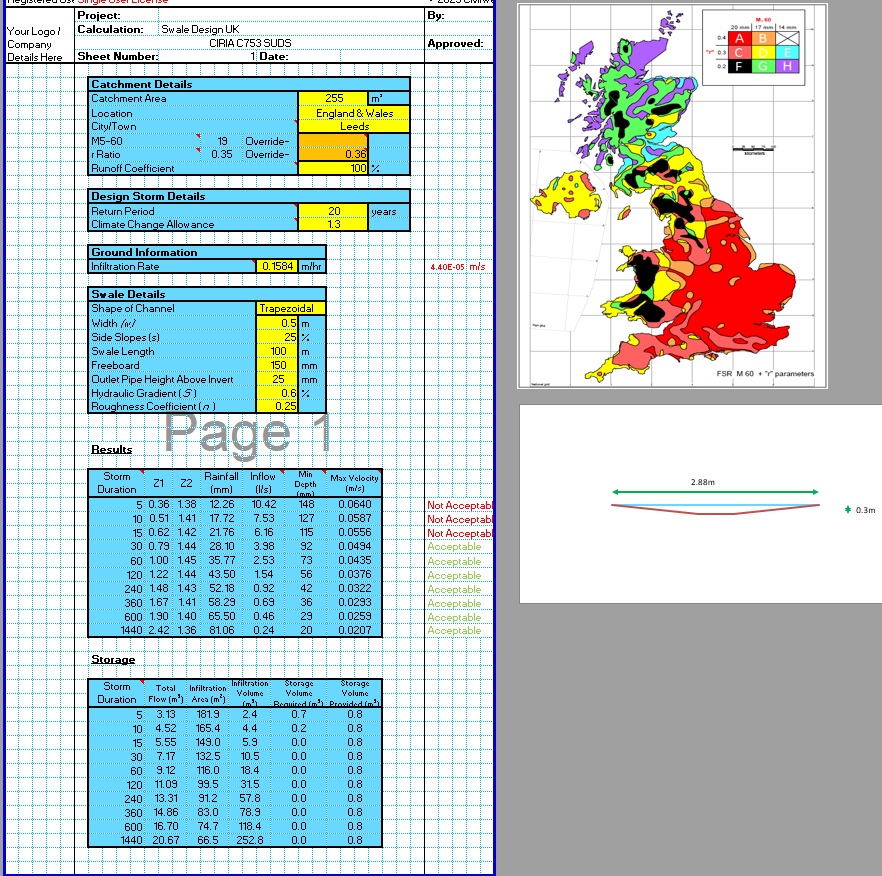
Swale Design Spreadsheet
This spreadsheet can be used to design swales. These linear grassed channels can be used both to convey, infiltrate and filter surface drainage runoff.
Learn More
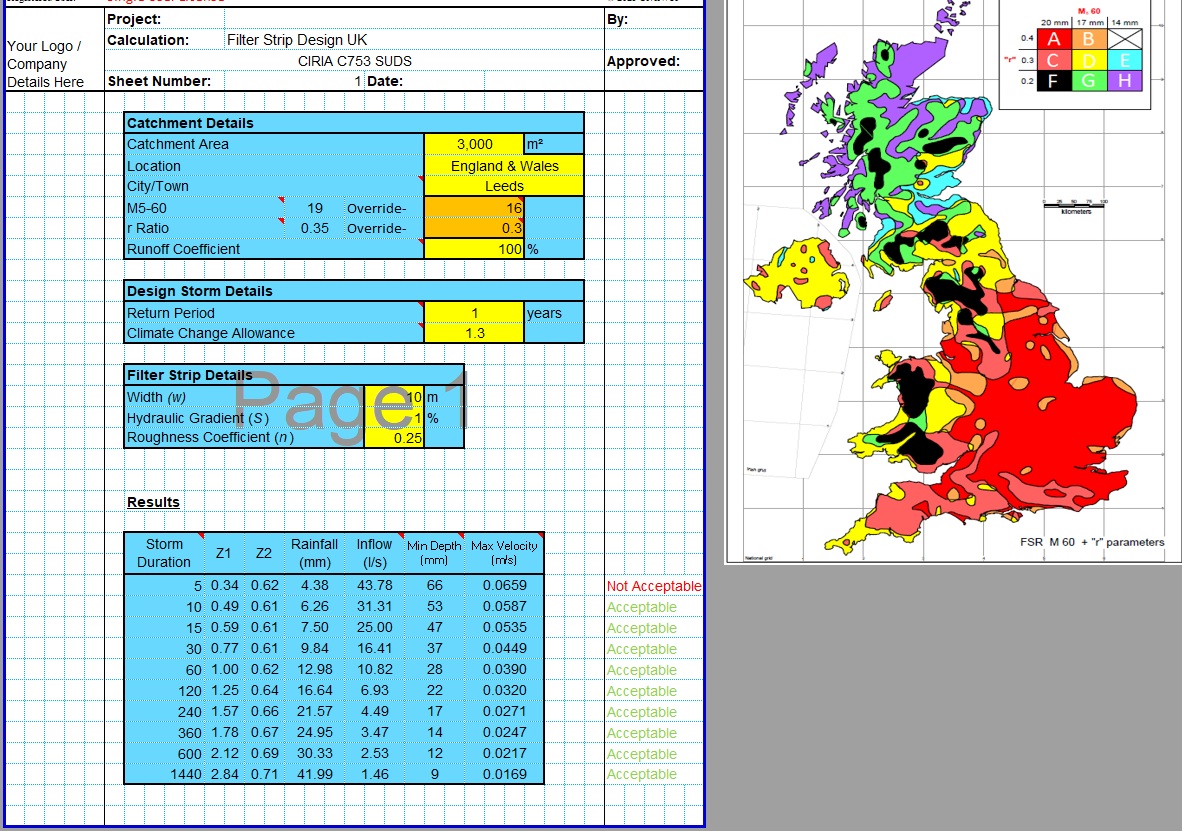
Filter Strip Design Spreadsheet
This spreadsheet is designed to analyse surface water filter strips and to determine the max flow depth and max flow velocity and determine whether they are in accordance with relevant standards.
Learn More
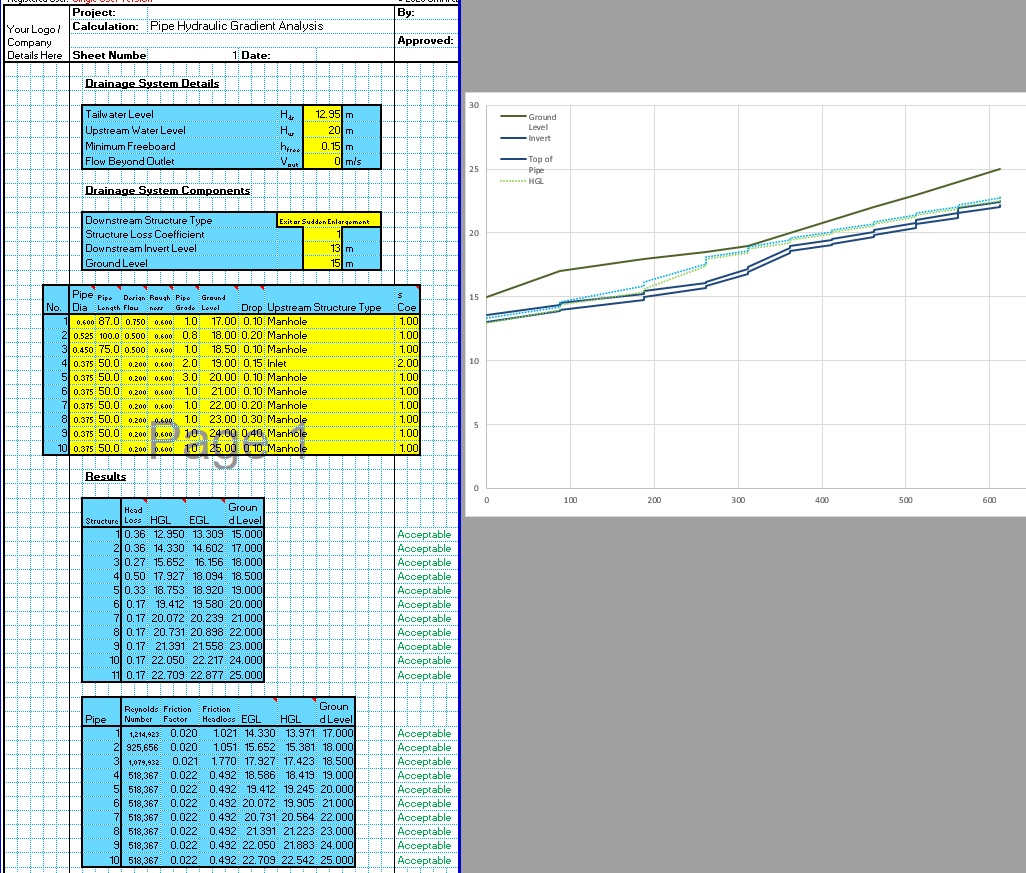
Hydraulic Gradient Analysis Spreadsheet
This spreadsheet analyses the hydraulic and energy grade lines for drainage systems with up to 10 drainage runs.
Learn More
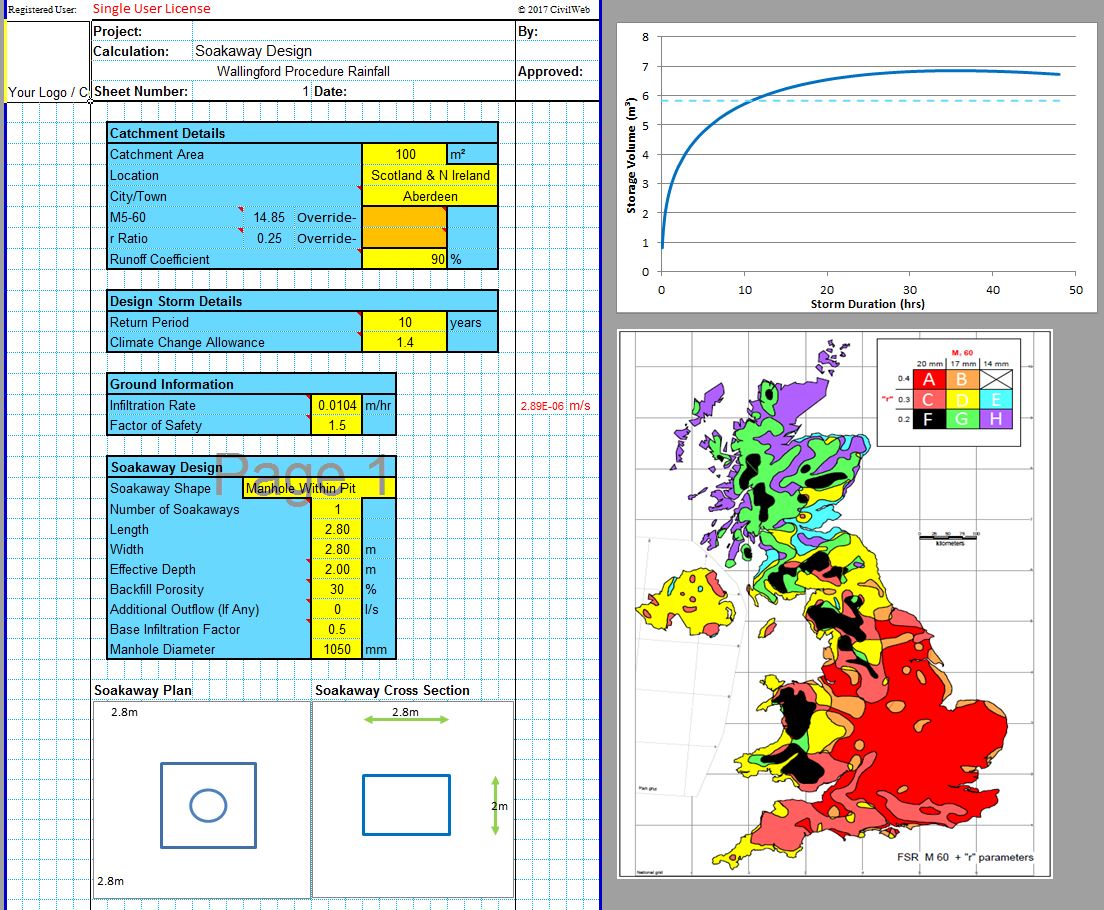
Soakaway Design Spreadsheet
This spreadsheet calculates the requirements for a soakaway system and assists the user to design a suitable system.
Learn More
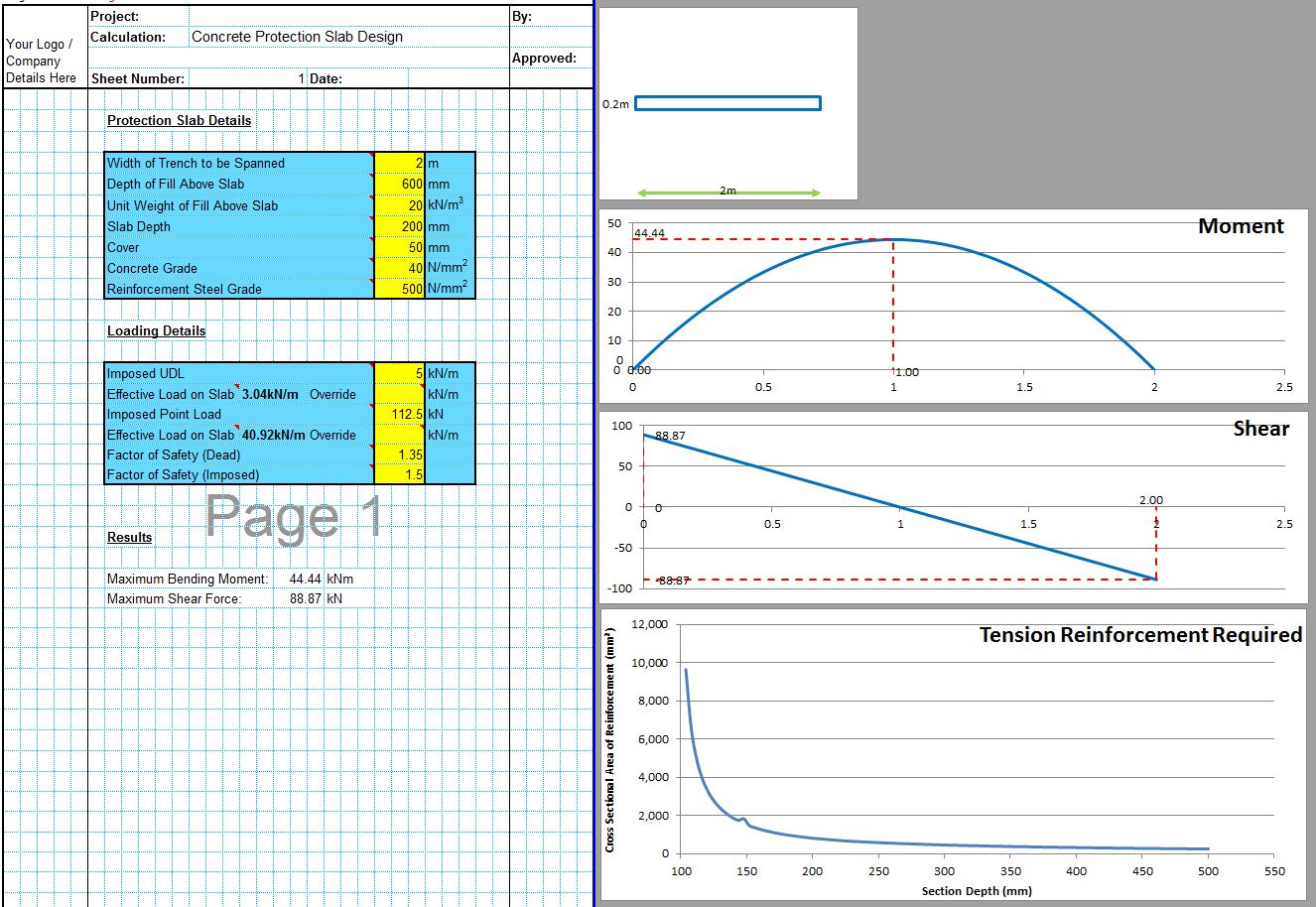
Concrete Protection Slab
This detailed design spreadsheet designs a protection slab commonly installed to protect shallow pipes.
Learn More
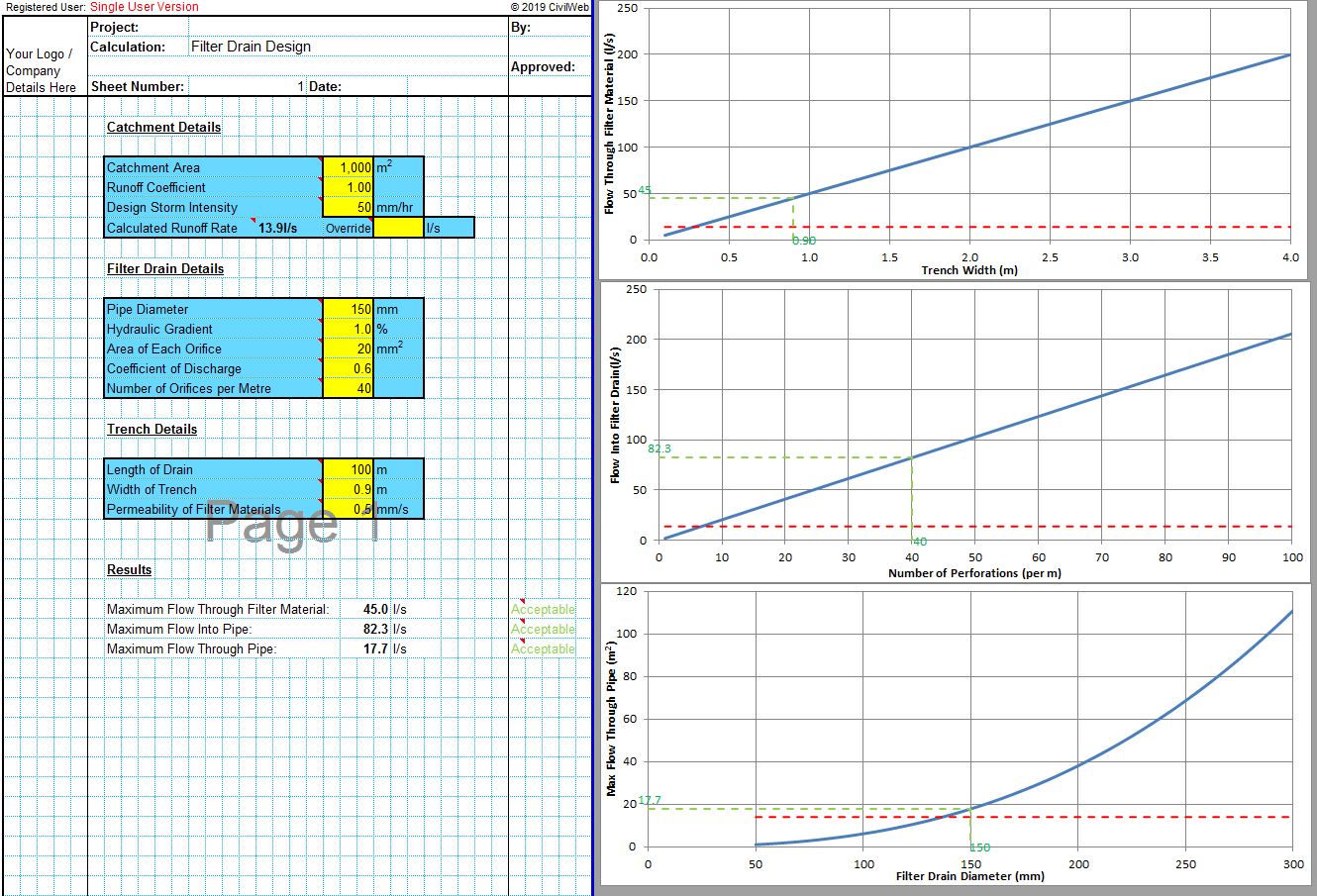
French Drain Design
This spreadsheet completes French Drain Design in accordance with the SUDS Manual.
Learn More
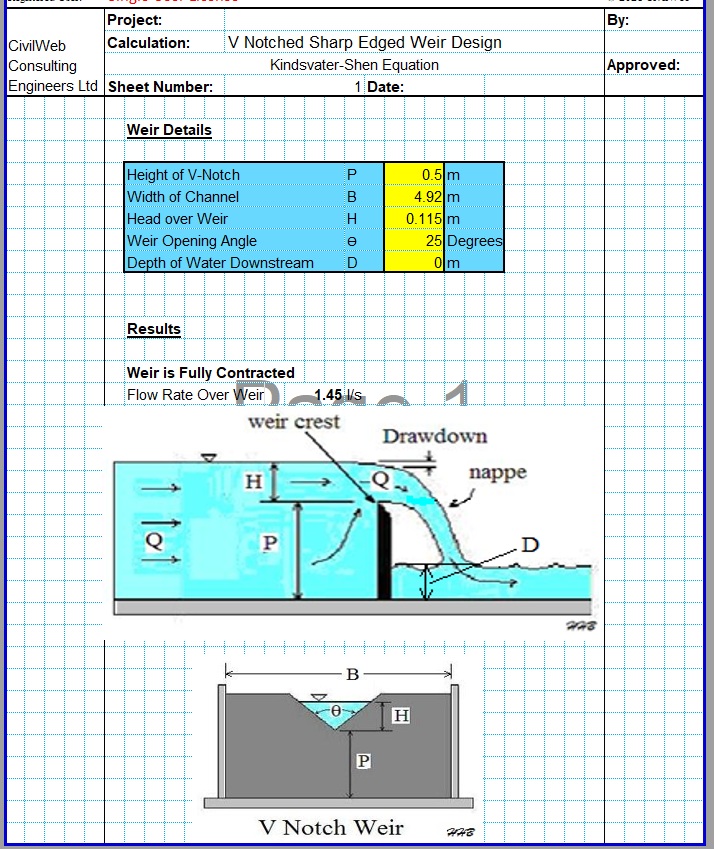
Sharp Crested Weir Flow Calculator Spreadsheets
This suite of 5 separate spreadsheets calculates the flow over sharp crested weirs of all shapes and sizes.
Learn More
Drainage Design Spreadsheet
This is the full suite of drainage design spreadsheets, available at a massive discount for only £49.99.