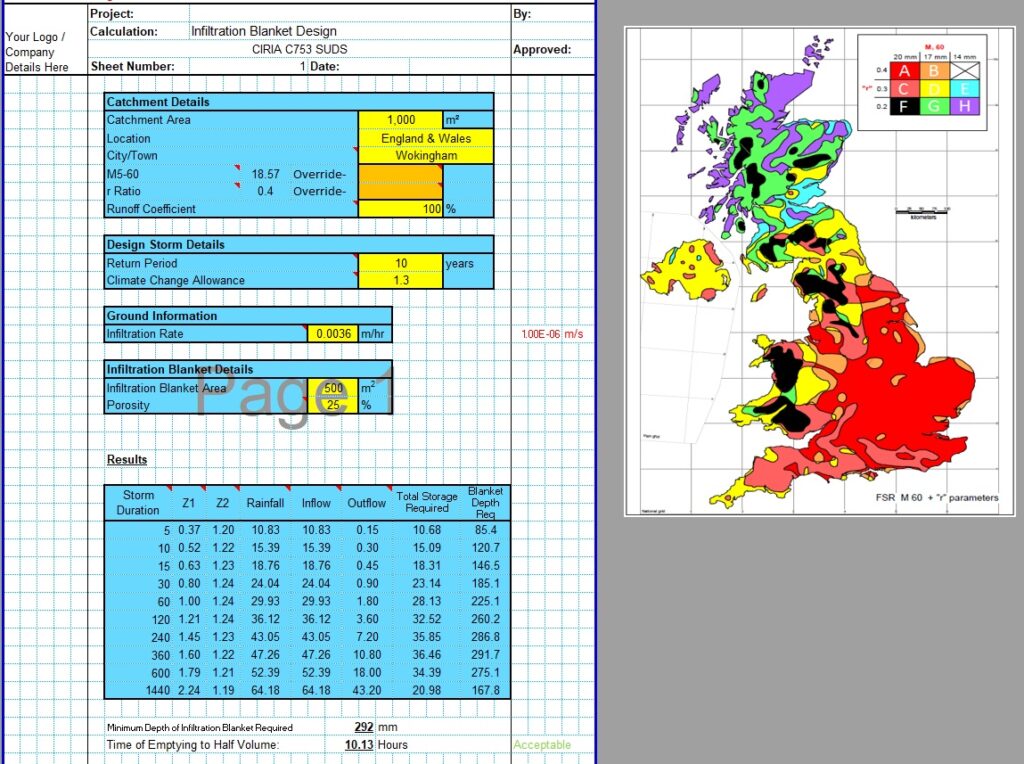
Infiltration blanket design is an important part of any modern SUDS design. The CivilWeb Infiltration Blanket Design Spreadsheet can be used to complete all the calculations required for the hydraulic design of any infiltration blanket including rainfall analysis.
The CivilWeb Infiltration Blanket Design Spreadsheet can be purchased lower down this page for only £19.99. Or why not buy our best value bundle? Our Full Drainage Design Spreadsheet Suite can be purchased at the bottom of this page for only £49.99. This suite includes all of our drainage design spreadsheets, more than 20, and represents an incredible saving of more than 85%.
Infiltration Blanket Design: Purpose, Methods, and Spreadsheet Tools
A well‑designed infiltration blanket plays a quiet but crucial role in modern stormwater management. It helps developments handle rainfall sustainably, reduce runoff, and protect downstream networks. The sections below walk through what an infiltration blanket is, how engineers typically design one, and why spreadsheets have become a practical tool for getting the calculations right.
What is an Infiltration Blanket
An infiltration blanket is a shallow, engineered layer designed to absorb, store, and infiltrate stormwater into the underlying soil. It typically sits beneath landscaped areas, car parks, sports fields, or lightly loaded surfaces and acts as a distributed infiltration system rather than a single concentrated soakaway.
Most infiltration blankets are built using:
- A permeable surface layer such as turf, gravel, or permeable paving
- A granular sub‑base with high void space to temporarily store water
- A geotextile layer to prevent fine particles from clogging the system
- Native soil beneath, which ultimately receives the infiltrated water
The blanket spreads water over a wide area, allowing it to soak into the ground slowly and naturally. This reduces peak runoff, supports groundwater recharge, and helps developments meet SuDS (Sustainable Drainage Systems) requirements.
Key benefits include:
- Lower surface runoff and reduced flood risk
- Improved water quality through natural filtration
- Distributed infiltration that avoids overloading a single point
- Compatibility with green spaces and low‑impact design
Common Infiltration Blanket Design Methods
Designing an infiltration blanket requires balancing hydraulic performance, soil infiltration capacity, and structural requirements. Several methods are commonly used:
Infiltration Rate Assessment — Designers conduct percolation or infiltration tests to determine how quickly the native soil can absorb water. This value drives the required blanket area and depth.
Storage Volume Calculations — The sub‑base layer is sized to temporarily store stormwater from a chosen design storm (e.g., 1‑in‑10‑year or 1‑in‑30‑year rainfall event). Engineers calculate the void volume needed to prevent surface flooding.
Hydraulic Loading Method — The blanket is sized so that the inflow rate from rainfall does not exceed the soil’s infiltration capacity. This ensures the system drains within an acceptable timeframe.
Layered System Design — Some blankets use multiple layers of different aggregate sizes to improve filtration, structural strength, and long‑term performance.
Overflow and Bypass Provisions — Where infiltration alone cannot manage extreme storms, designers include overflow pipes or connections to downstream drainage systems.
Each method must consider soil type, groundwater depth, rainfall intensity, land use, and maintenance requirements to ensure long‑term reliability.
How Does the CivilWeb Infiltration Blanket Design Spreadsheet Work?
Firstly the spreadsheet calculates the quantity of rain water that the infiltration blanket will be required to handle. The spreadsheet is pre-loaded with rainfall data for all parts of the UK, so the user simply needs to input the location, runoff coefficient, return period and climate change factor. The spreadsheet uses this info to calculate the rainfall intensity, which is simply multiplied by the catchment area to give the total volume of water for all possible design storm events.
Next the user can input the infiltration rate expected from the underlying soils along with the infiltration blanket area and the material porosity which the spreadsheet can determine the total storage volume and outflow rate.
With these calculations done, the spreadsheet cleverly analyses each potentially critical design storm event and calculates the depth of infiltration blanket material required to achieve the volume of rainwater storage required. The user can then simply pick the desired storm event value or use the worst case for the design thickness.
A further check is finally made on the time of emptying to ensure that the infiltration blanket drains quickly enough to make space for any subsequent storms.
Why Use an Infiltration Blanket Design Spreadsheet?
An infiltration blanket design spreadsheet helps engineers manage the many variables involved in sizing and checking the system. Because infiltration performance depends on soil tests, rainfall data, storage depth, and void ratios, a spreadsheet ensures calculations are accurate, consistent, and easy to update.
Advantages include:
- Automated calculations for storage volume, infiltration rate, and drain‑down time
- Quick comparison of different storm events or soil conditions
- Built‑in checks for groundwater levels, soil permeability, and structural limits
- Scenario testing for alternative materials or blanket depths
- Clear documentation for planning submissions and SuDS compliance
For developers, engineers, and local authorities, a spreadsheet becomes a practical tool that reduces design time and increases confidence that the infiltration blanket will perform effectively in real‑world conditions.
Get Started Today
Save hours of repetitive calculation time. Whether you’re working on a major project or a small renovation, this tool will give you clarity, accuracy, and confidence.
Buy the CivilWeb Infiltration Blanket Design Spreadsheet now for only £19.99.
Or alternatively big savings are available with our Infiltration Blanket and Permeable Pavement design bundle. Get both spreadsheets for only £29.99.
Or why not bundle with the CivilWeb Permeable Pavement Design Spreadsheet for only £10 extra?
Or save £50+ by buying our full Drainage Design Suite including all our drainage design spreadsheets.
Free Trial Version
Why not try the fully functional free trial version of this spreadsheet?
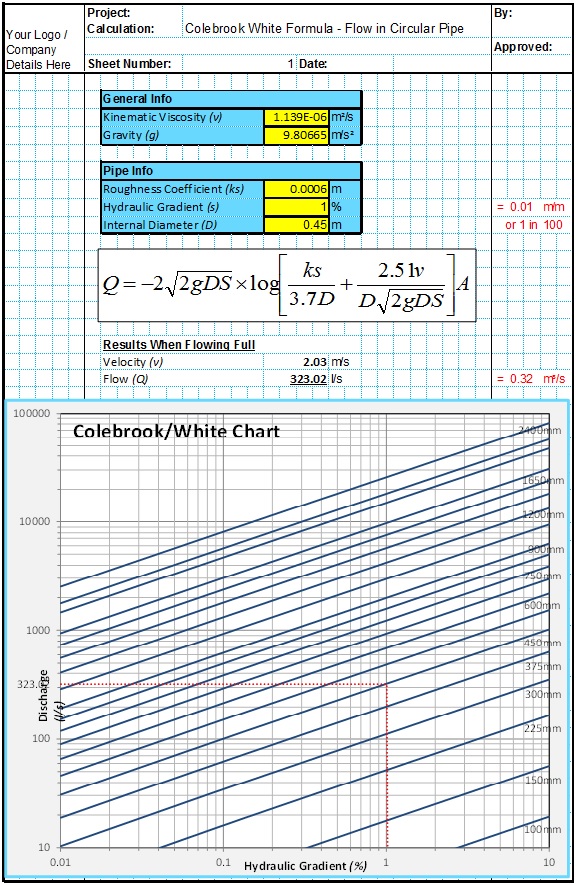
PIPE FLOW CALCULATOR
This spreadsheet uses the Colebrook-White and Manning Equations to calculate the flow capacity and velocity in pipes acting under gravity.
Find Out More
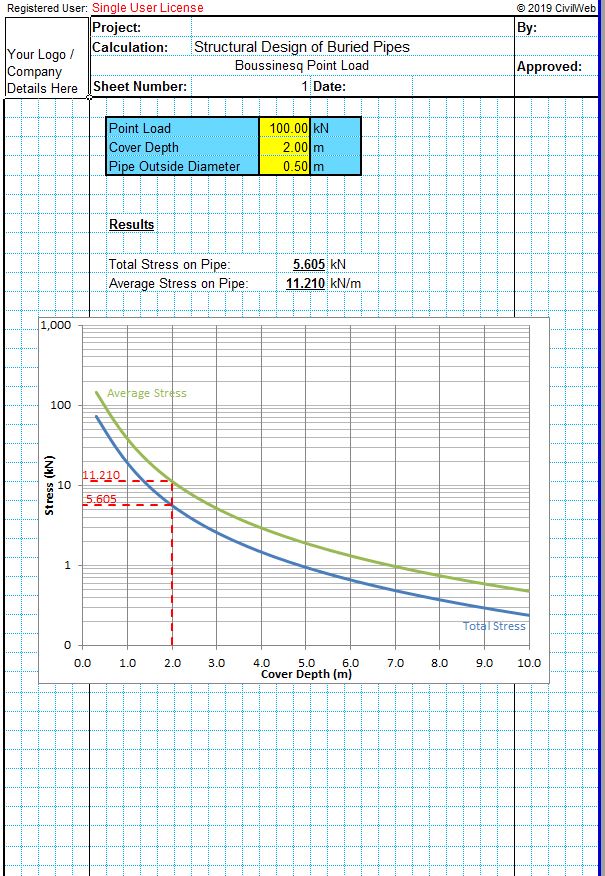
Buried Pipe Design Spreadsheet
This spreadsheet can be used to design concrete, steel, plastic and other buried pipes in accordance with BS EN 1295-1.
Learn More
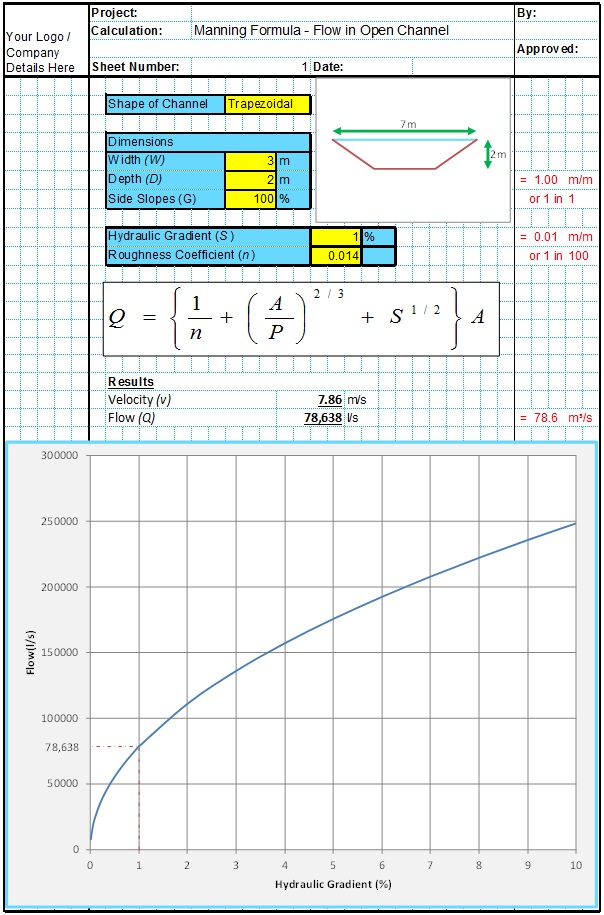
Manning Open Channel Design Spreadsheet
This spreadsheet uses the Manning formula to calculate the flow conditions in an open channel acting under gravity only.
Learn More
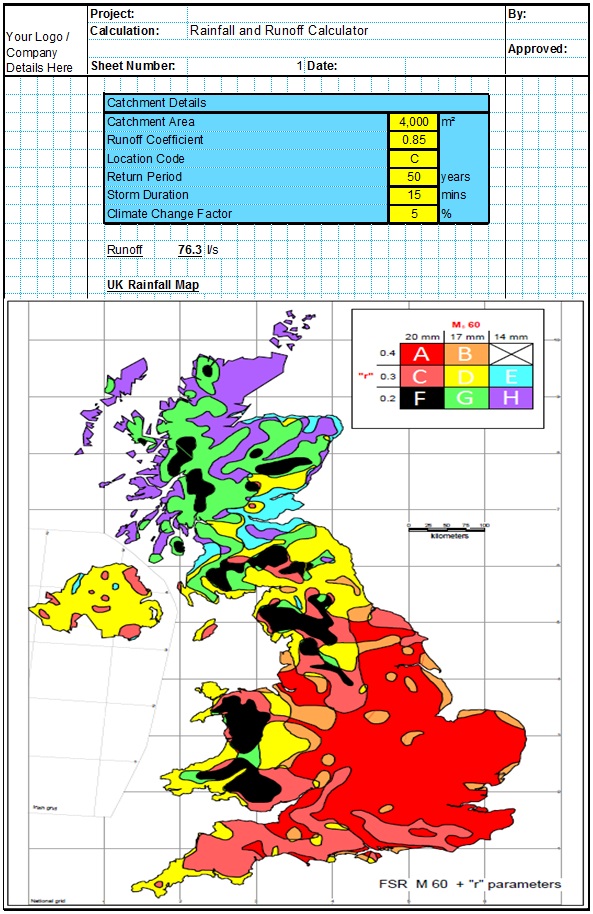
Runoff Calculator Spreadsheet
This spreadsheet calculates the design runoff flow for a site in accordance with the Flood Estimation Handbook.
Learn More
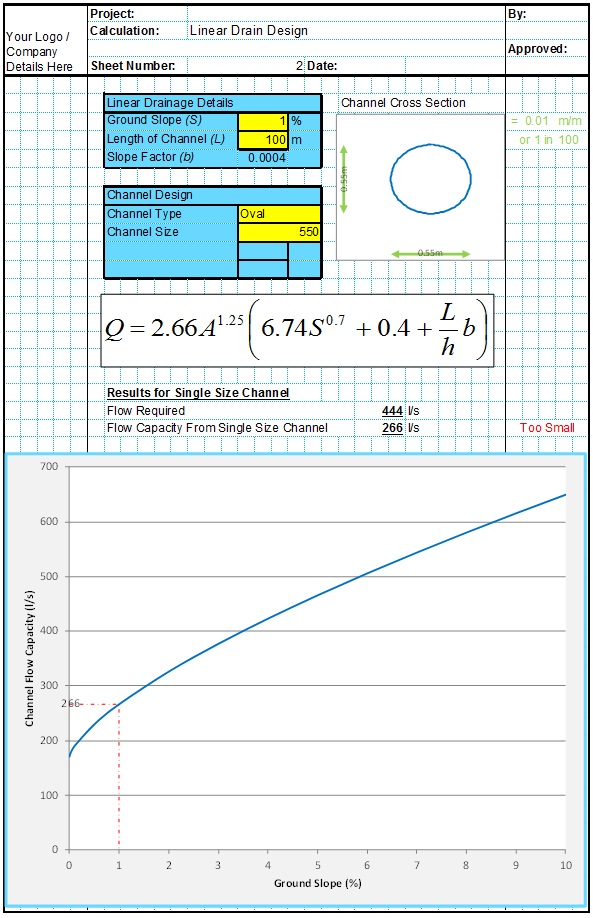
Linear Drainage Design Spreadsheet
This spreadsheet calculates the maximum flow from a specified linear drainage channel and checks whether the channel is sufficient for the specified site and storm conditions.
Learn More
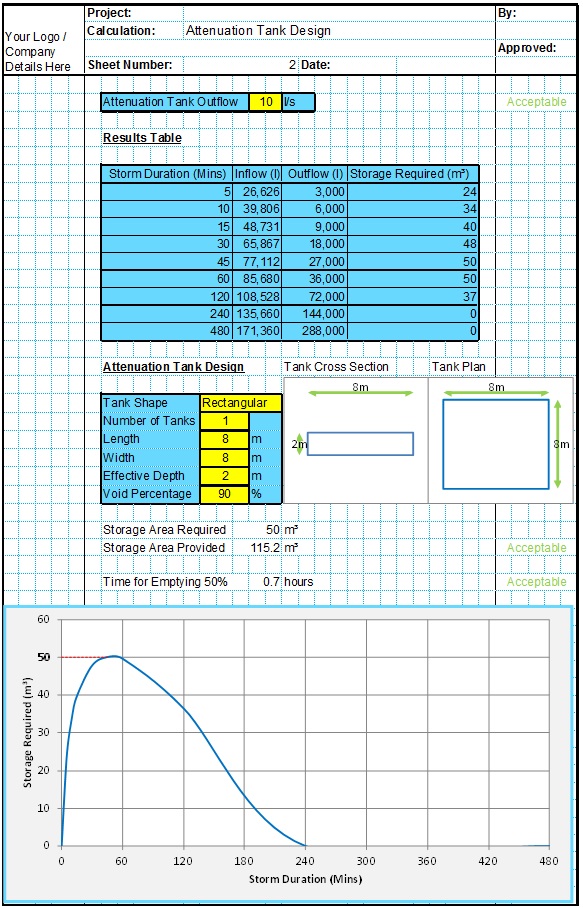
Attenuation Design Spreadsheet
This spreadsheet calculates the requirements for a attenuation system and assists the user to design a suitable system.
Learn More
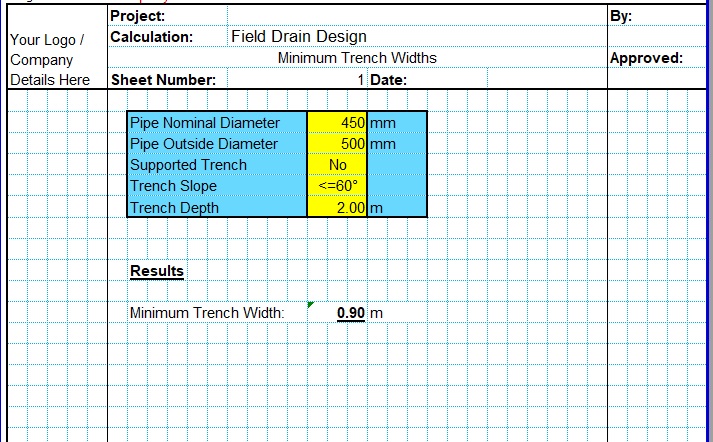
Field Drain Design Spreadsheet
This spreadsheet can be used to design field drains, typically subsurface drainage systems used to drain fields and open areas.
Learn More
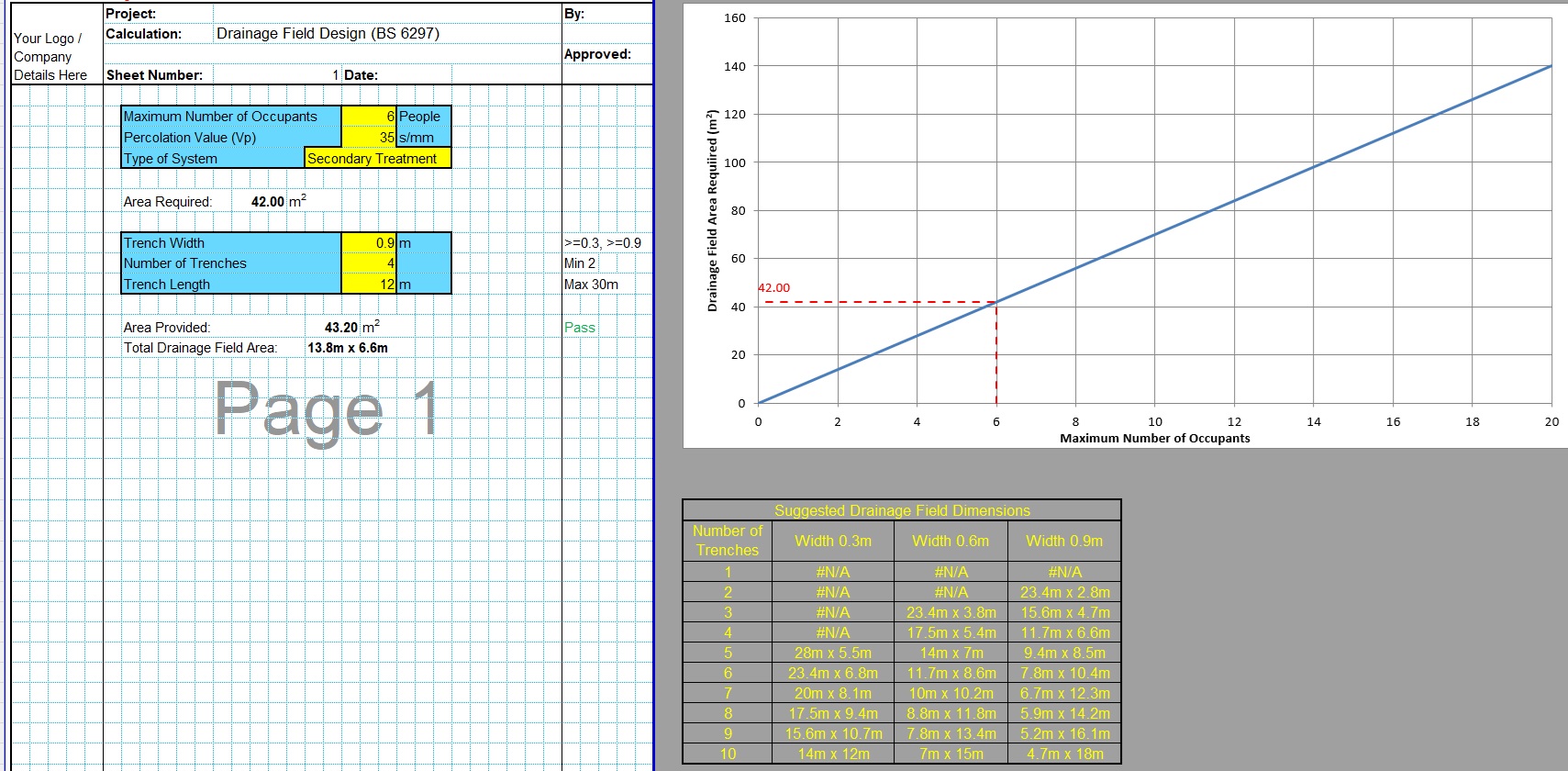
Drainage Field Design Spreadsheet
This spreadsheet can be used to design septic infiltration systems known as drainage fields, leach fields or septic drain fields.
Learn More
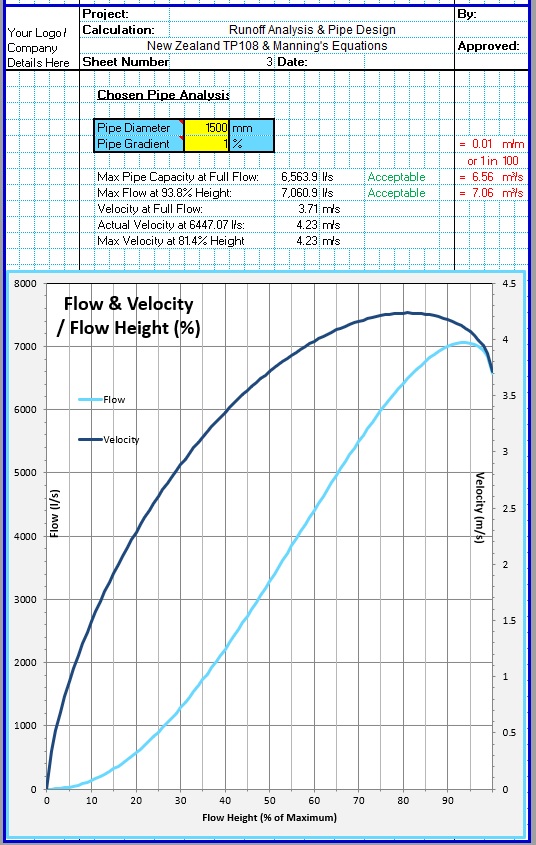
TP108 Spreadsheet
This spreadsheet calculates the rainfall for New Zealand catchments in accordance with TP108.
Learn More
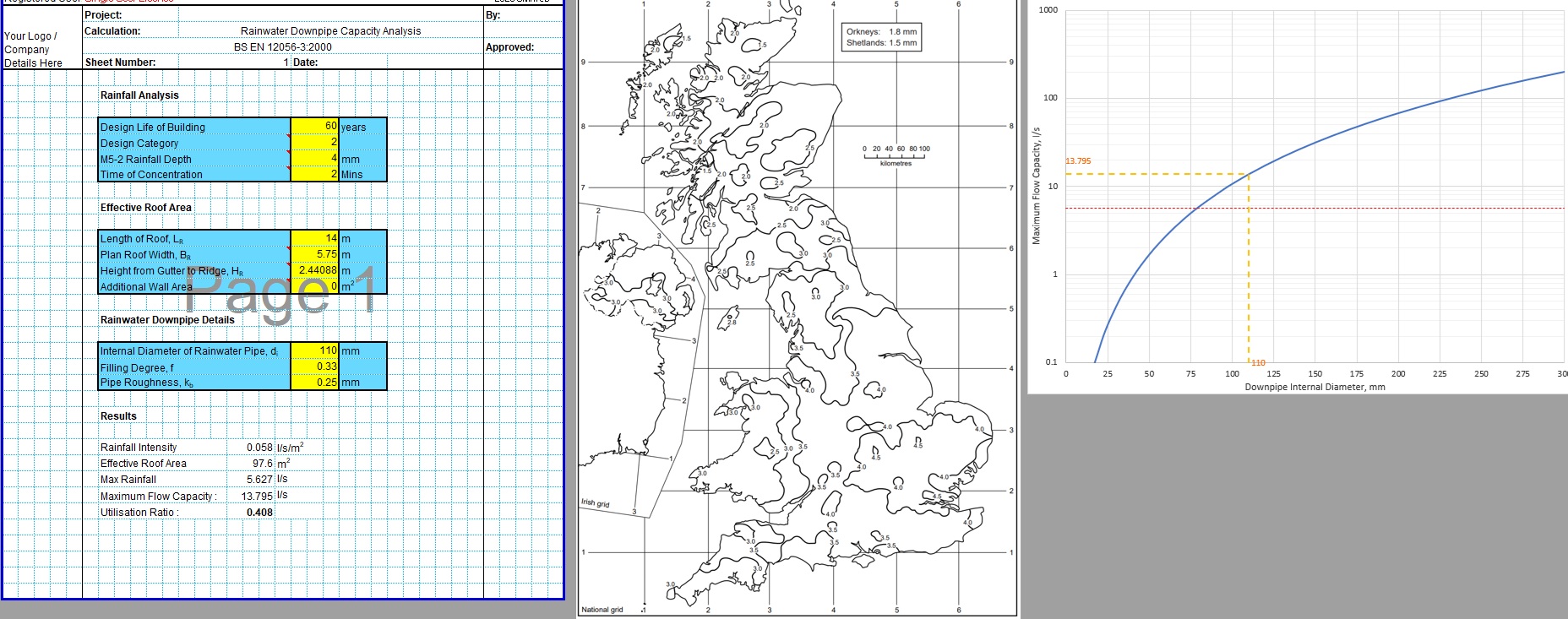
Roof Downpipe Calculator Spreadsheet
This spreadsheet calculates the size of roof drainage downpipes depending on the roof catchment and rainfall requirements.
Learn More
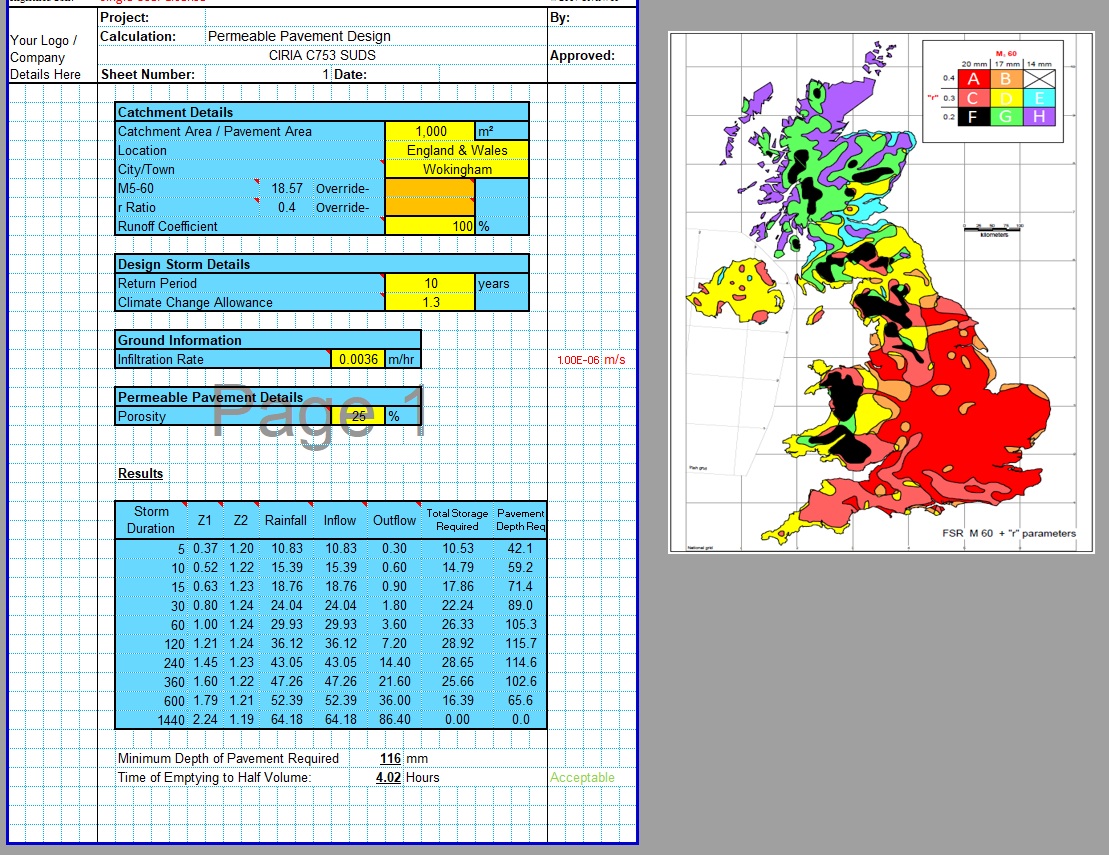
Permeable Pavement Design Spreadsheet
This spreadsheet is designed to determine the size and characteristics of permeable pavements.
Learn More
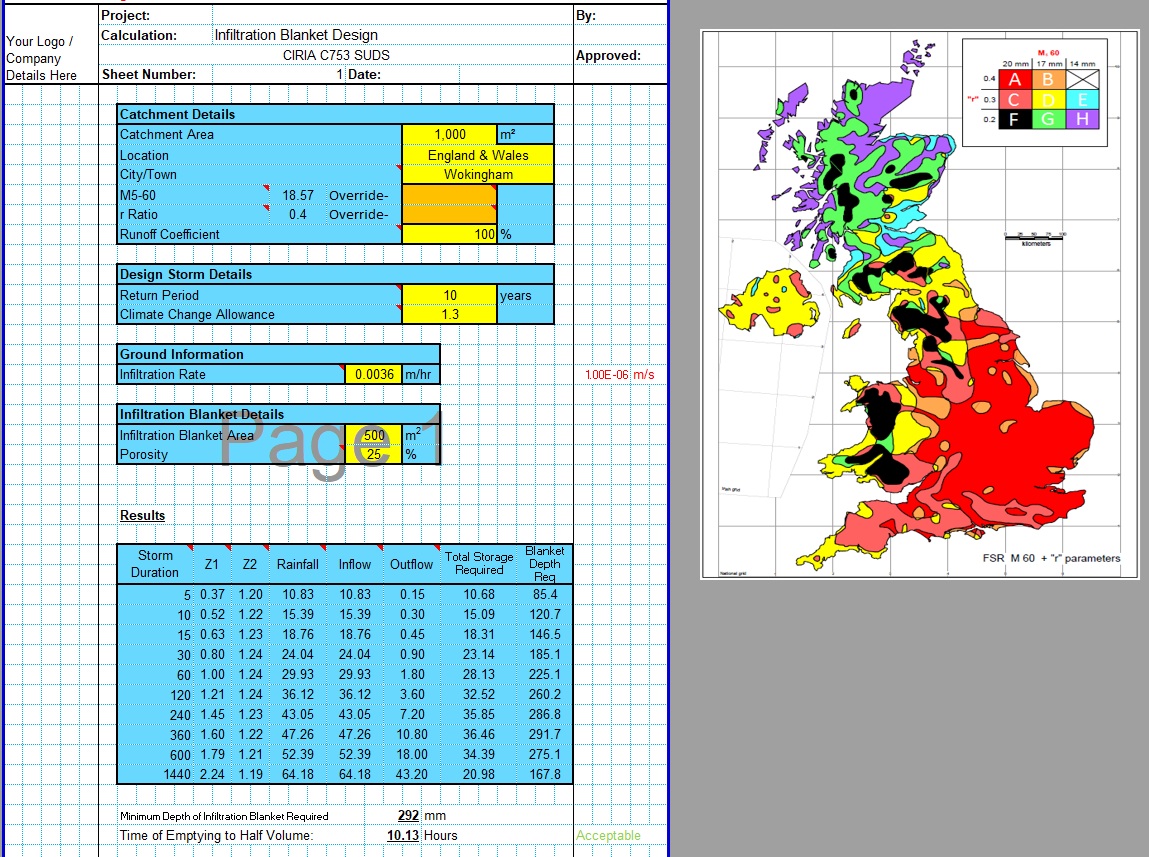
Infiltration Blanket Design Spreadsheet
This spreadsheet can be used to design thin depth infiltration systems, typically called infiltration blanket systems.
Learn More
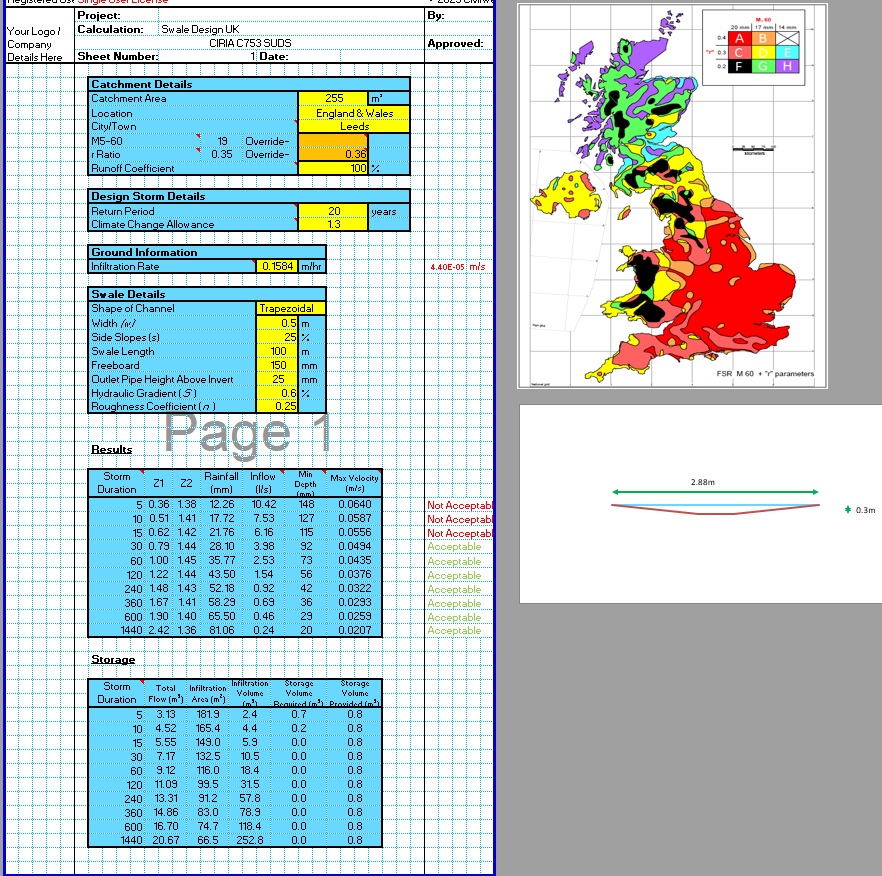
Swale Design Spreadsheet
This spreadsheet can be used to design swales. These linear grassed channels can be used both to convey, infiltrate and filter surface drainage runoff.
Learn More
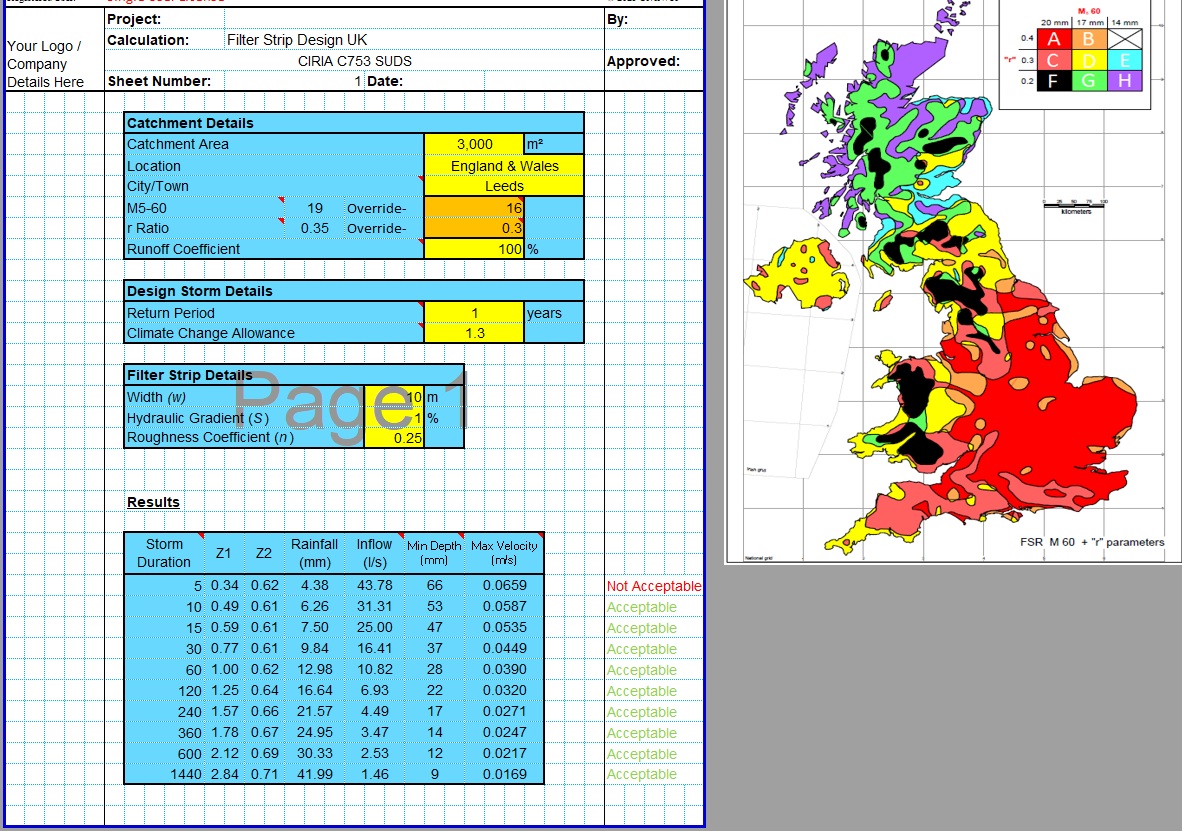
Filter Strip Design Spreadsheet
This spreadsheet is designed to analyse surface water filter strips and to determine the max flow depth and max flow velocity and determine whether they are in accordance with relevant standards.
Learn More
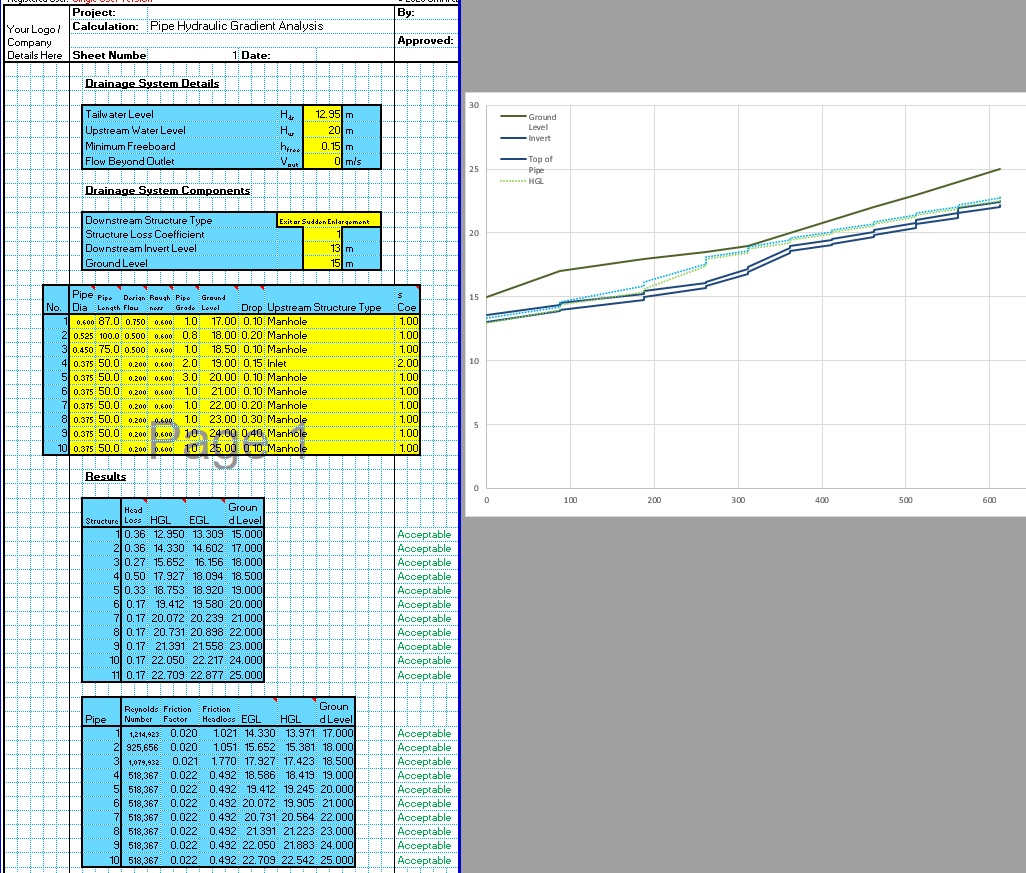
Hydraulic Gradient Analysis Spreadsheet
This spreadsheet analyses the hydraulic and energy grade lines for drainage systems with up to 10 drainage runs.
Learn More
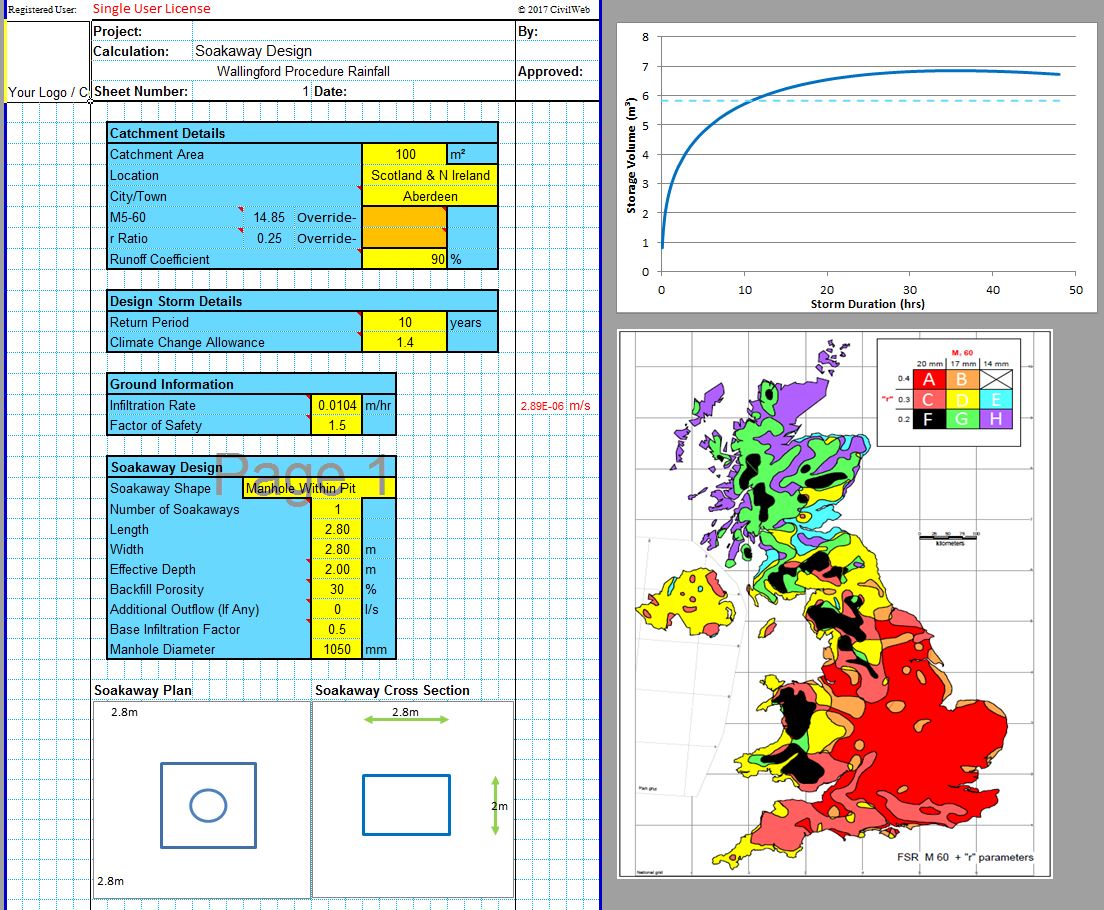
Soakaway Design Spreadsheet
This spreadsheet calculates the requirements for a soakaway system and assists the user to design a suitable system.
Learn More
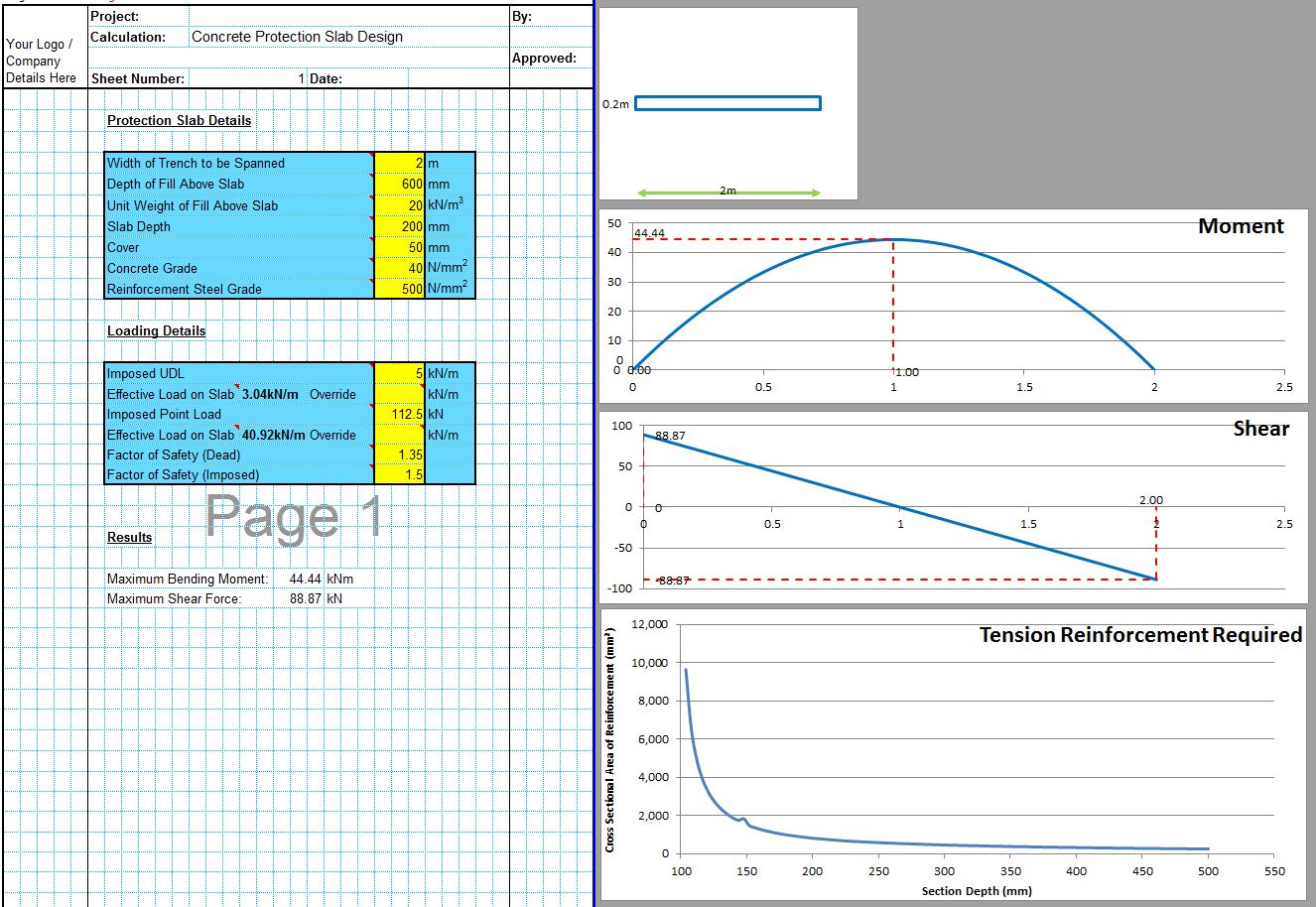
Concrete Protection Slab
This detailed design spreadsheet designs a protection slab commonly installed to protect shallow pipes.
Learn More
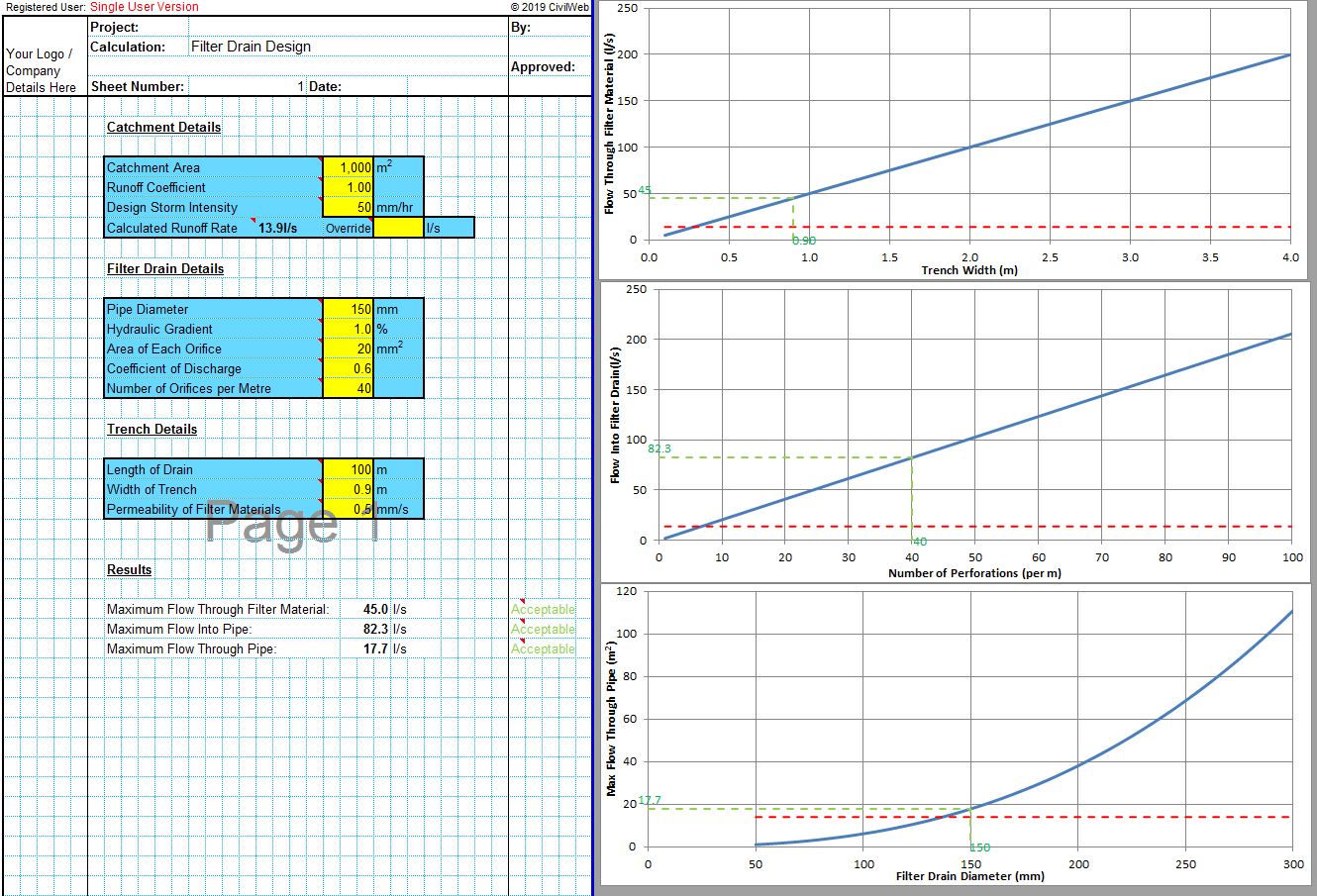
French Drain Design
This spreadsheet completes French Drain Design in accordance with the SUDS Manual.
Learn More
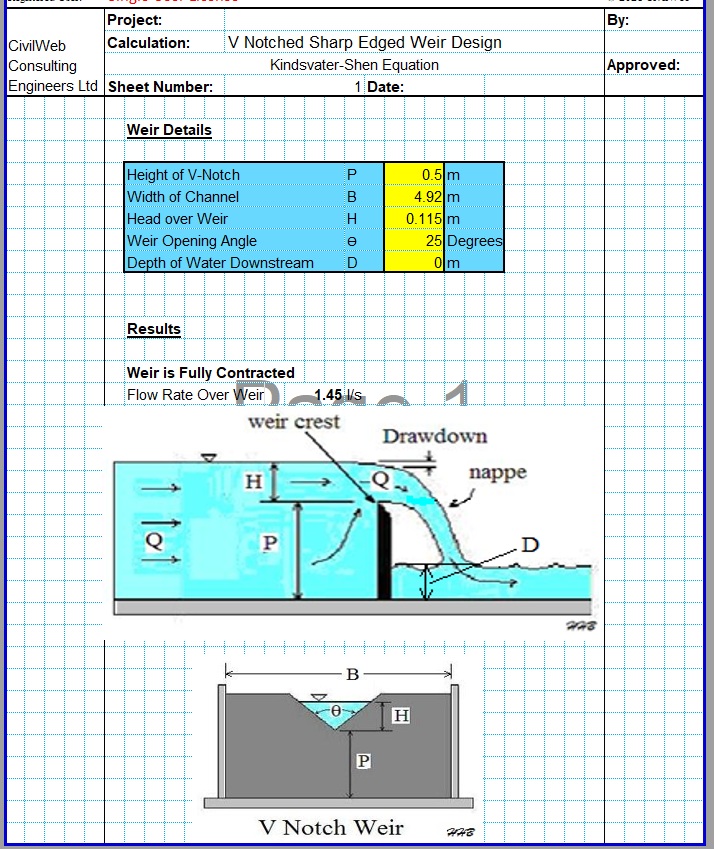
Sharp Crested Weir Flow Calculator Spreadsheets
This suite of 5 separate spreadsheets calculates the flow over sharp crested weirs of all shapes and sizes.
Learn More
Drainage Design Spreadsheet
This is the full suite of drainage design spreadsheets, available at a massive discount for only £49.99.